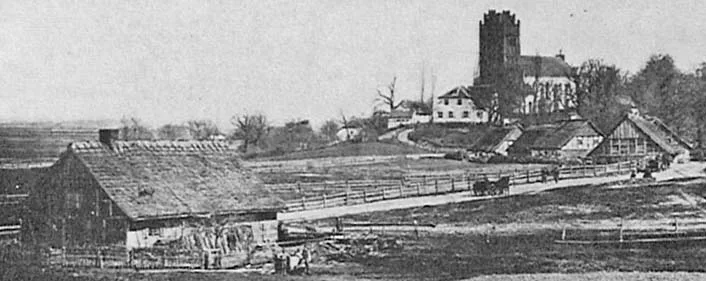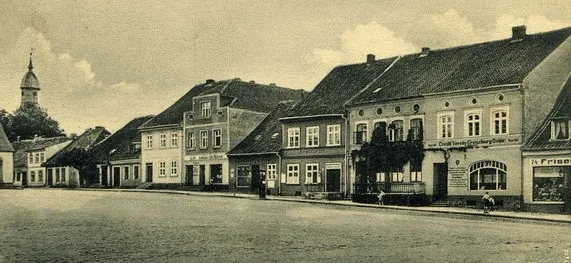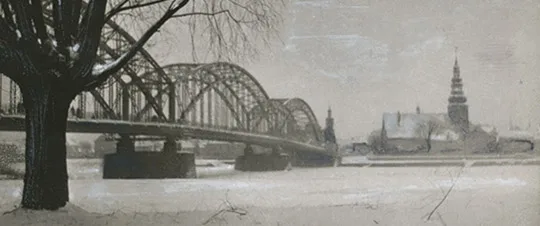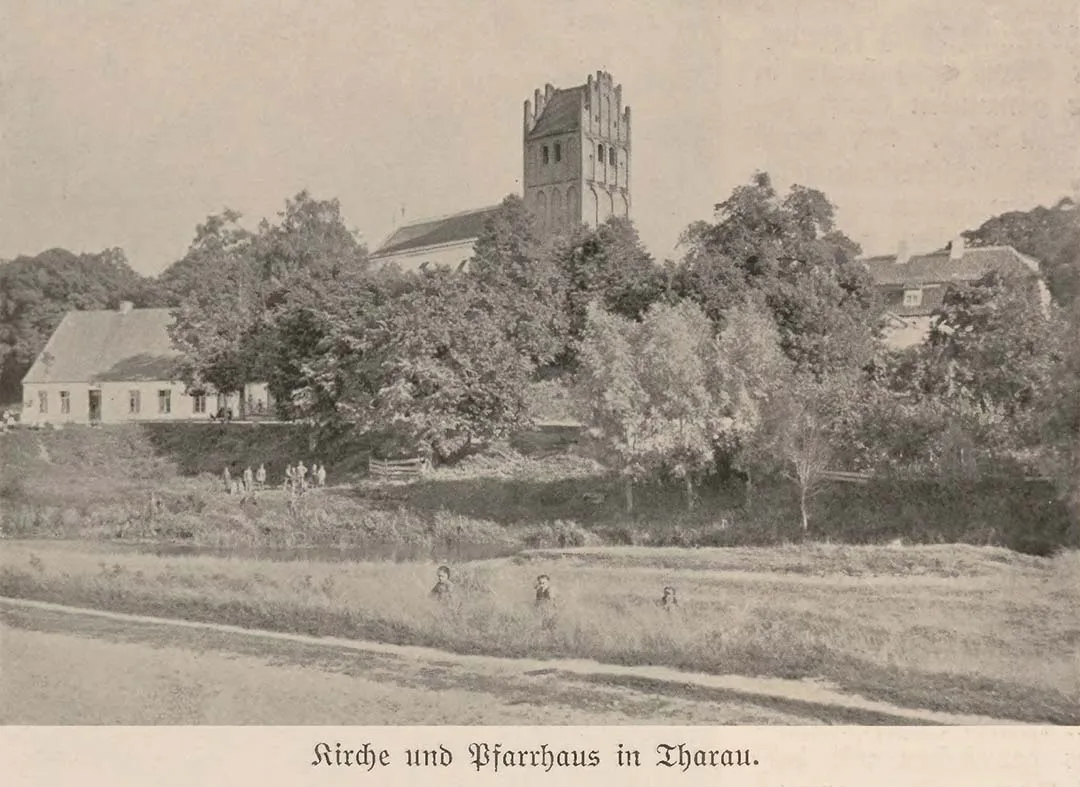
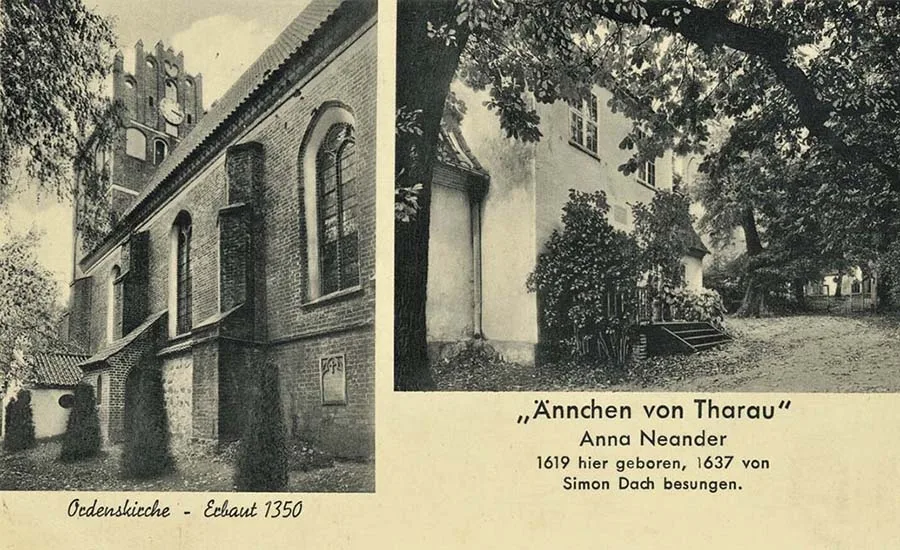
Tharau is first mentioned in the chronicles in 1315; in the mid-14th century a church was built here, and in 1365 an organ was installed in it. In 1471 Tharau passed into the possession of the mercenary commander Heinitz von Meyenthal, and in 1484 it went to Hans von Schlieben of Gerdauen. The Schlieben family owned the estate for 230 years. In the 17th century Tharau became famous thanks to the song "Ännchen von Tharau", set to a poem by Simon Dach (1605–59). The poem was written in 1636 for the wedding of Ännchen Neander (1615–89), daughter of Martin Neander (d. 1629), pastor of the church in Tharau, and the pastor Johann Portatius (d. 1646).
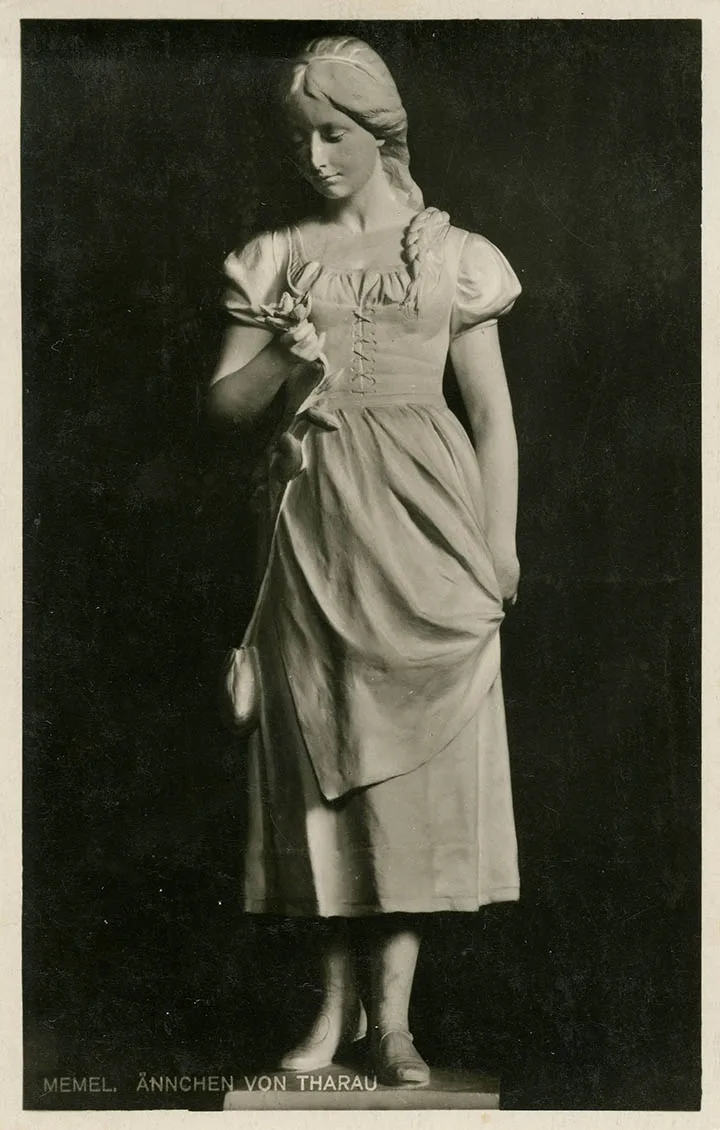
A copy of the Ännchen von Tharau monument that stood in Memel (Klaipėda).
In 1642 the organist Heinrich Albert (1604–51) set Dach's poem to music, after which the song became very popular in Germany.
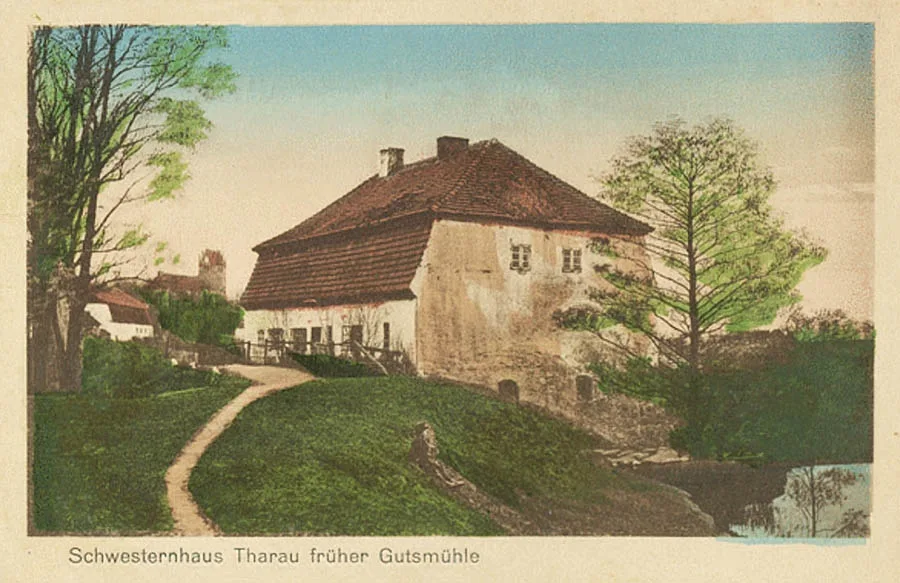
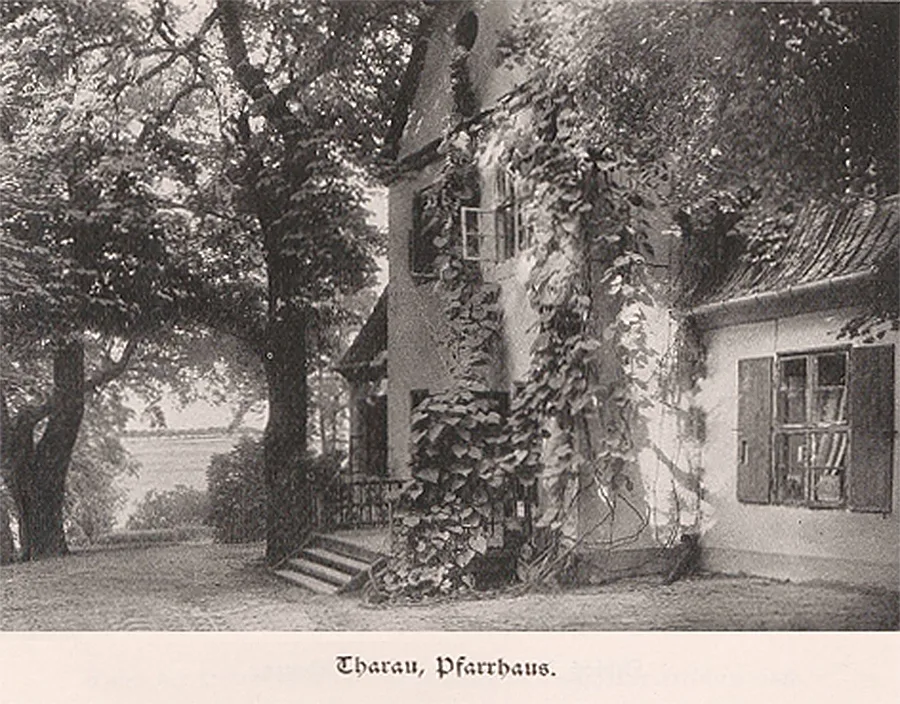 The little house where Ännchen was born.
In 1717 Tharau was acquired by the Prussian minister Wilhelm von Kanitz, and in 1739 it passed to his son-in-law Wilhelm Ludwig von der Gröben (1690–1760), minister for budgetary affairs and minister of war under Frederick II. In 1760 the Tharau estate was inherited by his nephew Fabian von Braxein (1722–98), who devoted himself to the estate from 1768. In 1770 he built the manor house and repaired the inn and the pastor's house. Braxein was the first in East Prussia to abolish serfdom on his land, and he promoted the agricultural development of the village. In 1829 the Tharau estate was bought by Karl Wilhelm von Gramatzki (1779–1842), son of a wealthy Königsberg merchant.
In 1866 a railway connection was opened, and on 30 September 1928 a new station building was put into service here.
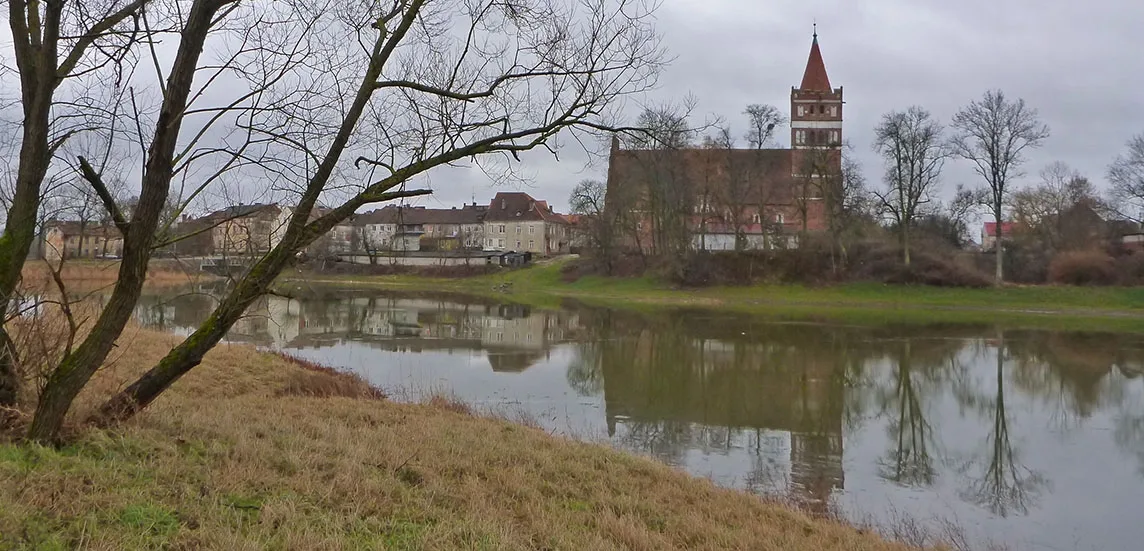
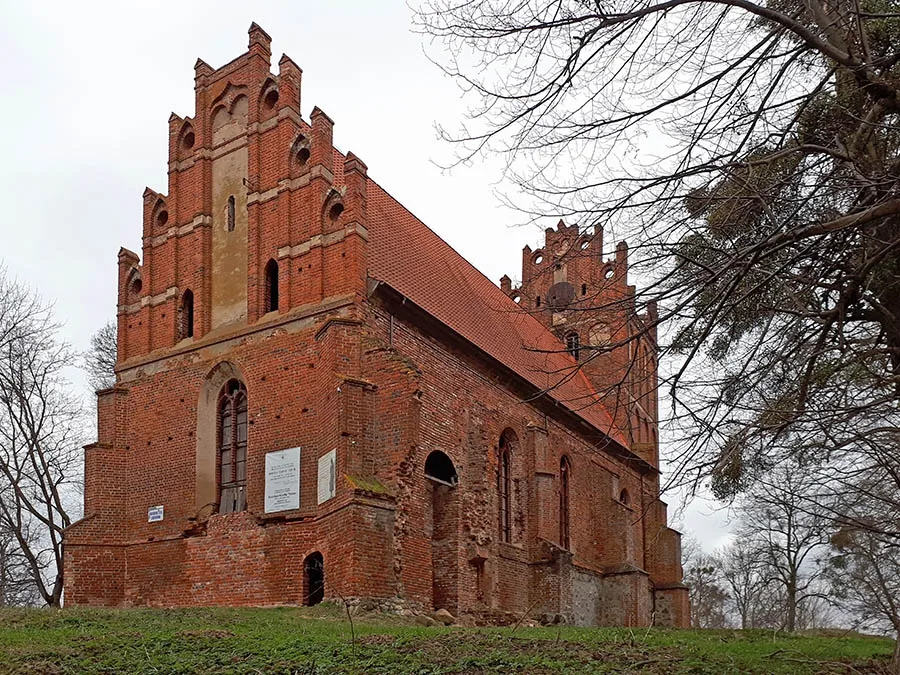 Tharau church in Vladimirovo (2021).
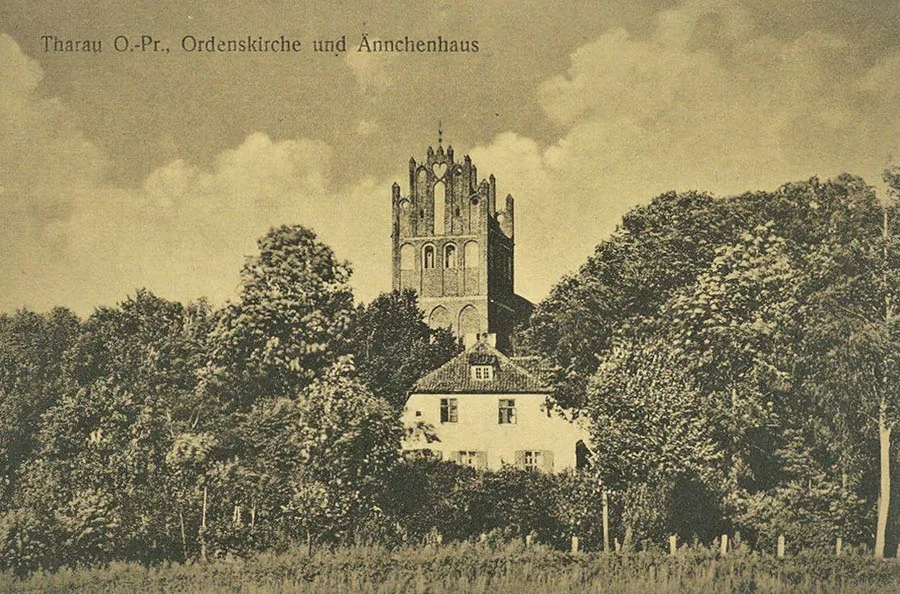
In the 19th century Tharau consisted of two administrative units: the Tharau estate and the village of Tharau. The estate formed a Gutsbezirk, and the village a rural community in the Landkreis Preußisch Eylau (Bagrationovsk). The church in Tharau was the parish church for the surrounding villages and estates. The Gutsbezirk Tharau also included the Vorwerke Augustenhof (Kolodino), Braxeinhof (Kandiyevo) and Braxeinswalde (part of Otvazhnoye).
In 1874 Amtsbezirk No. 19 Tharau was established in the Landkreis Preußisch Eylau, comprising the rural community of Tharau (Vladimirovo) and four Gutsbezirke: Tharau (Vladimirovo), Ernsthof (Krasnopartizanskoye), Groß Bajohren (Mayskoye) and Hasseldamm (Kostyukovo). On 27 March 1882 the independent estate of Braxeinswalde (part of Otvazhnoye) was separated from the Gutsbezirk Tharau; it formed a Gutsbezirk of its own within the Amtsbezirk Tharau. No later than 1908 the Gutsbezirk Hasseldamm was abolished, and the Hasseldamm estate (Kostyukovo) became part of the Gutsbezirk Tharau as a Vorwerk. On 30 September 1928 the Gutsbezirk Braxeinswalde (part of Otvazhnoye) was abolished and incorporated into the rural community of Wittenberg (Nivenskoye) in the Amtsbezirk Jesau (Yuzhny). On 1 November 1928 the Gutsbezirke Tharau (Vladimirovo), Ernsthof (Krasnopartizanskoye) and Groß Bajohren (Mayskoye) were merged with the rural community of Tharau (Vladimirovo) into a new rural community of Tharau.
The last owner of the Tharau estate was Hedwig von Olfers (1913–86).
Ernsthof was an estate forming a Gutsbezirk in the Landkreis Preußisch Eylau (Bagrationovsk). The estate belonged to the parish of Tharau (Vladimirovo). In 1874 the Gutsbezirk Ernsthof was included in the newly established Amtsbezirk Tharau (Vladimirovo). In 1906 the Tharau – Kreuzburg railway (Nivenskoye – Slavskoye) was built, and Ernsthof station was opened on it 0.8 km from Ernsthof.
On 1 November 1928 the Gutsbezirke Ernsthof (Krasnopartizanskoye), Groß Bajoren (Mayskoye) and Tharau (Vladimirovo), which belonged to the Amtsbezirk Tharau, were merged with the rural community of Tharau (Vladimirovo) into a new rural community of Tharau.
Braxeinshof was a Vorwerk in the Gutsbezirk Tharau (Vladimirovo) in the Landkreis Preußisch Eylau (Bagrationovsk). The Vorwerk belonged to the parish of Tharau (Vladimirovo). On 24 September 1866 traffic opened on the East Prussian Southern Railway, which ran past the Vorwerk Braxeinshof. A lineman's hut was set up on it near the Vorwerk. In 1874, as part of the Gutsbezirk Tharau, the Vorwerk Braxeinshof was included in the newly established Amtsbezirk Tharau (Vladimirovo). In 1906 the Tharau – Kreuzburg railway (Vladimirovo – Slavskoye) was laid near the Vorwerk, and Groß Bajoren station was opened on it 0.7 km from the Vorwerk. After the Gutsbezirk Tharau was abolished on 30 September 1928 and incorporated into the rural community of Tharau (Vladimirovo), the Vorwerk Braxeinshof came to belong to that community.
On 28 January 1945 Tharau was taken by troops of the 11th Guards Army and the 5th Army.
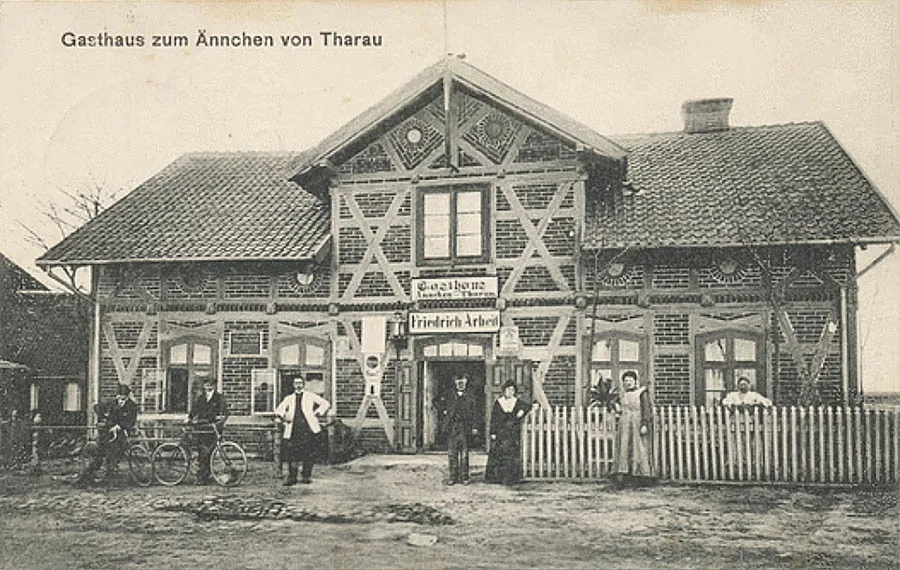
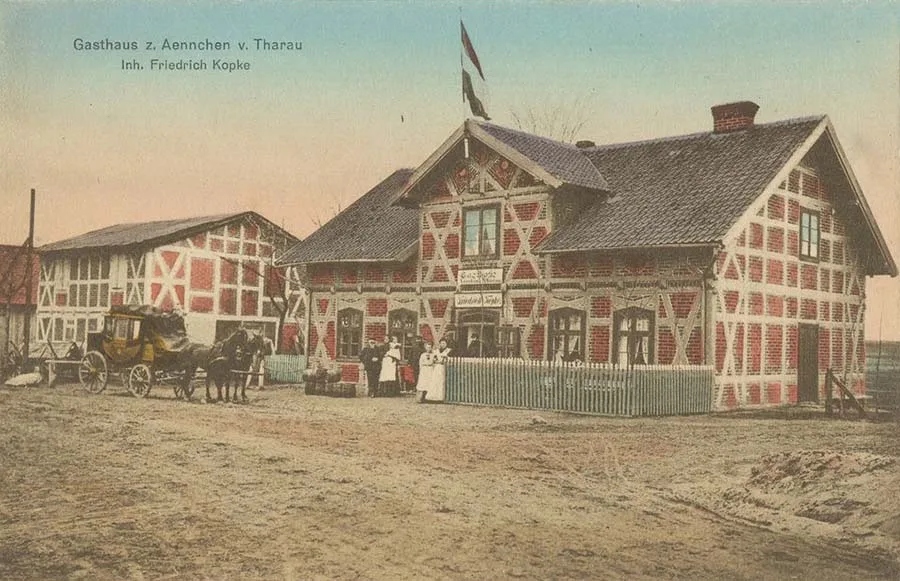 A guest house for those who wish to pay Ännchen a visit.
The northern part of the village was stormed by the 11th Guards Army, which took it on the night of 28 January. The southern part was taken by troops of the 5th Army, which by the end of 28 January 1945 had driven the enemy back beyond Packerau (Yasnoye).
On 17 June 1947 Tharau was renamed the settlement of Vladimirovo, and the Vladimirovo Village Council was created at the same time. On 17 November 1947 Braxeinshof was renamed the settlement of Kandiyevo. On 5 July 1950 Ernsthof was renamed the settlement of Krasnopartizanskoye. In 1955 Vladimirovo had 33 houses, Krasnopartizanskoye four and Kandiyevo two. In 1963 Vladimirovo had 38 houses and a school. Krasnopartizanskoye and Kandiyevo still had four and two houses respectively. A poultry farm was opened near Krasnopartizanskoye. As of 1963 the railway was still in place from Krasnopartizanskoye to Groß Bajoren station (Mayskoye). In 1962–69 the Vladimirovo Village Council was abolished; in 1962–66 the settlements belonged to the Pobedinsky Village Council, and in 1966–69 to the Nivensky Village Council. No later than 1975 Krasnopartizanskoye was removed from the register and incorporated into the settlement of Vladimirovo. By 1984 the Vladimirovo – Slavskoye railway had been completely dismantled. By the 1980s an agro-industrial enterprise had opened in former Kandiyevo, and the number of houses in Kandiyevo rose to three. By the late 1990s two farmsteads remained in former Krasnopartizanskoye and three in Kandiyevo. Later, on the site of former Krasnopartizanskoye, four houses were built near the former Ernsthof station. As of 2018 the settlement had a school, a kindergarten, a House of Culture, a medical and obstetric station, a museum and cultural centre, a post office and a furniture factory.
Coordinates of the settlement: 54°32'26'' N 20°32'00'' E (Tharau, centre), 54°34'00'' N 20°30'24'' E (Ernsthof), 54°33'03'' N 20°33'36'' E (Braxeinshof).
Sights: the church (15th–16th centuries, under restoration), a mass grave of Soviet soldiers (272 people, monument of 1952).
Population change: 1988 – 350, 2002 – 826, 2010 – 666 inhabitants.
For reference
Population change of the Tharau community: 1910 – 230, 1933 – 755, 1939 – 786 inhabitants.
Population of the Tharau Gutsbezirk: 1910 – 313 inhabitants.
Population change of Ernsthof-Krasnopartizanskoye: 1910 – 154, 1988 – 10 inhabitants.
Population of Kandiyevo: 1988 – 10 inhabitants.
Modern photo by Mikhail Ogorodnikov.
Translated from Russian with the help of AI (Claude, Anthropic), October 2026.