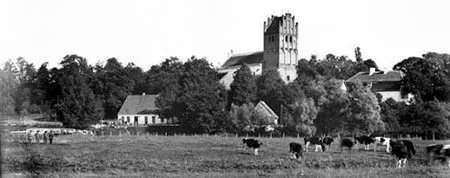
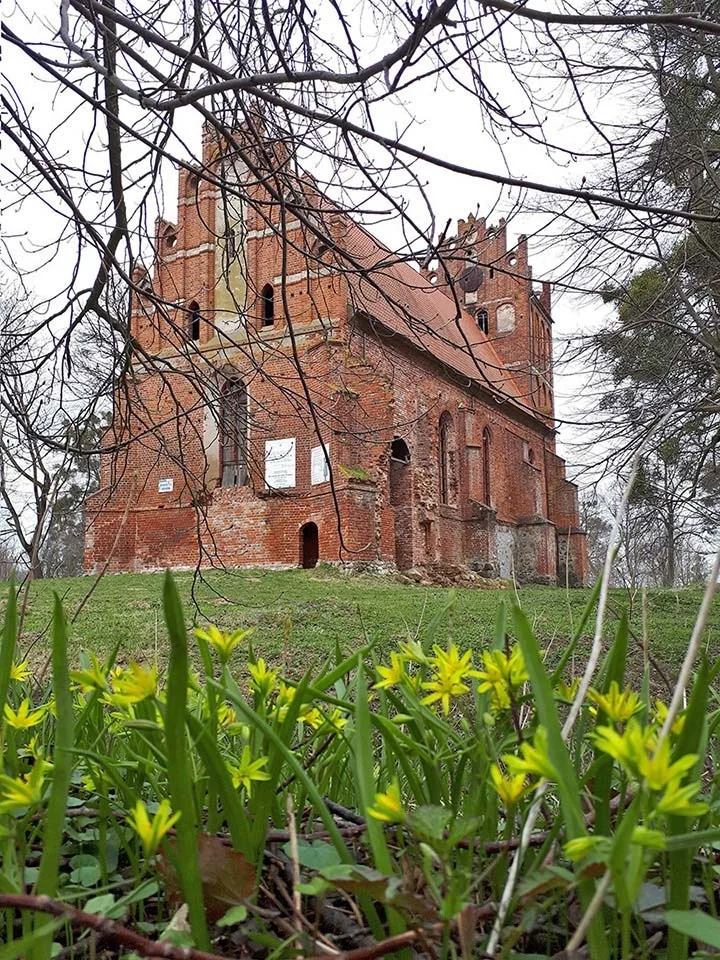
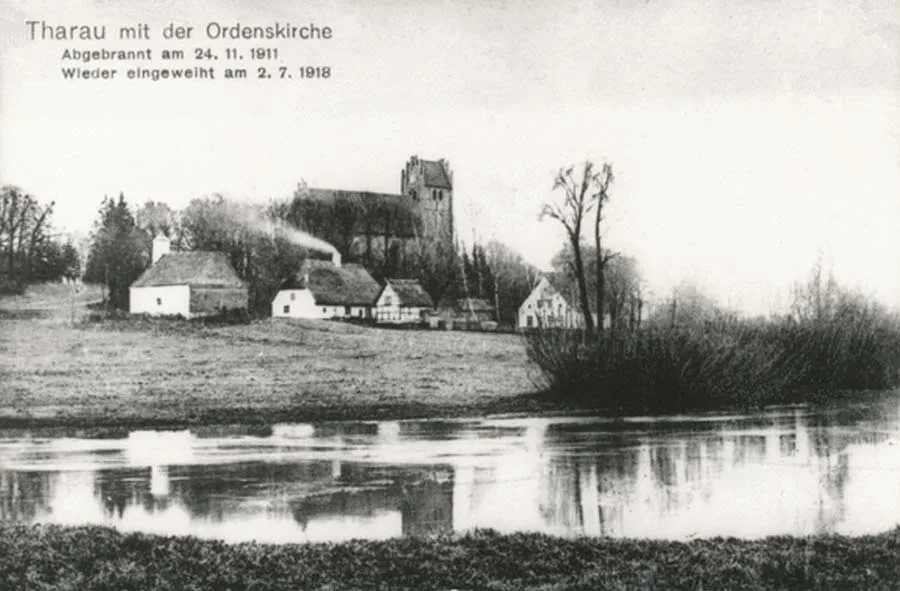
A 14th-century parish church. A brick building with a chancel, a tower on the west (16th century) and numerous annexes. A sacristy in the north-east corner, the entrance on the south. To the left and right of the tower there were burial vaults. Pointed-arch windows. The corner buttresses are diagonal, those along the sides perpendicular. All the buttresses are stepped. At first the ceilings had two vaulted bays, then there was a board vault, and from 1805 a smooth plaster ceiling. After the repairs of 1811–18 the ceilings became vaulted again.
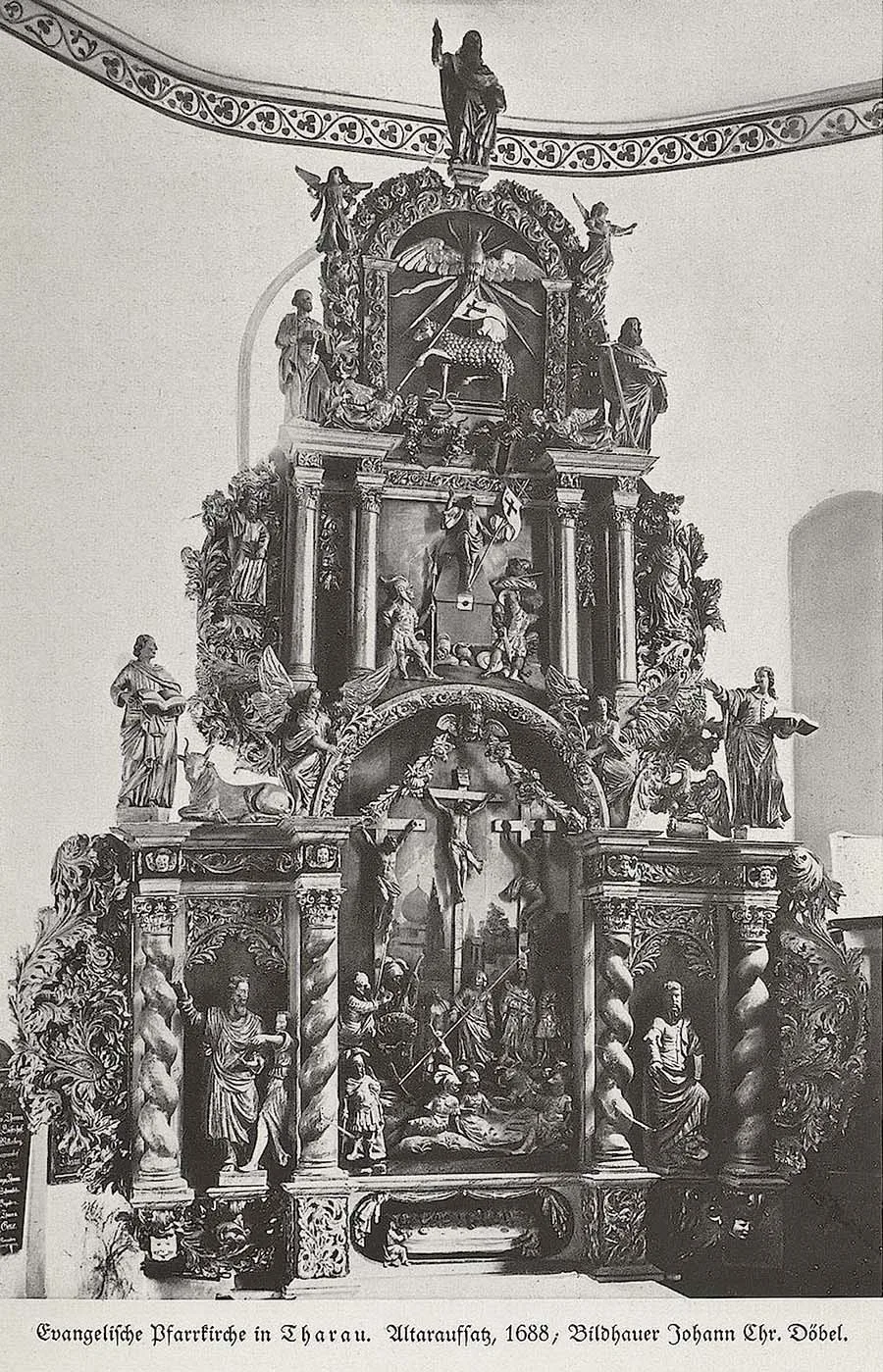
Between the nave and the chancel, a pointed triumphal arch. Altar of 1693 (A. Boetticher) or 1688 (W. Hubatsch). The pulpit stood near the triumphal arch, a 17th-century work. Organ of 1869. The first organ is mentioned in 1365. In 1655 it was gilded and painted by Johann Werner. Bells of 1675, 1792 and 1798.
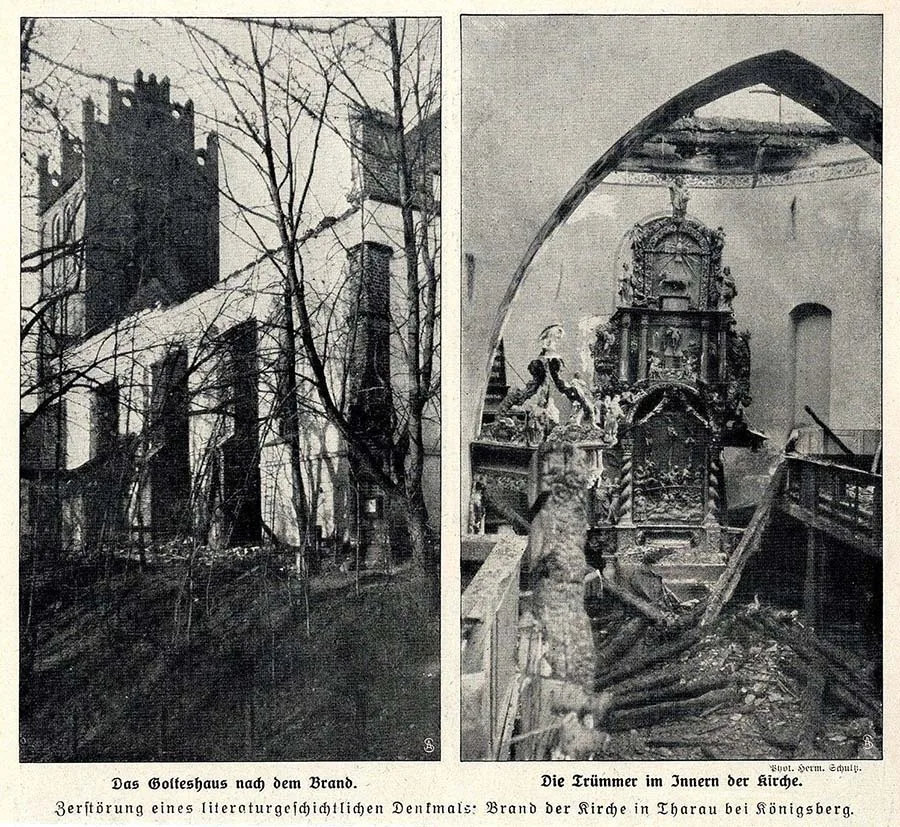
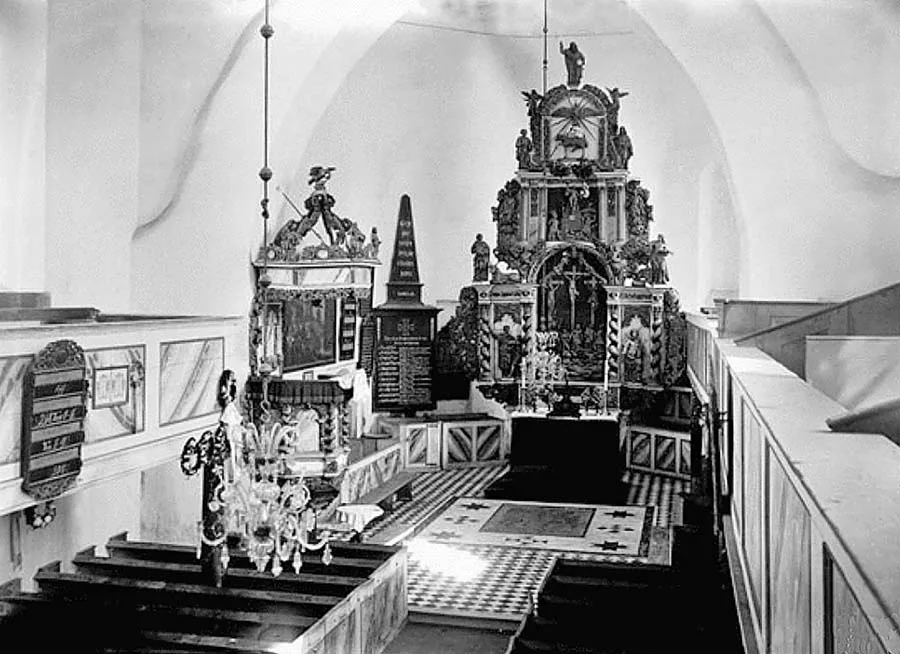
After a fire in 1910 the church was thoroughly restored in 1911–1918.
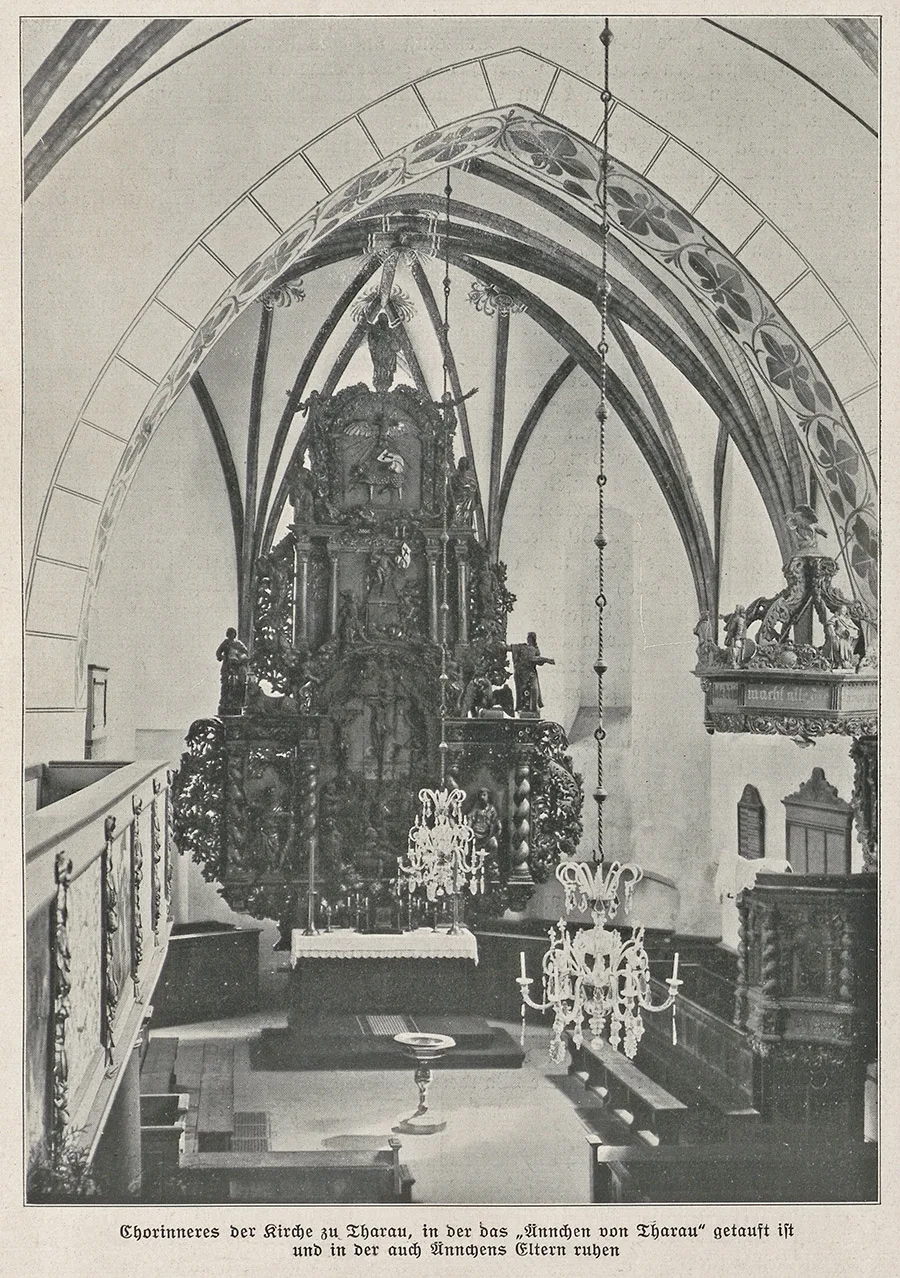
The interior decoration was carefully restored. A harsh-sounding pneumatic organ by the Königsberg master Carl Novak was installed. The last organ was installed in 1935 (by the firm of Emanuel Kemper and Son).
After the Second World War the church remained intact both outside and inside. Then the organ was dismantled, the bells were thrown down, the roof tiles were damaged, and the building began to fall into disrepair. In the 1970s the church was used as a store for chemical fertilisers. For this purpose doorways were knocked through in the chancel on the east and in the nave on the north. After the roof collapsed and the vaults began to leak, the store was moved elsewhere and the church was abandoned.
In 1988 a group of searchers from Riga tested their theory about the Amber Room. The cellars were opened and examined, and deep trenches were dug on the east and west sides.
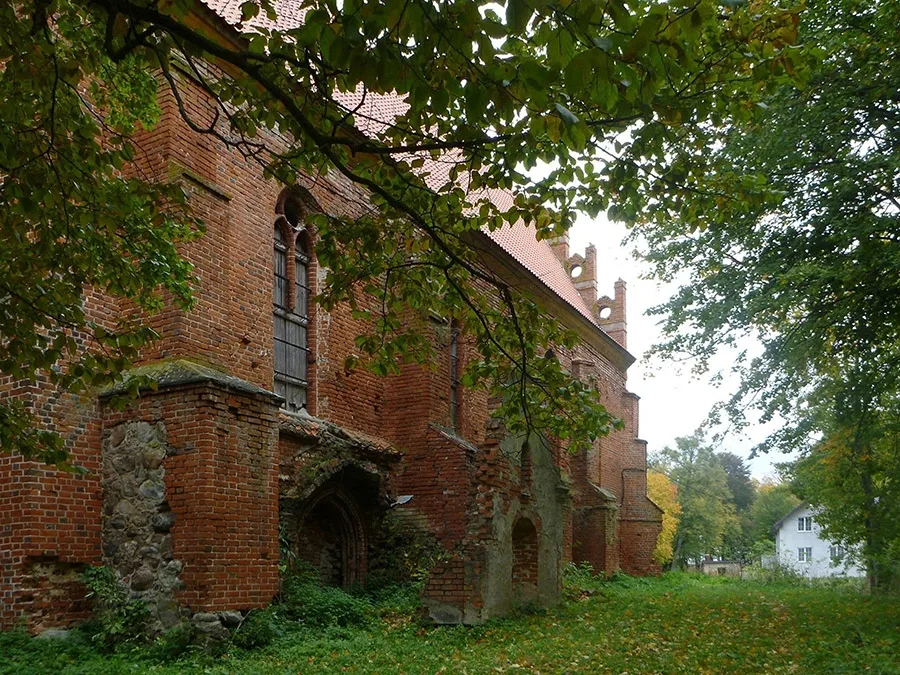
In 1990 the local village council transferred the church free of charge to a manufacturing company, which undertook to restore it and possibly open an Orthodox church in it. However, the work that was started was soon halted for lack of funding. At the end of the 1990s a representative from Germany tried to repair the church, but he too turned out not to have enough money.
By 2007 a restoration project for the church had been drawn up by the state institution Spetsproektrestavratsiya, and by 2013 the roof had been restored.
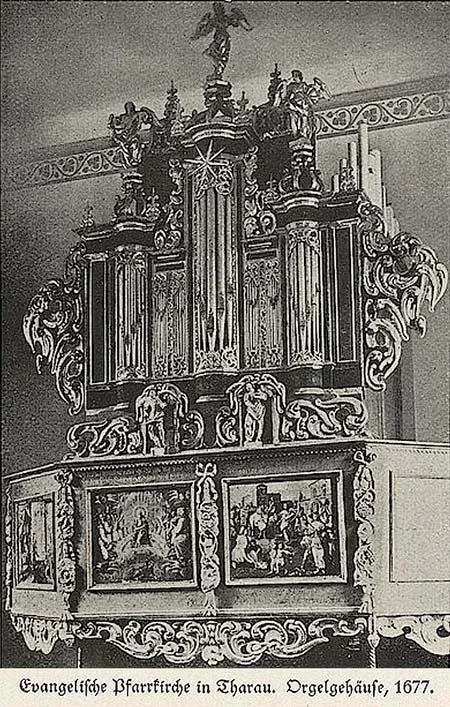
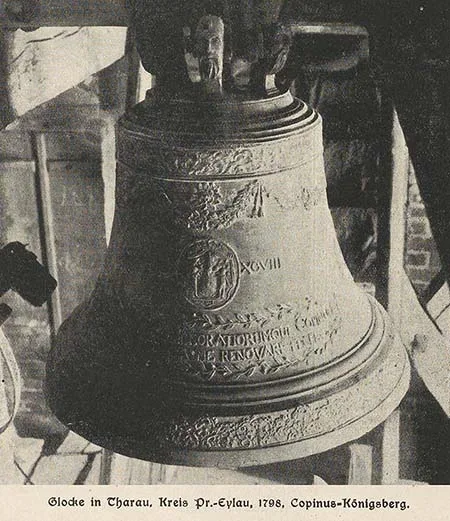
Photos on this page: Mikhail Ogorodnikov,
Bildarchiv Ostpreußen bildarchiv-ostpreussen.de,
Anton Ulbrich «Geschichte der Bildhauerkunst in Ostpreussen»,
Richard Dethlefsen «Beiträge zur ostpreussischen Glockenkunde».
Translated from Russian with the help of AI (Claude, Anthropic), October 2026.