This unique area, where three countries meet (Russia, Poland and Lithuania), is rich in historical and natural monuments, and the forest (in places a relict one!) can rightly be considered an open-air museum. Hills and valleys formed during the Ice Age alternate with picturesque lakes and rivers. The present-day relief took shape here as a result of the last glaciation, about 15,000 years ago. The glacier left behind numerous stones and boulders carried here from Scandinavia. In scientific literature they are called erratics. Some of the stones have even been given names of their own, such as "Anita" or the "Devil's Stone", whose origin is the subject of a legend that, like many others, has survived to this day:
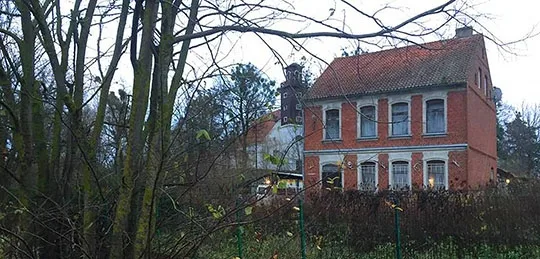
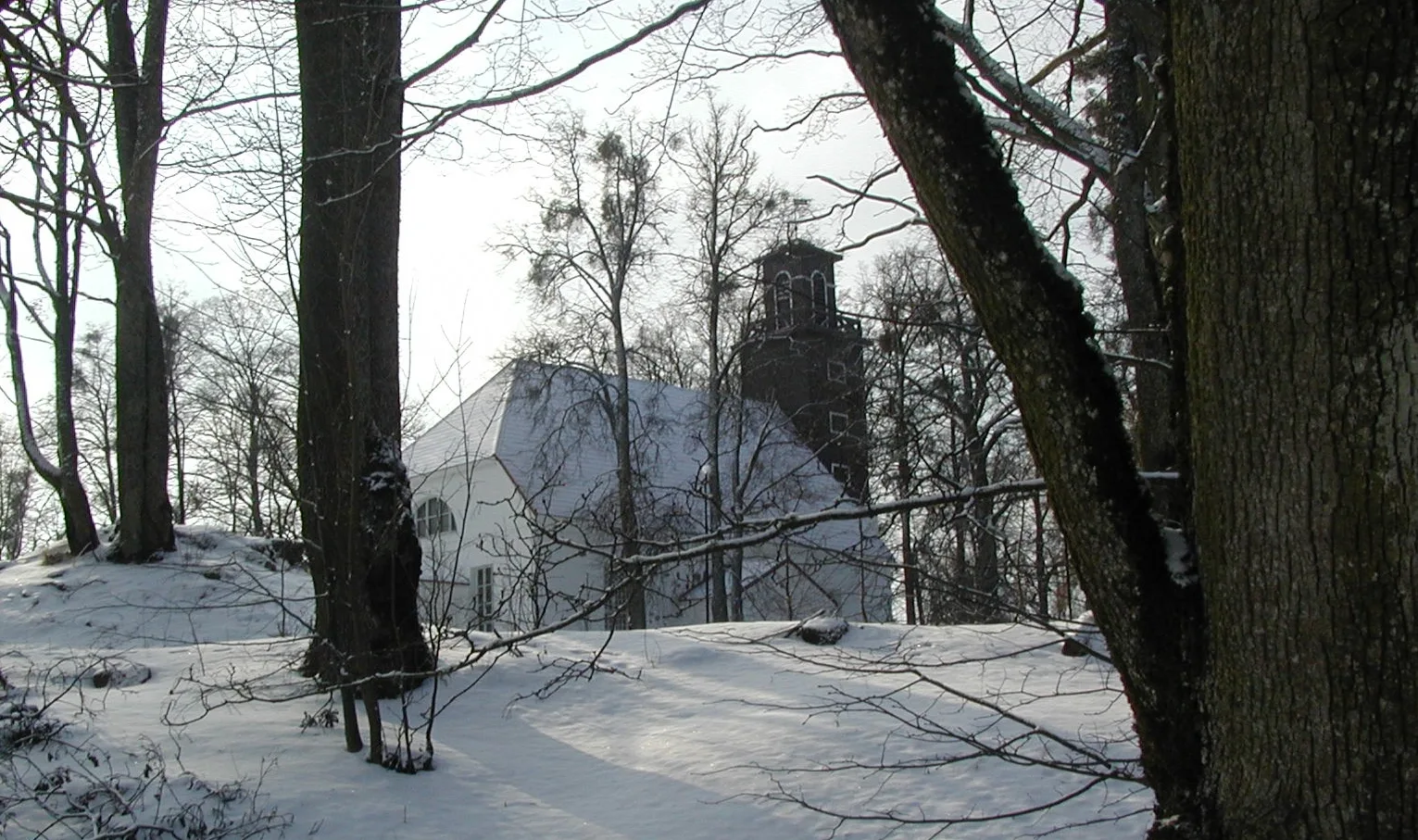
When the church was being built in Tollmingkehmen (now the village of Chistye Prudy), the devil flew up to the workers and asked what they were building. The workers were afraid to tell him the truth and said they were building a tavern. Delighted, the devil promised to help them and set about hauling stones with great zeal, but one day, when the building was almost finished, he realised he had been deceived. In a rage he seized a huge boulder, soared above the trees and meant to hurl it at the church, but just then a rooster crowed three times in the pastor's house. The devil, who could not bear that sound, began to tremble, the stone slipped from his claws and fell in the forest. And there it has lain ever since.
Hills, Rivers and Lakes
The highest point of the Kaliningrad Region, 242 m above sea level, lies within the Vishtynets Upland. Unfortunately, it cannot be visited, as it is located beyond the control strip of the Russian border.
The second-highest elevation in the area is quite accessible: Mount Dozor, 230 m, 2 km east of Lake Marinovo (Severnoye).
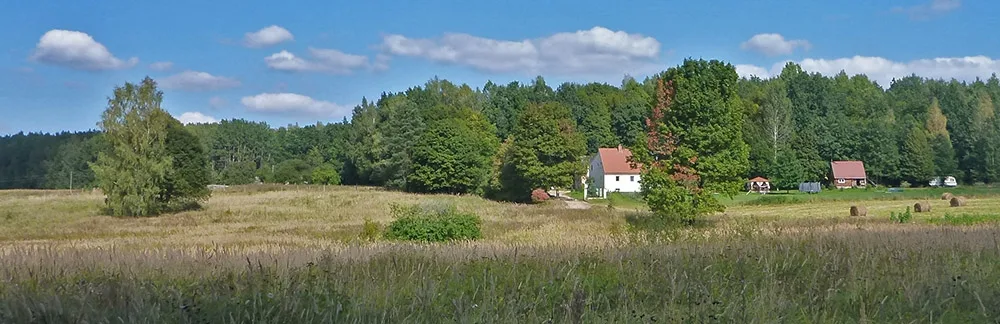
The varied landscape of the Vishtynets Upland, adorned with a mosaic of coniferous and deciduous plantings, is home to a great many animals.
The softly murmuring waters of the rivers and the idyllic forest lakes enchant visitors and draw anglers and tourists alike.
Rivers: the Pissa, the Krasnaya, the Chyornaya, the Sinyaya and a multitude of streams.
Lakes: Vishtynetskoye, Marinovo (Severnoye), Rybnoye, Protochnoye and a large number of small lakes.
Lake Vishtynets is the pearl of the region, having given its name both to the nature park and to the area itself. It is a favourite spot for holidaymakers on both the Russian and the Lithuanian sides of the border. It is the largest lake of glacial origin in the region. Its surface area is about 18 sq km, and its greatest depth is about 50 metres. The lake's crystal-clear waters are rich in fish, among them whitefish, vendace, tench, pike, bream, eel and others.
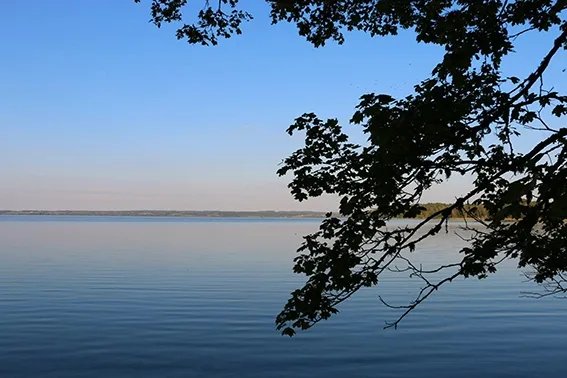
A summer evening on Lake Vishtynets.
Leisure and Hunting
The forest has always attracted people of every social standing and level of wealth. In their time, the last Grand Master of the Teutonic Order, the first Duke of Prussia Albrecht of Hohenzollern, Margrave George Frederick and Elector John Sigismund all hunted here, as did Kaiser Wilhelm II and Reich Chancellor Göring. Among our own compatriots, S. Yu. Witte and L. P. Beria visited Rominten in their day.
In the late 19th and early 20th centuries the forest became the favourite imperial hunting ground of Kaiser Wilhelm II. In 1891, in the village of Rominten (Raduzhnoye, Nesterov District, no longer in existence), on the bank of the Rominte (Krasnaya) River, an imperial hunting lodge was erected, designed and built by German architects. It was a two-storey wooden H-shaped building consisting of two wings connected by above-ground and underground passages. The ridges of the roofs were decorated with carved dragon figures. In 1893 a wooden chapel dedicated to St Hubert, the patron saint of hunting, was built next to the hunting lodge. And in 1909 a bronze sculpture of a red deer stag with sixteen-point antlers, the work of Richard Friese, a professor at the University of Königsberg, was set up beside the chapel.
The image of this stag became something of a calling card for Rominten. A bridge was also thrown across the steep banks of the river, decorated with four sculptures of red deer by the artist Friese and the sculptor Pallenberg.
Sadly, neither the imperial hunting lodge nor St Hubert's Chapel, nor many of the other buildings, have survived. All that remains in their place are foundations recalling those times. One of the wings of the imperial hunting lodge was dismantled and moved to Kaliningrad in the late 1940s. Greatly altered, without its chimneys, roof tiles and carved wooden ornaments, it bears only a distant resemblance to the stately building that once stood in Rominten. For the time being it can still be seen in the city's Central Park.
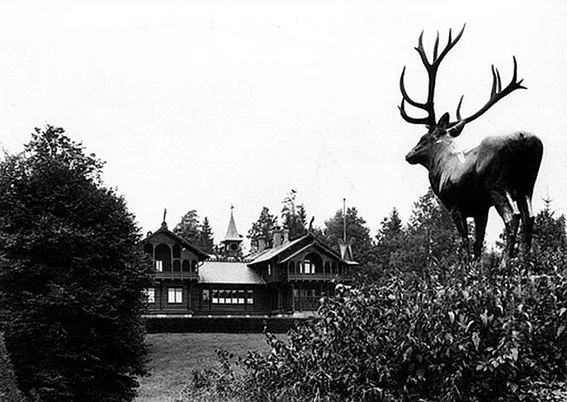
The Kaiser's hunting lodge and the stag sculpture.
The bronze stag sculpture was taken to Smolensk as a war trophy, where it can still be seen today in the M. Glinka Park.
Of the four stag sculptures from the bridge, only two have survived; they now adorn the entrance to the administrative building of the Sosny sanatorium near Moscow.
As a legacy of the imperial hunts, memorial stones dedicated to the Kaiser's notable trophies and hunting anniversaries have survived in the forest.
In all, 20 such stones were set up, 16 of which have survived to this day, and most of them are freely accessible to visitors.
Some of the stones have even been included in hiking and cycling routes. Besides the Kaiser's memorial stones, others have also survived, dedicated to foresters who left a notable mark on the history of the area and died tragically at the hands of poachers.
Historical Heritage
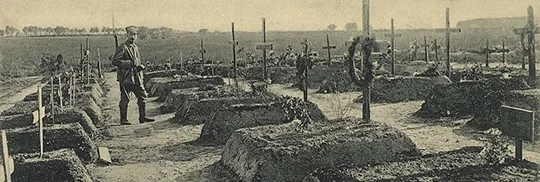
Many other silent witnesses of the past can still be found in the forest today: village churches, some preserved and some being restored, forgotten and overgrown village cemeteries, numerous First World War burial sites, bridges, railway lines and stations, and the ruins of watermills.
Among the villages of the forest, several stand out as particularly interesting and remarkable.
Chistye Prudy (Tollmingkehmen/Tollmingen) — in the mid-18th century this village was home to the pastor Kristijonas Donelaitis, who served here and is regarded as the founder of classical Lithuanian literature. The church and the house where Donelaitis worked and lived now house a museum. The village also retains its railway station building and water tower. On the outskirts of the village you can see several old signposts with barely legible arrows and village names.
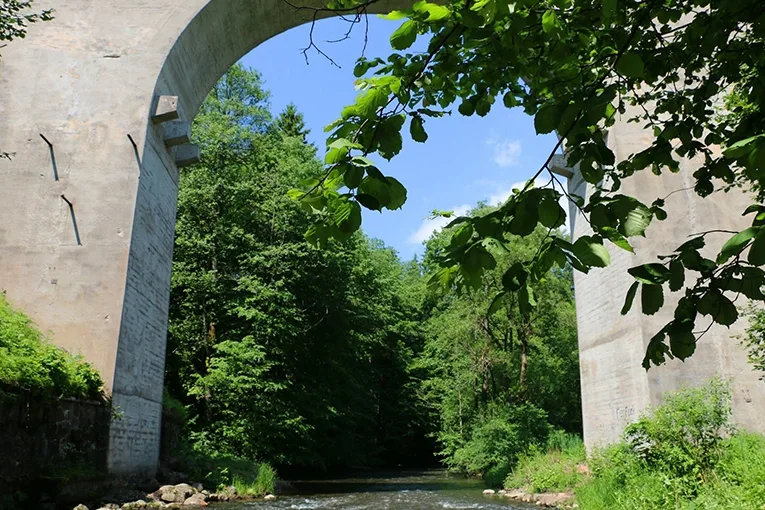
Tokarevka (Makunischken/Hohenwaldeck) — two remarkable structures have survived here: the railway bridge over the Krasnaya River, one of the highest in the region (1901, height 25 m), and a mill. In addition, not far from the bridge, by the road leading towards Dmitriyevka, you can find the foundations of an old bakery. The building did not survive the hard times of the 20th century, but the handsome brick pillars that once held the gates through which carts and motor vehicles drove up to the bakery are still standing.
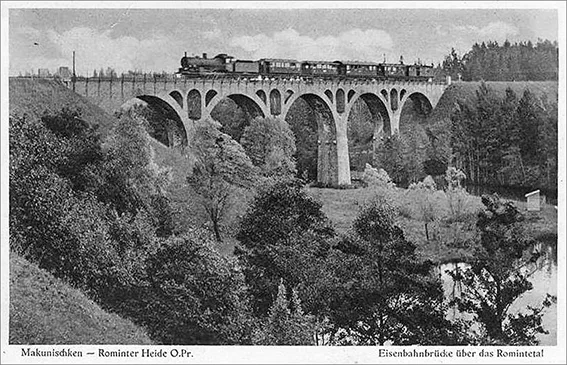
The railway bridge over the Rominte in Makunischken.
Kalinino (Mehlkehmen/Birkenmühle) — in the centre of the village stands a dilapidated church built in the early 18th century, next to which there is a small First World War burial site. On the outskirts of the village you can see a memorial stone commemorating the state labour camp that operated here in 1934–36, as well as an arched railway bridge spanning the road.
Krasnolesye (Gross Rominten/Hardteck) — at the village's central crossroads stands a surviving First World War memorial, and not far from it is a church under restoration that stood without a roof for many years. On the outskirts are the railway station and, nearby, a railway bridge. But the most interesting place in the village is the “Vishtynets Ecological and Historical Museum”. Housed in the former village school, it presents exhibitions on the history and culture of the Heath, specimens of stones and plants, traces of the material culture of its inhabitants and much more. The museum staff offer guided tours to anyone interested and talk about the local sights and natural monuments. The museum also hosts environmental education classes and symphony concerts. Visitors can obtain information there about tourist opportunities throughout the Heath.
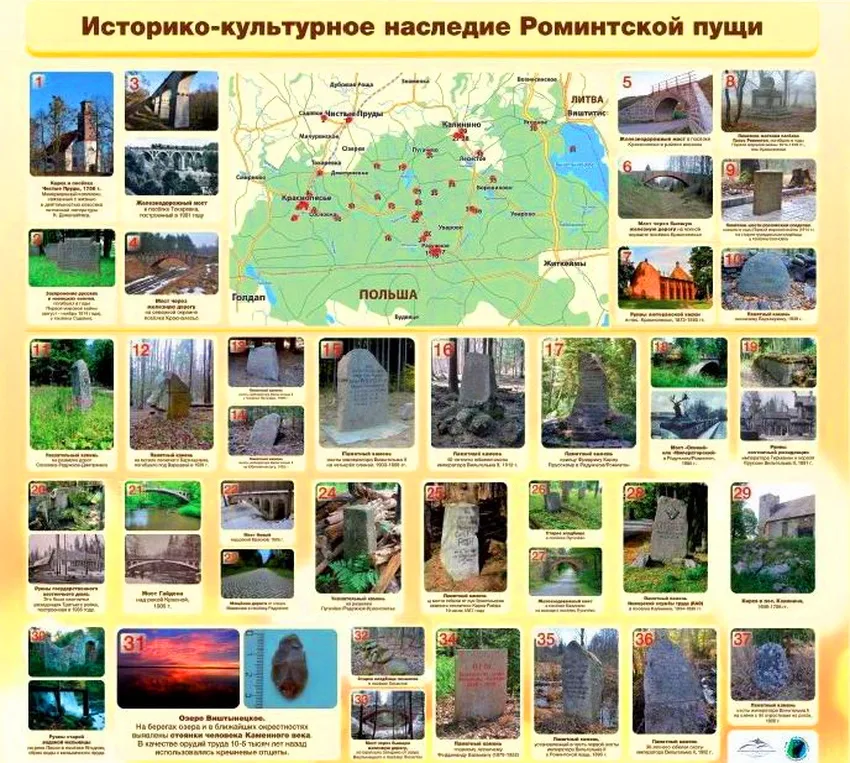
Map of sights near the museum.
Since August 2014 the museum has held the annual international cultural and folklore festival “Neighbours”, whose main aim is to foster good-neighbourly contacts and relations among the people living on the three sides of the Rominte Heath.
Not far from Krasnolesye stands a magnificent railway bridge, more than 25 metres high, spanning the valley of the Krasnaya River (see photo above).
Today, since 2012, most of the Rominte Heath has formed the Vishtynetsky Nature Park, which covers an area of 22.7 thousand hectares. The park's main purpose is to protect and restore natural resources and to organise their use for recreation, health and environmental education.
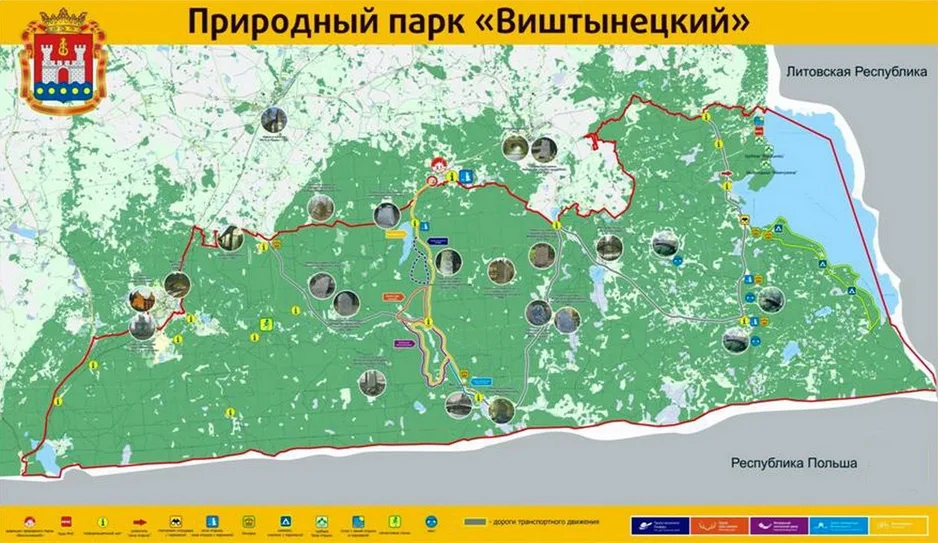 Map of the regional nature park “Vishtynetsky”.
In 2013 information boards and signposts were installed in the park. The tourist routes developed here can be of use both to lovers of active holidays and to visitors interested in local history.
Tourist routes
– Forester Reiff's Trail — a walk from Lake Marinovo to the place where the forester was killed, marked by a memorial stone.
– Emperor Wilhelm's Trail — a walk around the site of the Rominten hunting lodge.
– By bicycle from Lake Marinovo to Lake Vishtynets, along the Pissa River or along the dismantled railway line.
– On foot along the forest compartment roads deep into the woods in search of the Kaiser's memorial stones, or over the hills around Krasnolesye in search of the source of the Sinyaya River.
– On horseback along the Krasnaya River, past old bridges, to pine trees a century and a half old, or across the meadows racing the wind.
– A strenuous rafting trip down the Krasnaya River through logjams and fallen trees, passing beneath century-old bridges and past villages that no longer exist...
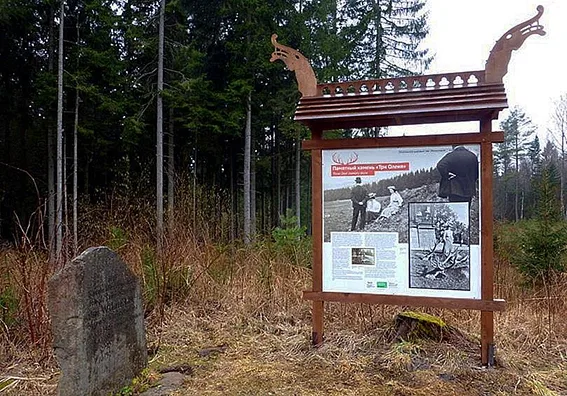
Old and new — a Kaiser's stone and a modern information board.
A brisk bike ride along roads through the forest or beside the lake, walks through remote and little-known corners of the woods, kayaking on the Krasnaya River for the hardy and for lovers of water sports, as well as horse riding and simply relaxing in the open air — all this awaits visitors to the Rominte Heath and lets them get to know its natural and historical heritage more closely.
In the villages of the Heath and the surrounding area there is a wide range of accommodation to suit every taste: private rooms and holiday camps, guesthouses and wild camping. Riding stables and a fishing park, home cooking and bicycle hire — this is what the guesthouses have to offer. Holiday camps will offer you boat and catamaran hire, a banya and relaxation on the lakeshore.
At any time of year the Heath gives its guests a warm welcome and reveals to them its natural beauty and historical monuments.
P.S. We should remember that our own attitude matters more for preserving this unique natural monument than any number of laws in force and various protected statuses. This is our heritage, and it deserves to be respected.
Photos from the Bildarchiv Ostpreußen, the East Prussian picture archive (www.bildarchiv-ostpreussen.de).
Translated from Russian with the help of AI (Claude, Anthropic), October 2026.