She was born in East Prussia, in Königsberg, and lived there with her parents until she was four. Then the city was taken by Soviet troops. Maria remembers her mother hastily gathering their belongings and packing them into a suitcase. She remembers her unlocking a drawer of the chest with a key and taking out several large exercise books...
Manuscripts that were not allowed to burn
At the time the little girl did not understand what those exercise books were or why her mother kept them locked away in a secret place. Had it been an ordinary day – peaceful and, as always, full of childish joy – she would not even have noticed. But on that terrible day every little detail was etched sharply into the child's memory for the rest of her life.
Those mysterious exercise books, filled with neat handwriting, became the most precious part of her parents' entire legacy: handwritten cookbooks containing all the secrets of the family kitchen. They were passed down from generation to generation, altered and added to. And there was no forgiveness for any member of the household who let a family recipe fall into the hands of strangers. Many East Prussian housewives carefully kept these handwritten books and, when they left Königsberg, took a small piece of the region's distinctive culture with them to places where no one was waiting for them... Not knowing whether they would have a crust of bread tomorrow, people who had lost their homeland nevertheless hoped that one day they would be able to lay the table they had known since childhood.
Today the recipes of traditional East Prussian cuisine are being gathered literally crumb by crumb. But even now one can only marvel at its variety, even though everyday food was simple.
Every housewife could make a multitude of dishes from ordinary potatoes, replace mayonnaise with quark to save a spoonful of butter, and whole milk with buttermilk... Using various spices and herbs, she could give any dish an inimitable taste and aroma.
East Prussian cuisine is famous for its harmonious combination of sweet, spicy and sour. Take, for example, the thick soups (Eintopf) – spicy and rich, indispensable for people doing hard physical labour. These soups were so popular that they were constantly served in small local eateries. Thick pea soup with pork belly (Loeffelerbsen), for instance, is something any restaurant in the capital would have been proud to offer its demanding clientele.
However, Königsberger Klopse deserve a hymn of praise of their own – probably the best-loved dish in East Prussia, without which no celebration was complete. Incidentally, 107 family recipes for Klopse have been collected to date – made from meat, fish, game and poultry. They were both boiled and fried.
Every family made them in its own way, with its own special touch. Some recipes have come down to us from our great-great-grandmothers' time, such as peppered Klopse (Pfefferklopse).
East Prussian housewives knew one more ingredient of any dish, without which, in their view, food lost its inimitable flavour: cooking with love, a smile, respect and charm – like a prayer. The kitchen was considered a sacred place where it was not done to swear or quarrel with the neighbour, and where everything had to be perfectly clean, both literally and figuratively (Ordnung! – always and in everything). Add to that sensible thrift, pedantic tidiness and a careful attitude to food. Practically nothing was thrown away.
The peculiarities of national hospitality
"Before talking about the particular features of East Prussian cuisine, one has to mention the hospitality of our housewives. And the further east you went, the warmer the welcome," says Maria.
Local hospitality was legendary. If a belated traveller came into the house, for example, he was immediately sat down at the table and fed until he could eat no more. The housewife would serve one plate of food filled to the brim, then a second, a third… And if the guest declined a fourth, she would ask in dismay: "Didn't you like it?"
Hospitality at a village wedding is a subject of its own. The whole neighbourhood gathered to honour the newlyweds. Weddings were usually celebrated after the harvest, on a grand scale and with a lavish table, and not for a day or two but for a week, sometimes longer. Preparations began well in advance – roasting, steaming and baking for two hundred people, with plenty to spare. Nobody was to leave without having eaten their fill.
Food for the wedding table was usually prepared by hired cooks. The bride's and groom's families planned the menu long before the wedding.
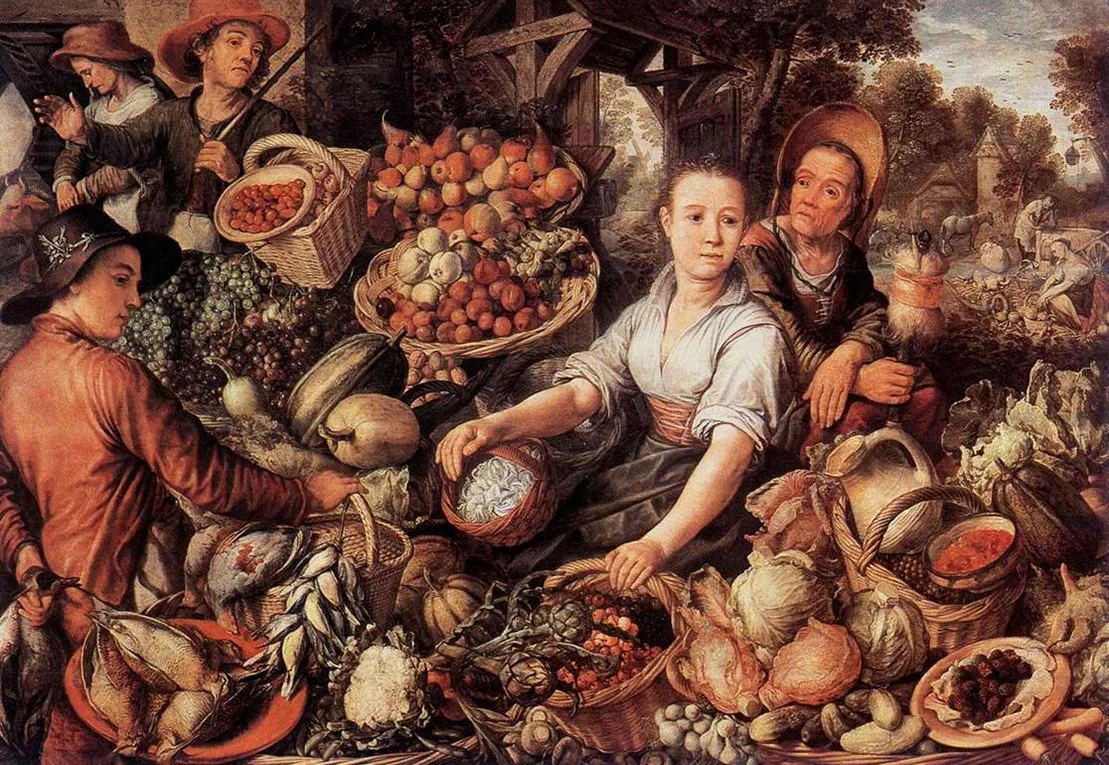
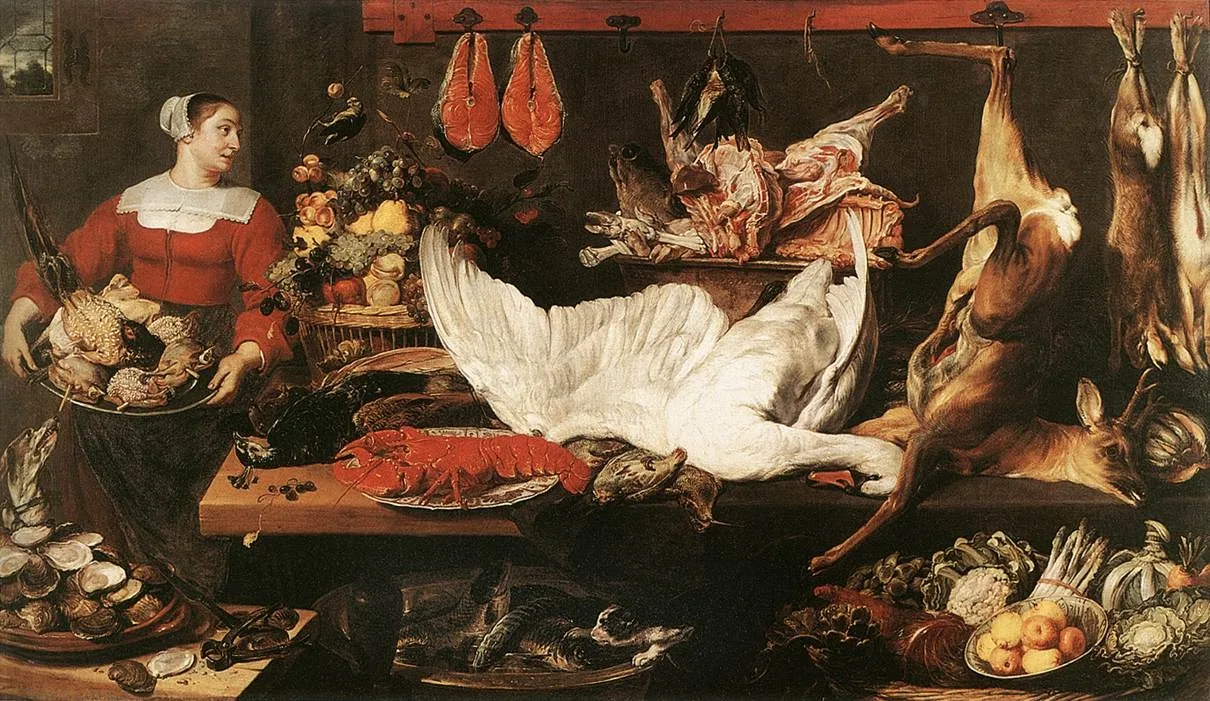
The table groaned under countless dishes of poultry, pork, veal and other livestock, made to traditional family recipes: fried Klopse, pork stewed with plums, pork with sauerkraut, roast goose, chicken fricassee, fried homemade sausages in beer or cream sauce, ham in cream (Schmandschinken), turkey stuffed with chestnuts, rabbit ragout with leeks and, of course, smoked pork belly, bacon, pork loin, speck... Plus a variety of elaborate meat and fish salads and salads made from vegetables and greens grown in their own gardens. And if the master of the house was a hunter or a fisherman, the festive table was supplemented with such delicacies as hare giblet ragout, roast wild boar in beer sauce, elk in cream with assorted fruit, smoked salmon, carp in beer sauce or stuffed pike…
Of course, by no means everyone could afford such lavish feasts. We are talking about wealthy and middle-income families living off their own farms. Surpluses were sold at the market, so that town housewives could have fresh farm produce on their tables and country people could earn some very welcome extra income.
Not champagne in their veins
East Prussian cuisine is traditionally very rich in calories and very nourishing. It bears no comparison with French cuisine (for some reason every cuisine in the world likes to be compared with it). The light, carefree way of life of the French is reflected in their national cuisine. It is like champagne – it runs quickly through the blood. East Prussian cuisine, by contrast, is heavy and massive.
Although food in East Prussia was fairly simple, without frills or dishes from overseas (patriotic, in a word), it offered a great variety of meat, fish and vegetable dishes. The place of honour in East Prussian cuisine belonged to the potato, which goes perfectly not only with meat and fish but also with vegetables, various sauces and mushrooms – of which the local forests always had plenty.
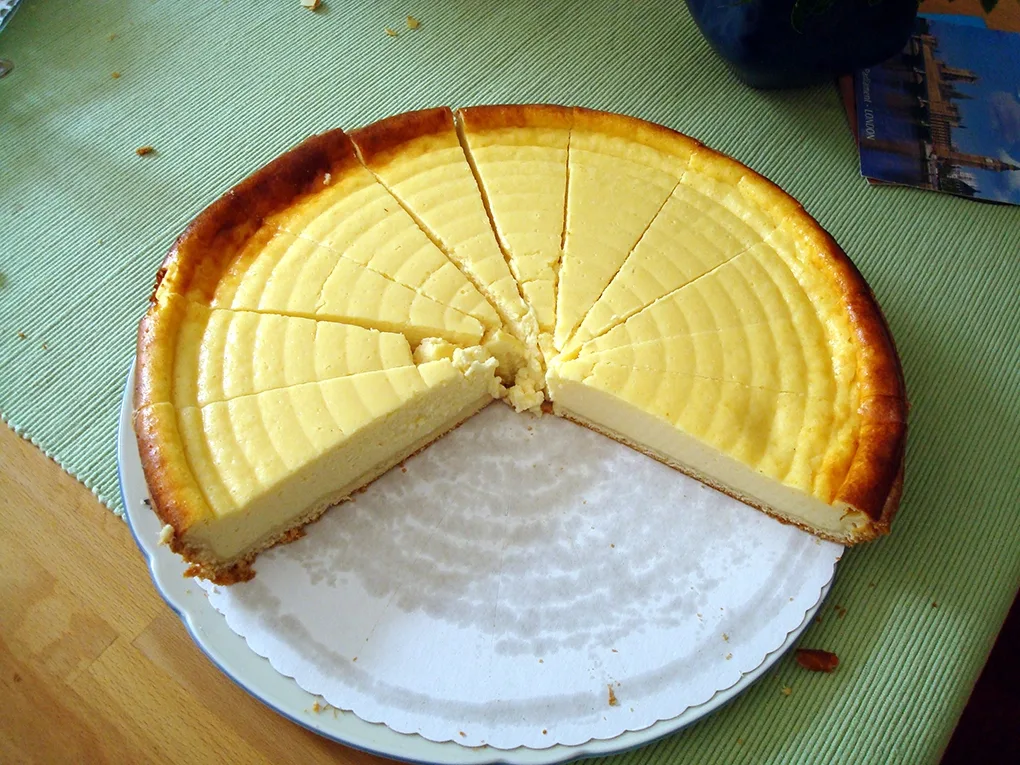
It is hard to imagine a Prussian table without smoked pork belly, speck, cream, sour cream and quark.
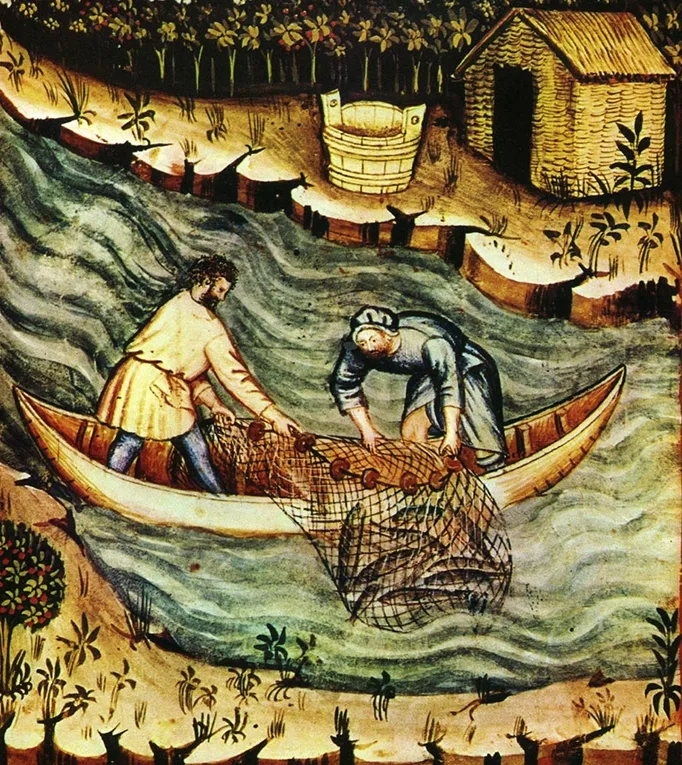
Incidentally, in the average East Prussian family it was not customary to eat hot meat dishes more than twice a week. Although East Prussia was rich in fish (zander, eel, bream, perch, crucian carp, catfish, burbot, salmon, trout, Baltic herring, herring, cod, river and sea flounder, vendace, smelt and even lamprey from the Masurian lakes), fish occupied an even more modest place in the family diet: «Ein Mal pro Woche Fisch hält den Geist frisch» (fish once a week keeps the spirit fresh). A rather strange tradition, which dates back to the 16th century, when fishermen had to deliver their entire catch to the ducal court for processing and subsequent sale. On fast days, people were forbidden to have fish dishes on their tables.
Geography and climate are decisive in shaping the cuisine of any country.
That is why the peoples of Eastern Europe – be it East Prussia, the Baltic states, Poland, Ukraine or, to some extent, Russia – have since time immemorial developed very similar ways of cooking, even though many of the ingredients differed. Take borscht, for example, which is so popular in Ukrainian national cuisine.
Beetroot is an essential ingredient of borscht. Moreover, the stock is made the same way in both. It can be made from meat, from bones, or from a mixture of meat and bones. In Ukrainian cuisine, unlike East Prussian, making borscht takes quite a long time – from three to six hours (Poltava borscht, made with chicken or goose stock, is naturally quicker, whereas Chernihiv borscht, made with meat-and-bone stock, takes 5–6 hours).
Remarkably, East Prussian borscht contains neither cabbage nor potatoes. To illustrate, let us compare the ingredients of this dish, popular in both countries:
East Prussian borscht
– 1.5 litres water,
– 1 kg beetroot,
– 500 g beef,
– 1 beef bone,
– soup greens (usually parsley, dill, celery),
– 1 onion,
– 3–4 allspice berries,
– 2 stock cubes,
– 1 tsp marjoram (hardly a dish is made without it),
– lemon juice or wine vinegar,
– sugar
– 250 g sour cream.
Simple Ukrainian borscht
– 3 litres water,
– 500 g beef,
– 1/4 head of cabbage,
– 4 potatoes,
– 1 large beetroot,
– 25 g pork fat,
– 25 g butter,
– 0.5 glass tomato paste or 2 tomatoes,
– 0.5 glass sour cream,
– 1 carrot,
– 1 parsley root,
– 2 onions,
– 1 tbsp 3% vinegar,
– 2 tsp sugar,
– 3 bay leaves,
– 4-5 cloves of garlic
– 3 allspice berries,
– 5–6 black peppercorns,
– 1 tbsp chopped parsley.
Can you taste the difference?
Translated from Russian with the help of AI (Claude, Anthropic), October 2026.