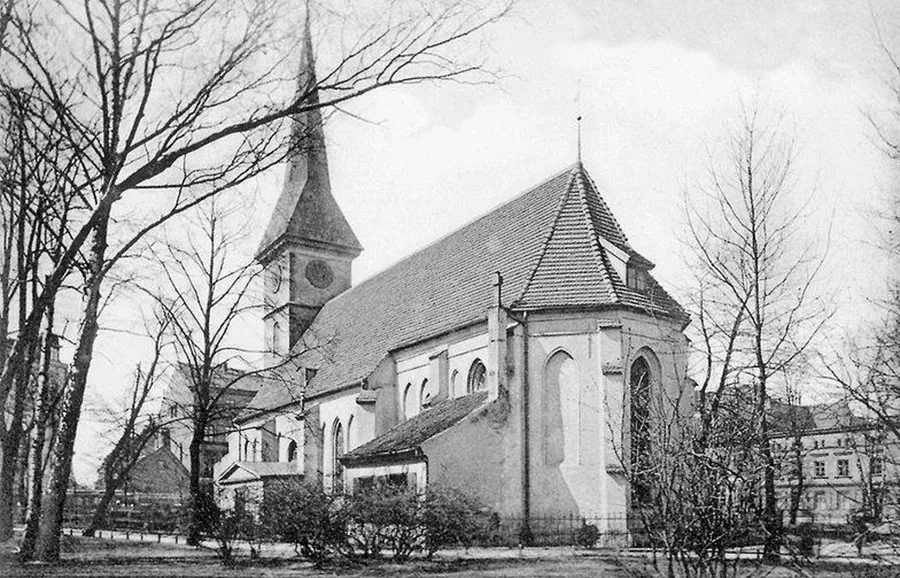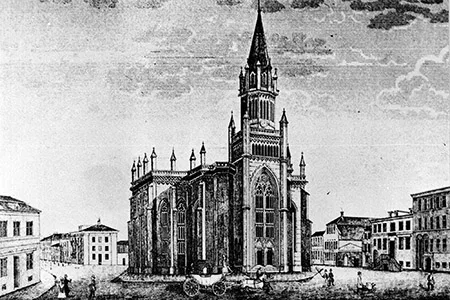
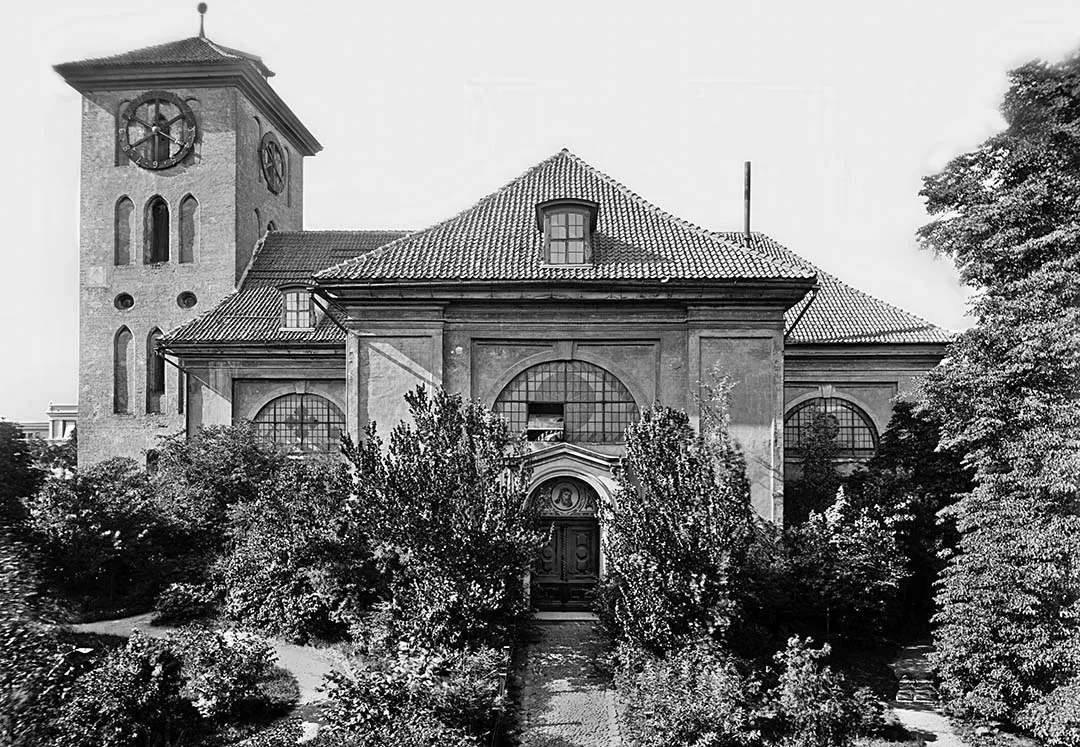
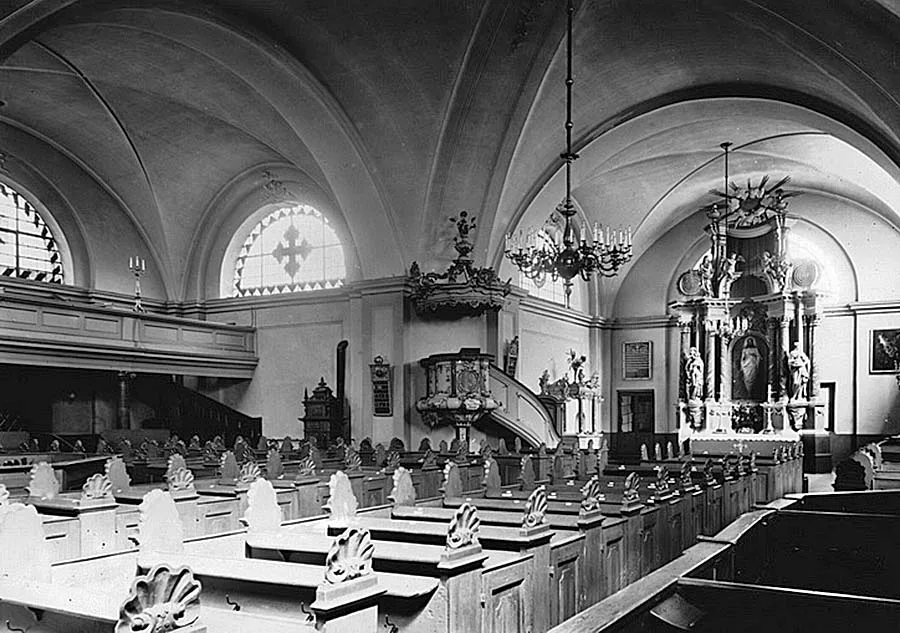
In 1783 the church burned down, but it was restored by the architect Jester using the old walls and reconsecrated at Christmas 1784. It was a modest plastered building with a Greek-cross plan, large semicircular windows and a tower with Gothic motifs surviving from the first church of the 17th century.
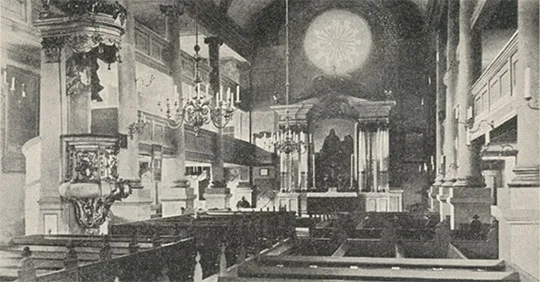
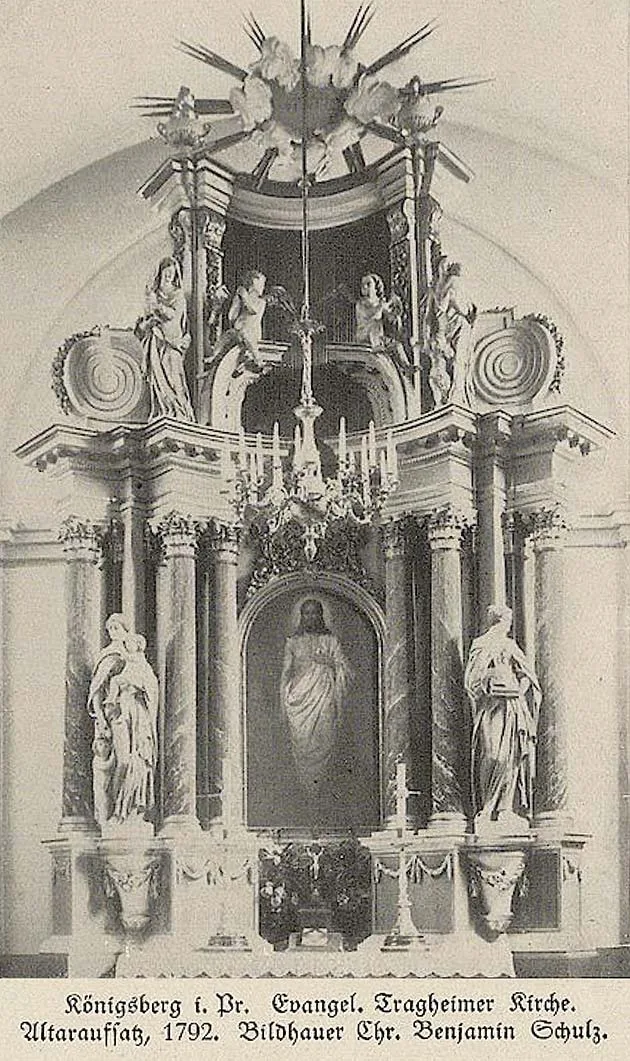
The interior, with low cross vaults, had galleries along the sides. At the far end of the choir stood the altar, made by Christian Benjamin Schultz in 1792 in the Classical style.
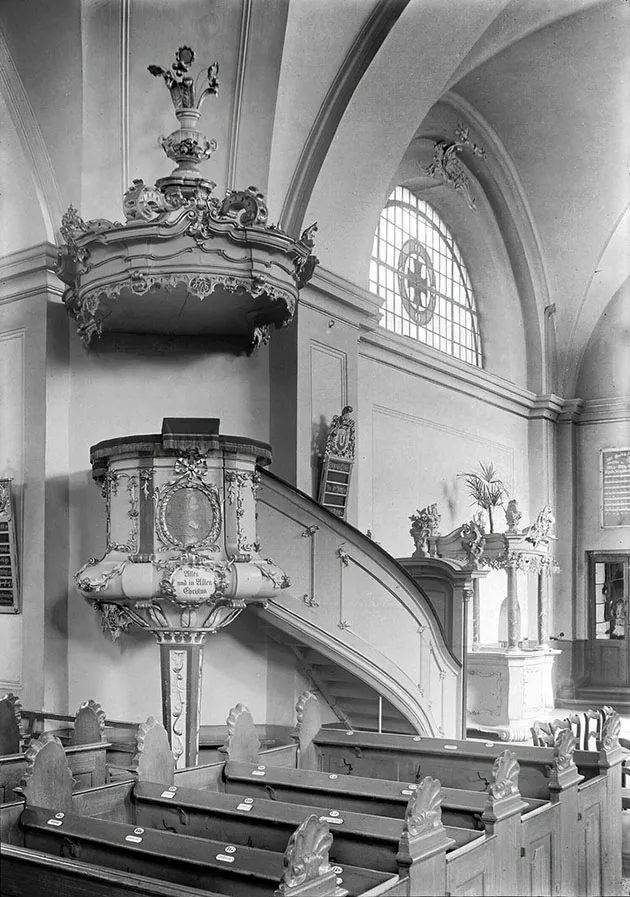
At the beginning of the choir, on the left at the corner, stood the pulpit by the joiner Grabowski, who also made the confessional, executed in 1784 in the Rococo style.
The sacristy held portraits of 17th- and 18th-century pastors. There was fine altar plate of the 17th–18th centuries, including two altar candlesticks from the workshop of Abraham Wilde, 1684; a silver-gilt tankard with the Twelve Apostles by Peter Andreas Hendel, 1691; and a large offertory cup by Abraham Wittgal, 1693. The church had two bells, cast in 1784.
The organ of 1754 was transferred to Darkehmen (Ozyorsk). A new organ was built in 1896 by Max Terletzki and enlarged in 1905 by Bruno Goebel.
During the fighting of the Second World War the Tragheim Church was badly damaged. Its ruins were dismantled in the 1950s, and by the end of the 1960s it had been completely demolished when General Sommer Street was built up.
Translated from Russian with the help of AI (Claude, Anthropic), October 2026.