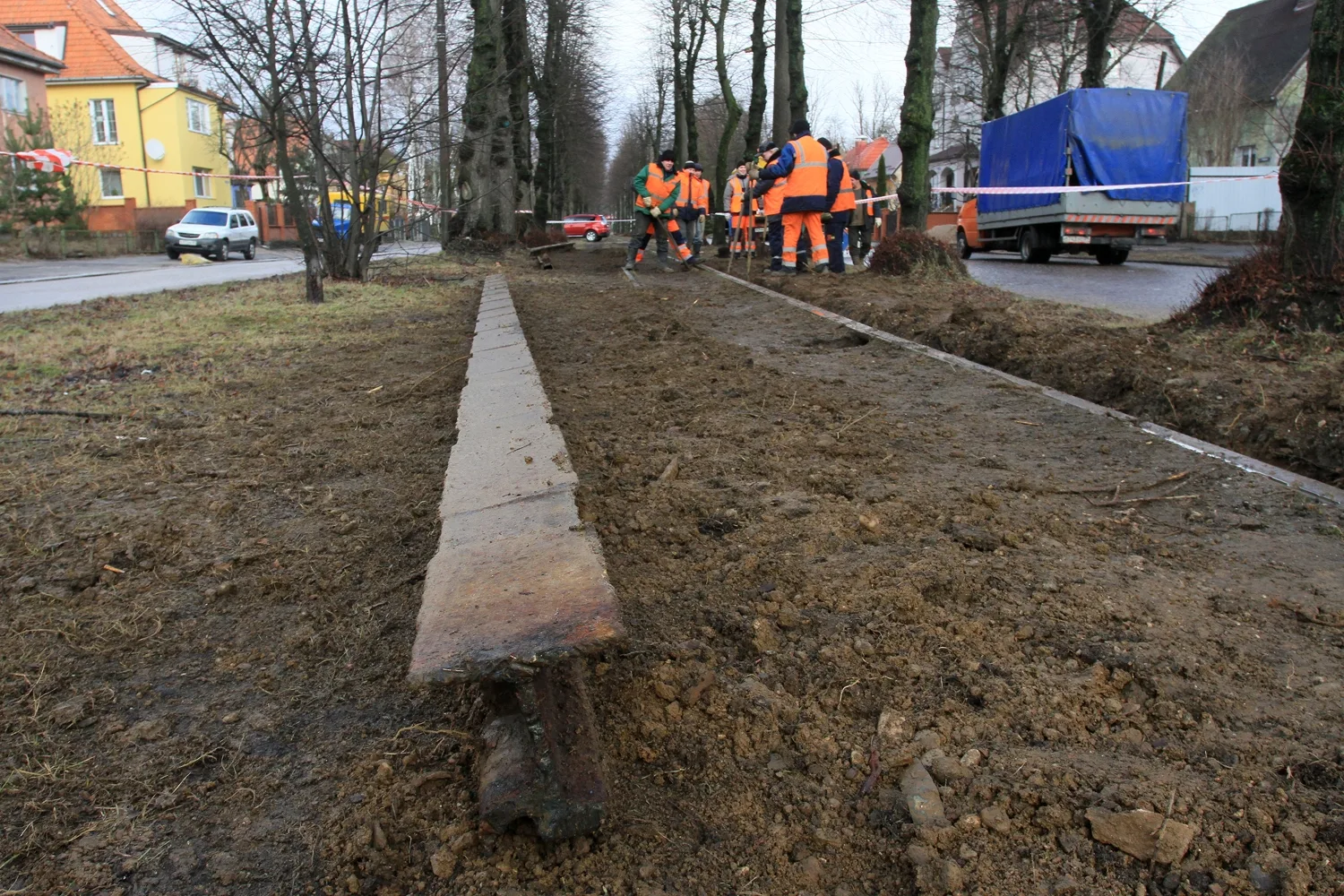
Not long ago a wonderful farewell piece to the Kaliningrad tram was published; its last route is due to be cancelled at the beginning of April because of the reconstruction (although in fact it looks more like a rebuilding) of the Wooden and High Bridges.
The route is being cancelled supposedly temporarily — until the repairs are finished. But, by all appearances, they will drag on right up to the 2018 World Cup. In that time the bus magnates will have made themselves at home on the vacated lines, and people will get used to it. In short, there is no point harbouring illusions. The tram will leave our city, if not for ever, then for a very, very long time.
Why does it all turn out this way? After all, the tram has a host of advantages over other forms of surface public transport, and that is why it flourishes in practically every more or less large European city.
At 1 Ploshchad Pobedy they habitually explain this paradox by saying that Kaliningrad is simply too poor to maintain a tram fleet and repair the tram tracks.
And that is the honest truth. The financial state of the city (and of the country as a whole, for that matter) really is close to desperate. But in the nineties things were even worse. And yet almost all the tram routes were preserved in those, as it is now customary to say, wild times. The route network began to be dismantled (and was practically finished off) in the fat noughties, when there was more money than ever in Russia in general and in Kaliningrad in particular. So perhaps it is not about money? Or rather, not only about money?
Perhaps the problem is that in the nineties the owners of bus companies did not sit on the city council, and now they do?
No, no. I am not accusing or suspecting anyone of anything. God forbid! How could I? After all, it is perfectly obvious that it would never even occur to any of the city councillors to confuse their own personal wool with the state's. Presumably these people, while running their businesses, simply became fans of buses and minibuses, and stopped noticing the merits of other forms of transport — well, trams, for instance. What trams? Now, tinted minibuses that you have to climb into bent double — that's the thing! Battered MANs and Mercedeses that probably still remember Chancellor Adenauer — that's really cool. Whereas trams are expensive and inefficient.
…I recall that, probably six years ago, a representative of the company Logistics Consulting presented to local officials and councillors (among whom there were quite a few transport businessmen) a concept for developing a light-rail tram network in Kaliningrad.
It must be said that this is a rather handy thing. Such a tram (as the name already suggests) is much lighter than an ordinary one and makes practically no noise, so its lines can be laid close to houses. It is fast (a speed of about 90 kilometres per hour), reliable (the manufacturers give a quarter-century guarantee on the cars) and, above all, traffic jams mean nothing to it, because the line is segregated. A car simply cannot drive onto it.
A light-rail tram can easily adapt both to the narrow, winding streets of an old town and to wide avenues. It can run through the centre of a big city and through its outskirts, and carry passengers from villages that are not too far away. From Khrabrovo, say.
And the company's representative assured them that the investor was ready to bring all these wonders about without any financial help from the municipality. Nothing at all was required of the city except moral support.
One would think this was the city's chance, something to seize and hold on to with both hands for as long as one's strength lasted. But the local councillors and officials did not do so.
They watched the presentation without much interest, nodded their heads and went their separate ways, making it clear to the investor's representative with their whole demeanour that his proposal had not particularly impressed them. Being a quick-witted man, he realised there was nothing for him in Kaliningrad, swiftly packed his papers into his briefcase and flew back to Moscow. And we stayed. With the junk on wheels that for some reason we call "public transport".
Roughly a couple of years ago Kaliningrad was given another chance to put its transport system in order. Another solid investor came to the city — the company Morton, which proposed building an elevated metro here. And it, too, intended to do so with its own money.
However, the city authorities once again received the tempting offer coolly. Our transport scheme isn't ready yet, they said, and the master plan hasn't been fully worked out. Once we've worked it out, then come back.
For a while the firm's representatives ran around the offices of local officials, trying to prove something, attempting to appeal to common sense, but in the end they gave up and, as the press wrote at the time, "froze" the project.
Of course, the local authorities are also to blame for the dire state of public transport in our city. They have certainly earned reproach — at the very least for short-sightedness and lack of professionalism. But should we pin everything on them?
After all, it is not Martians who regularly vote for these, to put it mildly, ambiguous people. It is we who give them the right to decide which form of transport we need and which we don't.
And besides, it is we who regularly ride these buses that degrade human dignity, we who put up with drivers who smoke and swear, we who agree to pay considerable money for services of dubious quality. One could, of course, object that we have no choice. And that is indeed so. But only on the one hand. On the other, there is always (well, all right — almost always) a choice.
Kaliningrad, fortunately, is a very small city which, if you want, you can walk the length and breadth of in an hour and a half. And if you get up a bit earlier in the morning, you can quite easily get to work without the help of our hapless carriers.
And for some reason it seems that if thousands of people one day start walking to work (or, if that is impossible, at least try to keep bus rides in their free time to a minimum), the public transport situation in the city will gradually change for the better (the carriers will have to attract their departing customers somehow), and if voters stop voting for those who are killing the trams, this form of transport will return to our streets.
The problem, however, is that Kaliningraders by and large will do nothing of the kind. And it is not a matter of laziness or lack of initiative. It is simply that, by all appearances, people are happy with the existing state of affairs.
They are willing to ride buses like these, and the sad fate of the Kaliningrad tram does not much bother them. What's more, many of them (especially motorists) fervently support the authorities' decisions to scrap the tram routes, because they believe it is the trams that cause the traffic jams on the roads.
And yet these same people often admire how splendidly tram traffic is organised in, for example, Gdańsk.
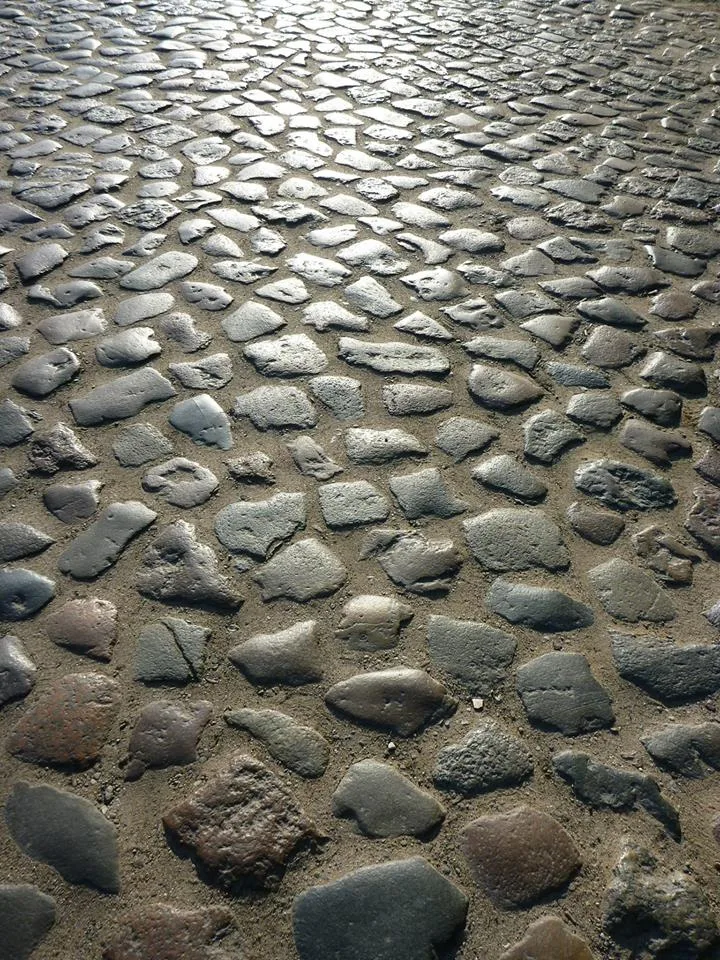
In a word, most local residents' attitude towards trams is roughly the same as towards cobblestones. Yes, it's great, but asphalt is more familiar. Let's rather have asphalt everywhere, and we can admire cobblestones abroad.
… And yet I believe the Kaliningrad tram has a future. I have almost no doubt that in 50–70 years it will return. Our descendants, led by a city councillor who is also the owner of a private tram company, will use old books to restore the route network, lay the rails anew where they were in some glorious 1995 or even 1982, and enjoy fast, comfortable and inexpensive rides.
True, by then trams in Europe will survive only as tourist attractions. The main form of public transport there will be some kind of giant air-powered passenger drones…
Translated from Russian with the help of AI (Claude, Anthropic), October 2026.