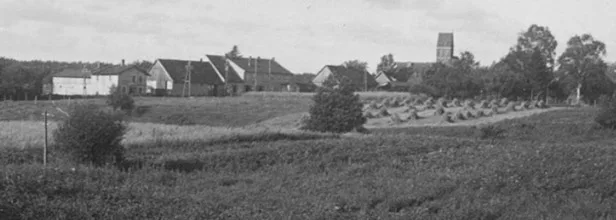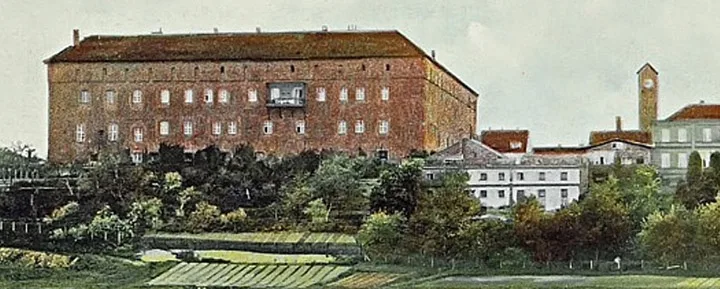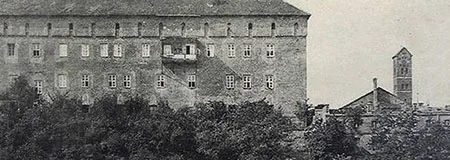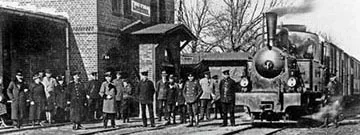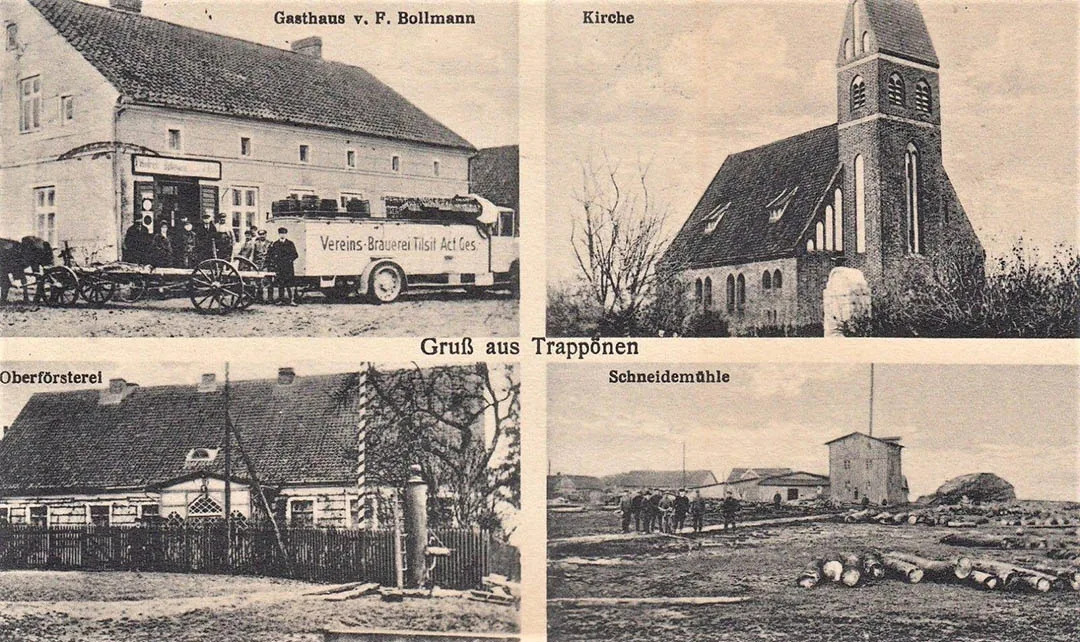
Trappönen was a village forming a rural community in the Landkreis Ragnit (Neman), which in 1922 was merged into the Landkreis Tilsit-Ragnit (Sovetsk-Neman). Until 1904 Trappönen belonged to the parish of Wischwill (Viešvilė, Lithuania). The Trappönen community also included the village of Böttchershof (part of Nemanskoye). In the western part of the village of Trappönen stood a windmill (later dismantled), and in the eastern part the Trappönen head forestry office.
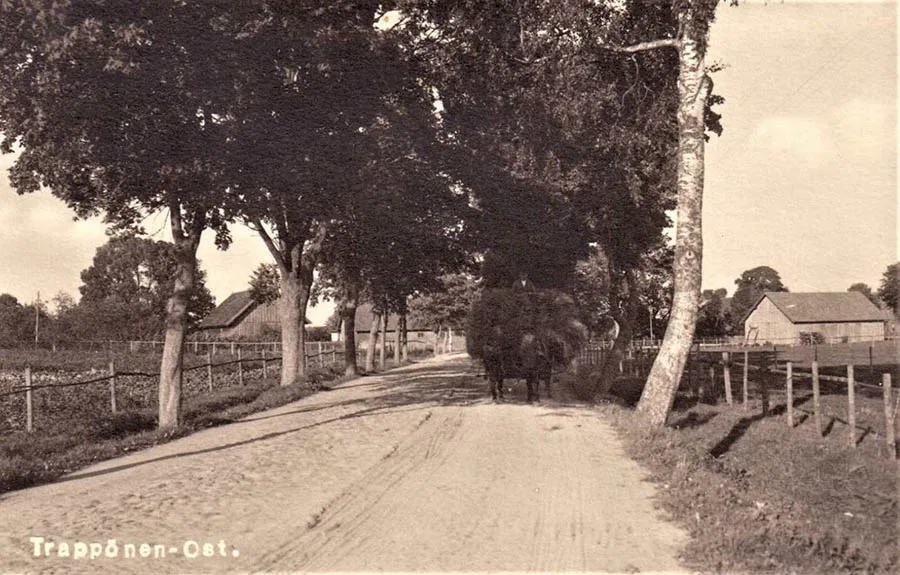
A school in Trappönen is mentioned from the late 18th century; it operated right up to the Second World War. At the end of the 19th century the school had two classes.
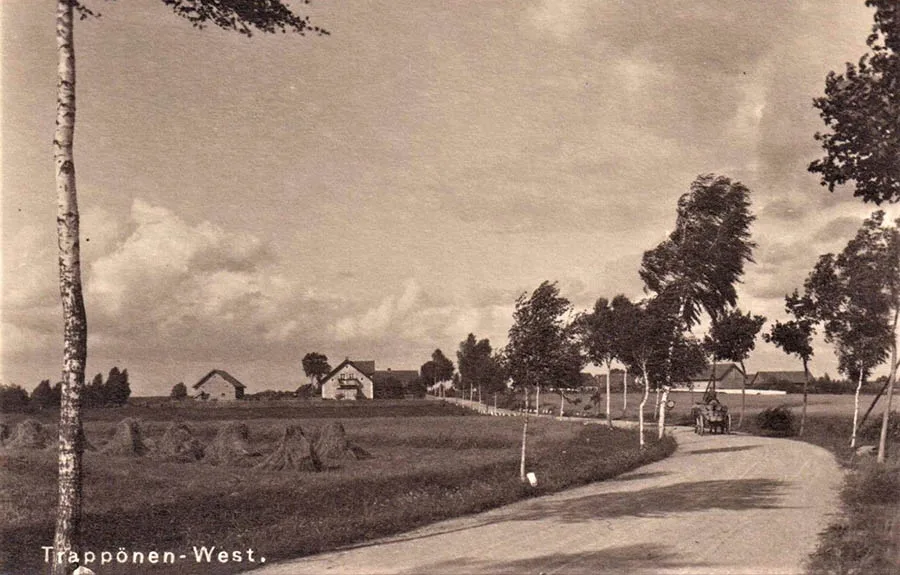
On 15 April 1874 the rural community of Trappönen was included in the newly established Amtsbezirk Dorf Trappönen. The Amtsbezirk Dorf Trappönen comprised two entities: the rural community of Trappönen (Nemanskoye) and the Gutsbezirk Mösen (part of Nemanskoye), but by 1908 only one community remained in the Amtsbezirk: Trappönen. The first head of the Amtsbezirk was Julius Millauer, owner of the estate in Trappönen. Later, residents of Trappönen held this post in 1933–45 (the house owner Schmidt) and in 1945 (Alfred Ladies).
Böttchershof was a small village belonging to the rural community of Trappönen. Until 1904 the village belonged to the parish of Wischwill (Viešvilė, Lithuania), and afterwards to the parish of Trappönen (Nemanskoye). On 15 April 1874 the rural community of Trappönen became part of the newly established Amtsbezirk Dorf Trappönen. The estate owner Petereit from Böttchershof served as head of the Amtsbezirk in 1919–33.
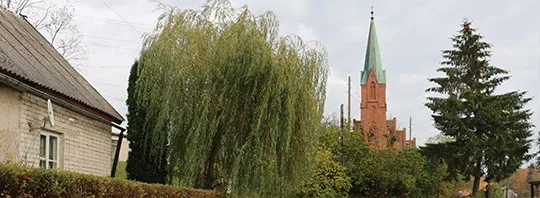
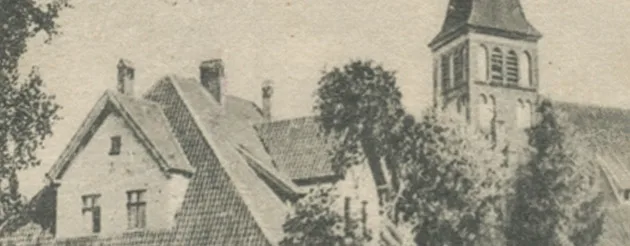
From 1899 Trappönen had its own pastor. In 1902 the formation of a separate parish began. In 1904 the parish of Trappönen was officially created, comprising 10 villages that had previously belonged to the parishes of Wischwill (Viešvilė, Lithuania) and Lasdehnen (Krasnoznamensk). In 1904–05 a church was built in Trappönen (opened in November 1905).
After the Memel Territory was separated in 1922 in favour of Lithuania, a customs post began operating in Trappönen. In the 1920s the school in Trappönen became a four-class school with 5–6 teachers. There was also a police station with two officers.
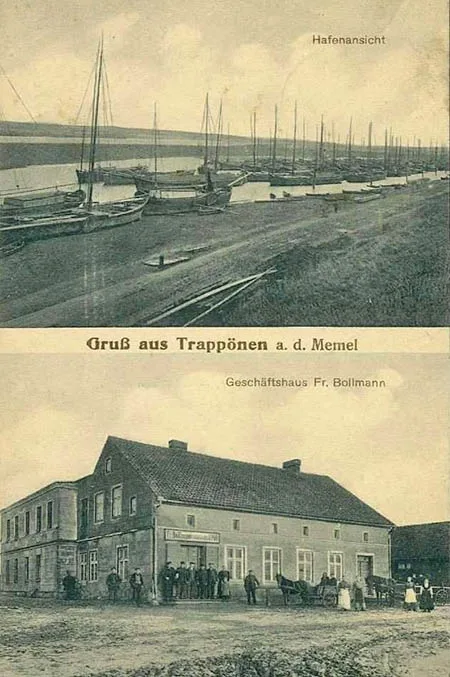
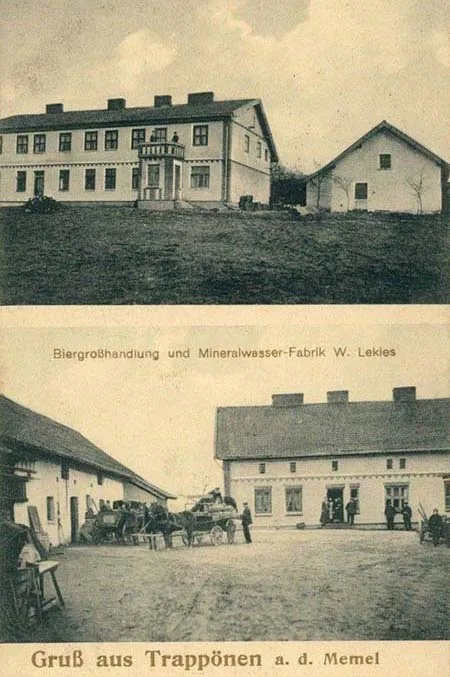
In the pre-war years the village had a school, a sawmill and a brickworks. There was a ferry across the Neman. During the Second World War the village was badly damaged. The Trappönen church was destroyed.
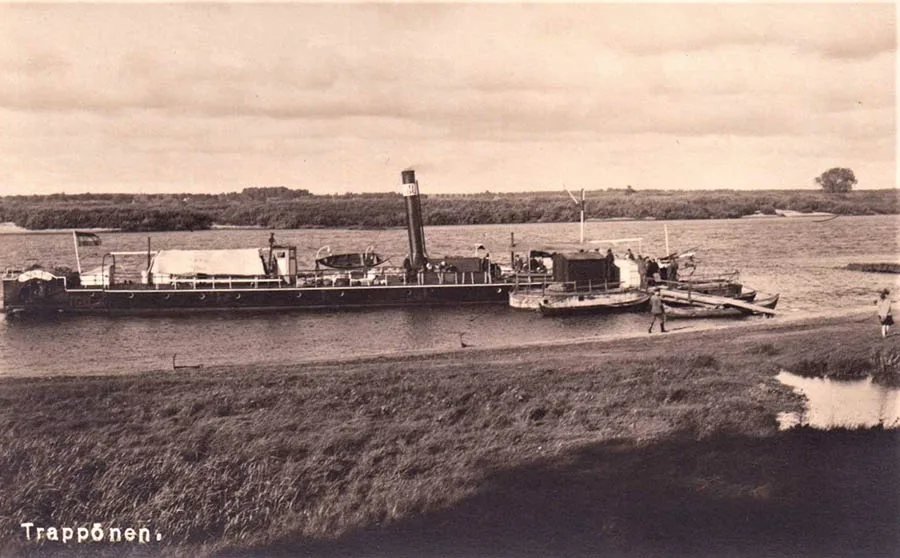 The ferry crossing (landing stage) in Trappönen.
On 17 June 1947 Trappönen was renamed the settlement of Nemanskoye. The Nemansky Village Council of the Krasnoznamensk District was created at the same time. Mösen, Böttchershof and the Trappönen head forestry office were not officially renamed and became part of the settlement of Nemanskoye de facto. In 1972 Nemanskoye had 120 houses. By that time there were no longer any buildings on the territory of Mösen and Böttchershof. Nemanskoye had a school and a forestry office. There was a ferry across the Neman to the territory of the Lithuanian SSR. In 1985 Nemanskoye had about 95 houses, a school, a forestry office and a fire station. The ferry crossing existed until the 1990s and was closed after Lithuania left the USSR. In the 1990s a local history museum was opened in the Nemanskoye school. As of 2020 the settlement has about 90 houses.
Coordinates of the settlement: 55°02'58'' N 22°23'32'' E (Trappönen), 55°03'13'' N 22°22'15'' E (Böttchershof), 55°03'22'' N 22°19'13'' E (Mösen).
Sights: a monument to those who fell in the First World War (1927), the local history museum.
Population change: 1985 – 780, 2002 – 657, 2010 – 714 inhabitants
Population change of the Trappönen community: 1905 – 1175, 1910 – 1170, 1933 – 1081, 1939 – 1095 inhabitants.
Population change of the Trappönen forest Gutsbezirk: 1905 – 53, 1910 – 53 inhabitants.
Population of Böttchershof: 1905 – 26 inhabitants.
Population change of Mösen: 1905 – 24, 1910 – 13 inhabitants.
For reference
From 1836 the Trappönen head forestry office formed the forest Gutsbezirk Trappönen, Forst, in the Landkreis Ragnit (Neman), which in 1922 was merged into the Landkreis Tilsit-Ragnit (Sovetsk-Neman). The forest Gutsbezirk Trappönen included the forester's lodges Forsthaus Chlum, Forsthaus Daschberg (55°02'11'' N 22°14'06'' E), Forsthaus Fuchswinkel (part of Livenskoye), Forsthaus Hartigsberg (part of Dolzhanskoye), Katzenfang (part of Nikolskoye) and Forsthaus Torfhaus (part of Livenskoye). Until 1904 the Trappönen head forestry office belonged to the parish of Wischwill (Viešvilė, Lithuania), and from 1904 to the parish of Trappönen (Nemanskoye). On 30 September 1929 the forest Gutsbezirk Trappönen was dissolved: its forester's lodges were joined to the nearest communities, the head forestry office itself was incorporated into the Trappönen community, and the remaining territory was merged with the forest Gutsbezirk Neu Lubönen Forst (Zelenodolye) into a new forest Gutsbezirk, Trappönen, Anteil Kreis Tilsit-Ragnit, Forst, administered from Neu Lubönen (Zelenodolye).
On 30 September 1929 part of the forest Gutsbezirk Trappönen, namely the Trappönen head forestry office (part of Nemanskoye) and the Chlum forester's lodge (55°02'29'' N 22°22'26'' E), became part of the rural community of Trappönen.
Amtsbezirk Forstamt Trappönen
On 15 April 1874 the Amtsbezirk Forstamt Trappönen was established in the Landkreis Ragnit (Neman), comprising two rural communities, Budupönen-Utehlen (from 1931 Hartigsberg, Dolzhanskoye) and Treibgirren (from 1938 Treiben, 55°01'30'' N 22°20'41'' E), as well as the forest Gutsbezirk Trappönen. The first head of the Amtsbezirk was the royal senior forester Godbersen from Trappönen. Later, residents of Trappönen held this post from 1875 (the royal senior forester von Stuckmann), in 1920–23 (the senior forester Ring), in 1923–28 (the senior forester Fricke) and in 1928–33 (the forest master Gieseler). On 15 November 1928 the communities of Budupönen-Utehlen (Dolzhanskoye) and Treibgirren, as well as the Gutsbezirk Mösen (part of Nemanskoye) from the Amtsbezirk Dorf Trappönen, were merged into a new rural community of Budupönen-Utehlen (Dolzhanskoye). On 30 September 1929 the forest Gutsbezirk Trappönen was reorganised and merged with the forest Gutsbezirk Neu Lubönen (Zelenodolye) into a new forest Gutsbezirk, Trappönen, Anteil Kreis Tilsit-Ragnit. The Amtsbezirk Forstamt Trappönen then consisted of the rural community of Budupönen-Utehlen (Dolzhanskoye) and the forest Gutsbezirk Trappönen, Anteil Kreis Tilsit-Ragnit. Its composition did not change again until 1945.
Mösen was an estate forming a Gutsbezirk in the Landkreis Ragnit (Neman), which in 1922 was merged into the Landkreis Tilsit-Ragnit (Sovetsk-Neman). The estate belonged to the parish of Wischwill (Viešvilė, Lithuania), and from 1904 to the parish of Trappönen (Nemanskoye). On 15 April 1874 the Gutsbezirk Mösen was included in the newly established Amtsbezirk Dorf Trappönen. On 15 November 1928 the Gutsbezirk Mösen was abolished and merged with the communities of Budupönen-Utehlen (Dolzhanskoye) and Treibgirren into a new rural community of Budupönen-Utehlen.
Trappönen parish: Alt Lubönen (from 1938 Friedenswalde, Ozyornoye), Bötthershof (Nemanskoye), Budupönen-Utehlen (from 1931 Hartigsberg, Dolzhanskoye), Galwoszen (from 1938 Sandwalde, ), Mösen (part of Nemanskoye), Neu Lubönen (from 1938 Memelwalde, Zelenodolye), Schacken (Verkhovoye), Trappönen (Nemanskoye), the Trappönen head forestry office (part of Nemanskoye), Treibgirren (from 1938 Treiben, 55°01'30'' N 22°20'41'' E).
Population of the forester's lodges of the Trappönen Gutsbezirk in 1905: Chlum – 5 inhabitants, Daschberg – 6, Fuchswinkel – 10, Hartigsberg – 3, Katzenfang – 6, Torfhaus – 4 inhabitants.
Translated from Russian with the help of AI (Claude, Anthropic), October 2026.