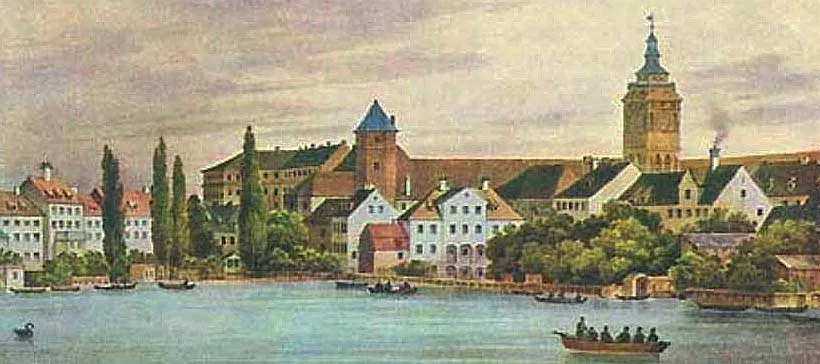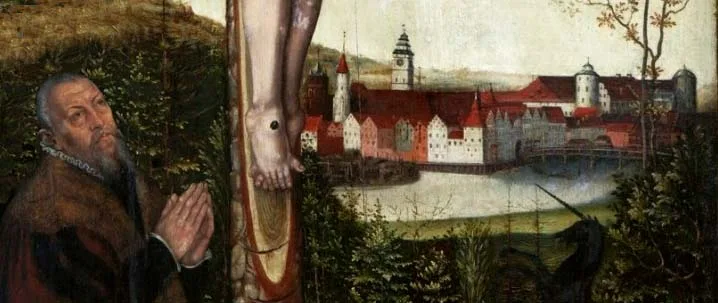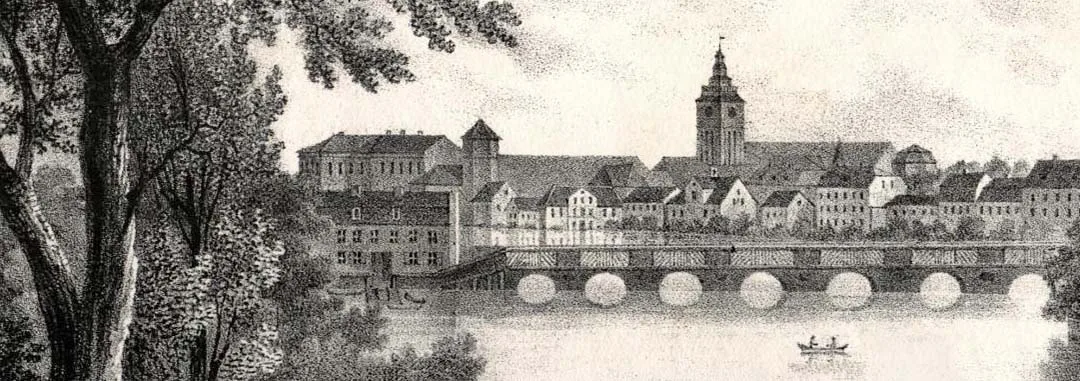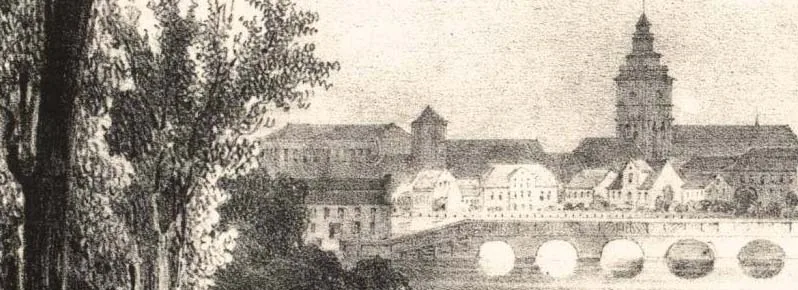
A ducal decree of 23 July 1526 ordered the tower keeper to wake the soldiers with a signal ("anzublasen"), to sound the signal for opening the town gates ("aufzublasen") at four in the morning, and to play the general retreat ("zuzublasen") at eight in the evening.
"The keeper," the decree goes on, "shall practise playing the horn, so that he may sometimes play something cheerful from the tower in the evening"1.
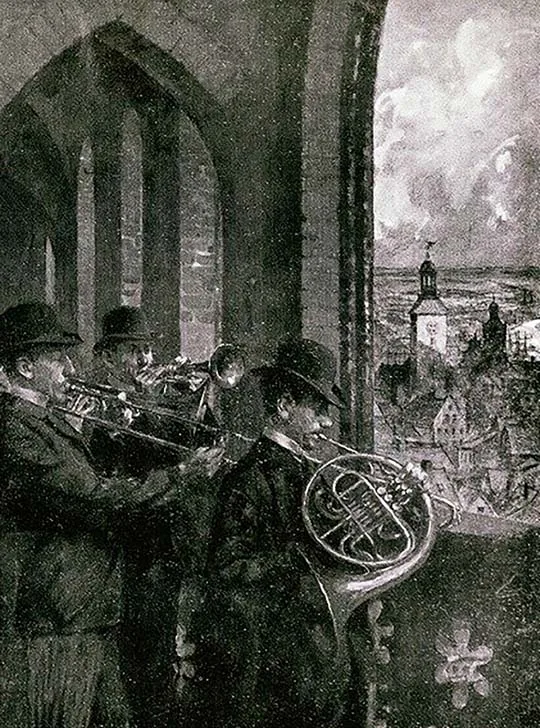
And the very next year Duke Albrecht obliged his "chief trumpeter" (that is, his music director) to see to it that the tower keeper blew a chorale on the horn every day at four in the afternoon. The right to play from the tower was confirmed by a special letter. When the castle musicians were abolished in the 17th century, the chorales came to be performed by the town musicians.
According to the German composer Johann Friedrich Reichardt2, horns and trombones were played every morning and evening. In 1829 it was reported that music sounded from the castle tower three times a day.
And from 1840, under the direction of the town musician W. L. Wurst (W.L.Wurst), only two tunes were performed: in the morning at eleven o'clock, at first the chorale "Ich weiß mein Gott, daß all mein Tun und Werk in deinem Willen ruh'n" ("I know, my God, that all my labours rest in Thy will alone, now and for ever")3 was played, which was later replaced by the hymn "Ach, bleib mit deiner Gnade" ("Ah, with Thy grace abide among us, Lord")4, and at nine in the evening "Nun ruhen alle Wälder" ("Now all the woods are resting..")5 was performed.
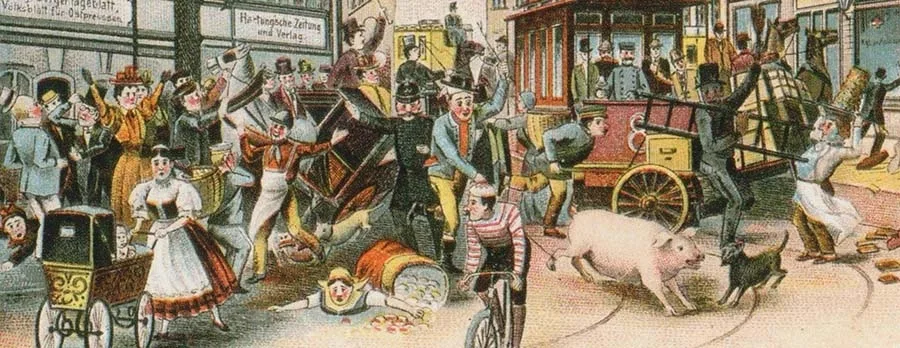
This beautiful custom, when music soared over the city as if from heaven, drowning out even the noise of the streets, lasted until the very last days of German Königsberg.
Herbert Meinhard Mühlpfordt
“Königsberg Life in Customs and Folk Traditions” (Königsberger Leben in Bräuchen und Volkstum)
LEGENDS OF PRUSSIA in the blog of Tatyana Kolivay.
TRANSLATOR'S NOTES
1. Literally: "Auff einem Zingken soll sich der tormer uben und bisweilen des Abendts einfrohliches vom torme machen."
2. Johann Friedrich Reichardt — German composer and writer (1752–1814).
3. The chorale "Ich weiß mein Gott, daß all mein Tun und Werk in deinem Willen ruh'n" was written by the Lutheran pastor Paul Gerhardt (1607–1676).
4. The chorale "Ach, bleib mit deiner Gnade" was written by the Lutheran theologian Josua Stegmann in 1627.
5. The chorale "Nun ruhen alle Wälder" was written by the Lutheran pastor Paul Gerhardt (1607–1676) in 1627. Music by Johann Sebastian Bach.
Translated from Russian with the help of AI (Claude, Anthropic), October 2026.