Peoples on peoples scattered and were gone,
Their names are known to no one any more.
The ages flow, the days and years rush on,
Above the world Eternity spreads its wings...
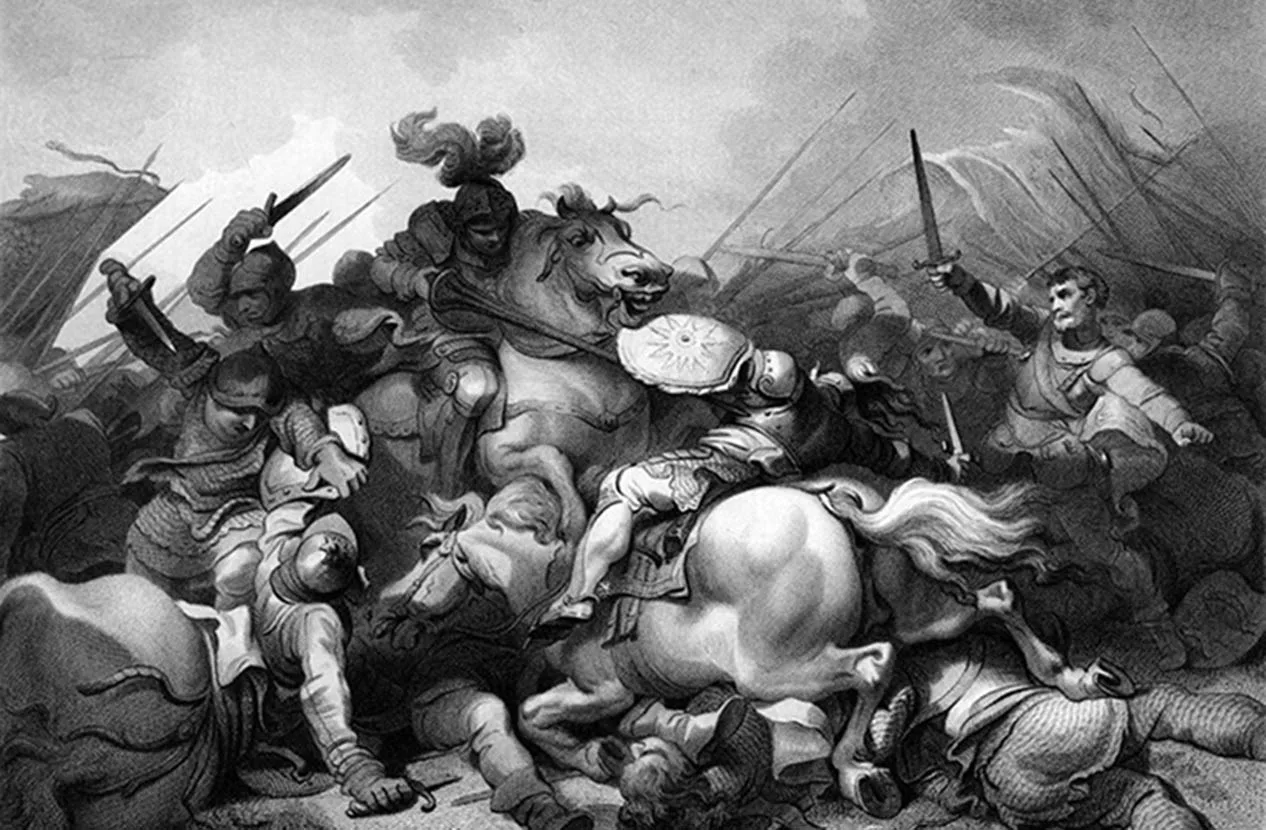
It was many centuries before the birth of Christ. Here, to the land between the rivers Ilfing1 and Wisela2, new tribes came from distant lands. They came from Scandinavia, Jutland, Holstein.. In their homelands droughts and floods were frequent, and one lean year followed another. And when people began to starve and had nothing to feed their livestock with, then one unlucky day they gathered their belongings and set off to foreign lands to seek a better lot and a new homeland.
Century after century settlers arrived in the lands of the Wisela from the West and the North. Through the depths of the ages the first names of the tribes have come down to us: the Sciri and the Bastarnae came here three centuries before the birth of Christ, crossing the river Netze3. The Burgundians and the Vandals came, and after them the Goths, led by King Berig. They called the Vistula land "Gothiskandza", which means "Land of the Goths".
They were tall, stately people. They settled in the basin of the rivers Ilfing and Wisela, on the shores of the lagoons and bays. The native peoples whom they subjugated, and those with whom they traded, spoke of them as titans and giants.
But legends live a life of their own and tell of those distant events in their own way...
* * *
In far-off times, on the shores of the narrow Vistula Lagoon4, by the Baltic Sea, there lived two brothers. Both were giants, and so huge that each of them could easily wade across the Vistula Lagoon.
The elder brother lived in the Wick forest, which today stretches between Tolkemit5 and Frauenburg6, and the younger settled on the opposite shore of the lagoon, where today the villages of Vogelsang7, Pröbbernau8 and Kahlberg9 lie scattered along the Vistula Spit.
Both giants often had to fell trees, but between the two of them they had only one axe. It was a huge stone axe — to match its owners.
When the giant of Wick needed it, he would shout towards the spit: “Hey, brother, toss our little one over to me!” And at once the huge stone axe would come whistling across the lagoon from the other shore. And if the giant living on the spit wanted it back, he would start bawling at the top of his voice: "Hey, you there in the forest, send the axe over!" And at once it would come flying from the other shore, out of the forest thicket.
But it so happened that in an evil hour the brothers quarrelled over their stone axe. The forest giant needed it urgently, but the dweller on the spit suddenly needed it too and would not give it up for anything. The brothers quarrelled. One word led to another, each more offensive and angrier. At last the forest dweller boiled over with furious rage and seized a huge piece of rock, wishing to strike down his offender on the spot with a well-aimed throw. But the stone slipped from his hands, trembling with anger, and fell into the lagoon near the shore.
Seeing what his brother had in mind, the giant who lived on the spit hurled the stone axe with all his might at the opposite shore, aiming at the forehead of the one he now hated. Mortally wounded, the forest giant crashed to the ground as if mown down. His blood spread throughout the Wick forest and soaked the soil so thoroughly that bilberries still grow there in abundance.
Tormented by remorse, the giant left alone could find no peace from then on. Life without his brother became hateful to him. Restless, he wandered back and forth along the spit, and one day in a fit of despair threw himself into the sea and drowned. His remains still lie at the bottom of the lagoon, poisoning the water. That is why every local knows that many fish often die there.
And the rock that fell into the lagoon still sticks out of the water. Both large ships and small fishing boats are wary of passing it. People say that evil spirits make mischief there. When storms rage on the lagoon and the waves, foaming and roaring, beat against the sea stone, people hear in the noise of the waves the two giant brothers quarrelling with each other from the opposite shores.
TRANSLATOR’S NOTES
1. The German name of the Elbląg River.
2. The German name of the Vistula River.
3. The Netze River is a tributary of the Warta. The Warta is a river in Poland, a right tributary of the Oder.
4. In Russia the Vistula Lagoon is called the Kaliningrad Lagoon.
5. Tolkemit — today Tolkmicko (Tolkmicko).
6. Frauenburg — today Frombork (Frombork).
7. Vogelsang — today Sztutowo (Sztutowo).
8. Pröbbernau — today Przebrno (Przebrno).
9. Kahlberg — today the resort of Krynica Morska (Krynica Morska).
● Editor’s note: Read on VisitPrussia.com an interview with the translator of German and, in particular, Prussian fairy tales, our regular contributor Tatyana Kolivay, who runs her own blog, where countless other parables, legends and fairy tales in her translations have been published.
Translated from Russian with the help of AI (Claude, Anthropic), October 2026.