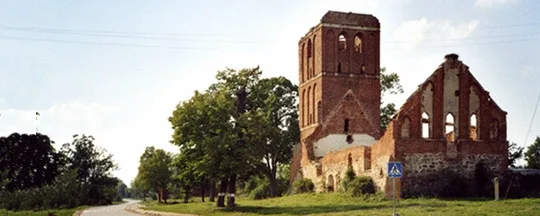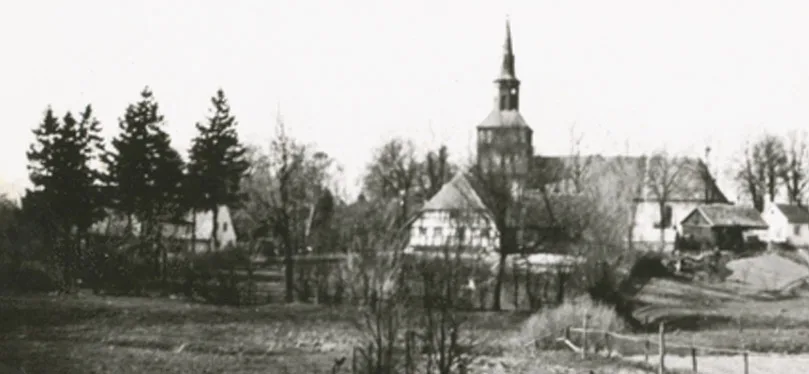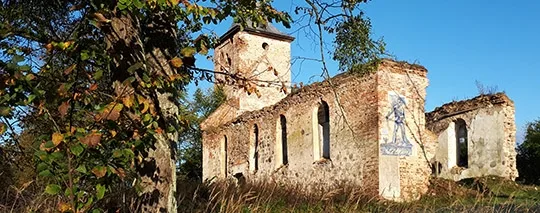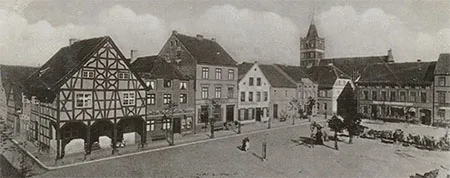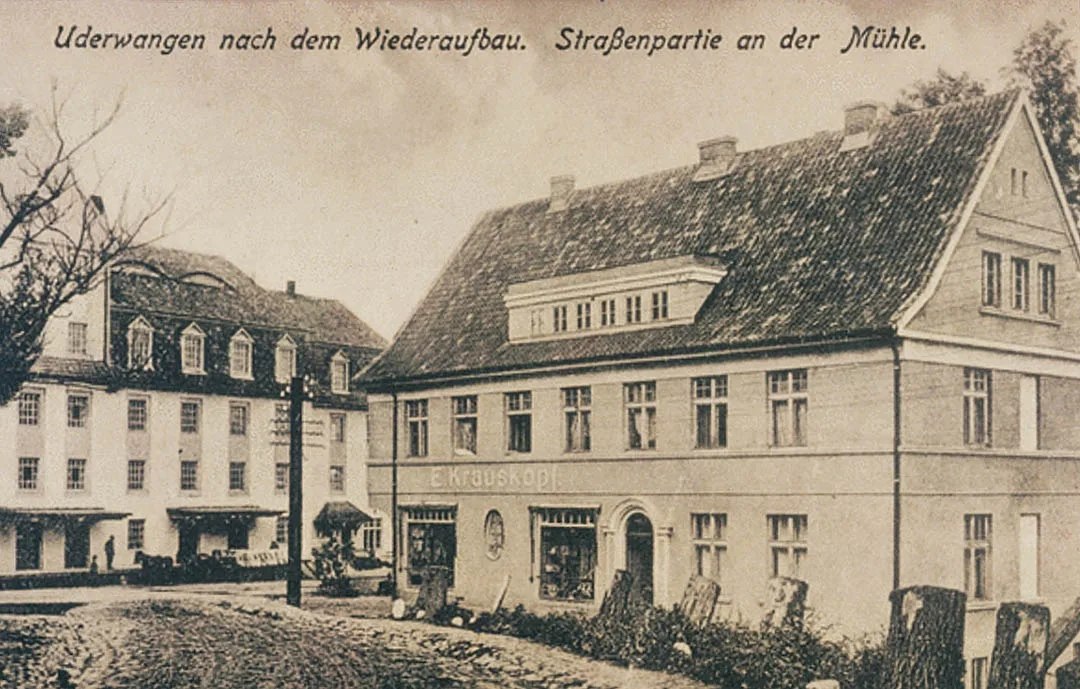
Uderwangen was founded in 1365 as a tributary village. At the end of the 14th century a church was built in Uderwangen. In the 15th–16th centuries a tower was added to the church. In 1720 a pulpit and an altar were installed, and in 1864 an organ. Bells were cast for the church in 1826 and 1878.
In the 19th century Uderwangen was a village forming a rural community in the Landkreis Preußisch Eylau (Bagrationovsk).
Uderwangen church was the parish church for the surrounding villages and estates.
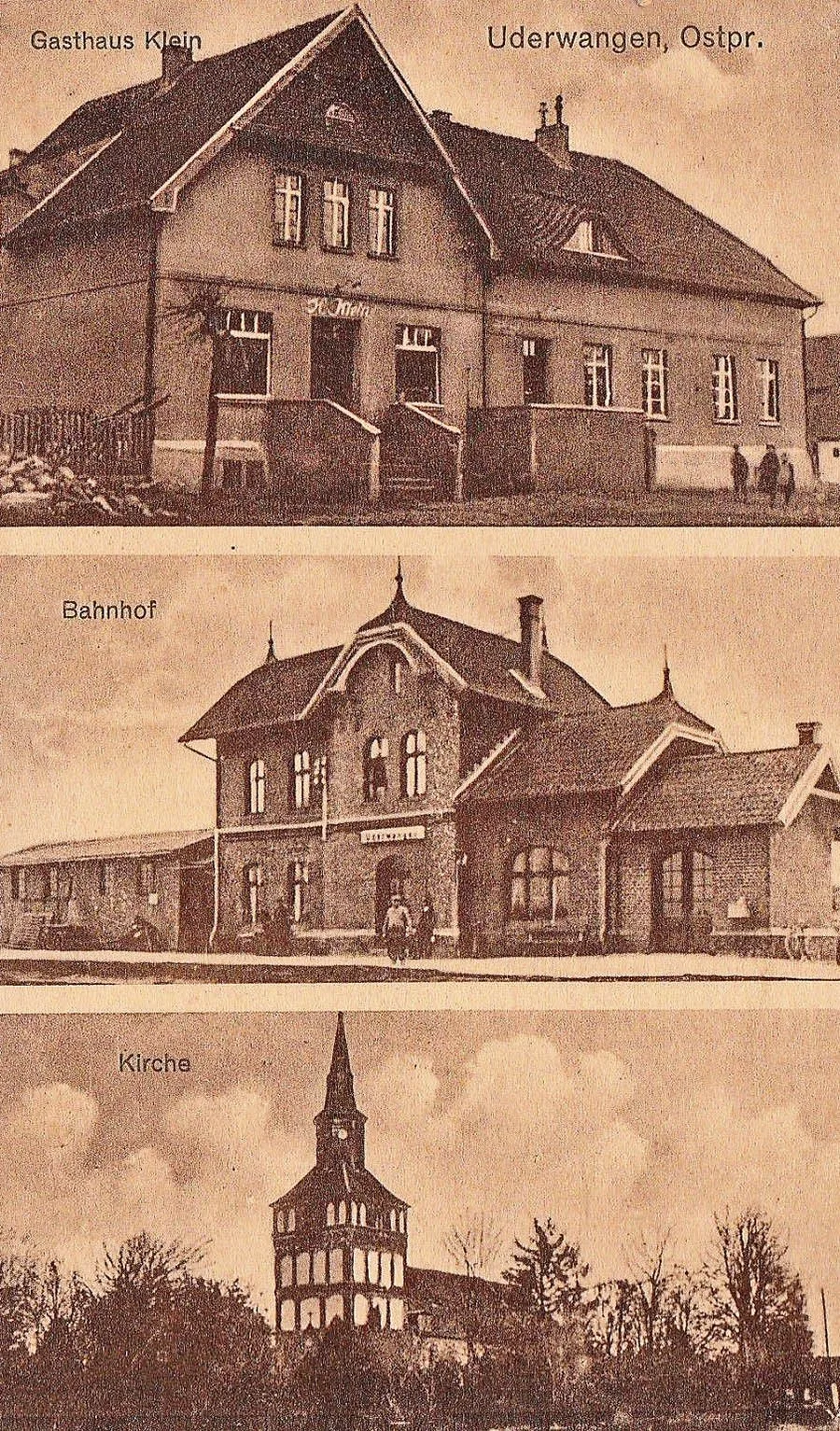
In 1874, in the Landkreis Preußisch Eylau, Amtsbezirk No. 2 Uderwangen was established, comprising four rural communities – Frisching (Prokhladnoye), Trinkheim (Vysokoye), Uderwangen (Chekhovo) and Unruh (Kerchenskoye) – and three Gutsbezirke: Eberswalde (Mokhovoye), Liebenau (54°32'03'' N 20°47'41'' E) and Pilgrim (Soldatskoye). From its foundation until 1945 the heads of the Amtsbezirk were residents of Uderwangen: in 1874–80 the mill owner Grosse, in 1880–85 the estate owner Hein, in 1885–1912 the leaseholder Wachholz, in 1912–31 the community chairman Supply, and in 1931–45 the community chairman Hoepfner.
In 1897 a school opened in Uderwangen. In 1898 the Königsberg – Angerburg (Węgorzewo, Poland) railway line opened, on which Uderwangen station was built.
During the First World War, on 28 August 1914, a skirmish took place near the village of Uderwangen between the Russian cavalry of the Khan of Nakhichevan and German units.
On 30 September 1928 the Uderwangen community was merged with the Unruh community (Kerchenskoye) and the Gutsbezirke of Eberswalde (Mokhovoye) and Pilgrim (Soldatskoye)* into the new rural community of Uderwangen. The Gutsbezirk Liebenau was abolished and incorporated into the rural community of Frisching (Prokhladnoye). On 14 May 1930 the rural community of Ackerau (Armeyskoye) from the Amtsbezirk Blankenau (Yershovo) and the rural community of Lewitten (Soldatskoye)* from the Amtsbezirk Groß Lauth (Nevskoye) were incorporated into the Amtsbezirk Uderwangen. The last change in the composition of the Amtsbezirk Uderwangen took place on 1 April 1937, when the Thomsdorf community (Solnechnoye) passed to it from the Amtsbezirk Wittenberg (Nivenskoye). The Amtsbezirk Uderwangen now consisted of six communities: Uderwangen (Chekhovo), Ackerau (Armeyskoye), Frisching (Prokhladnoye), Lewitten (Soldatskoye), Thomsdorf (Solnechnoye) and Trinkheim (Vysokoye).
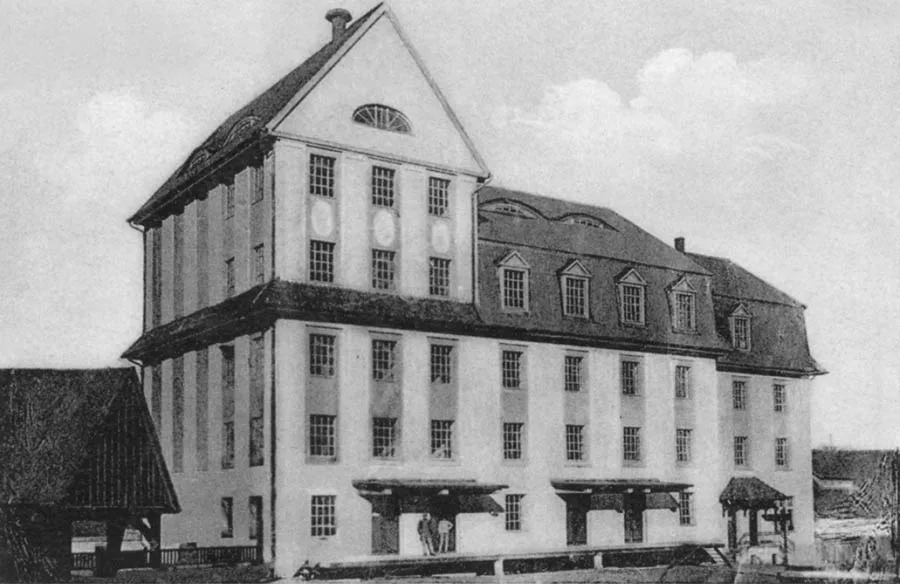
Before the Second World War Uderwangen had a school, a railway station, a sawmill and a mill.
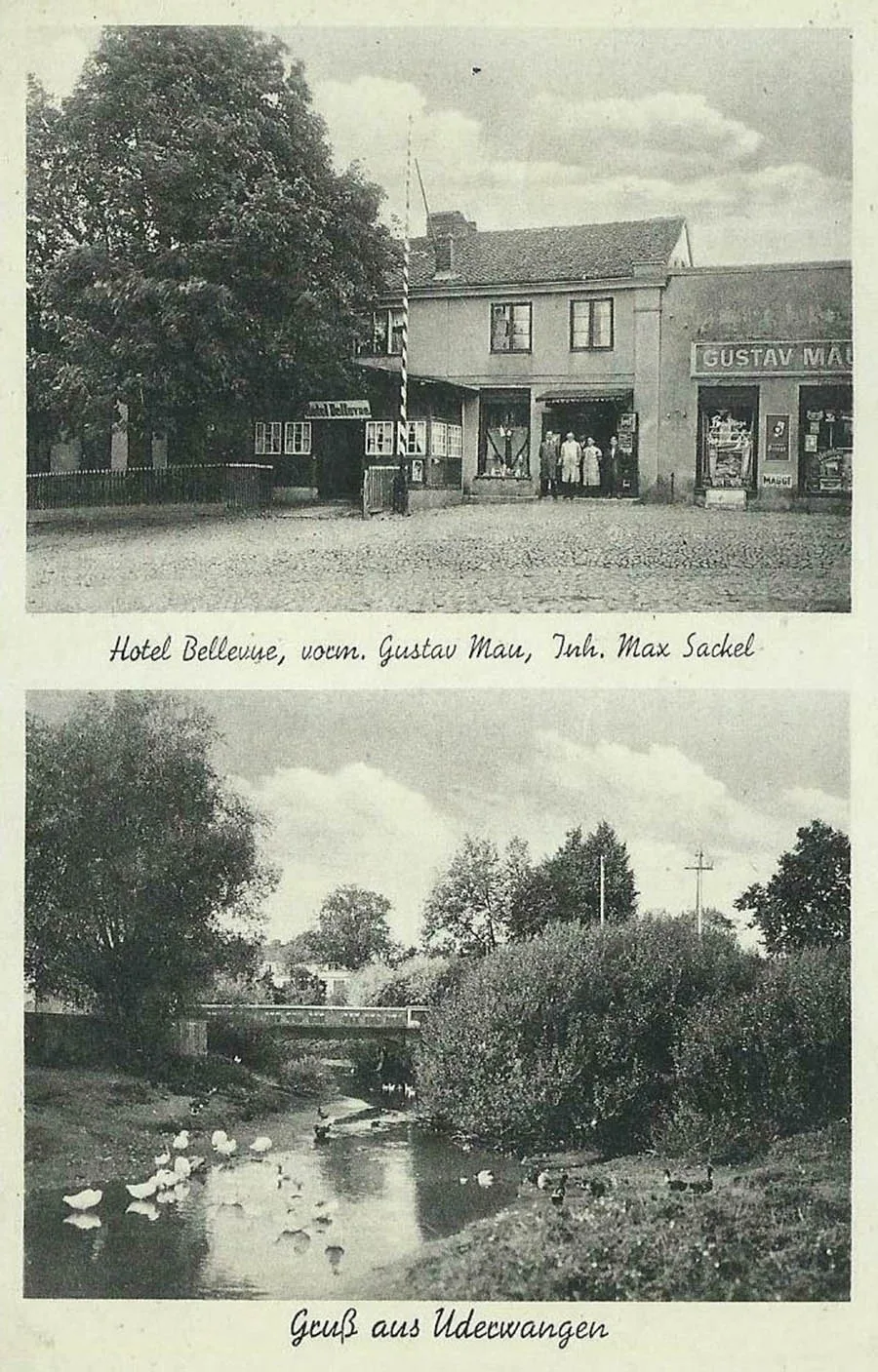
Unruh was a village forming a rural community in the Landkreis Preußisch Eylau (Bagrationovsk). The village belonged to the parish of Uderwangen (Chekhovo). In 1874 the Unruh community was included in the newly established Amtsbezirk Uderwangen (Chekhovo). In 1898 the Königsberg – Angerburg (Węgorzewo, Poland) railway line opened, on which Uderwangen station was built next to Unruh. On 30 September 1928 the Unruh community lost its independence and was merged with the Uderwangen community (Chekhovo) and the Gutsbezirke of Eberswalde (Mokhovoye) and Pilgrim (Soldatskoye) into the new rural community of Uderwangen (Chekhovo).
On 26 January 1945 Uderwangen was taken by units of the 11th Guards Rifle Division of the 11th Guards Army; at the same time, to the south of Uderwangen, the area around Unruh was taken by the 159th and 184th Rifle Divisions of the 5th Army.
On 17 June 1947 Uderwangen was renamed the settlement of Chekhovo, and the Chekhovo Village Council was created at the same time.
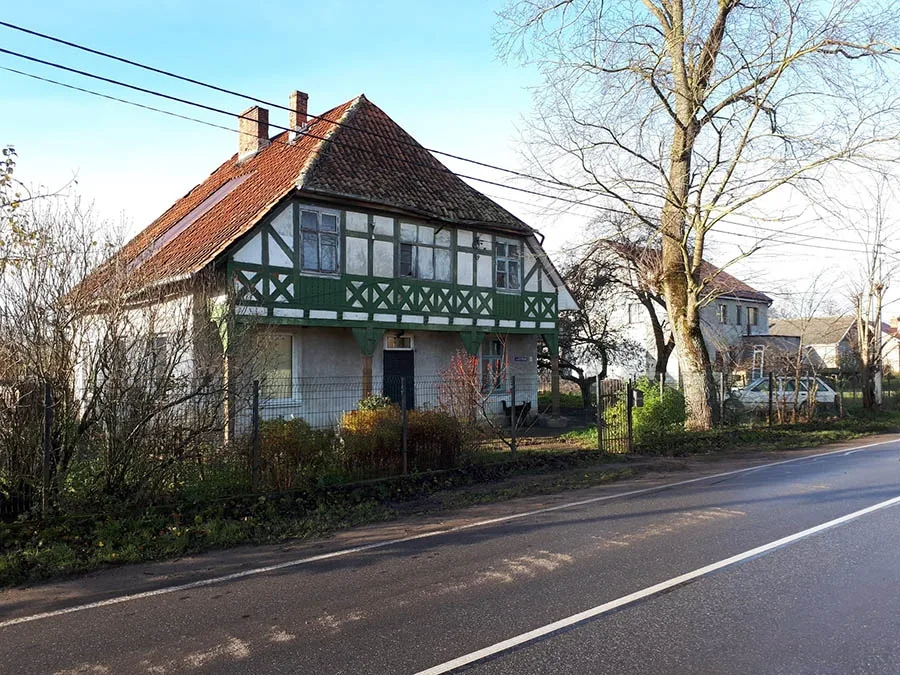
One of the few surviving half-timbered houses, in Chekhovo.
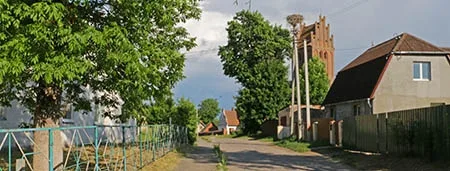
On 5 July 1950 Unruh was renamed the settlement of Kerchenskoye. Initially the settlement belonged to the Mariysky Village Council, but in the same year, 1950, it passed to the Chekhovo Village Council. Later Kerchenskoye became part of Chekhovo. In 1955 Chekhovo had 65 houses, and Kerchenskoye 4. As early as 1955 the dismantling of the railway branch began, and by the 1970s it had been dismantled almost completely. No later than 1975 the settlement of Kerchenskoye was removed from the register and incorporated into Chekhovo. In 1977 Chekhovo had 97 houses, including two houses on the territory of the former settlement of Kerchenskoye. A dairy farm operated in the settlement. As of 2018 the settlement had a kindergarten, a House of Culture, a feldsher-midwife station, a post office and a dairy plant.
Sights: the ruins of the church (14th–19th centuries), the ruins of the railway water tower (1930s), the mill building (1916), a monument to those who fell in the First World War (1920s), a mass grave of Soviet soldiers (more than 1,200 people, monument 1955), a bridge over the Prokhladnaya River. In addition, there are two notable boulders near Uderwangen – the "sinners' stone" and the "sacrificial stone" – but whether they still exist and in what condition needs to be verified.
Population change: 1984 – 650, 2002 – 579 inhabitants.
Population change of the Uderwangen community: 1910 – 1223, 1933 – 1321, 1939 – 1616 inhabitants.
Population of the Unruh community: 1910 – 106 inhabitants.
* — In 1946 the villages of Lewitten, Pilgrim and Schwellienen were merged into the settlement of Soldatskoye.
Modern photo by Mikhail Ogorodnikov.
Translated from Russian with the help of AI (Claude, Anthropic), October 2026.