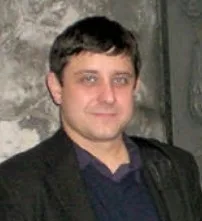
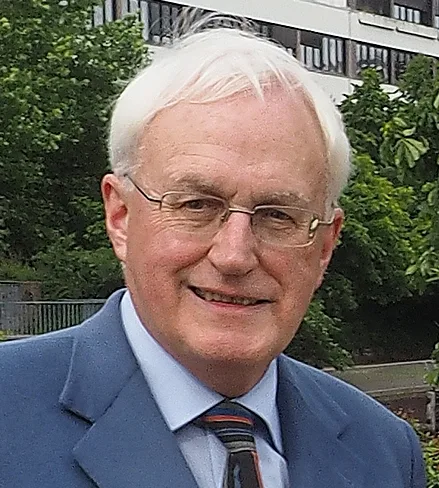
– Mr Horst, you are chairman of the Society of Friends of Kant and Königsberg. How did it come about?
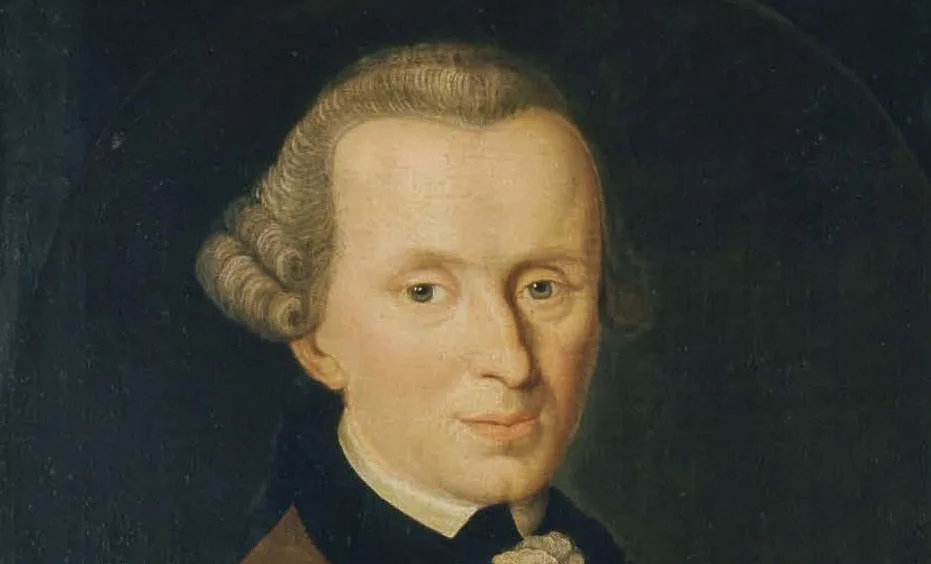
– The first Society of Friends of Kant was founded a year after the philosopher's death, in 1805, in Königsberg, by his real friends from his own lifetime, who traditionally met with him at the same table. In 1803 Immanuel Kant celebrated his birthday for the last time. In 1804, a little over two months after his death, his friends gathered again and decided to hold a festive lunch or dinner every year on the birthday of the philosopher and friend. Thus a tradition was established that lasted until the end of the Second World War. The founder of the society was William Motherby, son of Robert Motherby, a friend of Kant's. He had practically grown up before Kant's eyes and under his care, knew him well and wished to preserve his memory.
Now about us. Our Society of Friends of Kant and Königsberg is comparatively young; it was founded in Berlin, and yet we have a link with that old Königsberg tradition. Its formal founding date is 12 February 2011 (the anniversary of Kant's death). But the idea of reviving the tradition came to me long before that. My mother was from Königsberg.
When I first visited Kaliningrad in the 1990s, what struck me was that it was not only the city that had been destroyed – all the old traditions had been destroyed too; none of them remained. I thought it should not be like that!
What matters is that among the members of our society are descendants of those very friends of Kant, the founders of the Königsberg society. Thanks to this we have been able to revive a living tradition. Thus our society includes direct descendants of the Robert Motherby I mentioned (the sister and brother Marianne and John Motherby); the Barons von Schrötter – descendants of the family in which Kant worked as a private tutor; the children of the well-known scientist Karl Gustav Hagen; descendants of the statesman Theodor Gottlieb von Hippel the Younger; and descendants of Count Keyserlingk. We also welcome people who simply love Kant and philosophy and are interested in the history of Königsberg and its people. After all, it is part of European history. A good example is the book by the German writer Jürgen Manthey, "Königsberg: A History of a Republic of World Citizens" (Jurgen Manthey, «Königsberg. Geschichte einer Weltbürgerrepublik», München, 2005); it is a pity that it has still not been translated into Russian. It makes clear why Königsberg is of interest to the whole world.
– Do you think Königsberg is interesting and famous above all thanks to Immanuel Kant?
– No, not only. The more you get to know Königsberg, the more astonished you are at how many great people lived in this city! There are the writers Ernst Theodor Amadeus Hoffmann and Johann Hamann, and the writer and statesman Theodor Gottlieb von Hippel. Or the famous scientist, chemist and pharmacist Karl Gottfried Hagen. His son became a professor of art history. One might recall the astronomer Friedrich Bessel or the mathematician Franz Neumann. Our society includes descendants of Bessel, Neumann and Hagen. These three scientists were married to sisters, so they became related. Later their children became scientists too, and there were other marriages between the families, so you could call them one big Königsberg scientific community.
– Let's recall the University of Königsberg — admittedly neither the largest nor the best in Germany. What role did it play in the life of East Prussia?
– People from the Baltic lands studied here: Lithuanians, Poles. There were Russian students too. We know that the father of Lithuanian literature, Kristijonas Donelaitis, lived in East Prussia and studied in Königsberg! The famous Lithuanian poet and translator Liudvikas Rėza also came from East Prussia, from the Curonian Spit, and he studied at the University of Königsberg. Today there is a monument to him in Kaliningrad, and the Donelaitis Museum operates in the village of Chistye Prudy in the east of the region.
Clearly, the Albertina played a major role in the development of local education and culture. I would like the Kaliningrad university to take up this tradition as well. It must grow to live up to this history, to this important role.
Our society is ready to help with this. We decided that we would come to Kaliningrad every year. In Salzburg, for example, there is an annual opera festival. Why not organise an annual cultural programme combined with a trip to Kaliningrad? I think it is possible, and we always manage to find people who take part in it. The programme consists of three parts. First, one-day sightseeing tours around the Kaliningrad Region. Next, meetings with Kaliningrad scholars, public figures and officials, held as seminars with talks and discussions. Here we cooperate very well with the Immanuel Kant Baltic Federal University. The third part is museum exhibitions and concerts. Königsberg was always a musical city! Kant himself, it is true, was not very fond of music. But there were musicians around him, for example Johann Friedrich Reichardt, who had known Kant since childhood. Of course, the most important part of the programme is the Bean Dinner, the festive gathering on 22 April in honour of the philosopher's birthday! It takes place at the German-Russian House, for which we are very grateful to its director Andrey Portnyagin and its president Viktor Hofmann. We have good cooperation with them. The Bean Dinner is an important Russian-German event; more than that, it is already an international event that becomes more international with every year. English, French and Japanese people have already taken part in it.
– So the Society of Friends of Kant is not an exclusively German society?
– No, among us there are Russian citizens, English, Japanese, French and Swiss people. There is an Italian woman, a Japanese woman, a Latvian woman. We want to be an international society.
– In essence, Kaliningrad has two main sights – Königsberg Cathedral and Kant's tomb beside it. Few people know about the other "Kant sites".
– Well, the Cathedral is already something more. We must not forget that as recently as 1995 the Cathedral was a ruin, a wreck. And it must be said clearly and loudly that it was restored thanks to its first post-war director, Igor Aleksandrovich Odintsov. Of course, both Russians and Germans took part. But the idea was his, it was his initiative, and only his determination made it possible to carry it out. We worked together splendidly.
– Nevertheless, some people think the Cathedral was not restored in the best way. What do you think about that?
– The most important thing is that it was restored at all and is in use – even if it departs from its appearance in 1944, before the British air raids. Otherwise it would have been torn down altogether and taken apart for bricks, as happened to the Royal Castle. It is very good that the organ sounds in the cathedral again. We remember, after all, that Kant was baptised in the Cathedral. And no doubt he went there as an adult and listened to the organ, which in his day was already a very good one. The thing is, Immanuel Kant marvelled at how an organist could play with his hands and feet and talk at the same time. Evidently Kant had a conversation with an organist who was playing with his feet and hands, and was amazed that all this happened simultaneously. He writes about it in his work "Anthropology from a Pragmatic Point of View". The Cathedral is definitely the most important place in the region.
– In your view, which other "Kant sites" could make Kaliningrad and the region more attractive?
– Of course, Kant never left East Prussia, but he did travel outside Königsberg. Most of these places are now in the Kaliningrad Region and only one is in present-day Poland: the Gross-Arnsdorf estate, which belonged to the noble family for whom Kant worked as a private tutor. We are much more interested in the Kleschauen estate, today's Kutuzovo, near the border on Russian territory, where Kant's friend General von Lossow lived. Unfortunately, only stones remain of the estate. But I have heard that there are wealthy Russians who want to restore it. So far I have not managed to get in touch with them.
Another important place is the village of Judtschen, now Veselovka. Kant lived there for three years. There he became godfather to several children. This clearly shows that Kant was part of the village community, and that in Judtschen he not only lived and worked but also reflected and thought over his writings.
Veselovka is worth a visit in order to soak up the surroundings in which the genius spent three years and in which impressions and ideas came to him. You can even meditate! The surrounding landscape itself has an influence too. Even the sky. The starry sky.
Another remarkable place is the former Gross-Wohnsdorf estate. Today it is Kurortnoye in the Pravdinsk District. The estate belonged to the von Schrötter family. Baron Friedrich Leopold von Schrötter, a Prussian minister, was a great friend of Kant's, helped him a great deal, and Kant would rest at his estate. The buildings from Kant's time have not survived. The manor house that stands there now was built in the 19th century. But one old 14th-century tower has survived. And there, too, Kant sat with his friend Baron von Schrötter; they drank coffee and smoked tobacco. Kant said more than once how happy he felt there. That was something one very rarely heard from Kant. He was not a particularly happy man. But in that place he felt he was.
– What goals does the Society of Friends of Kant and Königsberg set itself?
– The aim of our society is to preserve Kant's traditions and to remind people of the philosopher as a person. But not of Immanuel Kant alone. Because Kant did not live in isolation. He had friends and companions. This was life; this was a big city. And Kant loved this city very much. He was proud that his home town was large. That mattered to him. All of this must be remembered. The spirit of the city must be preserved. We do this as best we can. For example, we try to draw attention to his friends, among whom there were many remarkable personalities. The von Schrötters, for instance, on whose estate "Kant's tower" stands, were progressive aristocrats. They did a great deal to reform Prussia. Right after Kant's death Prussia was devastated by Napoleon. It was restored only thanks to enlightened people, including Kant's students – not only with money but with ideas and reforms. And that, too, is a very important and great tradition.
Igor Odintsov had a good idea – to create a wall in the Cathedral with the names of famous scholars of the University of Königsberg, the Albertina. It is very important to restore the memory of others as well. It is a great pity that the old professors' cemetery, where famous Königsberg scholars are buried, cannot be saved.
– And how do Kaliningraders themselves respond to your society's activities? Do they share your ideas?
– We have many friends in Kaliningrad, and very fruitful cooperation with the people of the region is developing.
But of course there are people who don't want this and say that Kaliningrad is now a Russian city and there is no point in dealing with German history. It's not ours, they say, it's "someone else's", a foreign history. Can that be an argument? I don't think so. Because one cannot live without history! Some believe that everything that existed on this land before 1945 is all foreign, German or even fascist. That is not so. History is one and continuous. Besides, there are Russian features in Königsberg's history. Emperor Peter I spent several days here, perhaps a week. And the writer Andrey Bolotov, for example, lived in the city for four years during the Seven Years' War of 1756–1763 and wrote a book about Königsberg. It is a whole love story. Bolotov loved Königsberg; it was the brightest memory of his life!
So the history of Königsberg is not foreign to you, the present-day residents of Kaliningrad.
The aim of our society is to help restore the unified history of this land. And Kant is a phenomenon of this city. He was born here. His mother's ancestors came from Nuremberg, his father from the Memel area, from Tilsit. Kant was a son of this land, and he felt it. Interestingly, Kant spoke the East Prussian dialect. That makes sense, because he came from a modest family and at home they spoke the plain vernacular. Kant kept the features of this dialect, its pronunciation, in his speech. It mattered to him. Kant loved his homeland so much that he enjoyed speaking his native dialect!
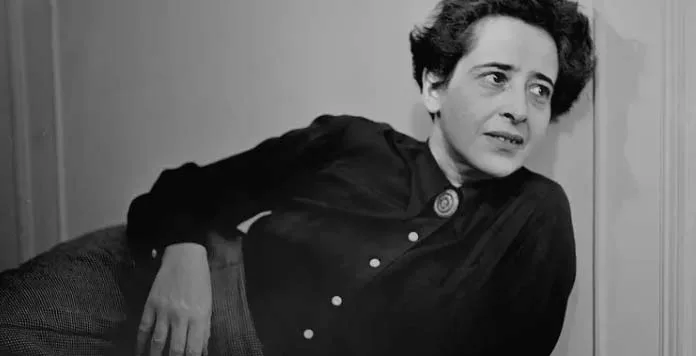
So our task is to remind people of Kant, of his personality and the people around him, but not only that. Take, for example, the philosopher and political writer Hannah Arendt. She came from Königsberg — she was not born here, but she lived in Königsberg from the age of three to eighteen. And the intellectual atmosphere of Königsberg and Kant's philosophy influenced her very strongly. Our society would like to remind people of figures such as Hannah Arendt and the artist Käthe Kollwitz. Kaliningrad must preserve the memory of Königsberg's great men and women.
Translated from Russian with the help of AI (Claude, Anthropic), October 2026.