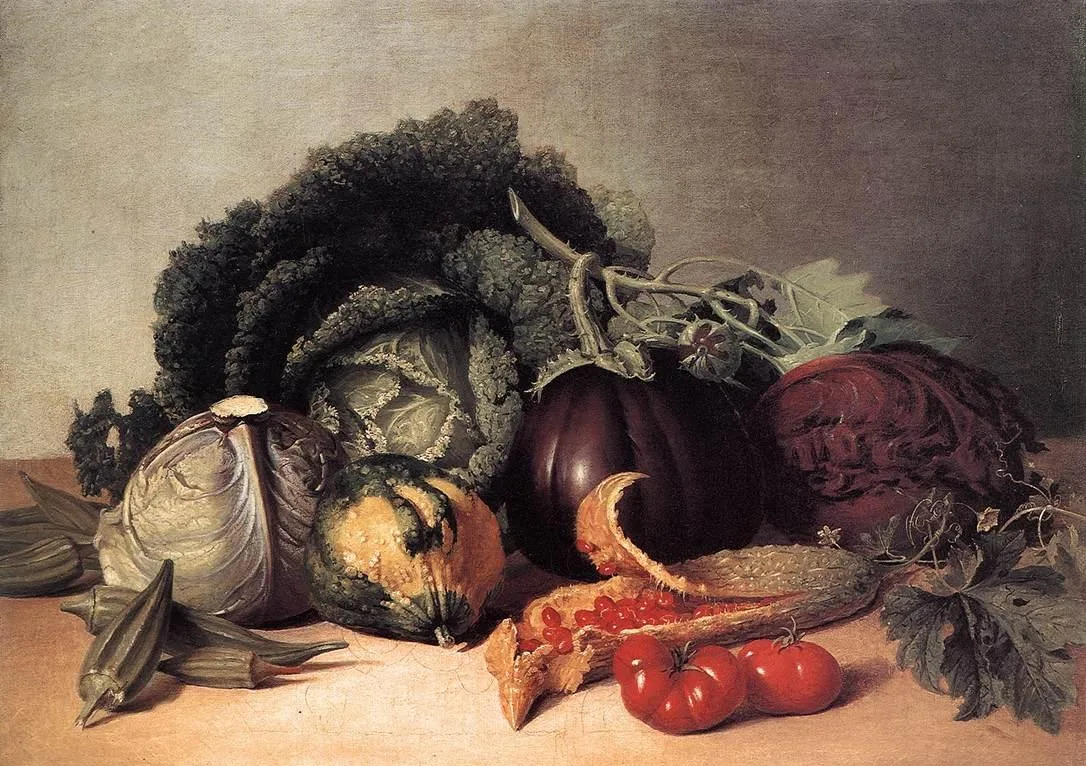
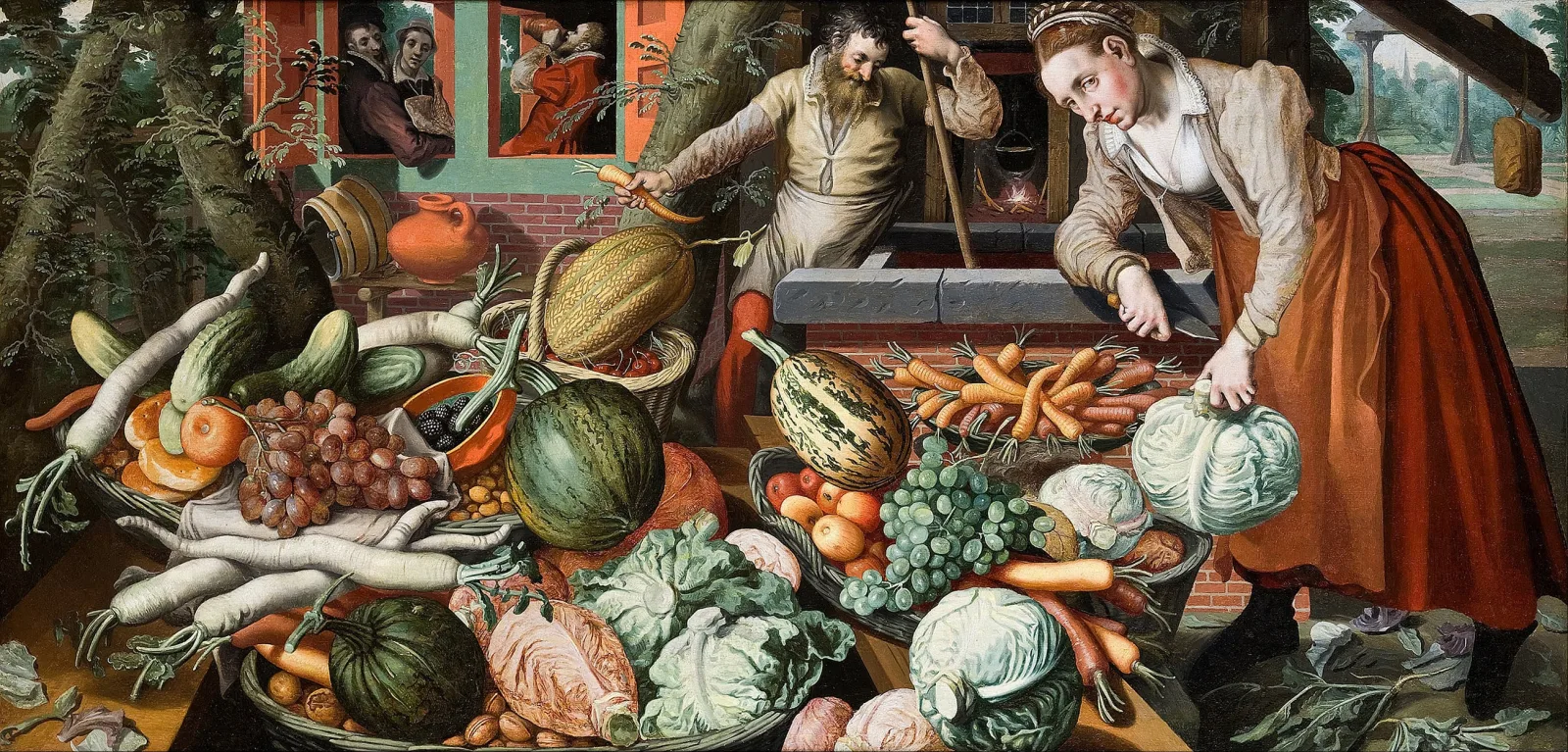
Rich, hearty meat dishes were mostly the preserve of men who did heavy physical work. Even so, eating meat every day was considered a great luxury. Delicacies were prepared for holidays, while everyday food was simple but tasty and varied. People did not live like lords or indulge in gluttony; they took their health seriously and favoured vegetable dishes. They also ate according to the seasons – that is, the time of year itself set the course for the menu.
Local peasants, and townspeople too for that matter, waited impatiently for spring – when the first long-awaited greens appeared in the vegetable beds (and at the town markets).
Then came the time of everyone's favourite new potatoes, early cabbage, radishes, carrots, tomatoes, cucumbers, spinach, lettuce, onions, legumes… And naturally, all kinds of dishes made from fresh vegetables appeared on the table.
Memel-Style Radish
(Recipe from 1910)
600 g white radish, 180 ml olive oil, 2 cloves of garlic, 1 tbsp white wine vinegar, 4 sun-dried tomatoes in oil, 2 tsp tomato purée, 1 anchovy fillet in oil, 1 tsp dried thyme, a pinch of cayenne pepper, salt, pepper and honey to taste.
Preheat the oven to 180 degrees. Cut the radish into rounds 1 cm thick, drizzle both sides with olive oil, lay them on a baking tray lined with baking paper and put them in the oven for 30 minutes. Bake until the radish is lightly browned. Peel and chop the garlic and mix it with the remaining oil, the vinegar, the chopped sun-dried tomatoes, the tomato purée and the anchovy fillet. Add the thyme and cayenne pepper and season the marinade with salt, ground black pepper and honey. Marinate the baked radish in this sauce for 1 hour. It can then be served with boiled or mashed potatoes. Baked marinated radish also makes an excellent accompaniment to meat dishes.
In East Prussia white cabbage was held in no less esteem than the potato. It was pickled, fried, baked and braised with all sorts of spices, herbs, fried onions and bacon.
Braised White Cabbage
750 g white cabbage, 2 tbsp goose fat, 3 apples, 1 tsp sugar, salt and pepper to taste, 1 lemon, chopped marjoram to taste and if desired.
Remove any wilted leaves from the head of cabbage, shred the cabbage finely and braise it briefly in the goose fat, then add a little hot water, the apples (peeled and cut into pieces), 1 tsp sugar, salt, a pinch of ground black pepper and the juice of one lemon, and braise for 1 hour, remembering to stir so that it does not catch. If needed, add salt and marjoram to taste. The dish can be served on its own or as a side to roast goose or fried sausages.
Carrot and Swede Stew
500 g carrots, 1 small swede (about 500 g), 1 tbsp fat, a bay leaf, 3 allspice berries, a vegetable stock cube, 1 tbsp chopped parsley, salt, pepper and sugar to taste.
Peel the carrots and swede, dice them and put them in a sauté pan. Pour in just enough water to barely cover the vegetables, add the fat and bring to the boil. Add the bay leaf, allspice and stock cube (it can be replaced with whatever spices and dried herbs you have to hand, according to your own preferences). Braise for 50–60 minutes over a medium heat. Then mash the vegetables with a masher and season with sugar, salt and pepper. Garnish with chopped parsley before serving.
Fat-Free Red Cabbage with Apples
1 medium head of red cabbage, 3 medium apples, 1 onion, 1 level tsp salt, 1 tbsp sugar.
Put the finely chopped onion into a heated sauté pan and brown it lightly, stirring constantly (without fat!). Wash the red cabbage, shred it finely and pack it tightly into the pan on top of the onion (pressing it down gently with your hands), then lay unpeeled apple slices over it in a layer, sprinkle with sugar and pour in ½ l of boiling water. Cover the pan with a lid. Braise for 90 minutes over a medium heat.
Mock Goulash
375 g green beans, 2 onions, 2 tbsp fat, 500 g small tomatoes, salt and paprika to taste, 1/8 l sour cream, meat seasoning, sugar to taste, parsley.
Wash the green bean pods thoroughly, break each one in half, boil until tender and drain in a sieve. Lightly brown the chopped onion in the fat and add the tomatoes, scalded and peeled beforehand. Salt generously, add paprika and braise briefly, then mix everything with the beans, braise a little longer and add the sour cream, meat seasoning and a pinch of sugar. Sprinkle chopped parsley on top.
This goulash goes perfectly with boiled floury potatoes. Gourmets insist that it tastes almost the same as one made with meat.
Asparagus
1 kg asparagus, 4 tbsp butter, 2 tbsp flour, 2 egg yolks, ½ sweet cream, a pinch of sugar, lemon juice to taste.
Wash the asparagus thoroughly under running water (first removing the woody ends), cut it into 6 cm lengths and boil. Make the sauce for the asparagus: fry the flour in the butter, dilute with stock (the mixture should not be runny), and add the egg yolk whisked with the cream, salt, lemon juice and sugar. Transfer the asparagus to the sauce. This dish can be served with boiled floury potatoes.
Young Peas
1 kg young pea pods, 5 small white onions, 4 tbsp butter, a pinch of sugar, a little flour, a bunch of parsley.
Shell the peas. Sweat the onions gently in butter until soft, add the peas, dust lightly with flour (only a little is needed, on the tip of a knife), season with salt and sugar to taste, pour in 3–4 tablespoons of vegetable or meat stock, set over a low heat and braise for about 10 minutes, then pour over two tablespoons of melted butter and braise until done. Then add the remaining butter and sprinkle with chopped parsley.
Stuffed Kohlrabi or Celeriac
8–10 medium kohlrabi or celeriac bulbs.
For the filling:
200 g minced mushrooms, 70–80 g breadcrumbs (to be mixed with the flesh scooped out of the middle of the bulbs), 1 egg, 1/8 l water, 1 level tsp salt.
For the sauce:
30 g butter, 40 g flour, ½ l vegetable stock, 1/8 l milk, salt to taste, a pinch of sugar, 1 egg yolk.
Peel the kohlrabi or celeriac and parboil. Cut off the tops of the bulbs (on no account throw them away – they will be the "lids"), carefully scoop the flesh out of the middle, chop it and mix it with the breadcrumbs and the chopped mushrooms fried with onion. Fill the vegetables with this stuffing, cover with the "lids", tie with kitchen string and braise until done. The dish can be served with a white sauce: fry the flour in the butter, dilute with vegetable stock, add the milk and simmer over a low heat for 10 minutes, stirring constantly. At the end stir in the egg yolk, season with salt and add a pinch of sugar. The sauce can be rubbed through a sieve to remove any small lumps. Incidentally, kohlrabi and celeriac can also be stuffed with cheese mixed with the scooped-out flesh and breadcrumbs, or with the minced meat used for Klopse.
Probably no East Prussian table was ever without a vegetable stew.
Like the bake and the Eintopf, it belongs among the humble, everyday dishes – "made from whatever was to hand", as the saying goes. Vegetable stew is as old as the hills, and today hardly anyone can recall its original recipe. The idea is simply to combine different vegetables and stew them in a single pot (sauté pan). It can be made with meat, poultry, fish or sausage – or without any extras, that is, with vegetables alone.
Vegetable Stew with Smoked Pork Sausages
500 g small potatoes, 300 g carrots, 300 g smoked pork sausages, 2 tomatoes, 1 onion, 1 glass of dark beer, 1 cup of tomato juice, 250 g cooked white beans, 1 bay leaf, vegetable oil, salt, peppercorns, ground paprika, ground black pepper – all to taste.
Wash and peel the potatoes and carrots thoroughly, cut them into large pieces and fry them together with the onion in vegetable oil, stirring from time to time, until golden. Transfer the vegetables to a sauté pan. Slice the sausages into rounds, fry them in vegetable oil and add them to the vegetables. Peel the tomatoes, chop them finely and add them to the pan as well. Add the beer, tomato juice, bay leaf, peppercorns and salt and stir. Cover with a lid and braise over a low heat until the potatoes are fully cooked. Then add the cooked beans, season with spices and salt to taste. Bring briefly to the boil and remove from the heat.
The vegetable stew was usually served in a large dish, garnished with chopped herbs. It can also be dressed with sour cream or any other sauce, as you like.
Sources:
Spezialitaeten aus Ostpreußen. Marion Lindt.
Doennigs Kochbuch Rezepte aus der Ostpreußischen Kueche. Margarete Haslinger, Ruth Maria Wagner.
Alte Familienrezepte aus Ostpreußen. Harald Saul.
Translated from Russian with the help of AI (Claude, Anthropic), October 2026.