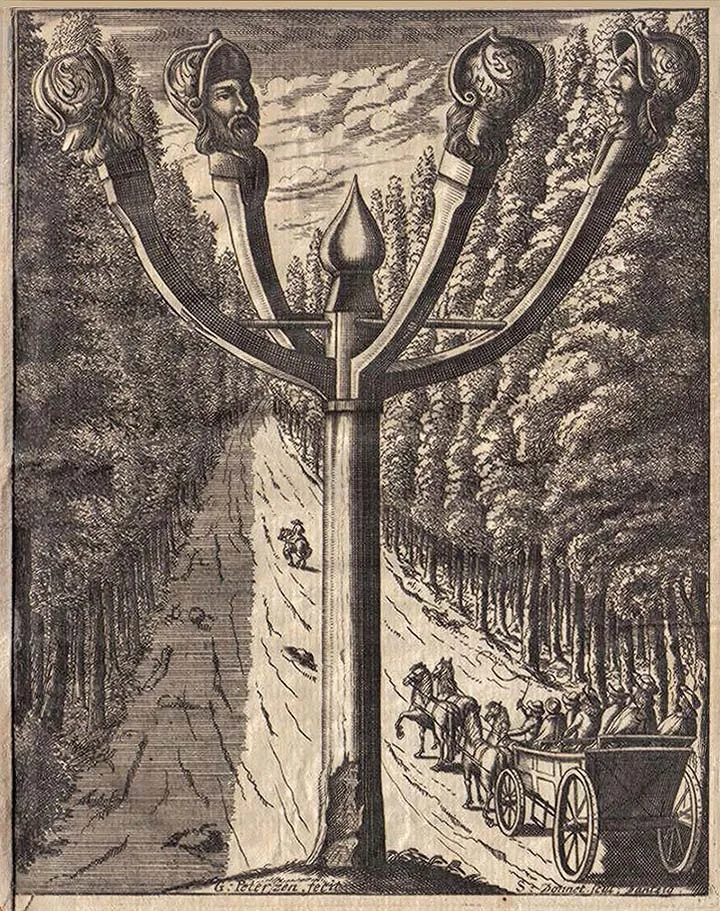
In the environs of Königsberg a beautiful old forest grows to this day. Magnificent broadleaf trees and mighty pines with spreading branches alternate with stretches of heath, which lends the whole area an inexpressible charm. This centuries-old forest is part of the Kaporn Heath1 and stretches from Metgethen2 to a wooded spot that has come to be called the "Four Brothers Tavern" [in fact as far as the hamlet of Kaporn, in the orbit of Gross Heydekrug (now the settlement of Vzmorye) — ed.]. A small inn of the same name really does stand there, in a wonderful forest of tall trees, and it and the whole area take their name from an ancient wooden column called the "Four Brothers Column". It can be seen at a crossroads of four roads. The column is about 24 feet high and is crowned by a capital with four bearded male heads in helmets.
The column has stood on this spot since time immemorial and over the many centuries of its existence has decayed and fallen down more than once. The Kaporn domain office was charged with the duty of keeping the "Four Brothers Column" in good order.
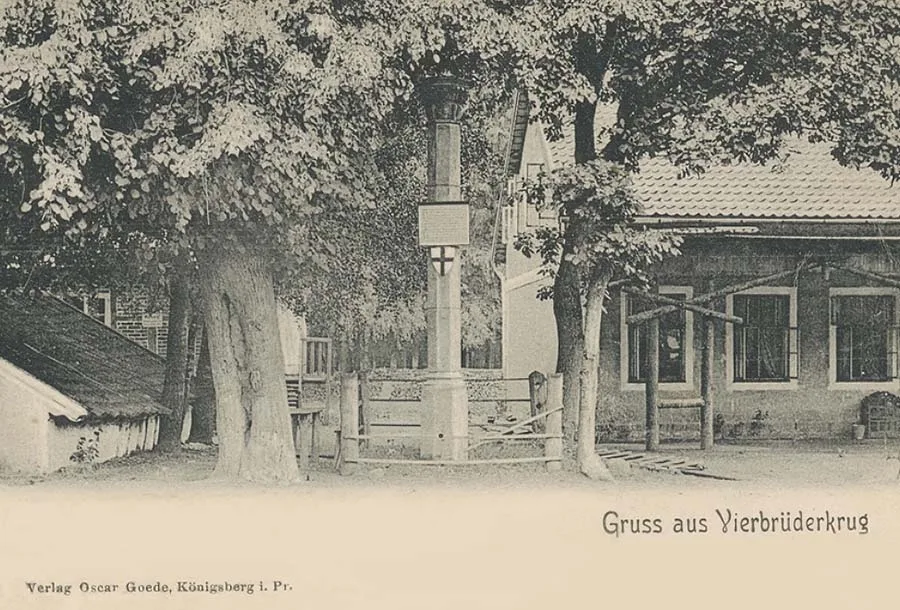 The "Four Brothers Tavern" on the road from Königsberg to Pillau.
Again and again it was restored and renewed. In olden times many curious customs were connected with this work. Today almost all of them are forgotten. Only one, perhaps, has survived: the carpenter who sets the column up again bows to it when the work is done and loudly wishes that it may stand for as long as possible.
There are many stories and conjectures of every kind about how and why this obelisk was erected.
Some locals say that four brothers who once robbed travellers in these forests were quartered here.
Other legends say that four brothers once decided to set off on a long journey around the world. It was at this very spot that they parted from one another, and many years later they met here again on a day agreed in advance. It was in memory of this meeting that the "Four Brothers Column" was put up here.
But it is also told that in time immemorial there stood here a majestic sacred oak with four mighty spreading branches, dedicated to the four great gods of the ancient Prussians.
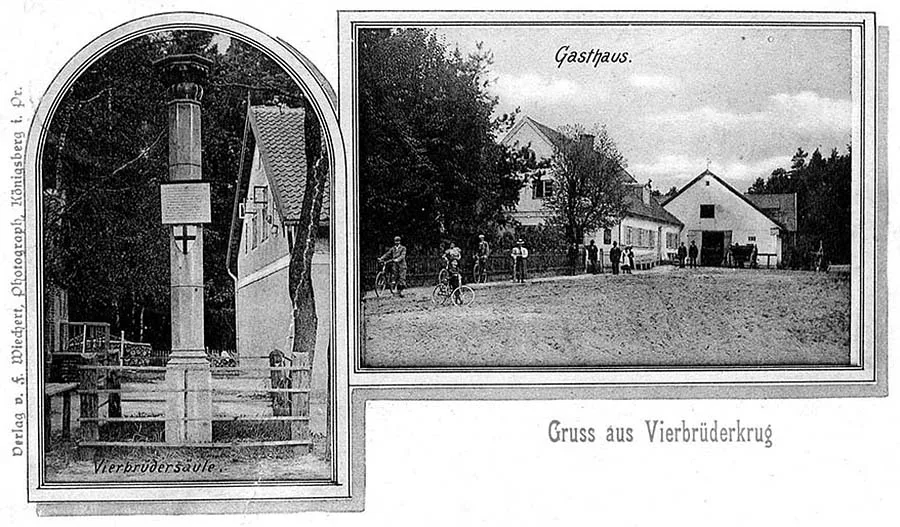 A postcard with views of the column and the guest house next to it.
According to other accounts, the column was erected because Margrave Albrecht of Brandenburg, the King of Poland, the King of Denmark and the King of Bohemia once drank to brotherhood on this spot after a great and successful hunt.
But the most credible to us seems the following legend:
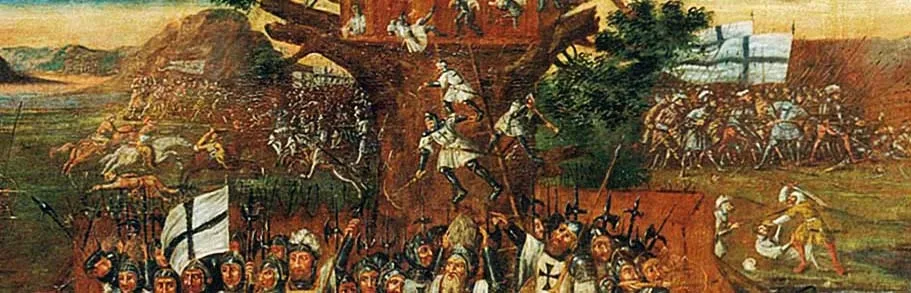
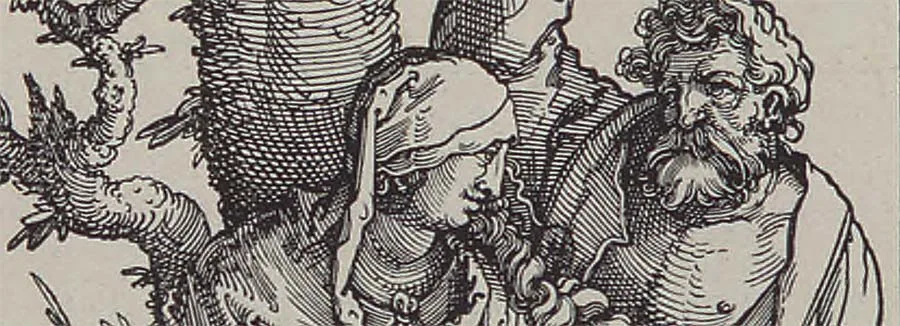
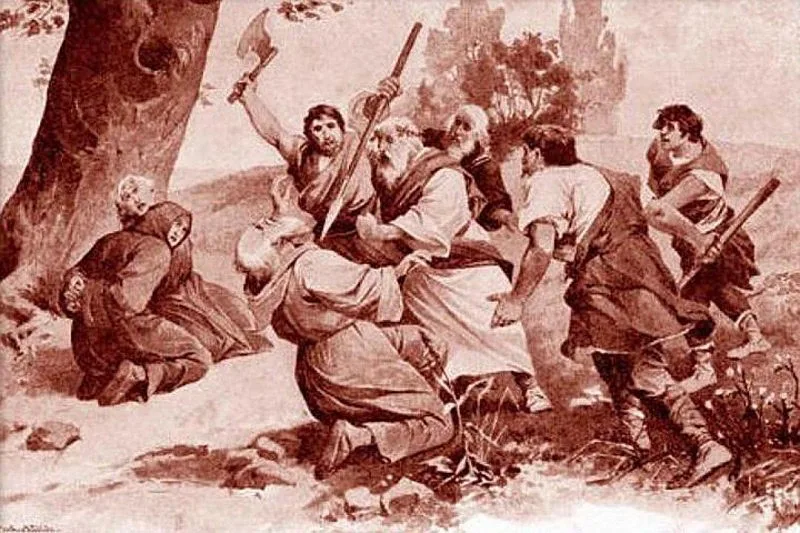
When the knights of the Teutonic Order first marched against the local tribe of the Yatvingians, they were few in number, and so all of them, together with the Landmeister3, were killed in battle with the pagans. And so four knights — Martin Golin, Konrad Entkin, Jakob Stobemel and Malachias Koblenz — resolved to avenge their slain brothers of the Order. In secret they set out for the lands of Sudovia4, where at that very time all the Yatvingian nobility had gathered for a feast to celebrate their victory over the newcomers.
The four knights and a hundred foot soldiers waited in the forest for nightfall, and when the Yatvingians, after a lordly feast and much drinking, were fast asleep, the troop launched a surprise attack, slew all the Prussian nobles — ninety-three of them in all — and returned victorious with great booty. It was in memory of this event that the column to the four knight-brothers of the Order was set up in the forest.
And on the column one can read a dedication in German verse, which tells us the following story:
Twelve hundred ninety-five it was — so the chronicles declare.
Meinhard von Querfurt5 was then the Order's master there.
Here in the grove four brothers lie, in everlasting sleep,
Returned from Sudovia with a swift and mighty victory…
Among them was brave Diwel, and Kobenzel, stout and strong,
And valiant Stobemel, and Reder, whose sword was quick and long.
All faithful to the Order, and the oath that once they made
In battles with the foe they sealed with their own blood and blade.
Near Konowedit Castle once at table they were seated,
When from the thicket murderers fell on them unheeded.
By sword, by stake, by spear all four were slain that day,
And to those heroes' memory this column stands for aye6.
TRANSLATOR'S NOTES
1. The Kaporn Heath (German: Kaporner Heide) — a forest tract that stretched from Königsberg (Kaliningrad) to Fischhausen (Primorsk).
2. Now the settlement named after Alexander Kosmodemyansky.
3. Landmeister — a high rank in the Teutonic Order.
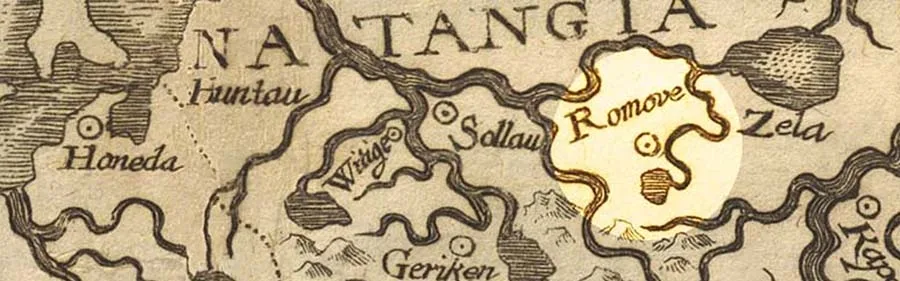
4. Sudavia or Sudovia — a historical region of Prussia. It was originally inhabited by the tribe of the Yatvingians (the Old Russian name of the region was Yatvyagia), or Sudovians — an Old Prussian tribe ethnically close to the Lithuanians. Sudovia stretched from the Great Masurian Lakes to the Neman and Biebrza rivers. This area was the last to come under the rule of the Teutonic Order (in 1283) and the first to leave its control, becoming part of the Grand Duchy of Lithuania in 1422. Today the northern lands of Sudovia belong to Lithuania, the southern ones to Poland and the eastern ones to Belarus. In the Kaliningrad Region, its far south-east is loosely counted as part of Sudovia, including the territory of the newly created Vishtynetsky National Park (Rominta Forest).
5. The Grand Master of the Teutonic Order in 1291–96 was Konrad von Feuchtwangen, while the column mistakenly named as master the Prussian Landmeister of that period.
6.
Zwölfhundertfünfundneunzig — die Chronik nennt dies Jahr
Zur Zeit, als Ordens-Meister Meinhard von Querfurt war,
Da ruhten hier im Haine vier Waffenbrüder aus,
Von Sudau’n siegreich kehrend zurück nach blutgem Strauß.
Da war der wackre Dyvel, der rüstge Kobenzell
Und Stobemehl und Röder, ein mutiger Gesel’.
Die Treue, die dem Orden sie hatten angelobt,
War schon in Gau’n voll Aufstands im Kampfe oft erprobt.
Sie saßen froh beim Mahle, nach Conovedits Schloß,
Da stürzte aus dem Dickicht hervor der Feinde Troß.
Mit Schwert und Spieß und Keule streckt nieder er die Vier.
und zum Gedenk’ der Toten steht diese Säule hier.
7. For many centuries this monument and the tavern named after it were a favourite resting place for hunters, since the surrounding forests, known as the Kaporn Heath, abounded in game of every kind.
REFERENCES
1. Johann Georg Theodor Grässe. Ostpreussische Sagen. Link.
2. Vierbrüdersäule. Wikipedia.de Link.
● Editor's note: Read on VisitPrussia.com an interview with the translator of German, and in particular Prussian, fairy tales, our regular contributor Tatyana Kolivay, who runs her own blog, where countless other parables, legends and fairy tales in her translation have been published.
Translated from Russian with the help of AI (Claude, Anthropic), October 2026.