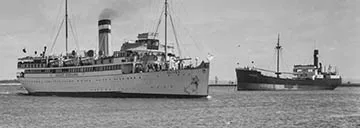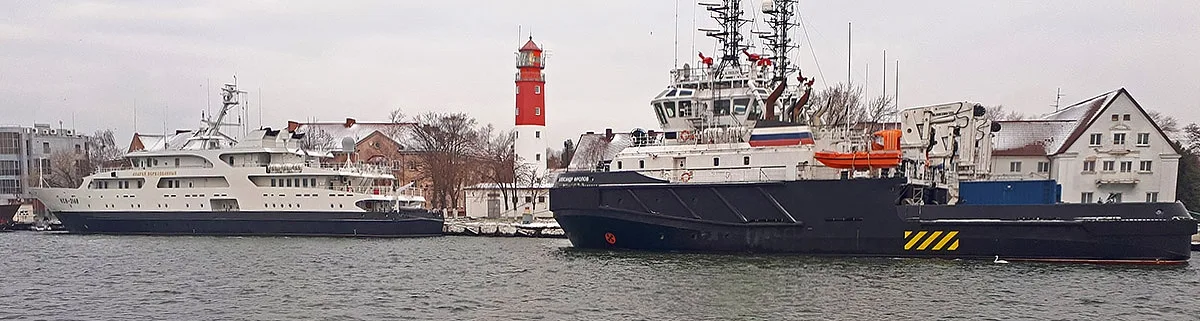
This time, though, Navy Day promised to be special. Baltiysk and its surroundings were preparing for a visit by the Supreme Commander-in-Chief, and this, among other things, threatened to make our transfer to the spit and back somewhat difficult. Our expectations were confirmed at once: our wish to cross turned out to be incompatible with the Baltic Fleet command's wish to hold a parade rehearsal. The crossing was postponed for three hours, and we had the chance not only to watch the rehearsal but also to take a little stroll through the streets of Baltiysk near the pier.
And there, meanwhile, something incredible was going on. The last time I saw anything like it, I think, was some thirty years ago at Soviet subbotniks, the "voluntary" Saturday clean-ups. Cadets and officers, military and civilians, young and old, were all busy with their tasks, each on his own patch. People were laying paving tiles, relaying asphalt, papering over fences, laying out new flowerbeds, refreshing facades.
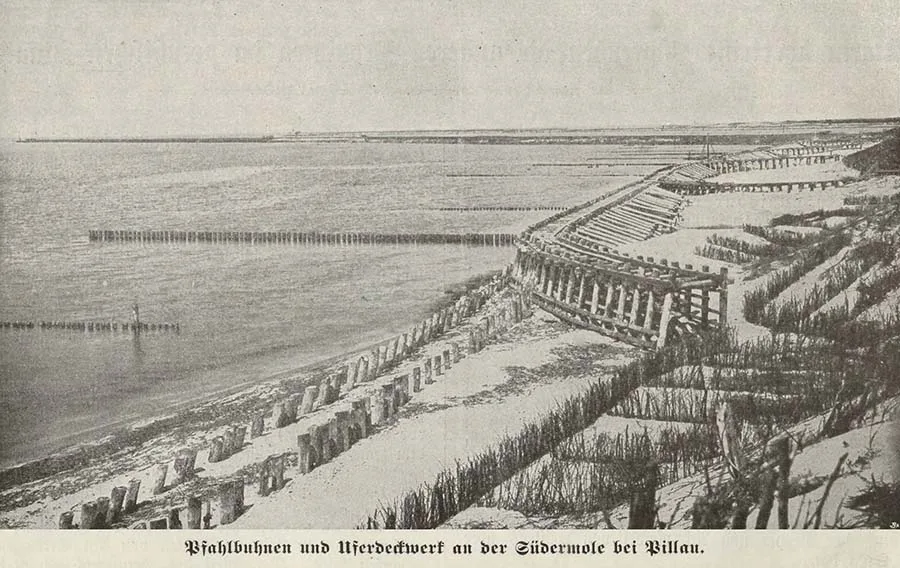 Coastal fortifications by the South Mole (the Western Fort, being a military facility, stayed out of shot.)
Some old woman was sweeping the patch in front of the shop by the pier and grumbling:
all sorts come here, it's fun for them, and we're made to work.
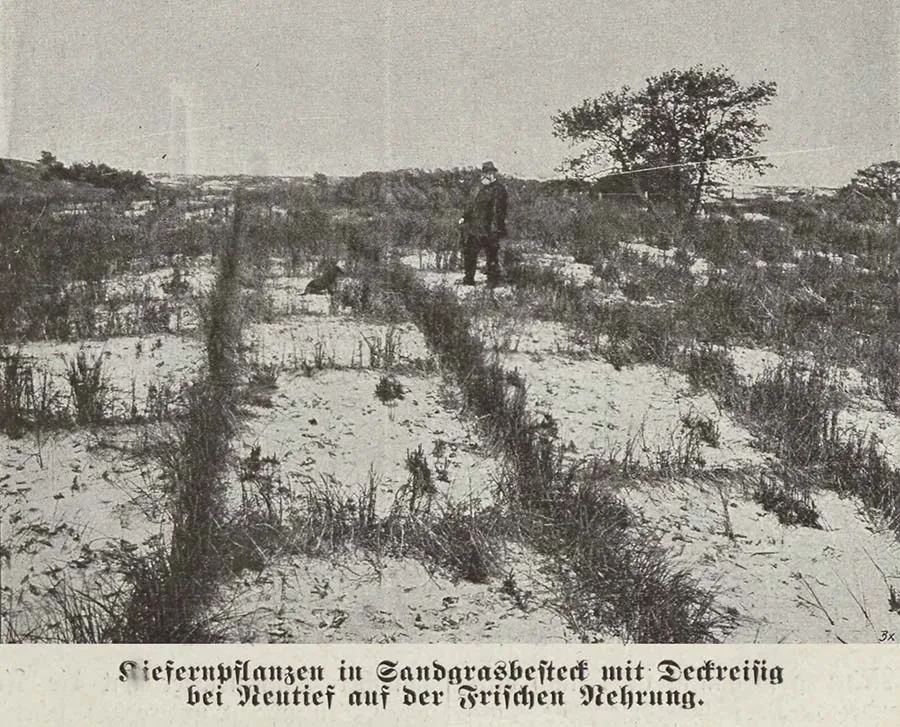 As on the Curonian Spit, an artificial ecosystem had to be created here.
From people's activity in the streets you really could tell unmistakably the planned route of the high-ranking guests: all the work was being done only along the route. Watching these preparations, I immediately remembered how, during the head of state's previous visit, some houses had their facades painted on one side only. For a long time afterwards they gleamed with their one-sided shine, as if recalling all the one-sidedness, selectiveness and showiness of the local officials' efforts.
Three hours of waiting, and now the ferry is carrying our little car across. The Russian part of the spit consists of active and abandoned military bases and a small village. A great place for a game of Zarnitsa, the Soviet children's war game: bunkers, underground fortifications, empty hangars and storehouses all around. The village is small, and it gets crowded only in good weather. The walls of the old German houses are riddled with bullets and shells, and people in striped sailors' vests walk the streets shouting "Glory to the Navy, glory to Russia". Many have clearly started celebrating already.
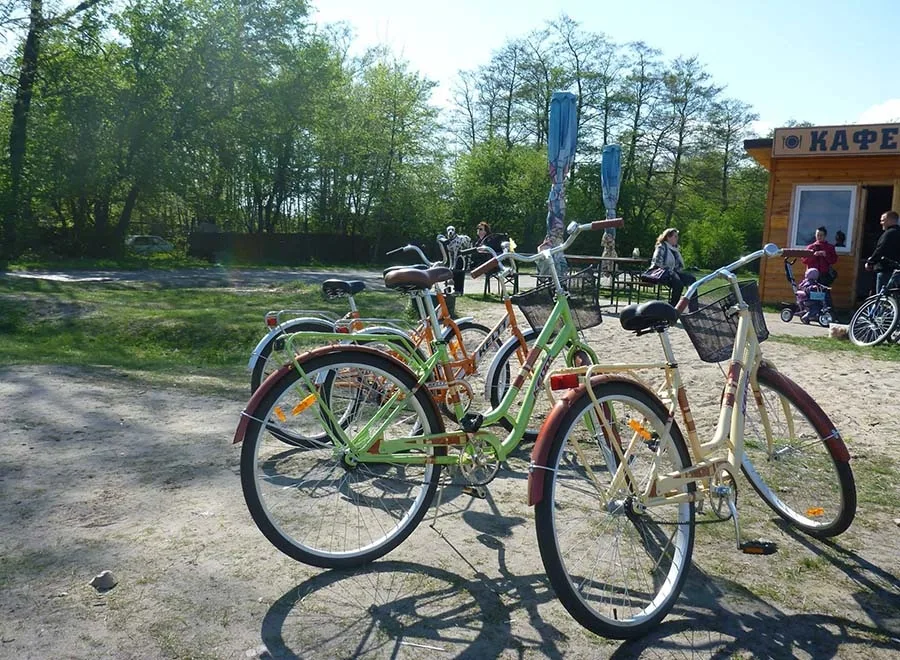 Bike hire and a café at the ferry exit.
By car you can drive about 3 km into the spit.
The runway of a former military airfield serves as the road.
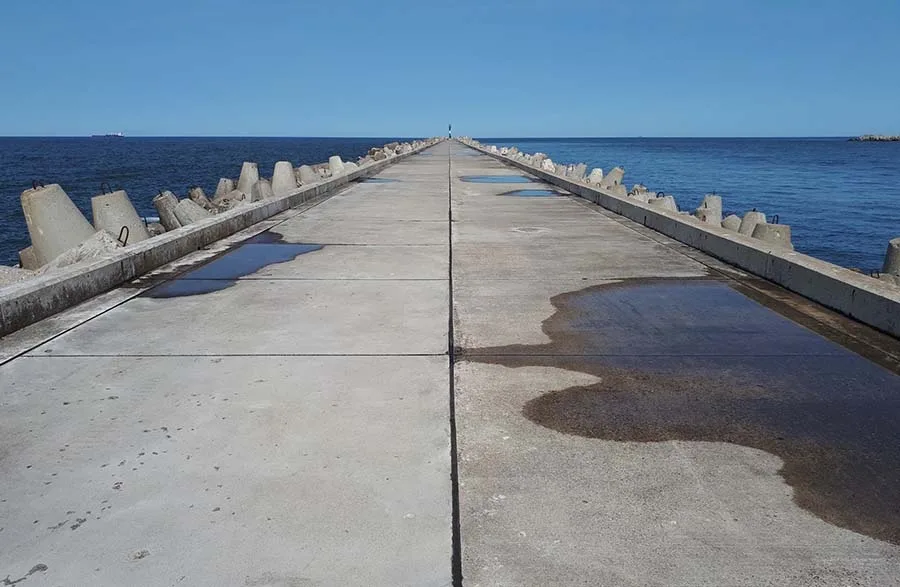 The South Mole, stretching along the strait (on the right).
The road runs into an active military unit; the soldiers won't let you go any further. Those who want to get deeper into the spit by car can do so only along the beach. The local dunes don't get any sturdier from being driven over, and such stunts carry a hefty fine, but it doesn't look as if anyone here is keeping an eye on it — jeeps tear along the beach every hour.
To be alone, my wife and I leave the car and walk off deeper into the spit, pitching our tent higher up, on a dune. Jeeps don't drive that high, but even here, as it turned out, it isn't peaceful. At night drunken racers on quad bikes roar past the tent. For some reason, food disappears every night. First the cheese, then the pasta. It's enough to drive you mad: the twenty-first century, you're lying in a tent on the seashore, five hundred metres from a base with deadly S-300 missiles, and in the dead of night someone steals a packet of dry vermicelli from your food bag.
One would very much like to hope it was foxes and not people.
In the daytime some dashing men in swimming trunks wander along the beach with mine detectors. They found something ten metres from our tent and began to dig. My wife got worried:
"What are you digging here? Is something hidden here?"
"We know what's hidden. Echoes of the war…"
"What, is there a bomb down there?"
"We'll dig it up and see…"
"Er... aren't you afraid it'll go off before you get a look at it?"
"You know what, you can catch the clap even from a granny, through a kiss!"
I didn't quite grasp the meaning of this folk wisdom in the field of venereology, and that made me even more uneasy. The amateur sappers, meanwhile, calmly dug up three rusty bits of iron and went off in a businesslike way.
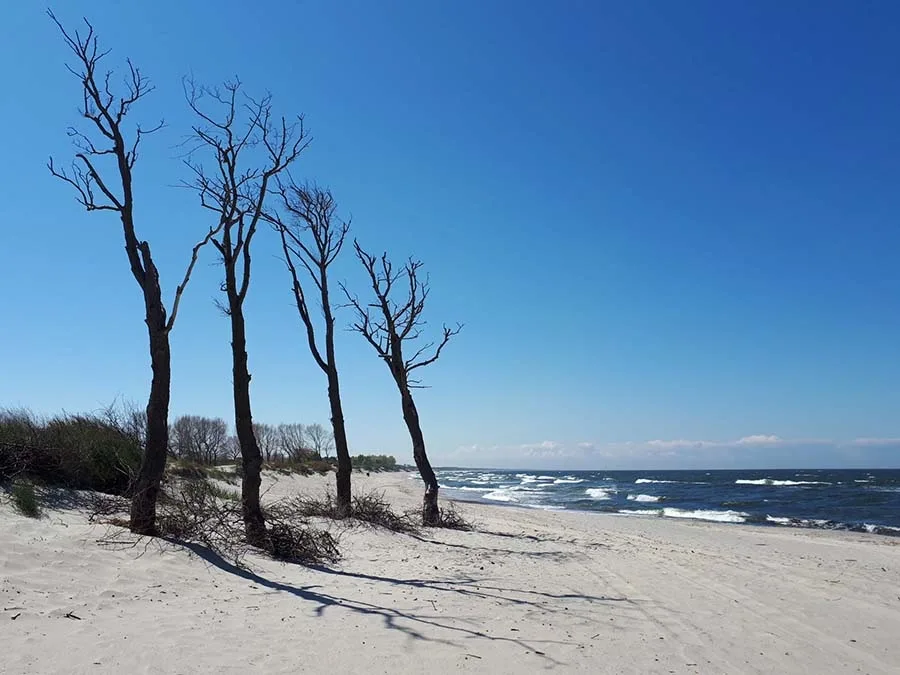
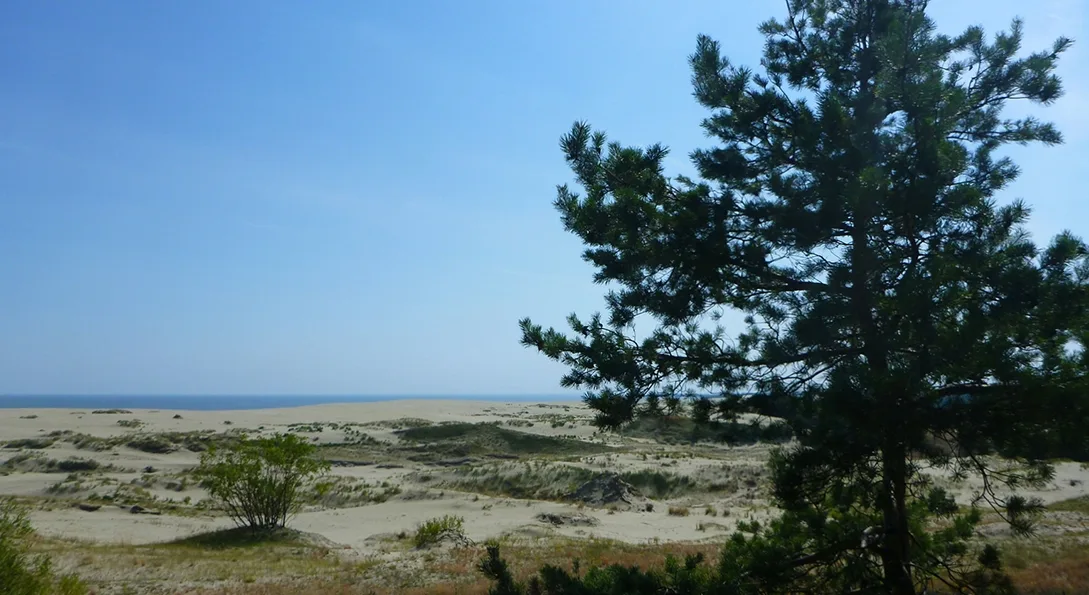
Nature on the Vistula Spit is extremely rich and in few respects inferior to the other masterpiece of the Baltic sands — the Curonian Spit, which, let me remind you, is on the UNESCO World Heritage List.
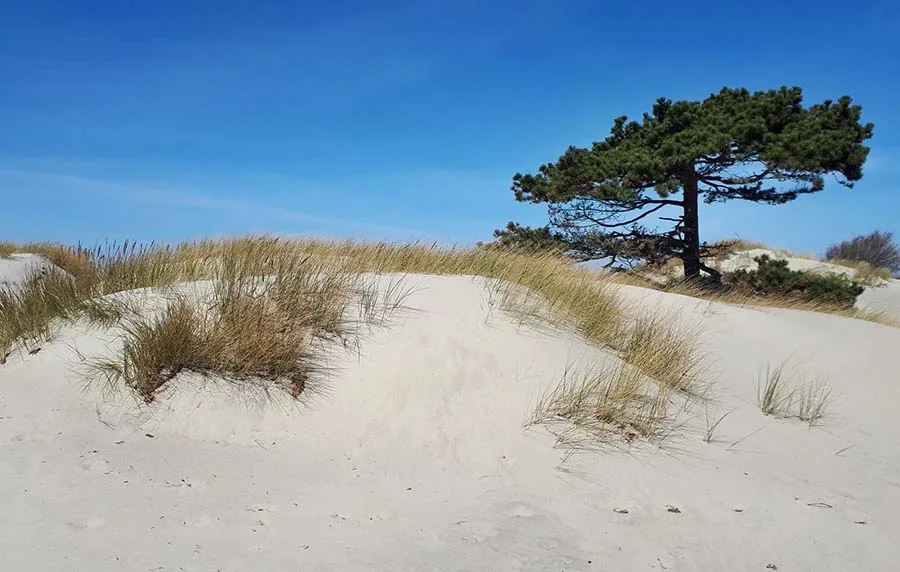 The special beauty of the Vistula Spit's nature.
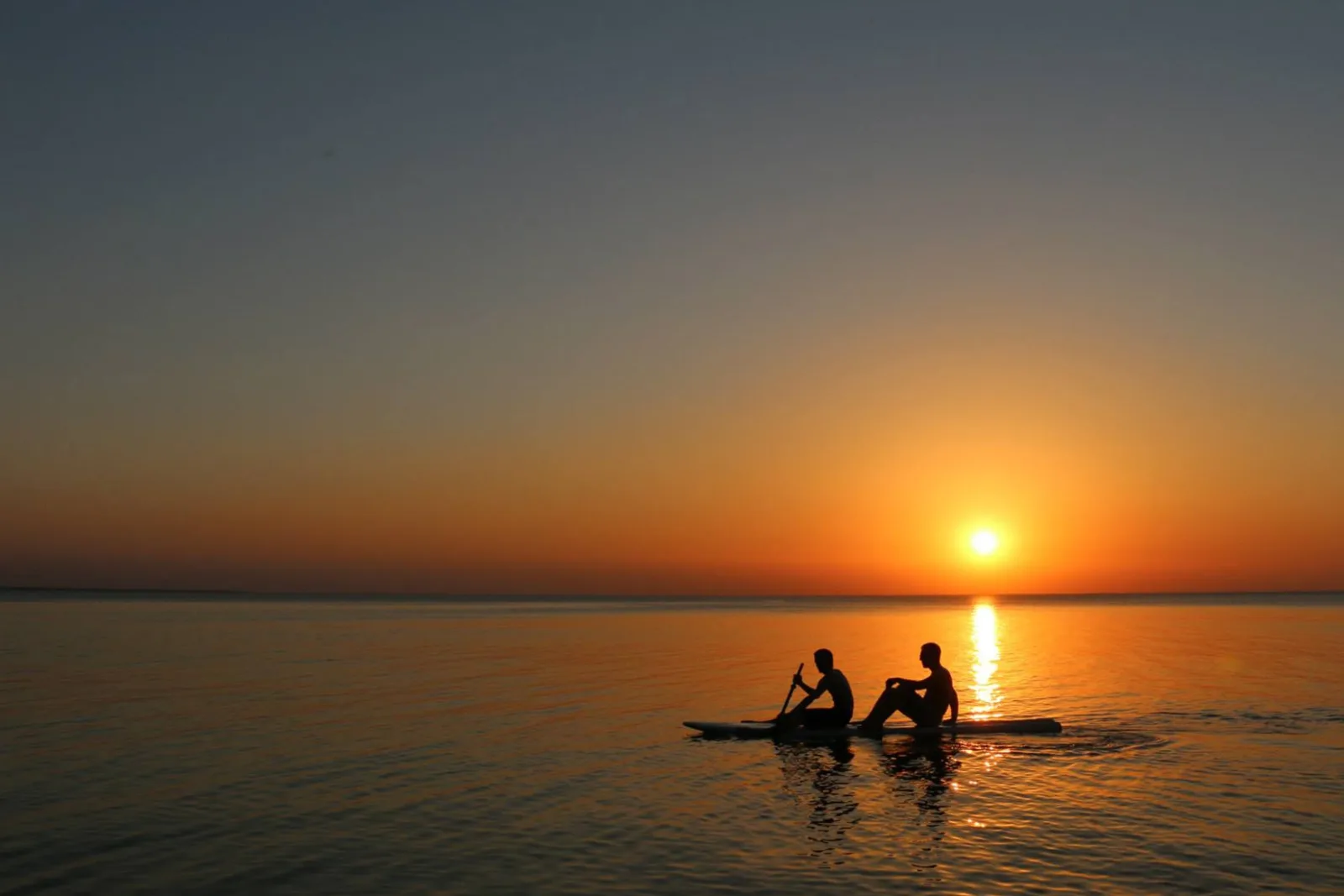
There is the sea and the lagoon, dunes and excellent sandy beaches, a forest with mushrooms and berries. This, of course, attracts people. Trailers for independent campers are slowly multiplying, but most people prefer to look for more secluded spots and bring tents. It's a pity, though, that the growing tourist flow means more litter for the spit. You can find bins or rubbish containers here only near the pier; beyond that begins quite a different territory, where the tourists are wild in every sense of the word.
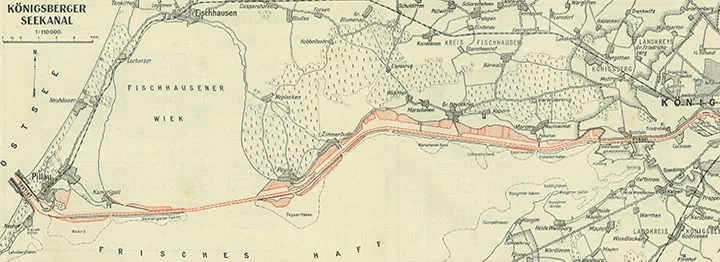
Somewhere out there, beyond a cascade of Russian military bases, begins the Polish part of the spit (the so-called Mierzeja Wiślana). Naturally, you can't get there along the spit: no border crossing is provided here. But many Kaliningraders don't miss the chance to get there via Polish territory. The differences are striking. On the Polish part, of course, much also recalls the war. Just think of the former Stutthof concentration camp, located at the very base of the spit and now turned into a museum and memorial site.
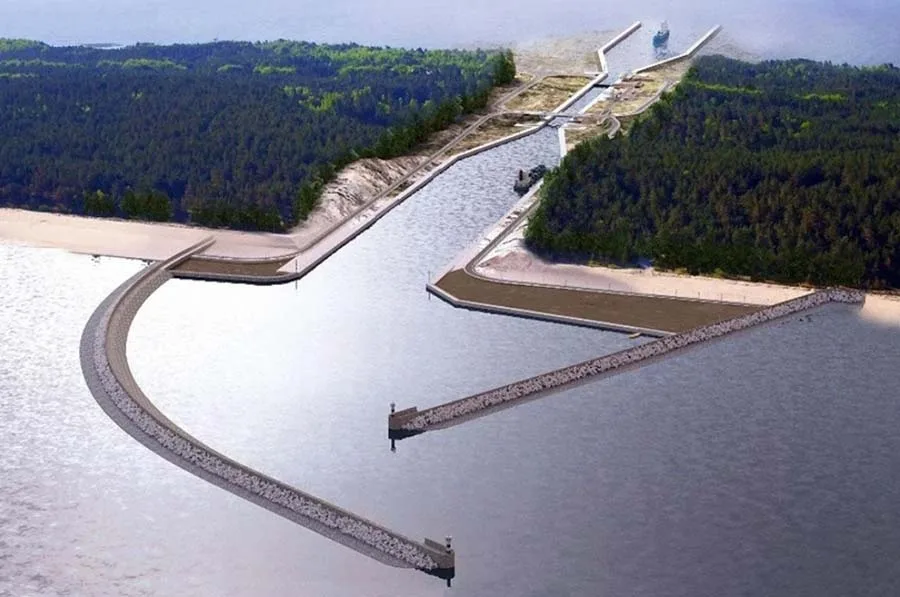 A channel on the Polish part of the spit.
And yet the Polish part of the spit today is above all the popular resort of Krynica Morska, good roads, cycle paths and lots of well-kept campsites.
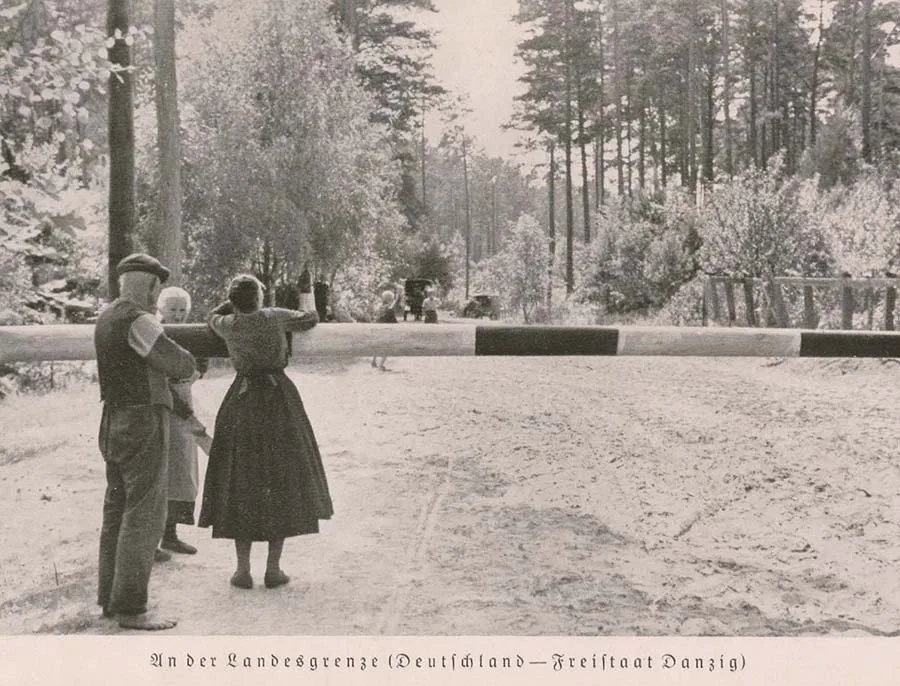 The border between Germany and the Free City of Danzig once ran across the spit.
The day before Navy Day we started packing for home. The next day, Sunday, the president was expected in Baltiysk, which meant the crossing would be closed. A dress rehearsal was scheduled for Saturday. A notice at the pier said the crossing would operate only until 11:00. So we had to get out on the 10:00 ferry. Just in case, my wife and I arrived early, at 9:30, but by 9:45 marines had already rolled up in boats and occupied the pier. The canal linking the spit with the mainland was closed and the crossing cancelled. Until the evening! Never mind that there had been a notice, or that some people had urgent business on the other side. Some of the big boys simply felt like starting an hour earlier.
And three hours later ships entered the canal, guns started firing, helicopters and fighter jets circled overhead. A small crowd of fans with beer and dried fish began to gather on the shore. "Glory to the Navy, glory to Russia!" This year I had to watch the naval parade rehearsal twice. We managed to get out of this recreational-military territory only towards evening.
Translated from Russian with the help of AI (Claude, Anthropic), October 2026.