However, after Stalingrad and Kursk the Germans began to suspect that the rear status of East Prussia might soon change to that of a frontline area, and began preparing it for defence by building fortifications. As the front approached the region's borders, this work became ever more intensive. East Prussia was turned into a huge fortified area with a defensive depth of 150–200 km. Königsberg lay behind a multitude of fortified belts (from three to nine in different directions).
The first battles on German soil
Soviet troops, in the form of the 3rd Belorussian and 1st Baltic Fronts, reached the borders of East Prussia in September 1944 as a result of the triumphant Operation Bagration (unquestionably the best strategic operation of the Soviet Army in the entire Great Patriotic War) and the Baltic Offensive Operation (also quite successful). The Germans intended to defend East Prussia to the last, not only and not so much for military as for political and psychological reasons: the region meant too much to them historically. Nevertheless, the Soviet command planned to capture East Prussia before the end of 1944.
The first offensive against East Prussia began on 16 October 1944. Two days later, troops of the 3rd Belorussian Front for the first time set foot on the territory of this region, i.e. on German territory, which they had been striving for since June 1941.
However, from the very first moment the operation turned into a frontal "gnawing through" of a very powerful German defence. Therefore, as early as 27 October the offensive was halted. It cannot be called a failure: the troops advanced 50–100 km into East Prussia. But there could be no question of capturing it entirely, and Soviet losses turned out to be twice those of the enemy (80,000 against 40,000). Still, a bridgehead on enemy territory had been created and important experience gained.
At the second attempt
The second attempt was made in 1945. For the East Prussian Operation the Soviet Army concentrated 1.7 million men, 25,400 guns, 3,800 tanks and self-propelled guns and 3,100 aircraft against approximately 800,000 men, 8,200 guns, 700 tanks and self-propelled guns and 800 aircraft of the German Army Group North (formerly Army Group Centre).
The Soviet offensive by the 2nd and 3rd Belorussian and 1st Baltic Fronts began on 13 January in two directions: through Gumbinnen towards Königsberg (from the bridgehead captured in October 1944) and from the Narew area towards the Baltic coast.
Unlike the Vistula–Oder Operation, which began at the same time and developed triumphantly (by 31 January the troops had already crossed the Oder, with only 70 km left to Berlin), the offensive in East Prussia proceeded extremely slowly and in this sense resembled the offensive operations of the first half of the war. The reason for this was the deeply echeloned German defence prepared in advance and the fire of German warships. It was thanks to the fire of the ships (the "pocket battleships" Lützow and Admiral Scheer, the heavy cruiser Prinz Eugen, and about 20 destroyers, torpedo boats and floating batteries) that the Germans regularly launched counterattacks, something that by this time was practically unthinkable on other sectors of the front. In addition, the German navy managed to transfer as many as eight divisions from the Courland bridgehead to East Prussia; the Baltic Fleet and the Soviet Air Force were unable to prevent this.
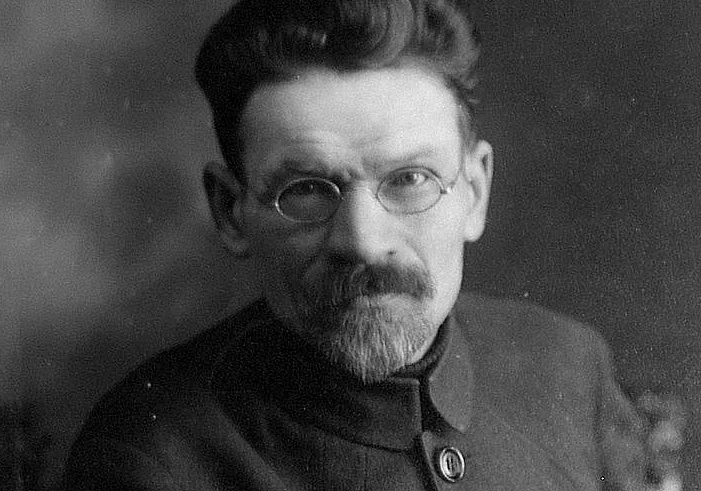
By the beginning of February, despite fierce resistance, Soviet troops had cut the German grouping into three parts. But final victory was still very far off. Thanks to the support of naval artillery, the largest of the German groupings, the Heilsberg grouping (south of Königsberg), launched a successful counterattack and reunited with the Königsberg grouping. In the course of these battles, on 18 February, the commander of the 3rd Belorussian Front, General of the Army Ivan Chernyakhovsky, was killed (he was only 38 years old).
What was happening in East Prussia led the 1st Belorussian Front under Zhukov to halt its offensive on Berlin and turn north, beginning, together with the 2nd Belorussian Front, an offensive into Eastern Pomerania.
Thus, the defence of Königsberg delayed the fall of Berlin, i.e. the end of the war, by at least two months.
In Eastern Pomerania, moreover, the Soviet troops encountered the same problem: the devastating fire of German naval artillery, which greatly hampered the ground offensive.
The German grouping in Eastern Pomerania and the Heilsberg grouping in East Prussia were eliminated only by the end of March. At the same time Danzig fell, which led to the final isolation of the German troops in East Prussia from the main forces of the Wehrmacht. In addition, the German navy was forced to shift its efforts westward, first to the area of the Bay of Danzig, then to Eastern Pomerania. The departure of the German ships, which the Baltic Fleet had never managed to deal with, made things easier for the ground forces in East Prussia.
The capture of Königsberg
Objectively speaking, after this the remnants of the German troops in East Prussia posed no threat whatsoever to the Soviet Army; they could simply have been ignored, and the maximum forces thrown at Berlin. But that was not our way. Now the goal became the capital of the region. Ahead lay the battle for Königsberg.
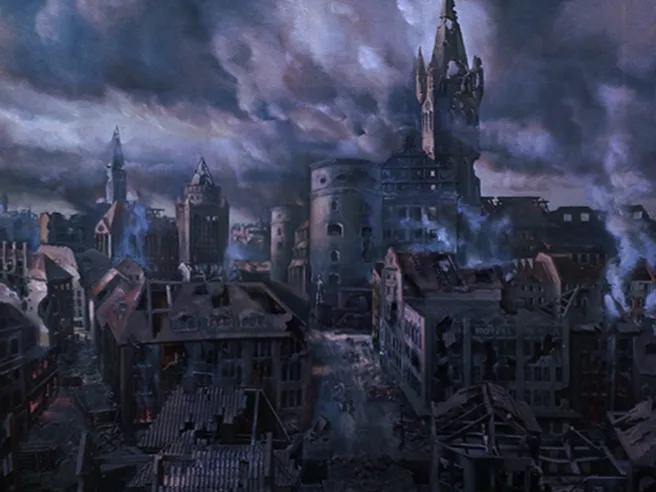
The defences of Königsberg consisted of three lines and included 12 large and 5 small forts, plus many other defensive structures. The city was defended by a German garrison of 134,000 men. The storming of Königsberg began on 6 April. Before that, for four days, an artillery and air preparation had been carried out against the capital of East Prussia, involving 5,000 guns and 1,500 aircraft. It was this that decided the outcome of the battle, all the more so since the shelling and bombing of the city continued during the assault itself.
Even the powerful German fortifications could not withstand such a quantity of metal raining down on them. Königsberg fell very quickly — as early as 9 April; 92,000 German servicemen surrendered, including the commander, General Lasch.
After the capture of Königsberg there was absolutely no point in fighting on in East Prussia, but the Soviet command thought otherwise. The last German grouping remained in the western part of East Prussia, on the Samland Peninsula. It was captured on 25 April, when Pillau also fell (note that by this time fighting was already going on in the centre of Berlin!). The remnants of the German troops (22,000 men) retreated to the Frische Nehrung spit, now known as the Vistula Spit, where they surrendered on 9 May.
The results of the East Prussian Operation
Of all the operations of the last year of the war, it was in the East Prussian one that Soviet troops suffered the heaviest losses: almost 127,000 men killed, 3,500 tanks and almost 1,500 aircraft. The Germans lost no fewer than 300,000 men killed. To the Soviet losses in East Prussia itself must be added the considerable additional losses during the storming of Berlin at the end of April (at the beginning of February it could quite realistically have been taken "on the move").
Thus, the "citadel of German militarism" cost us exceptionally dearly, although the storming of Königsberg as such was carried out almost flawlessly.
The reasons for this have been given above: the extreme saturation of East Prussia with defensive lines and the complete inability of the Baltic Fleet and the Soviet Air Force to neutralise the German ships (all of them were sunk by British aircraft in April–May 1945, but by then they had already done their "dirty work").
Moreover, it is by no means certain that the East Prussian Operation needed to be carried out at all. In effect, the Stalingrad mistake was repeated here, when, while finishing off the "cauldron", a much larger German grouping was allowed to escape from the Caucasus. And there was no need to finish it off — Paulus's army was doomed to perish from cold and hunger. Two years later, the German grouping in East Prussia was likewise doomed and no longer had any possibility of striking at the flank and rear of the Soviet troops advancing on Berlin; it could simply have been contained by fairly limited forces without any assaults. Then Berlin would inevitably have fallen in February, and the war would have ended there. But alas.
Translated from Russian with the help of AI (Claude, Anthropic), October 2026.