Does it?
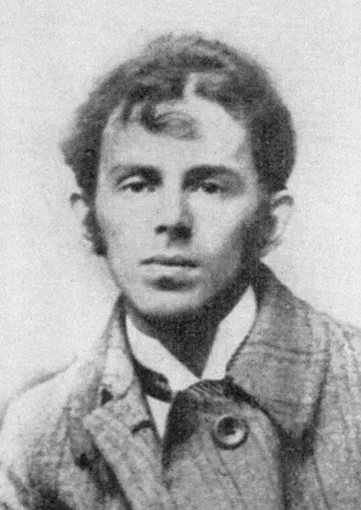
Osip Emilyevich turns 125 in 2016, and the Moscow city fathers, for example, have bustled into action, as is customary. Such a street must appear in the capital — after all, Warsaw has one. In our city, too, Mandelstam is a place of memory, although it would be better to say a place of oblivion.
It is well known that in 1910 Mandelstam passed through Eydtkuhnen (today the village of Chernyshevskoye in the Nesterov district). Nothing surprising about that: this border town became familiar to many after the construction of the railway linking St Petersburg and Berlin. According to the recollections of Georgy Ivanov, the nineteen-year-old Osip arrived in Petersburg by that same route in a state of distress: "In the suitcase lost at Eydkuhnen, besides a toothbrush and Bergson, there was also a dog-eared notebook of poems. Only the loss of the toothbrush really mattered, though — he knew both his own poems and Bergson* by heart…" The notebook left to the people of Eydtkuhnen as a keepsake contained the famous lines: "I have been given a body — what shall I do with it, so whole and so much my own? For the quiet joy of breathing and living, whom, tell me, should I thank?"
So naming a street after Mandelstam in the village of Chernyshevskoye, on today's border between Russia and the European Union, would be an act of restoring justice: he gave us poems, and we would give him — with all the generosity of the Russian soul — a whole street.
But it turns out that Mandelstam also spent some time in Königsberg. The circumstances of his stay were truly dramatic. They are related in documents from the records of the Police Department kept in the State Archive of the Russian Federation. In the anniversary year these materials were shown at an exhibition in the State Literary Museum.
On the fourteenth of October 1910 the Police Department in Petersburg registered an incoming letter from Flora Osipovna Mandelstam. Madame Mandelstam wrote as follows:
"To His Excellency the Director of the Police Department
From Flora Osipovna Mandelstam, wife of a Petersburg merchant
Petition
My son, Osip Emilyevich Mandelstam, aged 20, a severe neurasthenic, is at present in a critical situation in the city of Königsberg. While staying at a sanatorium in Finland in the summer, he travelled by water to join me in Berlin, where I was in a clinic for an operation. He had with him a passport issued by the City Governor's Office in St Petersburg, which had already been used. I returned home, leaving my son at the sanatorium for another two weeks. When this period expired, my son was returning to <illegible> Petersburg, but was not allowed through at the border. Owing to his serious illness he is often abnormally bewildered and absent-minded. That is why he overlooked what would happen with a used passport.
From the border he returned to Königsberg, and the Russian Consul asked the City Governor's Office by telegram to allow my son to return to Russia.
The City Governor's Office refused, saying that this was not within their power, and referred me to the Police Department.
I beg Your Excellency to telegraph the Russian Consul to let my son through on a transit certificate. I shall bear all costs for the expired passport. The stay of my sick son in a hotel in a foreign land may end in misfortune for him and in heart disease for me, since agitation is fatal after the serious operation I have undergone.
My address: Zagorodny 70, apt. 26."
Credit where it is due: the Police Department responded both constructively and promptly. On 15 October a telegram was sent reading as follows (translated from the French):
"Königsberg
To the Russian Consul
The Police Department sees no obstacles to issuing a certificate for return to Russia to the seriously ill Russian subject Osip Emilyevich Mandelstam on the basis of the used passport issued by the City Governor of St Petersburg, if Mandelstam's identity is <established> beyond doubt.
Director Zuev."
Happy end: the abnormally bewildered and absent-minded poet arrived for the second time at the railway station in Eydtkuhnen. It is hard to establish now on which of his two official visits he lost the suitcase, but the identity (in the French original we find the word "identity", l’identité, so familiar to Kaliningraders) of the young versifier evidently raised no doubts for the Russian consul. We know whom Mandelstam should have thanked for the quiet joy of living in his homeland again: the consular post in Königsberg at the time was held by Zinovy Mikhaylovich Polyanovsky**. Thanks to Polyanovsky the poet both lingered in our city and was happily reunited with his family. Fate would take cruel revenge on the diplomat for the poet's torments: at the outbreak of the First World War the Russian consul was arrested in Königsberg and then transferred to Berlin. He spent 14 months in detention and, by his own admission, nearly went mad — but in the end he was released after all and returned safely home. It is better not to trifle with bards, for in every great poet there is something of the Creator.
In the autumn of 1910 Mandelstam spent some time in a Königsberg hotel. The Russian consulate was located at Münzstrasse 18 (the building, in the area of today's Proletarskaya Street, has not survived).
The poet probably strolled around Königsberg Castle and the university, along the banks of the Castle Pond. Perhaps he wandered as far as the Kneiphof. There were plenty of hotels in Königsberg, so it is not yet possible to pinpoint where the Russian poet stayed. For now, therefore, Mandelstam in Kaliningrad remains simply a commonplace of memory. But who knows — perhaps in time we shall find further evidence that will make clear where a memorial plaque to this absent-minded and bewildered servant of the Muses should be placed?
Then again, perhaps it is just as well that we do not know exactly where the poet strolled, what inspired him, what he smiled at. For there is something totalitarian in our way of nailing a person's image to a specific spot with a memorial plaque. Like a butterfly pierced with a pin or a dried leaf in a herbarium, a memorial plaque, meant to preserve living memory, in fact clips its wings.
Who knows — perhaps the poet's image is more at ease wandering aimlessly with an expired passport through the palimpsest of the old city, finding for itself neither tent nor temple?..
Ten years after the poet had undergone his ordeal by bureaucracy in a foreign land, he wrote his enigmatic "Swallow".
I have forgotten the word I wished to say.
The blind swallow will return to the hall of shadows
On clipped wings, to play with the translucent ones.
In oblivion the song of night is sung.
And on the lips, like black ice, burns
And torments memory: a word is missing.
It cannot be invented: it hums of itself,
It rocks the bell of night's oblivion.
And slowly grows, as if a tent or temple.
Now suddenly it turns into a mad Antigone,
Now like a dead swallow hurls itself at one's feet
With Stygian tenderness and plague-stricken passion.
Oh, could I but bring back the shame of seeing fingers,
And the palpable joy of recognition.
I am so afraid of the sobbing of the Aonides,
Of mist, of ringing and of gaping void.
But mortals have been given the power to love and to recognise,
For them even sound will pour into their fingers.
But it has forgotten what I wish to say,
And the disembodied thought will return to the hall of shadows.
But that is not what the translucent one keeps repeating,
Always swallow, dear friend, Antigone...
And on the lips, like black ice, burns
The memory of Stygian ringing.
We may forget the word we wish to say. We may forget a suitcase with a toothbrush and poems, with matter and memory.
But if memory torments us, burning like black ice on our lips, does it really matter so much whether a memorial plaque to the poet appears in the city where he nearly went mad?
It seems to us that Proserpina gains power over us when we cross to the western bank of the great river, meekly following the luminary as it sinks below the horizon. But does this not happen earlier, when, in a vain search for immortality, we begin to surround ourselves with countless plaques and monuments that obtrusively remind us of a quite different fate?..
Waking from our prolonged night of oblivion, we listen anxiously to the Stygian ringing — the echo of the murmuring waters of the underground river that inevitably carries each of us, the sensitive and the insensitive alike, into non-being. But there is no cause for despair as long as our passport in this world has not expired. As long as we are given the power to love and to recognise.
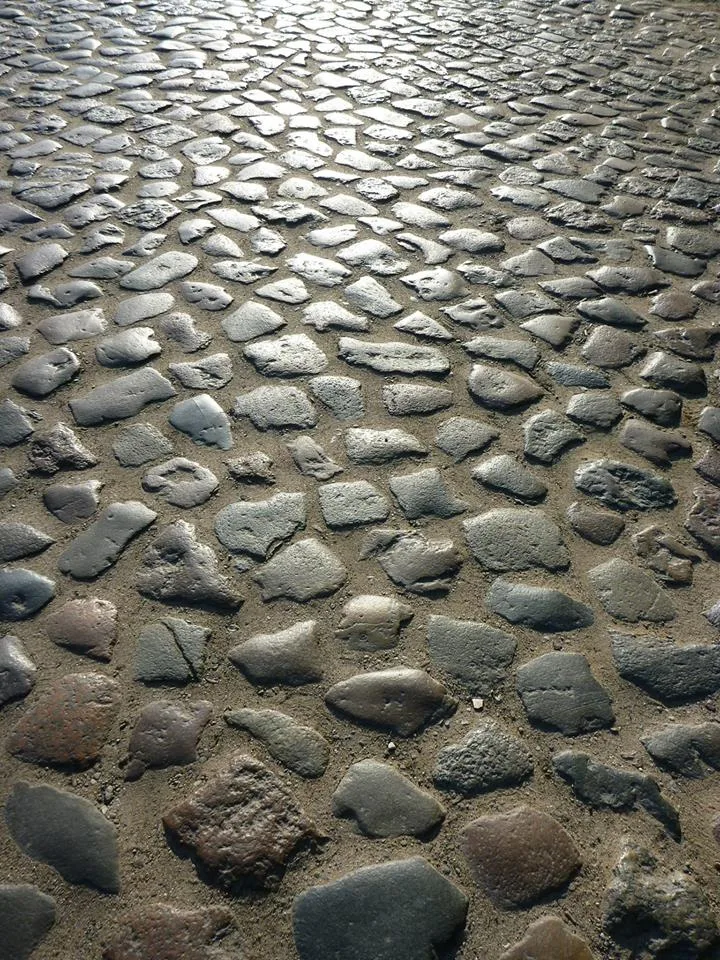
Whatever this crooked street may be called, it is within our power to love and to recognise, to recognise and to love. To rejoice quietly that one breathes and lives.
This palpable joy may well be the best way to immortalise the memory of the great poet in the city where he happened to get stuck one hundred and six years ago.
________________
* Henri Bergson (1859–1941) was a French philosopher, an exponent of intuitionism and the philosophy of life, and the author of "Matter and Memory".
** Information about the diplomat Z. M. Polyanovsky, who studied in Japan and was transferred to Königsberg from the Russian consulate in Nagasaki, is given on the website of the Representative Office of the Russian Foreign Ministry in Kaliningrad.
Translated from Russian with the help of AI (Claude, Anthropic), October 2026.