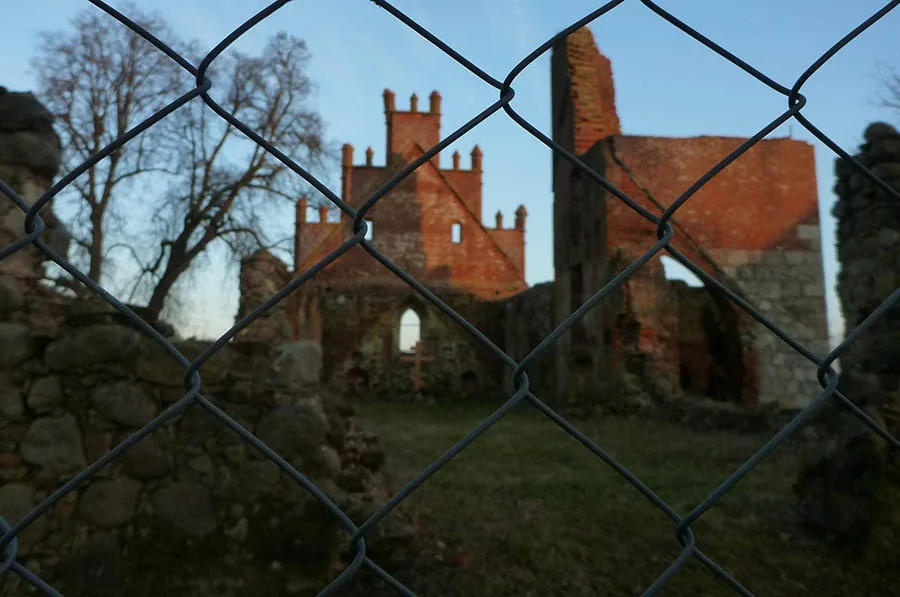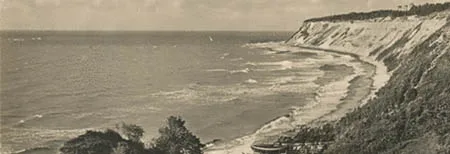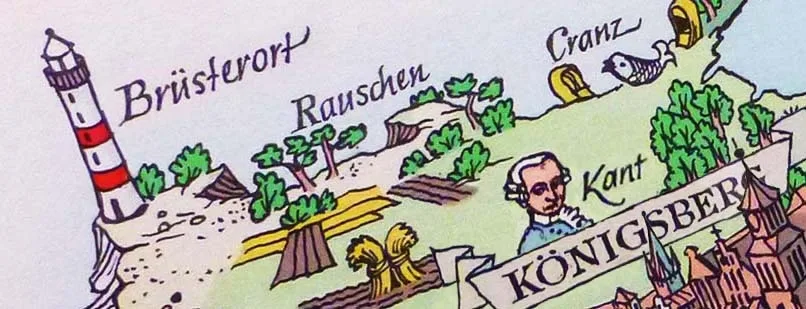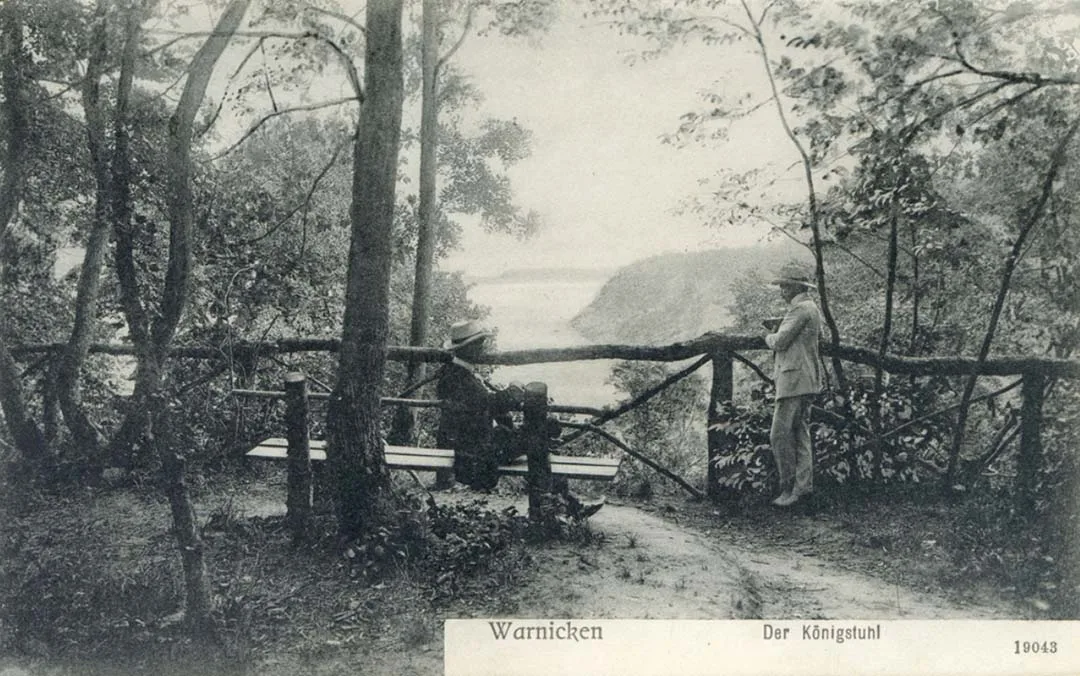
The village of Warnicken was founded in 1405. In 1713 Warnicken is mentioned as a manor and forestry that served as the residence of the manager of the forest district. At the beginning of the 18th century attempts were made here to mine amber by the shaft method. In the 19th century there were an estate and a forestry of Warnicken.
From 1867 the Warnicken estate, with the Warnicken forestry located on it (Oberförsterei Warnicken), formed a Gutsbezirk (later a forest Gutsbezirk) in the Kreis Fischhausen (Primorsk; from 1939 it became part of the Landkreis Samland). The estate belonged to the parish of Sankt Lorenz (Salskoye). By 1871 the forest Gutsbezirk Warnicken comprised, besides the Warnicken forestry itself: Strandgut, Strandhaus and the forestries of Wilhelmhorst (54°53'26'' N 20°03'24'' E) and Hirschau (Forsthaus Hirschau; Kolomenskoye). In 1871 the forest Gutsbezirk Warnicken had six dwelling houses, in which seven families lived. The Warnicken estate itself had one house, two houses were in Strandgut, and the other parts of the Gutsbezirk consisted of one dwelling house each. On 13 June 1874 the Warnicken estate and the adjoining part of the forest Gutsbezirk Warnicken were included in the newly established Amtsbezirk Warnicken.
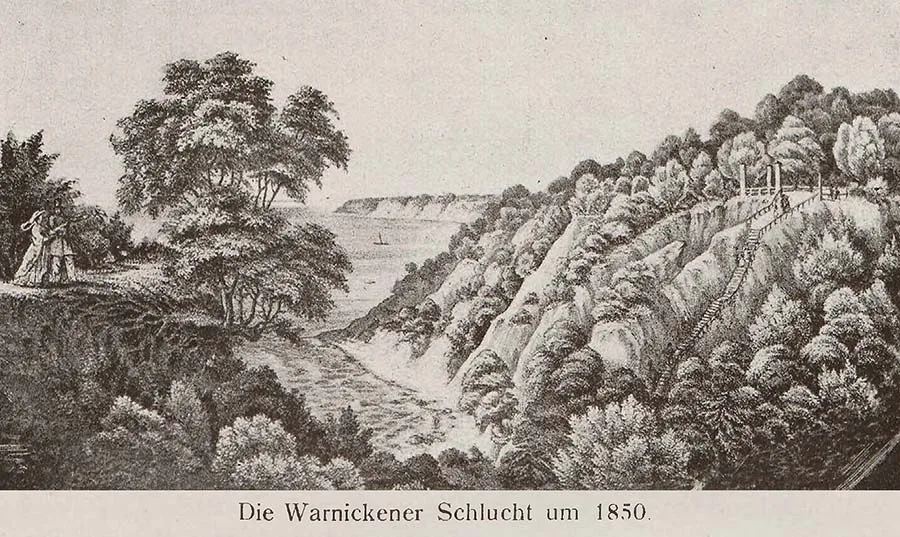 The Warnicken ravine in 1850.
On 14 July 1900 traffic opened on the Samland Railway (Samlandbahn), on which Warnicken was the terminus.
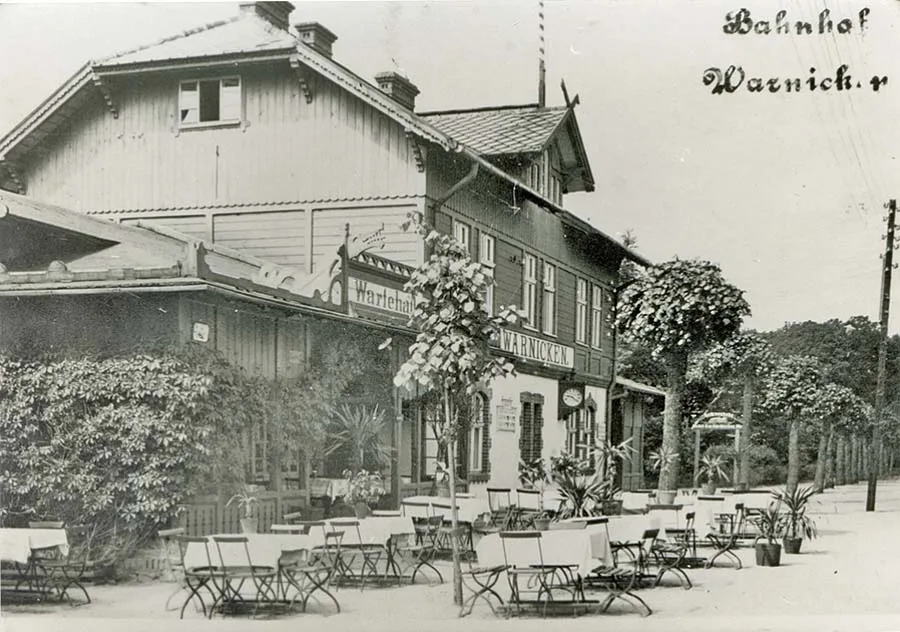 The railway station in Warnicken.
By 1905 the forest Gutsbezirk Warnicken consisted of the Warnicken estate (with the head forestry), the Wilhelmhorst forestry, the Katzkeim forestry (Forsthaus Katzkeim; Storozhevoye), the Hirschau forestry (Kolomenskoye), the village of Klein Katzenberge (54°54'38'' N 20°04'33'' E) and Warnicken station (Bahnhof Warnicken; 54°56'23'' N 20°05'10'' E). On 5 June 1908 the Schönwalde estate (Maysky) became part of the forest Gutsbezirk Warnicken. After 1910 a colony (village) of Warnicken began to form on forest land near the Warnicken estate. On 1 December 1928 the forest Gutsbezirk Warnicken was abolished and divided among the nearest rural communities; the Warnicken forestry itself, the village (colony) of Warnicken and the Schönwalde estate became part of the rural community of Georgenswalde (Otradnoye).
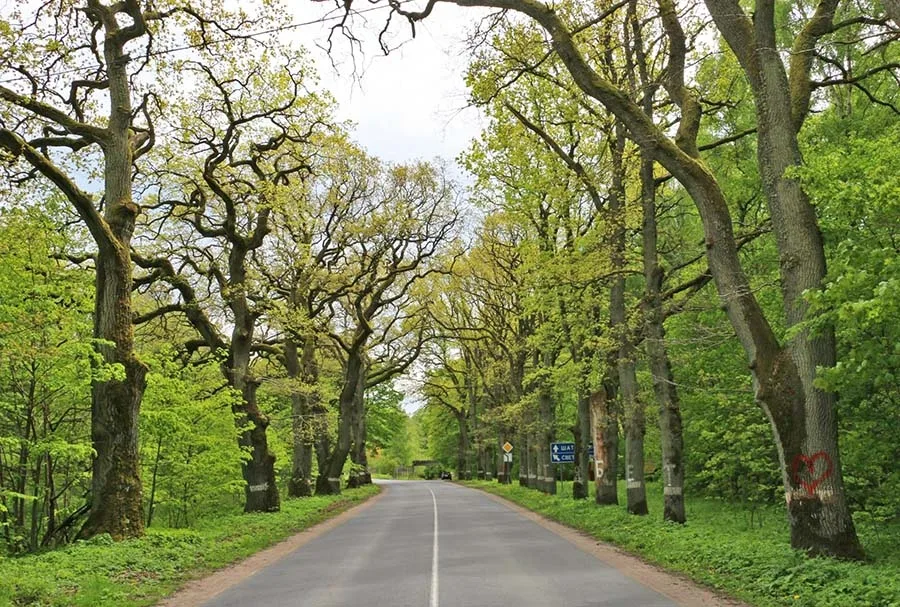 Today Lesnoye stands out among the other settlements around Svetlogorsk thanks to one of the few oak alleys surviving on the Sambia Peninsula (2023).
Amtsbezirk Warnicken
On 13 June 1874 Amtsbezirk No. 39 Warnicken was established in the Kreis Fischhausen, comprising three Gutsbezirke: Warnicken (Lesnoye), Georgenswalde (Otradnoye) and Grünwalde (54°53'29'' N 20°04'23'' E), as well as part of the forest Gutsbezirk Warnicken (Warnicken, Forst). (Head) foresters from Warnicken held the post of head of the Amtsbezirk in 1874–97 (Schallehn) and in 1900–1927 (Offermann).
On 15 July 1909 the Gutsbezirk Grünwalde was incorporated into the rural community of Woydiethen (Listovoye) of the Amtsbezirk Kirschappen (Druzhba). The Amtsbezirk Warnicken now consisted of the Gutsbezirk Georgenswalde (Otradnoye) and part of the forest Gutsbezirk Warnicken. On 1 December 1928 the forest Gutsbezirk Warnicken was abolished, the forestries became part of the nearest rural communities, and the Warnicken head forestry itself, the village (colony) of Warnicken and the Schönwalde estate were incorporated into the rural community of Georgenswalde (Otradnoye). On 18 May 1930 the Amtsbezirk Warnicken was renamed the Amtsbezirk Georgenswalde. In the process Neu Katzkeim left the Amtsbezirk and was incorporated into the Rauschen community (Svetlogorsk).
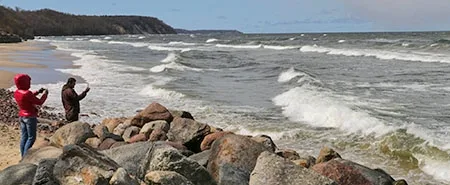
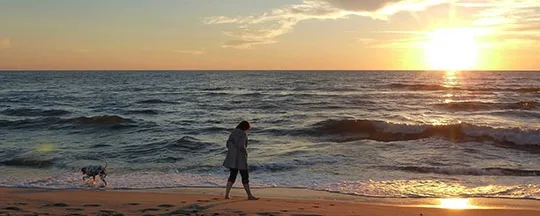
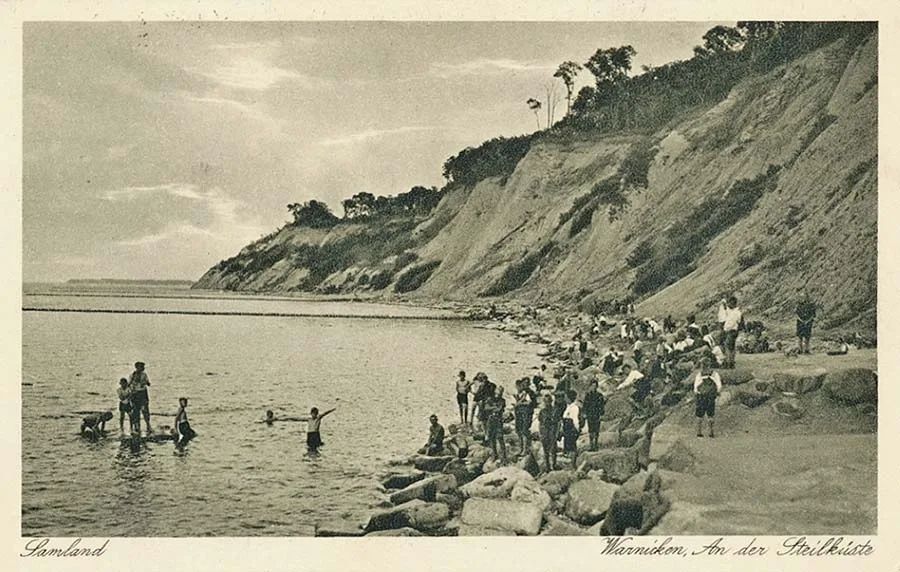 On the beach at Warnicken.
In April 1945 units of the Red Army entered Warnicken. There is no information about any fighting for the locality: the German units left Warnicken without a fight.
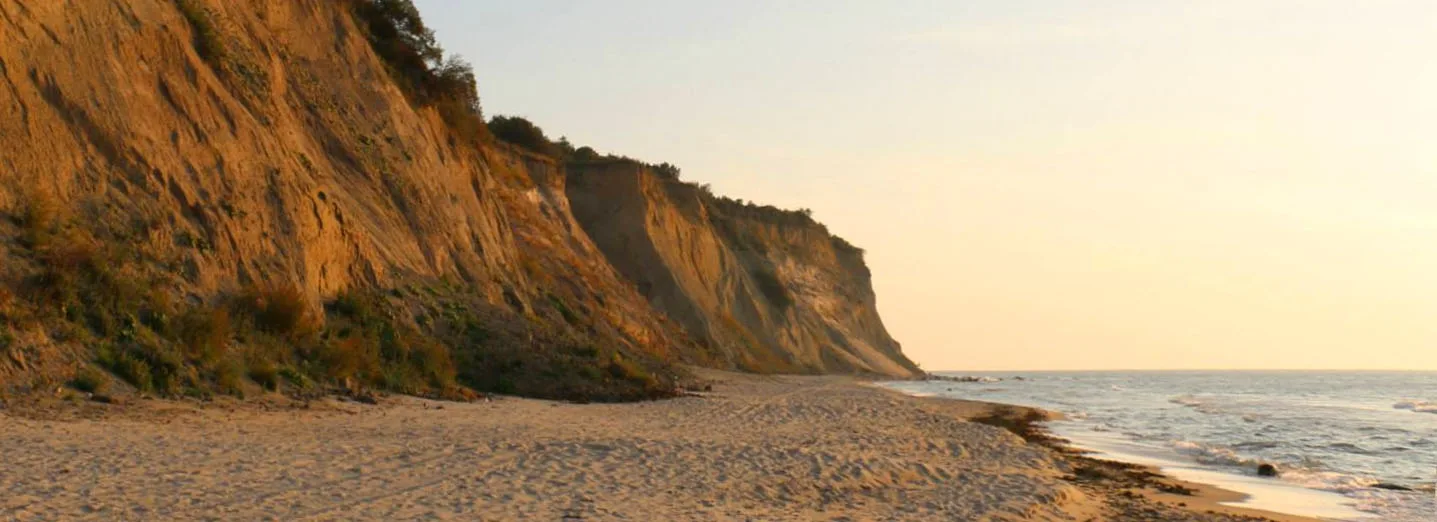
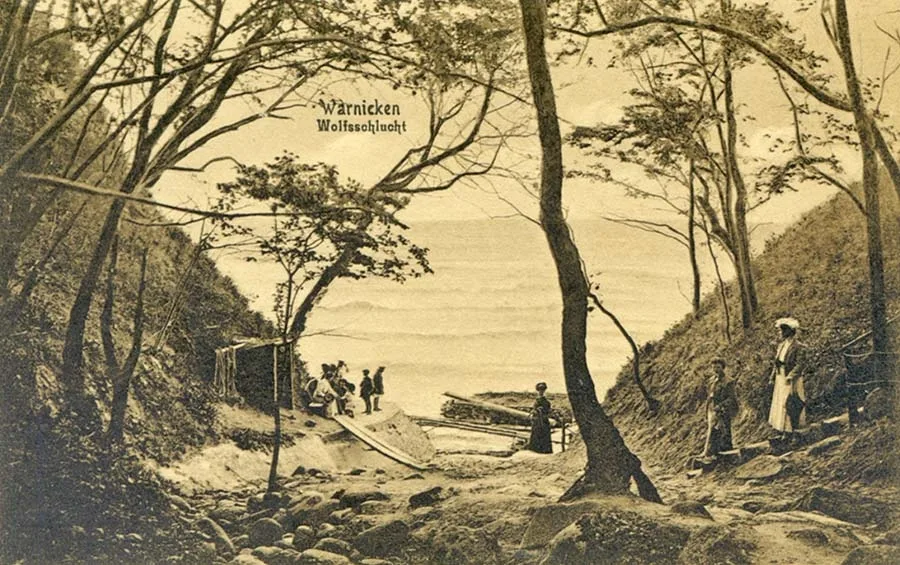 The Wolf Gorge is to this day one of the most picturesque places on the Sambia Peninsula.
The exact date when Warnicken was renamed the settlement of Lesnoye is unknown. It does not appear in any of the decrees on mass renamings. From 1951 the settlement of Lesnoye was part of the Primorye Settlement Council, which was newly formed at that time. In 1955 the settlement had 30 houses; at the end of the 1990s, about 60. As of 2018 the settlement had about 50 houses.
Sights: the Volchy ravine (gully) (Wolfsschlucht, German for "Wolf Gorge"), the oak alley.
Population change: 1871 – 12, 1984 – 200, 2002 – 208, 2010 – 196, 2012 – 201 inhabitants.
For reference
Population change of the forest Gutsbezirk Warnicken: 1867 – 58, 1871 – 66, 1885 – 40, 1905 – 179, 1910 – 237 inhabitants.
Composition of the population of the Gutsbezirk Warnicken in 1871: Evangelical Christians – 63, Catholics – 1, other Christians – 1, Jews – 1, children under 10 – 18, literate – 42 (88%).
Population of Strandgut: 1871 – 16 inhabitants.
Population of Strandhaus: 1871 – 21 inhabitants.
Population change of the Wilhelmhorst forestry: 1871 – 10, 1905 – 6 inhabitants.
Population change of Warnicken railway station: 1905 – 19 inhabitants.
Population change of the Schönwalde estate: 1867 – 11, 1871 – 12, 1885 – 29, 1905 – 2 inhabitants.
Population change of the Hirschau forestry: 1871 – 7, 1905 – 6 inhabitants.
Composition of the population of the Schönwalde estate in 1871: all 12 – Evangelical Christians, children under 10 – 4, literate – 7 (88%).
Illustrations on this page: Bildarchiv Ostpreußen. Modern photo: Mikhail Ogorodnikov.
Translated from Russian with the help of AI (Claude, Anthropic), October 2026.