Water jousting with poles is a sporting pastime of the boatmen's guild going back to the Middle Ages. Two members of opposing teams, armed with poles with padded tips, stand on special platforms on rowing boats. Moving towards each other, they try to knock their opponent off with their pole so that he falls into the water. Such contests are still held in some towns in France, Germany, Austria and Switzerland.
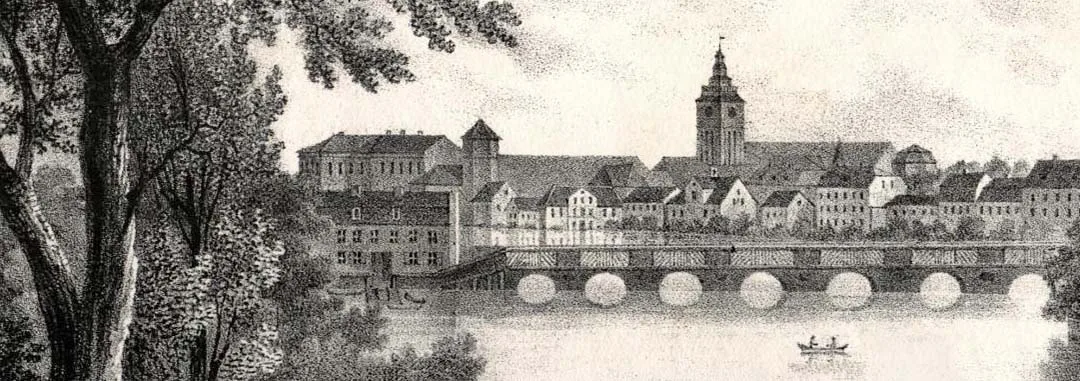
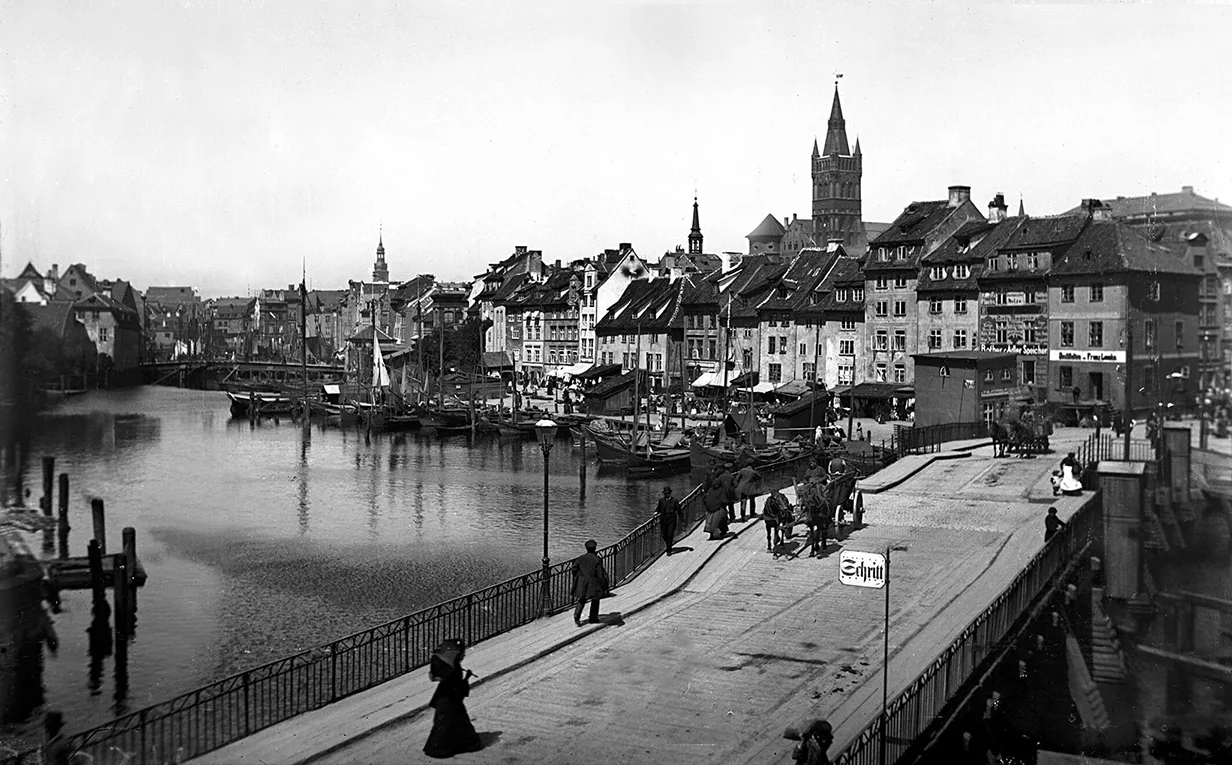
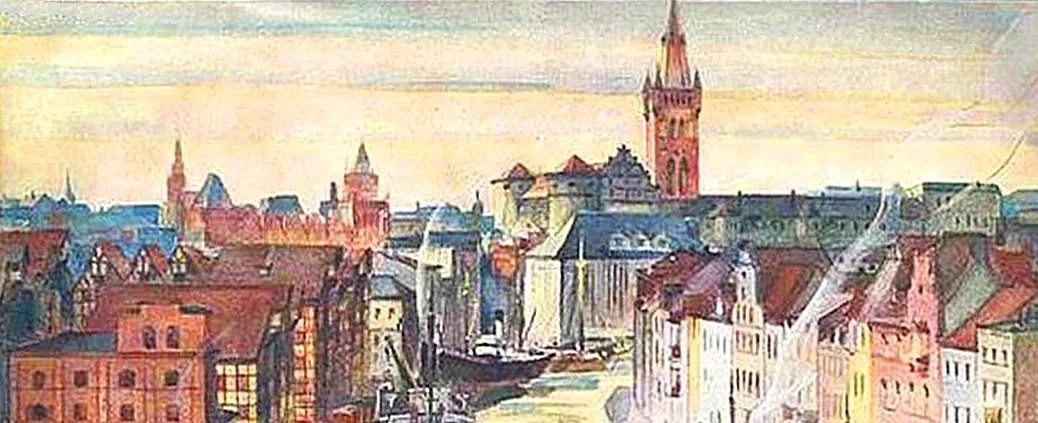
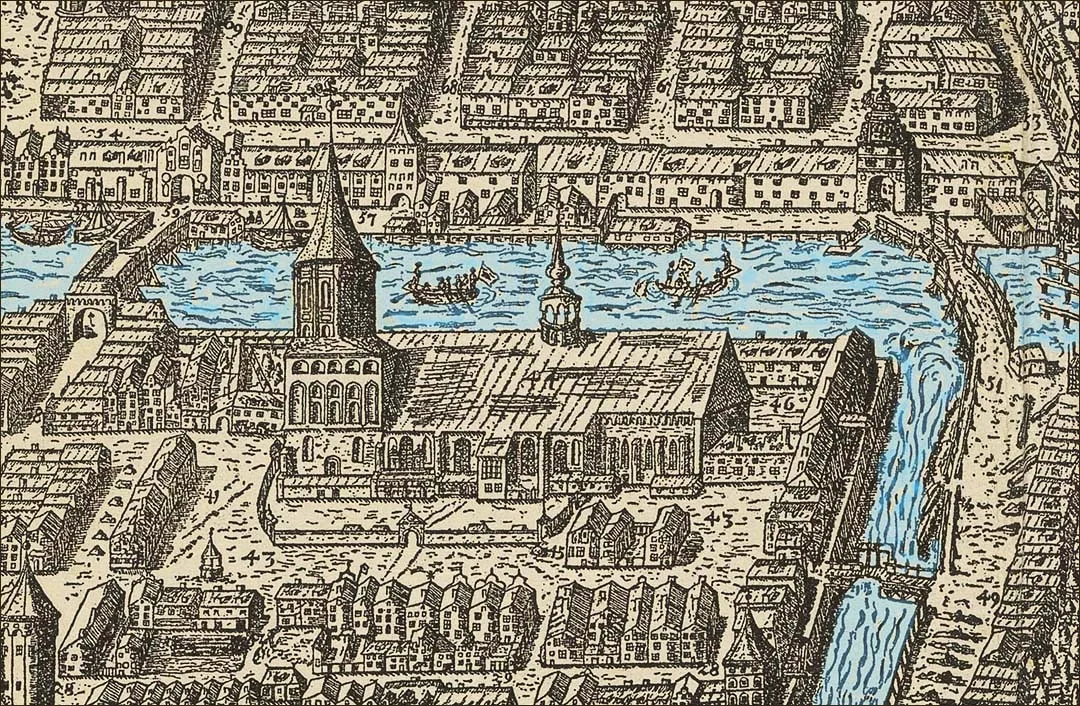
The boatmen of Königsberg competed on the Pregel [Pregolya]. There are at least two documentary records of this event.
The first dates from 7 November 1589, during the visit of King Sigismund III of Poland to Königsberg. The king stayed in the city for a week on his way back to Poland from Reval [Tallinn]. It is known that the members of the boatmen's guild then marched in solemn procession to the beat of drums, with banners, from the Public Garden of the Altstadt to the Green Bridge, where the boat tournament took place.
We learn of the second contest from Michael Lilienthal (1686–1750), a German theologian and historian who lived in Königsberg for many years, in his work “Prussia with Commentaries...” (German: Erleutertes Preußen...).
On 3 January 1594 the boatmen held their tournament on the Pregel by the Shop Bridge in the Kneiphof. They marched there from the Public Garden of the Altstadt with banners flying, to the roll of drums and the sound of horns. Seven pairs of rowing boats fought against each other. Standing in the stern, the fighters tried to push their opponent out of the boat with a long pole.
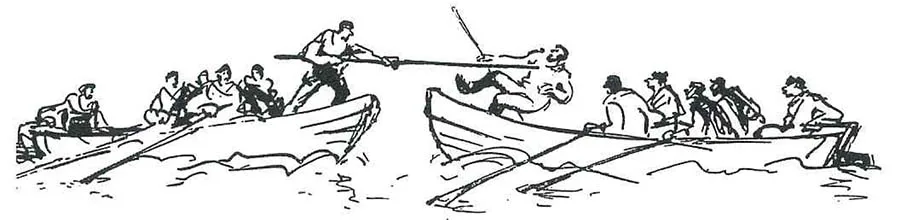
Whenever someone tumbled head over heels from a boat into the water, loud cheers rose from the spectators.
After the tournament, spectators and participants went their ways, well pleased with one another, although some had swallowed plenty of icy water: the members of every team except the winning one had to take a dip in the January Pregel.
Boat battles with poles usually concluded the festivities of the boatmen's guild and were a playful imitation of medieval knightly tournaments. One might say that this was indeed a knightly tournament, reshaped in a modern way.
A city legend of Königsberg tells that once, during one of these contests, two young fishermen in love with the same girl fought each other. One of them, charging at full tilt, struck his rival in the face with his spear so unluckily that the latter lost consciousness, fell into the water and drowned. And so nothing now stood in the way of the victor marrying his beloved. But on the night before the appointed wedding day, the dead man appeared to the bride in the most vivid guise of a drowned man, and the unfortunate girl went mad and threw herself into the Pregel in despair. "The dead man got to them after all," people said at the time.
“Königsberg Life in Folk Customs” (Königsberger Leben in Bräuchen Volkstum), Hamburg, 1983.
Author: Herbert Meinhard Mühlpfordt
Drawing in the text: Erich Behrendt
LEGENDS OF PRUSSIA in the blog of Tatyana Kolivay.
Translated from Russian with the help of AI (Claude, Anthropic), October 2026.