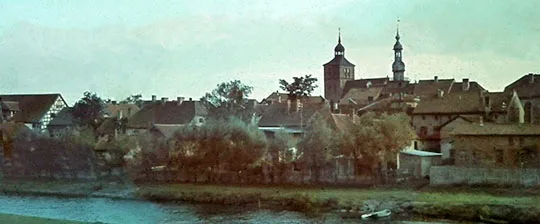
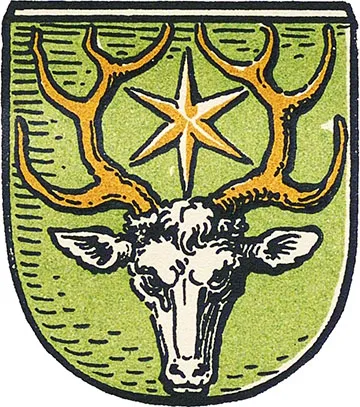
 Coat of arms of Wehlau
Even before 1255 the Prussians built the timber-and-earth fortress of Wetau or Wetalo on an island, no longer in existence, at the confluence of the Alle (Lava) and the Pregel (Pregolya). The chronicles record that the fortress was ruled by the chieftain Tirsko and his son Maudel, who soon converted to Christianity. In 1256 the fortress was attacked and captured by the Teutonic Order, after which the chieftain handed it over to the Komtur of Königsberg, Burchard von Hornhausen. On the site of the fortress the Order built a timber-and-earth castle. In 1264, during the Prussian uprising, the castle was attacked by Prussians who used stone-throwers in the siege. Nevertheless, the garrison under Heinrich von Taupadel managed to fight off the rebels, killing the leader of the attackers and the warriors who knew how to operate the stone-throwers. In the next attack on the fortress, however, in 1280, it was taken by rebel Sudovians and destroyed.
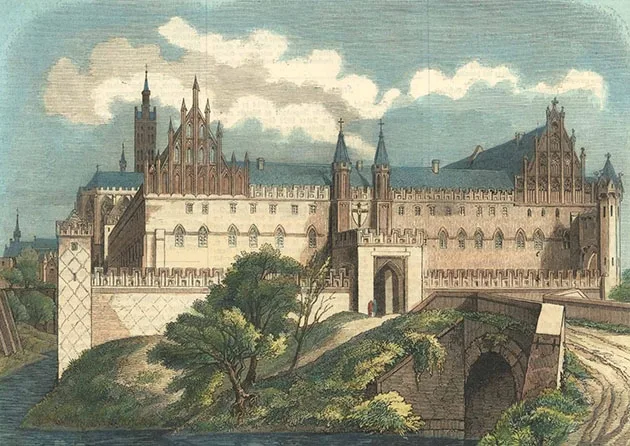
At the beginning of the 14th century a castle, now of stone, with an outer bailey was built on a new site – on one of the islands of the Alle (Lava) delta – but it too was destroyed by the Lithuanians in 1323.
The approximate location of the castle can be identified as the area between today's Shosseynaya Street and the bed of the Lava. At the same time all the settlements by its walls were burned. In 1336 the village headman Gottfried Hundertmark was commissioned by the Order's Grand Marshal, Heinrich Dusemer, to found a town, which later came to be called Wehlau. This is why 1336 is now officially regarded as the founding year of Wehlau-Znamensk. In 1339 Wehlau received Kulm town rights from Grand Master Dietrich von Altenburg. In the same year a higher town school opened in the town. In 1347 Wehlau was again destroyed by the Lithuanians, led by Kęstutis, Prince of Trakai. In 1349–51 a Franciscan friary was built on the site of the former castle. In 1354 construction began on a stone church, which was completed only in 1380. In 1376 the Lithuanians attacked Wehlau again; they laid waste to the surrounding areas but could not take Wehlau itself. In 1379–82, apparently impressed by the recent siege, the townspeople built stone walls around Wehlau.
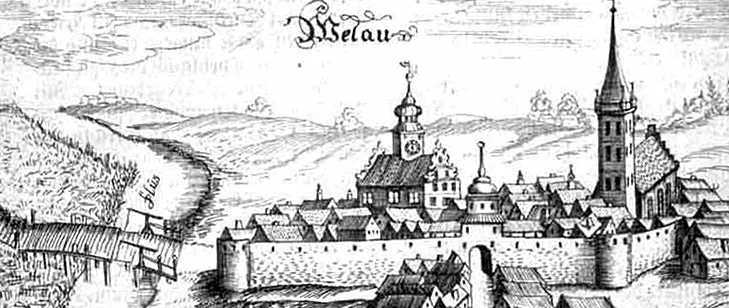
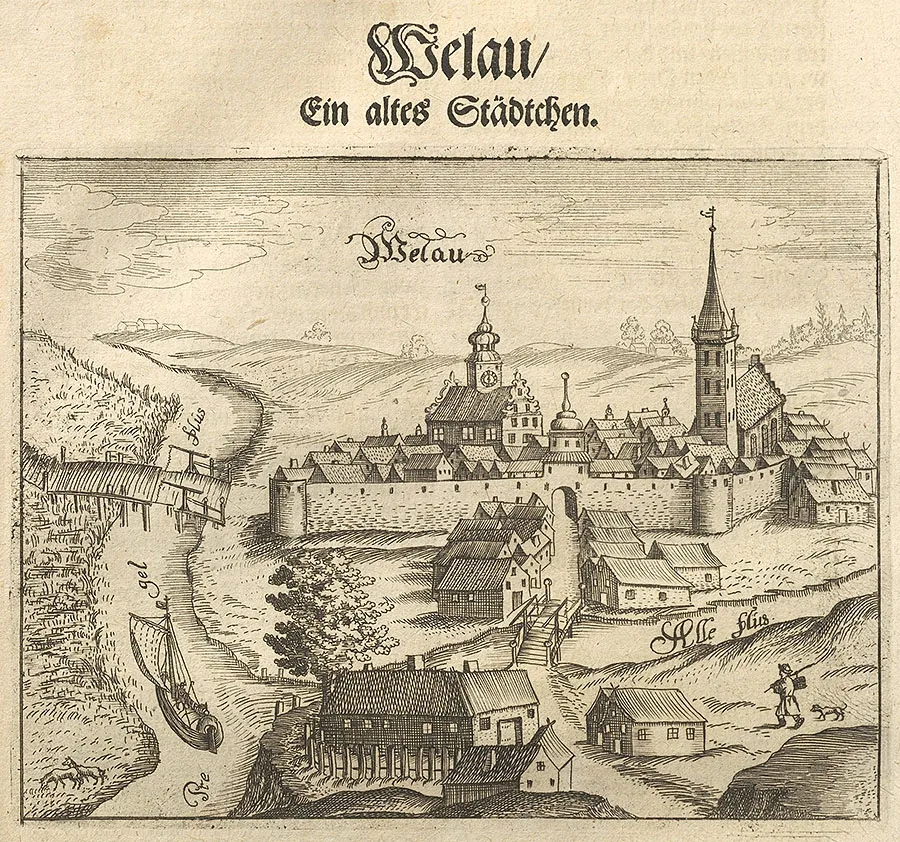 Wehlau. Engraving by Christoph Hartknoch, 17th c.
As early as the 14th century there was a large horse market in Wehlau. In 1447 a Bernardine friary was founded next to the town.
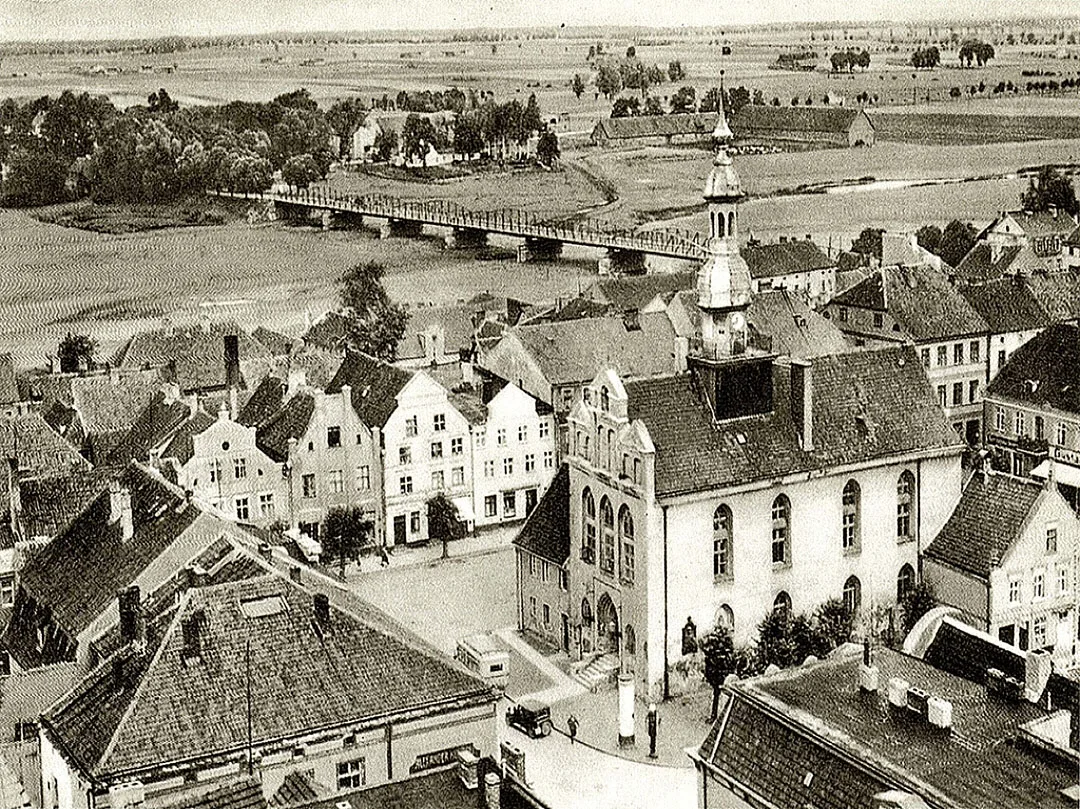
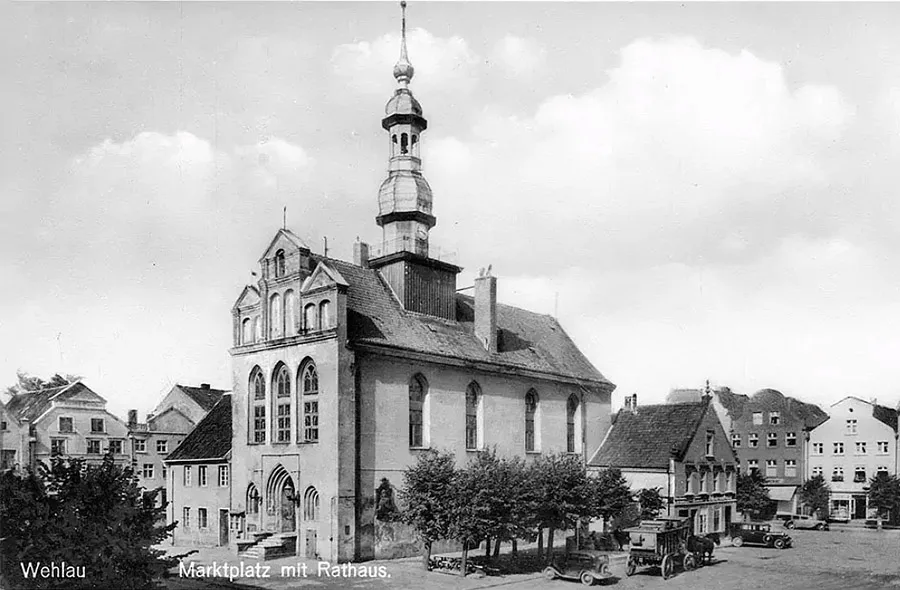 Town Hall of Wehlau on the market square (not preserved).
In the conflict between the Order and the Prussian towns that began in the 15th century and erupted into the Thirteen Years' War (1454–66), Wehlau sided with the Prussian Confederation in 1455. The rebellious townspeople destroyed the Franciscan friary. The Order's troops arrived, besieged Wehlau and threw up a counter-rampart around it. Unable to break the blockade, the people of Wehlau surrendered to the Order's authorities. In 1460, as punishment for this rebellion, the town was stripped of its town rights and became the property of the Teutonic Order.
Although the friary was rebuilt after the war, in 1517 the Franciscan friars moved to Königsberg. The friary was destroyed during the Reformation – one of the few instances of Catholics being persecuted by adherents of the new faith.
After the Reformation a Latin school was opened in place of the friary (1537), which prepared the first students for the University of Königsberg. Later Jakob Reza (1690–1739) taught at the school; he is known for having raised the standard of education in Wehlau. In that same year, 1537, Wehlau suffered a severe flood. And in 1540 a fire destroyed half of the town's buildings, including the town hall. In 1549 a plague epidemic swept through the town, and it returned periodically thereafter (1589, 1602, 1612, 1625). Then came the floods of 1576, 1612 and 1621. Wehlau's half-timbered warehouses burned down in 1607.
In the first year of the Northern War (1655–60) Wehlau was occupied by the Swedish army. On 19.09.1657 the first part of the Treaty of Wehlau–Bromberg was concluded in Wehlau – the agreement under which Prussia was released from Polish feudal dependence and became Poland's ally in the struggle against Sweden.
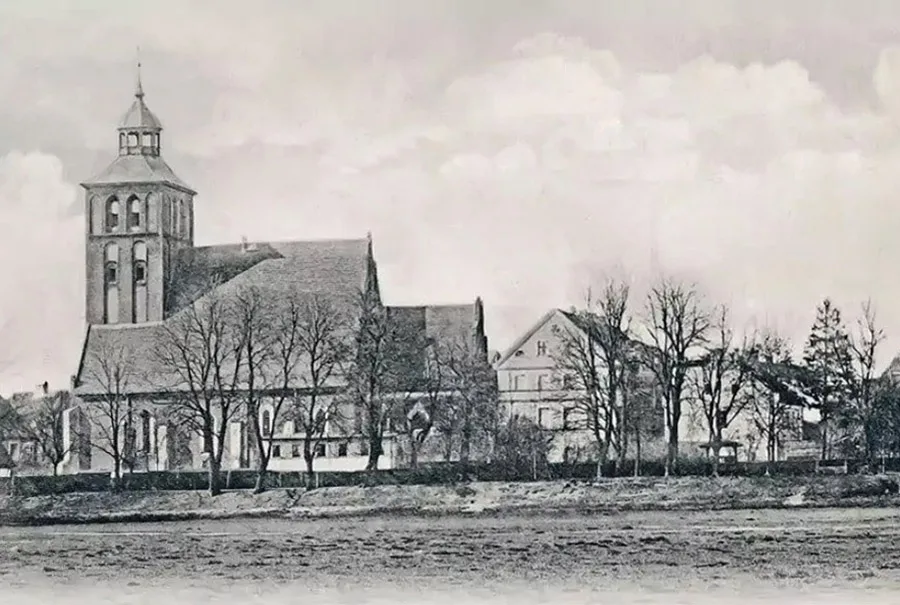
In 1659 another great fire raged in Wehlau, and in 1677, according to contemporary accounts, a lightning strike on the church tower melted three bells at once.
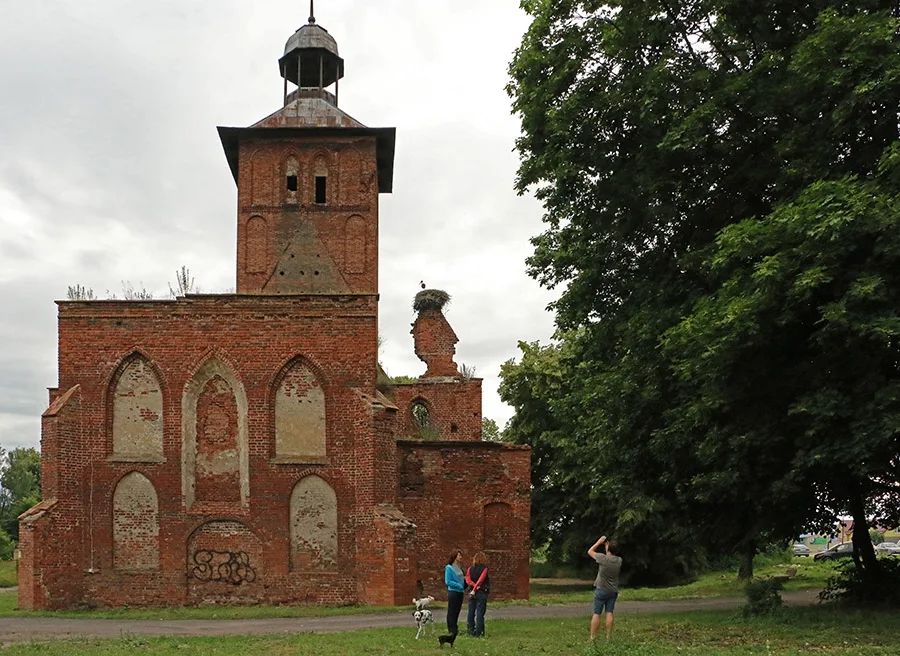 St James's Church (1354) in 2015.
In the 17th century the fortress of Wehlau was modernized. The fortress wall was given a bastioned layout. Wehlau had a garrison from 1678. On 06.01.1679 Wehlau was again occupied by the Swedish army under General Horn. But in the same month, under threat of being surrounded and defeated by the army of the Great Elector, the Swedes retreated to Tilsit / Tilsit (Sovetsk).
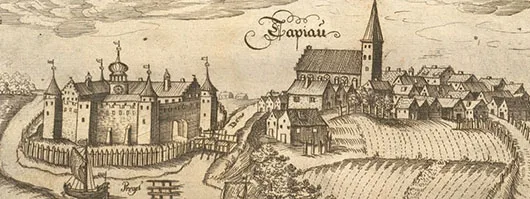
In 1699 a post office opened in Wehlau. By the end of the 17th century the town had firmly established itself as the economic leader of the area – horse fairs and other fairs were held here annually, and there were breweries and mills. In 1723 Wehlau became the seat of a Hauptamt, which from 1752 was part of the Kammeramt of Tapiau / Tapiau (Gvardeysk). In 1760 the town had 264 houses. In 1766 a flour mill built on the Dutch model opened in Wehlau.
During the Seven Years' War (1756–63), Wehlau, like the other towns of East Prussia, was Russian for a time, but no particular events took place here as a result.
On 06.12.1806 King Friedrich Wilhelm III and Queen Luise visited Wehlau. In 1807, after the Battle of Friedland, retreating units of the Russian army and the French pursuing them passed through Wehlau. Later the French army passed through the town twice more: when moving troops to Russia in 1812 and, in retreat, at the turn of 1812–13. The arrival of the French "guests" was customarily accompanied by organized requisitions and spontaneous looting. Napoleon himself visited Wehlau twice – in June 1807 and on 01.06.1812.
In 1818, after the administrative reform, Wehlau became the seat of a district – a Landkreis. In 1860 the Prussian Eastern Railway (Preußische Ostbahn) was laid through Wehlau, and a station was opened in the town. The railway connection furthered Wehlau's development as a trading centre.
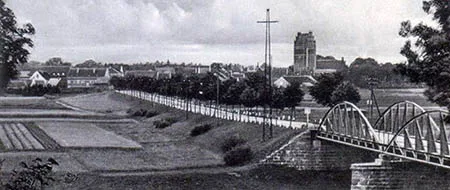
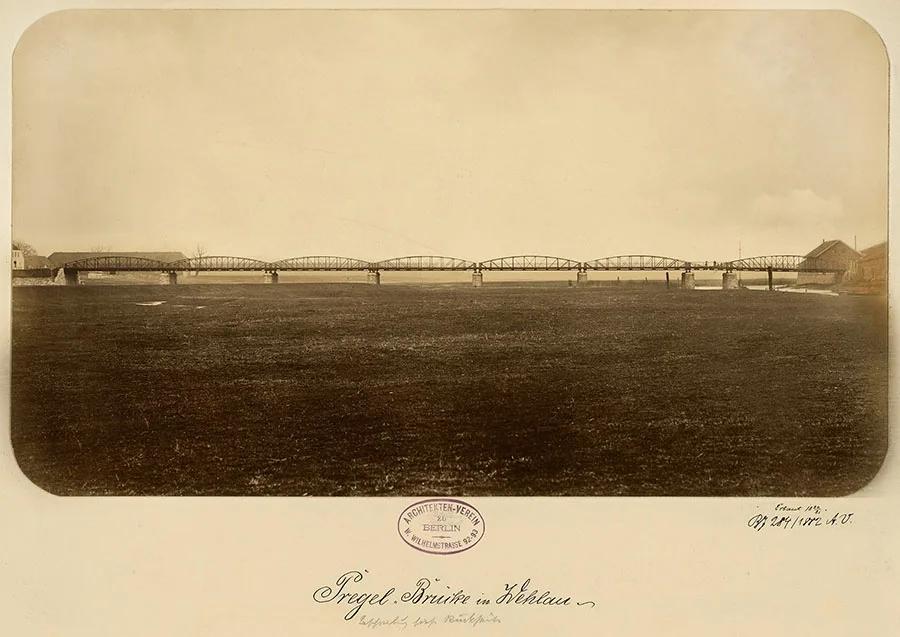 The Long or Seven-Arch Bridge over the Pregel with a bascule span (1880).
In the 19th century the Wehlau horse fair became the largest in Europe. It was held in July, and every year some 9,000 horses and 3,000 head of cattle were sold here.
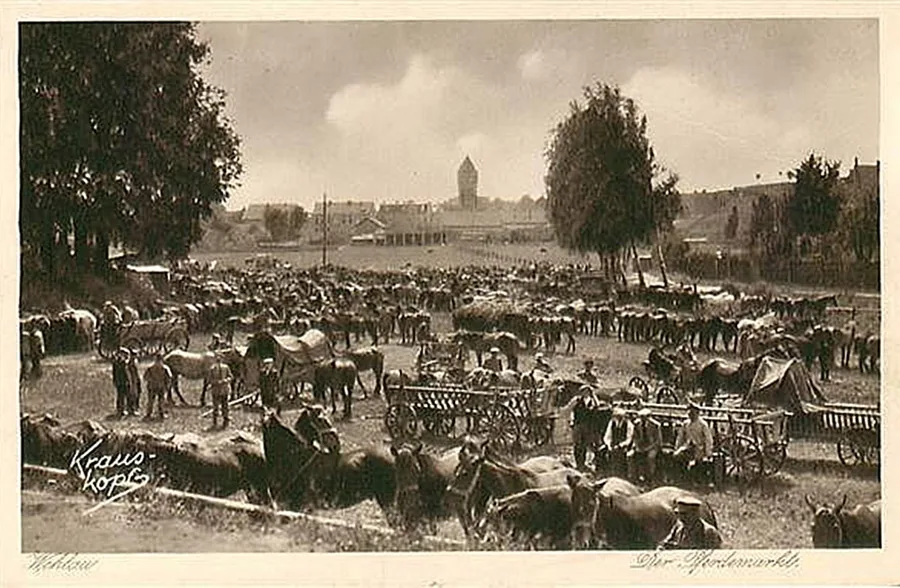 Postcard with a photograph of the famous Wehlau horse fair.
The Trakehner breed of horse, raised in Prussia, was especially popular. A market for agricultural produce was held twice a week. On 22.01.1862 the famous German mathematician David Hilbert / Hilbert (d. 1943) was born in Wehlau.
In 1871 the municipality of Wehlau had 336 residential houses. In 1880 the longest metal bridge in East Prussia, with a bascule span, was built over the Pregel; it is also known as the Seven-Arch Bridge (preserved). In 1890 a farriery school opened. In 1895 a sawmill began operating, and in 1904 a paper mill. In 1896 repair work was carried out in St James's Church. Also in 1896, horses were brought to Wehlau from Canada for breeding. In 1906 an agricultural school opened in Wehlau. In 1906 an engineering works was started up.
During the East Prussian Operation of 1914, the cavalry of the Russian 1st Army approached the town on 25 August, and soon troops of the 25th Infantry Division (Gen. P. I. Bulgakov) occupied it.
German sources speak of looting and fires, which were stopped by the Russian commandant Janson and the local representative Scheffler. In September 1914 the Russian troops withdrew from Wehlau.
In 1931 Wehlau had 535 residential houses and 1,548 outbuildings. In the pre-war years Wehlau had several schools, including the "Deutschordensschule" (German Order School), a girls' school and an agricultural school. Medical institutions included the district hospital and a nephrology hospital. As befitted the seat of a Landkreis, Wehlau had a court, administrative bodies, state and private banks, a post office, a customs office and a printing works, and a local newspaper was published. Industry was represented by an engineering works, a gasworks, a brickworks and a margarine factory, and there were breweries.
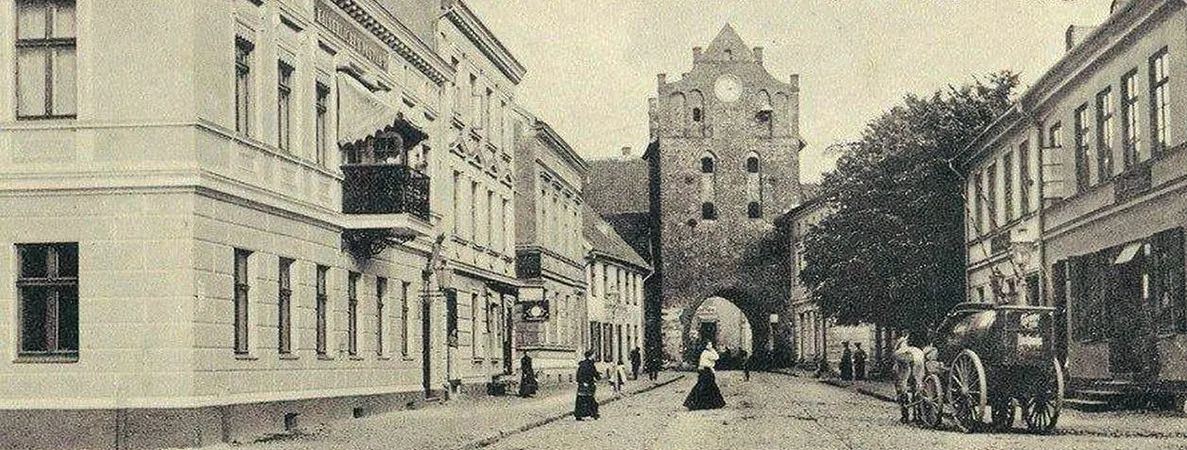
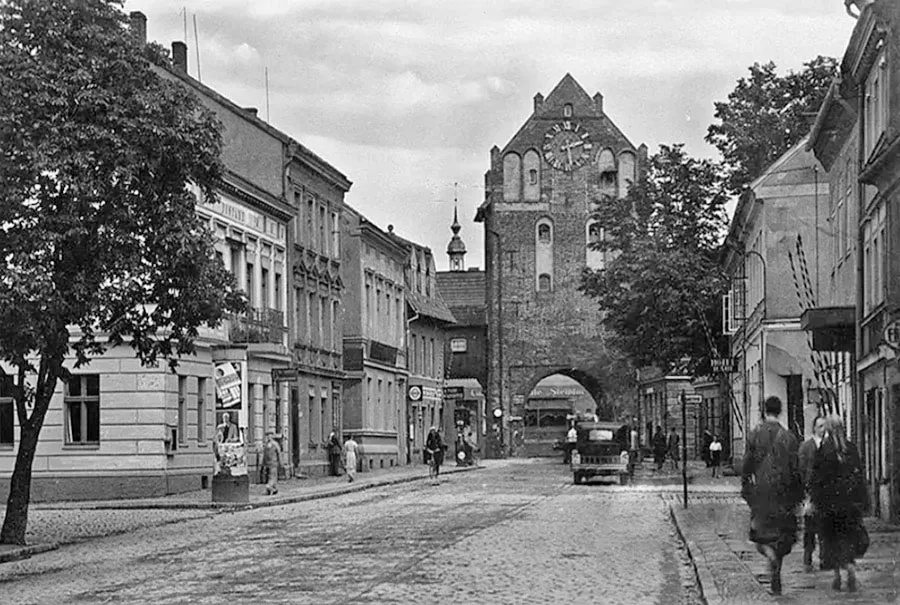 The stone gate at the entrance to the town from the Königsberg side (not preserved). On the left, the spire of the town hall.
On 25.12.1944 the bridge over the Alle (Lava) in Wehlau unexpectedly blew up. The causes of the explosion have never been established. On 19.01.1945 the belated evacuation of local residents from Wehlau began.
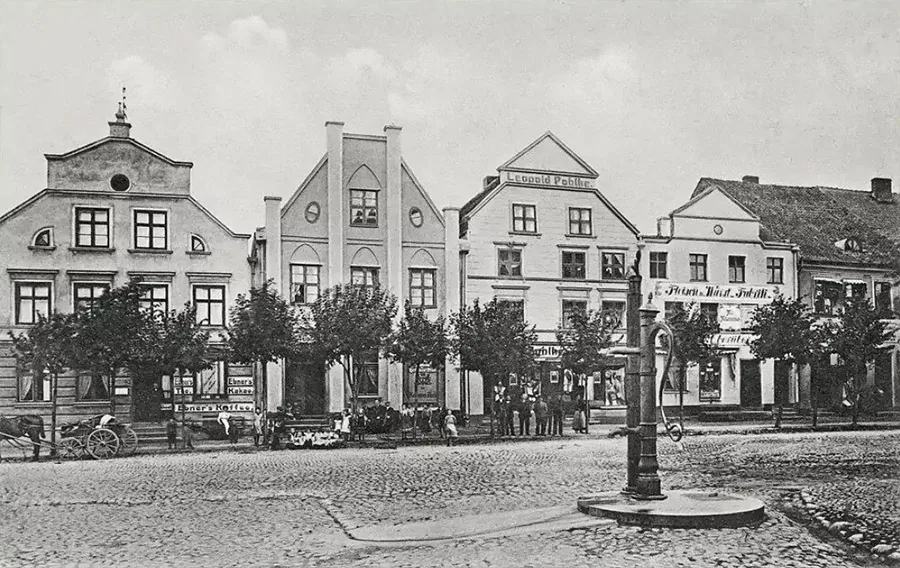 Houses on the market square of Wehlau (not preserved).
On 22.01.1945 soldiers of the 79th Guards Rifle Regiment (Major S. E. Shyolkovy) of the 26th Guards Rifle Division of the 11th Guards Army reached the outskirts of Wehlau. Practically all the forces of the 26th Guards Rifle Division (Maj. Gen. G. I. Chernov) were committed to the battle for the town, which lasted all night. Units of the 5th Guards Rifle Division (Maj. Gen. G. B. Peters) were also brought in. By the morning of 23.01.1945 Wehlau had been taken by the Red Army. The whole central part of the town was destroyed by heavy artillery fire.
On 17.06.1947 Wehlau was renamed the workers' settlement of Znamensk and became part of Gvardeysk District. On 17.11.1947 Allenberg was renamed the settlement of Khlebnikovo. After the war Soviet military units were stationed here. By the end of 1947 the paper mill in Znamensk was working again. The settlement also had a sawmill, a margarine factory, a flour-milling plant and clothing and footwear workshops. In addition, post-war Znamensk had a commandant's office, a hospital, an outpatient clinic and a military hospital, a seven-year school and a school for working youth, an orphanage for German orphans, a club, a post office, four shops, two barbershops and a bathhouse. On 15.09.1947 the main streets of the settlement were renamed. Also in 1947 a school for machine operators began work, training specialists for the region's agriculture.
In 1953 Znamensk's own electrical substation was put into operation.
In 1954 a container yard began operating at Znamensk station, which increased the station's importance as a logistics hub, and in 1955 a new station building was built. As early as 1955 the settlement of Khlebnikovo appears on maps as a district of Znamensk, although it was apparently only officially deregistered and incorporated into Znamensk around 1975. In the 1950s a crèche, a (departmental) kindergarten, a library and the paper mill's club opened in Znamensk. By 1959 Znamensk's housing stock had grown by 36% compared with 1950. In 1960 the largest enterprises by number of employees were the paper mill (556 people), the flour mill (180 people) and the margarine factory (76 people); there were also many military personnel among the residents, as a military unit was stationed in Khlebnikovo (the former Allenberg psychiatric hospital).
By 1965 the paper mill's cinema, four departmental clubs (with a total capacity of 1,200), an adult and a children's library, a stadium, two public gardens, a park and playgrounds had opened. From 1975 an oil-loading rack operated at Znamensk station. Social facilities were built too: in the 1980s the settlement had a 60-bed hospital, three departmental first-aid posts, a secondary school, an evening school and a music school, a crèche, a kindergarten, three libraries, two clubs, a cinema, a dental surgery, a pharmacy and stores selling manufactured goods. However, the settlement was dogged by the general problems of the countryside: young people sought to move to the city, housing construction lagged behind people's needs, and teachers and doctors were as a rule not highly qualified and too few in number.
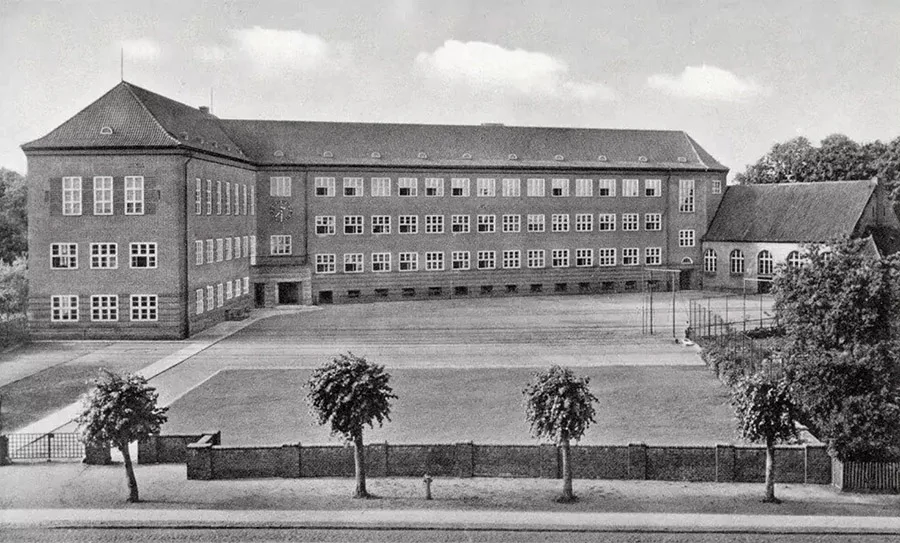
In the early 1980s the settlement had 121 municipal houses; 113 belonged to the paper mill, eight to the flour mill and three to the margarine factory.
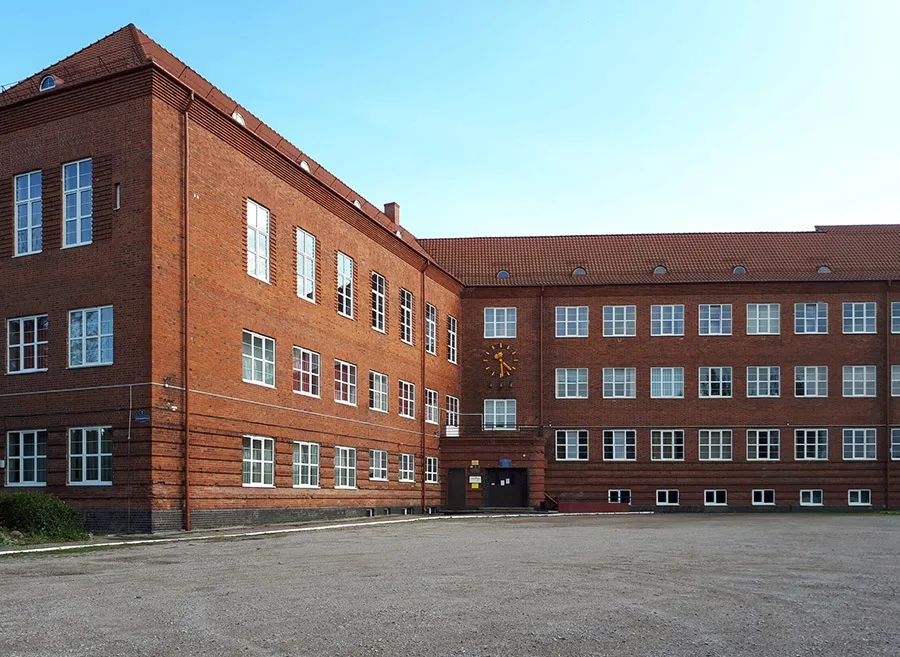 Znamensk school, formerly the Deutschordensschule Wehlau (1929).
But the most serious problems came in the years of perestroika. In February 1991 the Bolshaya Polyana village council was abolished, and the settlements that belonged to it were placed under the Znamensk settlement council. In 1994 work at the paper mill stopped for 19 months. It resumed in 1996, but the mill closed later all the same. In 1993 an Orthodox parish was established in the paper mill's cinema building. In 1999 the cinema building was handed over for reconstruction for church use. In 2002 a furniture production facility opened in Znamensk. In 2005 Znamensk was downgraded from an urban-type settlement to a rural-type settlement. In 2008 an Orthodox church opened in the former cinema building. In 2013 the military unit in the settlement of Khlebnikovo was disbanded. As of 2022, Znamensk has a compound feed plant, a composites plant and a furniture factory. There are a secondary school, a children's music school, a branch of the district hospital, a post office, a bank branch, a railway station, a club, and Catholic and Orthodox churches. As of 2022 the grounds of the former Allenberg psychiatric hospital are semi-abandoned but popular with tourists. On the site of the Vorwerk Wattlau there is now the intersection of Kaliningradskaya and Novaya streets, with houses and a petrol station. On the site of Altwalde I there is a remote farmstead belonging to the settlement of Znamensk, with a couple of houses and outbuildings. On the site of the Vorwerk Neu Wehlau there is a railway oil-loading rack, and on the site of the Neu Wehlau brickworks a farmstead that is part of the settlement of Znamensk.
Sights: St James's Church (1354), Catholic chapel (1928), town school (1929), water tower (1913), railway water tower (1909), the building complex of the Allenberg psychiatric hospital with its own church and water tower (1848–1852), residential and administrative buildings of the early 20th century, the Long or Seven-Arch Bridge (1880), a lock on the Lava (1920s) with lock-keeper's house, Lock No. 1 on the Pregolya (1920s) with lock-keeper's house, the Wehlau mill, the station building, "Napoleon's Spring", mass grave of Soviet soldiers (1,100 people, monument 1946), sculpture of a deer (2013), a pre-war weir on the Lava.
Population of Wehlau: 1782 – 2,627, 1867 – 5,288, 1871 – 5,179, 1880 – 5,442, 1895 – 5,229, 1910 – 5,288, 1925 – 6,946, 1933 – 7,354, 1939 – 8,463, 1946 – 2,6101, 1947 – 1,9132, 1959 – 4,159, 1970 – 5,130, 1979 – 4,813, 1989 – 4,570, 2002 – 4,302, 2010 – 4,036 inhabitants.
1 — including 288 Germans.
2 — including 460 Germans.
Population of Wehlau in 1871 by composition: Protestant Christians – 5,037, Catholics – 49, other Christians – 2, Jews – 91, children under 10 – 1,082, literate – 3,380 (84%), blind – 3, deaf-mute – 8, insane – 5.
For reference
Population of the Gutsbezirk Pinnau: 1905 – 85, 1910 – 56 inhabitants.
Population of the Gutsbezirk Allenberg: 1905 – 1,137, 1910 – 1,101 inhabitants.
Population of the Vorwerk Neu Wehlau: 1905 – 18 inhabitants.
Population of the Neu Wehlau brickworks: 1905 – 39 inhabitants.
Population of Altwalde I: 1905 – 14 inhabitants.
Allenberg was an estate forming a Gutsbezirk in the Landkreis of Wehlau / Wehlau (Znamensk). The estate belonged to the parish of St James's Church in Wehlau. In 1852 a provincial psychiatric hospital was opened in Allenberg. A church was built at the hospital. The first 59 patients were sent there in the same year. By 1873 the number of patients had risen to 250, and by 1900 to 1,000. In 1909 there was a smallpox epidemic in Allenberg, and many patients died. During the First World War there were also epidemics of influenza and tuberculosis. In 1918 only 586 patients remained in the hospital. On 30.09.1928 the Gutsbezirk Allenberg was abolished and incorporated into the municipality of Wehlau. In 1929 the psychiatric hospital already had 1,400 patients. In 1940 the hospital was closed, and the incurable patients were shot by the Nazis. Until 1945 an SS garrison was based in Allenberg.
Altwalde I was a small settlement of two farms belonging to the municipality of Wehlau. The settlement lay on the Prussian Eastern Railway (Preußische Ostbahn) and belonged to the parish of Wehlau.
Wattlau was a Vorwerk (outlying farm) belonging to the Gutsbezirk Sanditten / Sanditten (Lunino) in the Landkreis of Wehlau. The Vorwerk belonged to the parish of Petersdorf / Petersdorf (Kuybyshevskoye). On 13.06.1874 the Vorwerk, as part of the Gutsbezirk Sanditten, was included in the newly established Amtsbezirk Sanditten. On 01.11.1928 the Gutsbezirk Sanditten was abolished; its main part was attached to the rural community of Friedrichsthal / Friedrichsthal (Soldatovo) in the Amtsbezirk Grünhayn / Grünhayn (Krasnaya Gorka), while the exclave with the Vorwerk Wattlau was incorporated into the municipality of Wehlau.
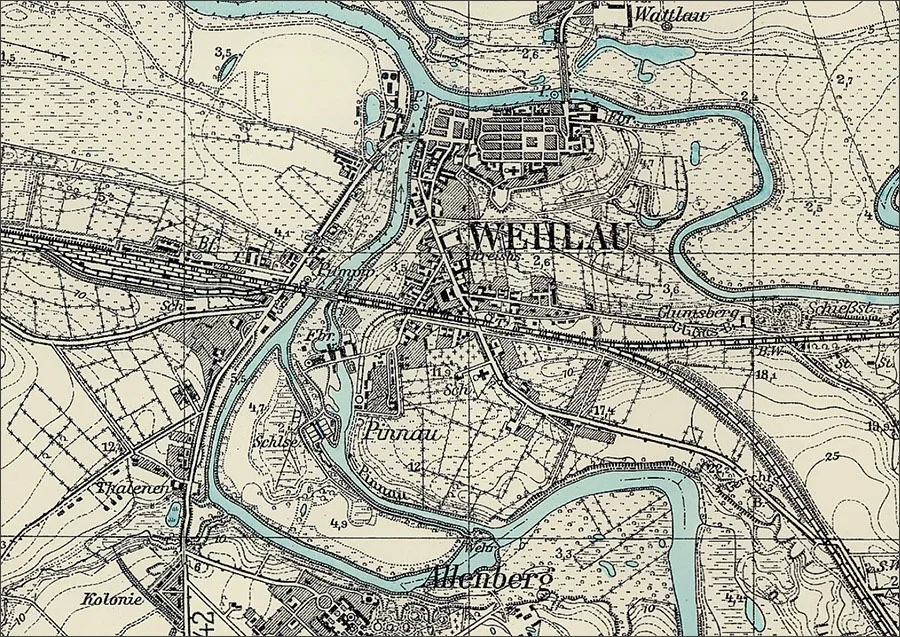
Neu Wehlau was founded in 1834 as the Vorwerk Abbau Potanus / Abbau Potanus. The Vorwerk was part of the municipality of Wehlau, and its parish was also in Wehlau. By the end of the 19th century the Vorwerk had come to be called Neu Wehlau. A brickworks was built at the Vorwerk. Later the brickworks was moved about a kilometre to the south, where it operated right up to the Second World War. The Vorwerk Neu Wehlau and the Neu Wehlau brickworks had the status of separate localities belonging to the municipality of Wehlau.
Pinnau has been known since 1407. After 1785 it was called Pinnau near Wehlau / Pinnau bey Wehlau. In 1872 the joint-stock company "Pinnau Milling Corporation" / "Pinnau Actiengesellschaft für Mühlenbetrieb" was founded to produce flour, pulp and paper. In 1883 Pinnau is mentioned as the Pinnau milling establishment / Mühlenetablissement Pinnau, which was part of the Amtsbezirk Bürgersdorf / Bürgersdorf (Gordoye) and by 1908 had received the status of an estate and Gutsbezirk. The estate belonged to the parish of Wehlau. On 30.09.1928 the Gutsbezirk Pinnau was abolished; its main part went to the municipality of Wehlau, and the exclave to the rural community of Paterswalde / Paterswalde (Bolshaya Polyana).
Parish of Wehlau: Allenvorwerk / Allenvorwerk, Altwalde / Altwalde (Znamensk, part), Alt Wehlau / Alt Wehlau (Prudnoye), Bürgersdorf / Bürgersdorf (Gordoye), Groß Nuhr / Groß Nuhr (Zavetnoye), Grünwalde forestry / Försterei Grünwalde (54°33'29'' N 21°21'35'' E), Holländerei / Holländerei (Znamensk, part), Klein Nuhr / Klein Nuhr (Sukhodolye), Klein Richau / Klein Richau (54°33'03'' N 21°17'41'' E), Milchbude / Milchbude (54°34'09'' N 21°19'52'' E), Neuwalde / Neuwalde (54°32'41'' N 21°22'15'' E), Neu Wehlau / Neu Wehlau (Denisovo), Pickertswalde / Pickertswalde (Gordoye, part), Pinnau / Pinnau (Znamensk, part), Preußlauken / Preußlauken (Osipenkovo), Seeckshof / Seeckshof (Volostnovo), Senklerkrug / Senklerkrug (Lyotnoye), Wehlau (Znamensk).
Contemporary photos by Mikhail Ogorodnikov.
Translated from Russian with the help of AI (Claude, Anthropic), October 2026.