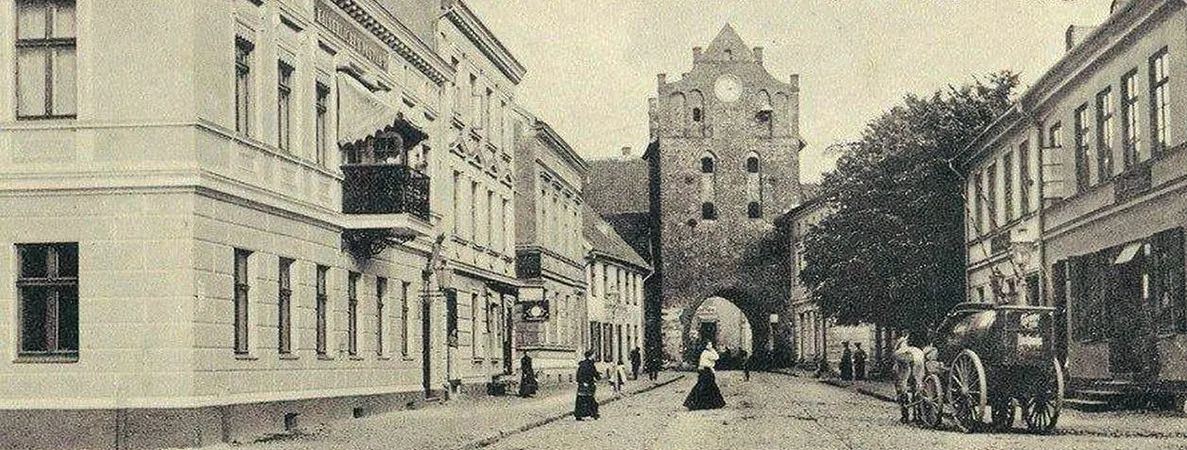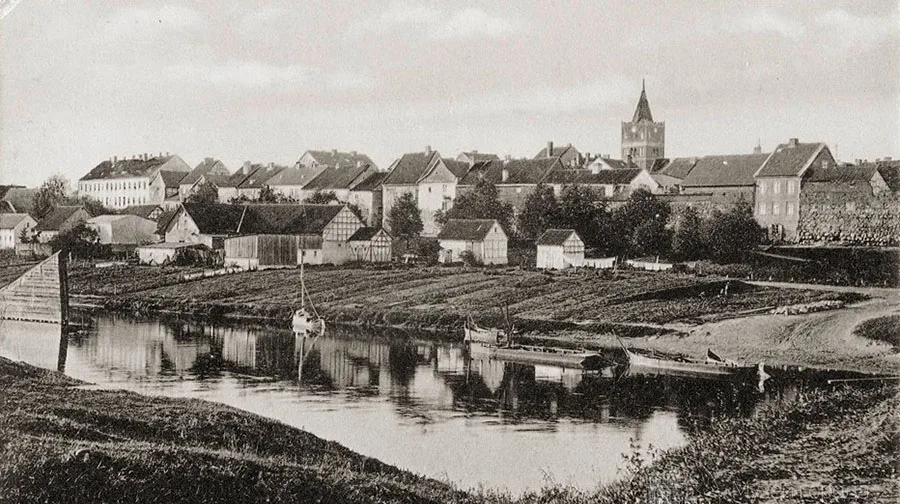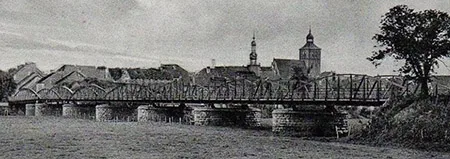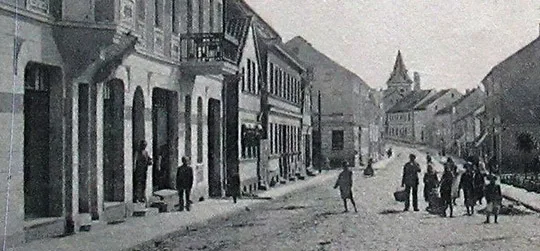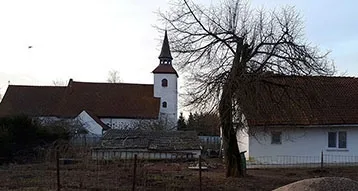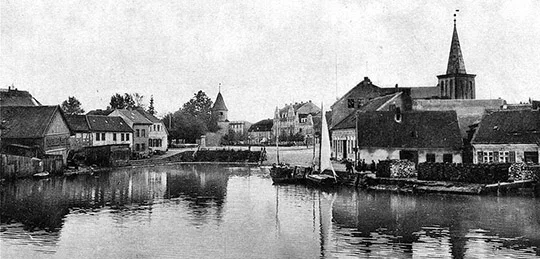
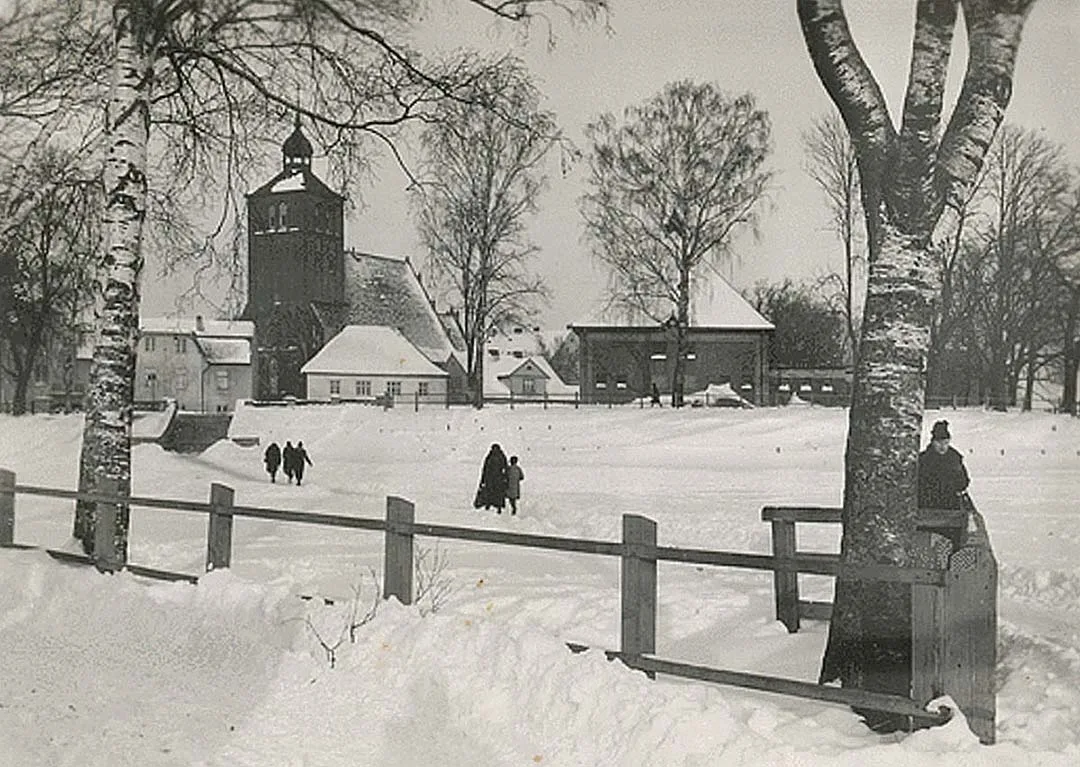
The church is built of brick; the tower is incorporated directly into the church building and is 52.5 m high. At the top it ended in a Romanesque dome. The main building and the rectangular chancel were built at the same time. Buttresses. Pointed-arch doors and windows. A porch (entrance) on the north side. A sacristy was added to the north of the chancel.
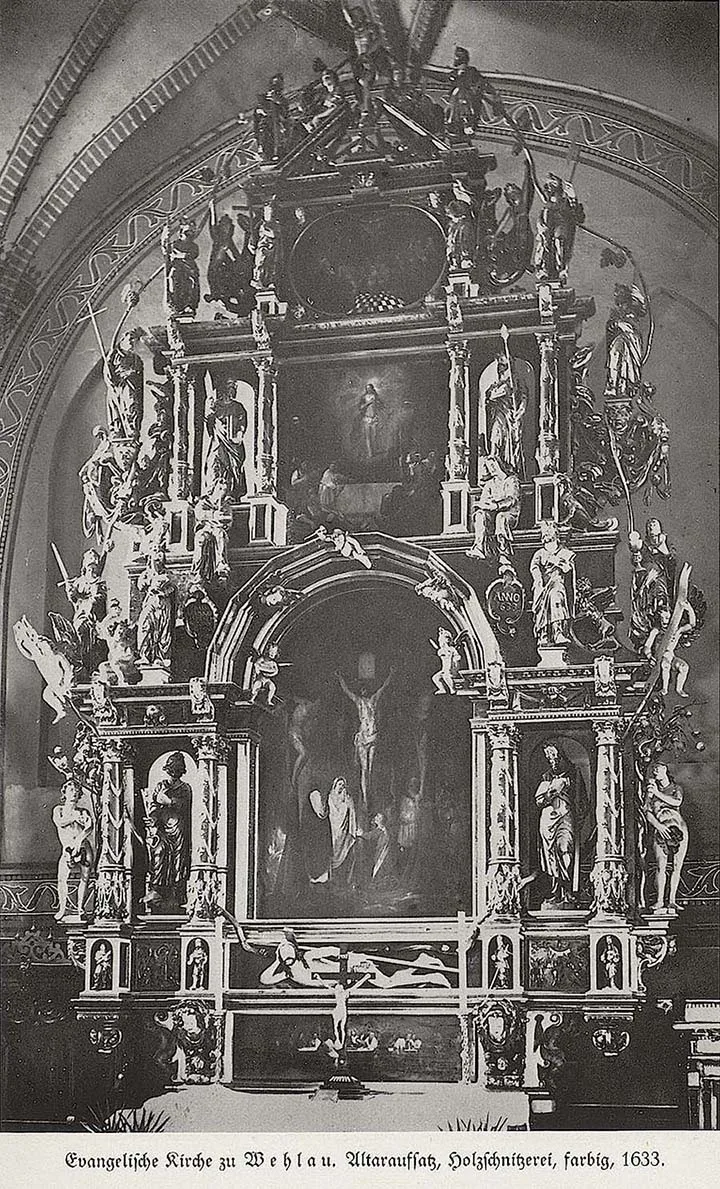
Inside it has three aisles. The ceilings are vaulted, with star vaults. Wall paintings. A large number of interesting religious paintings. Rich altar plate. The altar itself was built in 1521; the church possessed a Martin Luther Bible. The pulpit dates from 1715. The organ was built in 1600 by Adrian Zeickermann. Its upper tier was destroyed in 1677. Jacob Knerke, a native of Königsberg, built a new organ in 1685, which was rebuilt in 1810.
During the Second World War there was street fighting in the town, and at night Wehlau was bombed by German aircraft. The church also suffered some damage.
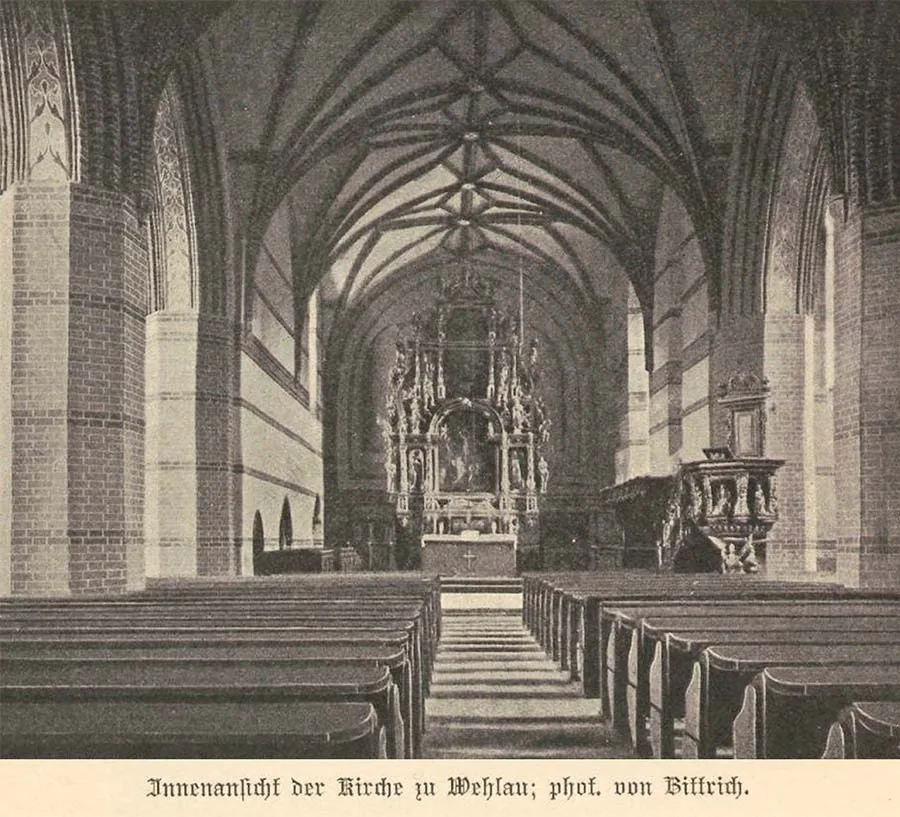
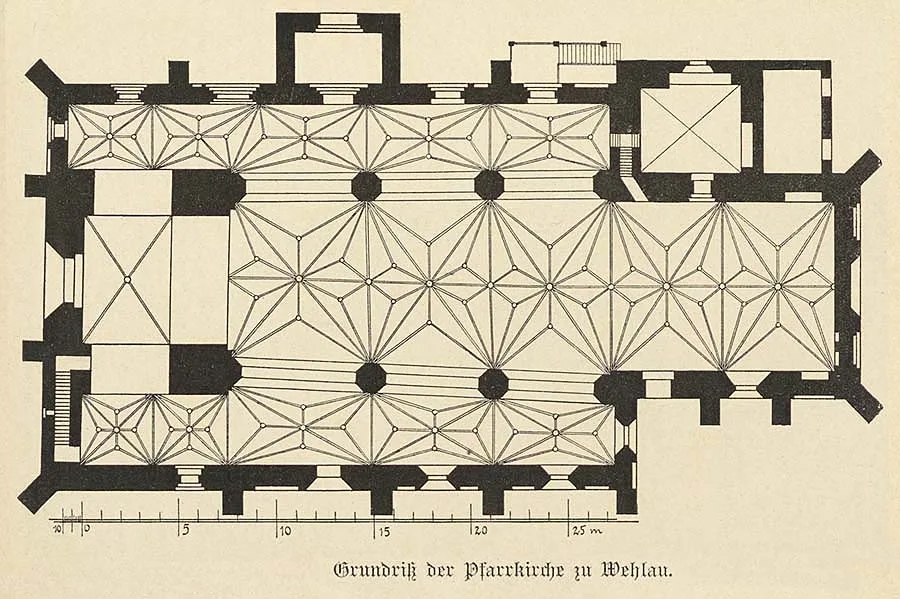
After the war it was used as a warehouse. The arches and vaulted ceilings were still intact. In the 1960s an attempt was made to blow up the church. The charge was placed on the north side. But the explosion was "unsuccessful". The church stood firm; only the vaults collapsed. Afterwards a flooded underground passage was discovered.
As of 1990, what remained of the church was the tower without a roof and the walls of the main building. The north porch and the sacristy were destroyed. Inside, the columns dividing the church into three aisles survived. To the south-west of the church, fragments of the old town wall can be made out.
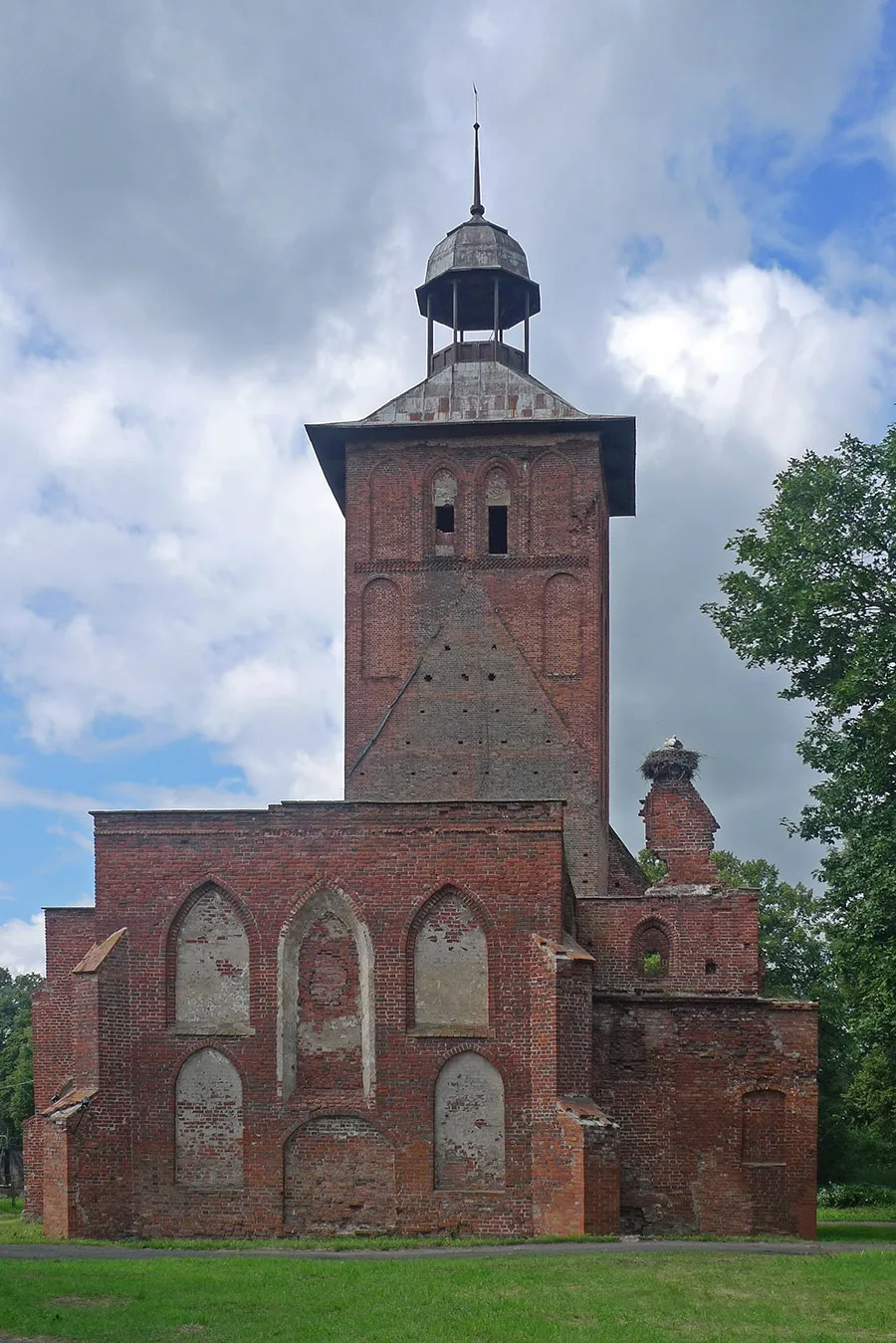
In 1994–95, with money from the town's former inhabitants, the walls were conserved, a roof was put on the tower and a viewing platform was set up.
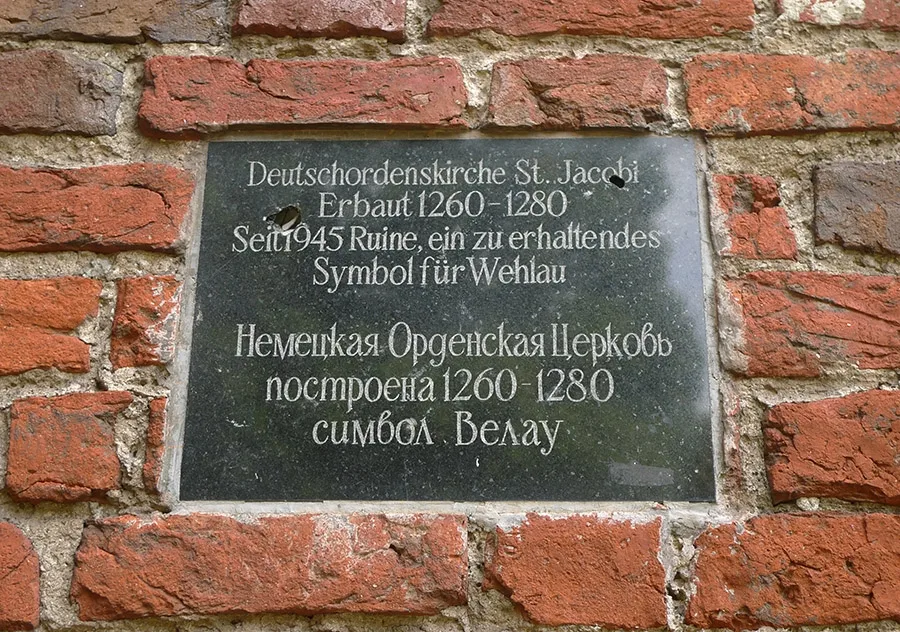
In the 2020s the church has become a venue for classical music concerts every summer. Next to it a rose garden has been laid out, dedicated to five historical figures whose lives are inseparably bound up with the history of the settlement and of the Kaliningrad Region. Each of the five sections of the flower garden symbolises a particular historical figure.
The Catholic Chapel
The growing number of Catholics in Wehlau by the beginning of the 20th century made it necessary to build a church for the town's Catholic community.
A design for the Catholic church was ready as early as 1916. But because of the war (the First World War, 1914–1918), construction had to be postponed.
Immediately after the war the political and economic situation in East Prussia deteriorated sharply, and construction had to be postponed once again. Only ten years later, when the situation had stabilised, was the decision taken to build the Catholic church. In 1928 a site was allocated near the "Old Cemetery" in Neustadt (a district of the town). The construction ended with the consecration of the church.
After 1945 the building was used as school workshops and later as a warehouse. Then it was abandoned and not used at all. In 2010 it was handed over to the Catholic Church. In 2011 it was renovated, and the church is functioning again.
B/w photos on this page: Bildarchiv Ostpreußen, Anton Ulbrich "Geschichte der Bildhauerkunst in Ostpreussen"; colour photos: Wikimedia Commons.
Translated from Russian with the help of AI (Claude, Anthropic), October 2026.