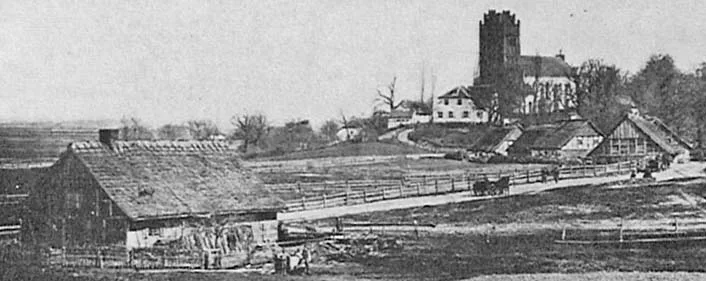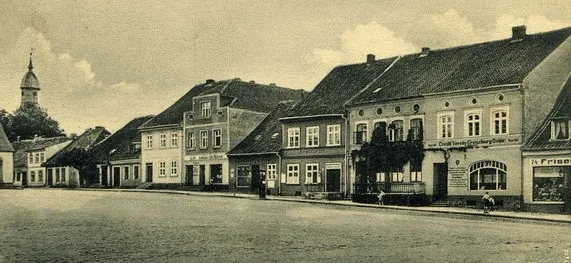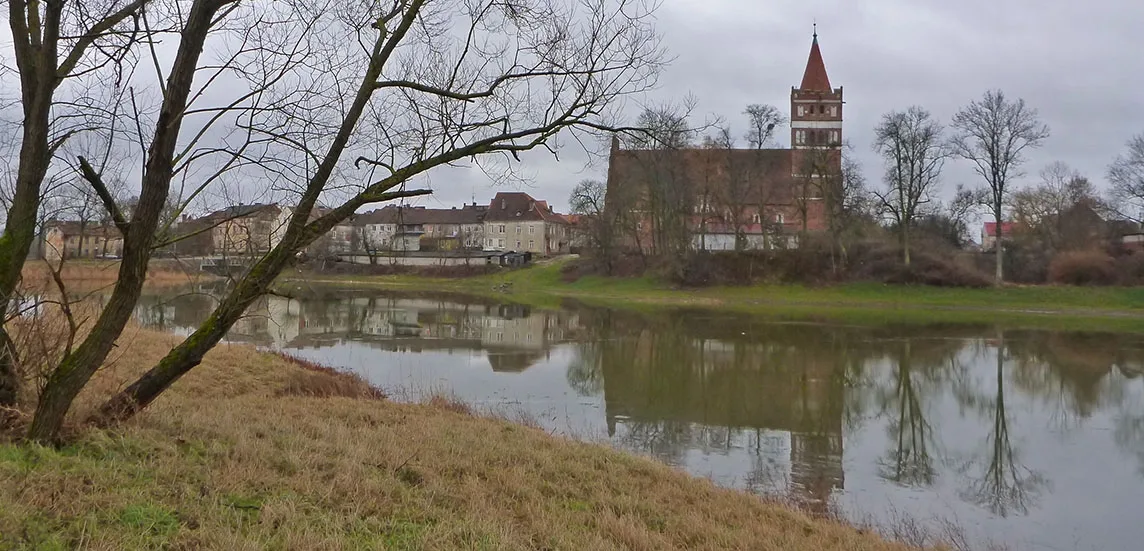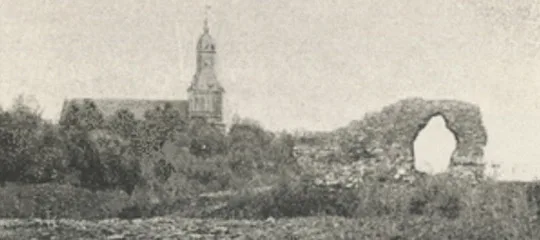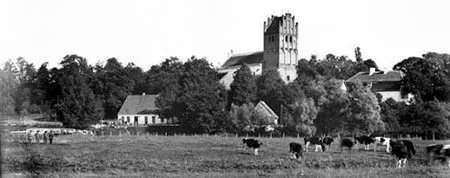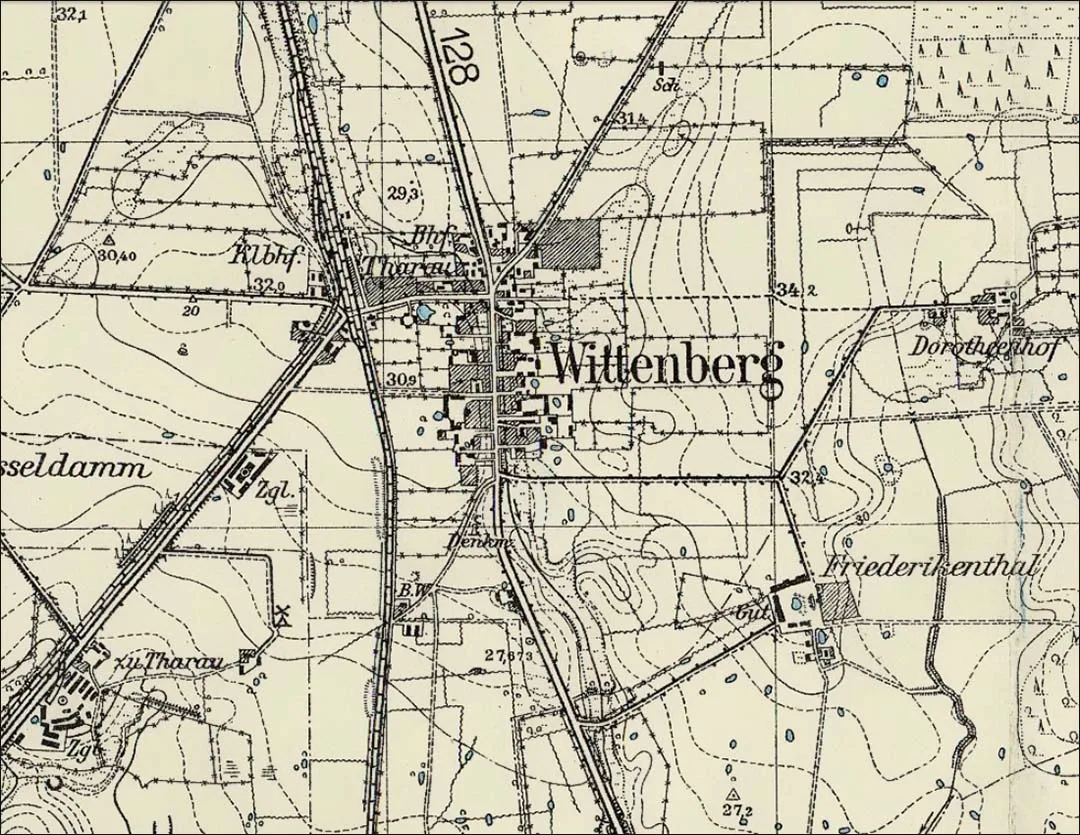
Wittenberg is first mentioned in 1339. In the 19th century Wittenberg was a village which from 1818 formed a rural community in the Kreis Kreuzburg (Slavskoye), renamed in 1819 the Kreis Preußisch Eylau (Bagrationovsk). The village belonged to the parish of Tharau (Vladimirovo). On 24 September 1866 traffic opened on the East Prussian Southern Railway, on which Tharau station was built in Wittenberg. In 1871, besides the village itself, the rural community of Wittenberg also included the station and the trackmen's houses. The community had 27 residential houses, in which 65 families lived. Of these, 24 houses were in the village of Wittenberg, one more belonged to Tharau station and another two to the trackmen.
On 7 May 1874 the rural community of Wittenberg was included in the newly established Amtsbezirk Jesau (Yuzhny), renamed in 1930 the Amtsbezirk Wittenberg (Nivenskoye). In 1906–32 the post of head of the Amtsbezirk Jesau was held by Oehlert, a leaseholder from Wittenberg, and from 1932 by the forester Fischer. In 1906 a railway was built from Tharau station to Kreuzburg (Nivenskoye – Slavskoye), on which a second station was opened in the village. On 1 April 1912 the Vorwerk Dorotheenhof (54°35'02'' N 20°35'18'' E) passed from the Gutsbezirk Arweiden (Lineynoye) to the Wittenberg community.
On 30 September 1928 the abolished Gutsbezirke of Friederikenthal (Nivenskoye) and Braxeinswalde (part of Otvazhnoye) from the Amtsbezirk Tharau (Vladimirovo) became part of the Wittenberg community.
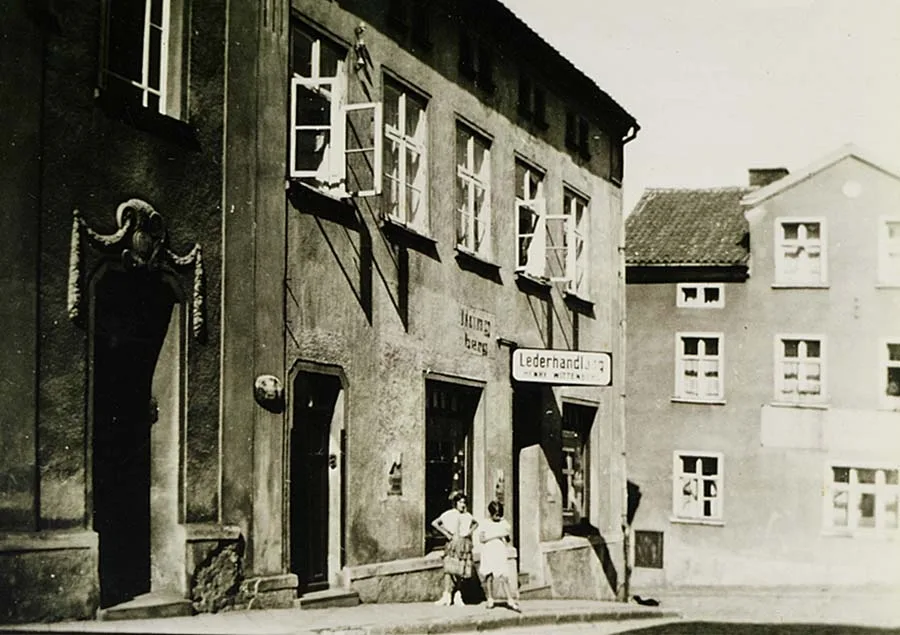
On 28 May 1930 the Amtsbezirk Jesau (Yuzhny) was renamed the Amtsbezirk Wittenberg. At the time of the renaming the Amtsbezirk comprised four rural communities: Jesau (Yuzhny), Lichtenfelde (Svobodnoye), Thomsdorf (Solnechnoye) and Wittenberg (Nivenskoye). On 1 April 1937 the Thomsdorf community (Solnechnoye) passed to the Amtsbezirk Uderwangen (Chekhovo). As a result three rural communities remained in the Amtsbezirk Wittenberg: Jesau (Yuzhny), Lichtenfelde (Svobodnoye) and Wittenberg (Nivenskoye), after which its composition did not change again. In the pre-war years Wittenberg had a school, two railway stations, a brickworks and a windmill.
Friederikenthal was founded in 1790–1805. In the 19th century Friederikenthal was a noble estate (Adlig Gut) which from 1867 formed a Gutsbezirk in the Kreis Preußisch Eylau (Bagrationovsk). The estate belonged to the parish of Jesau (Yuzhny).
In 1871 Friederikenthal had four residential houses, in which 15 families lived. In the course of the administrative reform of 1874 Friederikenthal became a Vorwerk in the Gutsbezirk Arweiden (Lineynoye). On 7 May 1874, as part of the Gutsbezirk Arweiden, the Vorwerk Friederikenthal was included in the newly established Amtsbezirk Jesau (Yuzhny), renamed in 1930 the Amtsbezirk Wittenberg (Nivenskoye). On 6 March 1876 the Vorwerk Friederikenthal again separated from the Gutsbezirk Arweiden (Lineynoye) as an independent estate and formed a Gutsbezirk of its own, which became part of the Amtsbezirk Jesau. In 1900–06 the post of head of the Amtsbezirk Jesau was held by Oehlert, the owner of the Friederikenthal estate. In 1879 the Friederikenthal estate had 173 ha of land, and its annual net profit was 1220 marks. On 30 September 1928 the Gutsbezirk Friederikenthal was abolished and incorporated into the rural community of Wittenberg (Nivenskoye).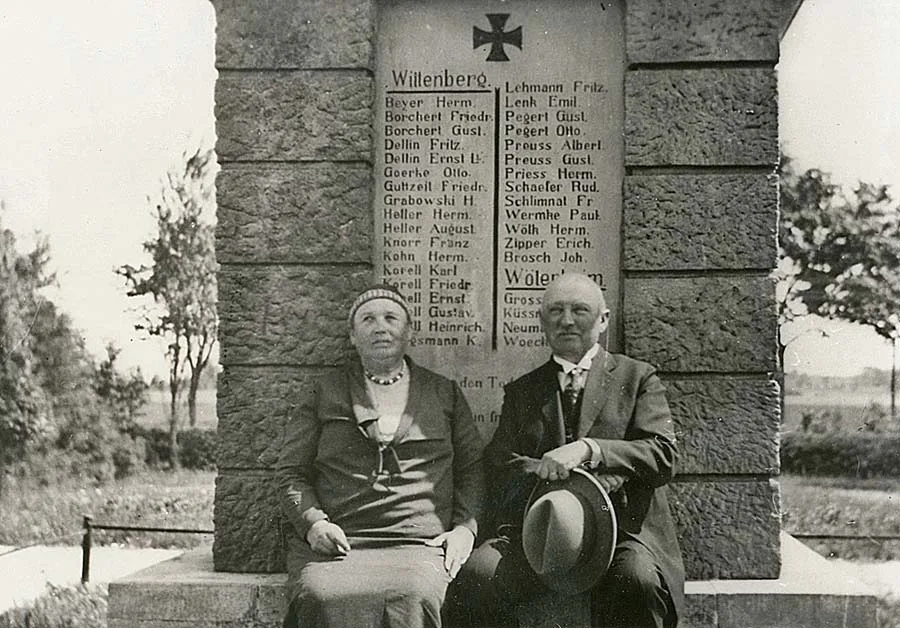
On 25 February 1945 Wittenberg was taken by soldiers of the 31st Guards Rifle Division (Major General I.D. Burmakov, 1899–1973).
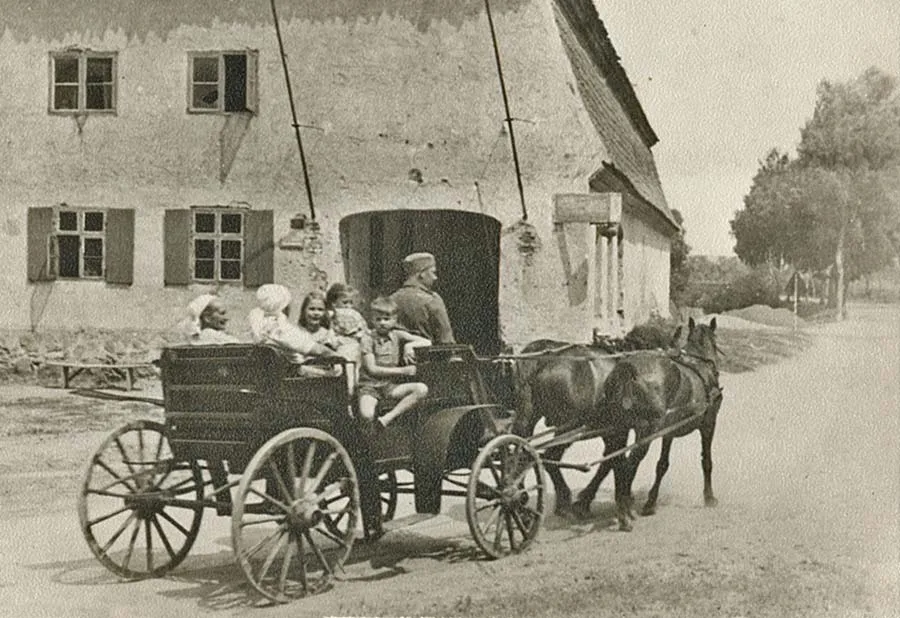
On 17 June 1947 Wittenberg and Friederikenthal were merged and renamed the settlement of Nivenskoye. The Nivenskoye Village Council was created at the same time. From 25 July 1947 Nivenskoye was the centre of the newly formed Kaliningrad District. In 1955 Nivenskoye had 96 houses. In 1959 the Kaliningrad District was abolished, and the settlement of Nivenskoye became the centre of a village council in the Bagrationovsk District. By 1963 the settlement had 97 houses and a school. By that time the dismantling of the Nivenskoye–Slavskoye railway had begun; it was completed in the 1980s. In 2016 the settlement of Nivenskoye became the centre of a rural settlement uniting the Nivenskoye and Vladimirovo rural okrugs. In the same year, 2016, the Nivenskoye Rural Settlement was abolished. As of 2018 Nivenskoye had a secondary school, two kindergartens, a local hospital and a psychiatric hospital, a House of Culture, a post office, a library, a veterinary clinic, the editorial office of the newspaper "Nivensky Vestnik", a barber's shop, and food and general goods shops. The settlement is home to a manufacturer of refrigeration equipment and a potash fertiliser mining company. As of 2021 the settlement has about 370 residential houses and public buildings.
Sights: a memorial to fallen Soviet soldiers (1975, 970 people), a memorial sign commemorating the founding of Wittenberg.
Population change: 1988 – 1600, 2002 – 2079, 2010 – 1720, 2012 – 1727 inhabitants.
Population change of the Wittenberg community: 1867 – 327, 1871 – 322, 1885 – 407, 1905 – 476, 1910 – 494, 1925 – 704, 1933 – 808, 1939 – 896 inhabitants.
Population change of Friederikenthal: 1867 – 70, 1871 – 69, 1885 – 88, 1905 – 45, 1910 – 39 inhabitants.
Composition of the population of the Wittenberg community in 1871: all 322 Protestant Christians, children under 10 – 89, literate – 169 (73%).
Composition of the population of Friederikenthal in 1871: all 69 Protestant Christians, children under 10 – 17, literate – 34 (of 50 surveyed, 68%).
Photos: bildarchiv-ostpreussen.de.
Translated from Russian with the help of AI (Claude, Anthropic), October 2026.