Zimmerbude
A fishing village stood on the site of Zimmerbude even before the time of the Order. In former times there was a sandy island about 2.5 km long near the village. In 1242, colonists from Lübeck expressed a wish to build a town here and on 31.12.1242 held negotiations about it with the Teutonic Order in Thorn (Toruń, Poland). Later, however, they abandoned such plans.
In the mid-15th century, a fortified episcopal estate called Cerauwe or Cemrowe is mentioned in this area. The stronghold was probably intended to protect the lagoon shore and the logging carried out here for building purposes.
After the secularisation of the Order in 1525, Bishop Georg von Polenz (1478–1550) received this estate as a fief. As its owner, he exchanged it for part of the village of Polepen (Malinovka), which then belonged to Oswald von Taubenheim. The von Taubenheim family owned the estate, which by that time (until 1661) was already called Zimmerpude and later Zimmerbude.
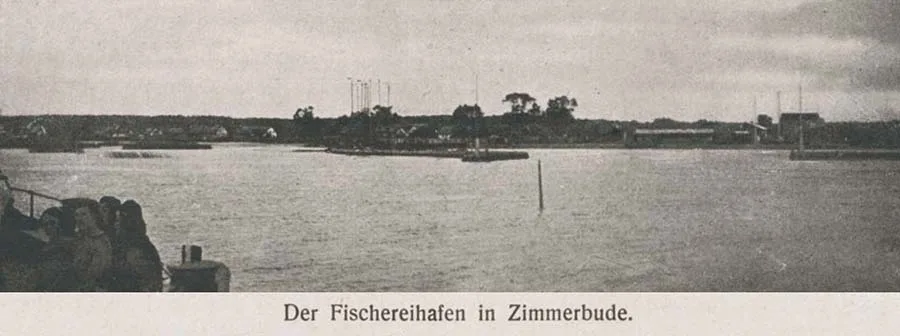
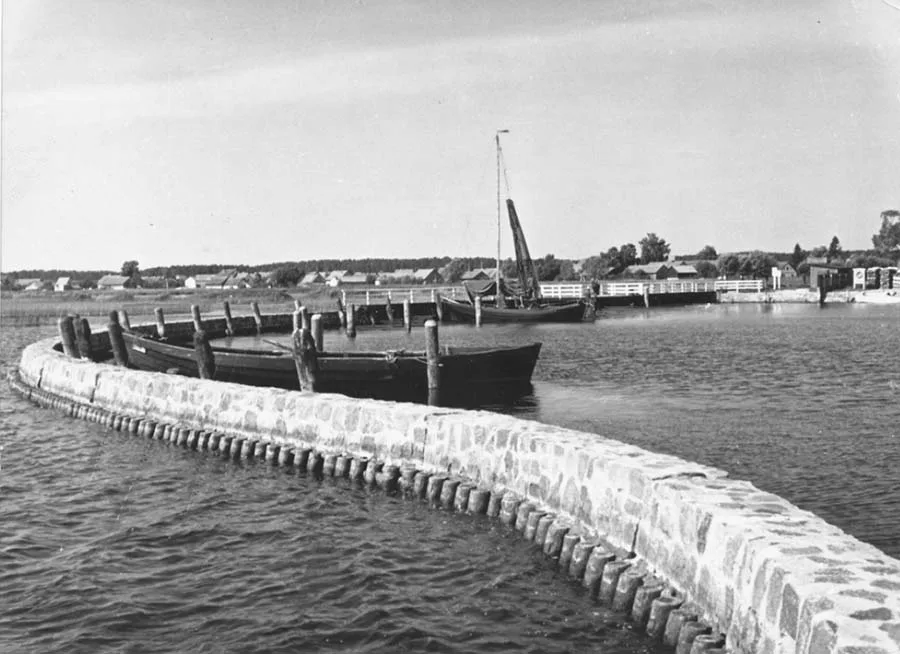 The mole in the port of Zimmerbude.
In 1669, the estate of Zimmerbude was given as a reward to the tutor of Elector Frederick III (the future King Frederick I), Eberhard Christoph Balthasar Freiherr von Danckelman (1643–1722). He later became Oberpräsident of Prussia (from 1695). By then, however, he had already returned Zimmerbude to state ownership.
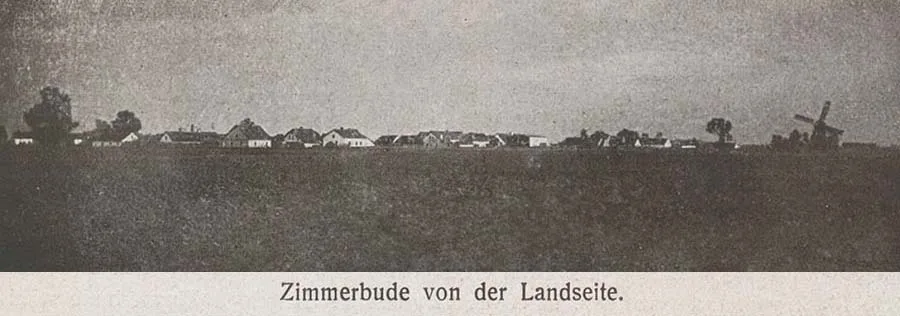
The estate was merged with the Caporn estate (Spasskoye) into the single holding of Caporn-Zimmerbude. By the 18th century, 12 peasant families lived on its land, along with fishermen who were allowed to fish in the lagoon only for their own needs. By then the lagoon itself had changed its shoreline, so that the original episcopal estate ended up under its waters.
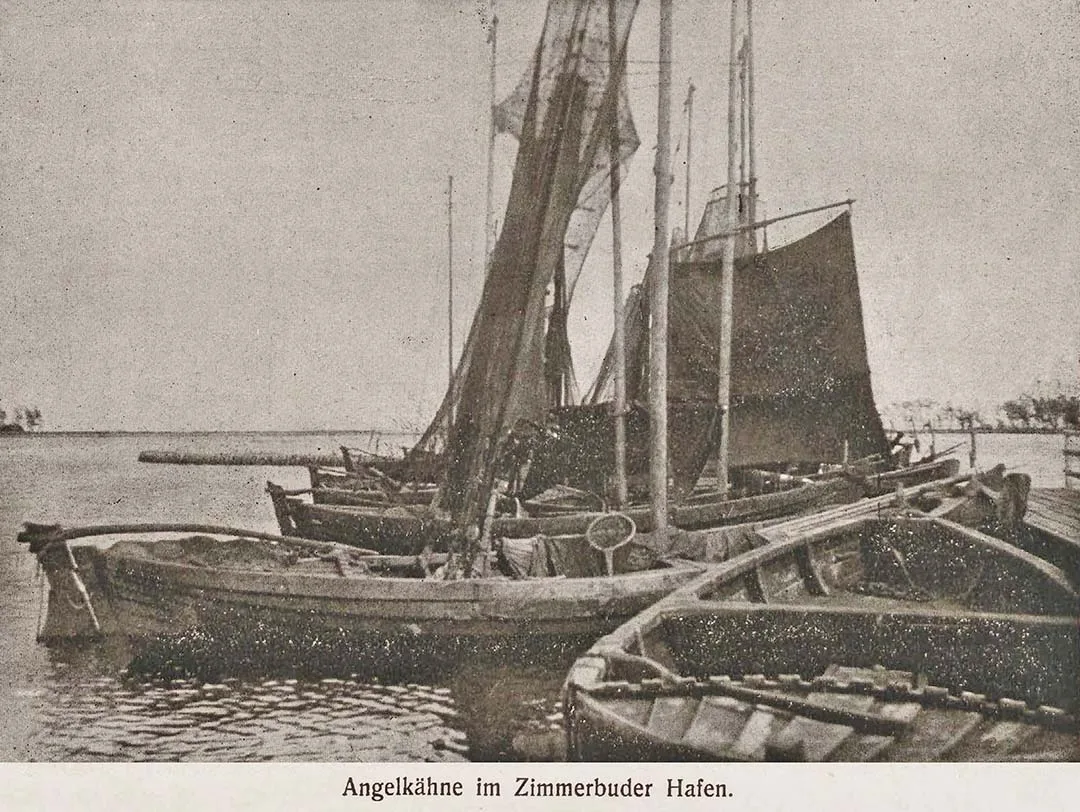
Life in Zimmerbude was neither varied nor eventful. The coastal plots yielded rather modest harvests, and fishing could not make the inhabitants rich either. Subsistence farming prevailed; even the clothes of Zimmerbude's residents were mostly homespun. The houses were quite small and had reed roofs.
From 1818, the Zimmerbude estate belonged to the Kreis of Fischhausen (Primorsk), which in 1939 was transformed into the Landkreis Samland. The estate formed a Gutsbezirk of the same name and until 1901 belonged to the parish of Medenau (Logvino). In 1871, Zimmerbude had 64 residential houses. On 13.06.1874, the Gutsbezirk of Zimmerbude was incorporated into the newly established Amtsbezirk of the same name. On 09.03.1882, Zimmerbude, by then transformed into a rural municipality, passed to the Amtsbezirk of Kobbelbude A, and the Amtsbezirk of Zimmerbude itself was abolished. At the end of the 19th century, a windmill operated in Zimmerbude; it survived right up to the Second World War.
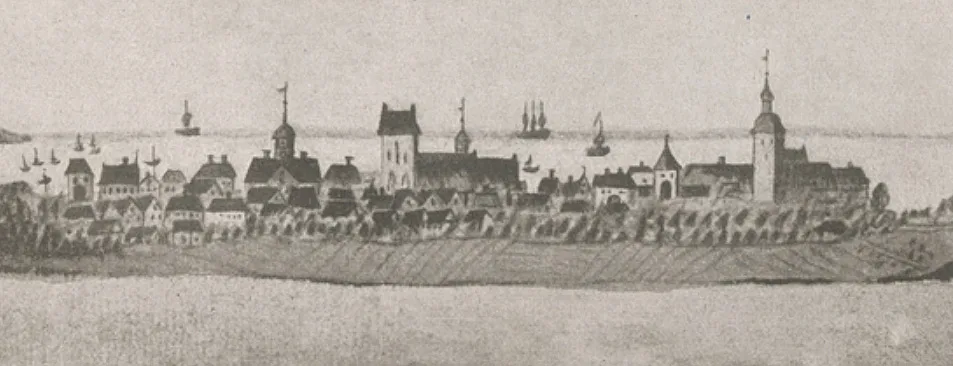
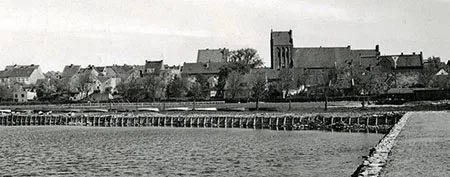
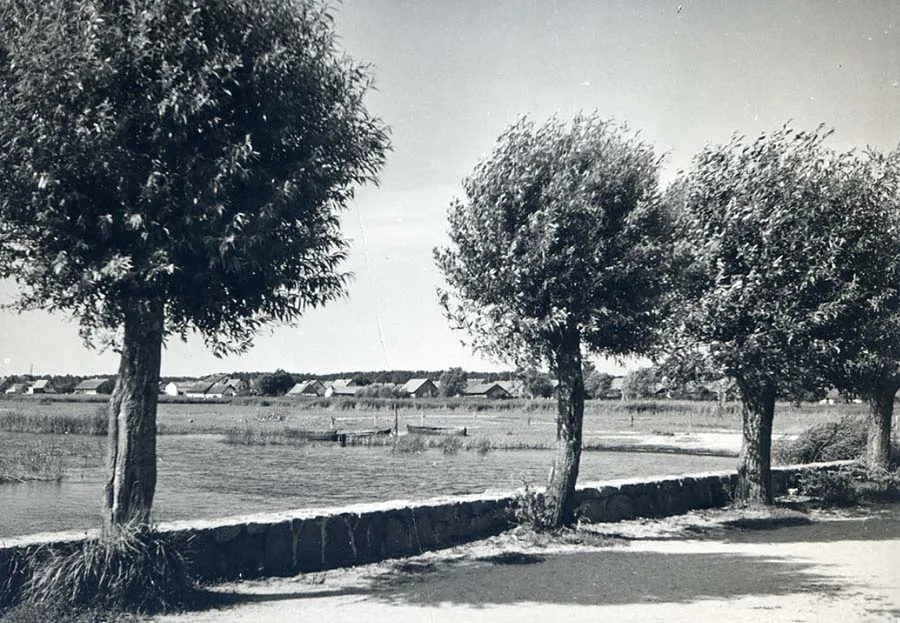 View of Zimmerbude across the Königsberg Sea Canal.
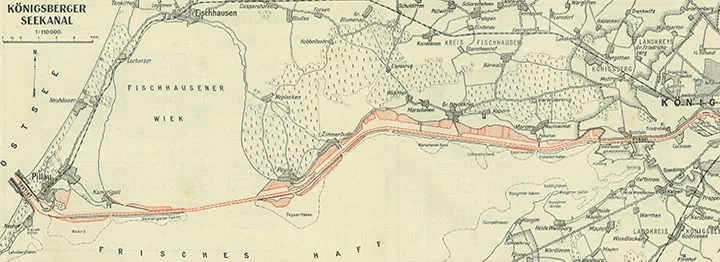
In 1894–1901, the bed of the Königsberg–Pillau Sea Canal (the Kaliningrad Sea Canal) was laid past Zimmerbude; during its construction, islands were built up from spoil. Thanks to them, the shoreline at Zimmerbude stabilised.
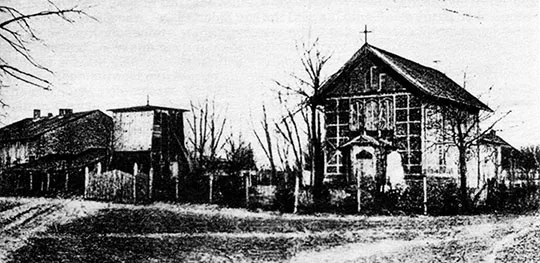
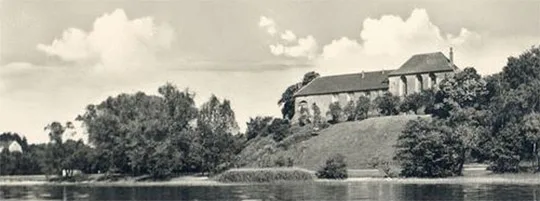
In 1899, the old half-timbered building of the church of Cranz (Zelenogradsk) became too cramped for residents and holidaymakers. Construction of a new church began, while the old one was dismantled and sold to the parish of Medenau to set up a "branch" in Zimmerbude. In 1901, Zimmerbude got its own parish. It comprised only three settlements: Zimmerbude, Peyse and Neplecken (Kharkovskoye), with 1,500 parishioners in total. The congregation bought the church building from Medenau (Logvino). A bell tower with two bells was erected beside it.
On 15.11.1904, the Amtsbezirk of Kobbelbude A, to which Zimmerbude belonged, was renamed the Amtsbezirk of Zimmerbude. The only head of the Amtsbezirk from Zimmerbude was the fisherman Karl Gerwien, in 1391–43.
In the 1920s, a school was opened in Zimmerbude. In the pre-war years, Zimmerbude also had a shop, an inn, a bakery, the Waldschloß hotel ("Forest Castle"), a church, a gendarmerie, a railway station and a compound feed plant. In the 1930s, a modern power station was built – the second most powerful in Germany. On 01.04.1939, Zimmerbude was merged with the municipality of Peyse (Komsomolskoye), the forest area Stadtwald Fischhausen, the municipality of Neplecken (Kharkovskoye) and part of the Kobbelbude forest into the new rural municipality of Peyse.
Peyse
The locality of Peyse is first mentioned in 1305 in the documents granting town rights to the settlement of Fischhausen (Primorsk). Apparently, a small fishing village already existed there at the time. In 1366, the Bishop of Sambia, Bartholomäus von Radam (d. 1378), granted a Prussian named Woiko the right to found a settlement on the lands of Peyse. After that, nothing of significance happened in the poor fishing village for several centuries.
From 1818, the village of Peyse formed a rural municipality in the Kreis of Fischhausen (Primorsk), which in 1939 was transformed into the Landkreis Samland. In 1871, Peyse had 33 residential houses. On 13.06.1874, the rural municipality of Peyse was incorporated into the newly established Amtsbezirk of Zimmerbude. On 09.03.1882, the municipality of Peyse passed to the Amtsbezirk of Kobbelbude A, which from 15.11.1904 was once again called Zimmerbude. Residents of Peyse held the post of head of the Amtsbezirk in 1919–31 (the teacher Schirrmacher and from 1943 (Mayor Kurt Friedrich).
From 1901, the village of Peyse belonged to the newly founded parish of Zimmerbude.
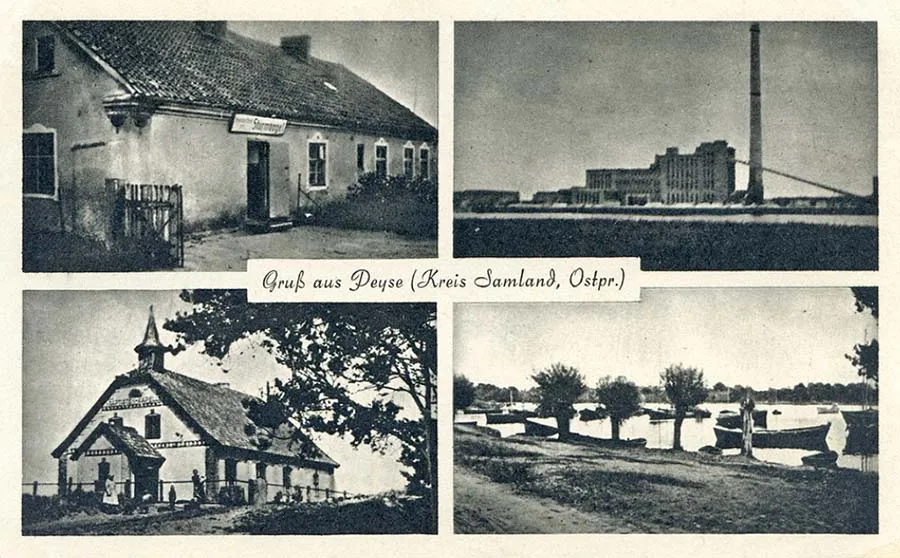 A postcard from Peyse.
The construction of the Königsberg–Pillau Sea Canal (the Kaliningrad Sea Canal) became highly important for the life of the village of Peyse. Running right next to the village, it gave fishermen access to the Baltic Sea in motor vessels. Already in the 1920s, there were several motor fishing boats in Peyse.
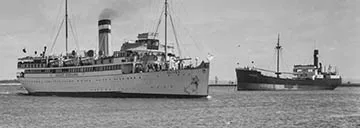
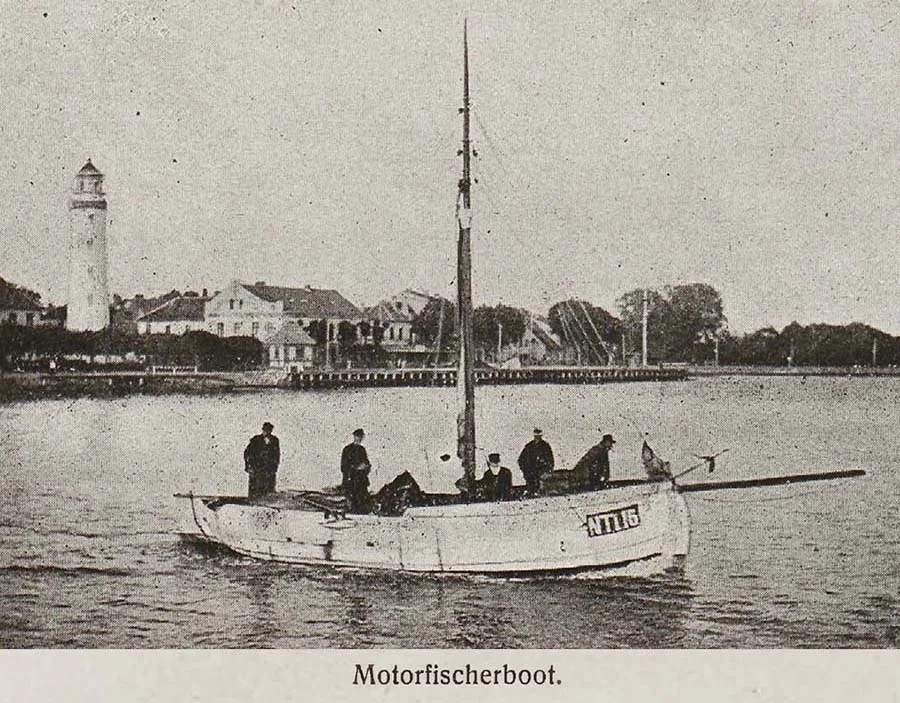 A motor fishing boat in the port of Pillau.
The islands formed during construction helped to stabilise the shoreline. Near Peyse, a system of navigation marks, buoys and lighthouses was built on the canal. In the village itself, a harbour was dug and fitted out. The new steamer service helped make Peyse the most attractive holiday spot for Königsbergers of all the coastal settlements in the area. In 1939, a thermal power station was built in Peyse, the second most powerful in East Prussia. On 01.12.1941, a railway branch was opened from the Königsberg–Pillau (Kaliningrad–Baltiysk) line to Peyse station. In 1943, a large mine and torpedo arsenal was built near Peyse.
The Fischhausen forestry was physically located on the north-eastern outskirts of Peyse, but belonged to the municipality of Fischhausen (Primorsk) and to the parish there.
The Amtsbezirk of Zimmerbude – Peyse. On 13.06.1874, Amtsbezirk No. 6 Zimmerbude was established in the Kreis of Fischhausen; it comprised four rural municipalities: Elendskrug (Novy, later Bobrovo), Marschehnen (Volochayevskoye), Peyse (Komsomolskoye, then Svetly), Widitten (Izhevskoye) and the Amtsbezirk of Zimmerbude (Svetly). On 09.03.1882, the municipalities of Elendskrug (Novy), Marschehnen (Volochayevskoye) and Widitten (Izhevskoye) passed to the Amtsbezirk of Codehnen (Slavyanskoye). Peyse and Zimmerbude passed to the Amtsbezirk of the Kobbelbude Forest District / Forstbezirk Kobbelbude (Bobrovo). At the same time, the Amtsbezirk of Zimmerbude was abolished.
On 15.11.1904, the Amtsbezirk of Zimmerbude reappeared: the Amtsbezirk of Kobbelbude A was renamed accordingly. As of 1908, it consisted of the rural municipalities of Peyse and Zimmerbude, as well as part of the forest Gutsbezirk of the Kobbelbude Head Forestry / Oberförsterei Kobbelbude (Bobrovo). On 07.05.1909, part of the forest Gutsbezirk of the Kobbelbude Head Forestry (Bobrovo) was attached to the municipality of Widitten (Izhevskoye) in the Amtsbezirk of Codehnen (Slavyanskoye). As a result, two rural municipalities remained in the Amtsbezirk of Zimmerbude: Zimmerbude (Svetly) and Peyse (Komsomolskoye). On 01.04.1939, the municipalities of Peyse and Zimmerbude were merged into the new municipality of Peyse, which also received the forest area Stadtwald Fischhausen from the town of Fischhausen (Primorsk), the municipality of Neplecken (Kharkovskoye) from the Amtsbezirk of Kallen (Tsvetnoye), and part of the Kobbelbude forest from the Amtsbezirk of Großheidekrug (Vzmorye). The Amtsbezirk itself was renamed Peyse, and until 1945 it consisted of the single municipality of Peyse.
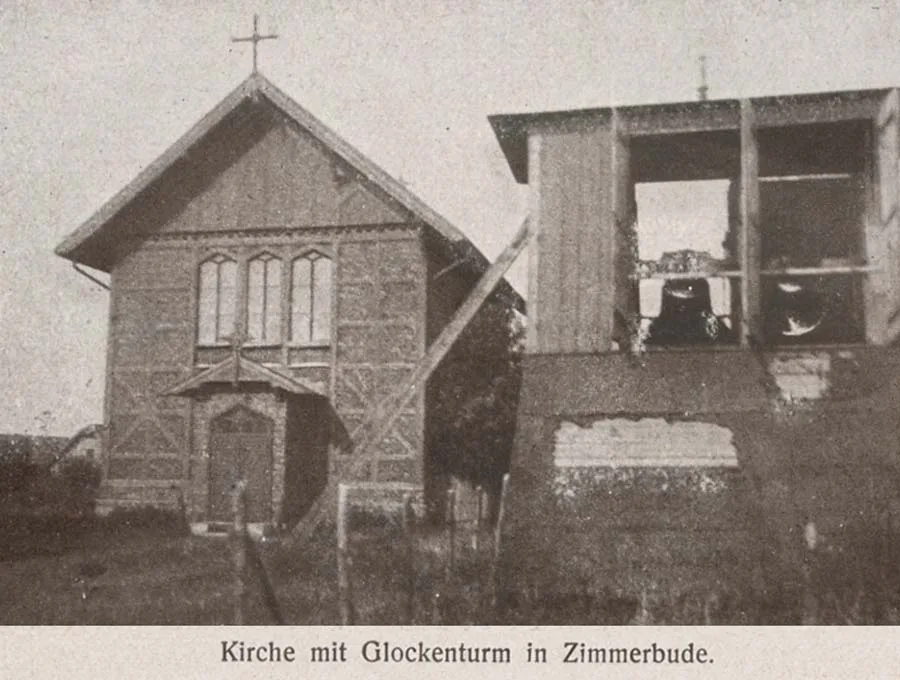 The church of Zimmerbude.
During the Red Army's Samland Operation, on 16.04.1945 units of the 319th Rifle Division (Col. D. A. Dulov) of the 90th Rifle Corps of the 43rd Army, in cooperation with the 70th Rifle Division (Col. S. A. Krasnovsky), launched an offensive against the Peyse peninsula in the area of Neplecken (Kharkovskoye).
By nine o'clock in the morning on 17.04.1945, they had reached the shore of the Frisches Haff, cutting off Peyse and Zimmerbude from the landward side. In the area of the mine and torpedo arsenal, they took about 5,000 enemy soldiers of the Wehrmacht's 28th Infantry Division and 5th Panzer Division prisoner. At the same time, soldiers of the 87th Guards Rifle Division (Maj. Gen. K. Ya. Tymchik), meeting little resistance, reached the outskirts of Zimmerbude by eight o'clock in the evening on 15.04.1945, and on 17.04.1945 they fully occupied both Zimmerbude and Peyse.
Immediately after the war, work began on restoring the infrastructure of the settlements, which still bore German names. In June 1945, work started on getting the Peyse thermal power station operational again. In September 1945, a small fish-processing enterprise with a smoking shop began operating. In 1946, a primary school was opened.
In November 1946, even before the renaming, the district authorities proposed granting Peyse and Zimmerbude the status of workers' settlements and renaming them Mayakovsk and Svetlovsk (Svetlovskoye or Svetlovsky) respectively. The regional authorities did not fully support these proposals.
In March 1947, the first generator of the power station began supplying electricity.
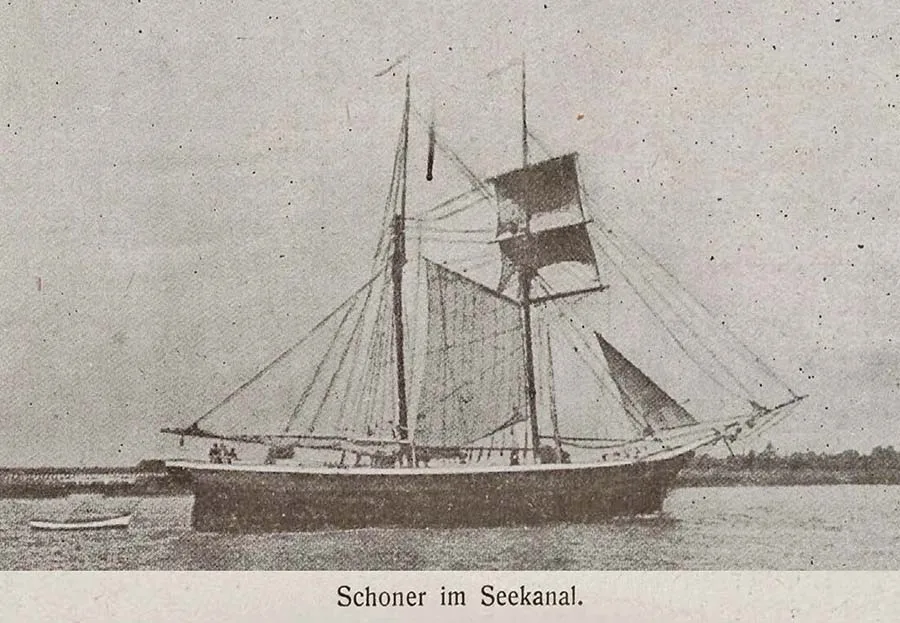 A schooner sails along the Sea Canal.
On 17.06.1947, Zimmerbude was renamed the settlement of Svetloye, and the Svetloye Village Soviet was formed. The date on which Peyse was renamed the settlement of Komsomolsky is unknown.
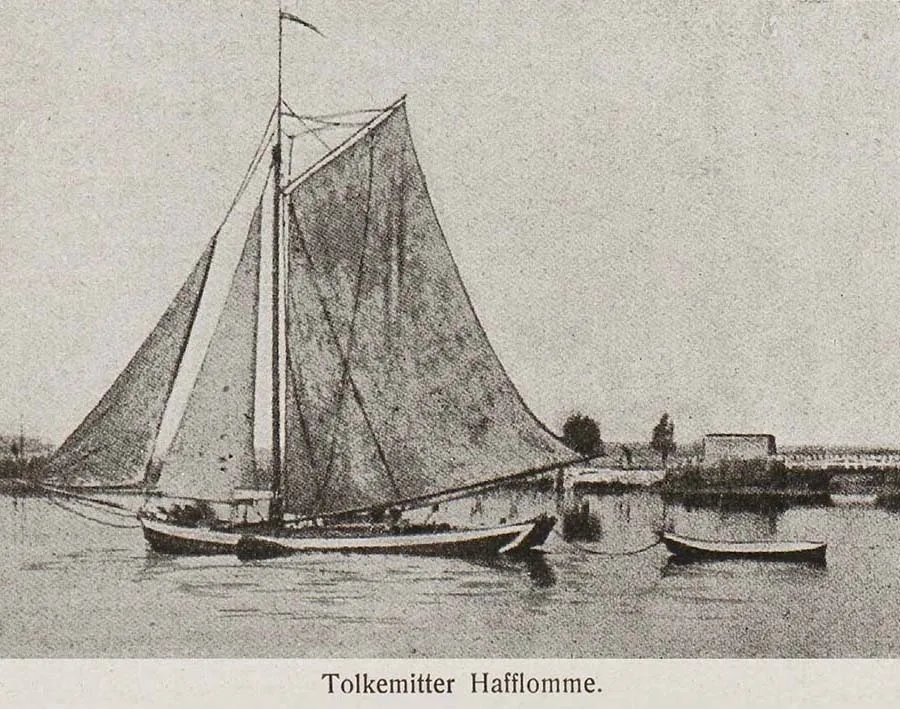
Also in 1947, the Svetly fish cannery began operating. A base for repairing small fishing vessels was set up as well. In 1948, Svetloye's primary school was transformed into a seven-year school. In November 1949, the "Za Rodinu" ("For the Motherland") fishing collective farm was established. In 1949, the Svetly construction and installation department was set up for urban construction.
On 01.08.1949, the settlement of Svetloye was merged with the settlement of Komsomolsky into the workers' settlement of Svetloye. The Svetloye Village Soviet was renamed a Settlement Soviet and placed under the Baltiysk Town Soviet. In 1951, a hospital was opened in the settlement.
However, because Baltiysk became a closed town, in 1952 the workers' settlement of Svetloye was returned to the Primorsk District. But this did not prove the best solution either, and in that same year of 1952 Svetloye was placed under the Kaliningrad City Soviet. In 1953, the school in Svetloye became a secondary school. In 1954, Svetloye had 484 residential houses.
On 06.10.1955, the settlement became a town of district significance and was renamed Svetly. The name Komsomolsky was kept by a district of the town (formerly Peyse). Also in 1955, the Svetly ship repair base was transformed into a ship repair yard. The town already had a polyclinic in a new building, a grocery store and a manufactured goods store, and a Fishermen's House of Culture, and in 1956 a collective farm market was opened.
Svetly developed above all as a centre of fishing, fish processing and ship repair. From 1956, the fishermen of the "Za Rodinu" collective farm began fishing in the North Sea. On 23.02.1957, the Power Engineers' House of Culture was ceremonially opened. In 1961, the town had 601 residential houses, including 115 built over the previous five years.
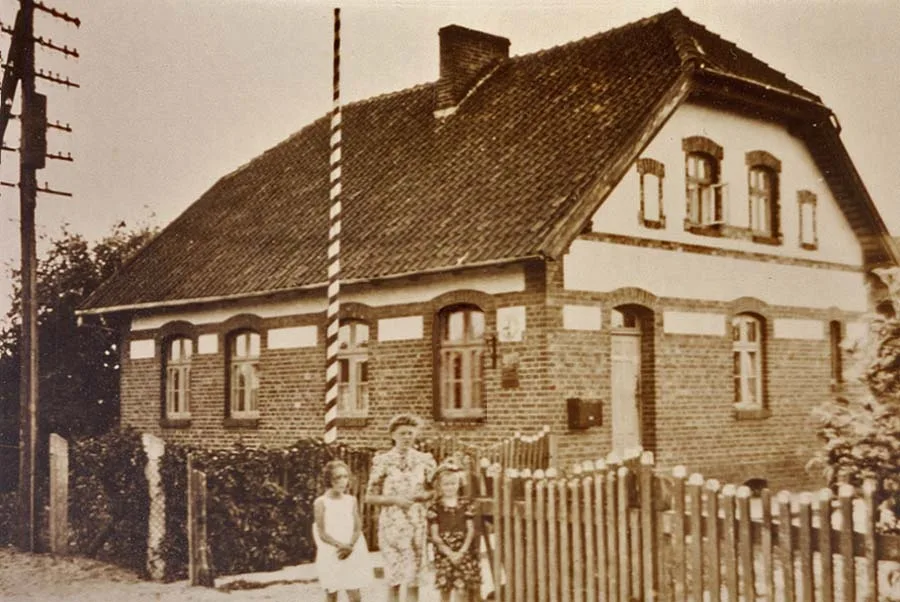 The post office building in Zimmerbude.
From 1962, the fish processing plant, which by then had been named "Baltiysky", began experimental production of a wide range of canned herring.
On 01.02.1963, Svetly became a town of regional significance. That same year, a consumer services centre was opened, and the secondary school moved into a new building. As of 1966, Svetly had two schools, a vocational school, a nursery and kindergarten, a music school, a library, two houses of culture and a hospital. In 1968, they were joined by the Burevestnik cinema (600 seats) and the Atlantik department store (at the time the second largest in the region). In 1969, a new 120-bed hospital with a maternity ward received its first patients.
In the early 1970s, the town's streets and public spaces were landscaped. New street lamps were installed with brackets in the shape of seagulls. In 1972, the Park of Culture and Leisure opened. At the same time, the "nursery and kindergarten" children's complex (280 places) began operating. In 1976, the Pirs restaurant was built. In the 1970s, the town repeatedly won prizes in urban improvement competitions: 1966 – a certificate of merit from the RSFSR Ministry of Communal Services, 1968 – 1st place among the towns of the European part of the RSFSR, 1971 and 1973 – 2nd place among the towns of the RSFSR. In 1978, a telephone exchange for 3,000 lines was launched in Svetly, and in 1979 another for 1,000. The town became the leader among the towns of the Kaliningrad Region in telephone network density. A railway connection with Kaliningrad was opened (Baltiysky Les station).
By 1983, Svetly was home to: a ship repair yard, a fish processing plant, the "Za Rodinu" fishing collective farm, the GRES-2 power station, an inter-collective-farm production base, a workshop of the Riga production association "Era" (ship electrification), a workshop of the Klaipėda plant "Zapremmash", the Stroykonstruktsiya plant and a greenhouse complex. Healthcare was provided by the town hospital, the town polyclinic, a children's polyclinic and a dental prosthetics clinic, and a pharmacy. Children were taught in two secondary schools, two vocational schools, eight preschool institutions, an arts school and a House of Pioneers; there was also a school for young workers. For residents' leisure, there were a cinema, a sports centre and a park of culture and leisure. There were also seven grocery stores and as many manufactured goods stores, a café, two restaurants, four canteens and a bathhouse. Administratively, a number of nearby settlements and the town of Primorsk were subordinate to the town.
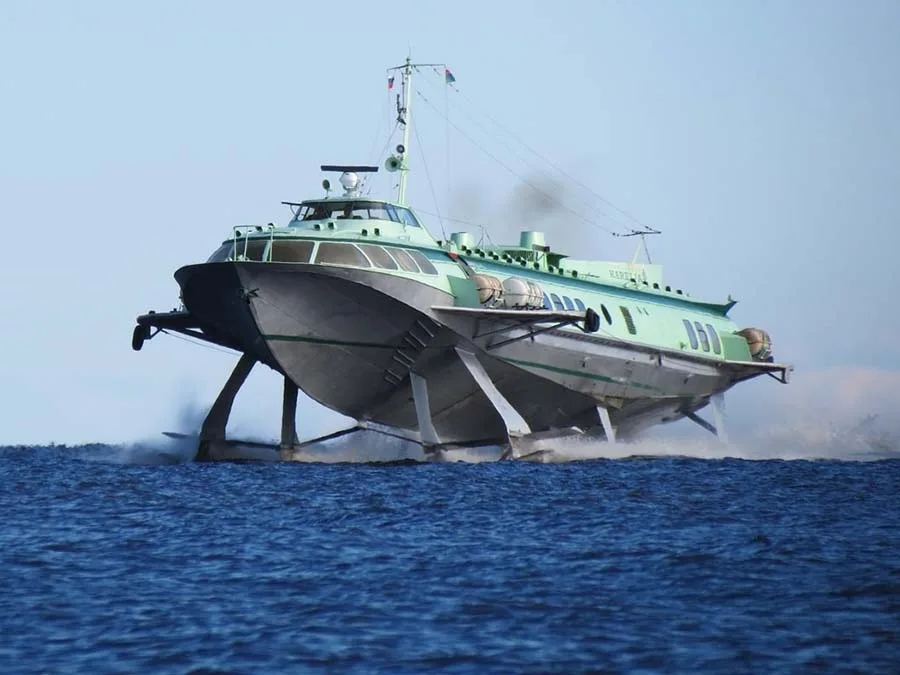 One of the two "Kometa" hydrofoils (10 and 17) that ran on the Kaliningrad–Gdańsk route with a stop in Svetly.
In 1992, a passenger sea service was opened between Gdańsk and Kaliningrad. The "Kometa" hydrofoils that ran on the route stopped at Svetly. On the whole, Svetly's enterprises came through the 1990s far better than those in other towns of the region. The Svetly ship repair yard even set up a subsidiary joint venture with Finnish partners.
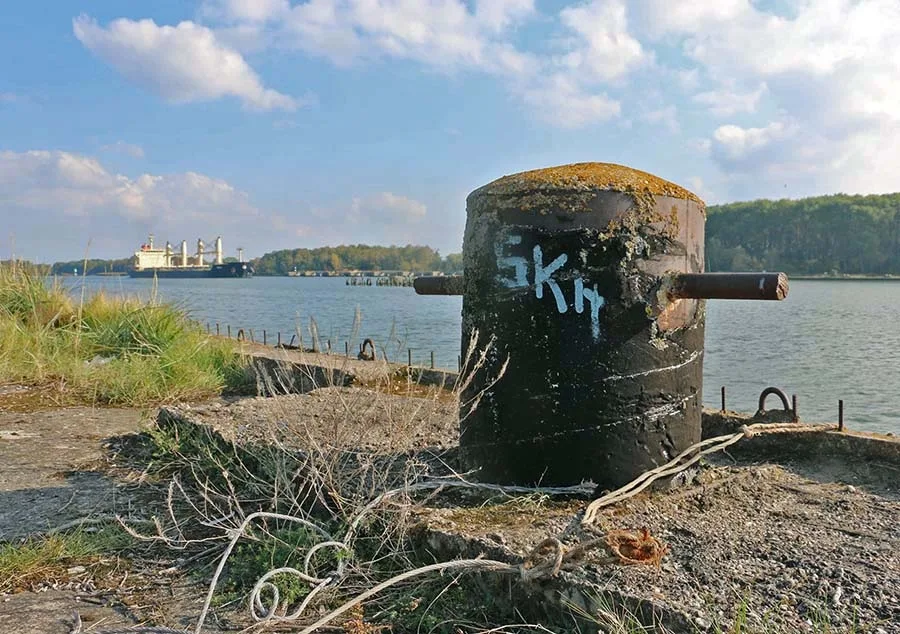 View of the Kaliningrad Sea Shipping Canal in Svetly.
In 1993, a Russian Orthodox church was consecrated in the town. In 1994, Svetly became the centre of the Svetly Urban District. At the same time, the town of Primorsk was removed from Svetly's jurisdiction. Also in 1994, construction of a plant for offshore structures began near Svetly, and in 1999 that of an oil terminal. In 2001, the integrated oil terminal of Lukoil-Trans LLC was put into operation. It includes a tank farm of 33 tanks, a two-sided railway unloading rack for 30 tank cars, a one-sided loading and unloading rack for 10 tank cars, and two berths for tankers of up to 40,000 tonnes deadweight. The terminal handles the transshipment of oil from the D-6 offshore platform and onshore fields, as well as gas condensate, base oils, diesel fuel, petrol and aviation kerosene.
In 2005, the Burevestnik cinema was closed, and five years later a shopping centre of the same name opened in its building. In 2008, Svetly became the centre of the Svetly Urban District. The number of secondary schools in the town rose to three, and one of the vocational schools was transformed into a technical college. There were also six kindergartens, a children's creativity centre, a children's arts school, a children's and an adult library, a house of culture and a children's and youth sports school of the Olympic reserve. As of 2008, the town had 104 shops, 189 retail pavilions, three restaurants, eight cafés, seven snack bars, eight canteens and a bar.
In 2010, Svetly accounted for 33% of the region's canned food output and 19% of Russia's.
Sights: the Lutheran church building (1899) and the parsonage, the mosaic panel on the façade of the Atlantik department store (1967–68), the Lenin monument (1973).
Population of Svetly over time: 1959 – 7,149, 1970 – 14,836, 1979 – 17,031, 1989 – 19,936, 1998 – 21,300, 2002 – 21,745, 2010 – 21,375, 2012 – 21,545, 2013 – 21,626, 2014 – 21,790, 2015 – 21,849, 2016 – 22,015, 2017 – 22,140, 2018 – 21,928, 2019 – 21,679, 2020 – 21,630 inhabitants.
Population of the merged municipality of Peyse: 1939 – 2,196 inhabitants.
Population of Zimmerbude over time: 1818 – 338, 1844 – 460, 1858 – 634, 1867 – 720, 1871 – 740, 1905 – 797, 1919 – 742, 1933 – 921, 1946 – 1,338 inhabitants.
Population of Peyse over time: 1831 – 209, 1844 – 305, 1858 – 361, 1867 – 428, 1871 – 465, 1899 – 630, 1919 – 592, 1944 – 2,196, 1946 – 843 inhabitants.
Population of the Fischhausen forestry: 1905 – 5 inhabitants.
Composition of the population of Zimmerbude in 1871: Protestant Christians – 727, other Christians (excluding Catholics) – 12, Jews – 1, children under 10 – 180, literate – 410 (74%), blind – 1, insane – 3.
Composition of the population of Peyse in 1871: all 465 were Protestant Christians, children under 10 – 120, literate – 320 (94%), deaf-mute – 1, insane – 2.
Photos on this page: Bildarchiv Ostpreußen / bildarchiv-ostpreussen.de, Mikhail Ogorodnikov.
Translated from Russian with the help of AI (Claude, Anthropic), October 2026.