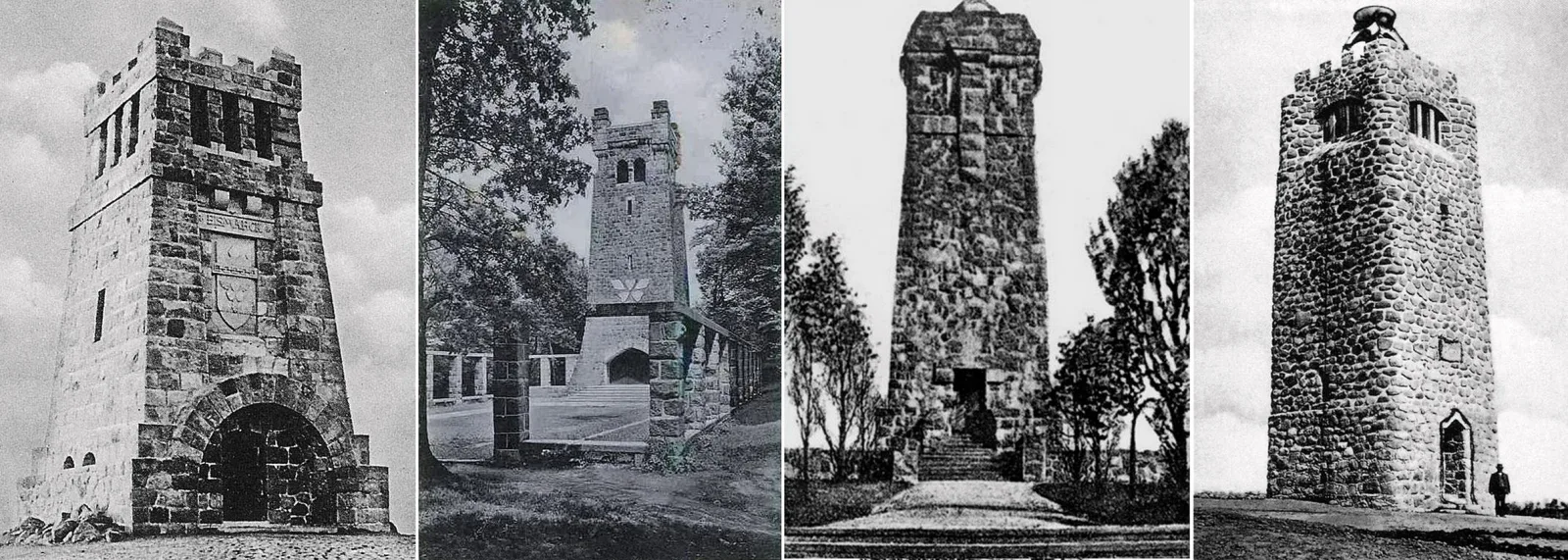
The main purpose of building towers named after Bismarck on such a large scale was to honour Otto von Bismarck, the founder of the German Empire.
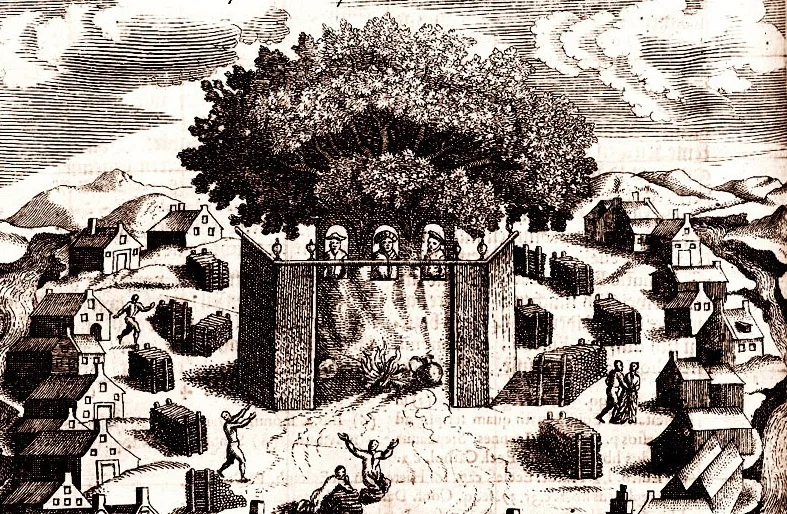
The towers were built with private funds, and in most cases the money was raised through community donations. Design competitions were held, and the finest and most beautiful sites were chosen for the towers, mostly on high ground. From there one could survey the surrounding land and settlements, and the towers themselves could be seen from far away. On certain days a fire* was lit on the towers to remind local residents of the great achievements of the “Iron Chancellor”, who had unified the German Empire.
This has given rise to the absurd notion, often heard today, that the towers were used to send fire signals. That would have been very difficult, since most of the towers stand a considerable distance apart. Nor was there any need for it in the age of the telegraph and the telephone.
East Prussia, part of which is now the Kaliningrad Region, was no exception to the Bismarck tower boom. Eight towers were built in our part of the world in all. After East Prussia was partitioned at the end of the Second World War, they were split evenly: four towers ended up in Poland** and four in the Kaliningrad Region.
The following four towers are located in present-day Poland:
– Drengfurt (Srokowo) – the 12.5-metre tower was opened on 19 October 1901 and is now half-ruined;
– Osterode (Ostróda) – the 21-metre tower was opened on 1 April 1902; it has been restored and is now in good condition;
– Sensburg (Mrągowo) – the 23-metre tower was opened on 23 June 1905; it has been restored and is now in good condition;
– Soldau (Działdowo) – the 12-metre tower was built before 1914 and is now half-ruined; very little information about this tower exists.
Below we look at the Bismarck towers that stood in what is now the Kaliningrad Region. All of them were erected at roughly the same time, at the beginning of the 20th century, on high ground near large towns. Of the four towers built, only two have survived to the present day.
The Bismarck Tower near Gumbinnen (Gusev)
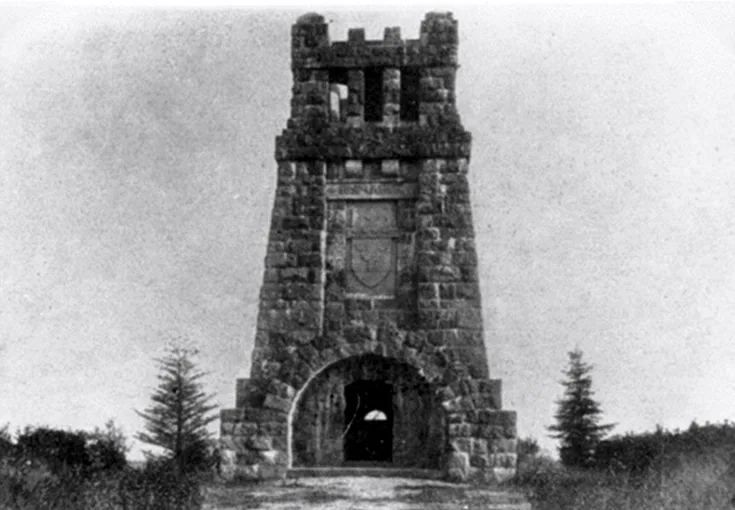
Plans to build a Bismarck tower were first announced in Gumbinnen as early as 1899, when a building committee was also formed, chaired by the district administrator. The site chosen for the tower was the Kallner Heights (Kallner Höhen), 115 metres above sea level.
The tower was designed by Menzel, the architect of the Gumbinnen district. Construction cost 15,000 marks, which were raised through voluntary donations.
The foundation stone was laid on 1 April 1902. Construction was supervised by the Royal Building Inspector Giessling. The building material was granite blocks brought from Masuria. The tower was 12 metres high. Near the top was a plaque with the family coat of arms and the inscription BISMARCK, and on the open platform at the summit stood a bowl for lighting the fire.
The tower was ceremonially opened before a large crowd on 14 June 1903.
The tower became one of the district’s notable landmarks and a favourite place of recreation for locals and visitors alike.
The easiest way to get there was by car, along a road that ran almost right up to the tower. Those who preferred to walk had to cover part of the way by train (towards Darkehmen, now Ozyorsk) as far as the Balbern halt, and from there make their way on foot along a range of hills to the tower.
The tower stood until 20 January 1945, when, as Soviet troops advanced, it was blown up by German sappers to deprive enemy artillery of a landmark.
Today the granite blocks of the foundation are all that remain on the site, and a sand quarry has crept right up to the spot where the tower once stood.
The Bismarck Tower near Königsberg (Kaliningrad)
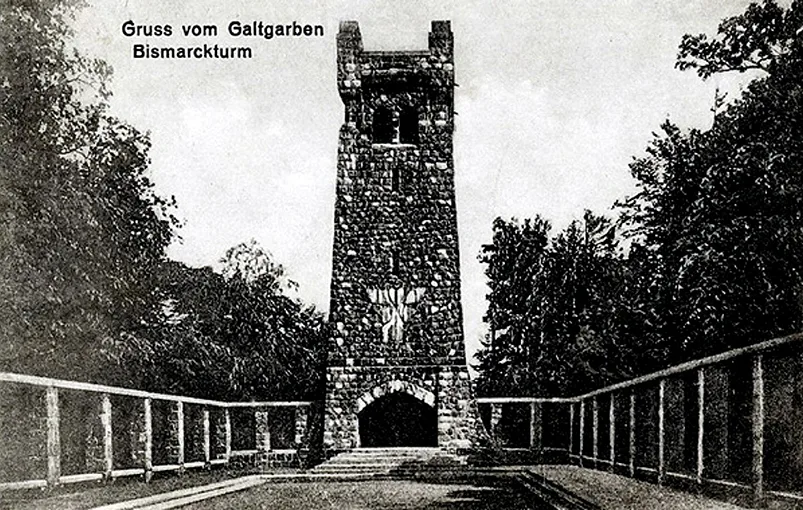
The idea of erecting a Bismarck tower near Königsberg first arose in 1898. At the suggestion of the local branch of the Pan-German League, a tower committee was formed under the chairmanship of State Councillor Karl Ouvrier***.
It was not until 1 May 1902, however, that a design competition for architects was launched. The winner was the Königsberg architect Richard Jepsen Dethlefsen, and it was his design that was chosen to be built.
The total cost of the tower was 28,000 marks, but by the time construction began only 11,000 had been raised. Lack of funds repeatedly held up the work and very nearly brought the project to an end.
The site chosen for the future tower was the highest point of Samland, Galtgarben Hill, 111.4 metres above sea level. The foundation stone was ceremonially laid on 20 August 1902. The building material was granite blocks quarried in Samland not far from the site, along with stones brought in from elsewhere and donated specially for the construction. But by the end of 1902, with funding dwindling, work had already come to a halt.
At the beginning of 1903 a committee was set up to secure funding for the tower. A charity evening was held on 20 February 1903, and on 26 and 27 February the ballet “Cinderella” was staged at the “Louisenhöhe” theatre, with the proceeds going to the building fund. Later, in 1904, further charity evenings were held, and a musical performance was organised at the Drugehnen guest house, not far from the building site, which raised 760 marks.
The districts of Königsberg and Fischhausen (Primorsk) repeatedly helped to raise money so that work on the tower could resume.
In the end, construction did not resume until the spring of 1905, and it was completed in mid-1906.
The tower, square in cross-section, was 22.58 metres high. By tradition, a fire bowl was installed at the top. Above the entrance was Bismarck’s coat of arms.
The tower was ceremonially opened on 23 September 1906. In all the years that followed it was a popular place for recreation and for all kinds of events and rallies. For this purpose an open-air venue (Festhalle) was created in early 1914 in front of the tower’s entrance on the south side. In June 1914, for example, a gathering of Samland youth was held there in the presence of Field Marshal Baron von der Goltz.
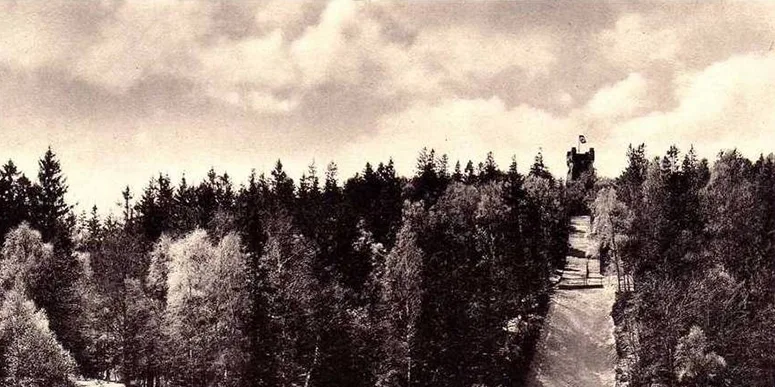
In winter the tower and the hill were popular thanks to the ski trails running around them and a ski jump that started at the foot of the tower.
In addition, there were monuments on the hill beside the tower and on its southern slope commemorating those who had fought in the Napoleonic Wars. In 1818, on the initiative of War Councillor Johann George Scheffner, a cross on granite blocks was erected on the hill in honour of those who had fallen in the War of Liberation against Napoleon. Cast-iron plates listed the battles of that war, and the granite block bore the carved inscription “27 September 1818”. The monument was restored in 1888. Another monument, bearing the image of a sword and a torch, stood on the southern slope of the hill. Its inscription read: “To the thousands who died for the Fatherland, deserving of praise and gratitude. 1818.” Scheffner himself, “the prime mover of the spiritual forces”, as the people of Königsberg called him, was buried on the summit of the hill in 1820.
The tower stood until 1945. On the night of 1 March it was blown up by Soviet troops during fierce fighting; accounts of the battle and of the demolition of the tower can be found in the memoirs of both Soviet and German eyewitnesses and participants****.
Today the hill is occupied by a military unit, and on the site of the monument stands an obelisk in memory of fallen soldiers bearing the words: “Soldier! Be worthy of the memory of those who fell in the battles to liberate the heights.”
The Bismarck Tower near Ragnit (Neman)
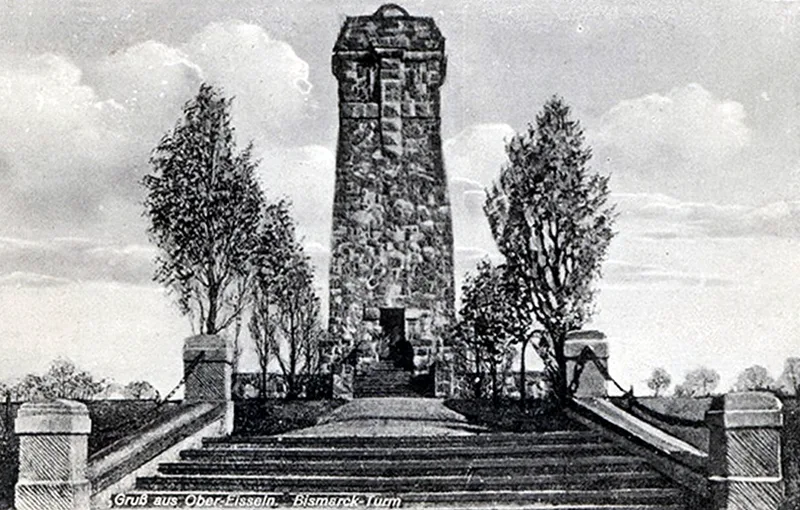
The idea of building a tower on the Neman River came from Count Georg von Lambsdorff, head of the Ragnit (Neman) district. He had planned to begin construction as early as mid-1899. But once again everything came down to money. At the beginning of 1910 the tower’s building fund held only 8,000 marks, while the total cost of the work was 17,000.
The site chosen for construction was the Signal Hill (Signalberg) in the locality of Ober-Eißeln (the settlement of Garino/Gorino), 67.8 metres above sea level. The foundation stone of the tower was laid in 1911. The work was carried out by the Evermann construction firm from Ragnit. The core of the tower was built of brick and then faced with granite slabs.
The tower was 19.7 metres high. Square in cross-section, it was 6 metres wide. At the top stood a fire bowl, reached by a staircase of four flights with 18 steps each. Above the entrance to the tower was mounted a plaque of rough-hewn stone bearing the inscription BISMARCK.
The grand opening took place on 17 August 1912. At the ceremony, the district head Hans von Trebra gave a speech and conveyed congratulations from the initiator of the project, Count von Lambsdorff.
Set amid woodland parkland, the tower was popular with residents of the district and visitors alike. Next to the tower there was a roadside café, from which a promenade staircase led down to the waters of the Neman.
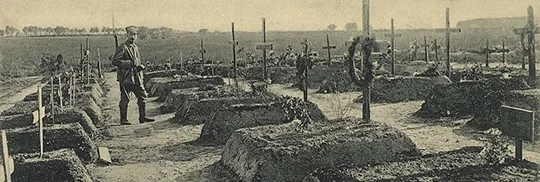
During the First World War the tower was damaged by fire from Russian batteries, and on 12 July 1914 the German observer Karl Wendt was killed by a shell fragment; he was later buried beside the tower with military honours. In 1933, at his own request, the district head Dr Bernhard Penner, who had died in a hunting accident, was also buried by the northern side of the tower.
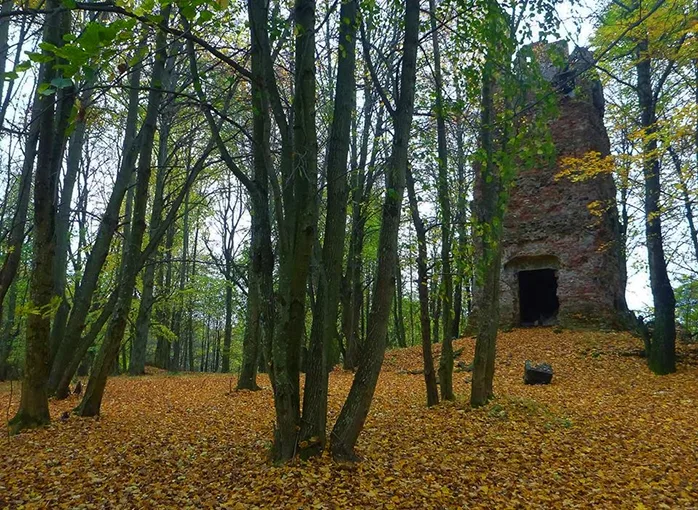
Today the tower is in a sorry state. The granite facing has crumbled away. The upper part of the tower has collapsed, the staircase is partly destroyed as well, and climbing to the top is life-threatening. The graves by the tower have been looted and lost.
The Bismarck Tower near Insterburg (Chernyakhovsk)
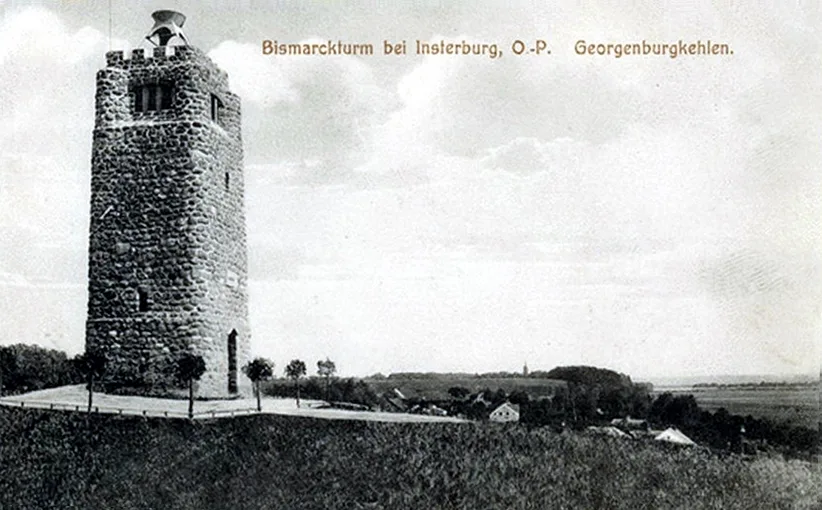
The idea of building a Bismarck Tower near Insterburg was first put forward by a landowner named Wagner in 1908. That same year a committee for the creation of a Bismarck Tower was founded in the town and set about raising funds. The total sum required for the work, 15,000 marks, was collected through voluntary contributions and donations.
The site chosen for the tower was a 33-metre hill not far from the confluence of the rivers Inster (Instruch) and Angerapp (Angrapa), where the Pregel (now the Pregolya) has its source.
The tower was designed by Schlichting, an architect from Insterburg. At a committee meeting in June 1913 he announced that all the necessary building materials were already on site and that construction proper could begin. The work was entrusted to the contractor Emil Kadereit. Supervision of the work was carried out by the government architect Bode zu Kreuznach.
The tower was 15 metres high, with a square base six metres wide. The building materials were unworked fieldstones on the outside and brickwork on the inside. On the open platform at the top stood the traditional fire bowl. Above the entrance was mounted a plaque with the inscription BISMARCK.
At the grand opening, held on 7 September 1903 before a large crowd of townspeople, the ceremonial speech was given by Dr Gramsch, President of the Gumbinnen District Government. A telegram was sent to Countess von Bismarck announcing that the tower in memory of Bismarck had been opened and consecrated before a great gathering of people. A telegram of thanks was received in reply.
Popular with local residents and visitors to the district, the tower stood until the end of the Second World War. Today it is in a dangerous state of disrepair. The staircase and the upper platform are partly destroyed, and some of the fieldstone masonry has been lost.
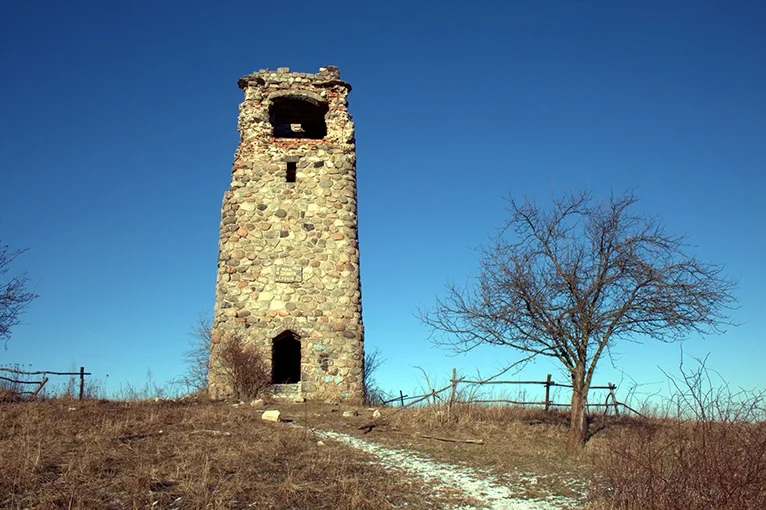
In 2011, as part of the “InsterGOD” project, the tower was measured and photographically documented, and an outline restoration design was drawn up.
Such, in brief, is the history of the Bismarck Towers that stood on the territory of today's Kaliningrad Region. The surviving ruins (for there is no other word for them) are popular with local and visiting tourists alike, yet the dangerous condition of these structures gives cause for concern that in the near future we may lose even these landmarks.
Photos by the author and from the Bildarchiv Ostpreußen (www.bildarchiv-ostpreussen.de).
_____________
* Most of the towers were fitted at the top with a fire bowl, in which a fire was lit on certain days – on Bismarck's birthday or on the anniversary of the unification of Germany into a single Empire.
** In total, 17 towers survive on the territory of present-day Poland.
*** State Councillor Karl Ouvrier was at the same time chairman of the Königsberg branch of the Pan-German League.
**** For example: Кобылянский И.Г. Прямой наводкой по врагу. М.: Яуза, Эксмо, 2005. Or: Fischer-Borken K. Sturm auf Galtgarben/Der Landser. № 314.
Translated from Russian with the help of AI (Claude, Anthropic), October 2026.