As a rule, newcomers write about Kaliningrad in rapturous tones. Sometimes it even seems too rapturous. I don't know about other Kaliningraders, but I have mixed feelings when I read such articles.
On the one hand, of course, it is pleasant that your city is rated so highly. Yet I cannot shake the thought that such judgements are made simply out of politeness. After all, you don't need to live here for many years to see that this city is, to put it mildly, far from perfect. You realise this especially clearly when you look at it from the top floor of some high-rise – the House of Soviets, the Plaza or, say, the Baltic Business Centre.
Wretched Khrushchevkas, ungainly Brezhnevkas and tasteless shopping malls are the ingredients of some utterly unappetising salad, which, as if with mayonnaise, is thickly dressed with lopsided kiosks, untidy mini-markets and shabby public transport stops.
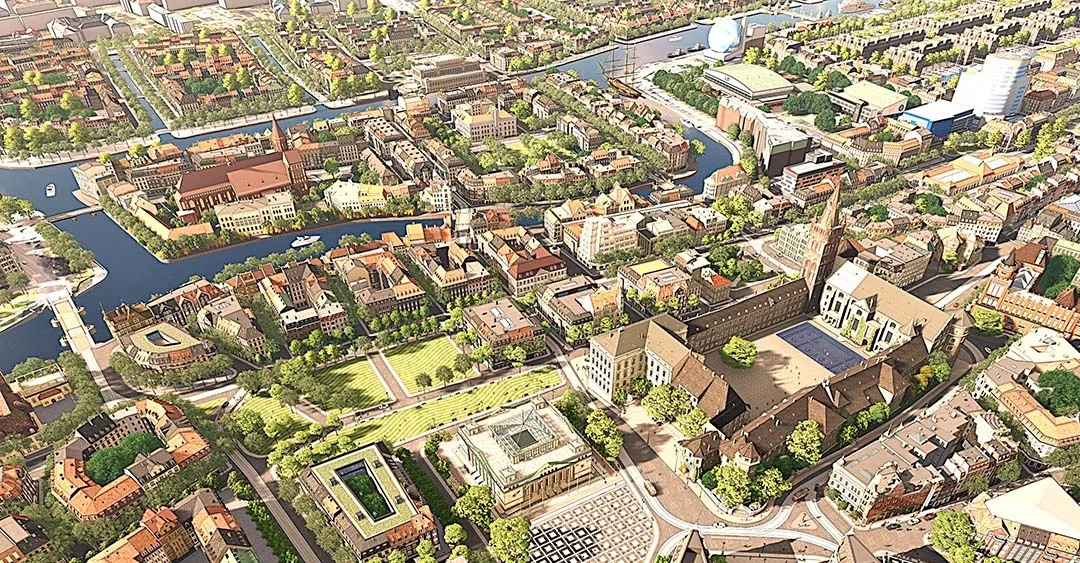
The first thought that comes to mind when you look at Kaliningrad from a bird's-eye view is this: why does this city need a chief architect if it is being built up chaotically anyway, if all the buildings are different, if there is not even a hint of stylistic unity? Wouldn't it be more sensible to abolish the post? At least it would save the budget something…
Still, the view of the city from the House of Soviets is nonetheless easier on the eye than the view from other local high-rises – if only because from the House of Soviets you cannot see the House of Soviets itself, whose notoriety for ugliness spread around the world long ago.
…Why, then, do people praise Kaliningrad? Why are they so glad that God prompted them to move here? Perhaps because the cities they come from are even worse? My experience of travelling in "greater Russia" is very modest. But what I saw was enough to rid me of many illusions.
Comparing Kaliningrad with Moscow and St Petersburg is laughable. But with Tula or Pskov, for example, it is possible. And it is by no means certain that Kaliningrad looks better against them. Yes, there is a certain European flair here, but it is barely perceptible, almost unnoticeable. On the whole, our city – advanced, as the local snobs believe – differs little from any other Russian one. The same dirt on the streets, the same unsmiling faces all around, the same battered buses, the same chaotic development, the same couldn't-care-less attitude to the historical heritage. The only difference is that here highbrow analysts build multi-storey theories about why this or that church (manor, fortress) is not being restored but is instead being taken apart for bricks by the locals – the people, they say, don't regard any of it as their own and feel no connection with the German past of this land. In "greater Russia" they often manage without such philosophising. They simply accept ruin as a given.
…So what is it that draws people here after all? The sea, perhaps? Partly, yes. But our climate is capricious; not every summer brings five warm days in a row, so you rarely get to lie on the beach to your heart's content.
And the service at the local resorts is not exactly overbearing either. So what is left? Apparently only the proximity to the European Union. Indeed, far from all of those who decided to swap their city for ours deny that this was one of the main reasons for the move.
We Kaliningraders are used to regarding our city's geographical location as a great advantage. And it really is an advantage. Yet if you think about it, there is something very hurtful in the fact that people move here only because there is a foreign country right next door. It is as if a woman justified her consent to marry Petya by saying that Petya lives next to a wonderful man called Vasya, whom she could visit often, even every day.
People like the fact that you can simply get into a car and in a few hours drive to Warsaw or Berlin. It is as though these cities share a little of their charm with ours. In this frame of reference, Kaliningrad is something like a modest hallway in a luxurious apartment with many rooms. And if so, why pay attention to the hallway's shortcomings, why look at it at all, when the door to the glittering drawing room stands open?
But can Kaliningrad be interesting in itself? Without Europe? For most of those who were born here, the question does not even arise.
I think many of us are perfectly well aware that this city is disfigured, mangled physically and morally. And yet we love it, the way, I suppose, one loves sick children.
That is, we see what a huge gulf lies between Kaliningrad and the neighbouring European cities, and we clearly understand that it can never be bridged. Yet this sad circumstance only sharpens our warm feelings for our native place and makes our bond with it even closer.
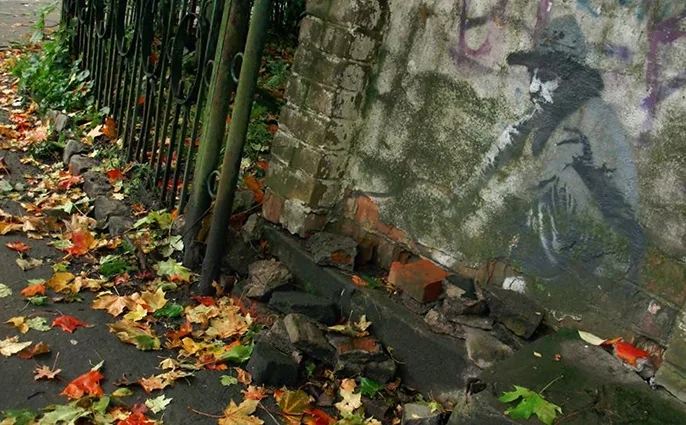
As for the newcomers, they vary. Some manage to feel Kaliningrad, with its aesthetic of eternal decline and its inescapable melancholy, to see the great past behind the drab façade, to discern the details that make our city truly beautiful. Well, and for others it will forever remain merely the anteroom of the European "paradise".
Be that as it may, being a Kaliningrader (whether born here or a "blow-in") is still a happiness. Albeit, at times, a rather difficult one…
Translated from Russian with the help of AI (Claude, Anthropic), October 2026.