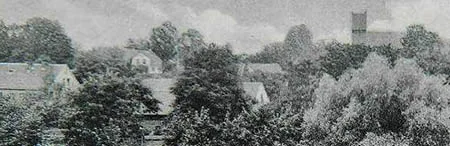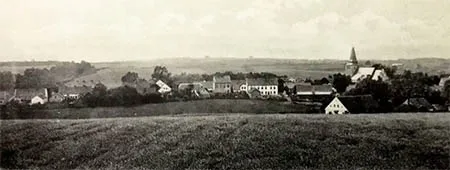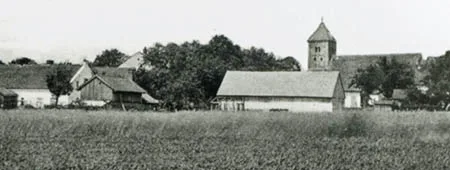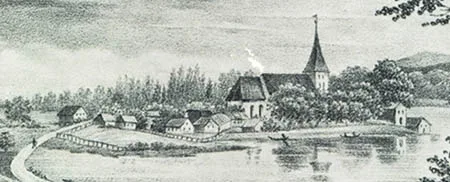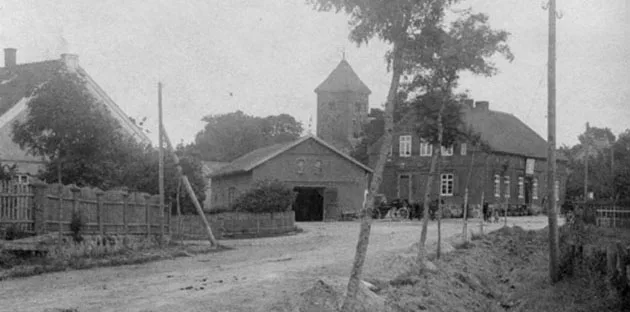
Drugehnen was founded in 1339. Around 1500 it was called Druckeyn. After 1539 it was Drugen, and after 1563 Drugein.
In the 19th century Drugehnen was a village forming a rural community in the Landkreis Fischhausen (from 1939 the Landkreis Samland). The village belonged to the parish of Kumehnen (Kumachevo). The community also included the Hegeberg-Drugehnen inn. In 1874 the Drugehnen community was included in the newly established Amtsbezirk Seefeld (Prostornoye), which was renamed the Amtsbezirk Drugehnen (Pereslavskoye) in 1930. On 14 July 1900 traffic opened on the Samland Railway (Samlandbahn), on which a station was built in the village. On 30 September 1928 the abolished Gutsbezirk Quanditten (Sinyavino) became part of the Drugehnen community, comprising the Quanditten estate (Sinyavino), the Vorwerke Ernstgrund (54°49'45'' N 20°19'05'' E) and Taplacken (54°49'32'' N 20°17'58'' E), and the Quanditten brickworks (Ziegelei Quanditten; Sinyavino, part). At the time the Amtsbezirk Seefeld was renamed Drugehnen, it consisted of five rural communities: Dommelkeim (Pavlinino), Drebnau (Zelyony Gay), Drugehnen (Pereslavskoye), Marienhof (Novo-Pereslavskoye) and Wiekau (Khrustalnoye). Its composition did not change until 1945.
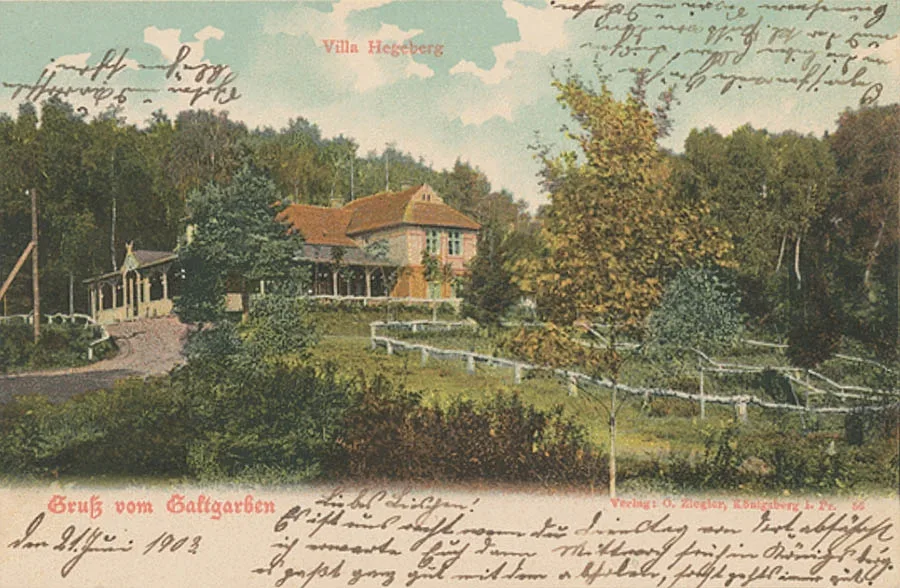
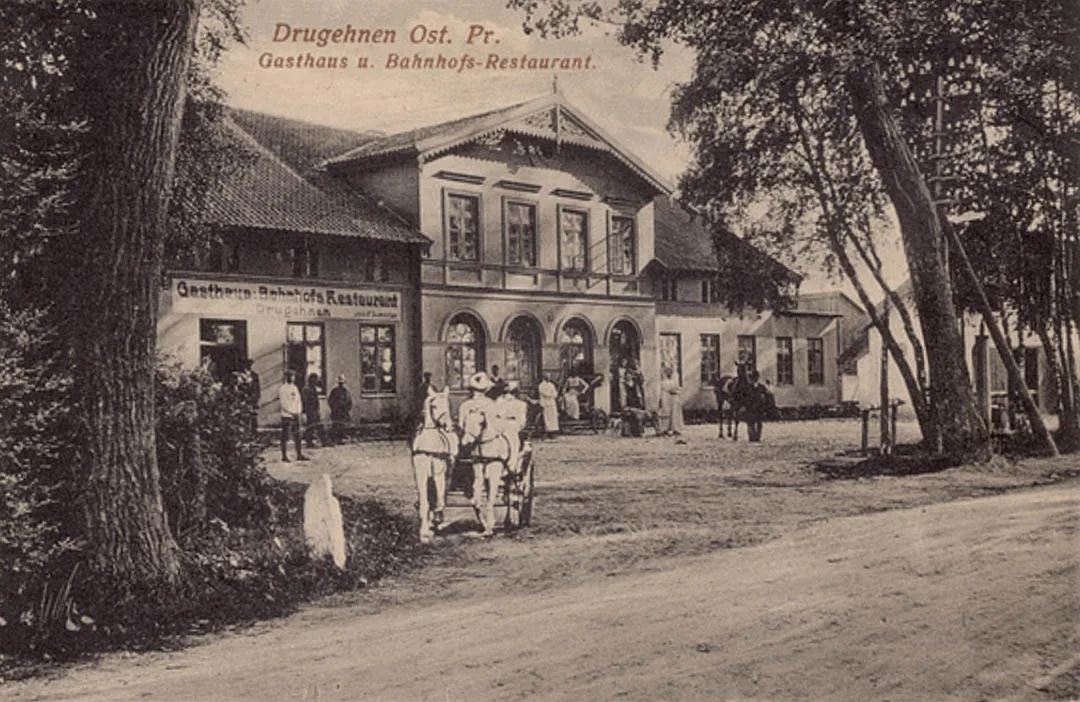
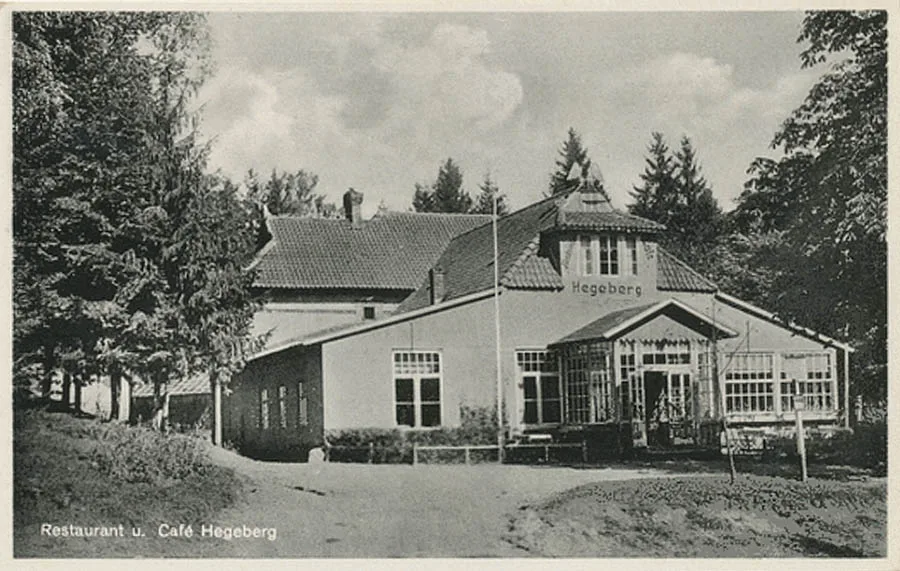
Before the war there was an inn in Drugehnen. Another inn of the same kind was located in Hegeberg-Drugehnen.
Marienhof station was built in 1900, when traffic opened on the Samland Railway (Samlandbahn). The station was located 1 km from the Marienhof estate and was part of the Gutsbezirk formed by it. Marienhof station belonged to the parish of Kumehnen (Kumachevo) and, as part of the Gutsbezirk Marienhof, to the Amtsbezirk Seefeld (Prostornoye), which was renamed the Amtsbezirk Drugehnen (Pereslavskoye) in 1930. After the Gutsbezirk Marienhof (Novo-Pereslavskoye) was merged with the Gutsbezirk Seefeld (Prostornoye) into the new rural community of Marienhof (Novo-Pereslavskoye) on 30 September 1928, Marienhof station came to belong to this community.
On 1 February 1945 Drugehnen was taken by troops of the 17th Guards Rifle Division of the 39th Army.
On 17 June 1947 Drugehnen was renamed the settlement of Pereslavskoye, and the Pereslavskoye Village Council was created at the same time. The new name is associated with settlers from the Pereslavl District of the Yaroslavl Region. Marienhof station became part of the settlement of Novo-Pereslavskoye. In 1955 Pereslavskoye had 60 houses, and Novo-Pereslavskoye had 3. No later than 1975 the settlement of Novo-Pereslavskoye was removed from the register and incorporated into the settlement of Pereslavskoye.
Sights: a memorial to fallen Soviet soldiers (6,900 people, 1985), a mass grave of Soviet soldiers.
Population change: 1984 – 1100, 2002 – 1456, 2010 – 1388 inhabitants.
Population of the settlement of Novo-Pereslavskoye: 1984 – 40 inhabitants.
Population change of the Drugehnen community: 1905 – 187, 1910 – 180, 1919 – 256, 1933 – 639, 1939 – 820 inhabitants.
Population of Marienhof railway station: 1905 – 10 inhabitants.
Population of Hegeberg: 1905 – 2 inhabitants.
Population of Taplacken: 1905 – 76 inhabitants.
Population of the Vorwerk Ernstgrund: 1905 – 5 inhabitants.
Population of the Quanditten brickworks: 1905 – 7 inhabitants.
Translated from Russian with the help of AI (Claude, Anthropic), October 2026.