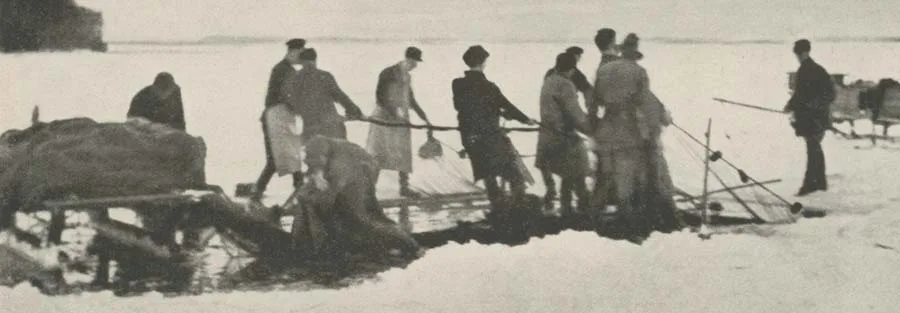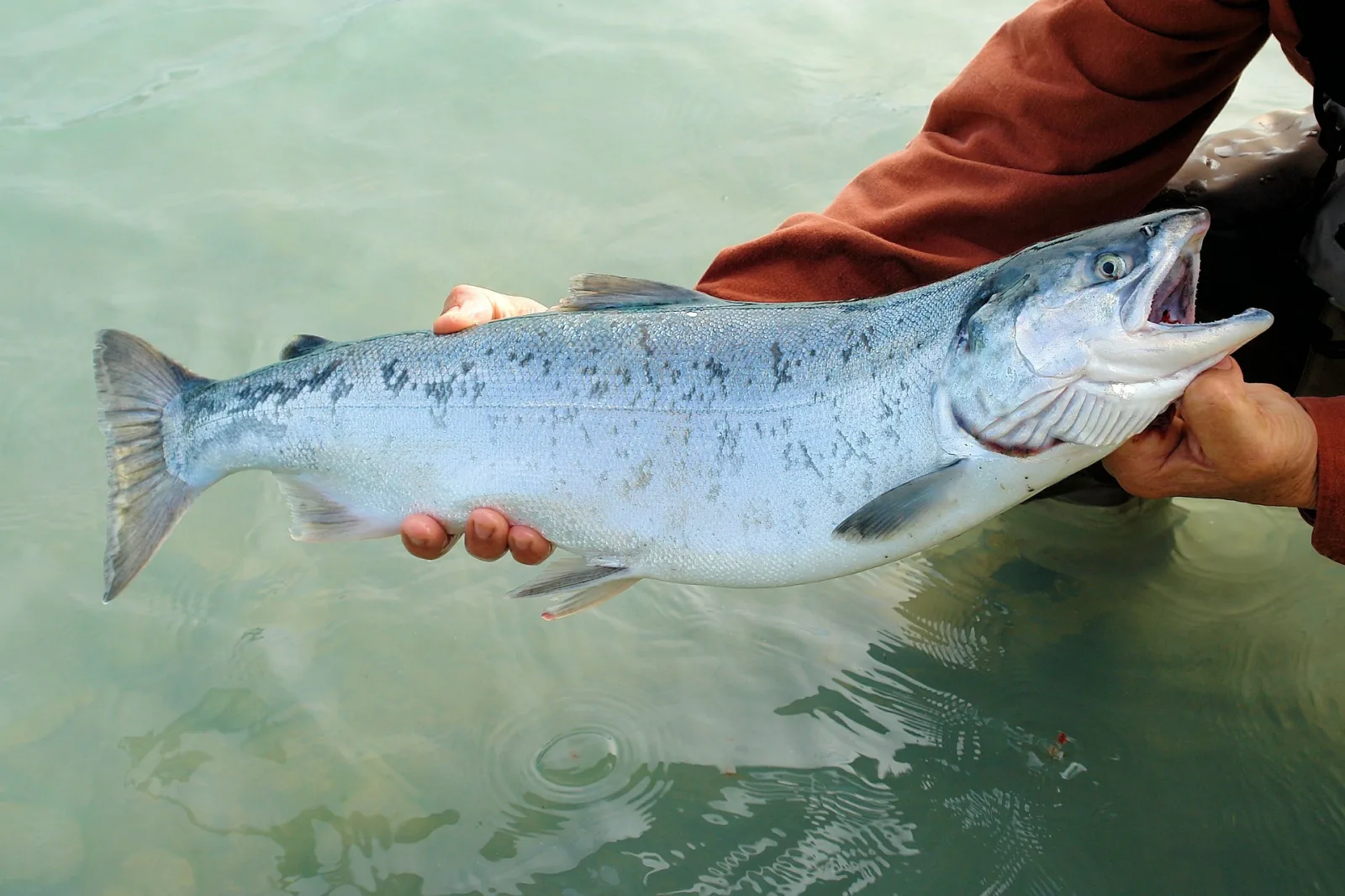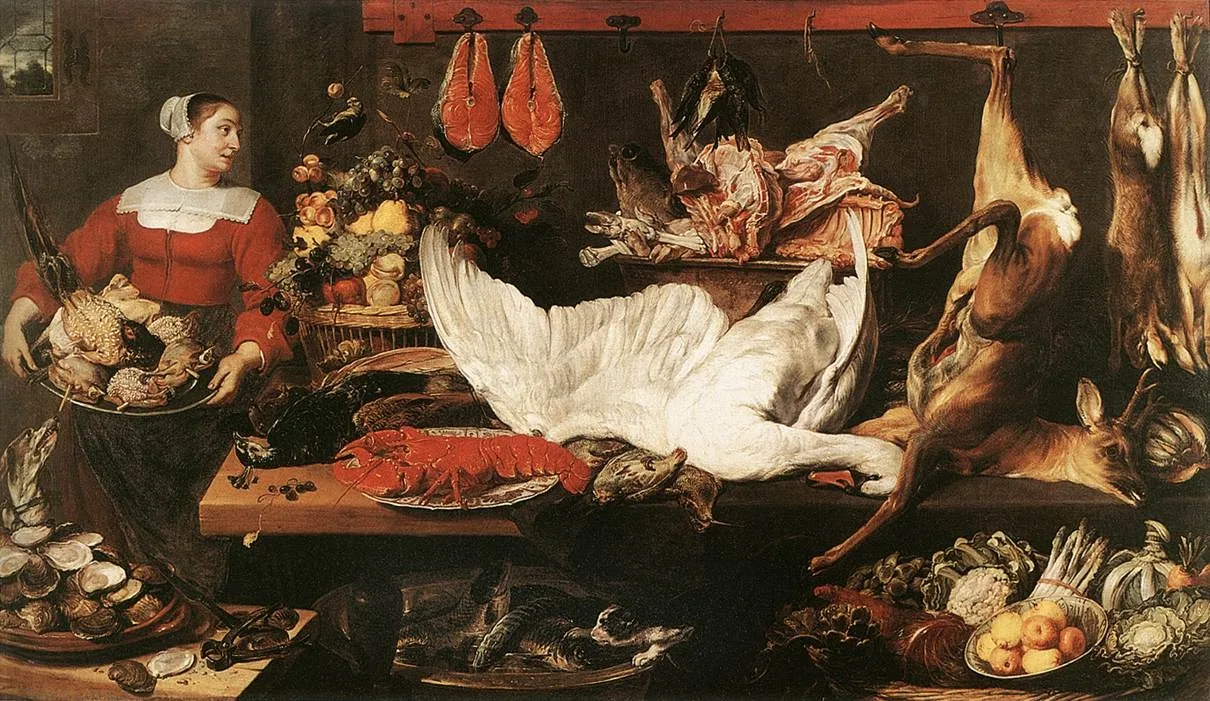
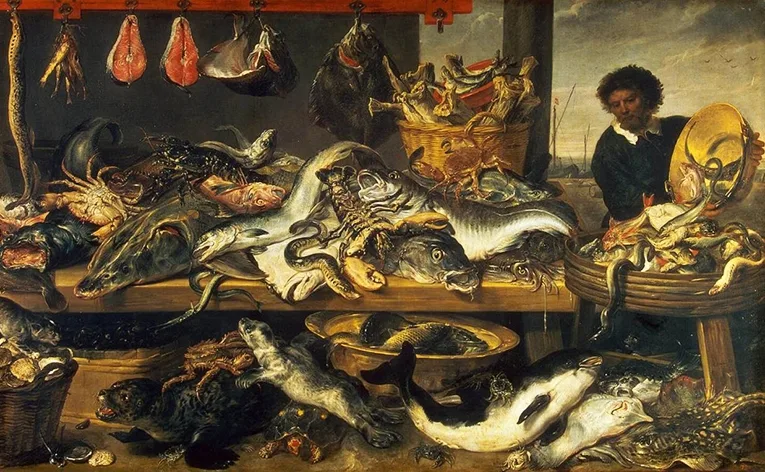
Since a fishing industry in the modern sense did not exist for a long time in the lands where the Prussians lived, fishing – until the Teutonic Knights laid down certain rules – was regulated by the priests of the pagan cults, who decided who could fish, where, when and with what. The royal government later also made use of these rules, which were based on medieval privileges.
One such privilege of 1637 for the fishermen of Fischhausen, for example, set out the fishermen's obligations to the town: "No one shall sell fish on the lagoon to outside traders, but is obliged to bring here all that he has caught by God's blessing, and to keep it for sale at the shore and in the ditch; and if the town is sufficiently supplied but fish still remains, the latter may be sold, with the knowledge of the lord burgomaster, to outsiders from the countryside, and no one shall refuse his fish, and whoever does otherwise shall pay six marks for it." The fishermen of Fischhausen had to keep the town fish market on Schmiedegasse and Langgasse supplied without interruption.
With such an abundance of fish, all the markets of East Prussia were full of it. And naturally the best was taken to the capital. In Königsberg there were quite a few places to get freshly caught fish. The largest and busiest markets were on the northern bank of the Pregel: the Upper (Oberer Fischmarkt), between the Schmiedebrücke and Holzbrücke bridges, and the Lower (Unterer Fischmarkt), between the Schmiedebrücke and Krämerbrücke bridges.
Königsberg had several fish shops. The largest were "Deutsches Meer" on Büttelplatz and "Nordsee" on Steindamm (now Leninsky Prospekt). But the women of Königsberg still preferred to buy fish at the markets, including the oldest one, in the Altstadt. The main thing was to get up early so as to be there when the catch arrived. Fish sold out quickly, as it was an invaluable addition to the table.
Every Königsberg family's handwritten cookbook contained dozens of recipes for fish dishes.
And since fish is not filling and is easily digested, it was recommended to eat a thick soup before it and a dessert afterwards. This might be a chocolate pudding with cream or a cup of strong coffee with a slice of cake.
Incidentally, superstitious people dried the scales of the carp cooked for the New Year's table and carried them in their purses so that money would never run short. It was also believed that dreaming of fish meant good news.
Fish in Cream Sauce
(One of the best-known and best-loved fish dishes of East Prussia.)
To make it, you took 1.5 kg fish (freshwater or sea fish), soup greens, 1 celeriac, 1 parsley root, 1 carrot, 3–4 allspice berries, 1 bay leaf, 1 onion, salt to taste, 1 tbsp wine vinegar, , ¾ l water, 2 tbsp butter, 2 tbsp flour, 1/8 l sour cream, dill, 2 egg yolks, parsley, horseradish, sugar, pepper and lemon juice (wine vinegar) — to taste, 1 tbsp butter.
Wash the fish thoroughly, clean it and lay it in large pieces on a china dish. Make a stock with the soup greens, root vegetables, spices, bay leaf, chopped onion, salt and a little wine vinegar, put the fish into it, bring to the boil and leave over low heat for about 20 minutes. (Cook cod and zander for 5 minutes, as the flesh falls apart easily.) Carefully lift the cooked fish out of the stock and place on a warmed plate. Strain the stock.
Melt 2 tbsp butter in a pan and slowly and carefully mix it with 2 tbsp flour, ¼ l stock and 1/8 l sour cream; add very finely chopped dill to taste and simmer for 10 minutes. Take the stock off the heat and add 2 yolks, chopped parsley (to taste), a small spoonful of grated horseradish, sugar, pepper and lemon juice (or wine vinegar). Pour this sauce over the fish. "A golden-yellow cream or egg sauce should be so thick that a spoon stands up in it," — East Prussian gourmets used to say. And to go with it, — boiled potatoes. A little horseradish whipped with butter would not go amiss either.
To give the fish dish a more vivid flavour, a handful of ruffe was added to the stock along with the soup greens and seasonings.
Braised Young Eel
750 g eel, 1 portion soup seasoning, 1 onion, 3 allspice berries, 3 tbsp butter, 2 tbsp flour, 1/8 l sweet cream, 1 egg yolk, chopped herbs (chervil, dill, parsley, chives), lemon juice (to taste), ½ l fish or meat stock, a pinch of sugar.
Fry the flour in butter until golden, thin it to a thick sauce, and add the chopped onion, the finely chopped soup seasoning, salt and spices.
Rub the eel well with salt inside and out to remove the slime, rinse and cut into portions. Then place them in the sauce and braise for 15–20 minutes over low heat. Carefully lift out the eel with a slotted spoon, mix the sauce with a little flour, the egg yolk and lemon juice, and add a pinch of sugar. Arrange the eel on a dish, pour the sauce over it and sprinkle with the chopped herbs.
Other fish can be prepared by this recipe too — pike, haddock or tench.
Fried Cod
1.5 kg cod, 1 lemon, 50 g smoked pork fat, vegetable oil and breadcrumbs (as needed), 2 eggs, 1 large onion, lettuce leaves, lemon juice (to taste), 1 tbsp butter, 1 tbsp flour, salt and pepper (to taste).
Wash the cod well. Remove the black membranes and the backbone. Sprinkle with lemon juice, cut into pieces and salt inside and out.
Fry the smoked pork fat, cut into small cubes, add vegetable oil, bring to sizzling point and add the finely chopped onion. Dip each piece of cod first in the eggs beaten with a teaspoon of water, then roll in breadcrumbs and fry on both sides in the fat. Lay the cooked fish on a large platter lined with lettuce leaves and sprinkle lightly with lemon juice.
In the fat left in the pan (remove the onion from it), melt a heaped tablespoon of butter, brown the flour, thin with a little water, season with salt and pepper and simmer for another 10 minutes. This sauce was popularly called "Schmunselsauce". The expression defies translation not only into Russian but even into German. All that is known is that it has nothing to do with the verb "schmunzeln" (to smirk, to grin).
Carp in Beer Sauce
1 carp weighing 1000 g – 1200 g, 1 bottle dark beer (or porter), 1 onion, 3 cloves, 1 portion soup greens, 1 packet fish seasoning, 2 tbsp butter, 50 g gingerbread, 1 tbsp starch, sugar and lemon juice (to taste), a little red wine.
Cut the scaled and gutted carp into 5 – 6 pieces, salt , and rub with lemon juice. Mix ½ l beer with ¼ l water, add salt, the cloves, onion, chopped soup greens (marjoram, tarragon, lovage, dill, parsley, chives — all to taste and as desired), the seasoning and butter, and simmer for about 10 minutes; then put the fish into the stock (it should be fully covered) and simmer for another 15 minutes over low heat. Lift out the fish with a slotted spoon, skin and bone it, and keep warm.
Add to the strained stock the gingerbread soaked in warm water, the starch mixed with water, salt, lemon juice, a little red wine and a pinch of sugar. Pour the sauce over the fish. It was served with boiled potatoes.
Tench or eel can be prepared by the same recipe.
Pike on a "Cushion"
(From Ella Brachmann's cookbook)
For each bed ("cushion") of home-made buttered noodles you need about 150 g pike fillet, poached in vegetable stock.
For the noodles:
400 g flour, 4 egg yolks, 1 tsp vegetable oil, 2 tsp butter, salt to taste.
To make the noodles, knead a dough from the flour, egg yolks and vegetable oil. It should be elastic and not stick to the hands. After 30 minutes roll the dough out thinly. Fill a large pan with water, add salt and 2 tsp melted butter and bring to the boil. Cut the thinly rolled dough into noodles, drop them into the boiling water and cook, stirring constantly, for no more than 5 minutes. Drain the noodles in a sieve and rinse with cold water. Melt butter and toss the noodles in it.
For the cheese sauce:
50 g butter, 50 g flour, ½ l milk, 1 coffee cup milk, 50 g Parmesan.
Mix the butter with the flour, pour in a cup of cold milk and bring to the boil. Stirring, gradually pour in ½ l milk and bring to the boil again over low heat. Let the sauce cool slightly and mix it with one egg yolk and the grated Parmesan.
Place each portion of pike on a bed of noodles, pour over the sauce , and sprinkle with grated Parmesan if you like.
Smelt with Smoked Bacon
1 kg smelt, 150 g bacon (smoked streaky bacon), 1 onion, lard, salt and lemon juice (to taste), 1 tbsp butter, 2 tbsp flour, 125 g sour cream, sugar and pepper (to taste).
Wash, dry and salt the smelt. Melt a little lard and fry the chopped bacon and onion in it. In another pan melt a good amount of lard and fry the smelt on both sides. Then take it out of the pan, let the fat drain off and keep warm.
Remove the bacon and onion from the pan, add butter to the remaining fat, then the flour, and stir in the sour cream, sugar, pepper and lemon juice. Before serving, arrange the smelt on a warmed serving platter and pour the sauce over it.
Incidentally, until the 1940s Königsberg produced fish body oil by pressing small sticklebacks (not smelt!), which were good for nothing else. The yield was small – just 2–2.5% per tonne of fish. This production killed two birds with one stone: it not only provided children with an invaluable product but also helped rid the sea, lakes and ponds of the voracious stickleback, a trash fish that ate fry and roe – including its own. Vendace suffered from it most of all. The term "fish oil" in the medicinal sense originally meant whale oil. In the 1980s, when whaling was banned, fish oil began to be made from cod liver. Today in Russia what is mostly sold as fish oil is in fact fish body oil, made from sprats and other more or less oily small fish. But its content of vitamins A and D is low, as indeed is its content of polyunsaturated omega acids.
Translated from Russian with the help of AI (Claude, Anthropic), October 2026.