Human settlement on this site is known from the 2nd–4th centuries AD, as archaeological excavations carried out here at various times testify.
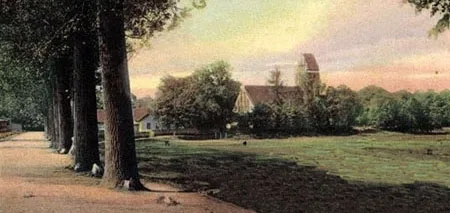
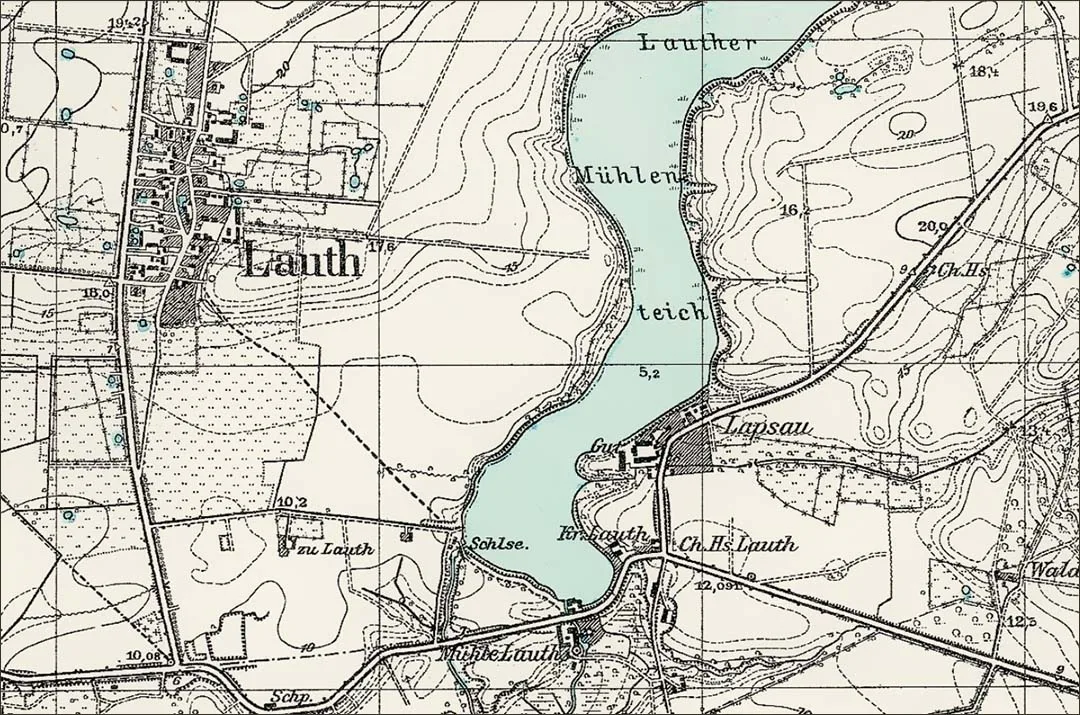
After seizing the territory where Bolshoye Isakovo now stands, the Teutonic Knights, as was their custom, dammed the stream that flowed here and built a mill on it. After that the stream was called the Mill Stream (German: Mühlen-Fließ, now the Guryevka), and the pond that formed was called the Lauth Mill Pond (German: Lauther Mühlen Teich). The settlement was named Lawte (c. 1263). By 1303 it already appears as Lauthe. From 1448 the name Lauth is used.
The village (mill) of Lauth is recorded in the chronicles of October 1525 as the place where Duke Albrecht suppressed a peasant uprising. In 1554, during a cold winter when all the Königsberg mills froze, grain and salt were brought to Lauth from all the surrounding area to be ground.
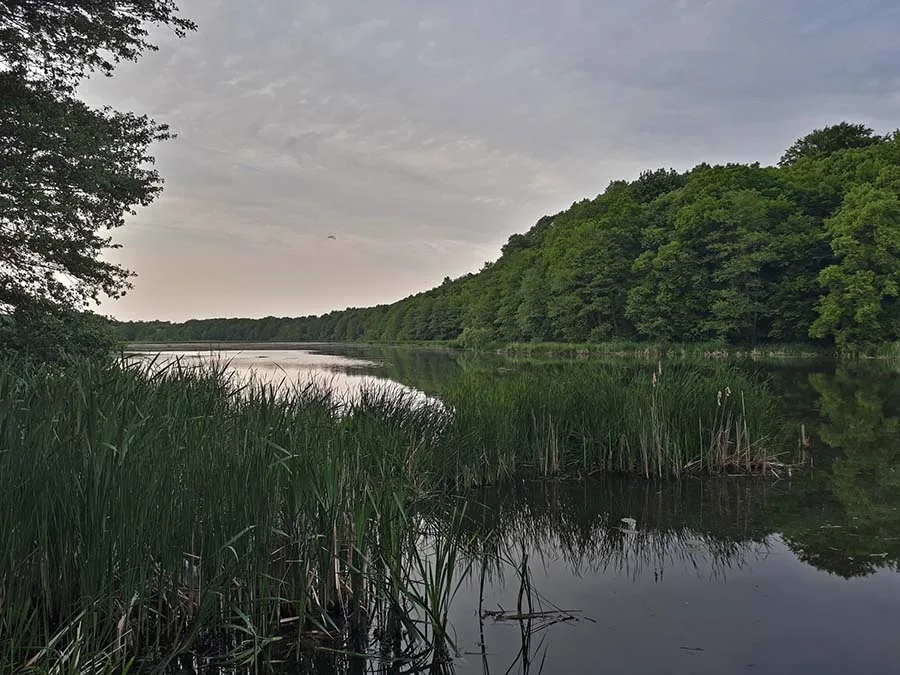 Chisty Pond was called the Lauth Mill Pond until 1947.
In 1566 Duchess Anna Maria of Brunswick granted the mill at Lauth to the Königsberg bakers' guilds. In 1583, on the orders of the regent George Frederick, a sawmill was also built near the mill.
In the gazetteer of 1785 Lauth is listed as a royal village of 20 farmsteads belonging to the district of Brandenburg (Ushakovo) and the parish of Neuhausen (Guryevsk). In 1806–07 the Lauth mill was put up for auction and bought by Friedrich Wilhelm Lehmann for 33,000 thalers. By 1818 the number of households in Lauth had risen to 29.
In the 19th century Lauth was a village which from 1818 formed a rural municipality in the Landkreis of Königsberg (transformed in 1939 into the Landkreis of Samland). Besides the village itself, the municipality also included the Lauth Mill (Mühle Lauth).
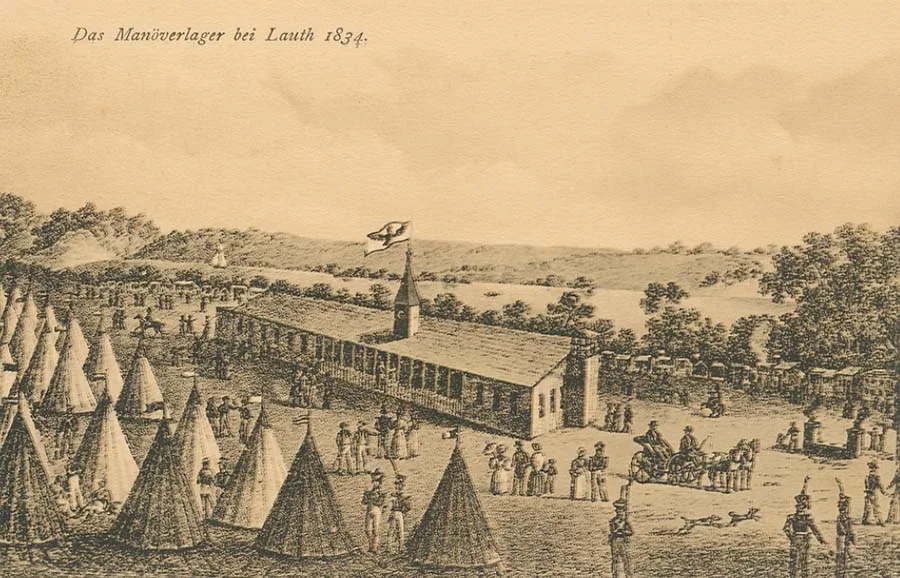
A field camp of the Prussian army, pitched near Lauth during the major tactical manoeuvres held here in 1834.
In August 1834 major manoeuvres took place here (see above), attended by the Prussian King Frederick William III with his sons and the Russian Field Marshal Ivan Fyodorovich Paskevich.
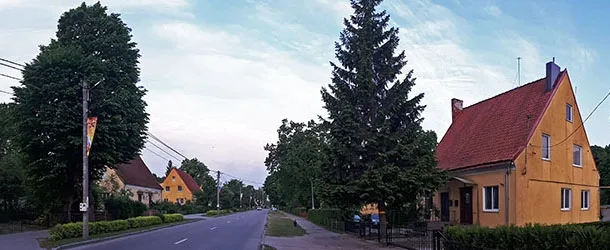
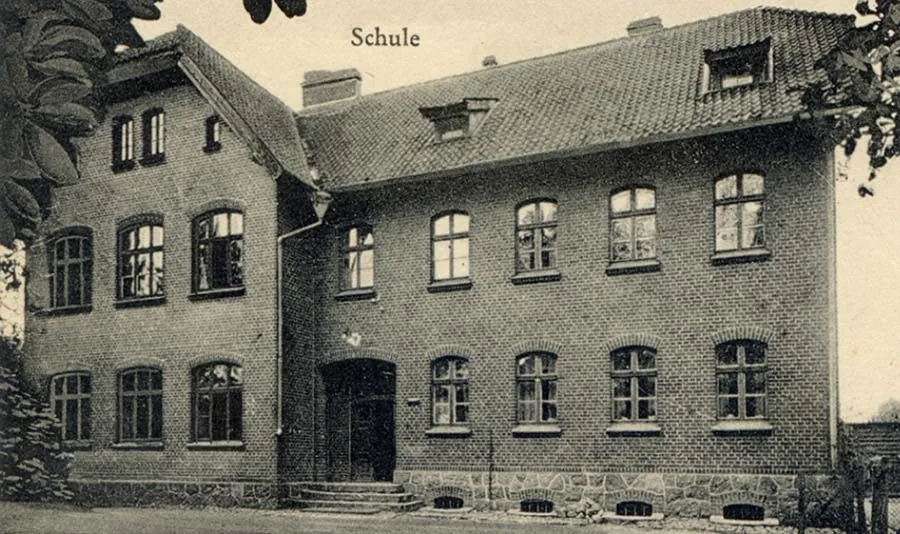 The Lauth school.
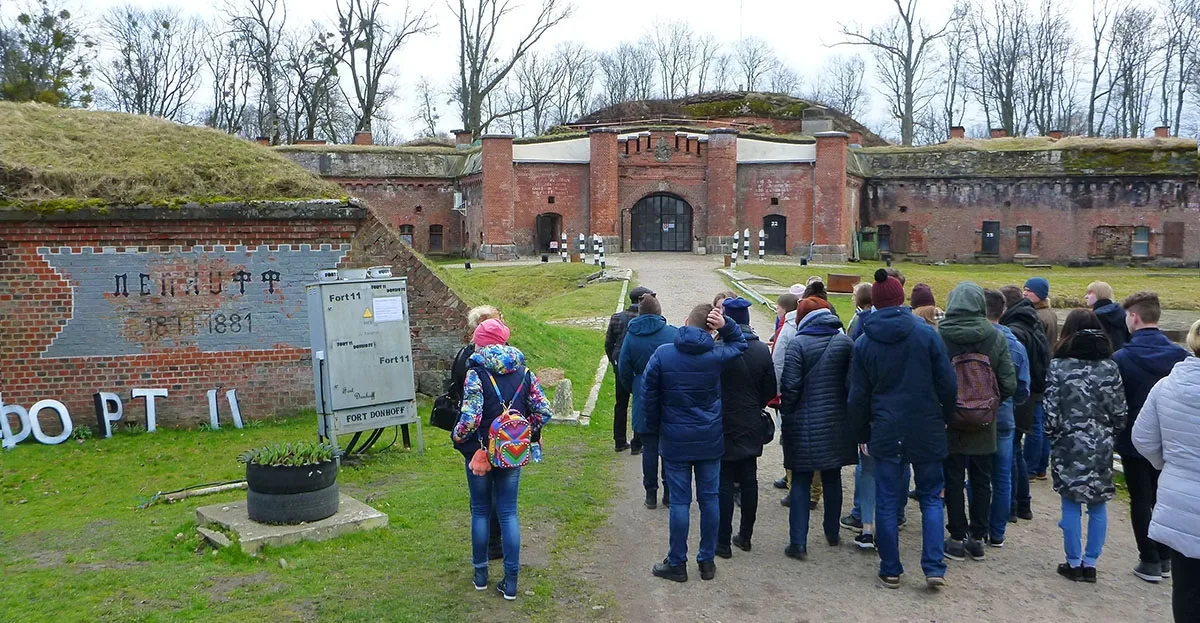
In 1871 the rural municipality of Lauth had 44 residential houses (including two at the Lauth mill), home to 117 families and one single man. In the 1870s forts No. 1 "Stein" and No. 1a "Gröben" were built near Lauth. These forts were later administratively included in the rural municipality of Lauth.
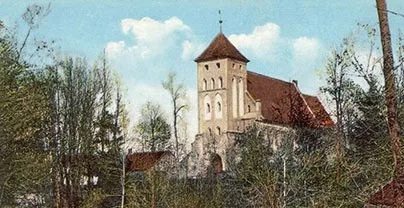
On 30.04.1874 the rural municipality of Lauth became part of the newly established Amtsbezirk of Liep (Kaliningrad, Yaltinskaya Street), which was renamed the Amtsbezirk of Lauth on 02.12.1927. Residents of Lauth regularly became heads of the local Amtsbezirk: in 1877–80 the owner of the Lauth mill, Dr Berendt; in 1901–04 and 1918–28 the owner of the estate and mill, Käswurm; in 1904–07 the leaseholder Birkholz; and from 1928 the landowner Otto Schleiminger. In 1894 Kurt Käswurm became the last owner of the Lauth mill. In 1898 a school was opened in the village (pictured above), and in 1904 a small hydroelectric plant was added to the mill. At the time of the renaming the Amtsbezirk comprised two rural municipalities: Lauth (Bolshoye Isakovo) and Palmburg (Pribrezhnoye).
On 01.04.1939 the municipality of Lauth was dissolved and incorporated into Königsberg. The Amtsbezirk of Lauth was abolished at the same time.
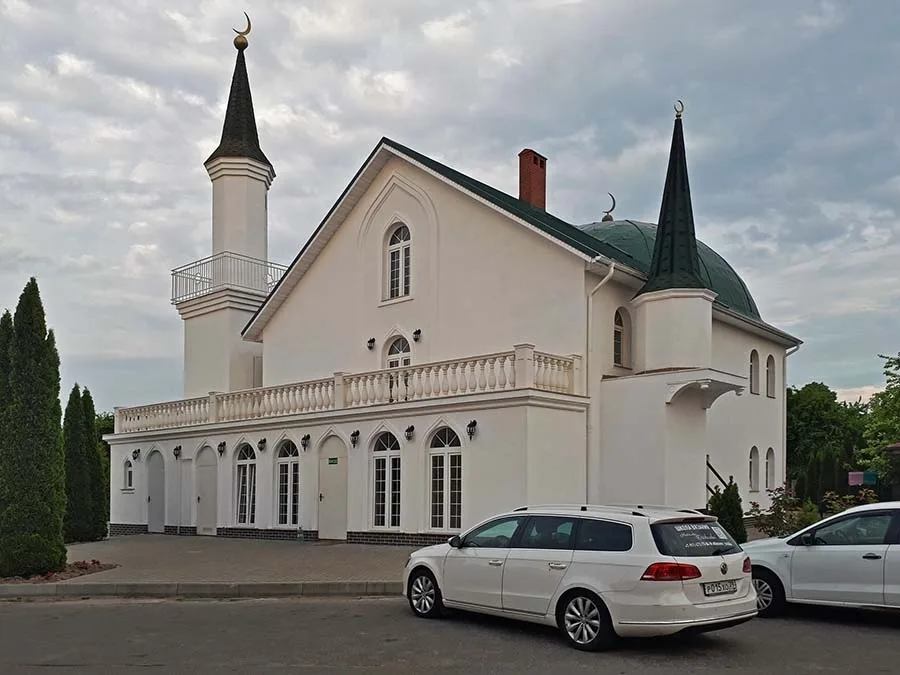 The mosque in Bolshoye Isakovo.
Lauth was taken by units of the 3rd Belorussian Front in the course of the operation to storm Königsberg on 6–9 April 1945.
On 17.11.1947 the settlement was renamed Isakovo in honour of Junior Sergeant V. S. Isakov, killed in the spring of 1945. The settlement was originally part of the Nivenskoye village council of the Kaliningrad District. It was later divided into Bolshoye Isakovo and Maloye Isakovo. From 09.02.1953 to 01.02.1960 it was the centre of the Guryevsk District. In 1955–63 the settlement had 102 houses and a working school. There was a greenhouse farm near the pond. In the 1970s, when the development of oil fields in the Guryevsk District began, most of the settlement was allocated to the oil workers. The Baltika motel was built on the site of the Lauth mill. By 1984 the settlement already had two schools. In 2010 the region's first mosque was opened in Bolshoye Isakovo. Later, in the 2010s, an educational and experimental fish farm [for raising fry] of the Kaliningrad State Technical University (KGTU) was opened on the site of the former Lauth mill.
Sights: Fort No. 1 "Stein", Fort No. 1a "Gröben", a mass grave of Soviet soldiers (21 people, memorial 1952).
Population: 2002 – 2499, 2006 – 2563, 2010 – 3187 inhabitants.
Population of the Lauth municipality: 1818 – 310, 1867 – 633, 1871 – 599, 1885 – 774, 1905 – 879, 1910 – 864, 1925 – 756, 1933 – 1827 inhabitants.
Population of the Lauth mill: 1818 – 13, 1871 – 60, 1905 – 55 inhabitants.
Garrison of Fort No. 1: 1905 – 131 people.
Garrison of Fort No. 1a: 1905 – 4 people.
Composition of the Lauth municipality's population in 1871: Protestant Christians – 598, Catholics – 1, children under 10 – 169, literate – 300 (70%), insane – 1.
Number of farmsteads in Lauth: 1785 – 20, 1818 – 29, 1871 – 44.
Modern photos by Mikhail Ogorodnikov.
Translated from Russian with the help of AI (Claude, Anthropic), October 2026.