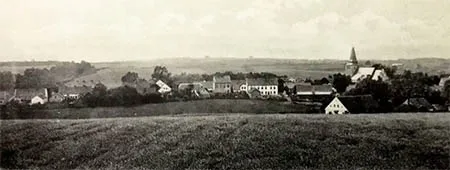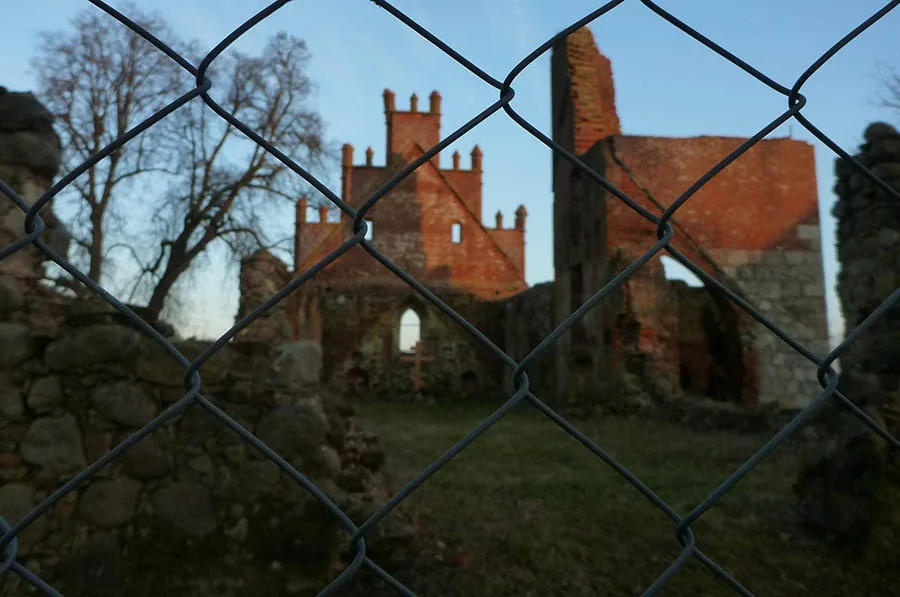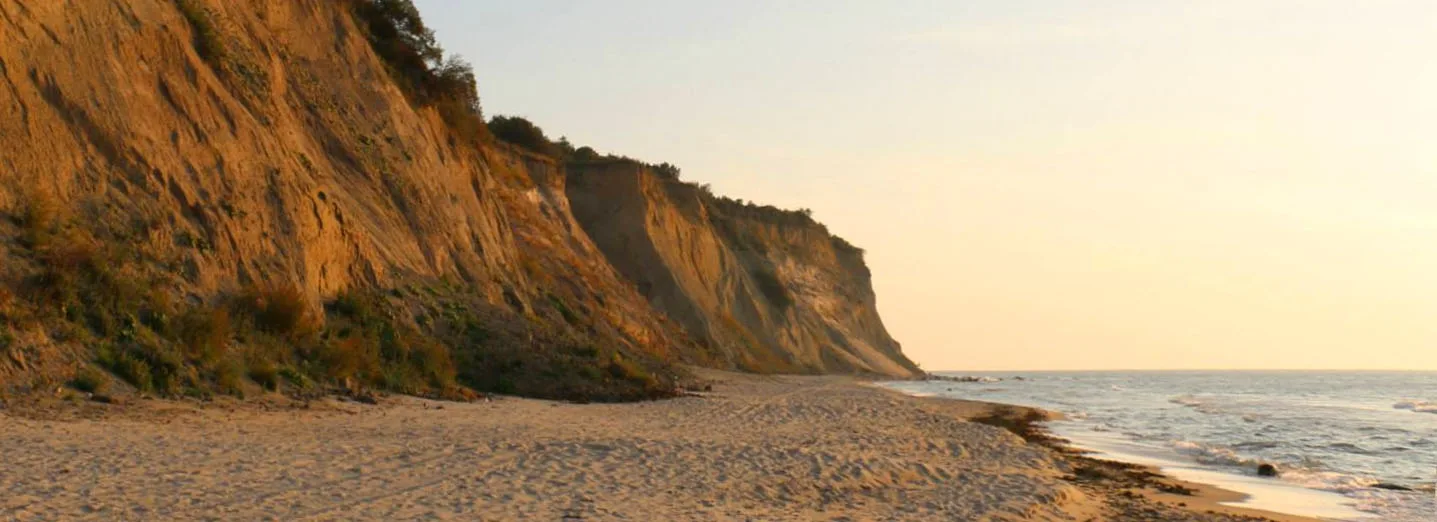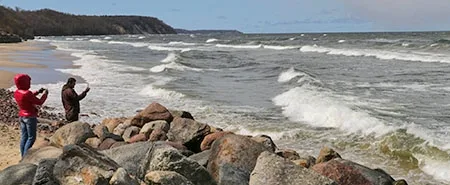
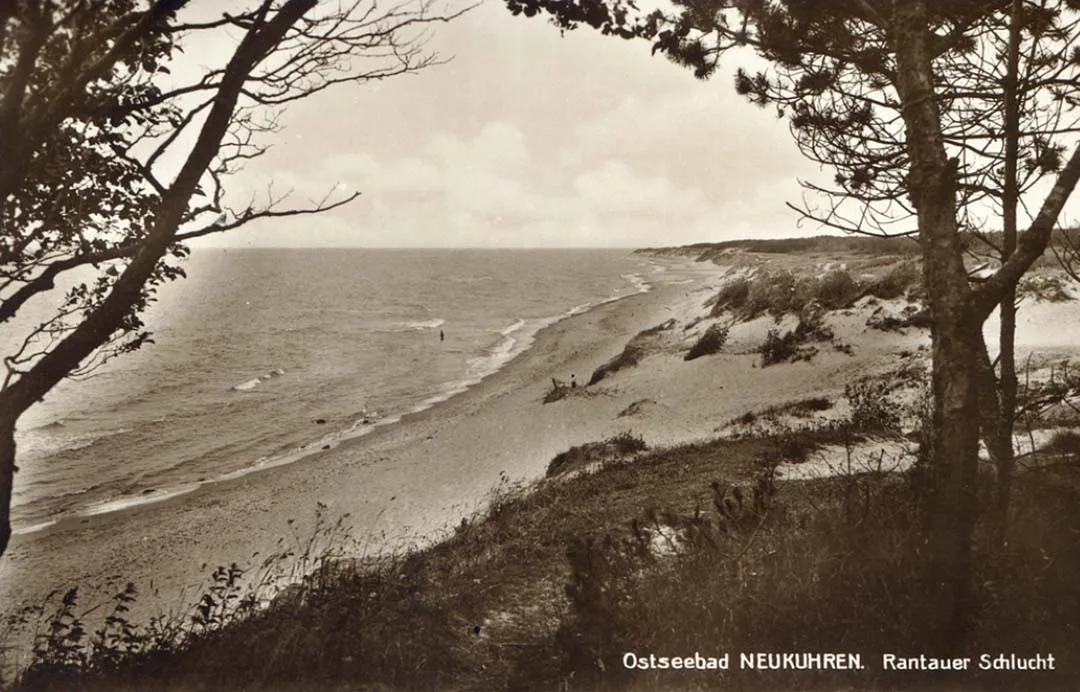
Rantau (German: Rantau) has been known since 1297 as Rantawa. A lighthouse was built here in the late 15th – early 16th century. If the chronicles are to be believed, genuine Prussian priests could still be met in Rantau as late as the mid-16th century.
In the 19th century Rantau was a village forming a rural community in the Kreis Fischhausen (Primorsk; from 1939 part of the Landkreis Samland). The village belonged to the parish of Pobethen (Romanovo).
In 1871 the village of Rantau consisted of the village proper and an outlying part, the Abbau. Altogether Rantau had 32 residential houses, home to 62 families and two single men.
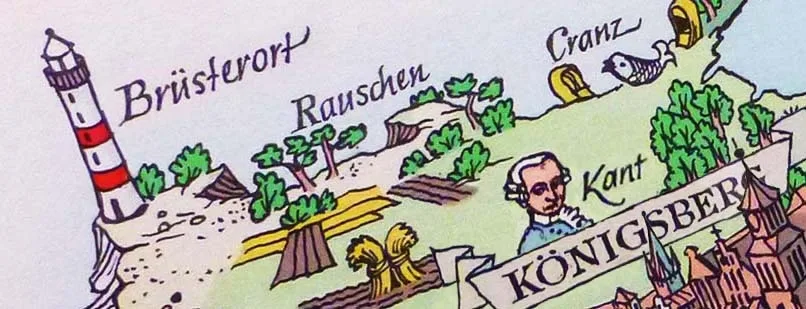
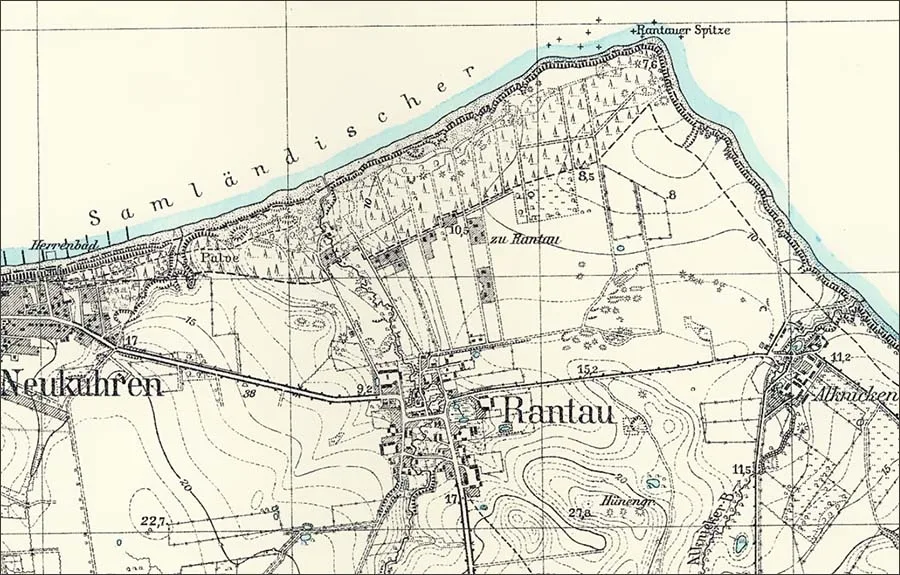 Rantau on a map of East Prussia from the early 20th century.
Three of the residential houses were in the Abbau. On 13 June 1874 the rural community of Rantau was included in the newly established Amtsbezirk Strobjehnen (Kulikovo). In 1900–01 the Cranz – Neukuhren (Zelenogradsk – Pionersky) section of railway was built, passing south of Rantau, where the Pobethen-Rantau station, which belonged to the Rantau community, was opened at the same time. The Rantau community also included Rantauer Palwe (54°57'20'' N 20°14'34'' E)
On 25 May 1910 the Amtsbezirk Strobjehnen was abolished, and the Rantau community became part of the Amtsbezirk Neukuhren (Pionersky). On 17 October 1928 the Alknicken community (Pribrezhnoye) became part of the Rantau community. The Rantau community now consisted of the village of Rantau (Zaostrovye), Rantauer Palwe, the Pobethen-Rantau station, the village of Alknicken (Pribrezhnoye) and the village of Alleinen (54°55'55'' N 20°16'38'' E).
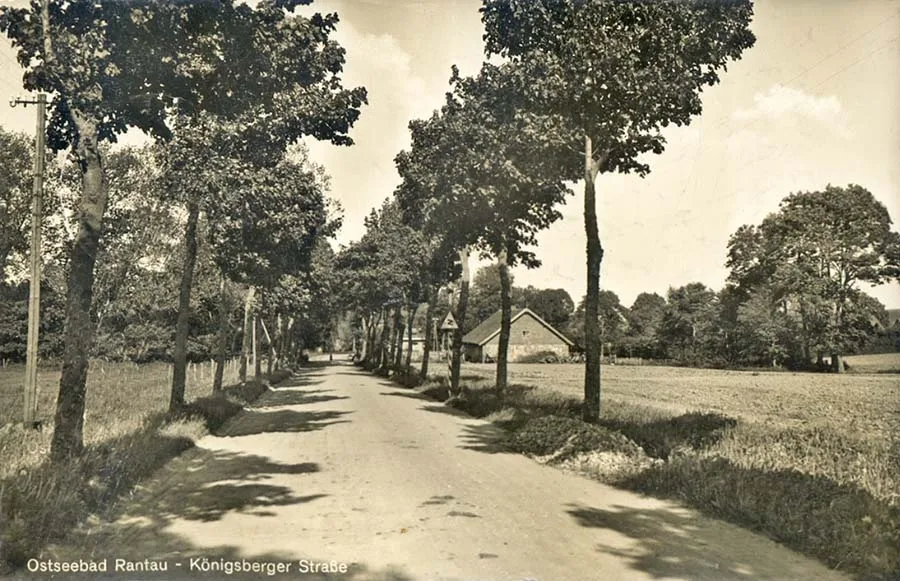 Königsberger Straße in Rantau.
On 14 April 1945 Rantau was taken by storm by soldiers of the 154th Rifle Division (Guards Colonel N.L. Volkov) of the 60th Rifle Corps, 2nd Guards Army.
On 17 November 1947 Rantau was renamed the settlement of Zaostrovye. In 1955 the settlement had 55 houses. By that time a railway branch had been laid from the Zelenogradsk – Svetlogorsk railway through Zaostrovye to Cape Gvardeysky.
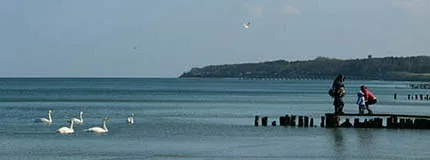
In the 1990s construction of a cottage village began in Zaostrovye. If local estate agents are to be believed, retired military officers are keen to buy houses in Zaostrovye because of its proximity to the residence of the President of the Russian Federation (in Pionersky). As of 2018 the settlement had a medical post, a holiday camp and a hotel. In the early 2020s a new lighthouse was built on Cape Gvardeysky (German: Rantauer Spitze) in Zaostrovye.
Sights: the Soviet command and rangefinder post (tower) of the coastal railway artillery (collapsed during a storm), the lighthouse.
Population change of Rantau-Zaostrovye: 1867 – 353, 1871 – 367, 1885 – 367, 1905 – 395, 1910 – 399, 1984 – 550, 2002 – 553, 2010 – 624 inhabitants.
Population change of the Rantau community: 1867 – 353, 1871 – 367, 1885 – 367, 1905 – 395, 1910 – 399, 1925 – 520, 1933 – 618, 1939 – 586 inhabitants.
Composition of the population of Rantau: Evangelical Christians – 366, other Christians (excluding Catholics) – 1, children under 10 – 99, literate – 230 (86%), blind – 1.
For reference
Population change of Alleinen: 1867 – 28, 1871 – 21, 1905 – 25 inhabitants.
Population of the Pobethen-Rantau station: 1905 – 9 inhabitants.
Composition of the population of Alleinen in 1871: all 21 were Evangelical Christians, children under 10 – 3, literate – 11 (61%).
Translated from Russian with the help of AI (Claude, Anthropic), October 2026.