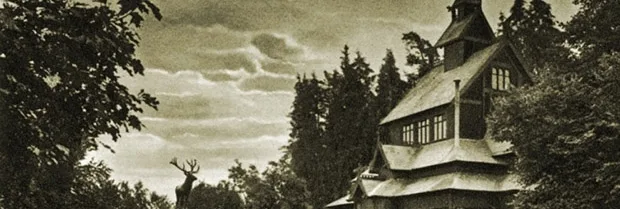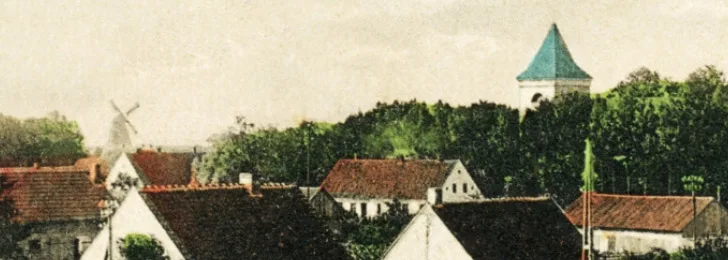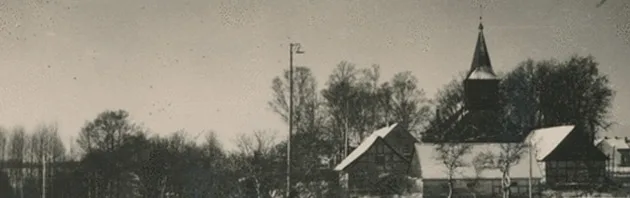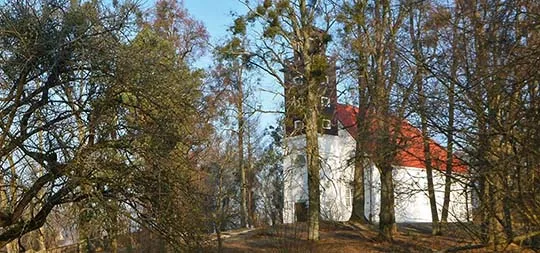
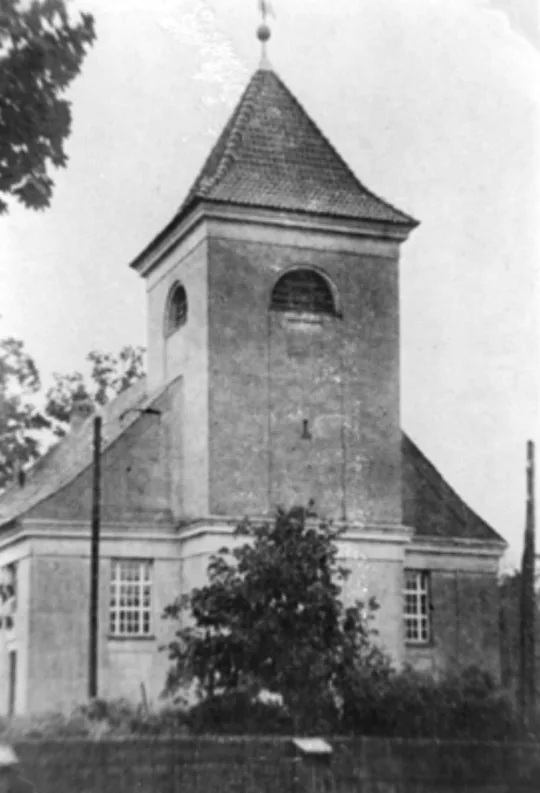
The church was built on the orders of Friedrich Wilhelm I in 1721. It was a massive rectangle of plastered brick. Dimensions: 31.39 x 15.69 m. A porch (the entrance) was added on the west. The sacristy was on the east. The tower was of wood. On 23 May 1785 lightning struck the tower, and the church burned out down to its walls. In 1788 the church was restored.
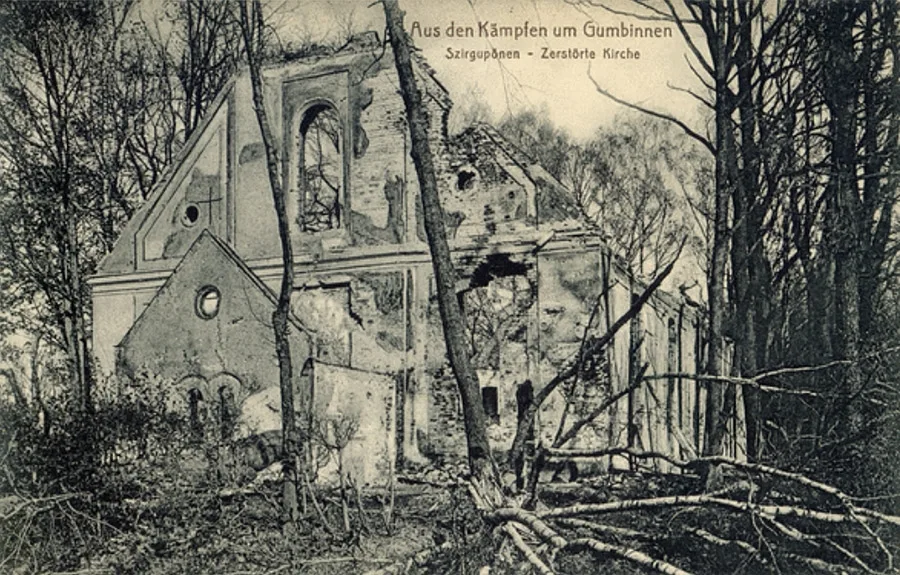
In 1818 it was badly damaged by a storm (pictured above).
Restoration work was carried out in 1828, 1850 and 1873. The wooden tower, clad in galvanised sheet iron, had a flying eagle as its weathervane.
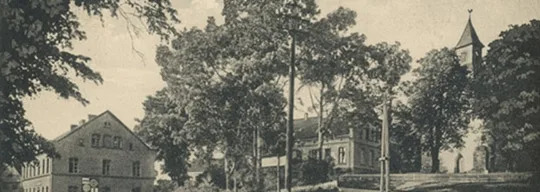
Inside, the church had three naves. The central nave had wooden barrel vaults; the side aisles had flat ceilings. In the eastern part of the church there were two spiral staircases. The church was surrounded by tall trees adjoining the park of the Neumann-Feedern family.
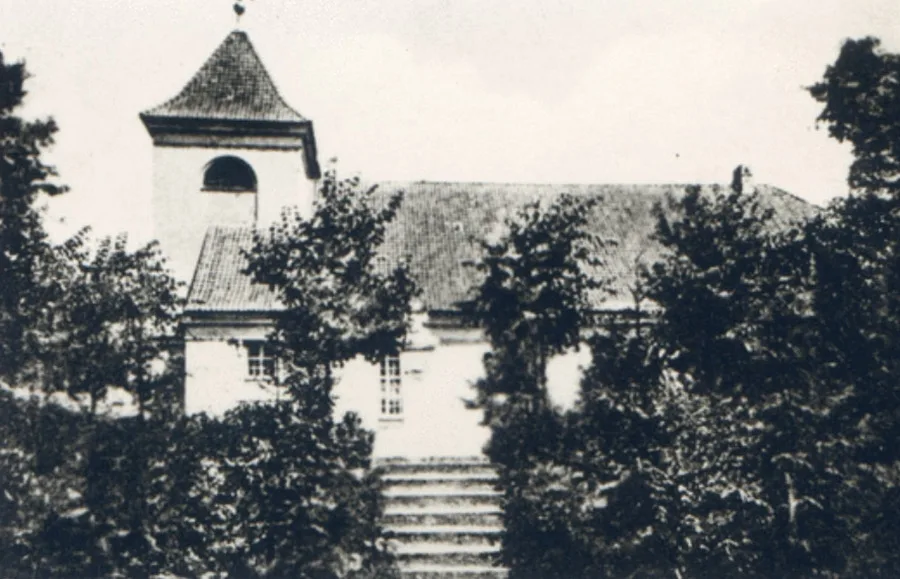
After the Second World War the church remained intact, except for the tower.
It was still standing until the 1970s, since it is marked on detailed maps of 1974. Then the village, apparently deemed to have no future, was liquidated. The houses were destroyed, and so was the church. As of 1990 all that remained of the whole village was a single half-ruined house, near which stood an enormous tree.
In 1997 a careful survey revealed remains of the foundations and bricks.
Photos: Bildarchiv Ostpreußen, bildarchiv-ostpreussen.de.
Translated from Russian with the help of AI (Claude, Anthropic), October 2026.