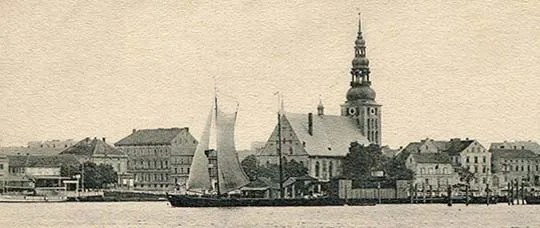
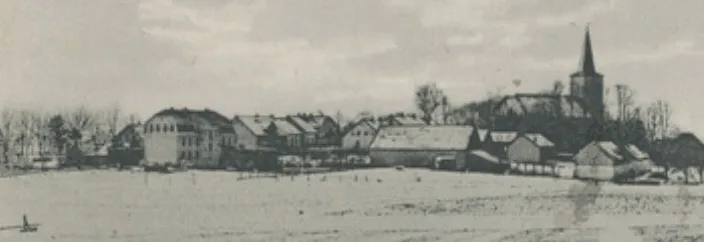
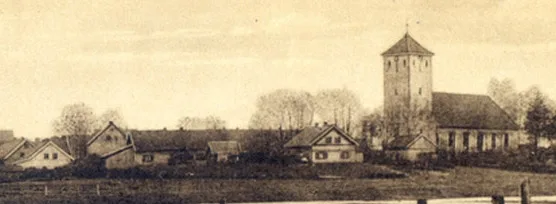
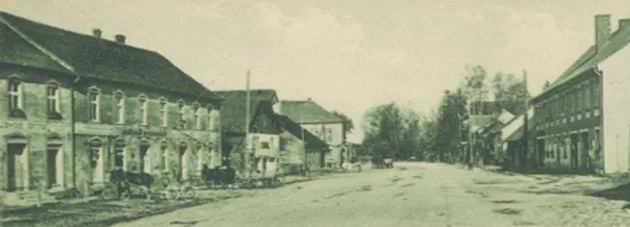
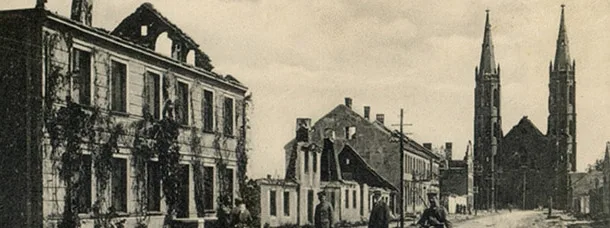
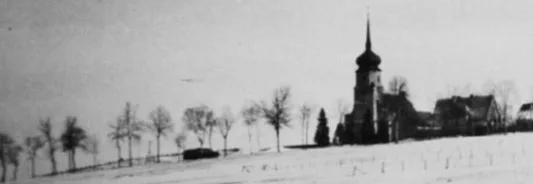
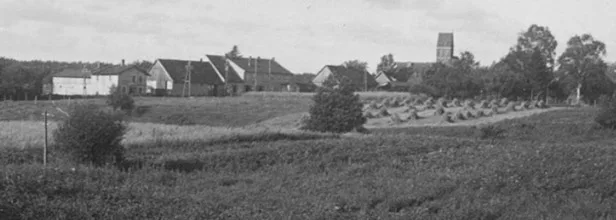
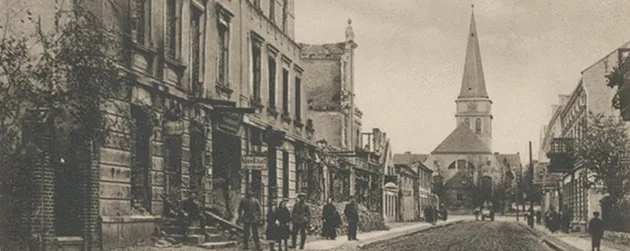
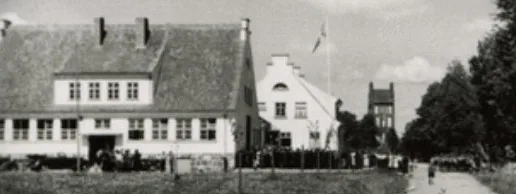
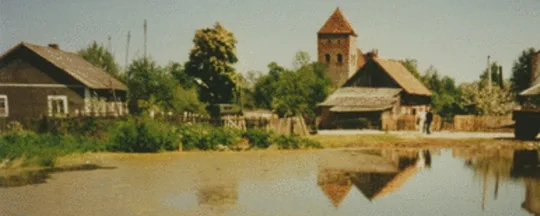
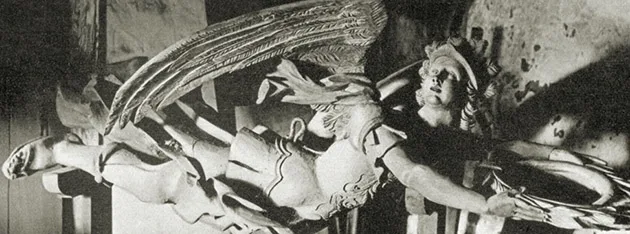
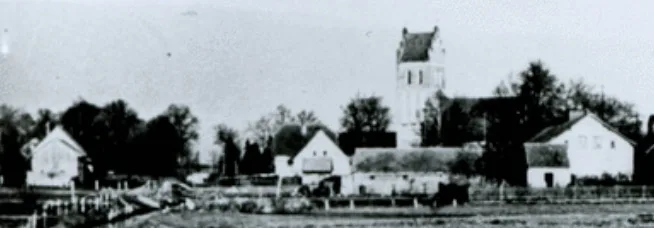
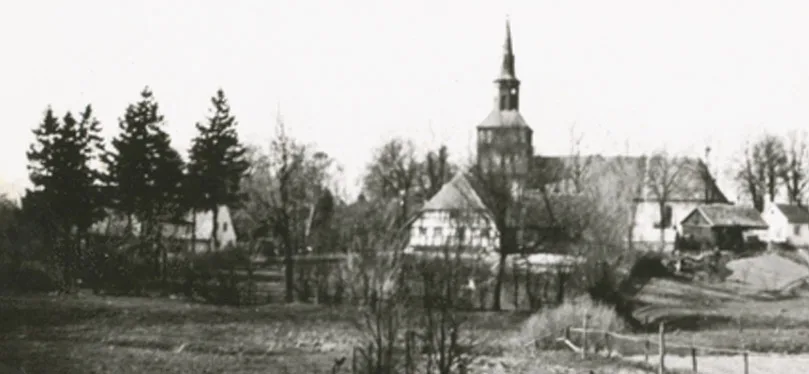
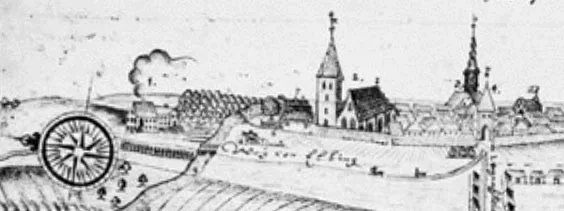
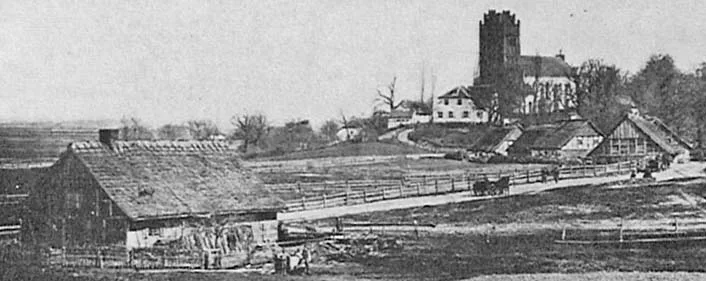
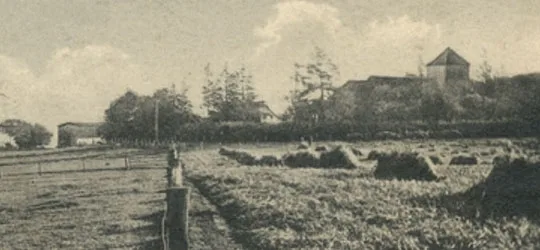
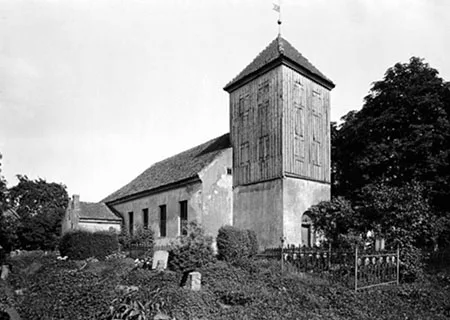
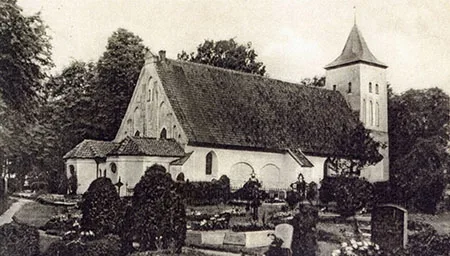
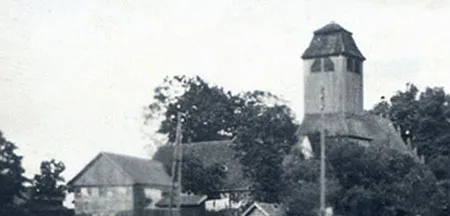
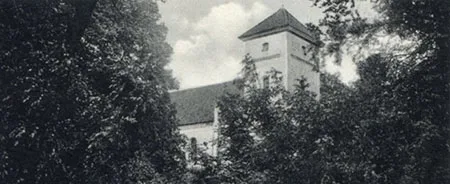
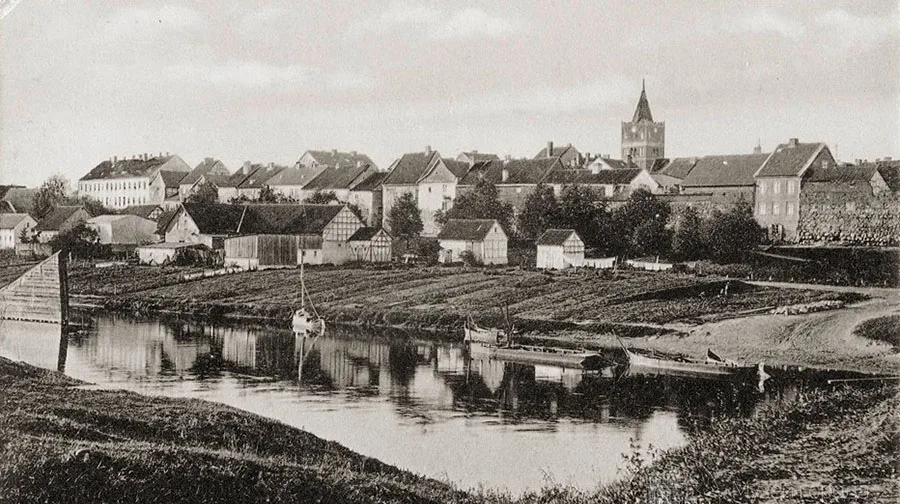
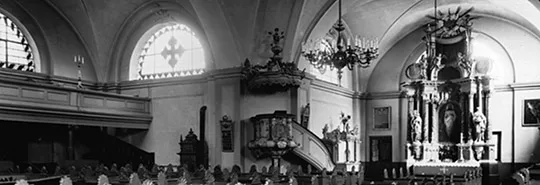
Destroyed during the assault of 1945; its ruins were cleared away in the post-war years
Damaged during the fighting within the Pillau fortress in 1945. The ruins were cleared away
The gable was slightly damaged during the fighting in 1945. After the war the church was used as a warehouse
Badly damaged during the Second World War, which later led to its demolition
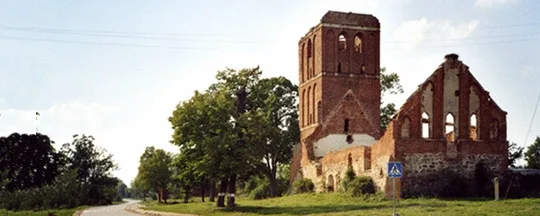
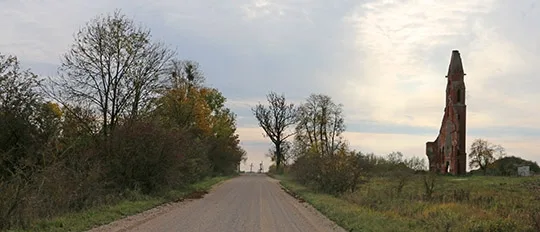
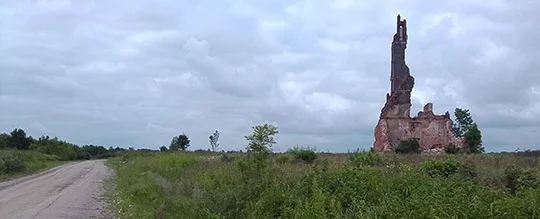
Badly damaged during the Second World War; all that remains of it is the tower, without its spire
Partly destroyed after WWII. In the 1960s–70s it was dismantled for bricks. Its railings went to make a school fence
It survived the Second World War intact; in the 1970s it housed one of the workshops of the Raduga factory
It came through the Second World War undamaged, but in the winter of 1950–51 it was set on fire by teenagers
It was intact after 1945. In the post-war years it was stripped for firewood and bricks, and what remained was demolished in the 1960s
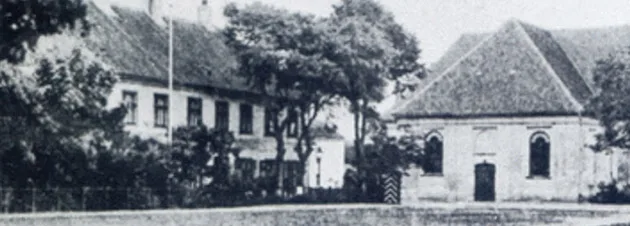
The first church built on the orders of Friedrich I, who ascended the Prussian throne in 1701.
Having come through the Second World War unscathed, it was used as a storehouse in the post-war years until it burned down in 1995
After the Second World War it housed a House of Culture and a cinema until it burned down in 1995
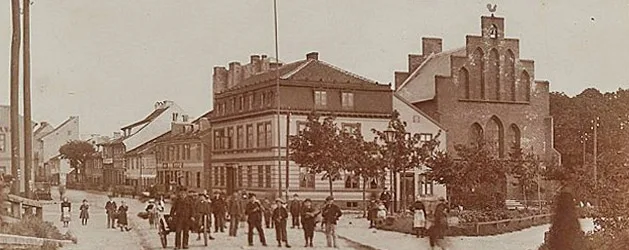
A majestic brick building in the Gothic Revival style
Surprised by the shape of the dome on the church tower in Novokolkhoznoye? In German times it looked almost the same
Built at the beginning of the 20th century, it stood unused after the Second World War. By 1960 it had been demolished
During the Second World War Pillkallen church was destroyed too. The ruins were demolished after the war
In 1945 Ragnit church was undamaged, but in the 1950s it began to be converted into a furniture shop and a hostel
Built in the second half of the 19th century on the high northern bank of the Šešupė, it is used for its original purpose and adorns the town
The sad story of an abandoned and crumbling village church
A polygonal building with a portal facing Schillerstrasse. Its pyramidal roof bore a turret
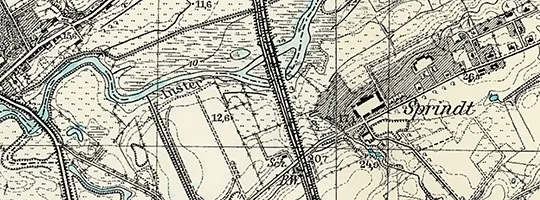
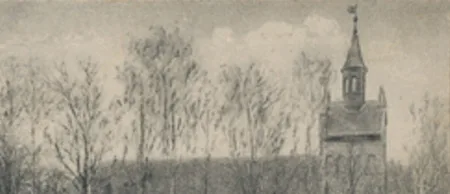
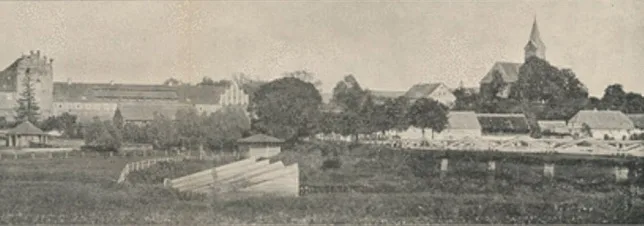
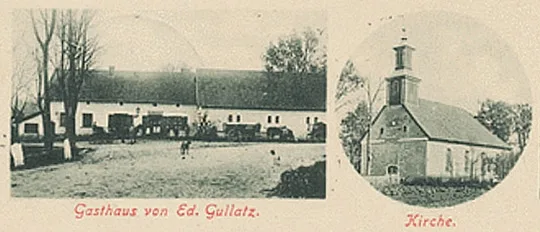
The church of the community of the settlement that grew up around the Sprindt estate, north of Insterburg
The church had a massive tower with a beautiful spire, which collapsed in 1950 and broke through the roof of the nave
A neighbour of the castle of the same name, north of Insterburg (Chernyakhovsk). It has not survived
After the Second World War this 18th-century church was, in keeping with local "tradition", used as a warehouse
When there are many churches and nobody needs them, who will notice one more or one less? This one was wrecked in the 1960s
In the post-war years the building was divided inside into two floors and converted into a village house of culture
It would have fitted perfectly into the ensemble of the Immanuel Kant Museum (the Pastor's House) in present-day Veselovka
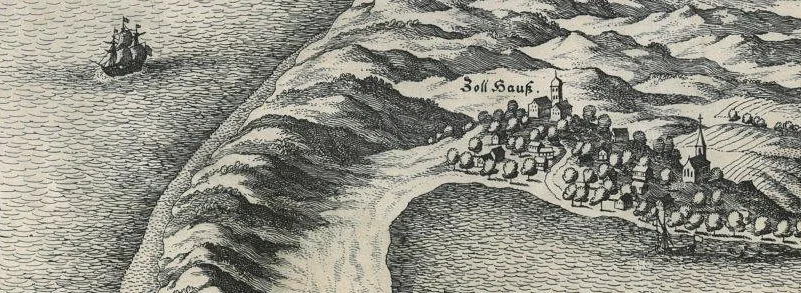
Built by the Frenchman Pierre de la Cave, who in the 17th century rose to be commandant and governor of Pillau
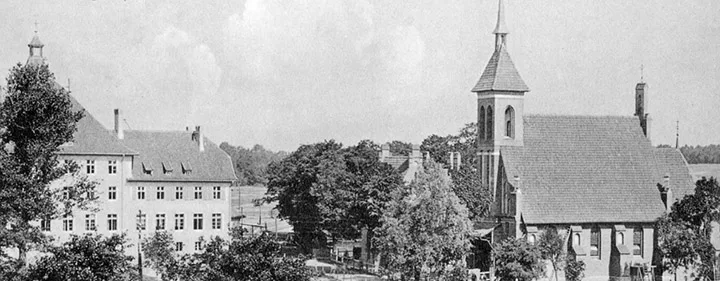
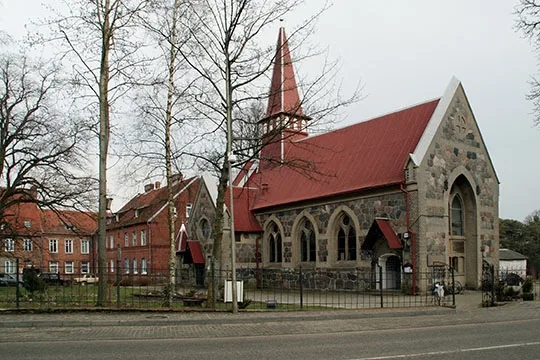
Consecrated in December 1892. Since July 1996 it has served as the Orthodox Church of St John of Kronstadt
In the first quarter of the 21st century it was a sorry sight. All hope rests with the "Guardians of the Ruins"
It was named in memory of Luther's companion-in-arms, who led the Protestant movement after Luther's death
Having lost its bell tower after the Second World War, it continues tirelessly to serve the people
It was built of fieldstone. The half-timbered bell tower stood separately
High-class eclecticism: a Romanesque-style building crowned by a tower with a Gothic spire
An exact copy of St George's Church in the town of Dessau
Not particularly expressive, but large. Today it is a majestic ruin in the spirit of German Romanticism
The sad story of an old settlement whose fate its church shared
Having survived the war and held out until the mid-1990s, the church began to fall into ruin. In 2010 it was handed over to the Russian Orthodox Chur…
One of the hardest-to-reach monuments of medieval architecture in the region
A brick-and-fieldstone building from the time of the Teutonic Order. The walls and the tower have partly survived
Built in 1806–1808 of fieldstone and brick. It survived the war and was then used as a warehouse
After the war the village was split in two by the border. The church ended up on the Soviet side. In 1974 it was demolished
The upper part of its tower was handsomely articulated by slender blind windows. Lost in the 1970s
A tall tower with five rows of blind windows and gables to the east and west, at a bend in the road to Zheleznodorozhny
A brick building without a chancel, with a vaulted sacristy to the north and a tower to the west
When it was rebuilt in the 19th century, masonry from the time of the Teutonic Order was partly reused
All that remains from the time of the Teutonic Order is the tower with a fine pointed portal, the plinth and part of the east wall
Since 2000 the church has been used as a gym by the Mozyr school across the road
Founded in the second half of the 14th century, it belonged to a convent of Augustinian nuns established in 1402
One of the most expressive and picturesque ruins in the region
It is hard to count on a happy, peaceful life when you are surrounded by a military training ground
Thanks to the efforts of local enthusiasts, the crumbling church has become a notable cultural centre
After the Second World War the old church stood abandoned for a long time and fell into complete decay
Of the village, whose patron was the King of Prussia, and of its church not one stone was left standing on another
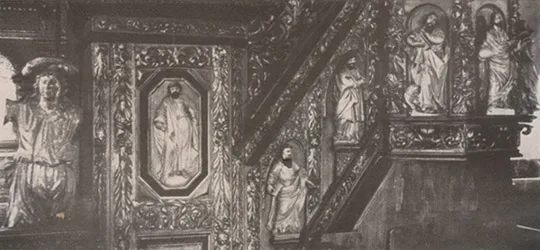
Its pulpit was made in 1690 by the famous Baroque woodcarver and sculptor Christian Klodssey
A contemporary of Ragnit Castle, built towards the end of the Order era. Damaged in 1945, it gradually fell into ruin
A neighbour of Friedrichstein. An annex to it held the richly decorated sarcophagus of the Dönhoff family
A very beautiful church built on the bank of the Pregel in the days of the Order (14th century), now completely lost
War rolled like a steamroller through the centre of the ancient town, but by the will of the Almighty the magnificent church survived
In the second half of the 20th century this village church from the Order era served as a warehouse, and was then abandoned
Lovis Corinth, a native of Tapiau, presented the church in 1910 with the altar triptych "Golgotha" that he had painted
Of the town that once stood where the village of Slavskoye is now, not even the street grid has survived
Not the most striking church in the region, with a rather ordinary fate: it was either blown up or taken apart
In the first half of the 1980s it was blown up and taken apart for its bricks
There is a certain logic in the fact that the unremarkable main body has sunk into oblivion while the unusual tower has stood firm
The church's history is linked with the name of Martin Luther: his daughter was married to the local pastor and is buried here
One of the most interesting churches in the southern part of the region — and not only because of its architectural merits
Over its history it caught fire more than once. The last time it burned for five whole days, after which the ruins were taken apart
The church and the village around it were taken apart for building materials almost immediately after the Second World War
Traces of the pre-war past of these places survive only on paper
Besides the main Lutheran church, the resort town had a Catholic and a Baptist chapel
It was in the eastern part of the south wing, which ran parallel to the railway along the shore of the lagoon
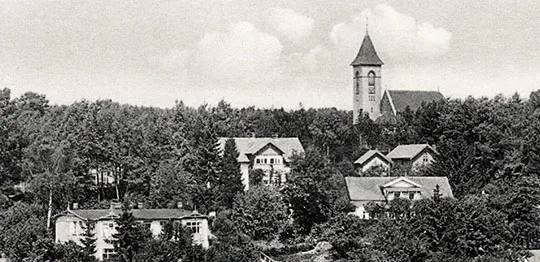
The forest that grew up around it on the dune has made this church one of the most beautiful in Samland
A famous place, a beautiful church, but what is left of it you could hardly find even if you searched high and low
Like almost everything in Palmnicken, the church was built with money from the Stantien & Becker company
A rebuilt wing of the local castle.
At the beginning of the 20th century the local half-timbered church gave way to a brick one
Later than many others, but in 2026 this church too was finally remembered
Its entrance was adorned with sculptures by the celebrated sculptor Rudolf Siemering
The length of its nave was striking. The impression was heightened by the height of the walls and the tall, narrow windows
For a long time it was the parish church of the village of Rauschen (Svetlogorsk). Even its ruins look impressive
After the war it was intact. It was used for utility purposes. It stood abandoned. It is now being repaired
A famous church on the road to Yantarny, with three stork nests on its roof
After the First World War, a mosaic panel commemorating the fallen appeared on the church wall and made it special
It survived the war, but soon afterwards it somehow got in the way of some atheist in power and was demolished in 1958
Where this church once stood in the middle of the village of the same name, the waves of the lagoon now lap
Having survived the war without losses, it fell into decay in peacetime
One of the many East Prussian churches of which not one stone was left standing upon another
A "contemporary" of Königsberg Cathedral
The neo-Gothic tower that appeared in the early 1860s did nothing to embellish it
Having survived the Second World War, the building, except for the tower, dematerialised in peacetime
The last decade of the 20th century proved fatal for the church, when it suffered its greatest losses
In the second half of the 2020s, what is left of it is regularly tidied up by volunteers of the Ruin Keepers movement
It is close to Kaliningrad, it has a landmark castle (also falling to ruin), two roads lead here, and still it is an abandoned site
The outstanding Prussian statesman Theodor von Schön was buried in the churchyard
Its surviving tower greets everyone heading for the regional capital from the south at the bridge over the Prokhladnaya (Frisching) River
The neighbour of the castle of the same name, recreated in Guryevsk
A very old and yet beautifully preserved church on the northern bank of the Pregel
It was built for holidaymakers in the early 20th century. Today it houses the House of Culture of the village of Primorye
Built from a wing of the castle that for more than a hundred years was the centre of the amber trade in Samland
After the Second World War Friedland Church fell to the victors intact, but in 1948 it was looted in a single night
A cosy city church with three hundred years of history that could not withstand the onslaught of the turbulent 20th century
This site stores only your settings in your browser — interface language and font size. No tracking, no advertising.