
(Conclusion.)
Parts 1–3. Part 4. Part 5. Part 6. Part 7.
Letter 73. In Königsberg
Letter 74. A New Lodging
Letter 75. The History of the War
Letter 76. The Battle of Kunersdorf
Letter 78. In Königsberg
Letter 77.
Letter 79. Königsberg
Letter 80.
Letter 81.
Letter 82.
IN KÖNIGSBERG
Letter 73
My dear friend! In my last letter I broke off while telling you how I occupied myself, living in Königsberg after the alarm I had suffered when my regiment demanded my return. Continuing my narrative now, I shall say that while I, living in peace as described, busied myself with serious work, and no less with mere trifles, though quite permissible ones, and my days flowed by in peace and quiet, almost every day bringing new pleasures, our army was in full campaign. Its former commander, General Fermor, had barely returned from Petersburg and waited for the spring, when with its coming he gathered all the troops quartered in cantonments and newly brought up to strength around Toruń {Thorn on the Vistula.} and set out with them once more towards Silesia through Poland. The city of Poznań was again appointed as the general assembly point, and the whole army gathered there in fairly good time. Yet he went no further with it than that place, but waited for another commander, who had been appointed in his stead.
For this post, contrary to everyone's expectations, the Empress chose General-in-Chief Count Pyotr Semyonovich Saltykov. Everyone was surprised to hear of this new commander, all the more so since, having commanded the Ukrainian land-militia regiments until then, he was known to almost no one, and there were no favourable or resounding reports about him. Even those whom chance had allowed to know him personally could tell those who asked nothing more than that he was, to be sure, a very kind man, but a simple little old fellow, without any great learning or merits, who had not yet distinguished himself by any notable deed.
We saw him before the army did, for his road there lay through Königsberg. I cannot describe with what curiosity we awaited him and with what peculiar feelings we watched him strolling on foot about our town. A grey-haired, small, plain little old man in a white land-militia coat, without any special ornaments and without any pomp, he walked the streets with no more than two or three men in his following {Walking behind him, in his retinue.}. Accustomed as we were to pomp and magnificence in our commanders, this seemed strange and astonishing to us, and we could not understand how such a plain and, by all appearances, insignificant little old man could be commander-in-chief of so great an army as ours, and lead it against a king who amazed all Europe with his courage, bravery, quickness and knowledge of the art of war. He seemed to us a veritable little hen, and no one dared not only to flatter himself with hope, but even to imagine that he could accomplish anything of importance, so little did his outward appearance and all his conduct promise us.
Our general had wanted, as was his custom, to regale him with a magnificent feast, but he expressly demanded that nothing special be undertaken for him, and wished to be content with the very simplest entertainment and dinner.
And this was the reason why his passage through our town was not in the least remarkable, and so quiet that, although he stayed with us two days and walked almost every street on foot, the greater half of the town did not even know he was within its walls. He left us as simply as he had come, and we all saw him off with the earnest wish that he might be more fortunate than the skilful Fermor, but with very despondent hearts that held no hope at all — so modest and unfavourable an opinion did we have of him.
After the departure of this new commander we returned to our former affairs and occupations: the general to his round of visits and his frequent calls on his Countess Keyserling, our chancery men to their papers, writing and business, and I to my translations, reading, drawing and other curious pursuits and occupations. My passion for them grew from day to day, especially from the time when I once happened to visit the house of an old gentleman, a retired Prussian colonel, a great lover of the sciences and of all manner of handicrafts and arts. It was there that I saw for the first time how people of this sort live and how clean and neat their houses are. I had long since had occasion to see this old man and had met him more than once in the street, for he lived in the same street as I did and often walked past my windows. But it had never entered my head that he was so great a lover of the sciences and arts, as I learned afterwards; I merely marvelled each time at his strange dress and gait. For all his age he was always as prim and fresh as if he were forty, and whatever the weather, I always saw him in a hat, always powdered, in a strange little wig, and always in an old-fashioned Prussian uniform with long, wide skirts stuffed with rush {Rush, or bulrush, is a plant used for weaving; it was put into the skirts of uniforms to make them stand out.}, one of which he always held up with his left hand, pressing it flat against his belly. By this very strange habit he stood out from all other people and became conspicuous, and since no one knew or could tell me why he always covered his belly with his coat-skirt, I took him for some eccentric or a madman. Having visited him, however, I changed my opinion of him greatly and began to think quite otherwise.
It happened by chance. One day I met him not alone, but walking together with the aforementioned Mr Orlov, Count Schwerin and another lieutenant of ours, a rich man, likewise very inquisitive and a great lover of the sciences, named Fyodor Bogdanovich Passek. These gentlemen knew him better than I did, especially Count Schwerin. The latter had no sooner caught sight of him than, stretching out his hand to him, he cried:
— Ah, Herr Colonel! My dear, kind old friend! Are you still in good health? It is so long since we have heard of you, — he went on, shaking his hand. — Are you still alive? Are you still busy as before with your ingenious contrivances and arts? Are all your machines and instruments in good health?
The old man smiled at this, shook the count's hand in a friendly way and said:
— In good health, in good health, Herr Count! And all at your service.
— Oh, if so, — the count rejoined, — could you not again do me the pleasure of showing us your works? We have people here, sir, — the count went on, — who would gladly like to see them.
By these words he meant his companions Orlov and Passek. The latter wished it particularly, and signalled to him with his eyes to persuade the old man to do it then and there and show us all his contrivances; nor did it cost the count much effort to win over the aged artist. Though the old man resisted somewhat, excusing himself by lack of leisure and saying in part that none of his present works were so important as to be worth seeing, at the count's request he was obliged to agree and to lead us to his house that very minute.
Having brought us there, he wanted to take us into his living rooms below and first treat us to something, but the count and his companions would not have it, saying that they had not come to trouble him with refreshments, but wished him to take them straight to his workroom and workshop. And so, almost unwillingly, our old man was obliged to climb a steep staircase and asked us to follow him. There we found an enormous room, all filled and crammed {Cluttered.} with a multitude of every kind of machine, implement and instrument. There was hardly a free spot anywhere, and we could only with difficulty squeeze our way to a little table standing by the window, the very one at which he mostly sat and worked. He at once began to bustle about, looking out his latest works and showing them to the guests, while I meanwhile had a few minutes of free time to survey his room and all the things in it.
I cannot describe with what insatiably curious eye I ran from one object to another and with what greed I devoured everything with my eyes. There was a vast number of things such as I had never seen in my life and of which I had as yet no notion. There were turning lathes of various kinds, there were polishing machines, there was a multitude of various physical, optical, mathematical and mechanical instruments and implements. There was a huge library, a great many telescopes of every kind, burning mirrors, microscopes, globes, maps, prints {An estampe is a picture engraved or etched on copper or steel and printed on paper.}, books laid open, and iron saws, chisels, gravers and every kind of working tool and instrument hung about the walls. All this was a new spectacle for me, and one I could not look at enough; and although all these numerous things stood, lay and hung there without the least order, all dusty and in disarray, scattered about almost anyhow, I admired them more than costly furnishings, and would gladly have agreed to spend the whole day with him going through and examining everything, if only I had been allowed to, and if only the master had agreed to show me everything and explain it all in detail.
But, to my extreme regret, this was the very thing that could not be done.
I was the youngest and least important person among the visitors, and therefore had to be content only with what was shown to my companions and with hearing what the master said to them. He did not manage to say even one word to me, for the time was so short and my companions' haste so great that he could not show even them a hundredth part of all that he had and that I should have liked to see and learn. To my greater vexation, even the things he did manage to show them were spoken of so cursorily and so briefly that I could understand almost nothing. This was only enough to arouse my curiosity, not in the least to satisfy it, and with the utmost reluctance I followed my companions, who were then hurrying off to pay a visit, and I was already thinking of falling behind and returning to the dear and venerable old man to make his closer acquaintance — but even this I did not manage. The old man came out of the yard after us and locked his room; and what vexed me even more was that, however much I flattered myself with the hope of becoming acquainted with him later and of persuading him by my entreaties to show and explain everything to me, and however much I hoped to learn a great deal from him, I never managed even to see him again from that time on. Soon afterwards he happened to leave for the country to stay with some relatives, and there, as I heard later, he ended his life.
For all that, this occasion did me much good. Not only did I gain some notion of many things unknown to me before, but through it I made the acquaintance of the aforementioned Mr Passek, who had been a stranger to me until then. For as they talked incessantly of this old man all the way back, praising his inquisitiveness and diligence and marvelling at the multitude of his machines and instruments, I too joined in their conversation. And on this occasion I had no sooner expressed my regret that they had stayed with him so briefly and that I had not managed to see many things I should very much have liked to know, than this very thing prompted Mr Passek to become better acquainted with me. He was the most inquisitive of them all, and having noticed the same inquisitiveness in me, he wished to know me better; and so he at once struck up an acquaintance with me and, on parting, asked me to come and see him some time, saying that since I was so inquisitive, he too could show me something worthy of my eyes and curiosity.
I did not fail to do so a few days later, and I can say that I was extremely pleased with this visit. I found at his place what I least of all expected. Though he was a mere lieutenant in our service, staying there at the time on some commission entrusted to him, I had not known that he had great wealth, was of distinguished birth, was acquainted with great lords, and was then spending a great deal of money on acquiring precious books and all kinds of machines and instruments.
Of the former I found that he already had a considerable collection, and of the latter none so amazed and delighted me as the electrical one.
It was at his place that I saw for the first time in my life this wondrous machine, which afterwards became so well known to me, and it was he who gave me my very first notion of it. I cannot describe with what curiosity I examined it then, and how greatly I was amazed by the sparks and shocks obtained from it, as well as by the various other experiments made with it. His machine was, to be sure, of the old style, with a small globe and a large wheel for turning it, still very imperfect compared with present-day ones and taking up almost a whole room, yet it had cost him no small sum and produced a very strong and good effect. I liked it so much that I spread its fame among all my acquaintances, and hardly a week passed in which I did not visit him and bring many others with me to see both it and the microscopes and other physical instruments, especially the air pump, which he also had and with particular pleasure demonstrated his experiments to us. But it is a pity that this man's stay with us in Königsberg was short: he left us that same summer, and I have not seen him since. He was the own brother of the Passek who was afterwards governor-general in Smolensk.
At about the same time I also became acquainted with another officer of ours, who served as a captain, though not in the field regiments but in the artillery. His name was Ivan Timofeyevich, he was of the Pisarev family and a native of the very same Kashira district that I came from; consequently he was my true countryman and a neighbour of my estates. This man happened several times to come to our chancery on business and to talk with me about this and that, and since he noticed in me, and I in him, similar inclinations in many things and an agreement of thoughts, this not only acquainted us but very soon made us friends. He grew exceptionally fond of me, and I felt for him not only affection but real respect, which he well deserved. He was considerably older than I, loved reading books, was regarded as a sober and orderly man, had earned everyone's respect, and did not like to talk of idle things, but always of matters, and good matters worth listening to; and since I loved such conversations no less, this very thing bound us in a friendship that lasted many years in a row. At that time, however, our acquaintance was only at its very beginning, for soon afterwards he left for the army.
As for my acquaintances in the chancery, two more were added to them about this time. For as the paperwork grew from hour to hour, because our general had also been given command of all the troops in Prussia, a special military department was needed for it, and two officers were appointed to run it: one, Lieutenant Kozlov, Savva Konstantinovich by name, a stout, simple fellow, but decent enough, who soon grew fond of me; and the other, Second Lieutenant Nasetkin, who had risen to officer's rank from regimental clerk and was a pen-pusher through and through. With this man I therefore had only a nodding acquaintance, for our characters were too different from each other; besides, I had no connection with him in business either, and both of them sat in other rooms, separated from us by a passage, and moreover did not dine with us at the general's, but went to their own quarters.
Besides the occupations described above, I had one more special one that summer.
Our young people took it into their heads to add to all the usual amusements one more, namely to form a Russian gentlemen's theatre. They were moved to this chiefly by the fact that the troupe of comedians we had had in the winter had left for other towns, our theatrical performances had ceased since the very spring, and the playhouse stood empty. And so our gentlemen decided to try forming a kind of theatre out of themselves. The chief instigators were the aforementioned Mr Orlov, Zinovyev, and a certain newcomer then living there, a Mr Dumashnev. No sooner had they conceived this undertaking and chosen one of our tragedies for the first trial, namely "Demophon" {A verse tragedy in 5 acts by M. V. Lomonosov, written to commission in 1752. Besides "Demophon", Lomonosov also wrote to commission another tragedy, "Tamira and Selim", in 1750.}, than they began recruiting people to perform it with them. But this could not be done as easily as they had at first thought. Many people were needed, and they found few who were fit for it. Those who might have agreed were unfit, and of those who were fit not everyone wished to venture upon this undertaking and take upon himself not only a great burden, but also willingly expose himself afterwards to criticism and judgement. The proposal was made to me from the very start and to me among the first, but I long struggled with myself and did not have spirit enough to venture upon a thing so unusual for me, and I did not agree to their wish until they had all asked me many times and pressingly. True, I already had some preparation for it. While still in winter quarters in Estland I had grown fond of the tragedy "Khorev" {A tragedy by A. P. Sumarokov, printed in 1747, which laid the foundation of his literary fame. The success that fell to the lot of "Khorev" furthered the growth of interest in the theatrical art and influenced the founding of a permanent theatre.}, and had not only learnt almost all of it by heart, but had also learnt to declaim speeches properly; so the business was in part already familiar to me, and this helped a great deal in my agreeing to take on a part. Even so, since I had never yet had occasion to see performances of Russian tragedies, the whole thing, especially given my timidity and shyness, seemed very strange to me, and had it not been helped somewhat by my having seen German tragedies more than once the previous winter, I would hardly have let myself be talked into it.
As much labour as it cost them to gather the men, as much or incomparably more was needed to find women fit for it. Two were required for this tragedy, and, unfortunately, both young, and among all the Russian ladies then in Königsberg we could not find a single one. At last, with great difficulty, Mrs Rosen, the brigadier's wife, who was staying in Königsberg at the time, was persuaded to do it.
This lady was Russian, but no longer young, and, worst of all, stout and quite unsuited to playing a beloved. But what will necessity not do!
We were glad even of her; but since we could by no means find another, we resolved to use a man for the purpose. One of our companions was chosen, namely Mr Zinovyev, whom I have mentioned earlier as a relative and companion of Mr Orlov. The youth, tenderness, fine figure and the very beauty of face of this young and lovable man moved everyone to beg him to take on the part of the beloved, and when he agreed, the brigadier's wife Mrs Rosen was assigned the part of the confidante, with which she was quite content.
Having thus gathered all the people needed, we set to work. The parts were at once written out and handed round to everyone, and at once everyone began to learn them and get them by heart. Mine was a considerably large one, yet I learnt it before anyone else. Even now I cannot recall without laughing how much this part occupied me and with what zeal and diligence I studied it. More than once I would lock myself up alone in my lodging and declaim for several hours on end, pacing to and fro about my room; more than once it happened that even in the middle of the night, instead of sleeping, I went over what I had learnt and tried to imprint it more and more firmly in my memory. And when I had finished my task and learnt my whole part, I cannot possibly describe the pleasure I felt. I imagined myself goodness knows what and began myself to urge on {To prod, to push.} my companions to learn their parts quicker; for since I had not the least doubt about myself, but firmly hoped that I would play my part well, I was already burning with impatience for our undertaking to be accomplished as soon as possible. But things turned out not as we had thought and expected. Circumstances suddenly took it into their heads to change: some disagreements arose among the participants in this enterprise, and our whole splendid and magnificent scheme burst like a soap bubble, and so early that many had not yet managed to learn even half their parts. I cannot describe with what keen grief I learned of this unexpected collapse of our whole undertaking. I received the news of it from Mr Orlov.
— Do you know, Bolotov, my friend, what a misfortune has happened? — he said to me, coming to us one morning and embracing me. — Our undertaking is not to be, it has come to nothing!
— What! What are you saying? — I exclaimed, astounded. — Can it be?
— It is so, — he went on, — and you, my friend, need not trouble yourself any more nor go on learning your part.
— That's a fine thing! — I cried. — Don't learn your part — but I learnt it long ago, so all my labours and efforts were in vain. Thank you very much!
— Well, what can be done, my dear fellow! So be it; I grieve over it myself, I too had learnt a great deal; but what can be done, circumstances have arisen, and such circumstances that we cannot even think of it any more now.
— But what circumstances? — I asked.
— Well, whatever they may be, — he said, — I cannot tell you; suffice it that the thing is over and will never come to pass.
Having said this, he ran off from me like lightning, so that I was left in the greatest astonishment and vexation with him.
For all that, he was so discreet on this point that however hard I tried afterwards, I could by no means learn the true reason, either from him or from the others. All the rest pleaded that they did not know themselves, while he knew but only told everyone that he could not say; and so I remained in complete ignorance of what actually wrecked this enterprise, and I do not know it even to this day.
Soon after this I happened, together with these same people and the aforementioned brigadier's wife Mrs Rosen, to be in the Königsberg Jewish synagogue, or congregation, and to see their divine service. This spectacle was new to me and had never been seen by me before, and I watched it with particular curiosity and attention.
The eminence of the brigadier's wife Mrs Rosen and of Count Schwerin was the reason why we were not prevented from entering this house of prayer at the very time when their service was being held and the whole building was filled with a multitude of people. This was during St Peter's Fair itself, when the whole town was filled with many hundreds of Polish Jews. The synagogue was of stone, of considerable size, and could hold a great many people. We found it already filled with people, though they had not yet begun their service; and since this time I managed to see it from the very beginning to the end, I can describe both it and the synagogue itself in detail.
The building was a regular oblong rectangle and was adorned on the outside (was) with a few architectural ornaments, but without any dome on top or any elevation above the roof; inside it had not the slightest ornament. All that met our eyes on entering consisted solely of a single octagonal ambo {Ambon.}, raised about one and a half arshins above the floor, built in the middle of the house and fenced at the top with a low little parapet. This whole ambo was no more than four arshins in diameter and for ascending it was provided at the sides with two little stepped staircases. On both sides of this ambo were continuous pews for sitting, exactly like those made in Lutheran churches, with the only difference that the partitions enclosing them were higher, and of such proportions that a man standing in the pews could lean his elbows on them. These pews took up the whole interior space of the building, and only a passage about three arshins wide was left in the middle. There was also a fairly spacious area at the front, where in other churches the altar usually stands; but in Jewish synagogues there was nothing there resembling an altar or a holy table, and this because their synagogue is not properly their church or temple, which they have nowhere, but merely a kind of house intended for the gathering of Jews, for singing hymns of praise and psalms to God and for instructing themselves by reading Holy Scripture. For this reason there is made in their front wall, between the windows, a kind of small cupboard or niche within the wall, hung with a small curtain, and here they keep the books of their Holy Scripture of the Old Testament, written, after the ancient custom, on parchment scrolls. These two or three things, that is, the ambo, the pews and the cupboard, made up all the interior furnishings of their synagogue; the fourth thing was a spacious gallery built against the back wall by the entrance, screened on the synagogue side by so close a lattice that one could by no means see all who stood in the gallery. This gallery, forming an entirely separate section and having no communication with the interior of the synagogue, is intended among them for women; and since these must never enter where the men stand and sit, the entrance to the gallery is also separate, and not from inside but from outside the building.
We found all the aforementioned pews filled with seated people, some of whom were bareheaded, while others had their heads covered with a kind of many-coloured silk veils or shawls.
All sat with the utmost reverence and meekness, and there was not the slightest noise or shouting in the whole congregation. We were led in and placed in the middle, right beside the aforementioned ambo, and here something comical happened to us.
The aforementioned brigadier's wife Mrs Rosen, who was with us, having no notion whatever what the ambo was made for, and taking it for nothing other than a place for persons of rank, and therefore the most fitting and comfortable for her to stand in, was so imprudent that, without asking anyone, she suddenly decided to mount it and take her place there. Good God! What noise, grumbling, murmuring and indignation arose that very minute throughout the synagogue! Everyone turned their eyes on her, and many even jumped up from their seats and did not know what to do. For them it was already extremely painful and unpleasant that a woman had dared to enter their congregation. They had already been looking askance at that, but because of her rank they did not dare to object; but on seeing her ascend the place they held to be most sacred, they fell into extreme confusion and alarm. Several men, presumably from among their elders, ran up to us almost beside themselves as we stood on the floor by the ambo, and in the most plaintive and humble manner, bowing and pointing at the brigadier's wife, begged us to persuade her to come down.
— Ah, gracious lords, gracious royal benefactors! — they said to us, pressing their hands to their hearts. — Ah, this not proper, this not proper!
But we did not let them worry long and whispered to the brigadier's wife that she should kindly come down; but she herself, having noticed the agitation she had caused in the whole assembly, was sensible enough to come down at once, and politely begged to be excused, pleading her ignorance, and this at once calmed the whole gathering.
Soon after this their prayers began. They consisted in the singing of psalms by the whole assembly in the Hebrew language. But here not only the brigadier's wife but very nearly all of us committed an extreme folly. It cost us all the greatest effort to keep ourselves from laughing and from guffawing at the top of our voices: so comical did their prayer seem to us. And indeed it had much that was extraordinary and comical about it, especially for us, unaccustomed as we were to seeing anything of the kind. Their chief rabbi had no sooner struck up the singing of his psalm than all who sat in the pews leapt up from their seats and, covering themselves with their veils, became just like madmen: they stamped their feet, waved their arms, wriggling with their whole bodies they shook their heads, and at the same time uttered such strange squeals, wails and shrieks that we were almost forced to stop our ears to deliver our hearing from such strange and unusual music. In a word, the noise, shouting and wailing throughout the synagogue grew so enormous, and everyone's contortions were so strange and comical, that some of us really could not keep from laughing; and for the rest of us too the spectacle was extremely striking, and we did not cease to marvel at it until it was explained to us that according to Jewish law God must be praised not only with one's lips but with all one's limbs, and that the contortions and stamping of feet we saw were the performance of this sacred duty.
This calmed us somewhat and made us wait quietly for the end of this extremely discordant singing, so offensive to the ear.
After this we saw that preparations were being made for some kind of procession. Several men, leaving their pews, reverently lined up in front of the aforementioned cupboard. We watched with curiosity to see what would happen, and then saw the senior rabbi approach the cupboard respectfully, draw back the curtain and with the greatest reverence take out from it the scrolls of Holy Scripture, written on parchment and wrapped in costly damasks {Fabrics.}. He placed them on the heads of the aforementioned men as they came up to him and received them with great respect. Then, with him walking in front, they carried them one after another in procession around all the pews and then up onto the aforementioned ambo. A kind of low little table covered with precious fabric had already been prepared there. On it they unrolled one scroll after another and for some time read the scripture in each at the top of their voices, poking {Touching, jabbing.} the parchment in a strange manner with enormous gilded pointers, exactly like those used in our common schools by little children learning to read, only incomparably larger. This spectacle was also amusing to us and entertained us to the point of laughter. But however hard it was for us to keep from laughing, especially at the sight of their comical pointing, we nonetheless had spirit enough to wait for the end of this strange reading, accompanied by great contortions, grimacing, crying out and wailing. When it was over, the scrolls were carried back with the same ceremony and amid general singing, laid in the cupboard as before and covered with the curtain, and with that the whole service ended, and everyone began to go home; seeing which, we too left this Jewish congregation, having first thanked the elders for the pleasure they had given us.
With this our outing ended at that time; and since my letter is already long, I shall end it with this too, telling you that I am yours, etc.
A NEW LODGING
Letter 74
My dear friend! Continuing my narrative further, I shall now say that among the memorable things of that same summer was also the fact that I got myself a new and better lodging, and so moved to my fourth. True, the one where I had been quartered was not altogether bad; however, as it was not very near the castle and the daily walk to it had grown tiresome to me, especially in the rainy autumn and winter weather, and moreover, being in a remote back lane, it was rather dull, and I, being then attached to the governor and already of some consequence, wished to have a lodging at least somewhat better. And so I gave our town major no peace until he assigned me a new one, and the very one I had my eye on. Before that one of our army lieutenants had been quartered in it, of the Chelishchev family, Ivan Yegorovich by name, the same who was afterwards a councillor of the criminal chamber in Tula. And since he and I were acquaintances and friends, it was through this very circumstance that I came to know this lodging, and I waited impatiently for the time when he would leave for the army.
This happened at the beginning of that summer, and then I did not delay a single minute longer, but moved into it at once.
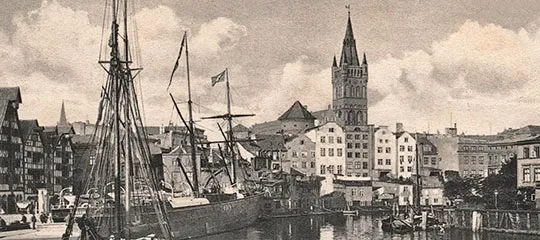
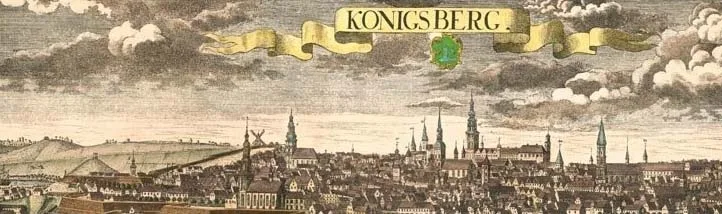
Many advantages were connected for me with this lodging, and with none of the previous ones was I so pleased as with this last. For, firstly, it was nearer to the castle than all the earlier ones, no more than two hundred sazhens from it; secondly, it stood in a street which, though small, had a good deal of walking and driving along it, especially by people going to stroll in the gardens, and was therefore not dull. The little house, though not large, was cheerful and warm. The whole upper storey of it was assigned to me, and although the whole of it consisted only of two rooms and a small entrance hall, this was enough and more than enough for me. In one of these little rooms, the more spacious, I settled myself, and it served me as bedroom and anteroom and everything else besides; the other, at the side and much more cramped, I assigned to my younger servant Avram and to my baggage: here stood my trunk and all the rest of my belongings. Both rooms were spick and span, whitewashed and provided with a sufficient number of little tables and chairs, and I needed no more than that. The view from the house and my windows extended on one side into a small fruitful garden belonging to the neighbouring house, whose fruit trees stretched their crowns right up to my very windows and almost touched them; and on the other side onto the street, and across it into a beautiful, regular garden adorned with arbours and parterres, belonging to a large stone house that stood across the street almost opposite my lodging. This garden delighted me especially. It was so near and so situated that I could survey the whole of it and see everyone strolling in it and everything that happened and was in it. The very flowers with which the borders in the parterres were planted in abundance were visible to me to the last one, and the scent of the fragrant herbs and flowers reached even my windows, especially in the evening. More than once I saw whole companies spending their time in strolls there, and sometimes a young man sitting in solitude reading a book in a half-arbour that stood directly opposite my window. At other times the whole family of that house would come there and drink tea with their guests. On the third side, though there was no view from the windows of my lodging, there was a passage from my entrance hall onto a kind of little gallery built onto the side of my storey, from which a most delightful spectacle opened to the eyes. This little house stood almost on the very shore of that large pond, looking like a lake, which lies in the middle of this town and which I have already had occasion to mention. The whole opposite shore was adorned with continuous stone houses forming almost one single row. They were all of several storeys, all painted in various colours, all stood with their walls right up to the water, so that the water washed their walls and one could come up in boats and skiffs to the very porches. In a word, owing to the curve of this shore they formed a most magnificent amphitheatre, especially in calm weather, when they were all reflected upside down in the smooth surface of the water, just as in a mirror. The great multitude of windows with which these buildings were dotted, and the many-coloured awnings let down from many of them when the sun shone, lent this picture still more splendour and beauty.
More than once I would go out and sit on this little gallery, admiring this spectacle to the point of rapture.
More than once I carried a little table out there with me and sat for several hours in the shade under the simple little roof in the fresh air, and, admiring the beauty of the place, occupied myself either with reading some pleasant and useful little book or with writing something for my own learning and instruction. The urge to write was already beginning to awaken in me then, and I was making my very first attempts at it. Often the pleasant sounds of harmonious music drew me out onto this little gallery. It so happened that in the houses surrounding this beautiful pond lived many people with a love of music, and so my ear was often delighted, from some windows by the pleasant tone of transverse flutes, from others by French horns, from others by fiddles and other instruments; and often little boats rowed about on the pond itself with whole companies of people of both sexes, enlivening the spectacle still more. Often on these outings they entertained themselves with music or with the singing of pleasant songs. A narrow and very long bridge, built only for pedestrians to cross the whole pond, visible to me on the left at some distance, and beyond it the more distant shores of the pond, adorned with a multitude of beautiful regular gardens and with arbours of various shapes built almost on the water itself, lent this place still more beauty. I hardly ever happened to see that bridge empty; there was always a multitude of people walking to and fro on it. Sometimes they gathered in crowds and, leaning on the railings, gazed at this lake and admired its beauties together with me, or delighted in the pleasant music heard from the many houses built along its shores.
Besides all these outward advantages my lodging had one more particular one, which was the most pleasant of all to me, namely a good landlord. Though he was a working man, a lacquerer by trade, and of very modest means besides, I was more satisfied with him than I would have been with the best and richest citizen of this town. From no one in all Königsberg, in all the time I was there, did I receive as much kindness as from this good-natured old man, and I can say that I was very pleased with him and with his whole family. He had a wife, an old woman just as kind and quiet as he was himself. The rest of his family consisted of two sons and two daughters, all of them grown up and all good-hearted; the sons both helped their father in his work and the daughters their mother, and all of them showed their parents particular respect, which the parents indeed deserved. I could not admire enough the meek, good-natured and virtuous character of the two old people, and marvelled that I had found such good people in the middle of Königsberg. But my astonishment soon vanished when I learned that my old people were not native Prussians but natives of a country that is full of good and honest people and renowned for the goodness of its inhabitants' character, namely Switzerland.
And indeed, these old people astonished me with their exceptional kindness towards me.
No sooner had I got acquainted with them, visited them downstairs a couple of times, talked with them in German about this and that, especially about Switzerland, and spent some two hours at a time in conversation with them, than they grew exceptionally fond of me, as if I were some relative of theirs. They at once began to make me offer after offer, and offers as pleasant for me as they were unexpected and astonishing. The very first was a request that I have all my campaign bedding, with its pillowcases, pillows and blankets, put away and stowed aside, and leave the care of this to them, saying that I might perhaps be satisfied with their bed. I was surprised at such kindness, so uncharacteristic of Prussians, and, declining out of politeness, said that I would thereby cause them trouble and expense. But they would not hear of it and insisted that I agree to their wish, assuring me that they would not put either themselves or me to the slightest expense. In a word, however much I declined, I was obliged to agree to their wish. And how greatly I was surprised when the very next day I found in my room a splendid feather bed, with clean, white, soft pillows and a fine white curtain, washed and starched to perfection. Not having slept for a very long time, or rather never yet, on such soft beds, I slept that night as if in paradise; and although there was the inconvenience that instead of my former blanket I had to cover myself and sleep under another, thin and soft feather quilt, after their custom, I saw to my surprise that this custom was not as bad as I had at first imagined; and I not only soon got used to it, but grew so fond of it that I preferred it to the best of blankets. To many who have not slept under such feather quilts this will seem strange and incredible, but I too thought so at first, and experience proved to me quite the contrary. The softness of the lower feather bed and the exceptional fluffiness of the upper one make it possible to sleep very comfortably in such a bed, and the upper quilt warms better than any blanket, while producing not the slightest weight.
True, at first I balked and by no means wanted to lie under the feather quilt, but the desire to please my hosts overcame my aversion, and by this I pleased my hosts so much that they took exceptional care that my bed should always be clean, white and tidy. Every Sunday they changed all the pillowcases and sheets, and every month even the curtain of my bed. I was surprised at this diligence of theirs, but was surprised even more when I learned that they washed all their linen only twice a year. At first this was incomprehensible to me, but afterwards I learned that they had laid in such a store of linen of every kind that they had no need to wash it more than twice a year. But then they never allow any linen to become too soiled.
And when the time comes to wash it, they do it with hired help, all together, and are busy at it for more than two weeks on end.
This usually happens at the beginning of spring and at the end of summer. And then they cover almost a whole meadow with their washed linen bleaching in the sun, for they not only wash it but also bleach it in the sun the whole day, sprinkling it continually with water. I was surprised to see once my landlord's whole family busy at this, and was horrified at the vast quantity of linen belonging to their one household.
However pleased I was with this kindness of my hosts, another and new offer that followed soon afterwards surprised me even more. My good-natured old people, seeing that I never dined at home and in the evening, coming home to sleep, contented myself only with the lightest and smallest supper, for which I usually sent to a nearby tavern, wished to spare me this trouble too, and told me one day that they were ashamed to propose it, but could I not be content in the evenings with their meagre bread and salt, and they would see to it that I should never go hungry. This offer struck me, and since I knew that their bread and salt was not as meagre as they said, but that they ate well and heartily, I was ashamed to accept the offer, although it was not disagreeable to me, and I did not agree until I had promised to pay them for everything as much as they pleased. "Very well, very well, Herr Second Lieutenant!" they said to me at this with a smile. "We shall see about that; only be content with our bread and salt."
Long accustomed to light and small suppers, I had all the more reason to be pleased with their care for me, since from that time on I enjoyed every evening incomparably better suppers than before. They grew so fond of me that they set aside for me the best pieces and portions of their food, and there was no evening when two or three little dishes with splendid fine-sifted rye bread and tasty morsels were not brought up to me. In a word, it often seemed that they cooked on purpose for me, and so well that I was extremely pleased. This kindness of theirs afterwards went so far that, when we no longer had our table at the governors', they provided me in the same way not only with suppers but even with dinners; and since there was no day on which I did not receive from them three or four little dishes of splendidly prepared and tasty food, I cannot describe sufficiently how pleased I was in this respect with my hosts, who thus fed not only me but even my servant.
At last it came to this, that they did not want me to drink even my own tea, but asked me to allow them to send that up to me every morning too. Although this was what I was most ashamed of all to agree to, I was obliged to yield to their entreaties and wishes in this as well, and from that time on I always drank excellent tea with cream in the mornings, and on Sundays even coffee.
Such good people did I happen to have as my hosts; I marvelled and could not understand why they loved me so much and showed me such favours, and I did not fail to ask them about it several times; but they always stopped my mouth and only said that they were more pleased with me than I was with them, and counted it their good fortune to have such a meek, quiet and steady lodger.
The only drawback connected with this lodging was that they had no yard spacious enough for me to keep my carriage and horses in, but I remedied this drawback too by obtaining another lodging for the horses and my other man, where he lived for me and kept himself, as I have already mentioned in my earlier letters.
In a word, with the change of my lodging my circumstances changed in many ways too.
I lived there merrily, peacefully and in every comfort, and had no need to worry either about food or about my upkeep; but it must be admitted that the kinder and more obliging my hosts were to me, the more I tried to conduct myself soberly and steadily and thereby keep up their good opinion of me.
However, it must also be said that at about this very time I began to apply myself more to reading moral and in part even philosophical books, and acquired an ever greater liking for them. The occasion and cause for this were given me in particular by this very lodging, so that I am much indebted to it in this respect as well. The occasion was the following:
In the very nearest neighbourhood was our field reserve pharmacy, and with it an apothecary, a man of exceptionally good character and disposition, Herman by name. He was a native of Reval and a clever, steady fellow, who loved reading books and studying the sciences. Beneficent Fate, ever caring for me, gave me occasion to become acquainted with him, and since he lived only about a hundred paces from me, I often went to see him, and in a short time we became friends; we sat, talked and strolled together in a public garden near his place. It was at these meetings that we once got to talking about books. Learning that I was a lover of them, he recommended one in particular to me and praised it so highly that I bought it that very day in a bookshop. Even now I bless that day and thank Fate for what befell me on it, for this book afterwards served as the basis of all my subsequent good philosophical life and was, as it were, the foundation on which the whole edifice of my peace and well-being in this life began to be built. This memorable book was Mr Hofmann's work on Peace of Mind, well known and so celebrated in the world, and I liked it so much that I read it several times from beginning to end and thereby imbibed much of the truly philosophical spirit; and this was the reason why from that time on I applied myself ever more to reading and acquiring good moral books, which afterwards contributed so much to all my knowledge and learning.
Among the further memorable things of this time concerning myself was also the fact that soon after moving into this lodging I learned for the first time to smoke tobacco and took up the habit. The occasion for it was particularly memorable. For some time before that I had been tormented by frequent constipation. At first I paid no attention to it, but in the course of time it became more and more burdensome to me.
This prompted me to speak of it with one of our doctors, a man I knew and who understood the medical science well enough.
He told me that it came from my sitting, and instead of prescribing me medicine, as I asked, he asked me whether I smoked tobacco. On hearing that I had never smoked, he advised me, instead of all medicines, to smoke tobacco in the mornings with my tea and afterwards to eat either a slice of bread spread with Finnish butter or a few French prunes, assuring me that this would not only do away with my constipation but would also protect me from it in future. This advice was most sensible and very useful for me, and I still thank Mr Nilus for it to this day; for as I followed this advice to the letter, I not only rid myself of my constipation at the time, but, having grown used to always smoking tobacco with my tea, I was never again tormented by it; and, best of all, throughout the whole subsequent course of my life I was hardly ever ill. Whether this came from that or not, I do not know; I only know that all the best physicians in the world regard this smoking of tobacco with tea as the best preventive against many diseases, and conclude so because such smoking always keeps nature open; and this is quite true, as my own example has proved to me. One only needs to observe as sacred the rule never to smoke tobacco at any other time, and, while drinking tea, not longer than one is drinking it. In exactly this manner I smoked tobacco all my life, and that is perhaps why it was so beneficial to me.
Another memorable thing was that at about this time I began to enlarge my library considerably. What chiefly prompted me to this was that I learned that in Königsberg books could be bought not only in shops but also at the book auctions held there very often, and at these with the further advantage that they went at a much cheaper price and often for a mere trifle. I learned of this from those same companions of mine, the German chancery clerks. No sooner had they taken me once to one of these auctions than I liked it so much that from then on I did not miss a single one of all those held in my time, and, to my indescribable pleasure, they took place quite often. This town was full of learned men and book lovers, and since such men often happened to die, and not every heir was a lover of books, this gave occasion for selling the books they left behind at auction. Each time this happened, it was announced in the supplements to the newspapers, and printed catalogues of all the books for sale were handed out to all who wished. And then, on the appointed day, all who wanted to buy gathered in that house and sat down at a long table, while the auctioneer sat at the end of it and, calling out the books by number, first gave each one to all those sitting at the table to look over, and then asked who would give what for it, and the usual auction bidding began; everyone added something to the price, and as soon as they stopped raising it, whatever the last bid was, for that price, after the third stroke of the hammer, the book went to that bidder.
I cannot describe with what pleasure I went to these auctions, and for what a small and worthless price I sometimes obtained the finest books at them.
It often happened that very few buyers gathered altogether, no more than ten or fifteen, and since they were all of different tastes and not every book was to everyone's liking, it happened that for some no one would give a kopeck, and they had to be let go to whoever jokingly offered a kopeck or two; and in exactly this way I obtained a multitude of books for a mere trifle, and was often vexed that I, as a serving man, could not burden myself with a great many of them; for I did not know what I would do even with those I already had if I were sent off to the army on campaign. This held me back a great deal, otherwise I could have enriched my library with many rare and costly books. More than once it happened that, with a heavy heart, I was obliged to part with very fine and costly books. Nevertheless it rarely happened that I returned from such an auction empty-handed; usually I brought home whole bundles of them, and then what examining began, what sorting of the books I had bought and what admiring of them! In a word, these auctions gave me many pleasant minutes, and my lodging was soon adorned with a whole bookcase of various books.
As for other events that took place at about this time in our Königsberg, I remember only two somewhat worthy of note. The first was that an archimandrite, Yefrem by name, was sent to us to take charge of all the army clergy, and was to reside in our town. But this spiritual person fell far short of our general wish; and however good a figure he cut at first after his arrival, so much did he afterwards turn to our discredit and to the disgrace of the clergy; for he had hardly lived among us a few weeks when he began to be seen driving in a carriage with lewd women and often getting drunk on far too strong liquors. Through this he soon lost all respect and prompted our governor, reporting on it, to request another and more sensible one in his place.
The other event was that, having learned that in Königsberg there was the former mint with all its implements and craftsmen, we decided to make special Prussian money ourselves, like that which had formerly been made there, that is, half-silver. No sooner had an order to that effect come from the court than we gathered all the craftsmen needed for it, found a mint master, and I was charged by the governor with making drawings for the dies, which I put together as best I could. On all these coins there was depicted on one side a bust portrait of the Empress, and on the other the Prussian coat of arms, a single-headed eagle with an inscription.
The governor was pleased with my drawings, and according to them the dies were cut and we began to make money.
It was on this occasion that I first managed to see how money is made and struck at mints. I watched the whole process of this work with exceptional curiosity and could not admire enough all the implements and devices invented for it. The treasury made a great profit from this, and our money began to circulate incomparably better than the deceitful and bad coins with which the King of Prussia burdened all his lands.
Beyond this I remember nothing worthy of note until the very time when we began to receive news from our army; but as I reserve the telling of our military events for my next letter, I shall end the present one with this, saying that I am ever yours, etc.
THE HISTORY OF THE WAR
Letter 75
My dear friend! While we, as described, lived in peace and quiet in Königsberg and spent our time in various amusements, the war continued to burn in Europe and blazed with its full flame. In my preceding letters I have already mentioned what preparations were being made on all sides since the very spring; and now, continuing that narrative further, I shall say that this summer was the most memorable of all during this war, especially for us. It glorified our troops with famous victories, and was particularly unlucky for the King of Prussia; but to give you a clearer notion of all the military events of this summer, I shall tell everything in order and begin with the spring itself.
The bloodshed began very early that year, as early as April. For since the King of Prussia by no means wished his lands to remain the theatre of war and suffer the inevitable ruin from it, he used all his strength and means to draw the war away into the very heart of Germany and to remove it from his provinces. For this very purpose he ordered Prince Ferdinand, joining with the Prince of Isenburg, to attack the French, who were still in their winter quarters around the city of Frankfurt on the Main. And so, as early as the middle of April, Prince Ferdinand suddenly appears there with forty-six thousand men and takes the French by surprise. They were then commanded by the Duc de Broglie.
Nothing else remained for this general then but to gather his troops, quartered in winter quarters, as fast as possible and go to meet the enemy. And he managed to do this with such dexterity that he earned the praise of all connoisseurs of the art of war. In no more than 36 hours he gathered his whole corps, and although it did not exceed twenty-five thousand men, he did not wait for Count Saint-Germain, who was to bring him help, but went with them to meet the Prussian army of 46 thousand warriors and, meeting it at Bergen, had so fortunate an encounter that he defeated Prince Ferdinand completely and forced him, after losing six thousand men and several guns, to retreat. By this the general won himself great glory and was made for it a Prince of the Roman Empire by the Emperor and a Marshal of France by his own king.
With such an unfortunate event for the King of Prussia did this campaign begin, and this misfortune was, as it were, a kind of omen that the whole of that summer would be particularly unlucky for him.
Soon after this, namely in the course of the month of March, the Imperials took the town of Greifenberg in Silesia, and thereby increased still more the vexation of the King of Prussia, who, while the French, as described, were fighting the Hanoverians in those parts, had himself taken position against the Imperial Field Marshal Daun, the commander of the main Imperial army, and, watching all his movements, thought only of how to wreck all the plans and intentions of his enemies and prevent their execution.
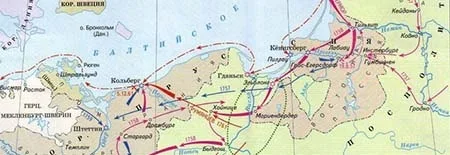
He knew them all well enough. He had channels through which he could learn everything that all the powers allied against him had in mind, and therefore took in good time all the measures needed to wreck their designs. That year their chief plan was that we Russians should act against him chiefly from the side of Silesia and, having entered it, try to turn the whole strength of the King of Prussia against ourselves; and so that he might be beaten the more easily, it was decided that the Imperials should reinforce us with a considerable corps, and meanwhile, while the king was busy with us, go themselves with their main army straight into the interior of his dominions and try to penetrate even as far as his very residence, the city of Berlin; and meanwhile the Reich army was to try to drive the Prussians out of Saxony and take the fortresses and towns there. In accordance with this plan our army was ordered to go straight to Silesia, so that it could join the Imperial auxiliary corps the more easily and quickly; and since the most direct way there lay through Poland, it was decided to go through it, and so that this entry into Poland should not be so harsh (?) for the Poles, this campaign of our army of forty thousand was announced in a special proclamation as early as the middle of May; the Prussians did the same, for both sides needed to supply themselves with provisions and forage from Polish territory, and both sides tried to win the Poles over to their side. This proclamation was made on the Prussian side by General Count Dohna, the very one who had commanded the King's army at the time of the first engagement with us in Prussia, for the King of Prussia sent this general, giving him a considerable corps, to hinder our march. This general had been in Pomerania until then, but as there was nothing more for him to do there, the king charged him, if not to prevent our army's march, then at least to make it difficult.
In consequence of this, the general, having gathered his troops near Landsberg and entered Poland as early as the 23rd of June, began with detachments sent out in all directions to try in every way to destroy the magazines we had prepared everywhere in Poland, and he managed to seize and destroy those at Bromberg, Rogoźno, Zinne and some other places and to deprive us of more than sixty thousand scheffels of groats and flour.
In the same way, and most of all, he wanted to get at our main magazine in Poznań.
But since that place was considerably fortified, and moreover all our troops were approaching it as the general rendezvous or assembly point, he was obliged to abandon this intention, and busied himself with taking grain and forage from the Poles by force and without payment, and with compelling the inhabitants themselves to enter service in his army, and indeed he recruited a vast number of them by force.
While the Prussians were thus making themselves at home in Poland, our troops all gathered at Poznań, where on 29 June the aforementioned General-in-Chief Count Saltykov, appointed as their commander-in-chief, also arrived. General Fermor, who had commanded the troops until then, at once handed over the command of them to him and himself remained there to serve under his command without the slightest resentment. By this he earned the name of a great patriot at court, and in the army too he kept all his eminence, and, having become Count Saltykov's first adviser and the chief mainspring of all undertakings, he could all the more conveniently take revenge on the Imperials who had wronged him, as he did not expose himself to answering for it.
Count Saltykov's very first act was that, having reviewed the whole army, he did not linger another day in Poznań, but set out on the march and went by the direct road to the town of Crossen, situated on the borders of Silesia and built on the banks of the river Oder. Count Dohna at once moved there too with his corps and, drawing near our army, tried in every way to get ahead of it and seize the high road leading to the river Oder. And this very thing gave occasion to the first battle with the Prussians that summer. However, the aforementioned Count Dohna, although he was a skilful general, did not manage to lead the Prussian troops himself on this occasion, but was obliged on the eve of that day to hand over all command of this corps to another general sent by the king, Wedel.
This change of commander in the Prussian army was expected by no one, and was all the more incomprehensible and astonishing to the Prussians themselves because this general was one of the junior lieutenant-generals and had been sent by the king with such full powers as were not customary in the Prussian forces, and therefore startling to all. The reason for sending him was that the King of Prussia was dissatisfied with Count Dohna's slowness and indecision, and especially with his missing a favourable opportunity to attack us at the little town of Meseritz in Poland; and the choice of this general for the purpose was due to the king's particular confidence in this favourite general of his. He sent with him to Count Dohna and to the whole army a letter which deserves particular attention and was of the following content:
"My dear Lieutenant-General Count Dohna!
"The circumstances in which the army under your command finds itself, the good and the interests of my state, and urgent necessity have compelled me to send the following order of mine to you and to your whole army; and it is my will that it be carried out to the letter.
"As circumstances do not permit me to go myself to Dohna's army to command it, I am sending Lieutenant-General Wedel, having furnished him with my orders for this occasion; for as long as he carries out this commission, he represents my very person, and all generals, lieutenant-generals, major-generals and other officers, down to the last private, must obey him exactly as if I myself were present and commanding. I have strictly enjoined him to place under arrest at once anyone who does not obey and does not carry out what he orders by his word, and I shall have all such disobedient men tried by court martial as violators of their oath. And so that the whole army may know my exact will in this, everything said here is to be proclaimed to all the troops. General Wedel will represent in the army what the dictators once represented in the Roman armies. Therefore all officers, whoever they may be and of whatever rank, must show him such obedience as is due to me, and carry out his dispositions with loyalty, exactness and courage. I am —
"In camp at Schmottseiffen, 20 June 1759. Frederick".
Below this was added in French in the king's own hand:
"You are not so well that you can burden yourself with command, and you will do well to have yourself taken to Berlin or some other place where you might recover your health. Farewell. Frédéric".
On receiving such an order, what remained for Mr Dohna to do but to leave at once for Berlin, leaving the army and everything in the care of Mr Wedel — and for the latter, by virtue of the king's personal order, to give battle to us at once?
And it followed on the day after Mr Wedel's arrival: he attacked our army on the march, when, continuing its advance, it set out in the morning along the high road leading to Crossen, near which it was to join the Imperial corps that was coming to it under the command of General Laudon. And since the King of Prussia had expressly ordered Mr Wedel to prevent this junction, he did not linger a single day, but, regardless of the fact that neither the lie of the land, nor the enemy's strength, nor the condition of his own army was known to him, he attacked it near the villages of Paltzig and Kay, not far from Züllichau and the river Oder on the Brandenburg borders — on 12 July. The battle began after three in the afternoon and went on fiercely until 7 in the evening; however skilful Mr Wedel was, and however much the king relied on him, he lost this battle completely, and, having lost up to six thousand men killed, wounded and taken prisoner, was obliged to flee, and counted himself lucky that his road to the Oder had not been cut off or intercepted and that he had been allowed to cross it in peace.
Thus our troops gained an indisputable victory over the Prussians, and all who were in this battle testified unanimously that there had never yet been a battle as orderly as this one. Nowhere was there the slightest disorder during its whole course, either on our side or on the Prussians', and the victory is ascribed rather to the superiority of our strength, to our advantages in the lie of the land and to the good effect of our unicorns and Shuvalov howitzers. The Prussian troops began to attack ours three whole times, each time falling upon them with almost desperate fury, but could by no means overcome them and were at last obliged to retreat. In this battle we lost Lieutenant-General Demiku, 2 staff officers, 2 captains, 11 subaltern officers, and of lower ranks and privates 578 men, and with the wounded the total loss was reckoned at up to 3,744 men; the Prussians, for their part, lost their famous General Wobersnow, killed together with 4,220 privates, and more than 1,200 men were taken prisoner; in addition, 14 guns, 4 colours, 3 standards and 45 drums were taken as booty.
Though this victory was not among the most famous, it produced many and various consequences, some of which were particularly advantageous for us.
The chief of these was that all our troops took heart from this defeat of the enemy and began to place more hope in their little old commander, who had had the good fortune to win the soldiers' affection from the very beginning of his arrival; and now they grew fonder of him still, and he rose in esteem with all of us too. We, living in Königsberg, on hearing of this battle and of how orderly it had been, almost refused to believe that this little old man could have accomplished it, and our pleasure was indescribable. The second advantage we gained from this battle was that nothing now prevented our army from advancing further and then joining the Imperial corps hurrying to our aid under the command of their famous General Laudon, consisting of 18 to 19 thousand men, for the greater part cavalry.
This general, having been sent to us by General Daun with thirty thousand troops, had no small labour in passing from his own lands through enemy territory, and, despite all the vigilance of the King of Prussia and his brother Prince Henry, who tried not to let him through, he made his way in masterly fashion and safely, and, overcoming all obstacles through the whole of Lusatia and leaving General Hadik on the way with twelve thousand troops, he at last reached the river Oder at the beginning of August and joined our army at the very time when it, marching down the river Oder, had already reached the city of Frankfurt and encamped opposite it across the river, by this approach putting Berlin itself in very great danger.
This successful passage of General Laudon through the whole of enemy territory was greatly helped by the actions of the Reich army, which until then had done so little, but this time rendered its service by invading Saxony from its side, thereby compelling the Prussian general Finck, who was watching the Imperial general Hadik, to lose sight of him and hurry to cover Leipzig and Torgau.
The King of Prussia himself was meanwhile in Silesia and contented himself with defending it. For a long time he stood at Landeshut, waiting for a moment favourable to himself, while Daun with the main Imperial army stood opposite him, likewise waiting for a favourable time to advance or to give battle to the Prussians. To destroy this hope and drive the Austrians back into Bohemia, the king tried in every way to make it as difficult as possible for them to supply themselves with provisions and forage; and in the Imperial camp they were already beginning to think of changing their position when news came of our army's approach to the Prussian borders, which changed the plans of both these commanders.
Daun, setting out on the march, began to move closer to us to ease our operations, while the king laboured in every way to devise means of wrecking our designs.
The battle of Paltzig, so unfortunate for him, and the subsequent junction of the Imperial corps with our army, which had already moved close to Berlin, at last induced this sovereign to hasten to his Brandenburg provinces; and since the shortness of time did not allow him on this occasion to take either infantry or cavalry from his army with him, he galloped off with only a small escort of hussars. His brother, Prince Henry, had to send the greater part of his army to the Oder to reinforce Wedel's defeated army, while he himself went to the king's army, forty thousand strong, which was encamped at Schmottseiffen, to command it during the king's absence and to hold back Daun, who stood opposite it with thirty thousand Imperial troops. General Finck likewise received orders to leave Saxony and hurry with his corps to the river Oder, where we already were at the time.
The king accomplished his journey safely. All the troops sent to him from various places reached their destination without any loss. He himself, on his journey, came upon the corps of the Imperial general Hadik near the little town of Guben, and, taking from him several guns and five hundred wagons of flour and capturing some six hundred men, then joined Wedel's army without hindrance.
Now the king resolved to give battle to our army without the least delay; and although his whole army did not exceed forty thousand, while ours, together with the Imperials who had come to us, then consisted of more than sixty thousand men, he did not doubt in the least that he would beat it in the same way as the year before at Zorndorf, and was so sure of it that when, at that time, a courier was sent to him by Prince Ferdinand with the joyful news that he had managed to beat the French at Minden, and thereby take revenge on them for his own defeat in the spring, the king detained the officer sent by him, saying: "Wait a little, my dear sir! We shall send with you to the prince just such a congratulatory compliment from ourselves as he has sent to us."
But this time he did not manage to keep his word, and the compliment sent with this officer afterwards was of an entirely different kind. Nevertheless, very little was lacking for our army to be utterly beaten by the king, and that same favourite of his, General Wedel, gave occasion on this occasion too to his second misfortune, as will all be seen from the more detailed description of this famous battle that follows below.
It truly deserves it for many reasons. This battle was the most memorable for us in the whole course of the Seven Years' War.
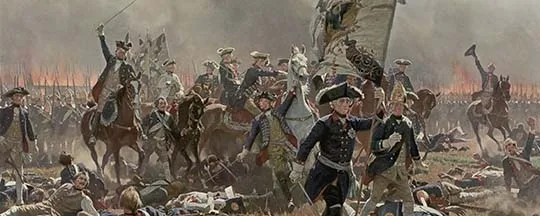
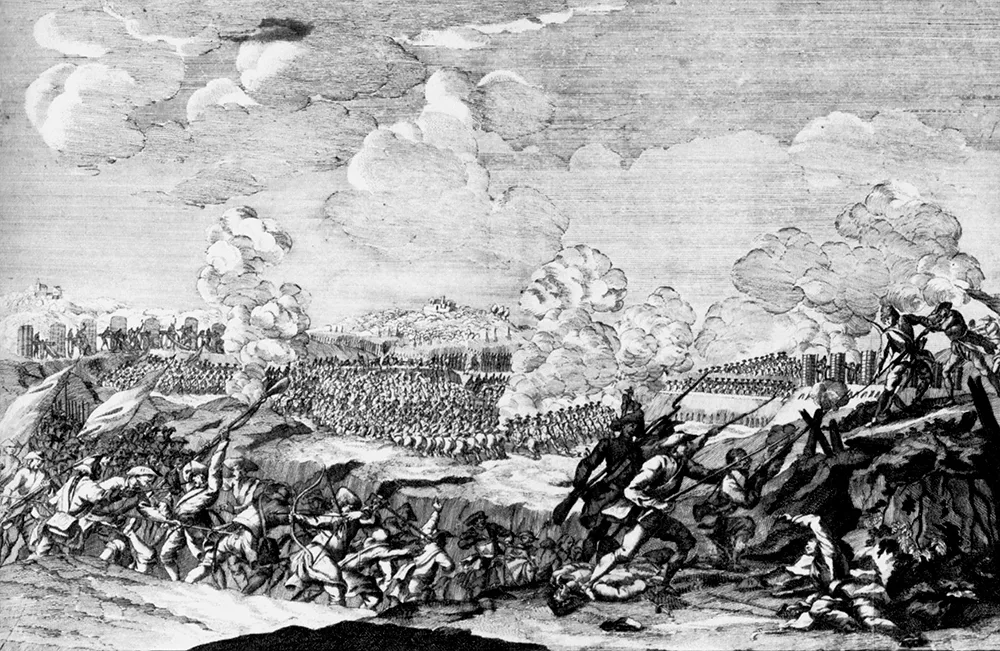
On this one occasion alone did our men succeed in completely defeating the King of Prussia, and in bringing this hero, famous throughout the world, to such extremity that on the day of this battle he even wished for death and was indeed very close to it. And since this victory won us the greatest glory, I shall describe this battle as circumstantially as possible and mention all the most notable events in it. But first I shall describe the position of our army.
It was encamped not far from the city of Frankfurt on the Oder, near the village of Kunersdorf, and had a position as advantageous on the one hand, and well enough fortified by nature and art, as it was dangerous on the other in case of misfortune, for the way of retreat was almost entirely cut off. It faced up the river Oder, towards the side from which the enemy was expected, and with its right wing rested right on the river Oder, and with its left on a dense forest and a steep ravine lying beside it. The whole front of it was covered by a marshy and almost impassable bog, across which there was only one big, long bridge; and the rear, extending towards the city of Frankfurt, was likewise covered by some boggy and steep ground. The village of Kunersdorf lay in the middle of the army, and the whole army was placed on fairly high ground. For the further security of both its wings, both were also fortified with retrenchments: the right one, standing on the Judenberg, with star-shaped redoubts, and in addition with an abatis in the forest there; and the left one, adjoining the aforementioned other dense forest and covered by a deep ravine, was further fortified with a retrenchment and several batteries containing more than a hundred heavy guns.
On the aforesaid right wing, towards the river Oder, stood the first division under the command of Count Fermor; here, too, was posted the vanguard corps under the command of Lieutenant General Villebois. The second division was placed in the centre, and command over it was entrusted to Lieutenant General Count Rumyantsev; and on the left wing stood Prince Golitsyn with the so-called New Corps. As for the Austrians, the ground was so cramped that there was no room for them in the line, and they were placed behind the right wing, while the light troops, with their leader Totleben, were posted out in front of the right wing.
Thus our camp was fortified both by nature and by art, and the position of the army was so advantageous that, even when it turned out that the King of Prussia was approaching not at all from the side whence he had been expected, but had crossed the river Oder below Frankfurt with the intention of coming round into the rear of our army, our commanders did not see fit to change the army's position, but left it in its former disposition.
With this I shall close this letter, leaving the further narrative and the description of the battle itself for the next one, and meanwhile I remain yours, etc. {10 December 1797. A. T. Bolotov.}
THE BATTLE OF KUNERSDORF
Letter 76
My dear friend! Setting about now the description of the glorious battle of Frankfurt, or of Kunersdorf, I shall begin it by depicting the cunning and skill of the King of Prussia in attacking our army. Having galloped up from Silesia, he found Wedel's beaten army at the little town of Müllrose, already reinforced by troops that had gathered there and been sent from other places, so that the number of these forces already came to more than forty thousand men. With this army, small indeed, but in all justice brave, he did not march, as ours expected, straight at our army, which by then was standing at Frankfurt and had occupied the town itself; but judging, perhaps, that here we had made all the necessary preparations to receive and meet him, and that it would be hard for him to cross the river here in full view of us, he resolved to turn to the left and, making a very great and long detour around Frankfurt by way of the little towns of Fürstenwalde and Lebus, to cross the river Oder at a place where we least of all thought or expected; namely, far below our army and almost under the very guns of his town of Küstrin, where at the village of Reitwein a bridge across the river was at once thrown for him.
He did this, firstly, so that he might cross the river here more freely, and so that we should not have time to hinder him; secondly, so as to supply himself from Küstrin with as many heavy guns as possible, which he considered most necessary for attacking our army; and thirdly, so that, having crossed here, he might come round into the rear of our army, and thereby throw our commanders into disorder and confusion and make his victory easier.
In all this he succeeded, save only the last. For the commanders of our forces, although they saw themselves deceived in their conjectures, did not let themselves be thrown into confusion by this unexpected appearance, but remained in their former disposition, relying on the advantages of their camp and on the fortifications raised on every side, and calmly awaited the arrival of His Majesty the King of Prussia.
No sooner had he crossed the river at the aforesaid place than he would not tarry a single minute, but, striving to profit by our confusion and not to give us time to collect our spirits, marched at once with all his strength to attack our army.
Since the position of our troops was known to him, and he had not the slightest doubt of victory and took it for certain that he would rout us, he resolved to fall upon our army from three sides at once: that is, in front, in the rear and on the flank where our left wing stood, so as thereby to cut off all our paths of retreat and, pressing us against the river, to destroy the whole army utterly. Which he very nearly succeeded in doing completely.
As this happened at the very beginning of the month of August, and the village of Ötscher, where he had spent the night with his army after crossing the river, was still no short distance from our camp, he set out very early, when it had only just struck two, and hastened to reach us before the heat itself set in. But since the nearest and straightest road lay over hills and through many woods and ravines and was quite unsuited to the march of an army, he was forced to make yet another very great detour and, bearing far to the left, to go by way of the villages of Bischofsee and Trettin, and in skirting many woods and ponds not only to have much trouble, but also to lose so much time that he could not arrive before just about noon.
Although the position of our army was known to him, as for the lie of the land itself, he could not be closely acquainted with it, and therefore, on surveying our army, he was dismayed to see that it was not so easy to attack it from all sides as he had thought and expected; that the rear and the front of the army, where he had intended to send his cavalry, were quite inaccessible, and there remained only our left flank, from which an attack of some sort could be made. But this spot, as I have already mentioned, was covered first by a strong retrenchment built on a hill with three powerful batteries holding as many as 80 guns, and then by a deep and wide ravine, and beyond it by a dense wood. But as nothing else remained, the King chose this very spot for his attack on us and, detaching a certain amount of his cavalry to stand opposite our right wing and also opposite the rear of our army, at once began to draw up all the rest of his troops in the aforesaid wood in five lines, of which the first three were made up of infantry and the remaining two of cavalry. Meanwhile he ordered General Finck to haul guns up onto the nearby heights and to open from them a heavy and terrible cannonade against our flank from many sides. We had, it is true, a transverse line of troops posted there, but this line was so short that, for lack of room, no more than two regiments could fit into it; for at just such a distance from each other stood both lines of our army on this wing. But since this shortcoming was made up for by the aforesaid retrenchment, set with a multitude of guns, and beyond it by a very great hollow, our commanders considered this spot impregnable and in no way expected an attack from this side.
It was this very circumstance that helped the King, in the shortest time, to overthrow that small force of ours, to cut into the flank of the whole army and thereby expose it all to manifest danger.
For no sooner had he drawn up his lines in the wood, and out of them dense columns, than he at once ordered his grenadiers to rush forward all together and go straight through the hollow and, clambering up the high bank of this ravine on our side, to attack our retrenchment there and take it and its batteries. These had not been silent all this while, but had struck them down in heaps with their guns as they came down and descended into the dale; but once they were down at the bottom, the fire of our guns became ineffective, and when they came up out of the hollow onto the hill, although they were met with case-shot from the guns and with musketry from the retrenchment, the time was already too short, and the Prussians, hurling themselves at ours with great fury, did not allow ours to do them any further harm. For they not only completely overthrew both those regiments of ours, but in a single moment took all our guns and batteries that were there.
Such swift and unexpected success gladdened the King of Prussia as much as it dismayed all our generals and commanders. They all lost heart then, seeing plainly that the whole army had thereby been exposed to the utmost and very greatest danger, and in the first minutes, not knowing what to do or how to remedy this evil, they left the enemy free to cross the ravine as he pleased, and to form on the hill and extend his front for striking at ours. But at last God himself put it into their minds, in place of the overthrown and utterly destroyed short transverse line, quickly to form others, new ones of the same kind, snatching one regiment from the first line and another from the second, and, making of them many cross-lines, short though they were, to put them out one after another in front of the enemy. And although in this way they were set out, as it were, simply to be slaughtered by the enemy, who, growing in number every minute, pressed further forward hour by hour and with indescribable courage fell upon our little lines and destroyed them utterly one after another, yet since they too did not stand with folded arms, and each line, kneeling, kept firing back until almost no one was left alive and unhurt, all this held the Prussians up somewhat and gave our generals time to reflect a little and collect their spirits; but it was hard then to devise any fit means of saving themselves and the whole army. However much the aforesaid cross-lines delayed the Prussians, they were in no way able to hold back all their infantry, which had crossed the aforesaid dale and had already passed over the greater part of all the ground we then occupied. The very village of Kunersdorf, which until then had been in the middle of our army, was already behind them, and all our remaining troops and regiments were squeezed onto our right flank and stood there in a heap and in very great crowding, with no room to spread out anywhere, and tried only to drag guns from every side and set them up in various places to receive the enemy, should their turn come too to fire back, after the example of the others.
In a word, the calamity to which our army was then exposed was very great. It was in manifest danger.
Everyone considered this battle lost, as indeed it already was; for had the Prussians, who had taken almost all our ground, chosen to undertake nothing further but, content with what they had already done, stayed with the advantages they had won, our army, driven together and crowded into a heap, could by no means have remained long in such a position, but would have been forced either to surrender entirely as prisoners, or to save itself by fleeing across the marsh that lay in front of its right flank and had only one bridge across it, and that one had been burnt by ourselves a few hours before, so as not to let the Prussian cavalry across it. The old man himself, our commander, was already in such distress and despair that, forgetting everything, he got down from his horse, knelt and, raising his hands to heaven, in front of everyone begged the Almighty with tears to help him in such calamity and extremity and to save his men from manifest destruction. And this prayer, offered by a virtuous old man from a pure soul and heart, was perhaps heard by heaven. For a very short time after that everything changed, and there came about what no one could have thought or imagined, and what was least of all to be expected.
This battle began at noon itself, and by 6 o'clock in the evening the Prussians had already taken all the batteries on the left flank and already had in their power 180 of our guns and several thousand of our men taken prisoner; and the victory was already beyond anyone's dispute and exactly such as had been at Kolin and Hochkirch: so much so that the King himself, already regarding it as such, sent couriers from the battlefield with this joyful news to Silesia and to Berlin. When suddenly the aforesaid unexpected thing ensued, and a terrible change took place in the fortune of war.
The cause of it was that His Majesty was not yet content with all the aforesaid advantages won over us, but imagined that nothing had yet been done so long as there was still anything that could be done; and he wished, so to speak, to finish us off. He used to say at all times that the Russian army must not only be beaten, but utterly annihilated and destroyed to the last; because it always comes back again and begins anew to lay the land waste. And these very words he pronounced publicly on this occasion too. The Prussian generals set against this argument only the exhaustion of the troops at that time. They said that the soldiers, from a march that had lasted a full fifteen hours, and from unceasing bloody work, and also from the terrible heat on that sweltering day, were so exhausted that they could barely draw breath. His famous and beloved General Seydlitz himself represented the same. And the representation of this great commander, whose bravery and courage were well enough known to the King, had such effect that the King was already beginning to waver and was about to order the troops to halt, when suddenly General Wedel approached him, to whom, in spite of his misfortune, the King was nevertheless particularly well disposed; the King does him the honour of asking him in these words: "And you, Wedel, what do you think?" He, being as much a courtier as a soldier, wished to flatter the King and declared his complete agreement with his former opinion and wish, and then the King, without long thought, cried out: "Well then! March!"
But oh! how dearly that little word, escaping from his lips, cost him! And how many times he regretted it and would gladly have taken it back, but by then it was too late.
All his troops, at this command, moved again to finish us off, and although very soon after this he himself saw his grave mistake in not following the advice of the old men, the action once begun could no longer be stopped. To finish us off completely the enemy needed cavalry and guns, and these were exactly what he lacked. The aforesaid ravines, marshy places and gullies prevented the cavalry from taking part in the action and the guns from being brought over from beyond the ravines: for those taken from us the Prussians themselves, by particular good fortune for us, had spiked and made unfit for use. And so, although some cavalry did get across by the heads of the ravines and gullies, and some guns were brought up too, all of it was very little and insufficient for overthrowing our remaining army, which stood crowded together in a heap on the hill of the right flank. To help themselves in this need, they decided to try to take a battery that we had abandoned on the Jewish cemetery. This battery was a very great one, and swept the whole field of battle. Ours had abandoned it and gone off from it at the approach of the Prussian cavalry, and since it stood without men, the Prussian infantry, which was some 800 paces from it, rushed forward to take these guns: and it had only a hundred and fifty paces left to run when Laudon hastens up, occupies this battery with his infantry, lets loose upon the Prussians a whole hail of case-shot, and thereby stops all their impetus. All their efforts to come closer were vain and did not help them. They only increased their disorder, which Laudon did not fail to exploit, and at once ordered his cavalry to fall on the attackers from right and left and to cut into the Prussian infantry and cavalry, and this cavalry then wrought a terrible bloodshed among them.
On the other side the Prussians began to assault and to try to take a height called the Spitzberg, on the taking of which the whole victory depended. But this height was held by our best and the Imperial troops, and was not only set with guns but covered as well by a ravine, or hollow, lying in front of it, some 400 paces long, from 50 to 60 paces wide, ten or fifteen feet deep, and moreover steep-banked. Into this very hollow the Prussians threw themselves and tried as best they could to clamber up the opposite bank, but all their efforts were unsuccessful. For whoever did manage to scramble to the top found there either his death or was again hurled down into that gully.
At last nature had its way. All the courage, all the bravery and all the daring of the Prussians could not make up for their exhausted strength. They assaulted this hill several times in a row, but could in no way clamber up it; the terrible and unceasing fire that ours kept up on them from many muskets and many guns struck them down dreadfully, and they were showered with bullets and case-shot as with a deadly hail. General Finck, who was trying in the same way to take other heights with his corps, likewise exhausted his strength in vain.
The King himself, who several times brought up fresh troops and forced them to the assault, exposed himself to the very greatest danger.
His whole uniform was shot through with bullets; two horses were killed under him, and he himself was wounded, though lightly. A gold étui that he had in his pocket saved his life by stopping a bullet that struck him, and the bullet lodged in the dented gold. He was just as close to death when his badly wounded horse began to fall under him, and his aide-de-camp Götz managed this time too to save the King and bring him his own horse. Everyone begged the King most earnestly to leave this extremely dangerous place, but he only answered: "We must try everything possible to win the victory, and I must do my duty here as well as all the others."
In a word, our Russians fought this time with the greatest fury and ardour, and the Prussians themselves even wrote of them afterwards that this time they supposedly lay down in whole ranks and let the Prussians pass over them as over the slain and dead, and then jumped up and shot at them from behind. But be that as it may, all the efforts and endeavours of the Prussians to drive us off the hill were vain.
Now the Prussian cavalry ventured to attack the heights, but all the skill and all the cavalry tactics of their famous General Seydlitz could achieve nothing here. This cavalry, accustomed under his leadership to overthrow the enemy's cavalry, even if it were twice or three times stronger, to put infantry to flight in any position, to take even batteries themselves and to overcome all difficulties and obstacles of terrain, fell here before the guns of our Russians, who fired at it from the height very accurately and showered it with their case-shot as with hail. Seydlitz himself, its brave leader, was wounded; the same fate befell Prince Eugen of Württemberg, who attempted a second attack. After him came General Puttkamer, who fell upon ours with his white hussars but was shot dead. And the other most famous commanders of the Prussian army, Generals Finck and Hülsen, were wounded too, and all the other troops, both foot and horse, fell into great disorder and confusion.
In these very critical and dangerous minutes Laudon suddenly appeared, coming out from behind the right wing with fresh troops, and fell upon the utterly weakened Prussians from the side and from behind. This commander, renowned for always knowing how to seize the lucky moments in battle, led the cavalry this time. He drew it up as it should be at some distance from the scene of the slaughter and fell in the best order upon the disordered Prussians, and this decided the whole fate of the battle. Panic fear and terror suddenly seized the whole Prussian army, and all the troops rushed to flee into the wood and to the bridges. Everyone wanted to get across at once; from this arose a terrible crush and an indescribable turmoil, which was the reason why the Prussians were forced not only to abandon the guns taken from us, but to throw away 165 of their own as well.
The King himself very nearly fell into our hands as a prisoner, being among almost the very last on the field of battle and having to ride through a single hollow way.
Only the extraordinary courage and rare presence of mind of Captain Prittwitz saved him from this great misfortune. The King, himself already regarding it as inevitable that he would be taken prisoner, cried out, repeating it several times: "Prittwitz! Prittwitz! I am lost!" But this brave officer, who had with him only a hundred hussars to resist whole thousands of enemies surrounding him, answered him: "No, Your Majesty, that shall not be while there is still breath in us!" And then, instead of merely defending himself, he turned and galloped off himself to attack our Russians, and fought with them until the King managed to get away ahead, to gallop to the rest of his troops and join them.
Never before had the firmness of spirit of this monarch (as the Prussians themselves speak of it in their writings) been so extraordinarily shaken as on this day, so unfortunate for him. In a few hours the fortune of war cast him down from the height of undoubted victory into the abyss of complete rout and defeat. He tried everything and strove in every way to stop his fleeing infantry, but nothing, neither representations, nor the most persuasive exhortations, nor entreaties uttered by the King's own lips, helped in the least, however effective they had been on other occasions, and it is said that, finding himself in this desperate position, he wished aloud for his own death. His lively imagination pictured to him in the first minutes the consequences of this lost battle as so terrible that from that very same spot on the battlefield from which, a few hours before, he had sent couriers with the joyful news of victory, he now sent an order to Berlin to take at once all measures for safety and for saving everything needful as quickly as possible. He already fancied he saw his enemies in Berlin, ravaging and laying waste everything, and himself powerless to prevent it. His troops were so scattered that by the evening of that day he had no more than 5,000 men of them with him. All the captured guns were lost again, and with them almost all the Prussian ones as well. General Wunsch, posted on the other side of the river Oder with a small corps to bar our path of flight in the event of the expected victory, arrived at Frankfurt at the end of this battle and took prisoner all of ours who were there; but on hearing of the rout of their army, he was forced to leave this town again and abandon his prisoners. The coming of night at last favoured the King of Prussia. He gathered something of his army and reached with it certain heights, which ours did not venture to attack.
Thus ended, to the immortal glory of our troops, this bloody battle. Not one of all those fought in this war had yet been so murderous and ruinous as this one. The Prussians lost in killed alone more than 8,000 men, while over fifteen thousand of theirs were wounded, with almost all their generals and most distinguished officers. Ours took nearly five thousand of them prisoner. And so their whole loss came to about 28 thousand. But ours too was by no means small: by Count Saltykov's own admission, the number of killed came to nearly three thousand, and the number of wounded to nearly eleven thousand, not counting the Imperials, who also lost more than 2,000 men in killed and wounded. In a word, the number of men who suffered death, wounds and captivity on that day on both sides came to almost fifty thousand. On our side too many generals were wounded, and the number of wounded staff and senior officers came to 474, and our loss was so notable that Count Saltykov himself, admitting it in a letter to the Empress, expressed himself, among other things, in these words:
"Your Majesty, be not surprised at this; you know that the King of Prussia always sells victories over himself very dearly."
This commander also used to say: "If I win another battle like this, I shall have to carry the news of it to Petersburg alone, with a staff in my hand."
But be that as it may, and however unhappy this day was for many, all who survived spent the evening of that day in indescribable joy and contentment, as much over the complete victory over the enemy as over their deliverance from manifest danger. But not so did the King of Prussia spend that evening and that night. He passed the night in the hamlet of Ötscher, slept in a hut ravaged by Cossacks and open on every side, with neither doors nor windows intact. a peasant hut, on a scrap of straw and without undressing. His hat covered half his face, and his sword lay bare at his side. At his feet his two adjutants slept on the bare ground, and outside at the door a single grenadier stood sentry. A night such as this famous monarch had had few of, and which he remembered well all his life!
Thus ended this memorable day, and with this I too shall end this letter, saying that I am yours, etc.
Letter 77
My dear friend! The news of the complete and notable victory won over the King of Prussia by our old man, of which I spoke in the previous letter, reached us in Königsberg a very short time afterwards through Brigadier Prince Khovansky, who had been dispatched by Count Saltykov with this news to Petersburg. It is impossible to describe how greatly overjoyed we all were at it, and how we began to triumph over the Prussians, who always tried to maintain that it was a thing quite impossible that ours could ever defeat their King. All of them, unable then to dispute the victory, hung their heads, and we threw them into even greater dismay by asserting that now Berlin too would soon be visited by ours, and the King would be unable to save it from our hands.
So concluded not only we but the whole world, for by all the circumstances the thing was not only probable but almost beyond doubt. The King himself thought no otherwise, for in the order he sent from the battlefield to Berlin were his very words, that he was now not in a position to defend the city, and therefore all the most distinguished and wealthiest inhabitants should leave it and take away their property as far as possible.
The royal family itself had to leave at once and go to Magdeburg, and the archives were carried off too.
But how could one think otherwise? The Prussian army in these parts had been brought, by two defeats following so quickly one upon the other, to such exhaustion that it was in no position to undertake anything. I have already mentioned that the King, after the battle ended, could barely gather five thousand men around him; and although the next day, having crossed back over the Oder, he saw that more had gathered to him from the remnants of his beaten army, so that as many as twenty thousand had already collected, what could he undertake without guns, without provisions, without munitions and all the necessaries of war, being moreover entirely cut off by our army from Silesia and Saxony and in such a position that he could get no help even from his own provinces? And since, with all that, the road to Berlin lay completely open and free for us, was it not to be expected that ours would not fail to profit by so glorious a victory and, without the least delay, would march straight on Berlin and try to take it before the King gathered his strength again?
Further, almost everyone was in no doubt that this victory would serve to bring the whole war to a speedy end as well: for they reasoned that, hearing of it, the Austrians too would not fail to attack with their main and powerful army and rout the army of Prince Henry, incomparably weaker than theirs, while the Imperial army would not fail to take all Saxony, and at last Magdeburg itself, and to bring the King of Prussia to the last extremity.
So everyone thought and concluded, and prepared soon to receive news upon news of new victories and conquests. We ourselves, living in Königsberg, expected new joyful news every day and were already preparing well in advance to congratulate one another on the taking of Berlin. But our astonishment was indescribable when one week passed, then another, and not only did no courier come galloping to us with news of the taking of Berlin, but, on the contrary, we heard that ours had this time too acted after their former and old custom, and instead of profiting by the first and precious minutes after the victory won, had, overjoyed beyond measure, let them slip, and had stood on the battlefield without any action, occupied only with festivities and celebrations, until the King had gathered his strength and spirit again and, seizing the road to Berlin, made our march on it impossible.
No less were we and the whole world astonished to hear that Mr. Daun too, that famous Austrian general and experienced commander, was this time so remiss that he undertook nothing, and not only did not attack Prince Henry, but did not even make a movement on his side towards Berlin; instead of all this he thought it necessary first to meet the commander of our army and agree on what to do; and for this meeting he not only went himself in quite the opposite direction from Berlin, but also persuaded our old man to go there with his army instead of to Berlin.
In a word, between these two commanders of armies there arose something like a quarrel and a squabble.
General Daun, hearing that our old man had been so remiss as not to profit by the victory but, letting all the first and precious minutes slip, remained in complete inactivity, reproached him bitterly for it, and the latter answered him with equal bitterness. "I have won two battles," he wrote to him, "and I am not advancing further now because I am waiting for news of two such victories from you, for it would be unjust if the troops of my Empress alone were to act." A strange and astonishing answer, and no less strange was the one he gave the Swedish minister Montalembert, who was with him and urged him in every way to advance, trying to persuade him with the representation that if he did not advance now, he would leave all the fruits of his victory to the Austrians. Mr. Saltykov answered him to this: "Oh! I shall not envy them that in the least, but wish with all my heart that they may have even more good fortune than I have had, and for my part I have done enough and more than enough already."
God knows to what one may ascribe such strange and, it seems, quite unreasonable replies of Mr. Saltykov: to his wilfulness, or to inexcusable obstinacy, or to difficulty, or to some other causes? Some of the more recent foreign writers consider the cause of it to have been the extreme displeasure and vexation with the Austrians that prevailed among all our Russian generals, and especially among the chief commanders. They say that the court of Vienna made a mistake, and instead of somehow winning these commanders over personally and drawing them to its side, it brought very great complaints in Petersburg, first against Apraksin, then against Fermor, and finally against Mr. Saltykov himself, and accused one of ill will, another of incompetence, inactivity and unwillingness to support their allies. And to these men, who learned of everything, this was galling and vexing, and therefore they never thought of helping the Austrians zealously, and on their part did only as much as would keep them from being called to account, and no more. Although the court of Vienna saw its mistake at last and tried in every way to correct it, by then it was too late.
In Petersburg, meanwhile, the rejoicing over the victory won over the King of Prussia was extraordinary. Count Saltykov was made a field marshal for it, and Prince Golitsyn a general-in-chief. The lieutenant generals were hung with orders, and the whole army was given half a year's pay as a bounty. No less were the Austrians rewarded by the Empress. She presented Laudon with a golden sword richly adorned with diamonds, and granted every Austrian regiment that had been in the battle five thousand roubles each; and to immortalize this day a great many silver medals befitting it were struck, and all the Russian soldiers who had been in this battle were decorated with them.
And so, through the aforesaid inactivity of our army and the Austrian one, all the fruits that might have been reaped from both our victories were lost; and the King of Prussia, meanwhile, while we were making marches and counter-marches and strolling about his Silesia, managed again to set all his affairs to rights and, though he gained no further advantages, at least prevented his enemies from achieving anything important. These indeed let slip the whole autumn, the most suitable season of the year for military operations, with almost no important action. The two commanders of the armies, ours and the Austrian, met in the little town of Guben, at which meeting they resolved that our Russian troops should not leave the Prussian lands but remain in the provinces lying on the left bank of the river Oder, and Daun undertook to supply our army with provisions and forage. He himself resolved to wait until the Imperial army took the Saxon capital, Dresden; then he would undertake the siege of the town of Neisse, and should this siege succeed and he have the good fortune to take this town, both armies would then enter Silesia and take up their winter quarters there.
Such was the arrangement they made; but this reckoning was made without the host.
Daun, having promised to supply our army with provisions and forage, did not consider that our army needed a very great quantity of them, and that there was nowhere for him to obtain so much himself, and it was difficult besides to deliver it to us. The King of Prussia, having recovered, followed everywhere on the heels of ours and of the Austrians and tried to make hindrance everywhere. The siege of Dresden meanwhile dragged on a long time. Our army, having stood and waited a long time for the taking of this city in one place, at Fürstenwalde, ate up all its reserve of grain and, receiving nothing from the Austrians, did not know how to feed itself. Lusatia, in which it then was, was forced in the month of September to feed no fewer than four armies, namely ours, the Austrian, and two Prussian ones, that is, the one commanded by the King himself and the one led by his brother Prince Henry. Owing to all these circumstances, and because the Austrians failed to deliver the promised provisions, we were the first to feel a shortage of them. The court of Vienna, unable to deliver them to us in kind, offered us money to buy them, but Saltykov answered that his soldiers do not eat money, they need bread. And as there was none of that, and nowhere further to get it, he turned with his army towards Poland, so as to bring himself closer to his magazines. Laudon, having received new reinforcement, did not leave him and tried in every way to persuade him to undertake the siege of the Prussian fortress of Glogau and, as far as possible, to dissuade him from crossing back over the river Oder. But the King's resourcefulness wrecked all these plans.
Our army, joined with the aforesaid Austrian corps, came on 13 September to the banks of the river Oder, intending to march along it as far as Glogau itself. With this intention it sent forward an advance party to occupy a camp at the little town of Beuthen; but how astonished our vanguard was when, on approaching it, it saw that place already occupied by the King of Prussia, whom they had supposed to be in Silesia and far away. Saltykov and Laudon looked at him from afar and in no way dared to attack him, although his whole army numbered no more than 24 thousand, and they were three times stronger than he. Notwithstanding this, the King of Prussia intended to defend Glogau at whatever cost, and since he expected an attack from ours every day, his troops were forced to stand to arms every morning. However, his fear and apprehension were needless. Ours did not venture to attack him, but crossed to the other side of the river Oder not far from Beuthen, and shot the bridge to pieces with their guns, for fear that he would pursue us.
They turned their steps towards Breslau, but wherever they went, everywhere they found Prussians and all the roads barred by them.
For the King of Prussia followed ours and was always close to us. It was on this occasion that the best opportunity presented itself to us of attacking this Prussian army and routing it utterly, but we let it slip through ignorance. At that very time the King was seized by his usual illness, the gout, and never was he so afraid of us as at this time, for he did not doubt that as soon as we learned of this illness of his we would not fail to attack him at once, since it is known that during this illness he was quite unable to command the troops himself but suffered the most hellish torment: he could neither mount a horse nor let himself be carried. So he would have been forced to await his unhappy fate. But by his particular good fortune we never learned of it and continued our march; and he meanwhile had himself carried by soldiers in their arms to the little town of Köben on the river Oder and, summoning his generals there, told them of the severity of his illness, which separated him from the army, and gave them the following charge: "Assure, I pray you," he said to them, "my brave soldiers that, although I have had much misfortune in this campaign, I shall not rest until I have set everything in order again. Tell them that I rely on their bravery and that death alone can separate me from the army."
The little town of Herrnstadt was to be the limit of our Silesian campaign of that time. This town, fortified not so much by art as by nature, was held by several hundred Prussians. Count Saltykov demanded its surrender from the commandant and threatened to burn it if it did not surrender; but when the Prussian officer answered that he had orders to defend the town even if they began to burn it, this answer so incensed Count Saltykov that he ordered several incendiary shells to be thrown into it at once and the whole of it reduced to ashes.
This was the last military action of that year, and one not worthy of great praise. For from here ours turned straight into Poland and marched to Posen, so that by the end of October there was not a single man of the Russians and Austrians left either in Silesia or in Brandenburg, and only our traces smoked everywhere. And as our march continued without a halt, Laudon asked Saltykov: "What then is he to do with his corps?" "Why, do whatever you like!" said Saltykov. "I am going to Posen!"
Hearing this, Laudon, after staying a few more days with us, was then forced to part from us in extreme displeasure and go back to the Austrian lands.
Thus ended our campaign of that year too, and, to our extreme shame, again without gaining any particular advantage, but only with the loss of a great many men and with the acquisition of nothing but empty glory. The King of Prussia remained at the end of that summer just as formidable to us as he had been before: and although the Imperials did take from him the city of Dresden in Saxony, and the Austrians at last unexpectedly succeeded not only in defeating but in taking prisoner entirely a whole corps of his, consisting of 18 thousand men, with 8 generals and their commander Mr. Finck, whom he had sent to retake Dresden, all these advantages had no further consequences and produced no change in the war. As for the King of Prussia, however unfortunate it had been for him, he found means to supply himself with all necessaries; so that at the end of the summer he in no way found himself brought to such extremity as to ask and sue for peace. In a word, the concurrence of all circumstances that summer was such that it pleased fate itself, it seemed, that this war should last still longer and not come to its end so soon as everyone thought and expected.
But I shall stop at this point and, leaving the account of further military events for another time, return to my own story and tell you what we did, living in Königsberg, while all this was happening in Europe, and how we spent the autumn and winter.
This you shall hear in the next letter, and now allow me to end the present one and to tell you that I am yours, etc.
IN KÖNIGSBERG
Letter 78
My dear friend! While our army was returning from its campaign and, settling into its former quarters, resting from its labours, and the commanders were thinking about preparing everything necessary for a new campaign and for continuing this war, we in Königsberg went on living as before, merrily and contentedly. No sooner had autumn and the long winter evenings begun than our balls and masquerades resumed as before. The former had indeed been held all through the summer, but not so often as in autumn and winter, for in these dull seasons of the year not a single week passed without our having a ball and dancing, even without any holiday or particular occasion, such as the passage of some eminent nobleman or general. For these, balls were usually given, while on holidays and solemn days large masquerades were held, either at the governor's house or, as before, for greater room, in the theatre. In the latter there were mostly only masquerades, and we were the first to teach the Prussians to use theatres for large and crowded gatherings and, laying portable platforms over the whole pit, to turn it, joined with the stage, into a very great hall. For me myself this was a new sight, and at first I did not understand how it was done, and was astonished when I entered the masquerade and hardly recognized the place where the pit had been. Only the boxes bore witness to its former existence. But these very boxes gave the masquerade the most splendour and liveliness, for they were all filled with a multitude of spectators and people of every sort, of whom such a crowd gathered that there was someone to dress up for and to devise varied costumes for. In these, all who took part in these amusements tried to outdo one another, and one may say that in such inventions and fancies the Prussians did not yield to us in the least, and often even surpassed us.
Besides balls and masquerades, we were often occupied with the theatre itself.
The comedians did not fail to come to us again as soon as autumn set in, and entertained us with their fine performances, and besides them we were visited that autumn by an equilibrist, or balancer, who travelled all over the world, and several times entertained our whole small public in the theatre by showing us his art in vaulting and balancing of various kinds. This spectacle too was new to me and never seen before, and I could not look at it enough or wonder enough at how a man can make such astonishing bends and turns and keep himself so exactly in balance.
And so, judging by these frequent and various amusements, my life at that time could be considered truly merry. And so indeed it was, and it would have been still more pleasant for us had our general not sometimes sprinkled all our amusements and pleasures with pepper and ginger and poured gall into our best merriments with his dissolute and endlessly hot temper. His unhappy character in this respect cannot be described enough. I have already told you before of the strange and astonishing disposition of our chief, and therefore I consider it superfluous to repeat it, and shall say only that we all at last grew so used to his scolding and abuse that we thought almost nothing of it and, instead of being vexed, only laughed as we came out of the judges' chamber and boasted to one another of whether we had been scolded more or fewer times that day. And, to the astonishment of all uninitiated outsiders, we often asked one another, sitting in the chancellery, whether anyone had been in the chancellery that day and how many times, which meant: whether anyone had been in the judges' chamber and been scolded by the general. And then one would say:
"Well, thank God, I haven't been there once yet today."
And another, sighing, would say that he had already been there three or four times. As for me, although by my post I had less to do with him than all the others, because all my translations and papers went into the hands of the secretaries and councillors rather than to him, I too was forced to drink the same bitter cup as all the rest and, though not as often as my other colleagues, to endure scolding and abuse at times as well. The occasion for it was mostly the circumstance that he often used me in place of his adjutant. Every time the latter happened to fall ill, and this happened rather often, I was forced to perform his duty, especially on holidays and solemn days, and, driving all over the town, to deliver compliments, and on the eve of those days to invite all the local nobility to a ball or a dinner.
These invitations and errands were sometimes so extensive that the two of us, the adjutant and I, barely had time to call on everyone and do all that was needed.
And on just such occasions we both suffered at times very great scolding from the general, for, as he had not a very good memory, he would forget that he had ordered me to do something and fall innocently upon the adjutant; and at other times, having ordered him to do something and then seeing me, he would begin asking me about it, and as soon as you tried to excuse yourself by not knowing, the fun would begin, and we had only to keep listening to his scolding and abuse. In the very orders he gave he was somehow not always mindful and consistent. It often happened that he had not ordered something at all, and afterwards demanded to know why it had not been done; and when you told him that he had not been pleased to order it, he scolded and swore at us for not reminding him of it. And how were we to know what he had in mind and what he needed to remember? In a word, his reprimands and scolding, and at times his very abuse, were so groundless, and we endured them so innocently, that we had a thousand reasons not to take them seriously at all and, instead of being vexed by them, simply to laugh at it all, especially knowing that this scolding would have no consequences, and that the general, despite all this, remained just as well disposed to us as he had been before.
Besides this, I had that autumn another "pereturka" {From "pereturit" — to drive from place to place.}. No sooner had the army returned from its campaign and settled into its cantonments than the colonel of our regiment did not fail to renew his demand that I be returned to the regiment, and an order to that effect was at once sent to Korf by the new field marshal. This alarmed me terribly once more, and all the more since our general had repeatedly requested translators from the Senate and their arrival was expected from day to day. But as this had not yet happened even by then, this circumstance, together with the goodwill towards me of the general and of all our chancellery people and the unwillingness of them all to part with me, helped me get off safely from the army this time too; for, despite the order sent, the reply was given that it was quite impossible to do without me, that the requested translators had not yet been sent by the Senate, and that for this reason I had not been dispatched but kept on to perform my former and important duty.
This keeping of me in Königsberg for some time longer was all the more pleasant to me and gave me all the more satisfaction because, a very short time afterwards, the translators long since dispatched to us arrived.
They were all students from Moscow University, and instead of the two requested by the general they sent us exactly ten, with the intention that, after keeping as many of them as the provincial chancellery would need, all the rest should be set to study something. I trembled in spirit on hearing of this and already considered it inevitable that I would now be sent off to the army at once, just as had been written to the field marshal. And I would indeed not have escaped it, for the general and both our councillors were already thinking of it and had already spoken with our first secretary, had it not been prevented by a trifling and seemingly worthless circumstance which helped to bring it about that I, despite even this, was kept in Königsberg for some time longer, to my indescribable benefit. This circumstance was of the following kind.
Our aforesaid first secretary, Mr. Chonzhin, happened somewhere and somehow to see the sister of that unfortunate Pillau postmaster Wagner who had been sent by us, on a certain suspicion, to the Secret Chancellery in Petersburg and from there into exile in Siberia, and who, through the account of his life that he afterwards published, became known to all the world. This girl was then about eighteen, and though no beauty, not bad-looking either. But be that as it may, she had the good or ill fortune to please our aforesaid secretary and so to bewitch him that she never left his mind, and he resolved at whatever cost to win her love, in which he somehow succeeded. I knew nothing of all this, for just as I gave the least thought to such matters even in regard to myself, I had still less need to concern myself with and learn of other people's; and this love intrigue became known to me only because our secretary knew not a single word of German, nor she of Russian, and yet they both needed almost every day to correspond or send each other little notes or billets. And since our secretary wished to conduct this affair somewhat more secretly, because he was already married and was soon expecting the arrival of his wife, he needed in this case an intermediary who would rewrite his notes in German for sending to her and translate hers, sent to him, into Russian for him.
And who else could carry out this commission but me?
He had already saddled me with it some time before and, though I did not at first want to do it and get involved in such foolish and nasty tittle-tattle, he managed to persuade me with his entreaties and promises to repay me for it himself in future, so that at last I agreed, though with extreme reluctance and constant indignation, to do his will, and by translating their little notes, which one may say were extremely foolish on both sides, gave him very great pleasure.
But be that as it may, this service proved extremely useful to me on the aforesaid occasion; for since I had become extremely necessary to our secretary in this respect, he had no wish at all to let me go to the regiment, but, having great influence with the general, he began, without any request or solicitation on my part, to represent to the general that I could by no means be let go yet, because of all ten students sent to us, according to the tests made of them all, not a single one had been found who could in any way perform what I perform in the chancellery, but that they all knew so little German that they would still have to be set to learn this language.
This was in part the plain truth, for although they had all studied German in Moscow, having no practice they seemed so ignorant that at first it was impossible even to think of employing them as translators; although they could have become fit for it in a very short time, as afterwards proved to be the case, on that occasion their ignorance helped me. The general himself, having tested them a little and seen the same, at once agreed to the secretary's representation, and I was kept on as before, while the gentlemen students were told to find themselves teachers and places where and what they should study, which they did not fail to do, and in a short time they distributed themselves among various professors, and some began to study philosophy, some medicine, some physics, and others metallurgy and so on, while I remained alone in the chancellery once again, performing the duty of interpreter and translator.
At almost the same time as they, two junkers, the Messrs. Olin, came to us to handle the written business in our chancellery. They had been sent to us in place of Secretary Gavrilov, who had left us, and they were both young fellows and brothers by birth. One of them was called Yakov Ivanovich and the other Alexander. And since they became our colleagues in everything and were attached to the general's suite, and not only sat and wrote with us in the chancellery every day but also dined at the general's, I must say something about their characters.
Since they were both the sons of some rich secretary but already held officer's rank, they conducted themselves not at all in the manner of clerks but in that of noblemen, and kept company not with the clerks but with us. They were both still young, the elder no more than 21, and the other only a year younger. Both were far from stupid, but apart from Russian reading and writing neither knew anything. The elder of them not only kept himself exceptionally neat, but soon became almost our foremost dandy and a ridiculous and unbearable petit-maître {French: fop, dandy.}. Being not bad-looking, he fancied himself a great beauty and began not only to squander everything on finery and foppery but, what was most ridiculous of all, took it into his head to give himself airs and to consider himself cleverer than anyone in the world.
This set us all against him, for however much we liked him, his arrogance was unbearable to us, and instead of the respect he sought from everyone, we only laughed at him inwardly.
As for his brother, he was of a quite different and better character: quiet, friendly, modest, affectionate, humble (?) {Most likely in the sense of "unobtrusive".} and so inclined to learn everything he did not know, and consequently so capable of teaching himself everything, that we all loved him. And between him and me in particular a special friendship soon sprang up, which in time grew so much that we were the best of friends and spent most of our time together.
Soon after that we were alarmed one night, in the very dead and darkest of an autumn night, by a fire that broke out at our newly founded mint. As it was not far from the castle and in the very street where I had my lodgings, and not far from me, I was particularly alarmed by it and had to get up at midnight, dress, run to the fire and help the others put it out. By particular good fortune we managed not to let it spread, but to put it out almost at its very beginning; yet it did not pass without a great deal of the new coinage we were making going missing, both finished coins and blanks not yet struck, which had to be carried out and hauled away in trays heaped to the top. Our general himself was at the fire and strove no less than all of us to put it out as quickly as possible, since a great deal depended on the mint not burning down.
Another fire, which followed a few days after this one, was more serious still and, although it too was put out at its very beginning, it caused us a great deal of trouble. It broke out in our very chancellery, and also in the dead of night, when none of us was in the chancellery and only the watchmen sat in the clerks' room waiting for our councillor, Mr. Baumann, to come out of the judges' chamber; owing to the amount of his business and his diligence he often sat there all alone and wrote until midnight. But this time our watchmen were somehow remiss and did not hear him come out of the judges' chamber, for it had a separate door into the general's rooms, where he lived; still thinking him in the judges' chamber, they did not trouble themselves in the least about it or about the candles Mr. Baumann had left burning; and he too was somehow remiss this time and went out without ringing or ordering the watchmen to put out the candles. But be that as it may, it so happened that a still-burning bit of wick sprang from one candle and, by misfortune, fell onto the many papers lying on the table. These at once began to burn and blaze from it and in a few minutes did so much damage that we had a great deal of work for the whole winter. A whole half of the table, with a very great number of the most important papers laid on it, received not only from the field marshal and other generals but from the court itself and from the Senate in Petersburg, burned, partly entirely, partly by half, and the whole judges' chamber filled with so much smoke that it was impossible to enter it. By particular misfortune, the watchman sitting in the clerks' room happened at those very minutes to doze off, and he did not learn of the fire until the fumes and stench had already partly filled the clerks' room as well and woke him from his doze. Then he rushed into the judges' chamber and trembled to see it all filled with smoke and the judges' table all in fire and flame. He rushed to put it out and raised such a cry that he alarmed everyone in the castle.
The general himself, hearing of this fire, ran there beside himself, and the incident so vexed him that he fell ill from anger.
But it must be admitted that there was cause for anger, for a great many very important papers had burned, among them not a few requiring speedy execution, and now there was nothing to execute them by. Important too were the Empress's rescripts, and our general was terribly afraid that news of this fire, which had come about through sheer carelessness, might reach the Empress herself, all the more so since new rescripts had to be obtained in place of the burned ones. But by his particular good fortune, the whole so-called Conference of that time, or our supreme council of state in Petersburg, from which rescripts or imperial decrees were sent everywhere, signed not by the Empress herself but by members of this council, was then headed by his brother-in-law, Grand Chancellor Vorontsov, and he was able to persuade him by letters to send copies of the drafts of all the burned rescripts in their place. And in the same way, by friendly and entreating letters, he obtained copies of the drafts of other most important papers received from the field marshal and other most important persons; the other burned papers all of us were forced to replace by our own labour and to spend several weeks in a row in unbroken writing.
However, this incident prompted our general to take better measures for the future as a precaution and to prevent such disastrous occurrences. He ordered that from then on all of us, members of the chancellery, should be on duty in the chancellery by turns, and that those on duty should not only not leave the chancellery for a single hour during the day but should also spend the night in it, all the more so since the latter was very necessary on account of the couriers who very often passed through, both to the army and from it. They all usually reported to us at the chancellery and dropped off letters, and for these one had, even if it were at the very dead of midnight, to go to the general and wake him if he was found asleep.
But this very precaution very nearly caused another fire in our chancellery, and this one very nearly came about accidentally from myself. The cause of it was that very duty, which I too had to perform along with the others. We all usually slept in the judges' chamber, having our beds brought there. And so, once when I happened to spend the night there and, because of the cold at the time, had my bed made up on a chest standing right by the stove, somehow one flap of my sheepskin coat, with which I was covered, hung down into the narrow gap between the stove and the chest.
This stove was a tiled one, thin, hot right down to the floor, and was stoked, after the German custom, from the entrance hall.
And as our watchman, because of the cold at the time, took it into his head to get up much earlier and heat the judges' chamber before daylight, and did not spare the firewood in the least but crammed the stove with it right up to the vault, it, being thin, became so red-hot that the flap of my coat at once began to smoulder and, catching fire, set alight the sheet and the feather bed itself. I, knowing and suspecting nothing, went on sleeping a sound and pleasant sleep, and would have quite comfortably burned my side as well, had not the sentry standing in the entrance hall also smelt the fumes and stench and told the watchman to see why there was such a stink. And it was he who, running in and frightened to death no less than the first time, woke me, no less frightened by this strange incident. But, fortunately, nothing burned except my coat and the sheet; and it happened so early that we managed to let the fumes out through the door and smother them with fumigating powder so well that no one learned of it except our secretaries, who, being fond of me, did not want to bring the matter to our raging general, from whom, even without it, I had been forced for several days in a row before this, quite innocently, to endure daily scolding and harassment.
The occasion for that was a displeasure given to our general by General Count Pyotr Ivanovich Panin, who was then wintering with us in Königsberg and commanding all the battalions stationed there. I do not know how or with what he offended our general, with whom he had until then been on constant friendly terms. Outwardly the matter concerned only quarters, but we, judging by the magnitude of the terrible quarrel and dispute that arose between them over a mere trifle, concluded that there must be some hidden cause besides. But be that as it may, it fell to me, by misfortune, to be the carrier of the merciless scolding and abuse the two of them heaped on each other; for since our adjutant happened to fall ill at that time, I was forced, performing his duty, for several days in a row and two or three times a day, to go to the aforesaid general and carry from our general to him, and from him to our general, such compliments as truly even barge haulers and factory hands hardly ever regale one another with. In a word, these errands were then for me not only the most difficult commission but all the more vexing one in that I was forced, as an outsider and for other people's sins, to endure scolding and abuse from our general; for every time he sent me to Mr. Panin he ordered me to tell him such incoherent and endlessly offensive nonsense as one could not hear without laughing, and, sending me off, strictly ordered me to repeat the whole thing to him in exactly those words; now, judge for yourself, could I carry out his command exactly and abuse an army lieutenant general, and a very important one at that time, with the foulest language?
No, I never did that, but every time I went to him I spent the whole way inventing and devising the mildest expressions, such as, though they might be unpleasant to this general, could not anger him so much.
All my studying remained almost every time to no purpose, for as this one too was no less quick-tempered, raging and hot in a squabble, however much I gilded the pills sent to him, no sooner did he see them than he flew into a real rage and at that very moment told me so much absurd scolding and abuse to carry back to Mr. Korf that I was unable to remember even a tenth part of it. And to tell the truth, I tried least of all to do so, for however often this one too made me confirm five times over that his answer would be repeated to my general in exactly the words he had used, I had no intention of it at all, but poured his answers too into another and better form. But my misfortune was that sometimes it was quite impossible to recast them so skilfully that they could not guess on both sides that I was not repeating all I was ordered to, or was repeating it quite otherwise, and for this very thing I endured terrible scolding and abuse from my general. But I would rather suffer innocently myself than, by repeating all their words exactly, increase their quarrel still more, pour oil and spirit into its flames and bring them to mortal enmity with each other; and I judged it better to pour water on this flame and try to put it out and lessen it, in which I managed to succeed, to my own satisfaction and no less to the satisfaction of them both. For while devising the mildest and less offensive words to repeat to them, I thought on my own about what concessions to each other and by what means they might most conveniently end this dispute; and so, after going back and forth in the aforesaid manner, I at last resolved to suggest the ideas for it to them, falsely claiming that I had heard them, not indeed from the general himself, but from others about him; and by this invention I little by little reduced their mutual vexation and bitterness towards each other and at last induced them actually to make each other concessions that seemed to be desired by themselves, but which in fact had been devised by me solely for their benefit and to end their quarrel, and skilfully proposed to them, and by this very means to end their quarrel.
But I have already strayed from the account of our fires, and returning to them now, I shall say that the matter did not end with the aforesaid third one that happened in our chancellery; it was as though they had been sent upon us that autumn and winter. And after this there was yet another, and though not a real one but almost entirely false, it brought ruinous and very sad consequences.
This happened on a winter Sunday, at the very time when our general, on the occasion of a victory celebration held that day, was giving a very great dinner to all the best persons in Königsberg and was still sitting at table with them, although it was already past two in the afternoon. Earlier, in describing this castle where our governor then lived, I mentioned, among other things, that the whole rear side of it, opposite the one where the governor lived, was formed by a very great and huge Kirche, or German church. Since all the quarters lying around the castle belonged to its parish, every Sunday and every holiday and solemn day a very great multitude of people of both sexes gathered in this church, as much for divine service as, still more, to hear the sermons, which here, as in the principal church, were always good ones, and much better than in other places.
And this church was so fortunate as to be always packed with people, not only in the mornings but also after dinner, for one must know that among the Lutherans on holidays there is a service after dinner just as before dinner.
So it happened this time too that this church was filled for the second time that day with a very great multitude of people of both sexes and of various conditions, for there were here as many low and common folk as, and still more, well-to-do and respectable inhabitants of Königsberg. To make matters worse, they all had a particular reason to gather in it at this afternoon hour. A year before, one of the local pastors, and the one best loved by them all, had happened, while preaching, to get carried away and blurt out some improper words against our Empress. Our government learned of this at once, and this pastor suffered very great torment for it and spent a whole year under arrest and under investigation. Everyone considered him lost, but our monarch, in her mercy, was pleased to pardon his offence, and the order for his release from arrest had been received only some three days before this time. And since this had become known to all the parishioners and the whole town, as well as the fact that he intended to preach from the pulpit here that afternoon, almost the whole town turned out and gathered to hear this sermon. But what, and what misfortune, happened during it?
The well-to-do women of Königsberg have a custom in cold winter weather of carrying with them to church special little copper vessels made like flat caskets, filled with embers. These vessels, or foot-warmers, they set under their feet and under their skirts when they have sat down in their pews, and since these are hidden above and at the sides, there can be no danger of fire, while they give off a great deal of warmth and warm the delicate Prussian ladies more than enough. So this time too there were many women in this church with just such fine copper boxes filled with embers. And it is no longer known for certain for what reason exactly one of these women, sitting in the very middle of the church during the sermon, which everyone was listening to with great attention, happened to turn to her neighbour and, stirring, to utter the little word "Feuer", which in our language means properly "fire". Whether she had burned herself on her box, whether it had come open and the embers spilled out of it, or whether she simply meant to tell her neighbour that the fire in her box had gone out — none of this is known for certain, nor could it be ascertained precisely afterwards; it is enough that this little word she had uttered was heard by many others too, and out of mere curiosity they began asking one another what could have happened and repeating this little word in quiet talk among themselves. As a little whispering and asking of one another arose from this, then, by particular misfortune, this word spread in a single instant through the whole church, and all the people began to repeat: "Feuer! Feuer!" Now one must know that in German this very little word also means a conflagration, and since in the event of a fire the Germans say only "Feuer, Feuer", those who did not know and had not seen the actual matter fancied that everyone was then talking of a fire that had broken out in that church.
This thought suddenly struck all the people, first with confusion, and then with indescribable fear and terror.
Everyone, as though by agreement, cried out with one voice:
"Feuer! Feuer!" Or: "Fire, fire!"
And everyone, leaping up from their pews, ran headlong to the doors and exits of the church. There were only two of these exits, opening onto the square inside the castle, but both were so spacious and had before them flights of steps which, though high, were so easy and wide that everyone could have left the church without any difficulty and in the shortest time, had they kept any order at all and not hurried as everyone then hurried, not knowing themselves why and, to put it plainly, out of their wits and senses, and thereby produced in both doorways and on both porches such a crush and crowding as cannot be imagined at all. And when some fools and good-for-nothings spread the further rumour that all the cellars under the church had been filled with gunpowder by the Russians, and that they meant to blow up the whole church, pastor and all, then, however mad and senseless this nonsense was, it nevertheless increased the fear and terror of all who were in the church to such a degree that they began to force everyone through the doors by sheer strength and, thereby knocking down a great many people coming down from the porch, rushed out themselves over the fallen without any discrimination or regard. And others, especially those in the galleries, who had to come down several flights of stairs, were so frightened and terrified that, not trusting themselves to get down the stairs and out through the doors of the church, they jumped from the galleries down to the floor; and some, breaking the panes {Glass.} in the church windows, began, despite all the terrible height, to let themselves down the walls onto the nearby roofs and to the ground, and in their haste fell, breaking their arms and legs. In a word, the confusion and crush, joined with noise and shouting, became indescribable, and the wailing raised both by those running out and by those running back into the church to save their kin became so loud that it reached the ears of our general himself, who was feasting with his guests in the hall. And when, to his question "What is that?", he was told that all the people were running out of the church in a frenzy for some reason, and at that same instant others who came running reported that there was a fire in the church, all this, and especially the circumstance, well enough known to all of us, that in the cellars under this church our cartridge and artillery boxes had indeed been placed and a great deal of gunpowder was kept in these cellars, as in an arsenal and a magazine, so dismayed and frightened all the feasters that they all leapt up from their places and ran headlong downstairs and across the square to the church doors, where meanwhile the whole main guard had also arrived.
But neither it, nor all of us, nor the general himself could do anything with these terrified people, who had, as it were, gone out of their minds.
Nothing, and no assurances that there had been no fire and that there was none, helped in the least, and we were forced to let this strange occurrence end of itself and to turn our ears to the pitiful cries and groans of all those who had had the misfortune to suffer some injury in this turmoil. Many, jumping out of the windows, broke their arms and legs; others suffered very great blows and crushing in the crowd; some had their clothes torn, some were wounded till they bled; many lost their hats and canes and other things; and some, falling under the feet of those running, were mercilessly maimed and so trampled underfoot that they lay almost motionless. And one young girl was so unfortunate that, having fallen and got under the feet of those running, she was crushed to death in the crowd. This misfortune struck us all with extreme pity for her. And this pity grew still greater when we heard that she was not an inhabitant of Königsberg but had come from the district to visit her relatives, and was the only daughter of her father and mother, and not only very pretty but of good upbringing, good conduct and good nature. Her poor parents were inconsolable at her loss, and not only they, but many of the onlookers too could not hold back their tears when she was carried away from us out of the castle.
With this I shall end this letter of mine, which has already grown too long. And since the year 1759 also ended with this incident, in the next one I shall tell what happened to me in the year that followed, and meanwhile I remain yours, etc.
KÖNIGSBERG
Letter 79
My dear friend! Both Christmastide and the beginning of the year 1760 we celebrated in the usual way, with many amusements, and our general, being fond of them and, moreover, having need of them for his love intrigues with Countess Keyserling, was not content this time with giving several large dinners at his house, and balls and masquerades in the evenings, but wished also at the New Year to entertain all his acquaintances and friends, and with them the whole Königsberg public, with an illumination, as a public spectacle of the kind that occurs very rarely in German towns. And therefore, although this whole illumination amounted to almost nothing and was a very small one, and only the railing and the gates of the courtyard in front of the castle were illuminated, even this was a great marvel for the Prussians, and the people, gathering in great numbers, could not look at it enough or admire it enough.
Since, however, the whole of it was made not by our people but by local craftsmen and townsfolk, I had the chance to see how illuminations are done in foreign lands and what a very great difference there is between their illuminations and ours. They make no use at all of lanterns painted in various colours, of which the finest illuminations in our country were composed in those days, nor of the clay saucers filled with tallow from which our simple illuminations are made; instead, several thousand little night-lights or flat small lamps had been made of tin, all of them filled with hempseed oil, so that what burned was not tallow but oil. With these all the stone pillars of the railing were set out, and the railing itself as well, along little spruce battens nailed to it, all the pillars and the railing having first been covered with spruce needles or boughs; and on the tops of the pillars crystal globes were fixed, filled with water tinted in various colours. And as the said little tin lamps were also placed behind these globes, they looked like some precious round stones, and though they did make a show, it was a very small and almost imperceptible one. The gate itself was screened by a transparent picture painted on canvas, but executed so badly and so little in keeping with its purpose that the whole of it deserved not the slightest attention; and since the entire illumination consisted of this picture, the said lamps and a couple of dozen of the said glass globes, the whole of it amounted to nothing of great consequence.
Soon after this I had the pleasure of seeing a Spanish grandee who was passing through Königsberg as ambassador plenipotentiary to our court.
Having read a great deal in books about Spanish noblemen, I had no doubt that I would find him in the flesh just as my imagination pictured him; but how astonished I was when, coming to him from our general with greetings and compliments, I found a small, lean, utterly insignificant little man who, moreover, was shaved clean from forehead to nape and was at that very moment washing not only his face but his whole shaven head with an enormous lump {A piece.} of Greek sponge! The sight was so new to me, so striking and so comical, that I very nearly burst out laughing; but luckily the Marquis did not notice it, for when I came in he was sitting on a chair holding a great basin of soapy water before him, while his valet, gripping the said lump of Greek sponge in both hands, was scrubbing his face and whole head with all his might, and the Marquis merely winced. "Well! There is no denying it," I thought to myself then. "So many towns, so many customs, and the proverb is a true one."
This ambassador was travelling to us in Petersburg from the new Spanish king to announce his accession to the throne, and we received him and saw him off with the honours befitting his rank.
Meanwhile preparations were being made everywhere among us for a new campaign with the coming of spring and for the continuation of our war, whose end nobody could foresee. All the non-belligerent powers did indeed take every possible pains to put out this flame of war, of which everyone was already beginning to tire; and England and the King of Prussia had already made certain indirect overtures to the effect that they would not refuse to enter into peace negotiations if their enemies agreed to it; and the old former King of Poland, Stanisław Leszczyński, was already offering his place of residence, the town of Nancy, for a peace congress, while the Dutch for their part offered the town of Breda, and others proposed the town of Leipzig for this congress. Yet all the correspondence, contacts and negotiations about it, which went on throughout the winter, were fruitless and in April broke off altogether, so that not the slightest hope remained that peace could come to Europe that year.
The chief reason for this is held to be that our Empress, who personally hated the King of Prussia, wished to keep the Prussia she had seized, while the Empress-Queen was set on regaining and conquering the whole of Silesia; and for their sake the French, too, would not agree to make peace, for they were governed at that time by the King's mistress, the Marquise de Pompadour, and by their minister Choiseul, both of whom were devoted to the Empress-Queen.
And since neither of our two courts had any thought that year of making peace and losing so many thousands of men and so many millions of money already spent, without any gain or advantage, they did not fail to make all the preparations necessary for continuing the war in the course of the winter. In our country a new and numerous levy of recruits was ordered, and a multitude of new and old soldiers was sent to Prussia to bring up to strength the regiments that had suffered losses in the last campaign. Every possible effort was also made to supply the army and all the troops with sufficient provisions and fodder, and the artillery with ammunition and all necessary stores. Field Marshal Saltykov was summoned to Petersburg and showered with favours and benefactions by the Empress. Councils were held with him about the coming campaign and, after all the necessary measures had been arranged with him, he was sent back to the army, and with him many generals, among them Lieutenant General Count Zakhar Grigoryevich Chernyshev, who had been exchanged out of Prussian captivity, for an agreement on the exchange of prisoners on both sides had been concluded between us and the Prussians back in the autumn in the Pomeranian town of Bütow.
All these generals passed through Königsberg both on their way to Petersburg and on their way back to the army, and our general gave feasts for all the most eminent of them.
— He tried to entertain each of them in the best possible way and to win each one's friendship, in which he succeeded a great deal by this means.
And whatever preparations we were making, the same, or even greater ones, were being made by the Austrians; for them the continuation of the war was even more necessary than for us, for Silesia never left their minds and they meant to fight for it to the very last.
As for the King of Prussia, to whom such preparations were even more necessary than to us, because in the past campaign he had lost a good deal of both money and men, making them was not as easy for him as for us. His own lands were not very large and were already partly exhausted, and of foreign lands he held none apart from Saxony; and so poor Saxony was compelled to answer to him for everything and to supply him with men, money, grain and all other necessities. And what exactions, what exactions he did not lay on that poor land that year! The town of Erfurt alone was forced to provide 400 recruits, 500 horses and 100 thousand thalers in money, while Naumburg had to pay 200, Merseburg 120, Zwickau 80, Chemnitz 215, and all the towns of the Thuringian district 1 million 375 thousand thalers. The contribution of the town of Leipzig alone came to 1 million 100 thousand thalers, and the whole Leipzig district had to pay 2 million in money and provide 10 thousand recruits, several hundred thousand Scheffel of grain and many thousands of horses with a great multitude of cattle. Besides that, all the best forests in Saxony were felled, and the timber and firewood sold off to rich men or floated down the Elbe to Hamburg, while all the tenants of the crown villages were forced to pay their rents a whole year in advance.
By these and similar violent means the King of Prussia amassed a good deal of money for himself. But it was not so easy for him to supply himself with men from Saxony; however many recruits he dragged in, their number was far from able to make good the losses in men he had suffered the previous summer. This gave rise to a new system of recruitment such as had never existed anywhere before that time. All the prisoners from all the enemy armies were forcibly made into Prussian soldiers. Nobody asked whether they wished to serve or not; they were dragged by force to the Prussian colours, where they were compelled to take the oath and then fight against their own countrymen. All Germany was filled with such Prussian recruiters. Most of them were not officers at all but hired adventurers, who used every possible trick and ruse to lure foolish and inexperienced young men into their nets. A Prussian colonel by the name of Collignon, a man shaped by nature itself for this business, was their commander and taught them the trade by his own example. He travelled everywhere, always in changing clothes and different guises, and talked people into Prussian service by the hundred. He not only made promises and pledges but even handed out actual patents for the ranks of lieutenant and captain in the Prussian army, and with them tempted many young rakes from among students, shop assistants and other such people, leaving each free to choose the infantry, the cavalry or the light hussar troops.
The fame of the Prussian army was so great and the talk of the booty it took so alluring that Collignon's patent factory was working without a break.
He had no need to concern himself with transport, or with feeding his recruits, or with giving them earnest money; his recruits for the most part made their way to Prussia at their own expense. A multitude of good-for-nothing sons in Franconia, in Swabia and along the Rhine robbed their fathers and mothers, shop assistants and clerks robbed their masters, stewards and treasurers their offices, in order to seek out the generous Prussian officers who handed out whole companies to anyone like so many rolls of bread. They all hurried with their officers' patents to Magdeburg, but there they were received as simple recruits and assigned to regiments against their will. No arguments or resistance were of any help there; the sticks worked on their backs until complete obedience and submission in everything was shown. In this and similar ways Collignon and his assistants supplied the King with more than 60 thousand recruits in the course of this war.
However, the plan of military operations for that summer, drawn up among all the allied powers, had as its chief aim to force the King of Prussia to evacuate, that is, to give up either Saxony or Silesia. Our court and the Austrian court did not agree to this proposal quickly, but both we and the Austrians were thinking more of our own private advantages. The French wanted us to besiege the town of Stettin in Pomerania that year. Saltykov, however, wanted to conduct the war along the sea coast in Pomerania and insisted on first taking Danzig. King Augustus asked for Saxony to be freed from the hands of the King of Prussia as quickly as possible; the Austrians thought only of conquering Silesia. In the end the proposals of the latter prevailed, and Saltykov received orders to march with his army into Silesia and besiege Breslau. In Petersburg this plan was considered the best and most perfect, although it had the shortcoming that our army had with it neither siege artillery nor shells. But the Austrians were to supply us with these from Bohemia.
Thus the whole of Europe armed and prepared itself for new bloodshed that year, which began at once, as soon as spring came; but I shall return for a while to the continuation of my own story.
While the army and the government were preparing for new military operations in the manner described, we went on living in Königsberg as before and spending all the idle time left over from our duties on amusements of various kinds. As for me in particular, on 7 October of the previous year I had entered the twenty-second year of my life, and I was beginning to think more soberly than before. My character and inclinations unfolded and showed themselves more clearly with every passing hour. My love of literature and of all learned pursuits not only did not diminish but grew with every day, and one could already see clearly that I was born not for war but for the sciences, and that nature had endowed me with a particular inclination for them.
And this very exceptional inclination was the reason why I was far from spending all my idle time on amusements and diversions alone, but used the greater part of it to much better advantage.
I spent it partly, as before, in reading German books, partly in translating them and making fair copies, and partly I occupied myself with paints and drawing. In this last, however, I engaged only from time to time, now and then, at leisure and a little at a time; and I also translated only a small German novel entitled "The Adventures of Milord Kingston" and made a fair copy of the translation, though it too was still rather poor and not worth anything at all {"The Adventures of a Milord, or The Life of a Young Man Who Was the Plaything of Love". A French novel popular at that time. Bolotov translated the novel into Russian from a German translation.}. My greatest occupation, though, was reading: I became more and more absorbed in it, and I was always to be found surrounded by a multitude of books, not only at home but in the chancellery itself. But that year, as mentioned above, I no longer read only novels and tales as before; little by little I began to grow used to moral and serious books as well. And since, by particular good fortune, these not only did not bore me from the very start but became exceptionally dear to me, in this respect the year may be counted a most memorable one in my life, for from its beginning I began to educate myself, to shape my mind, to correct my heart and to become a human being.
In all this I was helped a great deal by good moral writings falling into my hands, among them the moral reflections of Mr Holberg {See note 17 after the text.}. To this famous Danish baron and writer I owe a very great deal in my life. He was almost the first whose writings instilled in me a love of moral philosophy and attached me to it so strongly that I wanted to become a moralist myself, following his example. For this I still feel a special respect for this man, long since dead, and look with special feelings at his portrait, which I found in one of my books.
No small debt in my life do I also owe to the famous Leipzig professor Gottsched {See note 17 after the text.}. With his first principles of philosophy he not only acquainted me in passing with all the philosophical sciences but was the first to instil in me a love of this lofty knowledge, and with the said books he paved the way for my further pursuits in this field of learning. Many and various weekly journals, published in Germany at various times and in various towns, also fell into my hands and not only helped to strengthen my inclination to moral philosophy but acquainted me with aesthetics as well, laid the foundation of good taste and shaped both my mind and my heart in many respects.
I not only read all these journals with special zeal and pleasure, but even tried to translate many of the pieces from them that I liked best into our language, and I engaged in this labour with special pleasure.
And I grew so fond of writings of this kind that they once led me myself to undertake something similar and to produce a work which hardly anyone in the world has had occasion to produce with such success as I did, as will be mentioned in its proper place.
But to none of all the German writers do I owe as much in my life as to Mr Sulzer. As I have mentioned before, with both of his small books on the beauty of nature, which are rather well known in the world, he was the first to acquaint me with the structure of the world, poured into me a love of natural science and taught me to recognise, notice and admire the beauties and charms of nature, and thereby gave me, in the days, years and times that followed, a countless number of joyful and precious minutes in life, which I still enjoy even now (1790) and even in my old age.
With all these and many other useful books and the best German writings I was acquainted partly through the said library, which supplied me with books to read, partly through my comrades, the German chancellery clerks, and partly through book auctions. These I continued to attend with such zeal that I did not miss a single one and never returned to my lodgings without bringing with me several books bought at them. From this very beginning, at about this time, a proper library began to take shape in my possession, and I already had a hundred books or more, but all of them had cost me very little. Yet one cannot say that I did not now and then buy new ones too. Every time I happened to learn of some new book useful to me, I would run to the bookshop and, having bought it, send it to my bookbinder, and his workman often brought me whole piles of newly bound books.
Moreover, my acquaintance with the students sent to us from Moscow also did much to spur me on to occupy myself still more with books and learning. None of them were featherbrains or scamps; they were diligent young people inclined to learning; and since they studied under various professors and often came to see us in the chancellery, I always had the chance to talk with them about learned matters, both sharing my own studies with them and profiting from theirs in return, and I can say that I owe a great deal of my education to them as well.
Amid these learned pursuits, which occupied, one may say, the greatest part of my time, I did not fail now and then to sacrifice some part of it to other amusements and diversions, though not such as most of my contemporaries, the other officers, indulged in, but to noble and permissible ones. In winter and autumn I would drop into a tavern for some quarter or half an hour, not for squandering or any disorderly conduct, but solely to have coffee or tea served to me and meanwhile to observe with a philosophical eye the people of various stations who were there, spending their time at various games and pastimes. Sometimes I read the latest foreign newspapers of various kinds there, and sometimes I sat down at a separate table with my comrades, the Germans, making up our own little game of ombre that cost nobody anything, and playing not for gain but for amusement alone.
At times I would also take up a cue and play a game or two of billiards with one of my acquaintances, again not to win anything but for amusement alone.
However, all this did not happen every day, but very rarely.
In summer, on the other hand, I walked in the public gardens much more often, especially on holidays and Sundays after dinner, and there, in the company not of our own people but of the quiet and gentle citizens of Königsberg, I always spent my time with particular pleasure. A cup of tea or coffee and a pipe of tobacco made up all my extravagance there; very rarely I took part in the most inexpensive game of skittles. Sometimes, though this happened rarely, we would arrange with someone to drive out of town together, or walk several versts out beyond the town gates.
The best of such outings we had in the direction of Pillau {Pillau, the port of Königsberg.} and down the River Pregel, along its bank. The road there was wide, smooth and raised, lined on both sides with willows, with the River Pregel on one side, flowing almost straight and always covered with a multitude of vessels, and on the other side low, level meadows, also crossed here and there by rows of planted osiers. The small and large vessels sailing on the river, their white spread sails, their many-coloured flags or the sound of the oars of those rowing; on the other side a countless multitude of all kinds of cattle grazing in the meadows in the distance; the town itself, set partly on a hill, partly on a slope; the many red-tiled, and in places green, roofs of its tall houses, sometimes glowing like embers in the sun; the royal castle, rising above all the buildings on the hill and presenting, with its tall square tower, a special and somehow imposing appearance; the tall, pointed belfries of the churches, visible in various places among the countless houses; the green ramparts of the Friedrichsburg fortress, which stands on the left bank of the river where it leaves the town; a whole forest of masts of many ships, adorned with weathervanes and many-coloured pennants; many huge and very tall windmills, erected by the rampart in the town and on the hill — all, all of this presented a pleasant spectacle to the eye in this place, especially after one had walked two or three versts along this road. On holidays and Sundays the whole of it was dotted with a multitude of strollers of both sexes; in many places benches had been put up for them to rest, and in some places there were small houses forming a kind of tavern, for strollers could drive or walk into them and buy milk, eggs, butter, sausages, cheeses and the like, and to drink, beer and wine, and in some even tea and coffee. And I always found all such houses full of people, but nowhere and never did I see any disorder or noise; all was quiet, gentle and good, so that it was a delight to watch and one could always pass one's time pleasantly.
Mentioning this outing brings to my mind a trip I made that summer to these places in a boat.
I was talked into it by our chancellery secretaries and colleagues, and one of our naval officers had undertaken to take them out on the river in this way. I agreed to their persuasions to go with them all the more willingly because I had not been on the water for a long time, and I had never yet had occasion to go out in a boat. But oh, how vexed I was with myself afterwards for letting myself be talked into going with them! I shall never forget that outing and how frightened I was during it. Already one thing made me regret it: when, having come with them to one of the said little houses, and the most distant of them, I saw that their chief intention was to "make merry" there at their ease, as they put it, or, to speak plainly, to drink and carouse in the true Russian manner.
As long as we were sailing down the river and not so much rowing as being carried downstream by the current, I was still enjoying myself, both with the speed of the trip and with the various sights that met my eyes and that I had never seen before, for I had never been so far out of town. But no sooner had we reached the said little house and gone inside than they dragged whole dozens of bottles of various wines and drinks into it from our little vessel.
"Oh! oh! oh!" I cried out to myself, seeing this. "So that is why we came here! Well, God and they may do as they please, but I am no companion of theirs and I will not drink with them on any account."
And I did indeed keep my word, for however much they urged me, however much they tried to persuade me and even to force me, I would not on any account give in to their requests and wishes, nor did I wish in any way to drink myself almost out of my wits as they did. But how dearly all this cost me! They all even became angry with me for it, but I cared least of all for their anger and annoyance and wished only that evening would come sooner and drive them back to town. At last it began to draw near, but they were so drunk that, however often I suggested that it was time to go home, they gave it no thought, for not all the bottles had yet been emptied. At last, with great difficulty, they drained them all and decided to go back; but how I was struck with fear and horror when I saw the river, instead of its former smoothness and calm, all covered with terrible waves, for while they had been drinking in the said manner the weather had changed, and a very strong wind had risen from downstream and stirred up great waves on the river. I, who had long had an aversion to water and had always been afraid of travelling on it, went numb, took fright and did not know how we would travel over such terrible waves. Had we not been so far from town and had it not been so late, I would have decided at once to leave them and walk back to town; but since we were more than ten versts from it and evening had already set in and there were no more people on the road, there was no thinking of it, and I was forced to get into the boat with them again, now with a sinking heart. As for them, since to them in their drunkenness the very sea seemed knee-deep, instead of fear and dread they merely laughed at me and called me a coward.
I let them say whatever they liked and thought only of the danger and prayed to God that we would get back safely.
But however great the danger seemed to me, I did not imagine it even half as great as I saw it to be afterwards; for no sooner had we pushed off from the bank and got out into the middle of the river than our tipsy first secretary, the chief person of the whole outing, hardly knowing what he was doing, shouted to the naval officer:
— Brother and friend! Have them hoist the sail and let us run before the wind. See, brother, what a splendid wind it is, we'll be there in no time!
— Very well! — said the officer through his teeth and then fell silent, but the sailor at the helm put in:
— Won't it be dangerous, sir, and mightn't we capsize: the wind is too strong?
— What nonsense! — shouted our Chonzhin. — Up with the sail, and be quick about it!
I went numb and took fright when I heard this from the sailor, and my terror grew still greater when the officer himself, reluctantly, began to give orders to hoist the sail.
But how can I describe the horror that struck me when, once the sail had been hoisted, everyone moved over to one side and heeled the boat right over, and shouted to me to move over quickly as they had. This practice was quite unknown to me, and since I had never sailed in a boat, nor even seen how it is done, I did not know that this was just how it should be, and so I went numb and took fright on seeing one gunwale or side of the boat almost touching the water and nearly scooping it up. Forgetting everything, I shouted, wailed, considered myself already lost, scrambled and clutched at the opposite gunwale and, thinking every minute the last of my life, called on all the saints for help; I begged and implored my comrades to do me the kindness of putting me ashore; I was ready, come what may, to trudge on foot alone all night long — but all this was in vain. They only laughed and guffawed at me, called me a coward and faint-heart, and said that this served me right for being stubborn and not wanting on any account to listen to their requests and persuasions and keep them company in their drinking.
A thousand times I cursed then the boat, and the officer, and my whole wish and desire to go boating, and a thousand times I repented that I had not stayed on the bank and walked to town; but all this was too late now.
And I spent more than half an hour in indescribable terror. And I do not know what would have become of me if fate itself had not chosen to deliver me from it, for there came a so-called squall, a kind of whirlwind, and it heeled our boat over so violently that it very nearly buried itself in the waves and capsized with all of us, and had not the skill and quickness of the helmsman saved us, we should all have had a bath and perished in the River Pregel. Our gentlemen themselves, the drunken knights, however bravely they had behaved until then, sobered up the moment the gunwale scooped some water into our boat and drenched us all, and they all cried out with one voice to lower the sail quickly and take to the oars again as before, and did not refuse to bail the water out of the boat together with the others with their hats and whatever came to hand. And this put an end to all my fear and dread, for although the weather was very rough, we reached the town safely under oars. Nevertheless, as I got out of the boat, I swore to myself never again, under any circumstances, to go out in one in such a way.
Thus that incident ended, and with this I shall end my letter, leaving the further narrative to the following letter; and meanwhile I remain, etc.
Letter 80
Dear friend! Recalling further what else took place among us in Königsberg in the course of that year, I am reminded among other things that our general happened to live in the old, dreary and dark ducal apartments, which, being on the second floor of the castle, had very few windows, and small ones at that, so that they were very dark, especially considering their spaciousness and size; and since above this floor there were two more, one the finest, the bel étage, and the other a mezzanine, but a fairly high one, and neither of these floors had yet been finished, our general took a fancy to finishing the said bel étage for his residence, and asked the Empress for permission to do so. These repairs and this finishing cost us more than one thousand, for the general decorated these rooms with a lavish hand and without sparing money in the least; the best stucco workers and painters al fresco were employed to adorn and paint the rooms, and the gallery alone cost, I think, some two thousand, not to mention the many other living and state rooms.
Each of them was furnished and decorated better than the last, and the whole floor was finished so well that if the Empress herself had come to us, she could have found comfortable lodgings in it.
This work had begun back in the previous year and went on for more than a year, and the general could hardly wait for it to be finished, so tired was he of his dark rooms, which did not suit his lavish way of life in the least. And when at the beginning of that summer the work was completed, our general moved in at once, and it was there that he truly, as the saying goes, spread his wings and showed how well he knew how to live and how he loved it. Balls, masquerades and dances had not been rare among us even before, but now, when there was room to dance and make merry, their number doubled, and I grew so tired of dancing that sometimes I would pretend to be ill on purpose so as not to go to the ball and wear myself out to exhaustion with dancing and jumping about.
And this was indeed all the more so because a very great number of ladies and young girls came to us every time, and all of them were terribly fond of dancing, while the men, especially young ones able to dance, as they say, for all they were worth, were very few; and since I was by then among the small number of the foremost and best dancers, judge for yourself what it was like for us to jump and spin about for hours on end without rest, dancing various contredanses, each one of which always cost one a bloody sweat to get through; for we danced them there in the new and spacious gallery with no fewer than thirty couples; while the other half of the young ladies and girls, just as large or larger still, stood with folded hands and waited impatiently for it to end so that they could start another contredanse themselves; and their eagerness for this and for finding partners was so great that it was not we who sought them out but they who sought us, and they did not so much invite as plead with us to dance with them, and hurried each time to snatch the best dancer before one another; so that even in the middle of the contredanse being danced they would already be coming up to us from behind and asking for the promise of our hands.
At first, while it was still a novelty to us, we counted it a special honour; but afterwards, when the length of the contredanses, especially the wildest and liveliest ones, had so wearied us that one could hardly wait for even one to end, for even a single one left one's shirt soaked through with sweat, we began to resort to various tricks and deceptions, and, getting rid of all those who ran up from behind demanding a promise to dance by assuring them that we were already engaged and had given our word to others, though nothing of the sort was true, we would leave immediately after the dance for the most remote rooms, where there was nobody, and there take some rest.
But often the ladies found us even there, and we did not know where to hide from them as they searched for us in bands and whole round dances.
In short, this town was for us the merriest and most magnificent of all, before and after. Our general lived as a little tsar or some reigning and wealthy prince ought to live, and truly, one may say, with a lavish and rich hand. What feasts and numerous dinners and suppers he gave on all, even the most minor, holidays and festive days, and also on the occasion of every eminent person passing through our town! What new splendour and pomp was displayed on the tables each time! What splendour at the balls and masquerades! The best musicians were sent for and came to us from all sides, and for every ball new music and dances were brought. In short, everything new and best had to be seen and heard among us, and one can say without error that the Prussian inhabitants had never, since the very beginning of their kingdom, seen in their capital such splendours, diversions and amusements as they saw then and are hardly likely ever to see again. For the Prussian kings themselves will hardly ever be able to live as merrily, splendidly and magnificently as our Korf lived then. He truly kept something like a little court, and so it is not surprising that the rumour and fame of it spread everywhere, so that not only the Prussian but even the neighbouring Polish nobility came to us from all sides to take part in our amusements, to show themselves to us and to have a look at us, and each time we had the pleasure of seeing new faces and figures.
Besides the usual festivities and celebrations, that year these amusements were also occasioned by a wedding that our general held in his own house. One of our councillors, namely Mr Baumann, took it into his head to marry a young Prussian noblewoman; and since he lived in the general's house and was maintained by him, the general helped him to hold this wedding. It was most magnificent, as if it were a prince's, and I had the chance to dance at it for several days in a row, and also to see how the Germans perform weddings in private houses. Ours was performed in the great gallery, and we watched the spectacle with pleasure, although in truth this ceremony of theirs is far less worth seeing than at our weddings.
Besides this, in the course of that summer we also had the chance to see a rather fine firework display that cost no small amount.
For since this alone was missing from our amusements, our general wished to delight the Prussians and the whole Königsberg public with this spectacle, never seen before.
It was made and put together for us by the Italian Mornini, whom I mentioned earlier and who lived at the general's; and since it was no small one, consisting of a huge set piece made of fuses and candles and of a multitude of wheels, fountains, rockets, crackers and other such things, he worked on it for a long time, and there I had the chance to see for the first time how they are made. The place chosen for it was on the bank of the River Pregel, not far from my former lodgings, and we set it off on St Peter's Day before a countless multitude of people; and the pleasure this spectacle gave all the inhabitants of Königsberg was very great; they could not praise it enough.
This occasion was also accompanied by a great ball and celebration, and soon after this we again had the chance to jump and spin about for several days in a row on the occasion of the elder Count Chernyshev, Pyotr Grigoryevich, passing through Königsberg. He had been sent by our court to Spain as ambassador to congratulate the new king on his accession to the throne, and since he had been ordered to stay there for a long time, he was travelling there with his wife and both his daughters, young ladies already of marriageable age. They stayed with us in Königsberg for about a week, and since they were lodged in the castle with our general, he tried to entertain them as well as possible and devised new amusements every day. Both young countesses were great dancers, also played various instruments and brought us a multitude of new dances, and we had the chance to dance with them too until we were exhausted.
Letter 81
Dear friend! In my preceding letter to you I stopped at telling you what success I had in improving myself and in breaking myself of all the bad habits and passions proper to human nature; and now, continuing the same subject, I shall say that what spurred me on to all this most was moral books, of which I became as keen a reader as I had previously been of novels; and since I then had the best and most desirable opportunity of obtaining them, because the said library from which I took books to read was filled not only with novels but with writings of every kind, among them the most philosophical and the best moral works, and I could get from it whatever I wished, I read them almost without a break and filled my mind hour by hour with ever more numerous and more important knowledge. I cannot describe how great a benefit they brought me and how much they broadened all my information and knowledge. In short, through them I came to know not only myself but everything most necessary that a person needs to know in life; and, best of all, I became well acquainted with the whole learned world and, without any teachers or tutors, learned much that many others do not learn while studying in the regular way at academies and universities with many teachers and tutors.
In short, they were my best friends, mentors, teachers and counsellors and helped me beyond measure in my improvement and in the education of my heart and spirit. And how blissful that time was for me.
With every day I gained new knowledge and with every day became better; but one may say that the serious reflections I often engaged in also helped a great deal, and they moved me to undertake at that time a particular kind of thing such as people of my age then rarely do: I resolved to write down on separate scraps of paper every good thought that came to me and every good feeling of my soul, and every day to prescribe to myself something necessary, either to be done or not to be forgotten. And since I kept this up for almost a whole year, such a multitude of these written scraps of paper accumulated that, after copying them all out fair, I was able to compose from them all, and have bound, a whole book containing as many rules prescribed to myself as there are days in the year. It is a little book that I still have intact and that I keep as a kind of monument to my occupations and pursuits of that time, and also as the first and feeblest attempt at my moral writings; and in keeping with my intention I gave it no other special title, but called it simply a memorandum book.
But the most useful and memorable thing for me was that in the course of that year I began to learn and properly study philosophy. This came about quite by chance, almost unintentionally, and in such a way that I attribute this event too to the special workings of divine Providence and its care for my true good; and since this occurrence had an influence on my whole life, I shall tell of it at greater length.
Among the many and various books I read at that time I did read some philosophical ones and through them gained some notion of this most important branch of learning; yet all my knowledge in this field was still very imperfect, and moreover of such a kind that it could have done me indescribable harm, had my beneficent fate not put a barrier to it by the said occurrence and thereby saved me from utter ruin, as I shall mention at greater length later.
Of all the philosophical books I had read until then, none pleased me as much as Gottsched's first principles of all philosophy.
This book contained a brief outline or abridgement of the whole so-called Wolffian philosophy, which was at that time in general use everywhere and, for all its shortcomings, was then considered the best. That is why in Königsberg, too, all the professors and teachers of youth taught it, just as, unfortunately, having migrated to us as well, it still reigns in our country even now.
But I knew least of all at that time that this philosophy had many shortcomings and imperfections: that the very foundations on which its whole edifice was erected were weak and unreliable, and that in general it was of such a nature that as long as a person attached to it held to it only superficially and remained content with what it contains, he could be both good and safe; but as soon as any of its followers chose to carry his thoughts further and delve deeper into the essence of all things, he could all the more quickly stray from the right path and lose his way to the point of finally becoming a deist, a freethinker and even an outright atheist; and that a great many otherwise very intelligent people had indeed become such good-for-nothings through it and, instead of the benefit they sought, had gained extreme harm and fallen into irretrievable ruin, just as very nearly happened to me as well, as I shall mention later in its proper place.
And as little as I knew of this, just as little did I know that some years before a new philosophy had appeared in the world, incomparably better and more thorough than this one, not only in no way harmful but having the special advantage over all previous philosophies that it makes every person attached to it, even against his will, almost perforce a good Christian, whereas the Wolffian, on the contrary, almost always turned even a good Christian into a bad one, or rather into an outright deist and man of little faith; and that this new philosophy, extremely useful to the human race, founded in Leipzig by one of the most learned men there, by the name of Christian August Crusius, was already beginning to resound in the world, to gain many followers and little by little to spread in Europe, among other places in the very town where I was then. Here it was already being taught publicly by one of the university masters, by the name of Weymann; but since all the other professors were still Wolffians and followers of the said former and imperfect philosophy, he suffered some persecution and ill will from them on account of it, especially because many of those studying in Königsberg were leaving their former teachers and attaching themselves to him and, having learned better principles and ideas, became such opponents of the others that they could not overcome them at all in their usual disputations.
All this I did not yet know and would perhaps never have learned, had it not happened that the above-mentioned ten students were sent to us from Moscow and that I became closely acquainted with two of them. Both of them were the very best of all and the very ones who were intended to take my place and perform my duties.
One of them was called Sadovsky and the other Malinovsky.
Both were natives of Moscow, both sons of priests there, but both of very good character and of good and modest conduct; both were lovers of learning who had studied well at the university and already had a fair knowledge of everything, and were moreover people of fine feelings. Since both of them had been ordered, until they became more practised in German and more capable of translating, to find themselves teachers among the professors there and continue their former studies with them, and since they had been studying philosophy at the university, they chose that very faculty here too and, having engaged one of the professors there, began to attend his lectures, just as they used to do while still at Moscow University.
It so happened that this professor, like all the others, was a Wolffian, but among his pupils, the students there, there were some who were secretly also studying with the said master Weymann that new Crusian philosophy of which I spoke above, and that these, having become acquainted and made friends with both our students, told them so much good both about this new philosophy and about Weymann that they aroused in them a desire to study this new and so much better and superior philosophy.
With their help they at once became acquainted with this master, and since he was very glad of such new enthusiasts for studying his philosophy, he invited them to come to him in the evenings and willingly undertook to give them private lectures; he wished only that the matter be kept secret, so that the professor with whom they had been studying until then should not learn of it for the time being, and so that he should not suffer some ill turn from him because of it, to which they themselves willingly agreed. But no sooner had they been to him a few times and heard his lectures than they were so strongly captivated by this new philosophy that they wanted to share their pleasure with me too. They had already had time not only to become acquainted with me but even to make friends, for since they had been ordered to come to us at the chancellery from time to time, having learned about me and my exceptional love of books and learning, they at once became more closely acquainted with me and grew extraordinarily fond of me, and I just as quickly grew fond of both of them; and whenever they came to us, we always had unceasing conversations, exceptionally pleasant to me, about everything and especially about everything concerning books and learning, and this very quickly bound us together in an almost unbreakable friendship.
I cannot describe how astonished I was to hear from them about the said new philosophy, as yet quite unknown to me, and about its advantages over the former one familiar to me, and how they made me want to learn more about it myself and to hear how they were lectured on it. They heard my wish and did not fail to speak about it with their master Weymann and to ask him whether he would allow them to bring me with them some time, so that I might be present at least once while he gave them his lectures; and how indescribably they delighted me when they brought me the news that he had not only allowed it but considered it a special honour and would be very glad if I honoured him with my visit.
We agreed to go to him all together that very same day.
The evening, as I remember now, turned out very dark, autumnal and wet besides, and although walking was very unpleasant for us and we had to pass through many streets and narrow lanes over slippery pavements, I did not walk but flew, not feeling my feet beneath me, after my guides. I had no other thought than that I would find a proper and well-furnished house; but how astonished I was to find a mere hovel on the second floor of a modest little house, and everywhere in it nothing but traces of utter poverty. In another person it could have aroused nothing but contempt, but I had other things on my mind. I was seeking wisdom in it, and was fortunate enough to find it.
Mr Weymann received me with exceptional kindness and, having seated us, at once began his work. The subject that was due to be discussed in order that day was the subtlest and most important in all metaphysics: as I remember now, it was about time and space, and despite all its subtlety he treated it so well, so clearly, and adorned it with so many digressions relating to both philosophies, that I listened with indescribable pleasure and, making use of his permission, never tired of asking him now about this, now about that, for my better understanding. And both by my exceptional attention and by my understanding of everything he said, as well as by my perfect command of German, I pleased him so much that when we were leaving and thanking him, he told me that if I so wished, he would consider it a special pleasure if I always came to him in future and attended his lectures, and that he would not only ask nothing for it but would consider it a special honour to teach me philosophy, which I had come to love so much.
I was very pleased with this invitation of his and did not fail to take advantage of the permission he had given me, and from that very time I never once missed going to him together with my comrades, and always arranged my affairs so that I could leave the chancellery for him for the whole of the seventh hour after noon. And Mr Weymann grew so fond of me that he considered me the best of all his pupils and the quickest and most thorough in understanding everything, and took such pains over the enlightenment of my mind that I can say I owe this man a very great deal in my life.
Thus from that time I began properly to study and attend philosophical lectures, and did so so secretly that for a long time nobody knew or suspected anything of it. But when at last my frequent absences from the chancellery, always at the same time, became noticeable, and some of our chancellery people began to suspect me and to put a bad construction on them, I was finally forced to reveal it to Mr Chonzhin and to ask him for formal permission for these absences.
And then I had the pleasure of seeing that this turned not to my discredit but to my special honour and praise.
Mr Chonzhin not only spread it about and told everyone of it with great praise for me, but even told the general himself, and in such a tone that he too did not fail to praise me publicly for it and on many occasions held me up as an example and model to young people, especially to dissolute officers.
But the matter did not end there. At just about this time a distant relative of his, of the Choglokov family, was sent to him from Petersburg to be placed in the university there to study languages and sciences, and he lived, as if in a boarding house, with one of the foremost professors there, Mr Kowalewski; but this young man was of such a character that he needed supervision, and our general found no one but me to whom he could entrust this commission. And so I was obliged from time to time to go to the university there and to the house of the said Mr Kowalewski, not only to check on the progress of this relative of his but also to inquire about his conduct and behaviour; and since soon after that another of our army generals who was there, namely Mr Khomutov, on the recommendation of our general, earnestly asked me to take under my supervision his son too, who was studying at the same university, all this made me known at the university as well and won me honour and special regard from all the professors there, which went so far that at every university ceremony and festivity they never failed to invite me, together with the other most eminent people, to attend, and all of them showed me special courtesy and politeness, as if I were already a man of learning.
Now anyone can easily conclude that all this could not be disagreeable to me but was especially pleasant, and the benefit I derived from it was that I thereby had the chance to see all the university rites and customs and to gain a closer understanding both of the manner of teaching and of everything else. As for the said Professor Kowalewski, who was famous especially because many boarders always lived and studied in his house, not infrequently from the most eminent families of Prussia and other lands, although I visited him often, I saw nothing from him but cold courtesy; and I found that he was more famous than he deserved. All his teaching had nothing extraordinary or special about it, and even his supervision of his pupils and his care for their enlightenment were very mediocre; and the only rarity and peculiarity I found in his house was that painted portraits had been made of all his former and current pupils, and a whole room was hung with them: but even this came from nothing other than the sheer vainglory of this haughty and boastful man; and in any case it cannot be said that all who studied with him gained much benefit from him.
Another memorable thing that happened to me at about this time was that I was promoted in rank, from second lieutenant to lieutenant.
I could have had this rank long ago, had my promotion depended on our general, but since I was carried on the army rolls and still belonged to my regiment, the general could do nothing in my favour, and I had to expect everything from the chief commanders of the army and wait until my turn for lieutenant came by the list and by seniority. But since I was absent from my regiment and not present in the army, I did not expect any promotion at all, and sought it least of all; but our new old Field Marshal, having himself been rewarded and promoted in rank by the Empress for his victories, wished on his return from the campaign to Poland to bestow a favour on all the army officers who had been on campaign with him and to gladden them by a great general promotion common to all, and on this very occasion, against all my hopes and expectations, I too was made lieutenant. And the regiment informed our general of this, with a renewed demand and request that I be released and sent to the regiment.
Although this promotion was therefore nothing extraordinary or important, since ranks were given very sparingly in those days and I expected it least of all, I was extraordinarily glad of it. Mr Chonzhin did not fail to play a joke on me on this occasion too. He learned of it before anyone else, but since the general had forbidden him to tell me, wishing to gladden me himself the next morning, Mr Chonzhin took it into his head to have some fun at my expense and to prepare me for it by giving me a fright. And so no sooner had I come into the chancellery the next morning than he pretended not only to know nothing of it but to be angry and sullen, and, calling me into the judges' chamber, said to me in an angry voice and with an angry look: "What have you been up to there? The general is terribly angry with you. Some petition against you from the Germans has reached him; I have just been in his rooms and he is ranting and raving, and you'll see what you'll get from him." I was dumbfounded to hear this and, since I knew of nothing on my conscience, I answered him that His Excellency was free to do with me as he pleased, but that at least I knew of nothing I had done to deserve his wrath. — "All the same," he put in, "some paper has been submitted against you. I saw it myself, and it is written in German. Don't you know of anything on your conscience?" — "I don't," I said, "unless some scoundrel has taken it into his head to slander me with some lie!" — "Well, we shall see; the general will be here soon, and you just get ready to answer; what vexes me is only that this has happened at the wrong moment and at the wrong time. You don't know that yesterday's courier brought, among other things, a new demand for you to return to the regiment, and I truly don't know now how we are going to keep you; and I am afraid that the general, in his present annoyance with you, may finally decide to let you go, as he has already hinted to me." — "As he wishes!" I said; but I must confess that this last thing troubled my spirit even more, and, as the saying goes, cats began to scratch hard at my heart then.
I had had no wish to go to the army even before, and in the circumstances of that time I wanted all the less to part with Königsberg on any account.
At that very moment our councillors came into the judges' chamber, and Mr Chonzhin gave me a sign to leave. I went out with my head hanging, my face pale and with such an upset and troubled look that all my colleagues noticed it at once and, surrounding me, began to ask what had happened to me. — "Well, brothers," I said to them in vexation, "some beast, they say, has filed some complaint against me with the general, although I know of nothing I have done, have no idea; and on the other hand they are demanding me back to the regiment again, and Timofey Ivanovich has told me that the general, being now in a very great rage with me, no longer wants to keep me and has decided to let me go." — "What are you saying?" they all cried out with one voice on hearing this and, forming a circle around me, they all began to grieve and lament over me; for you must know that the whole chancellery loved me sincerely, and every last one of them took the liveliest part in my grief and vexation. But no sooner had they begun, vying with one another, to question me about it in more detail than suddenly there was a stir in the judges' chamber and the attendant ran out to us with the news that the general was coming. — In an instant they all scattered from me like rain and, settling in their places, fell silent. I too went to mine, behind the partition, but had barely sat down and begun telling my German comrades, who were also curious, about my trouble, when the bell rang out in the judges' chamber and a minute later the attendant runs out again, runs straight to me and says: "If you please, sir, to the general!" — I went deathly pale on hearing this, and my heart began to pound within me so, and the blood surged so through my whole body, that I was barely able to get up from my place and, as far as was possible in haste, pull myself together and prepare to answer. With a trembling heart, a pale face and knees giving way I went where I was called, and when, as the doors opened, I saw the general from a distance, holding a paper in his hands and waiting for me, I had not the slightest doubt that it was that very petition Mr Chonzhin had told me about, and was all the more troubled in spirit, and, being in indescribable confusion, could barely find the strength to enter the judges' chamber and bow to the general. I expected nothing other than that he would at once, as was his habit, blaze at me with fire and flame and trample me completely into the mud; but how astonished I was to see the opposite, and that the general, without any angry look, merely holding out the paper to me and, as it were, even with a kind of regret, said:
"What's to be done, Bolotov! They are demanding you back to the regiment again, and these demands, devil take them, have so worn me out that I no longer know what to do, and I have almost decided to let you go; here, take it and read it yourself!"
— "As you wish, Your Excellency; to the regiment, then to the regiment," I answered, and began to step forward to take the paper. But when the general, looking at me more closely, saw that with a pale face and an extremely uneasy spirit I was barely able to move my feet, he put on a cheerful look and, smiling, went on: "Well, all right, all right, Mr Bolotov, don't worry and don't be troubled in spirit. They may be demanding you, but we shall not let you go this time either; you are not idling here either, but serve your sovereign as much as many others, or even more; and besides, you are making yourself useful to the fatherland in another praiseworthy way as well." — These words poured a kind of life-giving balm into my troubled heart and encouraged me so much that, having made the general a very low bow, I was not even going to read the paper I had received from him; but he at once put in: "But do read it, read the paper, and read it aloud to us; perhaps there is something else in it."
This order surprised me; but how infinitely this surprise grew when, unfolding the paper and beginning to read, I saw that it was a notice of my being made lieutenant and a demand that I be sworn in to this rank. I was dumbfounded by this sudden and unexpected joy almost as much as before by my confusion, and my vexation and state at that moment were such that I am quite unable to describe them; I shall say only that the new, but now pleasant, confusion of spirit that arose in me made me stop reading; I was struck dumb, stood there like a perfect fool and did not know what to do, especially when I saw that the general, suddenly so cheerful as I had not seen him for a long time, began to congratulate me on my rank and, assuring me that he was very glad of it, wished me further promotion still. And no sooner had the two councillors sitting at the table with him, who were fond of me, heard this than they followed his example and, vying with one another, congratulated me, saying that I had long deserved it and more than deserved it. In short, congratulations were showered on me from all sides, especially when I came out of the judges' chamber. There all the chancellery people, from the highest to the lowest, swarmed around me in an instant from all sides; all took a sincere part in my joy, all wished me to rise to the rank of general, and I barely had time to bow to all of them; and I gladly forgave Mr Chonzhin, who had frightened me, for the joke he had invented at my expense, which he confessed, splitting his sides with laughter, especially when I learned that the general had at first really meant to let me go and that this Mr Chonzhin had persuaded him not to let me go this time either, at which not only I but all our chancellery people were very glad. Then the town major was sent for at once and ordered to swear me in that very hour, and the general was so gracious to me that he invited me to dine at his own table that day and in the course of the dinner deigned to drink a glass of wine to my health and congratulate me on my rank.
Thus ended this incident, so pleasant for me; and since my letter has already grown rather long, I shall end it at this point, telling you that I am ever yours, etc.
Letter 82
Dear friend! Continuing my account of the events that befell me in the course of 1760 and of what took place among us in Königsberg that year, I shall say that among the former belongs also a special friendship I formed with one of our naval officers, by the name of Nikolay Yeremeyevich Tulubyev — a friendship that I still remember and shall never forget. He was a lieutenant on one of our naval vessels and lived among us in Königsberg that summer to carry out certain commissions entrusted to him. Since in connection with them he often had business with our general and for that reason frequently came to us at the chancellery and sometimes spent several hours at a stretch there and in my own room, this very circumstance brought me into closer acquaintance with him.
He was still a young man, though several years older than I, and, as befits every naval officer, quite learned and so knowledgeable in many things that one could always talk with him with pleasure about many subjects.
But all this would not have made us friends so closely and so quickly had we not happened to have almost identical dispositions and inclinations in everything and such a natural sympathy between us that we took to each other almost from our first meeting, and within a few days became such friends and so intimate as if we were close kin. And I can say that the feelings I had for this man were truly those of friendship, and each time I was especially glad when he came to us at the chancellery. I would then abandon all my affairs and occupations and devote myself to conversation with this dear man, and what did we not talk about, and how many pleasant and priceless minutes did we not spend in these friendly conversations. In short, I never tired of talking with him, nor he with me, and of all the friends I have had in my life I was attached to none by such tender and sincere friendship as to this man. And this was the reason why, throughout his stay with us in Königsberg, we not only saw each other very often and sat together in the chancellery, but walked together in the best and most pleasant places of the town and its environs, delighted together in the beauties and charms of nature, of which he was as great a lover as I was, read the best and most pleasant books together, and engaged together in reflections on various subjects. But when at last he had to leave us and go to live in Memel, where his vessel was, we agreed on his departure to continue our meetings and conversations at a distance and to keep up a frequent, weekly correspondence.
And this correspondence did indeed take place between us. I was the first to begin it and so encouraged my friend that it went on without a break for several months in a row, and since it was of a special kind such as few people have, it gave us both a countless number of pleasant and priceless minutes in life. Even now I cannot forget with what impatience I then awaited the post each time, with what eagerness I unsealed my friend's packets and with what pleasure I read his long and friendly letters to me. He described to me everything that happened to him in Memel, and I told him what was going on among us in Königsberg and, mixing serious matters with trifles, added various jokes and other incidental subjects that I knew would please my friend, and he did the very same in his letters.
In short, our correspondence was exemplary, and not only frequent but so lengthy that we sometimes sent each other almost whole notebooks, and I sometimes spent several hours in a row writing a single letter to him.
All these minutes were always not only comforting to me but extremely delightful, and since he too found it just as pleasant to write to me, all this increased our friendship still more, which lasted right up to the time when he finally put to sea, where soon afterwards, to my very great sorrow, he lost his life, having given orders that all the letters I had sent him be delivered to me together with the news of his death. These letters are still kept intact by me; and since they were all written in one format, I had them bound at the time and keep them as a kind of monument to my feelings and pursuits of that time, and also to my ability at description in those days and the still great imperfection of my style. But be that as it may, this case proved to me by experience itself that a confidential and truly friendly correspondence, such as I then had with this man, can be not only extremely pleasant but can give both friends a countless number of priceless minutes in life.
Apropos of this I shall mention that among the events that befell me in the course of that year there also belongs this: I once very nearly burned myself up together with my whole lodgings and exposed myself to extreme danger. This came about from my immoderate love of reading books. I indulged in it not only in all the idle hours of the day and the evenings themselves, but somehow acquired the foolish habit of reading by candlelight after I had already gone to bed, and continuing until sleep began to close my eyelids and I dozed off altogether. Then a minute later I would wake up again, put out my candle and give myself up to sleep. In this way I had been reading books in the evenings for some time, and the habit became so strong that each time, a minute after I dozed off, it was as if someone woke me on purpose to put out the candle, and having done so I would then fall asleep peacefully. But how mortally frightened I was once when, waking in the said manner to put out my candle, I suddenly saw myself completely enveloped in fire and flame, for during the said minute my candle had been so careless as to set fire to the canopy of my bed, which hung somehow close to it, and it was already all ablaze by the time I came to. I cannot describe the horror and fear that struck me then. I leapt out of bed beside myself and, starting to put it out, burned and soiled both my hands all over; and by special good fortune the flame had not yet reached the ceiling, so that I was still able, though with difficulty, to put it out.
How ashamed I was then before the good-natured old people, my landlords, all of whom this incident frightened out of their wits and who suffered a loss on my account through the burning of the canopy.
I willingly offered to pay them twice what it was worth, but they would by no means agree to it and were content with my promise never again to read books in bed by candlelight, which promise I did indeed take care to keep; and the incident frightened me so much myself that from that time on, all my life, I have never again read books in bed by candlelight in the evenings, and I do not advise others to do so either.
As for other notable events in Königsberg at about this time, I remember only two, namely the consecration of our church and the death of General Yazykov. Concerning the church, I shall tell you that until then we had made do with only a small regimental church set up in a house; but since we intended to keep Königsberg for a longer time and perhaps for ever, all through the past period thought had already been given to where we might make a proper church for all Russians, which was needed both because of the great number of our people and because the Empress had been pleased to send us an archimandrite there to officiate, with a retinue, choristers and the full set of vessels. At first they thought of completing the huge church on the parade ground, whose construction had been begun long before but had for some reason come to a halt; but since it turned out that a large sum would be needed for its completion and the walls already built were not very sound and reliable, they finally decided to order the Prussians to vacate one of their churches, and this church we then had to consecrate and turn from a Lutheran into a Greek one. The church chosen and designated for this was one of the oldest churches in Königsberg, fairly spacious though, but of the most ancient Gothic architecture, with a high, pointed tower or spire, namely the one that stood in their Steindamm suburb, not far from the castle.
The chief difficulty in this business was to take down from the said high spire their customary cockerel and to put a cross on it instead; yet we managed this too. People were found who dared to climb to the very top of the tower and to take down not only the cockerel but also to take out of the ball itself the rolled-up copper sheet that foreigners customarily place in the ball on every church, and on which they engrave inscriptions recording the history of that church: for example, when it was built and consecrated, on what occasion, by whom, at whose expense, by which masters and under which ruler, and so on. I myself had the chance to see that old sheet when it was taken out, from which it appeared that the church had been built more than two hundred years before. And we put it back there, adding to it another, new one, also engraved with Latin inscriptions recording the said conversion of the church from a Lutheran into a Greek one, stating when, by whose order and by whom this was carried out. And so there now remains in Königsberg for all time a monument showing that we Russians once possessed it, that our General Korf governed it and carried out this conversion.
As for the iconostasis, it was sent from Petersburg, beautifully painted on damask and quite magnificent; and all the other church plate and vestments were also sent from there, splendid, very rich and magnificent.
The archimandrite himself was by now a different one, by the name of Tikhon, a truly pious, gentle and learned man, one who did not put our Russians to shame but by all his conduct won respect even from the Prussian clergy. It was this very archimandrite who consecrated the church then: and since the ceremony on this occasion was most splendid, it drew a countless multitude of onlookers, and all the Prussians could not marvel enough at our religious rites, especially the anointing of the church walls themselves with chrism, which we too saw there for the first time. And since the services in this church were always conducted in grand style, with fine choristers, and both the archimandrite and the hieromonks with him always delivered sensible sermons, all this pleased the local inhabitants so much that there was hardly a single liturgy to which several of the local people did not come to watch.
As for the second event, the death and burial of General Yazykov, he was the very man who, while still a colonel, had so bravely defended with his grenadier regiment, at the battle of Jägersdorf, or Apraksin's battle, the gap between the two camps of our army, among the covering woods, and who, having been wounded all over on that occasion, had won great glory by it and been made a general for it. From these wounds he had not been able to recover since that very time, and they brought him to his grave, although all the best physicians, both ours and those of Königsberg, tried to help him. We buried him then with all the honours due to his rank and fame, and since this ceremony too was one of the most magnificent and splendid, it likewise attracted the attention of all the inhabitants of Königsberg and was carried out before a countless multitude of people.
That is all I can remember concerning the events of that time, and since this letter has grown considerably longer through describing them, I shall end it here, telling you that I am and shall remain ever yours, etc.
SOURCE:
Болотов А. Т. Жизнь и приключения Андрея Болотова: Описанные самим им для своих потомков: В 3 т. Т. 1: 1738-1759 / Вс. ст. С. Ронского; Примеч. П. Жаткина, И. Кравцова. -- М.: ТЕРРА, 1993.
Some of the omitted chapters were added from:
Издание: А. Т. Болотов в Кёнигсберге (Из записок А. Т. Болотова, написанных самим им для своих потомков). Калининград, Кн. Из-во, 1990.
The remaining chapters were added from the first edition of the "Memoirs" (supplements to "Russkaya Starina", 1870).
Translated from Russian with the help of AI (Claude, Anthropic), October 2026.