* * *
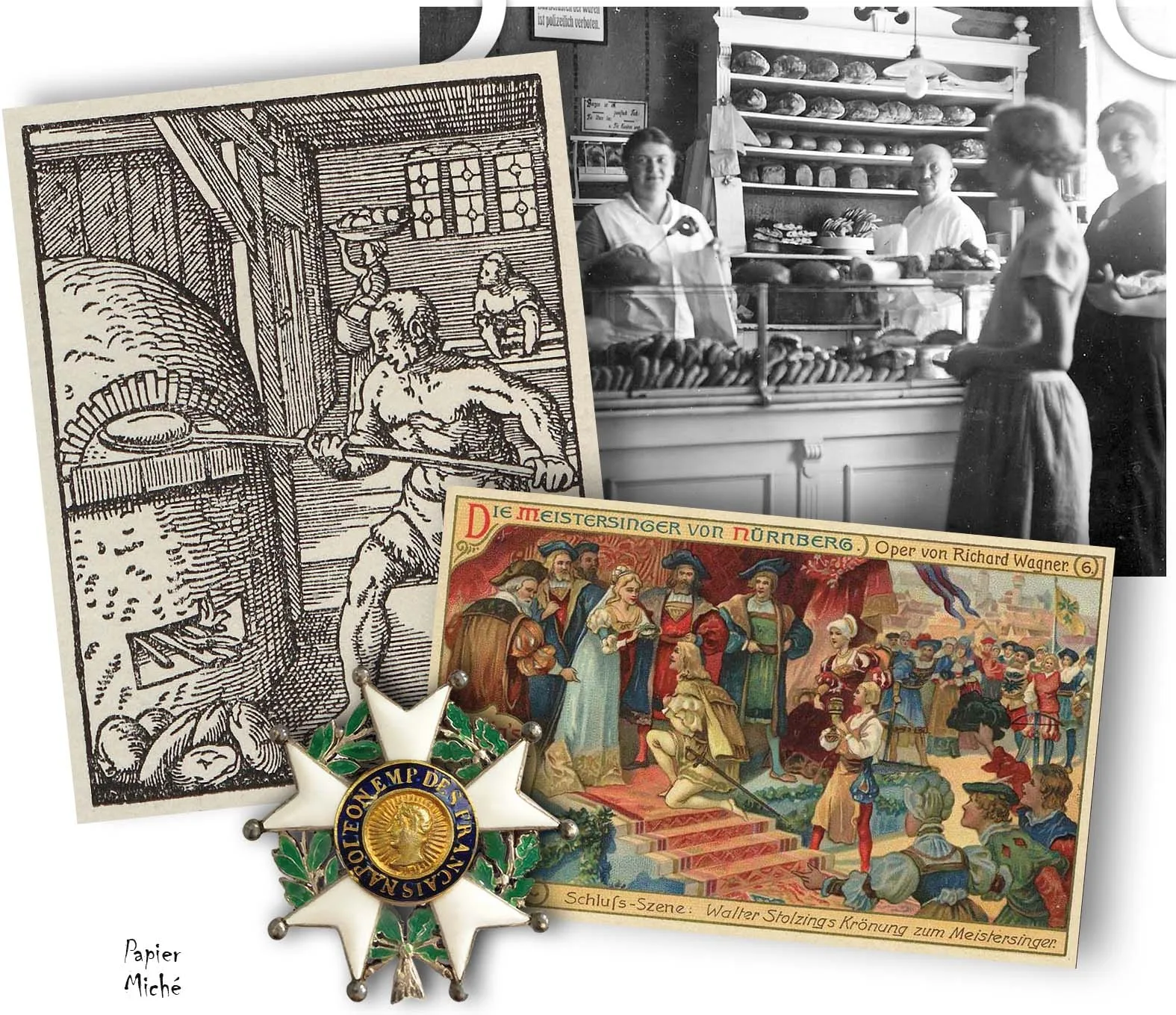
This was in the years before the First World War. Every morning fresh rolls were delivered to the house of Privy Councillor Varena (Hofrat Adolf Varena, 1842–1912), director of the Königsberg City Theatre, who lived in Central Tragheim (Mitteltragheim). One day the dignitary personally met the delivery boy from the bakery and asked him his name. “Richard Wagner!” came the answer. “Oh, that is a very famous name,” the privy councillor said in surprise. Puffing out his chest, the boy said: “I have been delivering rolls in this neighbourhood for a whole year and a half.” Then the councillor asked: “And do you know what your famous namesake says about the baker's trade?” The lad answered in the local dialect that he did not. Varena quoted the composer: “Hunger is a terrible suffering! If the baker stops baking our daily bread, the whole world will perish!“ The errand boy agreed, and the councillor went on: “Have you ever been to the City Theatre?” “Yes, on Christmas Eve we went to see ‘Hansel and Gretel’. The master said I should pay special attention to the witch's gingerbread house so that I could bake one just like it myself!“ “Quite right! Do you have free evenings on Sundays?” “Yes!” “Then go to the box office, give Frau Souchon my regards and ask for a free ticket. The theatre is now putting on Richard Wagner's ‘The Mastersingers of Nuremberg’ (Die Meistersinger von Nürnberg). Your namesake is a truly great man! Incidentally, his mother was the daughter of the baker Gottlieb Johann Pätz from Weißenfels on the Saale. Craft and art are closely intertwined!” The delighted baker's apprentice thanked the theatre director and witnessed the enormous success of “The Mastersingers of Nuremberg”*.
* * *
Königsberg baking had long traditions. In the Middle Ages the bakers presented the butchers with a gigantic Stritzel1 (Stritzel) at Epiphany. In 1583 the bakers gave the butchers as many as five huge Stritzels. To bake them, two large ovens were specially built “in the castle” (so the chronicle of the time claims!), each with openings in the middle so that the Stritzels could bake in both ovens at once. In 1601, on the Feast of the Epiphany, the bakers carried eight Stritzels through the town. The largest of them was 4 ¾ ells long! And six large round Kringel2 (Kringel). Gilded lions' heads, crowns, stars and the coats of arms of the baking dynasties, all made of gingerbread dough, were attached to the Stritzels. Then the bakers and butchers ate the pastries together at a feast in the Community Garden of the Altstadt. (In time the tradition gave rise to a separate local festival, Long Sausage Day, celebrated after Epiphany, in February. Editor's note.)
* * *
The East Prussian baker Rudolf Gennies (Rudolf Gennies) from Kunikehlen (Kunikehlen, a vanished settlement in today's Polessk District), as was customary in those days, set out to conquer the world after finishing his apprenticeship in Königsberg and, confident in his abilities, even dared to cross the ocean. He arrived in America just as the United States government was recruiting soldiers to defend against raids by rebellious Indians. Gennies volunteered without hesitation. His prudence and courage soon became evident to his commanders, and he quickly rose to the rank of major. After the final defeat of the continent's native inhabitants, Rudolf Gennies retired with the rank of colonel, receiving a corresponding severance payment. In 1897 Gennies returned to his homeland, East Prussia, to visit his elderly mother. As a curiosity he brought with him a gold nugget weighing no less than 5 kg, which he had once found.
* * *
The 1824 “Book of Historical and Literary Examples and Anecdotes” (Historisch-literarischen Anekdoten- und Exempelbuch) relates: When the French were retreating across the Berezina River in 1812, they were pursued by the Russians, with the Cossacks always out in front. A small group of them reached Kreuzburg (Kreuzburg, now the settlement of Slavskoye, Bagrationovsk District), not far from Königsberg, which the retreating French had left the evening before. One Cossack was riding past a bakery just as the baker was setting out fresh pastries, and the sight of the handsome brown rolls whetted the warrior's appetite. He grabbed as many as he could carry, giving the baker a five-franc coin, equivalent to one thaler and six groschen, and had already gone out of the door and was about to mount his horse when he heard someone calling him: “Cossack! Cossack!” It was the baker, running breathlessly towards him to hand over 20 groschen in change. The Cossack, who probably remembered that some of his compatriots often happened to “buy” without paying, was surprised by the baker's honesty. He made signs to the baker that he should keep the money in case one of his comrades failed to pay in future. But the baker would not agree; instead he pressed the money into the Cossack's hand and started to walk away. “Hey, wait!” the Cossack shouted after him. “Hold on a minute!” He reached into his trouser pocket, took out a captured French Cross of the Legion of Honour and gave it to the baker, saying: “You're a good fellow, you've earned a medal!”
* * *
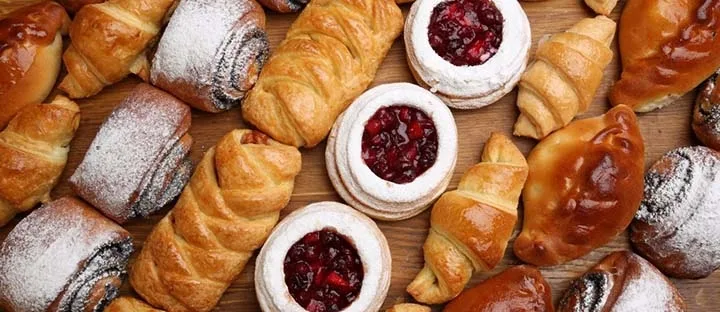
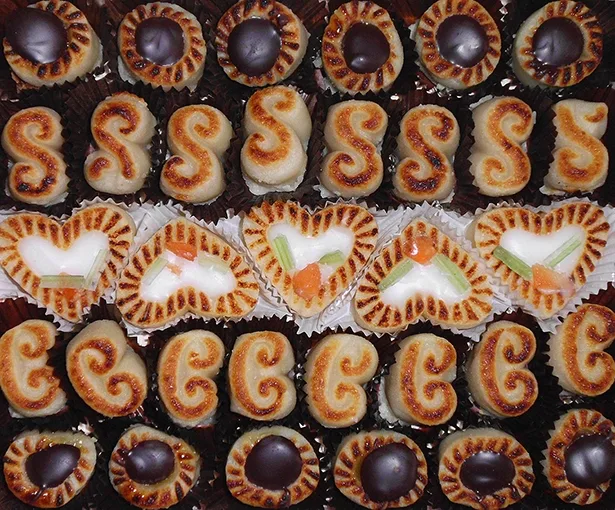
The Franzbrot (Franzbrot) rolls, pastry rolls of a characteristic shape, are believed to have appeared during the French occupation and were well known throughout East Prussia. Butter ones (Butterfranzbrot) were especially popular. And what a variety of baked goods we had: gingerbread and cinnamon rolls from Königsberg, Glumsfladen3 (Glumsfladen), Purzel4 (Purzel) and Raderkuchen5 (Raderkuchen), not to mention the Storchenkranz6 (Storchenkranz) and Mohnkuchen7 (Mohnkuchen) that appeared on the counters during the winter holidays. The Fastnacht carnival (the traditional folk festivities before Lent, the equivalent of the Russian Maslenitsa) was always celebrated on a Tuesday, but for us it was “Monday” (Mohntag, “poppy-seed day”. A pun: Tuesday in German is “Dienstag”, Monday is “Montag”. Editor's note). Streuselkuchen8 (Streuselkuchen) was as popular in East Prussia as in Silesia. And then there was the delicious bread made from local rye, which turned out especially well at Hoffmann's bakery, which bore the quality mark “Kalger Mühle” (Kalger Mühle). Some bakers also baked a bright, golden-yellow barley bread (Gerstenbrot), which was very popular with customers.
* * *
It was gratifying to see how the 75-year-old master baker Tobias from Königsberg, working in Travemünde without a bakery of his own, presented his products at the bakers' exhibition in Berlin in 1954, demonstrating rare skill. Unfortunately, a large part of Königsberg's baking community vanished together with the East Prussian capital, and those who remain have to earn their living without a business of their own.
_____________
* — Did the theatre director have a personal biographer who immortalised his employer's oral creative legacy, or is this an ingenious newspaper advertorial of the time, thanks to which another thousand people bought tickets for “The Mastersingers of Nuremberg”?
_____________
- Stritzel (Stritzel): traditionally baked for Long Sausage Day. In shape it resembled the Russian braided loaf (pletyonka). The bakers gave gigantic Stritzels to the butchers in return for sausages of similar size. Then both were eaten together and copiously washed down.
- Kringel (Kringel): a kind of ring-shaped, B-shaped pastry. In Russian, a krendel.
- Glumsfladen (Glumsfladen): a traditional East Prussian rectangular cake known for its unsweetened curd-cheese layer. “Glums” is the East Prussian word for curd cheese, and “Fladen” is a flat base of yeast dough.
- Purzel (Purzel): a traditional sweet pastry in East Prussia. These are deep-fried balls of yeast dough, often filled with jam or containing raisins. Like the “lucky” dumpling in Russia, mustard or a coin was put into one Purzel out of roughly two dozen.
- Raderkuchen (Raderkuchen, also known as faworki or khrusty): a traditional, very thin fried pastry made mainly for the winter holidays. Shortcrust dough was cut into diamonds, slit in the middle, twisted and deep-fried, then dusted with icing sugar. The Russian equivalent is khvorost.
- Storchenkranz (Storchenkranz), where “Storchen” means “stork's” and “Kranz” means “wreath”. Together, “stork's wreath”. A local East Prussian name for a ring-shaped pastry more often found in German tradition as Brötchenkranz (Brötchenkranz, a wreath of rolls). In Russian tradition it is called “Romashka” (“Camomile”).
- Mohnkuchen (Mohnkuchen): poppy-seed cake. In the form of a roll it is well known in Russian cooking as the poppy-seed roll. But it could also be baked on a flat base (see above) with a crumb topping (see below).
- Streuselkuchen (Streuselkuchen): a classic yeast cake distinguished by a particularly thick topping of flour, sugar and butter (margarine), the “Streusel”. It is considered a traditional bake, often served with coffee. In Russian tradition it is called crumb cake or crumble cake.
Translated from Russian with the help of AI (Claude, Anthropic), October 2026.