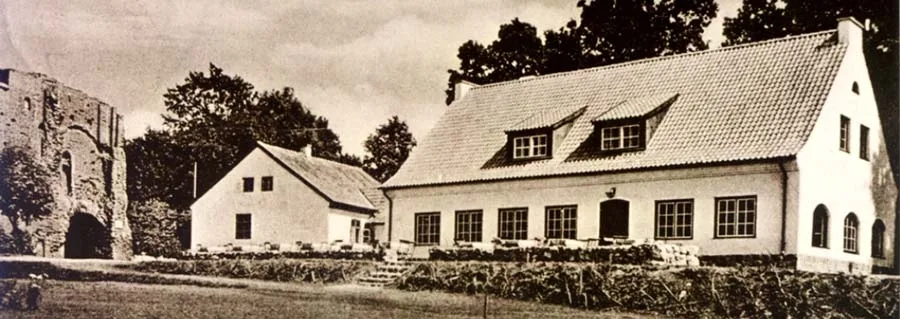
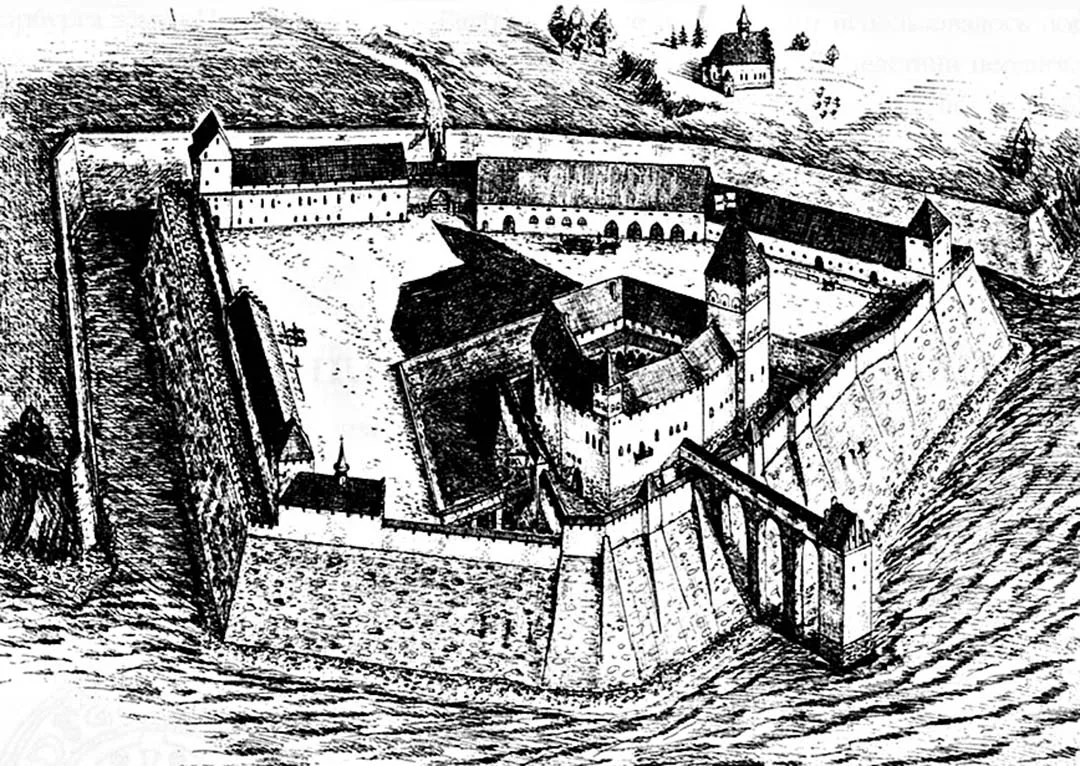
The Prussians had no serious means of waging war at sea, so even the rather modest Teutonic fleet was master of the situation here. On the landward side the site was protected by a marsh, crossed by a single road laid on a corduroy causeway. There was no stream near the castle on which a mill could be built, and a mill was an indispensable feature of every Teutonic fortification. The Order found a way out by building a fortified mill with a small garrison a few kilometres from Balga.
In 1242, three years after the capture of Honeda, a Prussian uprising broke out. The Order's position was made worse when the Pomeranian (that is, essentially Polish) Duke Swantopolk joined the rebels.
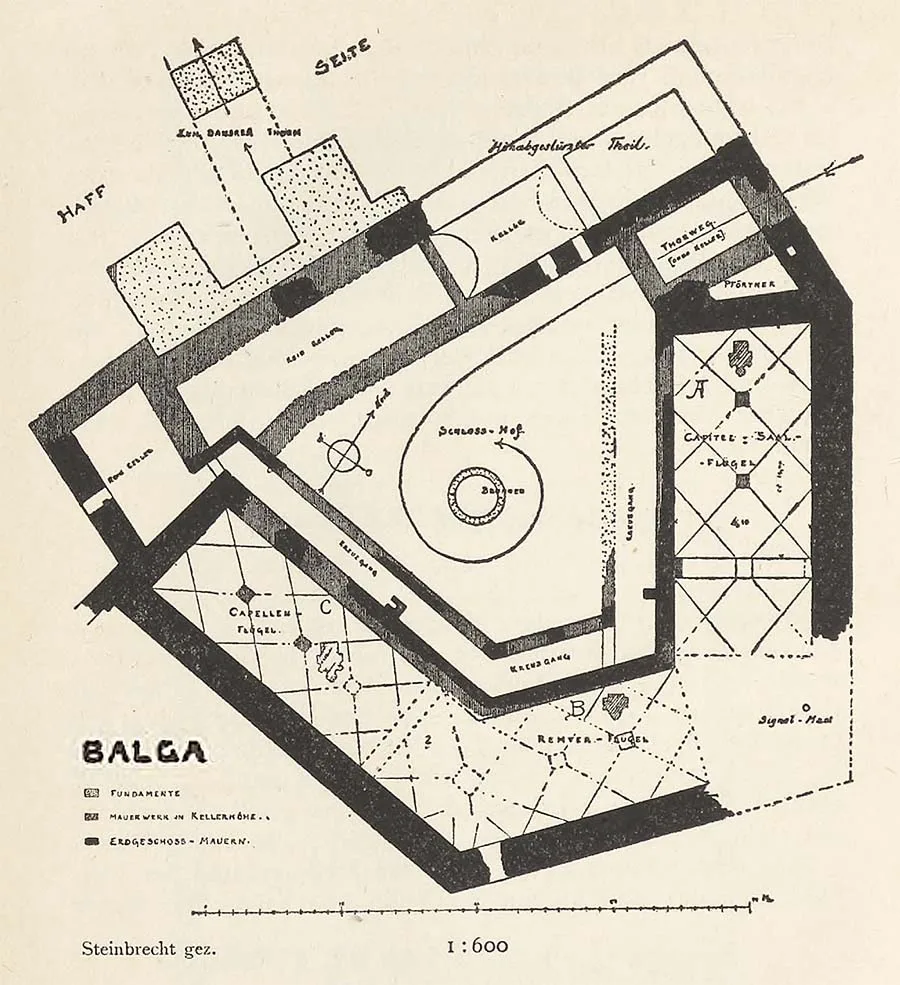
In the northern part of the territory conquered by the Order, the rebels took every castle and temporary fortification. Only Balga and Elbing still held out against the Prussians.
To blockade Balga, the Prussians built two temporary strongholds, Partegal and Scrandin. The Teutonic Knights responded in kind, using the former Prussian stronghold of Schneckenberg as an advanced outpost. In effect, the battle for Natangia was fought here at Balga. At first fortune favoured the Prussians: they managed to take the Schneckenberg stronghold and the fortified mill, and their garrisons were wiped out. In response, reinforcements reached the crusaders across the lagoon in the form of a contingent led by Duke Otto von Braunschweig. The knights then made use of Pomande, a Prussian who had gone over to their side, and lured the Prussian army into a trap where, according to the chronicler Peter of Dusburg, they destroyed it in battle. Both Prussian strongholds were burned and razed.
In 1246 the Order's forces devastated the Pomeranian lands; Swantopolk was forced to admit defeat and, by 1248, to leave his alliance with the Prussians. Left without an ally, the Prussians faced the Order's troops as they advanced from Balga deep into Natangia. The first attempt at invasion, however, ended in defeat: the Order's army was ambushed and annihilated. But the campaigns that followed compelled the Prussians to conclude the Treaty of Christburg in 1249 on the Order's terms.
During the truce Balga was rebuilt: the moats were deepened and a gate with a drawbridge was constructed. In 1250 the stronghold became the seat of a Komtur. Brother Meingot of the Order was chosen as the first Komtur of Balga (1250–51). In 1254 Balga served as the base for the famous campaign of King Ottokar II of Bohemia against the Prussians, which resulted in the conquest of Sambia and the founding of Königsberg.
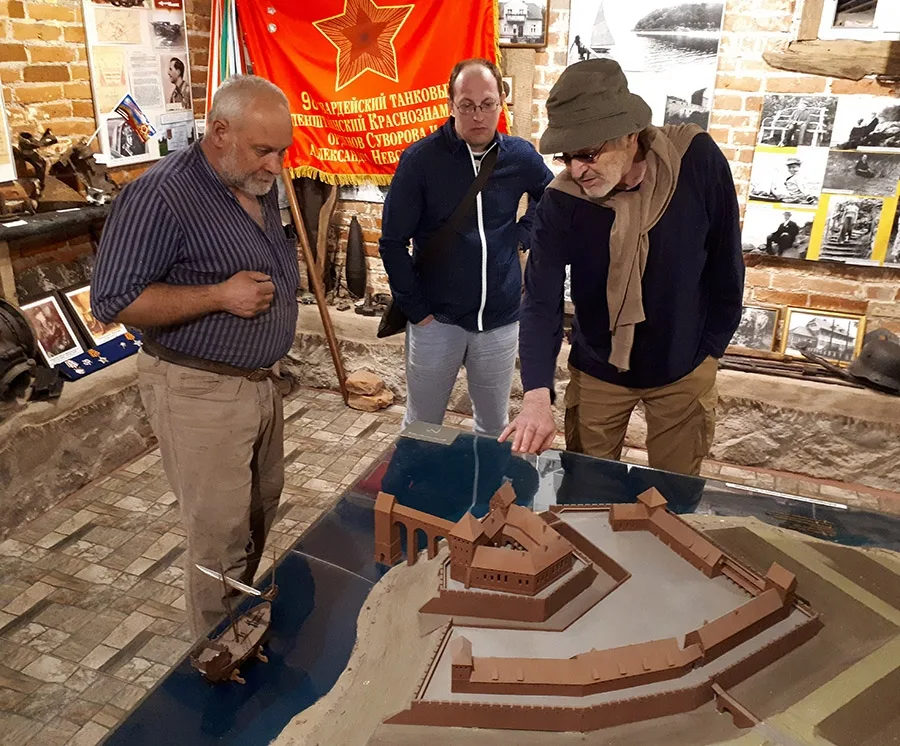 Researchers of the Teutonic Order Anatoly Bakhtin (far right) and Dmitry Veber (centre) with Dmitry Shilov, director of the Mamonovo Town Museum, in the museum's hall devoted to Balga.
A new Prussian uprising, the most powerful of all, broke out in 1260. Once again the Order's castles in Sambia and Natangia fell one after another; this time it was Königsberg and Balga that held out. Both castles withstood the siege, and after it was lifted by relief forces arriving from the German principalities and the uprising itself was crushed, the rebuilding of Balga Castle in stone began, a project largely completed by 1290.
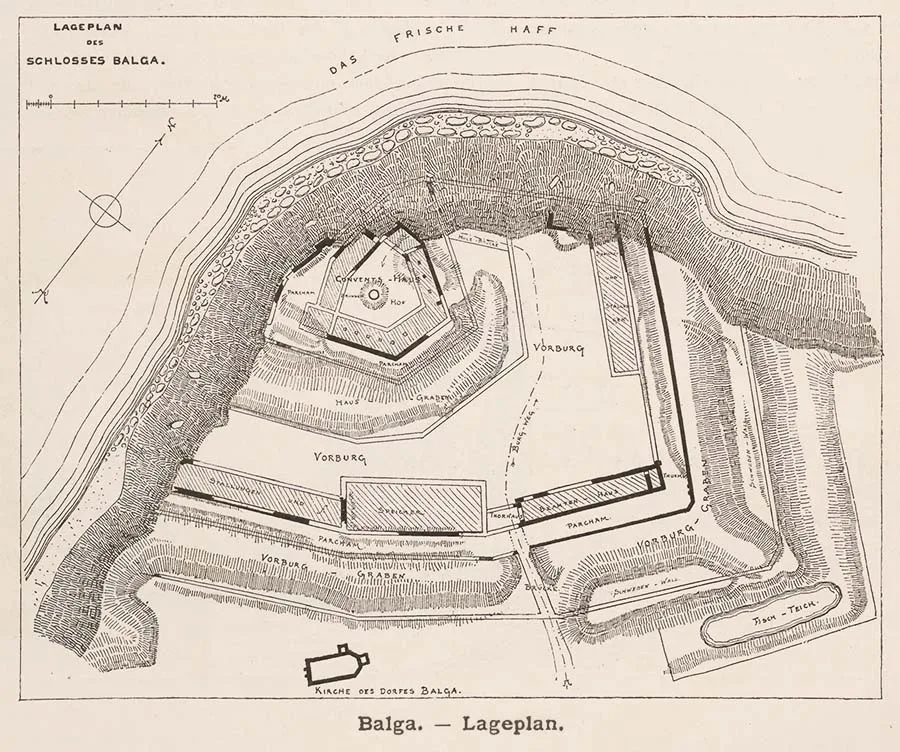
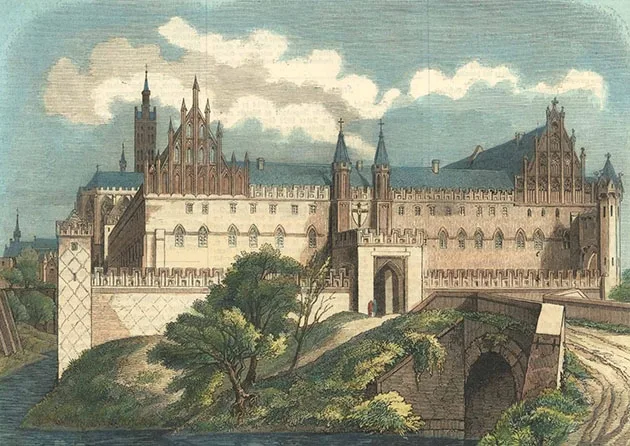
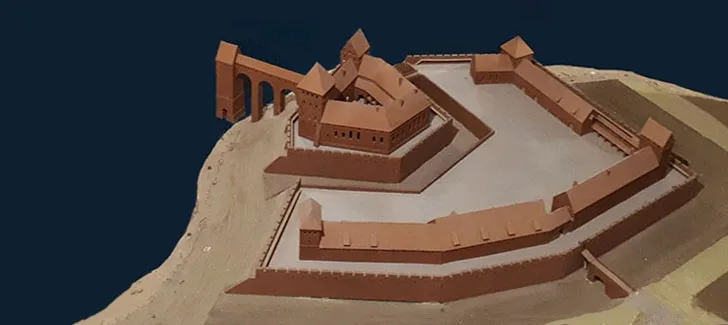
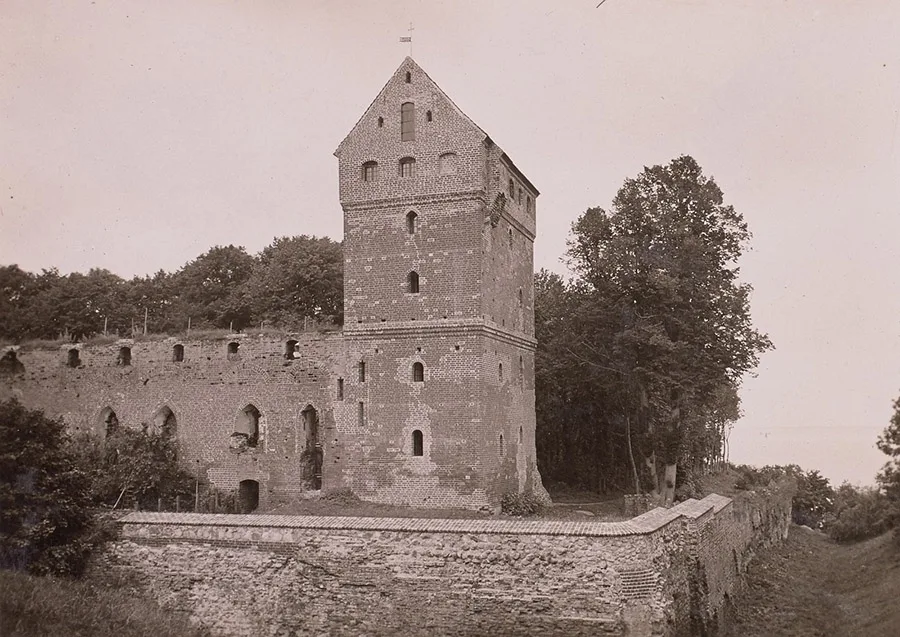
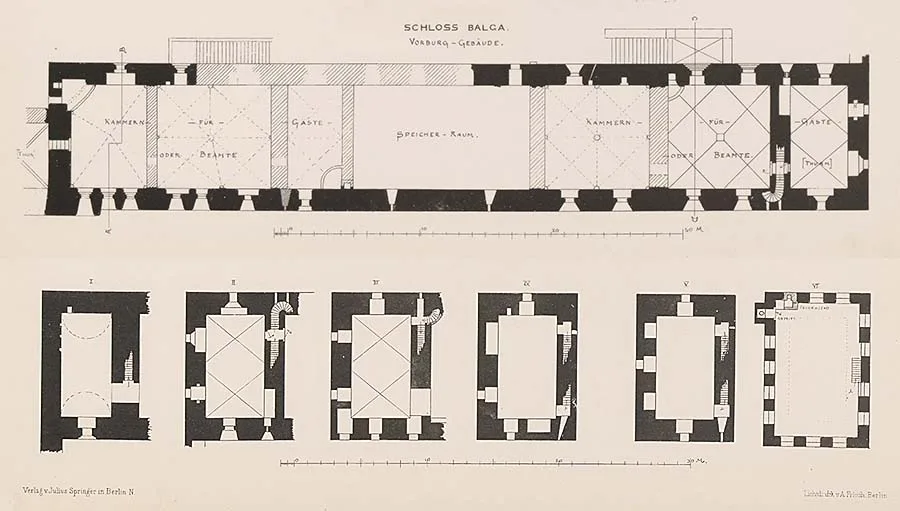
The castle became one of the Order's most important buildings. The ruins visible today are only a small fragment of the Vorburg (outer bailey). In reality the castle occupied the entire plateau and consisted of the Vorburg and the main castle proper, separated from it by inner walls and moats, the remains of which can still be seen. The main castle building was pentagonal or hexagonal and comprised three wings with vaulted cellars and two or three storeys above them. It housed the chapter hall, the refectory, the castle chapel and living quarters. The whole structure was crowned by a defensive gallery at the level of the third storey. The main tower stood at the south-west corner.
The Vorburg housed the Firmarie for old and sick brethren of the Order, a hospital, defensive and signal towers, service buildings, storehouses, guest quarters, a smithy, stables, a cattle shed and more.
Although the Order's military interests shifted north-east of Balga, towards the Lithuanian border, the castle continued to play an important role in the Order's state. The office of Komtur of Balga was considered an honourable one and promised further advancement in the Order's hierarchy. Suffice it to say that such Grand Masters of the Order as Dietrich von Altenburg, Heinrich V Reuss von Plauen, Winrich von Kniprode and Ulrich von Jungingen had all served as Komturs of Balga.
During the Great War (1409–1411), after the Order's crushing defeat by the Polish-Lithuanian army at Grunwald, the Komtur of Balga, Friedrich von Zollern, refused to surrender the castle to the enemy army that had arrived beneath its walls. The strength of the castle and the determination of its garrison forced the Poles to abandon the idea of a siege. Later on, the very fact that the Order had retained such important strongholds as Balga, Königsberg and Marienburg had a highly favourable effect on the final text of the First Peace of Thorn.
During the Thirteen Years' War (1454–1466), Balga was attacked several times by supporters of the Prussian Confederation of towns. In July 1457 the castle was stormed by troops from Danzig and Elbing. Later Balga was besieged by mercenaries from Bohemia. The last and most powerful assault came in 1466, when a combined force of burghers from Thorn, Marienburg, Danzig and Elbing tried to take the castle. Once again the castle did not fall, although its garrison suffered heavy losses and the entire surrounding area was laid waste.
After the Thirteen Years' War the Komturei of Balga went into decline. This was due both to the devastation suffered during the fighting and, more generally, to the castle's rather unfortunate location by shallow waters and with no river nearby. The Komturei was first downgraded to a Vogtei, and later a castle Komturei was established, that is, the castle itself without any subordinate territories, which was more of an honorary status. Balga steadily lost its military and administrative importance. The settlement by the castle remained a village and never grew into a town, as happened near other castles.
Balga Castle demonstrated its military might for the last time in 1520, during the Riders' War. By then its walls had already been banked with earth to protect them from siege artillery.
In 1525, on the orders of Duke Albrecht, the last Komtur of Balga, Hans von der Gablenz, handed the castle over to the administration of the duke's ally, the first Protestant bishop, Georg von Polentz. It was a kind of reward from the duke for his support in his undertakings. The castle's rooms housed the administrative bodies governing the surrounding district (the Amt), including the police and the court. Yet if military upheavals had kept the castle alive, the period of peace finished it off. For the far from wealthy Duchy of Prussia, maintaining a huge building that no longer had any military significance was too costly. Without repairs or upkeep, the castle continued to crumble. In 1584 the Dansker and the walls of several buildings collapsed.
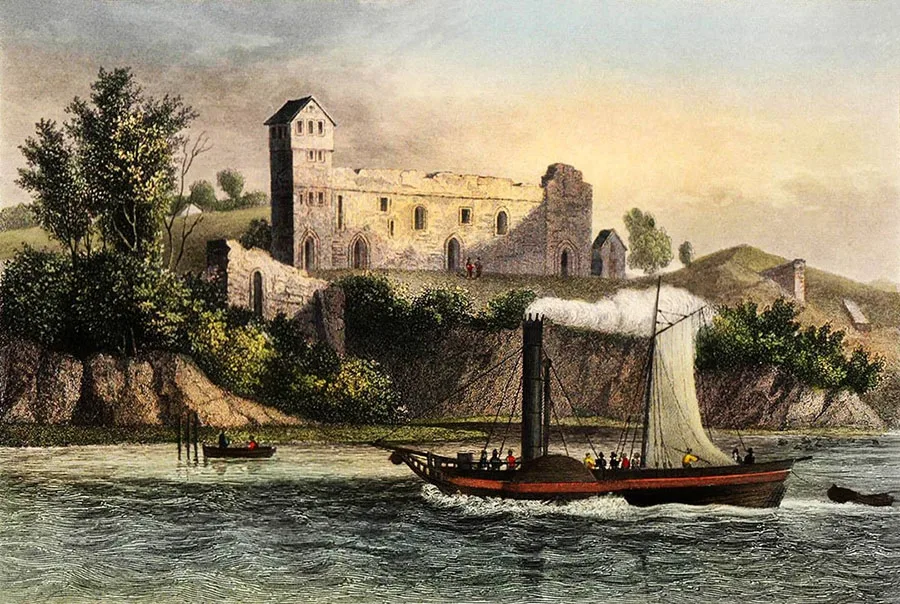
From the end of the 17th century the castle was systematically dismantled for building material, and in 1701 King Frederick I signed its final sentence: the castle buildings were to be pulled down and the rubble used to reinforce the banks of moats and canals in the surrounding area.
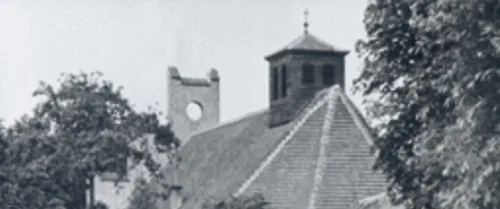
By 1790 every building had been demolished except for a single structure of the outer bailey, which was used for farming purposes and as a navigational landmark.
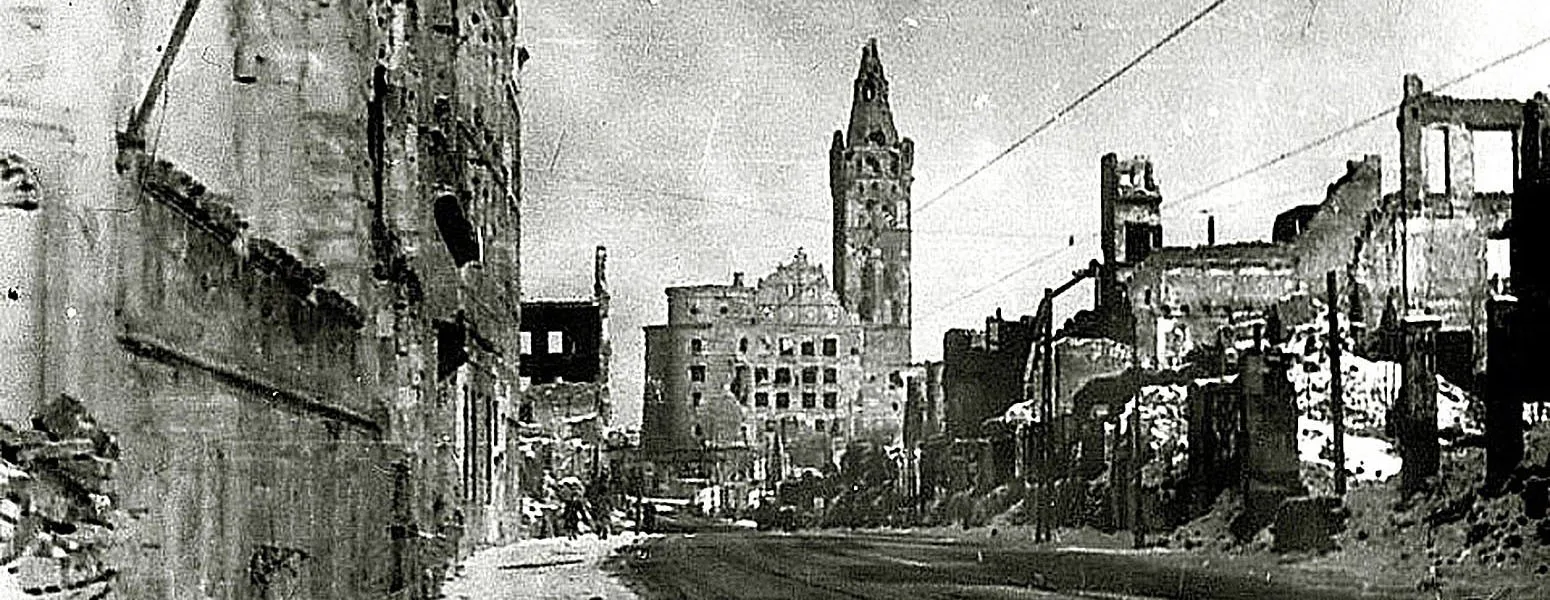
In the end, it too would have been torn down, but by the first quarter of the 19th century Europeans had begun to realise that, besides material, artistic and religious values, there are also historical ones. Only from this period onwards did the deliberate preservation of old buildings begin, and Balga was among the beneficiaries. In 1834, with the help of the well-known Prussian politician Rudolf von Auerswald, then Landrat of the Heiligenbeil district, the remains of the castle were placed under state protection and were later studied and restored. The castle and its surroundings became a destination for historical tourism and remained so until the outbreak of the Second World War. During the East Prussian Offensive, the castle ruins found themselves at the epicentre of the fighting to destroy the German forces pinned against the lagoon, and they suffered fatal damage from artillery fire.
After the war, the peninsula on which Balga stood became popular with tourists, and the ruins of the outer bailey were used as a practice wall by rock climbers. People also searched the area around the castle for hidden cultural treasures, including the Amber Room, but found only large quantities of ammunition and rusty weapons from the recent war. Later, the castle ruins were granted the status of a cultural heritage site, but in practice they remained unguarded and continued to deteriorate.
In 2021 the castle was leased by the autonomous non-profit organisation "Fortification Heritage of the Kaliningrad Region". Since 2022 the site has been under guard, the grounds are being tidied up, and work has begun to conserve the outer bailey and what remains of the church. The leaseholders plan to build a safe path down to the lagoon and open Balga to visitors. The Mamonovo City Museum has a hall devoted to Balga Castle, where, among other things, a model of the castle is on display.
Illustrations: Bildarchiv Ostpreußen, bildarchiv-ostpreussen.de, Mikhail Ogorodnikov (2021)
Emil Johannes Guttzeit's article "Balga" in Russian: LINK (PDF)
Translated from Russian with the help of AI (Claude, Anthropic), October 2026.