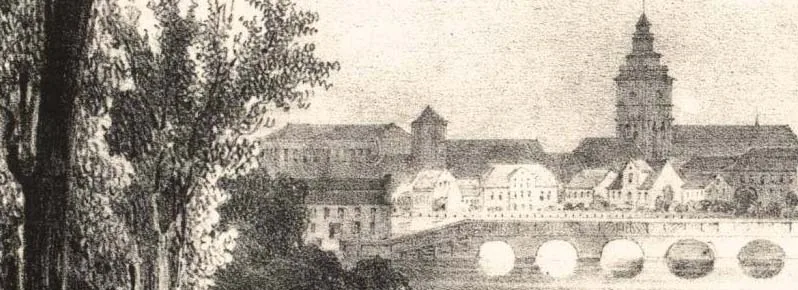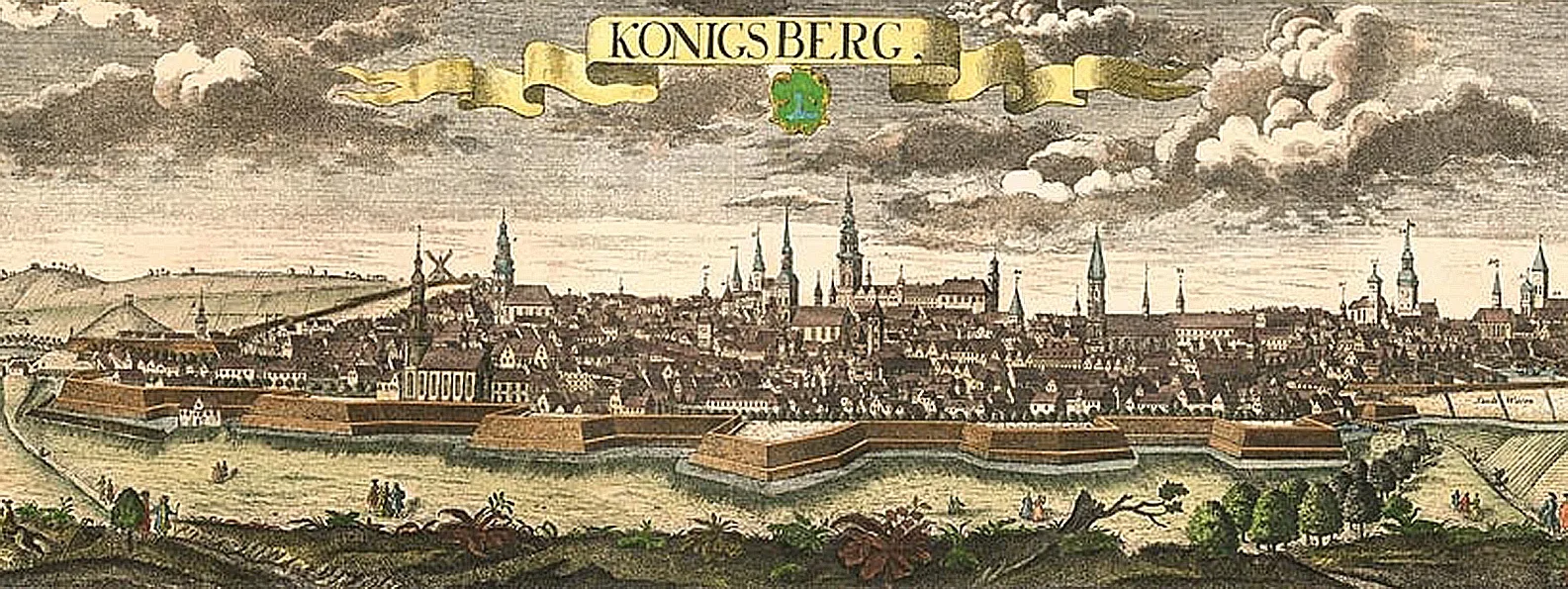
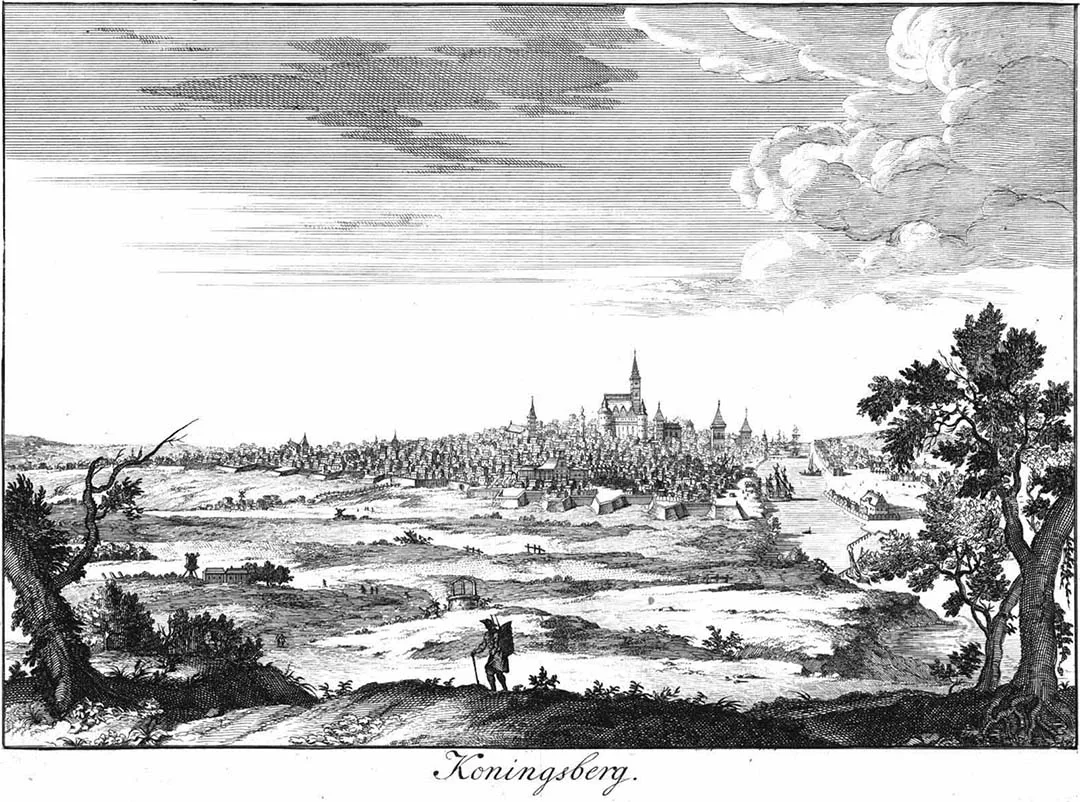
LEGENDS OF PRUSSIA in the blog of Tatyana Kolivay.
A fortress wall around a city certainly affects its general mood. Danzig [Gdańsk], for example, is unquestionably a fortress of the first rank, and once there we immediately feel that we have entered a stone jungle. The contrast between Danzig and its surroundings is very great.
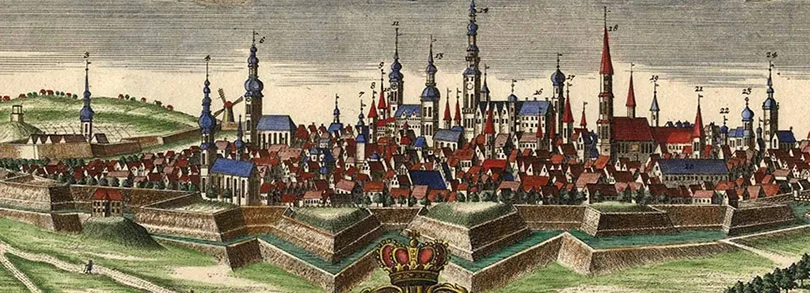
Königsberg is a city that takes up much more space than one would expect from the number of its inhabitants. It merges quite naturally with the surrounding countryside. True, a defensive rampart has been built around the city, but it is rather simple, without moats or bastions, and seems to have been built not so much for defence as for the pleasure of the Königsbergers who stroll along it.
From the Holländerbaum Gate to the Litauer Baum the rampart is planted with trees; in some stretches there is also low shrubbery, and benches have been put up for resting.
From here there are beautiful views of the city and its surroundings, of churchyards like gardens, buried in lush greenery, and of the mirror-like surface of the delightful Upper Pond. The stretch near the observatory is especially beautiful. Also very picturesque is the view of the Jewish cemetery and of the Old Rossgarten Church, standing among the fields in the green of its trees, and finally of the old customs barrier of the Litauer Baum, looking up the Pregel towards Arnau beyond the city limits.
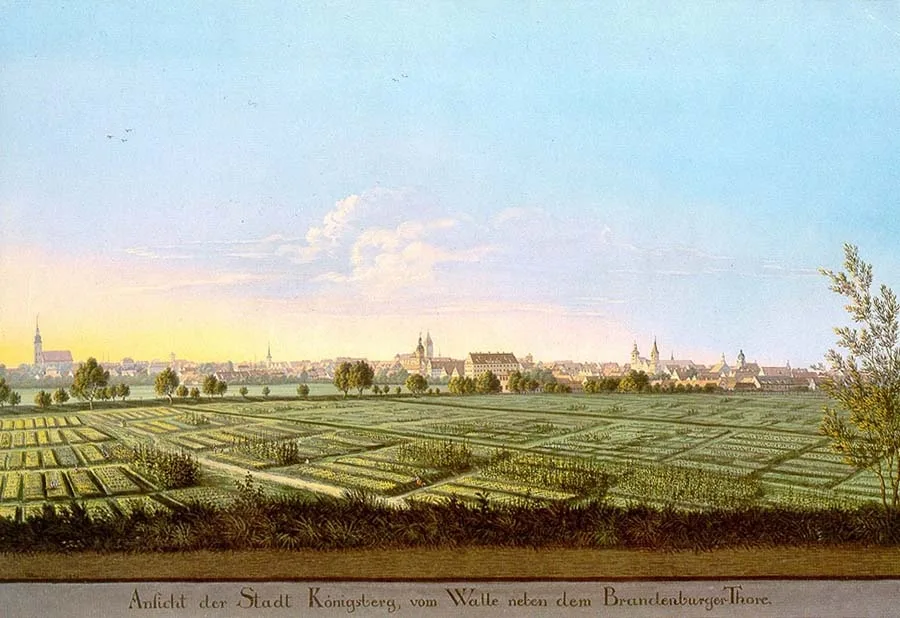
In spring the view of the green meadows on the far side of the Pregel near Jerusalem is magnificent.
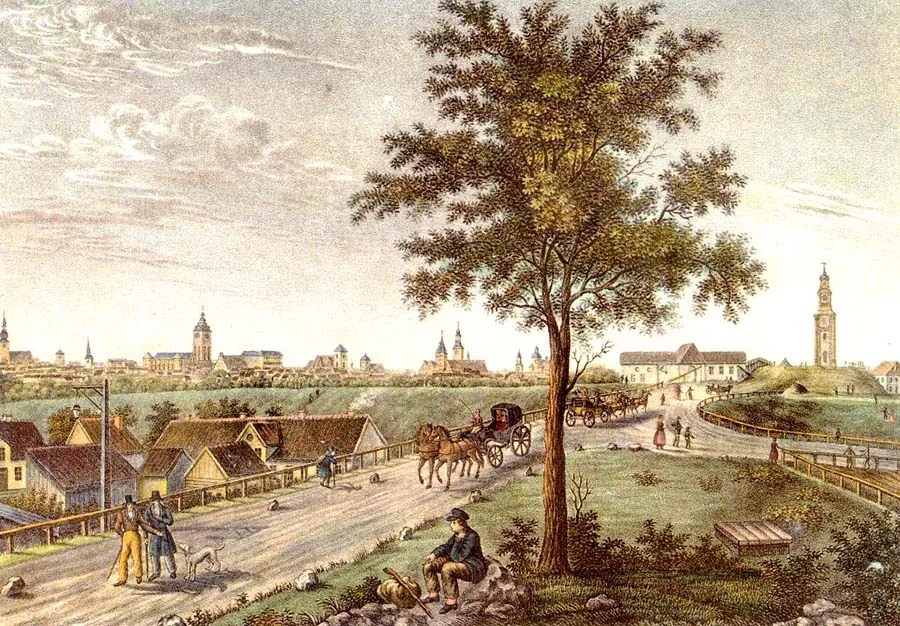 Views of the surroundings of Königsberg at the time Karl Rosenkranz was writing his "Sketches".
We owe thanks to the people who look after the rampart, especially the members of the Kessel embellishment commission. Remember the waste ground by the Holländerbaum barrier, behind the granary, where there is no boundary at all between town and suburb, because the rampart breaks off earlier, next to the observatory.
How neglected this place once was! And how gracefully the ornamental garden now smiles at us, with its flower beds, little trees and gravelled paths! From here to the Steindamm Gate it is mostly ordinary townspeople who walk. The cemetery next to the observatory attracts many, from the understandable need to visit the graves of their loved ones.
From the Rossgarten Gate to the King's Gate the promenade is filled with merchants, scholars, officials and officers taking exercise for their health.
Many of these gentlemen bring their wives along and are conscientious to the point of fanaticism, walking here regularly even in winter, when the snow lies a foot deep.
From the King's Gate to the Litauer Baum one meets only ordinary townspeople, soldiers, journeymen, beggars, old maids who live by selling embroidery and knitting, and day labourers who from the city wall can keep an eye on the plot of land they have rented and planted with potatoes.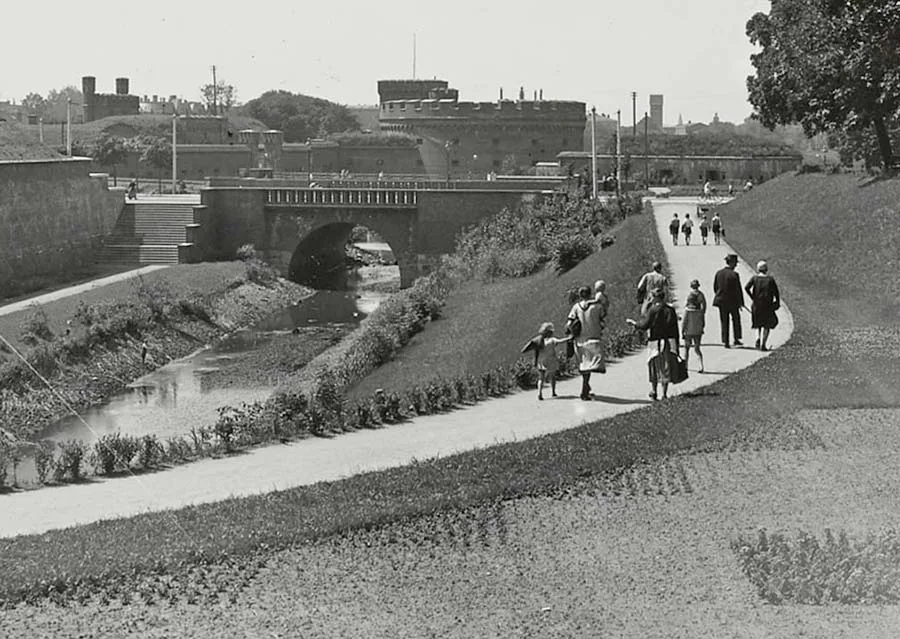
A permanent ornament of the city rampart is the excise officers.
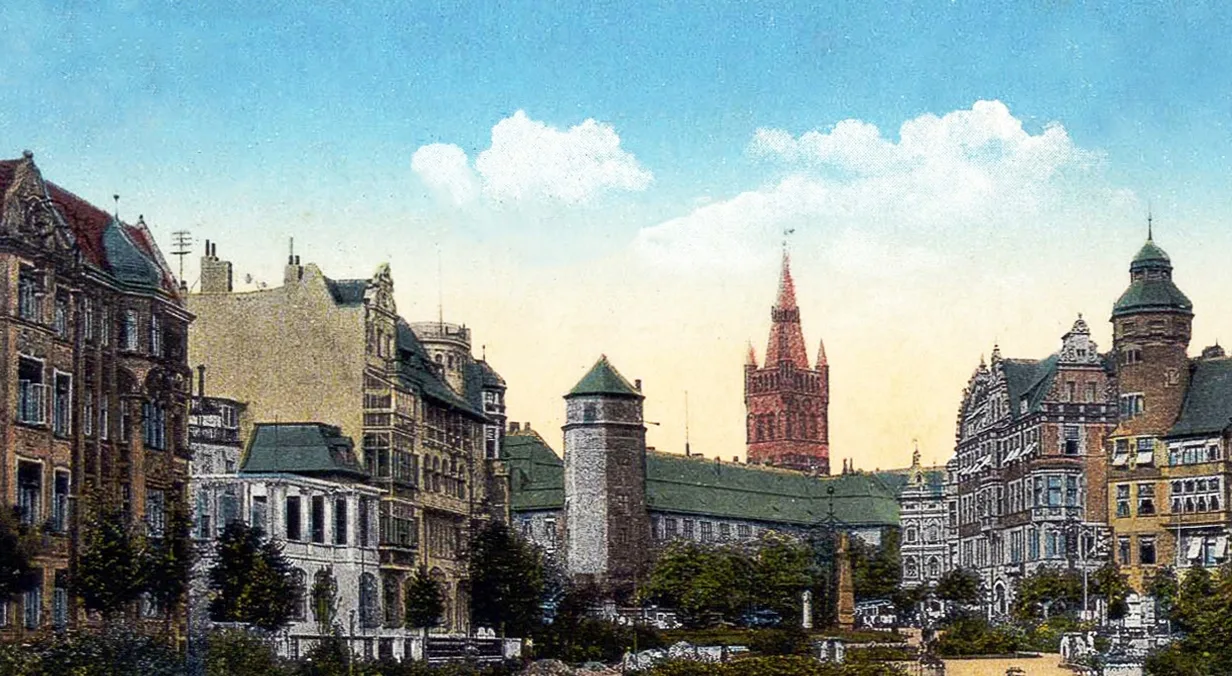
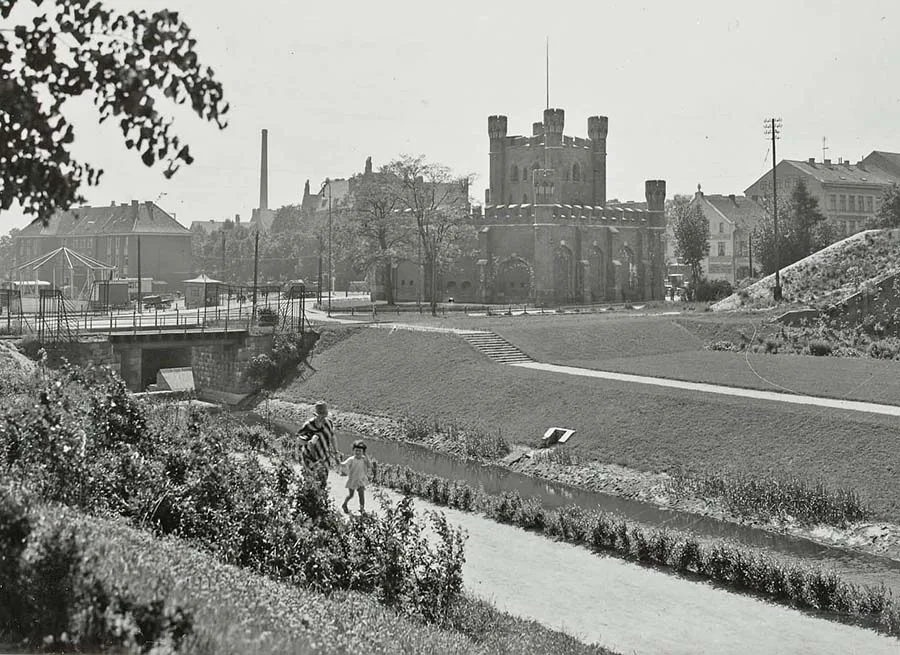 At the beginning of the 20th century the "Schneider Belt" recreation area was created on the ramparts of Königsberg.
In green greatcoats with blue collars, and for most of the year in overcoats, they patrol back and forth along the sections entrusted to them. At set hours they are relieved. Their gaze is sharp and restless. Suspicion is these gentlemen's duty. They often bore their eyes even into a harmless stroller if he has somehow caught their attention.
Indeed, one should not be surprised if the officers of the excise show suspicion even in the most trivial matters, for they have to spend long hours in complete inactivity with all their senses on the alert. They track down embezzlers and swindlers.
Be that as it may, these officials must console themselves with the thought that by their very presence here they justify their trade, for swindlers do not dare to appear on the city rampart, knowing full well that not only excise men but also sentries are there.
Still, cunning here in Königsberg is just as inventive as anywhere in Paris. On the city rampart of Königsberg the system of so-called feint breakthroughs is particularly well developed.
Down there, in the bushes, a man sits all evening with a sack lying beside him. It grows darker and darker. Now is the time for the town watchmen on guard to redouble their vigilance and be on the alert. After a while the man lying in wait is joined by a comrade, and the two of them drag the sack up onto the city rampart. The watchmen give them time to climb up and then rush at the two accomplices, wanting to catch them red-handed. The culprits drop the sack and vanish like the wind down the inner side of the embankment. At the same moment a big mongrel leaps out of the sack and starts tearing at the watchmen's ankles. And while they fend off with the empty sack the dog, crazed from sitting so long in the stuffy, cramped sack, elsewhere, at a spot left unguarded, a sizeable herd of cattle is smuggled into the town without paying any customs duty at all.
Whole families live on the flour carried into the town in false humps by sham hunchbacks, or by sham pregnant women in their last month.
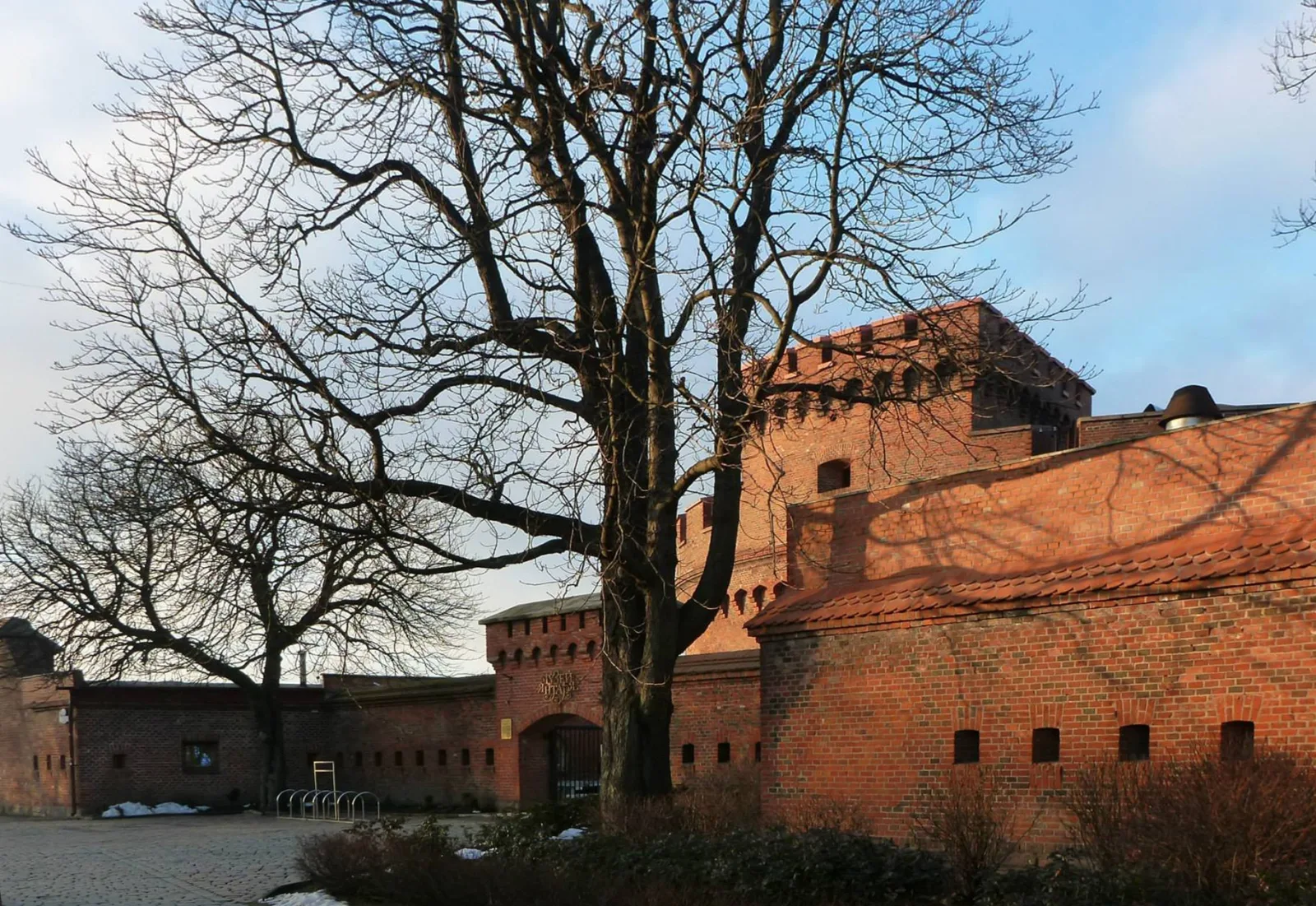
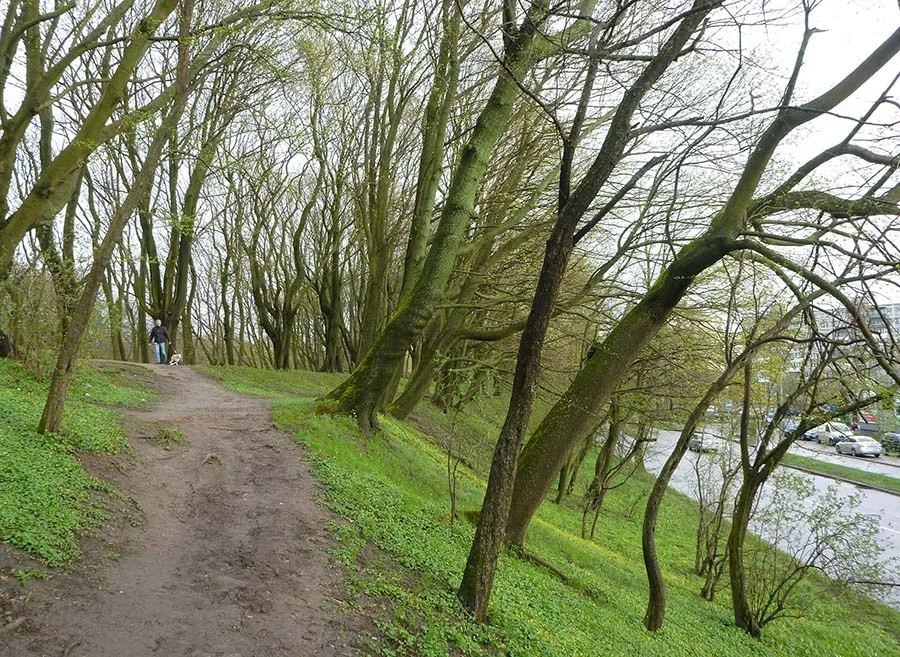
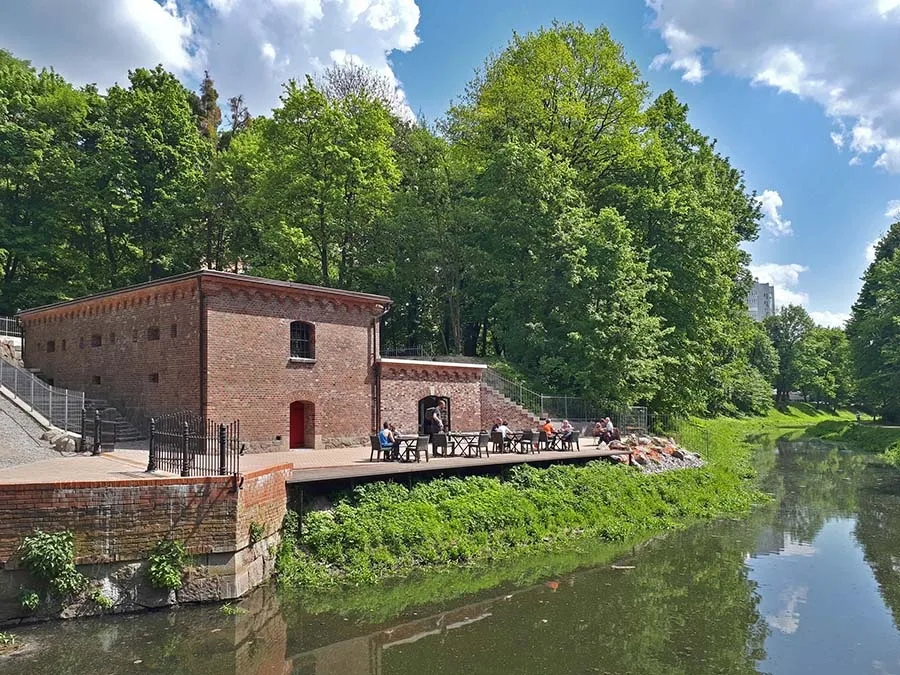 In 2023 the "Blockhaus" museum of Königsberg tableware was opened on the bank of the moat that runs along the rampart.
If, instead of tramping the city rampart all day long, the officials went out into the fields and to the mills, they would get to know the faces of their regular customers well enough — but then, perhaps, they would feel too much pity for these poor ragamuffins, and that would make it hard for them to do their duty.
As for the common people, the city rampart offers them the alluring temptation of slipping unnoticed across a mere twenty paces so as not to pay a second time for a few pounds of flour that have already been paid for once.
Leaving aside this quiet customs war, in which, incidentally, some good scuffles do occur, I may add that in some places on our city rampart there live very pretty lizards, which crawl out of their holes on warm rainy days; that in spring the rag-pickers like to dry their rags in the sun, hanging them on the inner side of the horseshoe-shaped bends of the rampart; and that a little later women can be seen in the surrounding fields gathering medicinal herbs and sorrel.
Heinrich Heine could, of course, have sung of such a contrast in his verse better than I: on the one hand, the grey figures of the rag-women tirelessly sorting through rags just as grey, and on the other, tender green fields stretching into the distance, with the little figures of the herb-women scattered over them, untiringly gathering this year's green harvest for the town's pharmacies and kitchens.
LEGENDS OF PRUSSIA in the blog of Tatyana Kolivay.
Translated from Russian with the help of AI (Claude, Anthropic), October 2026.