LEGENDS OF PRUSSIA on the blog of Tatyana Kolivay.
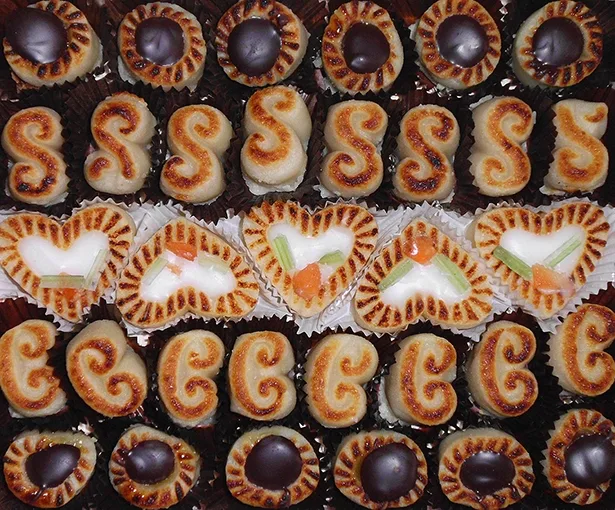
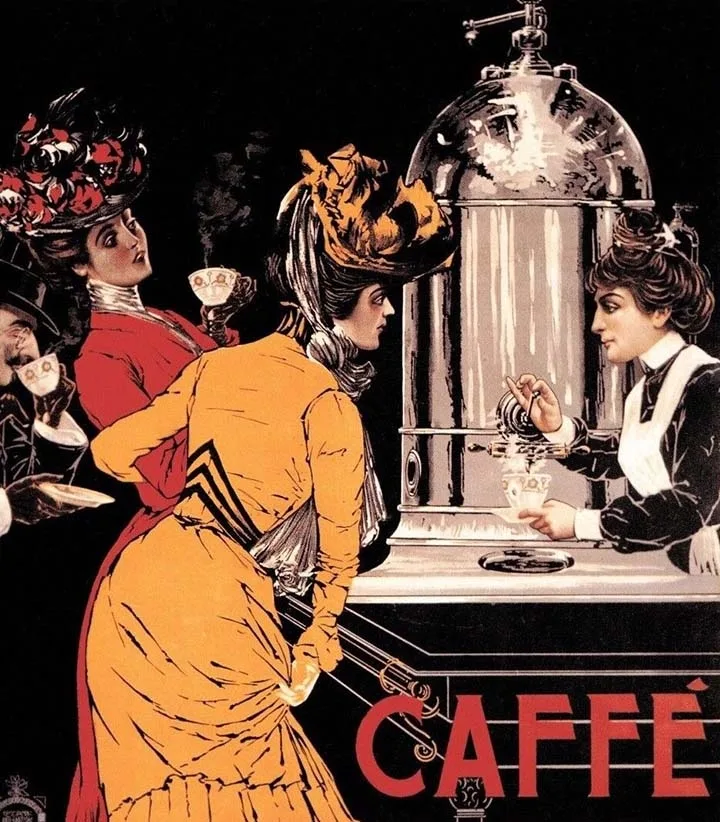
Somehow, when we think of Königsberg at Christmas, we can still smell that aroma: that wonderful, sweet, spicy aroma that drifted in invisible clouds out of the opening doors of the confectioneries into the cold winter air. The dominant note, of course, was the scent of marzipan, almonds and rose water, but there were other smells too: warm chocolate, honey, vanilla, lemon zest, cloves, cardamom, nutmeg, as tempting as sin. But is it a sin, when you are young, to treat yourself wholeheartedly to sweets? After all, which of us thought about calories as we stood in front of the cake display, agonisingly trying to decide what to choose. A “love bone”1, perhaps, or a “Princess” pastry, or a slice of “Napoleon” after all? The latter was of considerable size and stood out against the miniature shapes of typical East Prussian pastries. And so it was in every confectionery, bakery and almost every home kitchen of old Königsberg, that mecca of the baker's art.

Tell me, hand on heart, who in East Prussia does not love to “schmengern”, to indulge in sweets?
Our land has been known since ancient times as a land of honey, where sweet mead was brewed almost everywhere, and Bärenfang (Bärenfang) remains our national drink to this day. Not for nothing did the famous professor Rheticus, a pupil of the great Copernicus, picture ancient Prussia as a land flowing with milk and honey, whose bee colonies in vast dense forests had been created by Apollo himself.
A reliable source on this “sweet chapter” in the history of our land and its capital was found in Switzerland and prepared for publication by the Königsberger Rainer Lissem, who left us his treatise “Confectioneries, Cafés and Coffee Houses in Königsberg”, and we will gladly turn to it now, since this subject will help us take our minds off sad thoughts.
It was not easy for the Swiss confectioners to start their businesses when, 200 years ago, they came to the Pregel to dazzle the people of Königsberg with their sweet art. But they improved confectionery production here so successfully that as early as the beginning of the 19th century the local cafés came to be rated on a par with the most popular ones in Berlin, if not higher.

The Swiss came to East Prussia from the canton of Graubünden, mostly from the Engadine2, and some from the neighbouring region of Bergell (Bregaglia)3.
As early as 1796, Florian Janatsch, who then called himself Janatzki, was the first native of Graubünden to open a café, on Junkerstraße, next to the castle.
In 1809 the Pomatti brothers from Castasegna4 acquired the Feige confectionery, famous for its marzipan and its Luise cake, in the old post office building in the castle courtyard and became court confectioners, making marzipan a very popular delicacy, as it already was in the time of Duke Albrecht, at whose wedding in 1526 it was served as the “healing bread of Saint Mark”. The Pomatti brothers founded the first “marzipan factory” in Königsberg. Its recipes were passed down through Pomatti's successors, the confectioners Sterkau and Petschlies, to Herr Ewald Liedtke, who took over the management of this historic confectionery on Kaiser-Wilhelm-Platz. His wife Hildegard, the daughter of Otto Petschlies, was the first woman confectioner in Königsberg.
In 1812 the Zappa family from Zernez5 came to Königsberg and founded a confectionery factory on the Rossgarten Market, then on Castle Square and finally on French Street. The name is still famous among old Königsbergers. French Street is known for its exquisite sweets because here, at No. 7, stood Siegel's confectionery, “the actual centre of all confectioneries in Königsberg”, as the philosopher Karl Rosenkranz noted in his “Königsberg Sketches” in 1842. He describes it as a coffee house where people discussed everything under the sun and argued about politics, but in the end agreed: “It is for us what ‘Stehely’ is for Berlin.” In the middle of the 19th century the Café “Stehely” was regarded as the centre of Berlin's political life. Siegel's confectionery was probably the same for the people of Königsberg; it was often frequented by liberal professors from the Albertina as well as by radically minded members of parliament.
The Siegel family came from Silvaplana6; they were succeeded by another native of the Engadine, Caspar Sebastiani from Flan7. Stefan Plouda also came from the same parts, and in 1887 he took over the management of the “Kallmann” confectionery and marzipan factory on Kneiphof Long Street. Many stockbrokers liked to go “to Plouda's”. His name became a byword for Königsberg's café and confectionery culture. So did “Schwermer”, founded in 1896, and “Gehlhaar” on Kantstraße, in 1912. They still exist today and send genuine Königsberg marzipan all over the world!

Why did Königsberg confectioners of Swiss origin hold a monopoly on marzipan making? There is a story behind it, and it goes back to the 15th century.
At that time many bakers from Graubünden emigrated to northern Italy, especially to the Republic of Venice, which had concluded an alliance with this Swiss canton. During the Crusades the city in the Venetian lagoon had become the most important Mediterranean port, trading in oriental spices, including sweet almond biscuits for harems, which in Venice came to be called “marzapane”, that is, the bread of Saint Mark. The immigrants from Graubünden soon secured a firm place in the Venetian table of ranks: in 1699, of 42 Venetian confectioneries only four were not in their ownership.
When in 1766 the alliance between the Republic of Venice and Graubünden broke up for economic and political reasons, the inhabitants of the Swiss canton were banned from any commercial activity there. They therefore emigrated and settled all over Europe: at the end of the 19th century there were 700 confectionery establishments in Europe belonging to natives of Graubünden. They also came to Prussia, which pursued a very tolerant immigration policy, needing people able to serve its economic interests.

As a royal capital and a centre of learning and trade, Königsberg guaranteed good advantages, and more often than not the immigrants' expectations were fulfilled.
My little essay must surely awaken many memories in our readers, as it has awakened them in me, for I still remember the Baumkuchen (Schwermer Baumkuchen) that I enjoyed on the terrace of Café “Schwermer” by the Castle Pond, and the slices of cake with marzipan roses that I bought at “Gehlhaar” after receiving a good fee from the Königsberg regional broadcasting company: that had to be celebrated. But I also do not forget the little confectionery in Hinterrossgarten where my best friend and I now and then sweetened our long way to school, just as the song so popular at the time went:
"In einer kleinen Konditorei, da saßen wir zwei bei Kuchen und Tee ..."
“In that little confectionery, over cake and tea, the two of us sat...”
NOTES
1. In Germany the éclair is sometimes, by old tradition, called the “love bone” (German: Liebesknochen).
2. Engadine (Engadin): a high mountain valley in the Swiss canton of Graubünden (Graubünden).
3. Bregaglia (Bregaglia / Bergell): a municipality in the former district of Maloja (Maloja) in the canton of Graubünden in Switzerland, on the border with Italy.
4. Castasegna (Castasegna): a village and former municipality in Switzerland, in the canton of Graubünden. It is part of the municipality of Bregaglia.
5. Zernez (Zernez): a municipality in Switzerland in the Lower Engadine, canton of Graubünden.
6. Silvaplana (Silvaplana): a municipality in Switzerland, in the canton of Graubünden, situated on the shore of the lake of the same name.
7. Flan (Flan): a municipality in Switzerland, in the canton of Graubünden.
P.S.
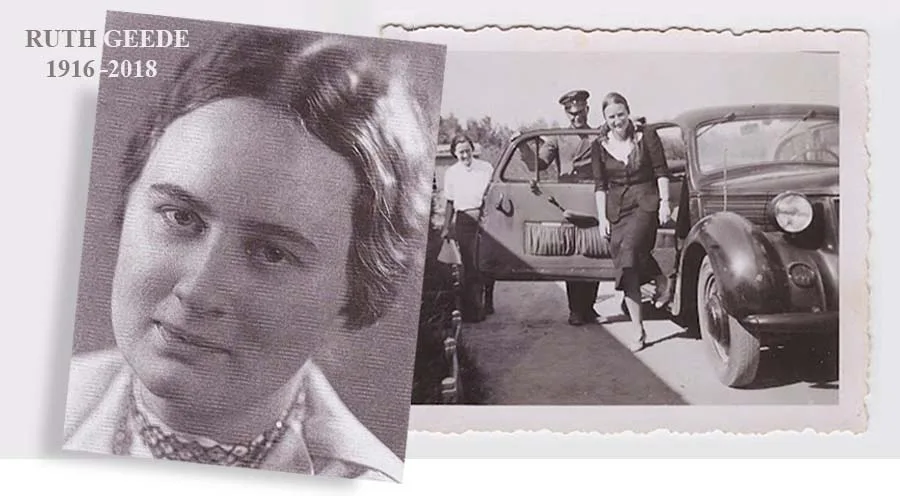
Throughout her long life Ruth Geede never ceased to admire her native East Prussia, which she had to leave in 1945, and to write about it. She wrote more than ten books and numerous press articles: she was regularly published in a regional Lüneburg newspaper.
LEGENDS OF PRUSSIA on the blog of Tatyana Kolivay.
Translated from Russian with the help of AI (Claude, Anthropic), October 2026.