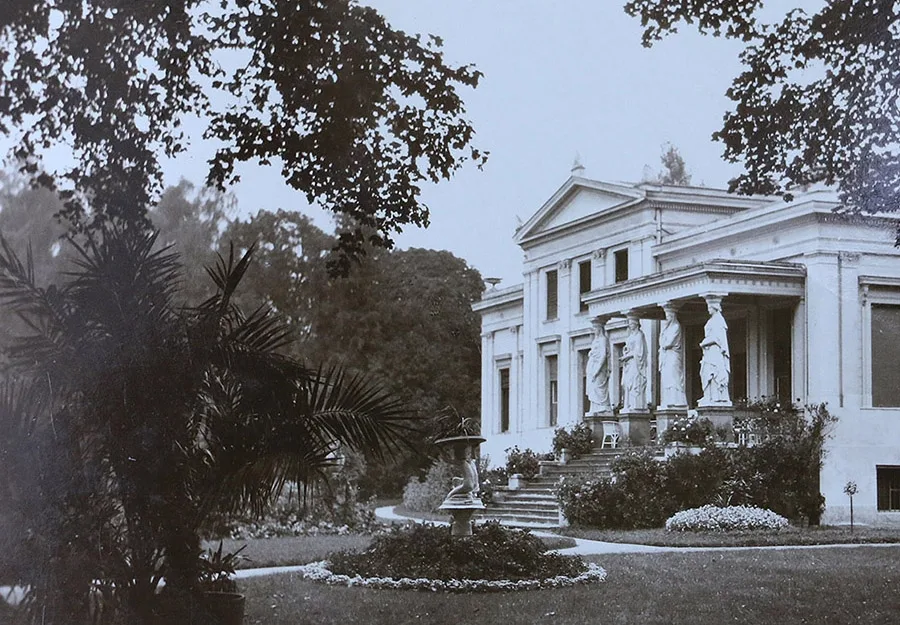
The history of the estate began in 1379, when it was called Keckstein. It is known to have previously belonged to the Waldburg family, one of the oldest noble lines (recorded since the 12th century) from southern Swabia and Vorarlberg. One of its descendants, Friedrich von Waldburg (1494–1554), became a knight of the Teutonic Order and joined the Reformation. He founded the East Prussian line of Waldburg-Kapustigall. The main residences of the Prussian Waldburgs were Kapustigall (also known as Waldburg, now Pribrezhny) and Keckstein, which the Waldburgs later renamed Friedrichstein. By 1666 the 450-hectare estate had fallen into decline and had to be sold. It was bought for 25,500 reichsthalers by the elector's chamberlain, Lieutenant Colonel Count Friedrich von Dönhoff (1639–1696). In 1709 the manor house the Waldburgs had built in the early 1600s burned down. A splendid new palace was then built in 1709–1714 to a design by the architect Jean de Bodt.
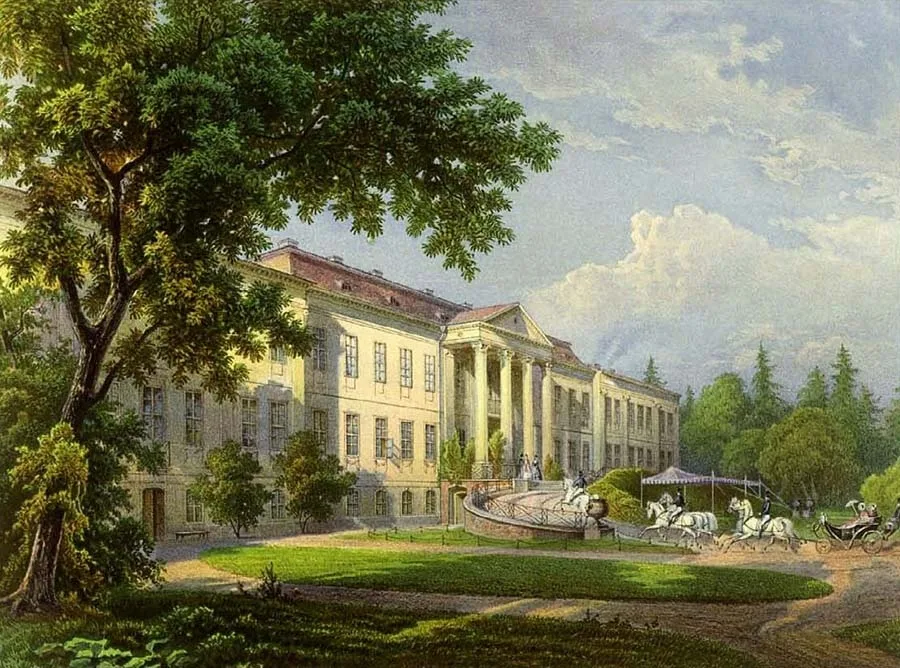
In its day, it was the largest country palace in East Prussia.
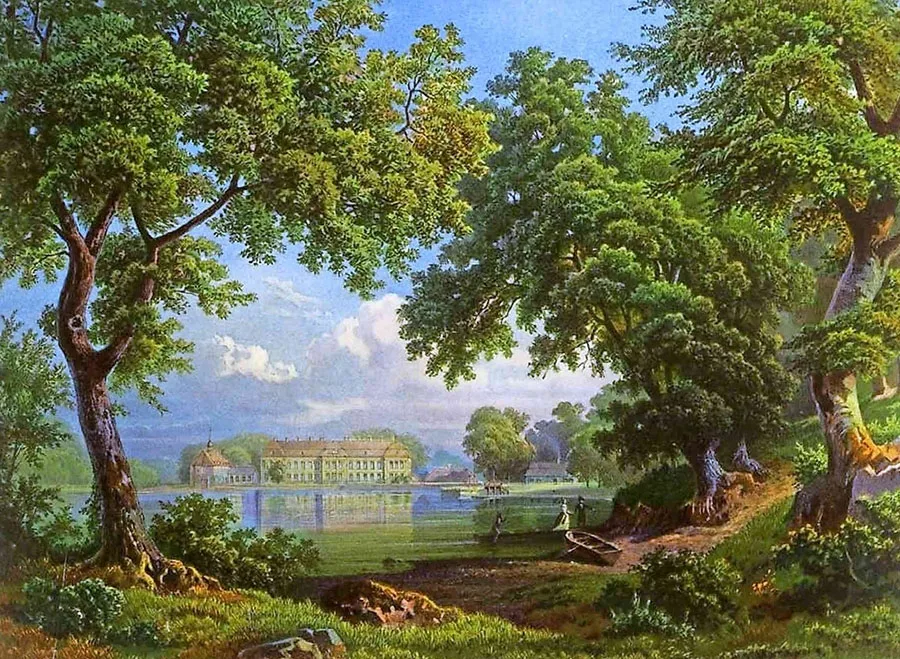 Friedrichstein Palace (1860).
It had a two-storey central wing, side façades facing the courtyard and the garden, central façades, a high basement and a mansard roof. The courtyard side was accentuated by an Ionic portico, and the garden side by an open loggia in the same style. This side overlooked a long pond, probably an old stretch of the Pregel. Once construction was complete, Italian artists spent more than a quarter of a century working on the Rococo interiors.
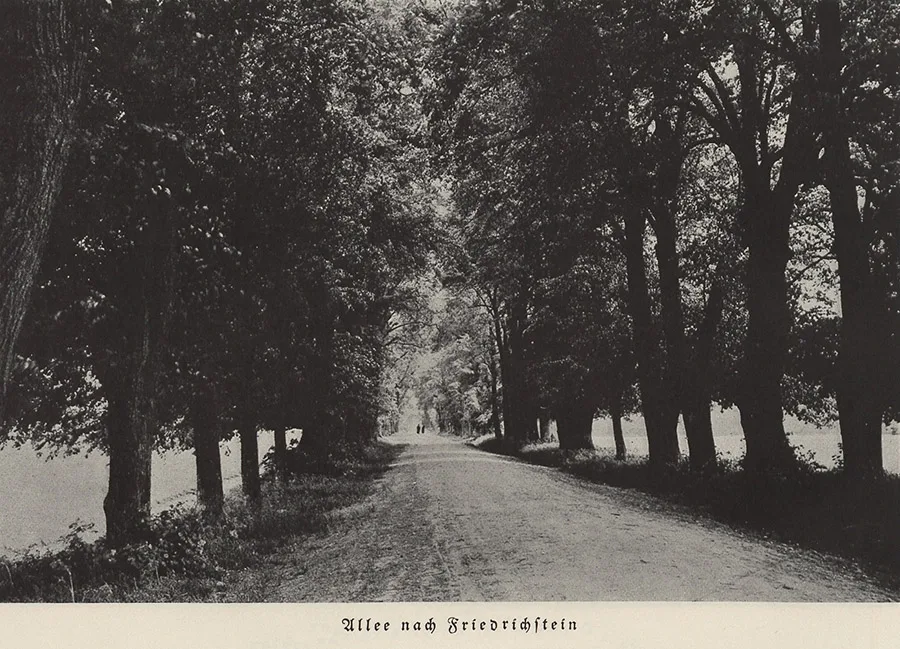
In her book “Childhood in East Prussia”, Marion Dönhoff, the last owner of Friedrichstein, recalled: “When you open the heavy doors, you see a large hall, and above the three doors hangs a painting given by Frederick the Great, showing him with his dog. To the left and right stand two cabinets from Danzig. The middle door leads into a bright, richly decorated conservatory. When distinguished guests were staying in the house, all the doors were opened – the heavy door into the hall and the tall one leading onto the balcony, which offered a magnificent view of a lawn of thick green grass bordered by hedges. From there two parallel avenues set off towards the green meadows of the Pregel.
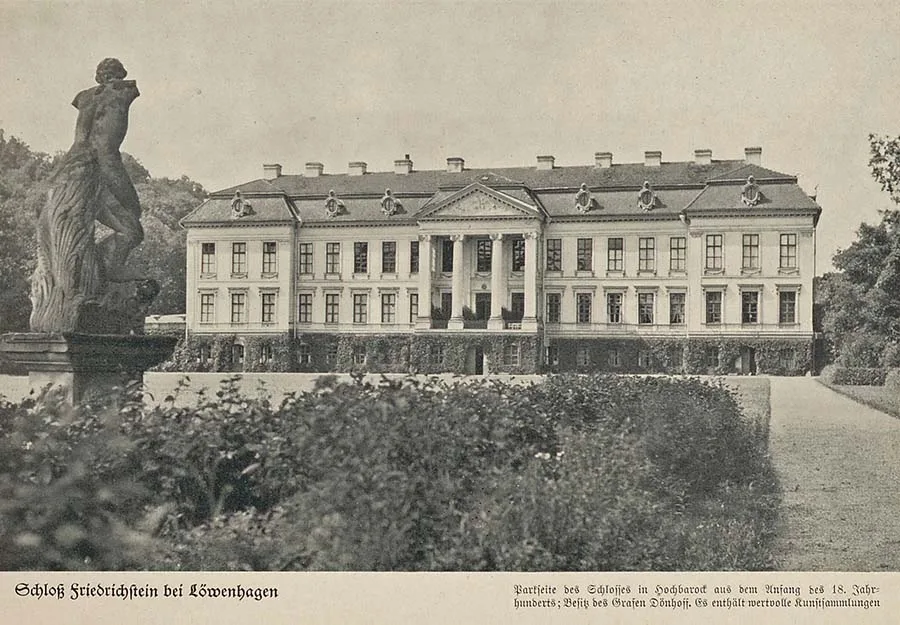
Visitors were overwhelmed: “More beautiful than Versailles!”
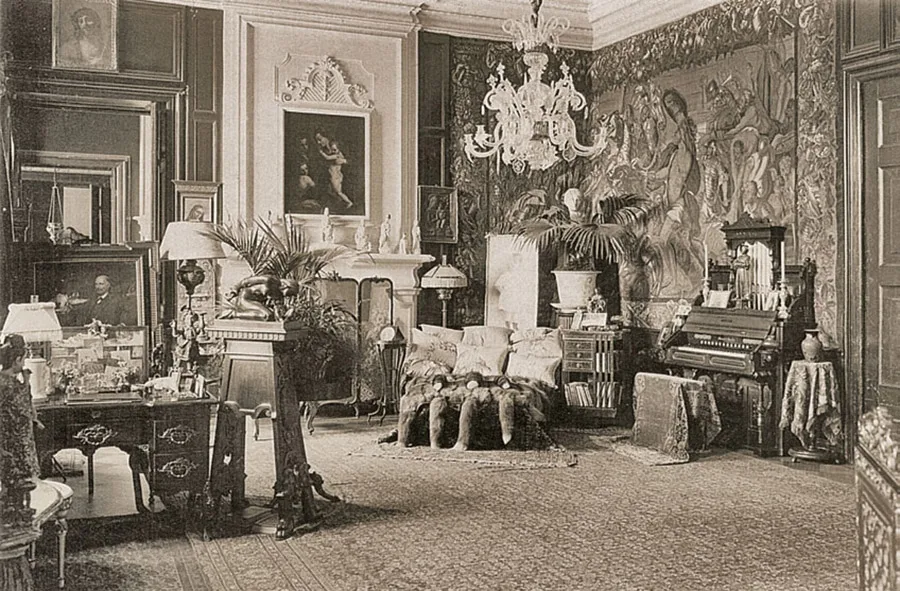 The Green Salon, with its windows facing south, around 1910. The desk on the left probably belonged to Marion Dönhoff's father, Count August Dönhoff.
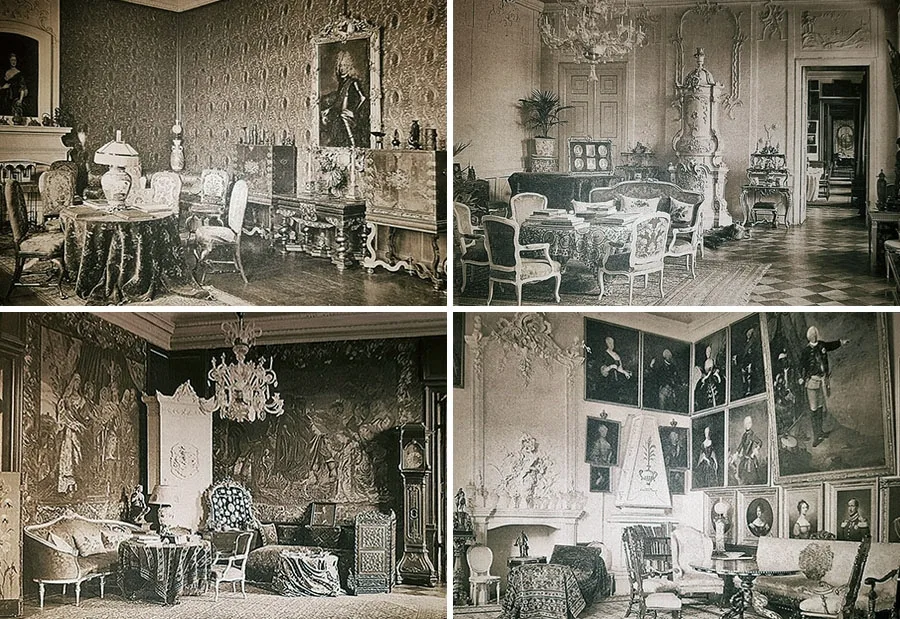 Interiors of Friedrichstein.
In 1944, anticipating the city's surrender to the Red Army, the Königsberg authorities approached the young Countess Marion von Dönhoff – who was then running the estate in place of her elder brothers, killed at the front – with a proposal to hide Christian Rauch's statue of Kant on the estate grounds. She gladly agreed, and the sculpture was brought to Friedrichstein and set up in the park. There is no reliable evidence that the monument was hidden before the evacuation. Whether the Friedrichstein staff managed to bury Kant remains an open question – perhaps they had more pressing concerns. Yet rumour stubbornly clings to precisely this version. As a result, in the mid-1980s a whole expedition set out from Kaliningrad to Kamenka in search of the relic. Its organisers had a plan of the park marking the spot where the monument had stood, which Marion Dönhoff herself had sent to Kaliningrad through a chance contact. But all efforts proved futile: the philosopher's bronze statue could not be found – it had vanished without a trace. It was therefore later decided to make a copy, which was ceremonially placed in 1992 on the original pedestal that had survived in the city.
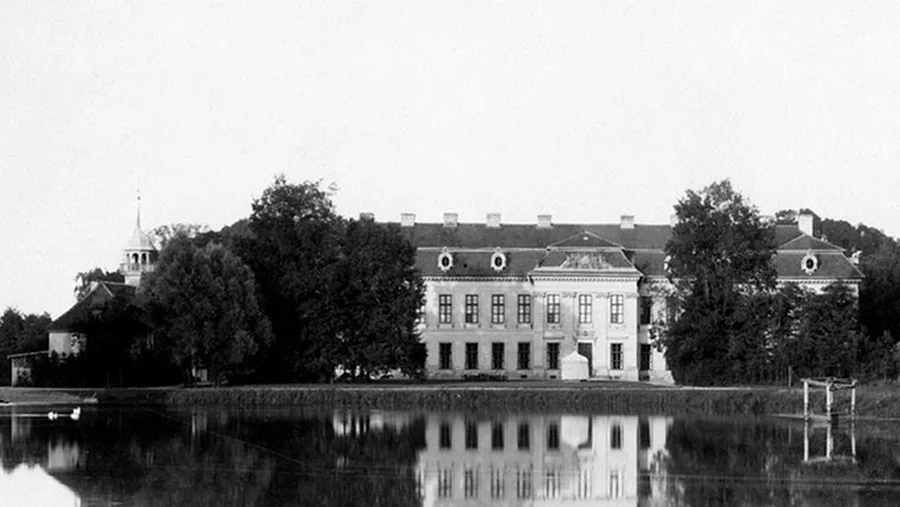
Sadly, after 1945 Friedrichstein shared the grim fate of many East Prussian architectural monuments that had survived the fighting unscathed: first it was set on fire, then looted, and then gradually dismantled for its bricks.
Only a few outbuildings have survived to this day, among them the carriage house, where a local enthusiast has set up a small museum.
In 2016, the Kaliningrad architect Arthur Sarnitz (Arthur Sarnitz), commissioned by the Herder Institute (Herder-Institut), created a 3D visualisation of the Friedrichstein estate (Kamenka), lost in the post-war years. The project includes three-dimensional models of the main building (the palace) and more than ten other structures that stood within 100 m of it. See the gallery at the very top.
Translated from Russian with the help of AI (Claude, Anthropic), October 2026.