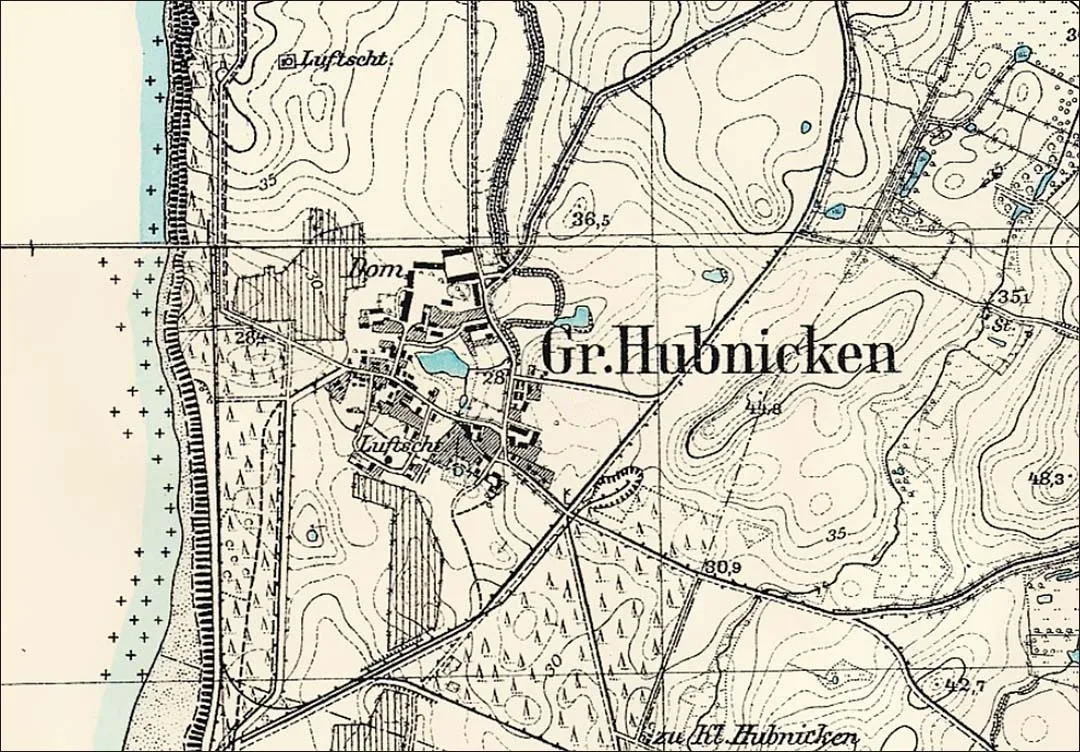
Gross Hubnicken was founded in 1394. Until the 16th century it was called Ubeniken. Then, until 1540, it was Groß Hubenicken, and after 1563 the spelling Gros Hubeniken became established. In the 16th century Gross Hubnicken belonged to the Kammeramt Sudau. In 1781 an amber mine was opened near Gross Hubnicken, where attempts were made to extract amber by the open-pit method. The mine did not bring the expected results, and in 1806 it was closed. In 1785 Gross Hubnicken was classified as a royal village (Königlich Dorf) with 17 households. By 1818 the number of households had risen to 19, and the village itself appeared in documents as a "peasant village" (Bauer-Dorf).
In the 19th century Gross Hubnicken was a village forming a rural community in the Kreis Fischhausen (Primorsk; from 1939 part of the Landkreis Samland).
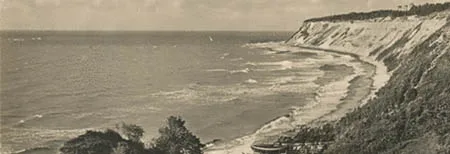
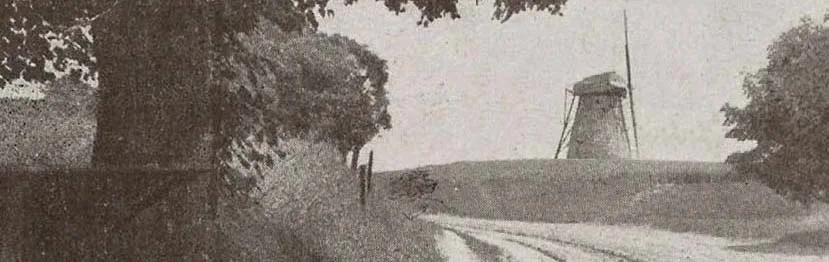
Until 1906 the village belonged to the parish of Heiligenkreutz (Krasnotorovka), and from 1906 to the new parish of Palmnicken (Yantarny). In 1871 Gross Hubnicken had 29 residential houses, home to 59 families and one single man. On 13 June 1874 the rural community of Gross Hubnicken was included in the newly established Amtsbezirk Heiligenkreutz (Krasnotorovka). Feistkorn, the leaseholder of an estate in Gross Hubnicken, was head of the Amtsbezirk in 1880–93. Another resident of Gross Hubnicken, Boye, the leaseholder of the royal domain (estate), headed the Amtsbezirk in 1905–08.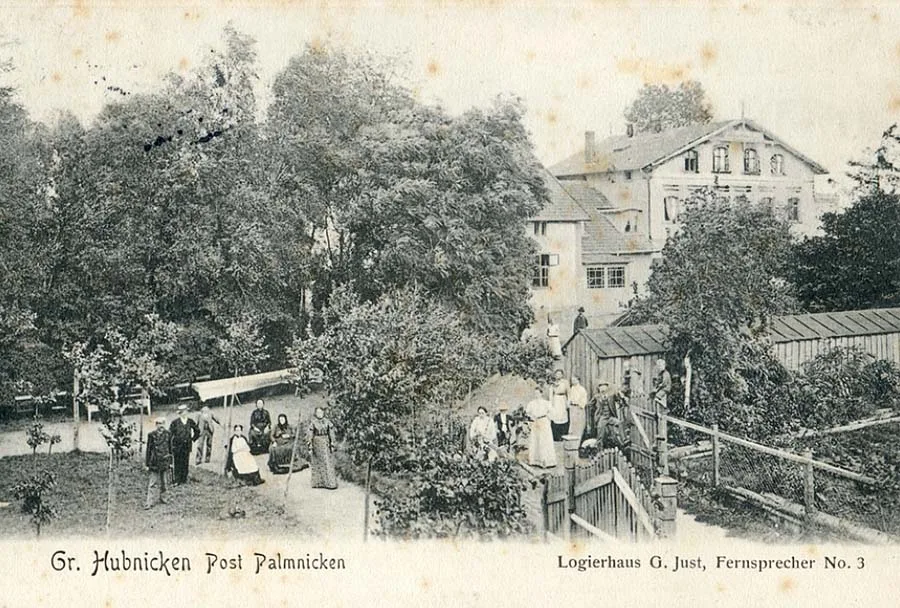 Postcard from Gross Hubnicken.
In 1875 the company Stantien & Becker began extracting amber south of Gross Hubnicken with the help of divers and teams of diggers. In 1883 the Anna mine was opened; in its very first year it yielded 85 tonnes of amber, and at the peak of production up to 400 tonnes were extracted from it. In 1899, after the lease expired, the mine and the rest of the infrastructure of Stantien & Becker were bought out by the state.
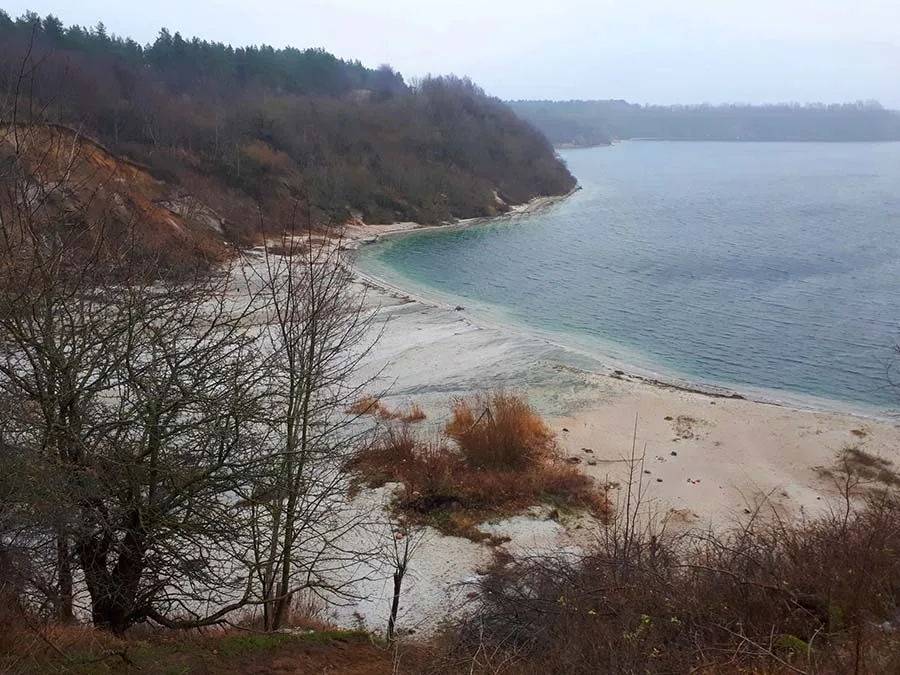 Lake Sinyavinskoye (the former Walter pit).
On 25 May 1910 the Gross Hubnicken community passed from the Amtsbezirk Heiligenkreutz to the Amtsbezirk Palmnicken (Yantarny). In 1913 the Walter amber pit was opened next to the Anna mine, and in 1924 the Anna mine was closed because its reserves were exhausted. In 1933 an airfield for gliders was built in Gross Hubnicken, where schoolchildren and adults took up gliding. The glider pilot F. Schulz, taking off from Gross Hubnicken, set a world record by staying in the air for 6 hours 40 minutes.
On 31 January – 1 February 1945, after the so-called "death march" (27 January 1945), concentration camp prisoners were shot south of Gross Hubnicken near the abandoned Anna mine.
The exact number of those shot is unknown. It was initially believed that about two thousand people had been killed. Researchers later estimated their number at 4,600 and even up to seven thousand.
On 15 April 1945 Gross Hubnicken was taken by soldiers of the 103rd Rifle Corps of the 43rd Army.
On 17 November 1947 Gross Hubnicken was renamed the settlement of Sinyavino. At first the settlement was part of the Yantarny Village Council of the Primorsk District. From 1959 it was subordinate to the Yantarny Settlement Council. In 1970 work in the Walter pit was stopped, after which it began to fill with groundwater and turned into Lake Sinyavinskoye. In 1971 Sinyavino had 36 houses. As of 2020 the settlement had 74 houses.
Sight: Lake Sinyavinskoye.
Population change: 1818 – 149, 1867 – 275, 1871 – 296, 1885 – 465, 1905 – 558, 1910 – 539, 1925 – 512, 1933 – 482, 1939 – 467, 2002 – 275, 2010 – 307 inhabitants.
Composition of the population of Gross Hubnicken in 1871: Evangelical Christians – 280, Catholics – 1, Jews – 15, children under 10 – 66, literate – 178 (77%).
Photos: bildarchiv-ostpreussen.de, Mikhail Ogorodnikov.
Translated from Russian with the help of AI (Claude, Anthropic), October 2026.