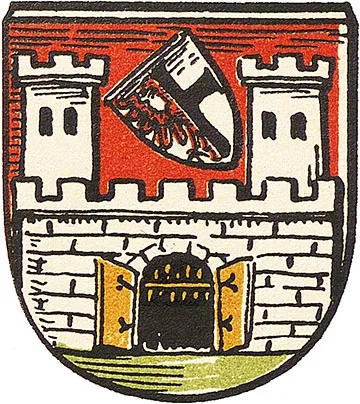
 Coat of arms
of Kreuzburg.
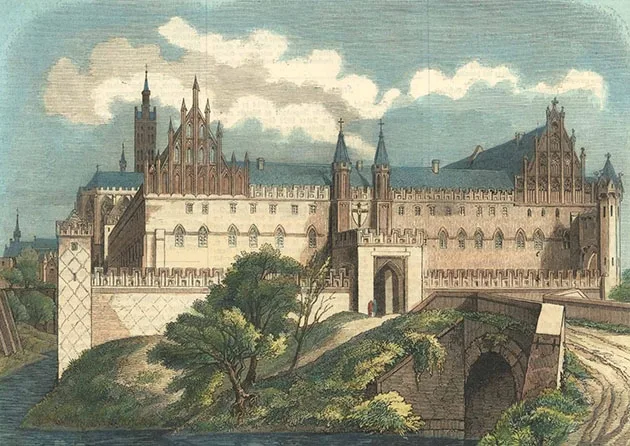
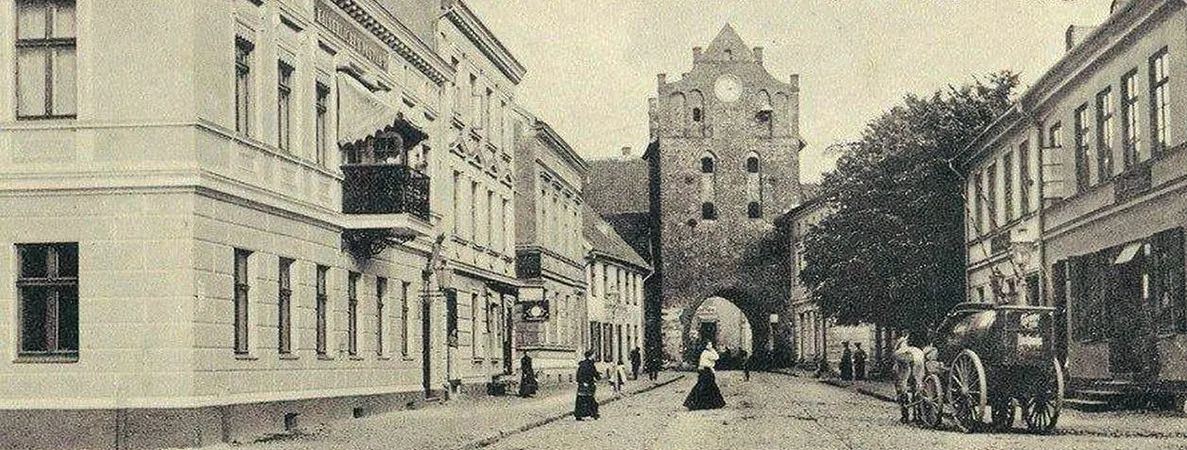
Kreuzburg was founded in 1241 by Otto von Braunschweig as a castle of the Teutonic Order on the site of the Prussian stronghold of Witige. In 1243 it was burned down by the rebellious Prussians. In 1253 the castle was rebuilt. In 1260–63, during the Second Prussian Uprising, the castle was besieged. When the besieged ran out of food, they tried to leave the castle, but since the horses had also been eaten, the Prussians caught up with the fugitives and killed them all except two knights, who managed to reach Balga / Balga (Vesyoloye). In 1273 the castle was rebuilt once again, and in 1309 it was reconstructed in stone. During this period Kreuzburg was for a short time (1275–77) a commandery seat and the castle of the Vogt of Natangia, but the seat was soon moved to Brandenburg / Brandenburg (Ushakovo). On 31.01.1315 the settlement by Kreuzburg Castle received Kulm town rights from the Order's Marshal Heinrich von Plotzke.
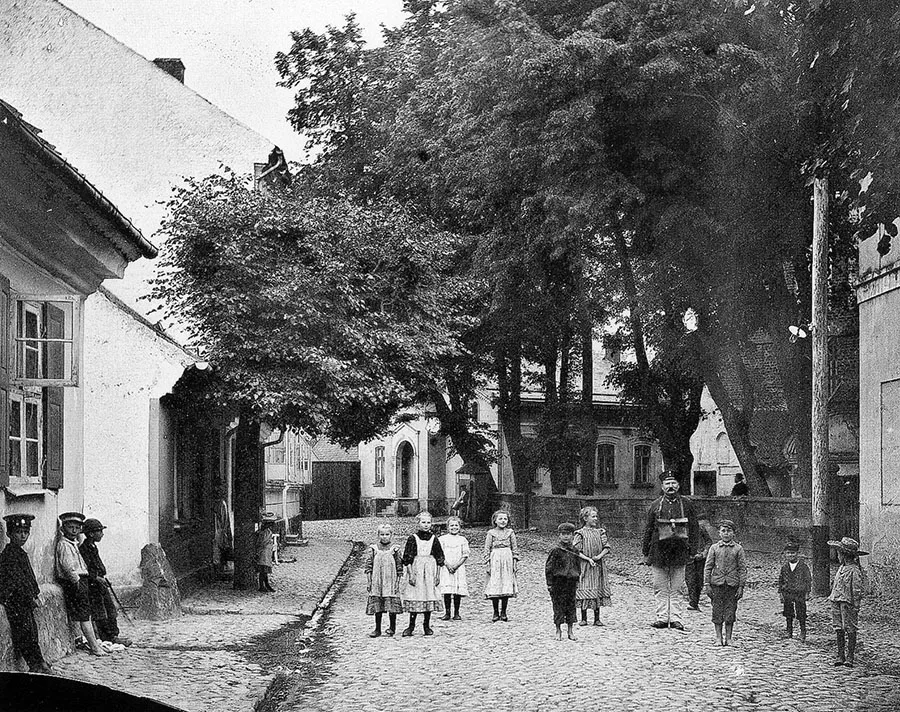
In the same year, 1315, a church was built in Kreuzburg. In 1402 a school was opened.
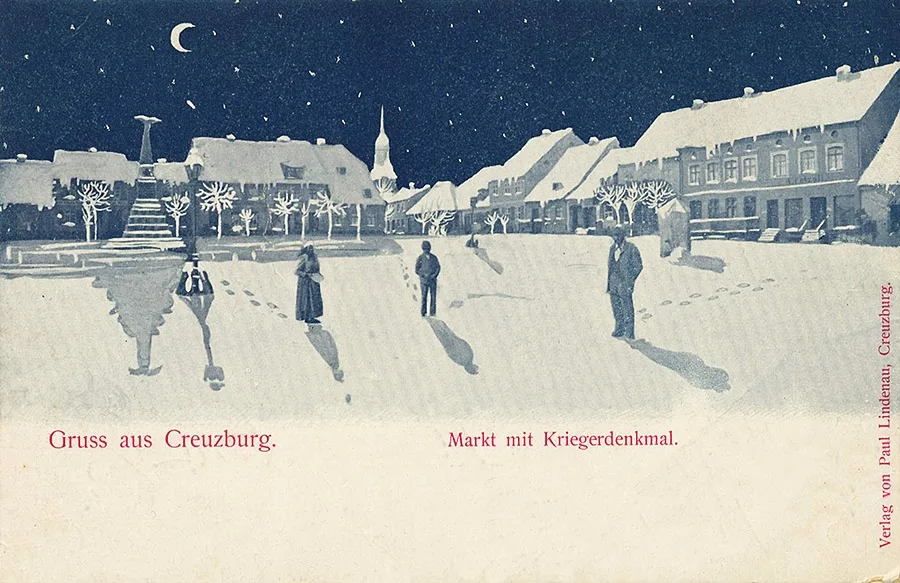
In the first year of the Thirteen Years' War (1454–66) the castle was captured by troops of the Prussian Confederation. However, as early as 1455 it was retaken by the Order. After that Kreuzburg was attacked several times, the town was repeatedly plundered and burned, but the supporters of the Prussian Confederation never managed to take the castle itself. In the Second Treaty of Thorn, Kreuzburg Castle is mentioned as remaining with the Teutonic Order. The Teutonic Order's debts following the Second Peace of Thorn forced Grand Master Ludwig von Erlichshausen to pledge Kreuzburg for 2,383 marks to the mercenary leaders Anselm von Tettau and Michael Greusing. In 1497 it was redeemed by Bishop Johannes of Riesenburg, and in 1505 his successor Hiob von Dobeneck became its owner
In 1520, during the Horsemen's War, Kreuzburg was attacked by the Poles.
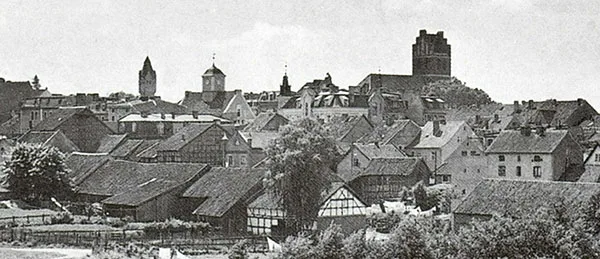
After the secularisation of the Order, Kreuzburg Castle changed hands until in 1565 Duke Albrecht of Brandenburg gave it to Paul Skalich, an adventurer and ducal favourite. After his flight in 1566 the castle, lacking proper care, began to fall into decay. It was owned in turn by several Prussian noblemen – Caspar von Fasolt, Albrecht Truchsess von Wetzhausen, Melchior von Kreytzen – but none of them stayed there for long. In 1585 Kreuzburg was bought back by the state. In the 17th–18th centuries Kreuzburg finally became a small provincial town. On 23.06.1771 Leopold Ludwig Hermann von Boyen, Prussian Generalfeldmarschall and veteran of the wars against Napoleon, was born in Kreuzburg.
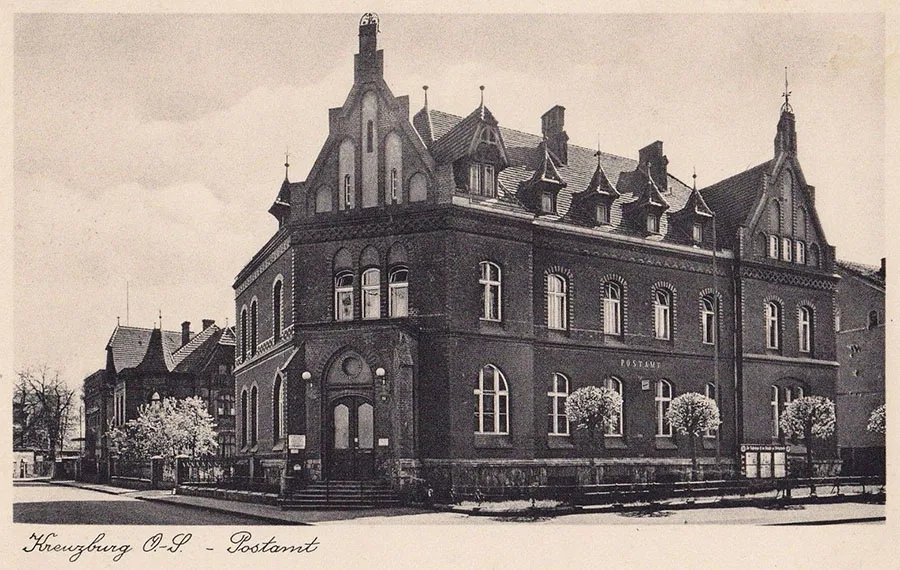
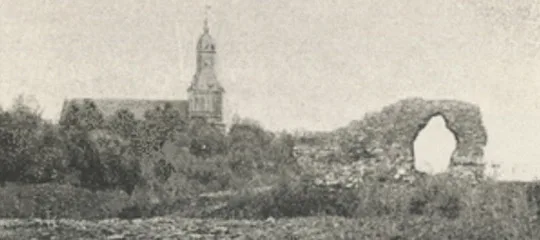
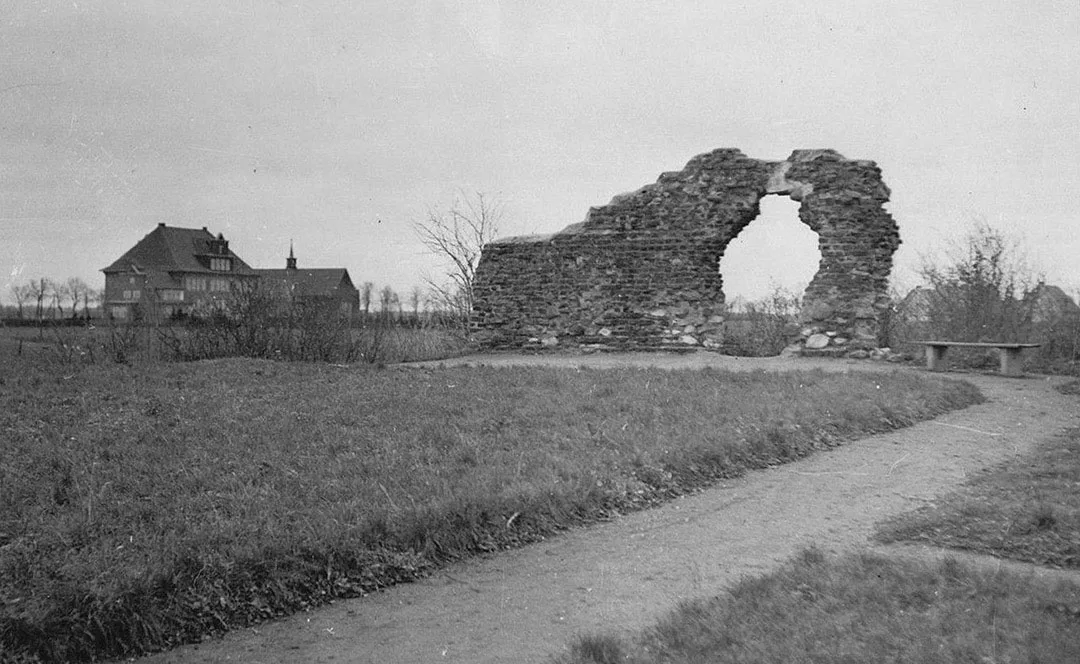
In the 18th century the town had two mills, a sawmill, a smithy and a fulling mill. The castle was actively dismantled for building materials. By the end of the 18th century only small remnants of its walls and foundations were left. In 1881 Reichermann, the owner of the mill in Kreuzburg, organised archaeological excavations at the castle.
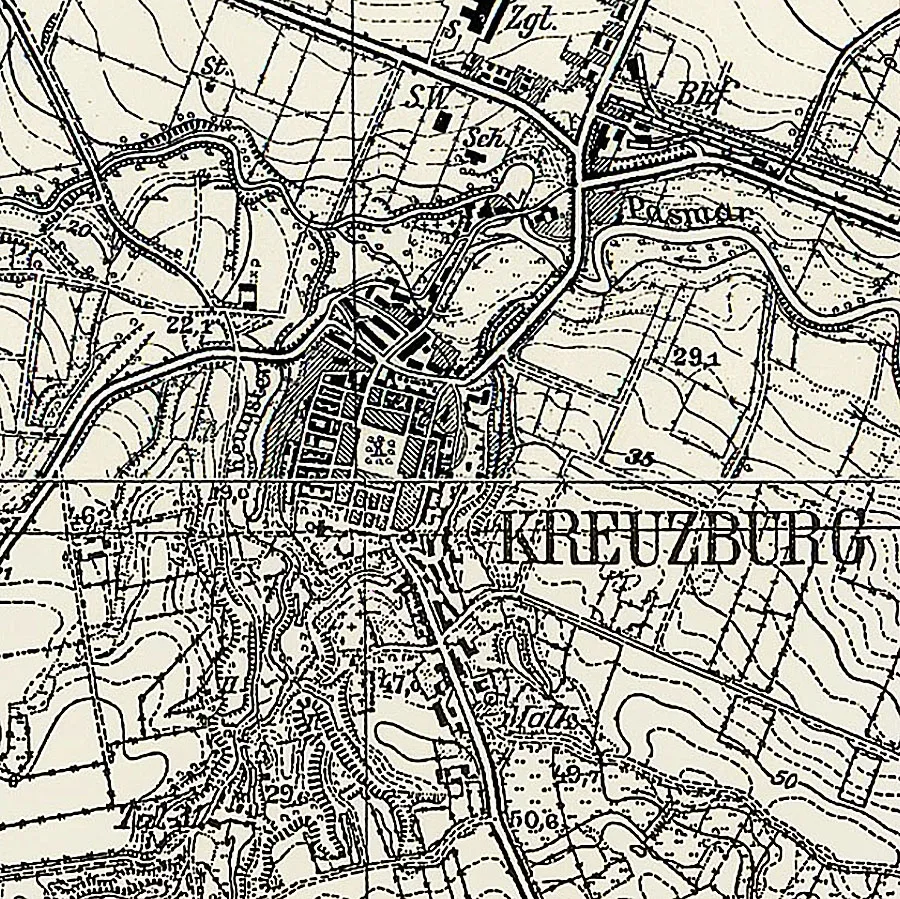
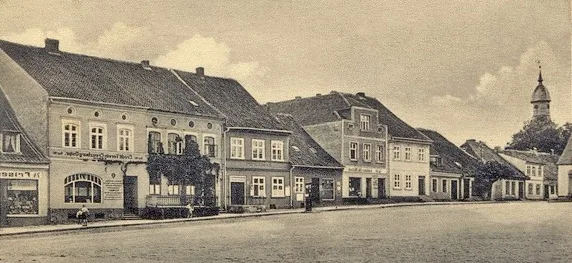
In 1908 the Tharau – Kreuzburg / Tharau – Kreuzburg (Vladimirovo – Slavskoye) railway was laid, and a station was built on it in the town. By 1939 Kreuzburg was a very small town with a population of 2,007. It had an Evangelical and a New Apostolic church, a district court and a prison, a post office, two schools and a railway station. The town also had mills, a sawmill, a brickworks and a dairy.
On the morning of 8.02.1945 soldiers of the 159th Rifle Division captured the eastern part of Kreuzburg. Forces of the 97th Rifle Division of the 5th Army advanced on the town from the north. By midday the town had been completely occupied by Red Army units. As a result of the assault, the town's buildings and the castle were seriously damaged.
In September 1946, 250 Germans lived in Kreuzburg, in July 1947 – 305 Germans, and by October 1947 only 20 of them remained.
On 17.11.1947 Kreuzburg lost its town status and was divided into two settlements – Yenino (the main part) and Slavskoye (the northern part around the railway station). Initially the settlement belonged to the Oktyabrsky village council, and from 1954 to the Pushkino village council. In 1955 Slavskoye had 13 households. By 1963 the number of households in Slavskoye had fallen to 12, while Yenino had 35 houses. In 1965 Yenino was merged into the settlement of Slavskoye, while the northern part of former Kreuzburg near the railway station became the separate settlement of Sadovoye. By 1975 Slavskoye had become the centre of the Pushkino village council. By 1984 the railway to Slavskoye had been completely dismantled. As of 2018 the settlement has a medical unit, and a motor transport company operates there.
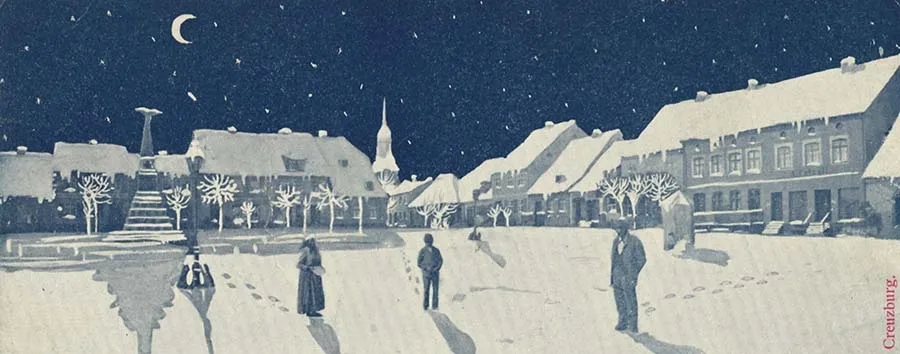
Sights: remains of the walls and ramparts of Kreuzburg Castle, a memorial to those who fell in the First World War (1920), the courthouse, a mass grave of Soviet soldiers (memorial 1953, 2,467 soldiers).
Population dynamics: 1740 – 988, 1782 – 1018, 1802 – 1511, 1810 – 1154, 1816 – 1303, 1821 – 1351, 1831 – 1678, 1846 – 1783, 1858 – 1932, 1864 – 2181, 1875 – 2004, 1880 – 2002, 1885 – 1976, 1895 – 1895, 1905 – 1848, 1910 – 1726, 1933 – 1802, 1939 – 2007, 1946 – 417, 1947 – 353, 1984 – 190, 2002 – 310 inhabitants.
Translated from Russian with the help of AI (Claude, Anthropic), October 2026.