In 1785 Maraunenhof was classified as a noble Vorwerk (outlying farm) with ten households. The Vorwerk also owned a forester’s house in the nearby forest. By 1818 Maraunenhof had become a hereditary leasehold estate (Erbpacht Gut) with five households.
In the 19th century Maraunenhof was an estate which from 1867 formed a Gutsbezirk (estate district) in the Landkreis Königsberg. The estate belonged to the parish of Quednau.
In 1871 Maraunenhof had six residential buildings, home to 18 families. On 30.04.1874 the Maraunenhof Gutsbezirk was incorporated into the newly established Amtsbezirk (administrative district) of Quednau (Kaliningrad, Severnaya Gora). In 1879 the Maraunenhof estate owned 290 hectares of land; the estate’s annual net profit amounted to 4,886 marks.
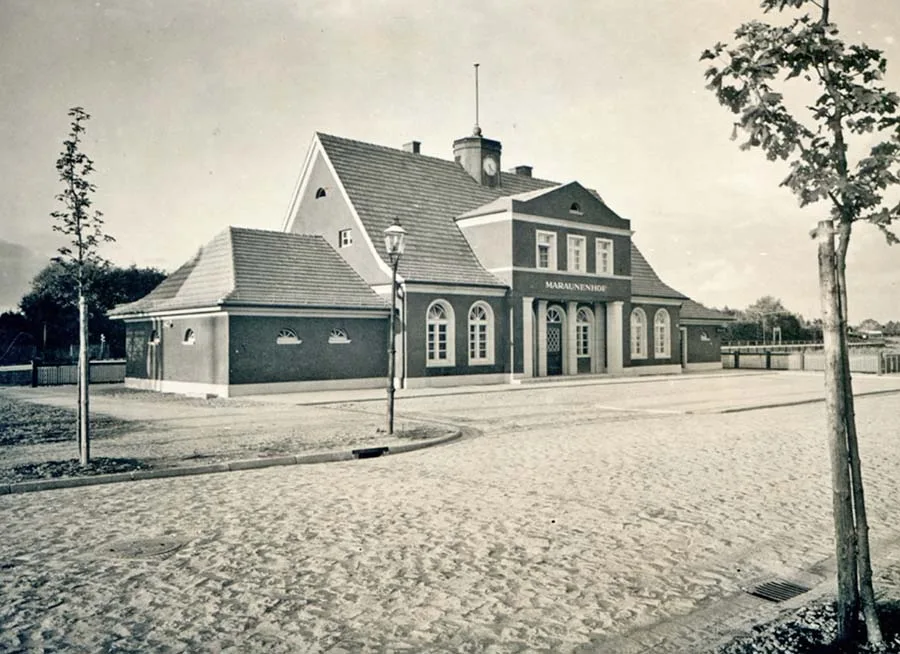 The station building at the “Maraunenhof” platform.
In 1885 the Königsberg–Cranz railway line (Kaliningrad–Zelenogradsk) was laid through Maraunenhof.
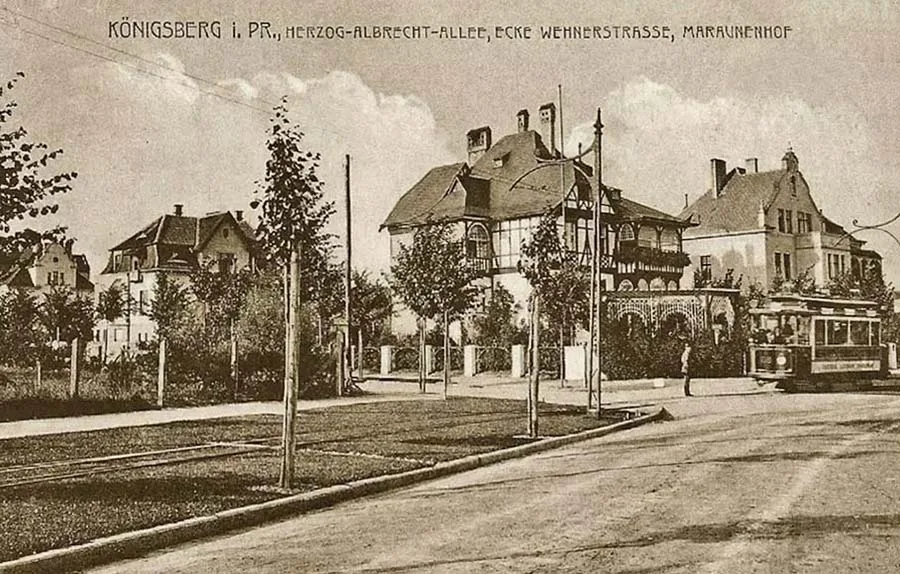 Maraunenhof on the Königsberg tram route map.
A passenger platform and then a station building (now Kutuzovo-Novoye station) were built on the line at Maraunenhof. In 1889 a railway line from Maraunenhof to Labiau (Polessk) was opened.
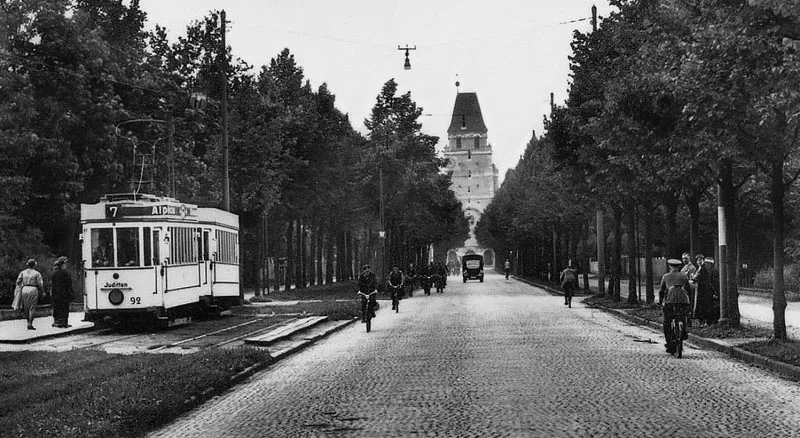
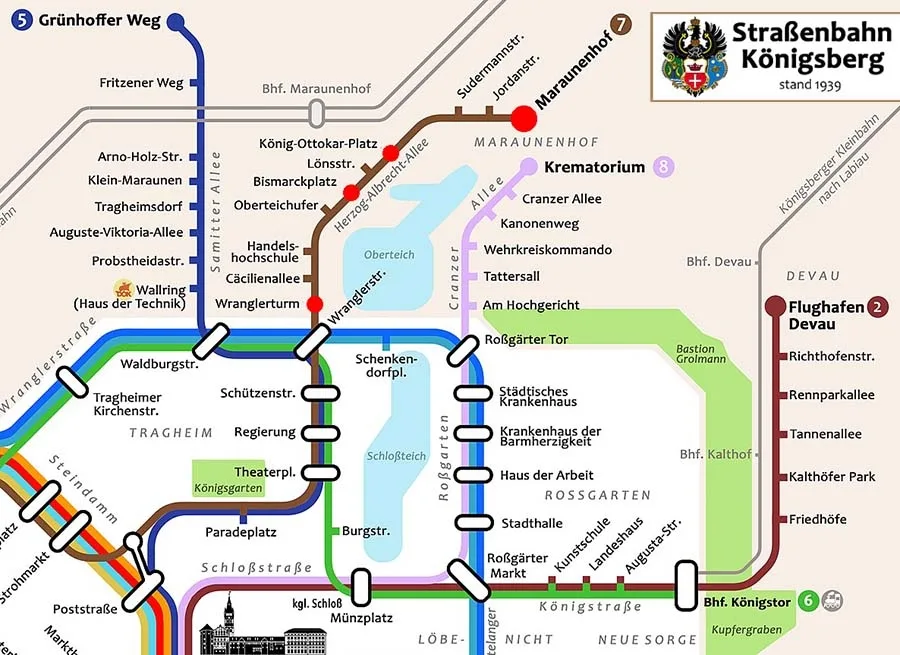
At the end of the 19th century a brickworks operated on the Maraunenhof estate. In 1902 an electric tram line reached Maraunenhof.
This was the terminus of route No. 7 (brown), which started in the Juditten area (now part of Mendeleyevo).
After the ramparts of Königsberg were partly dismantled in 1910–11, intensive building of private houses began in the suburbs, including Maraunenhof. In 1911–13 the Duke Albrecht Memorial Church (Herzog-Albrecht-Gedächtniskirche) was built in Maraunenhof to a design by the architects Heinrich Mattar and Eduard Scheler.
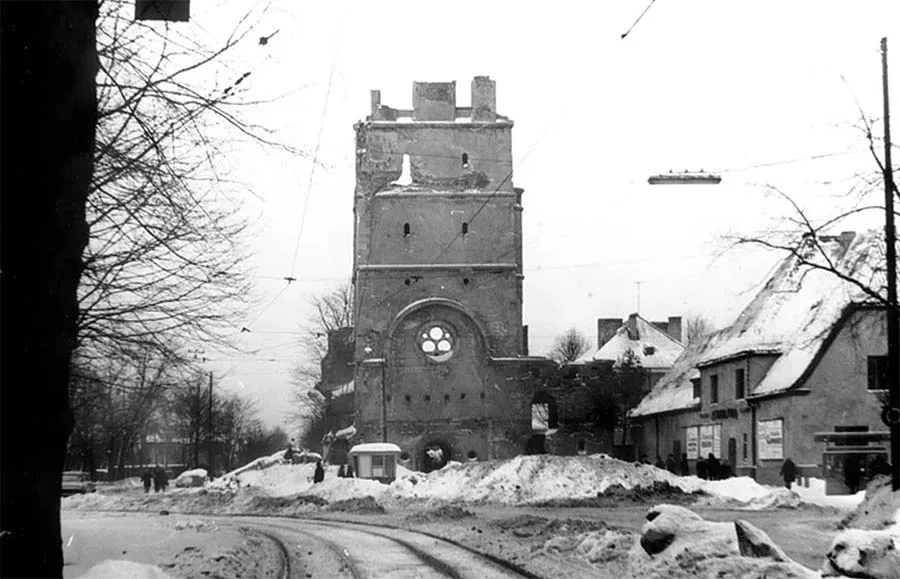
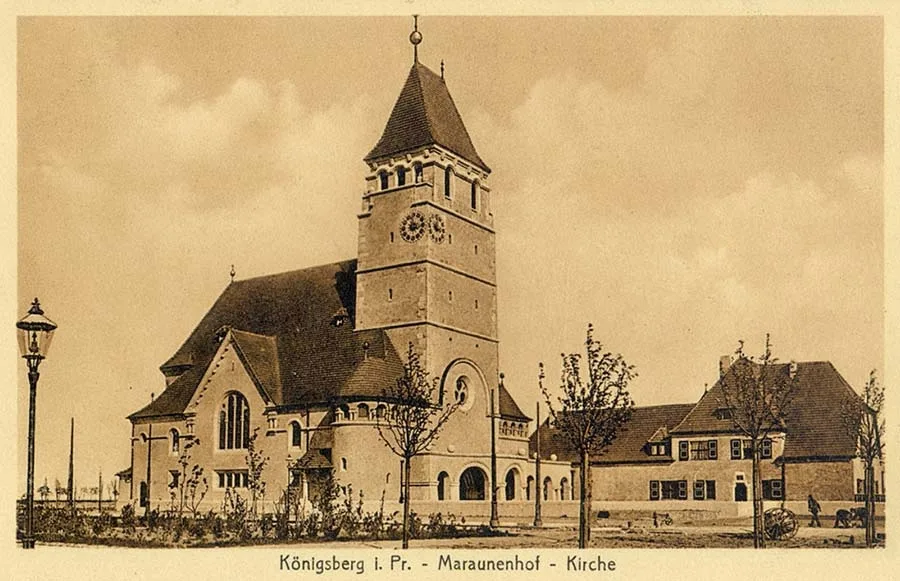 The New Tragheim Duke Albrecht Memorial Church before and after the Second World War.
On 16.06.1927 the Maraunenhof Gutsbezirk was abolished and incorporated into the municipality of Königsberg. From then on Maraunenhof became a prestigious city district, built up mainly with villas.
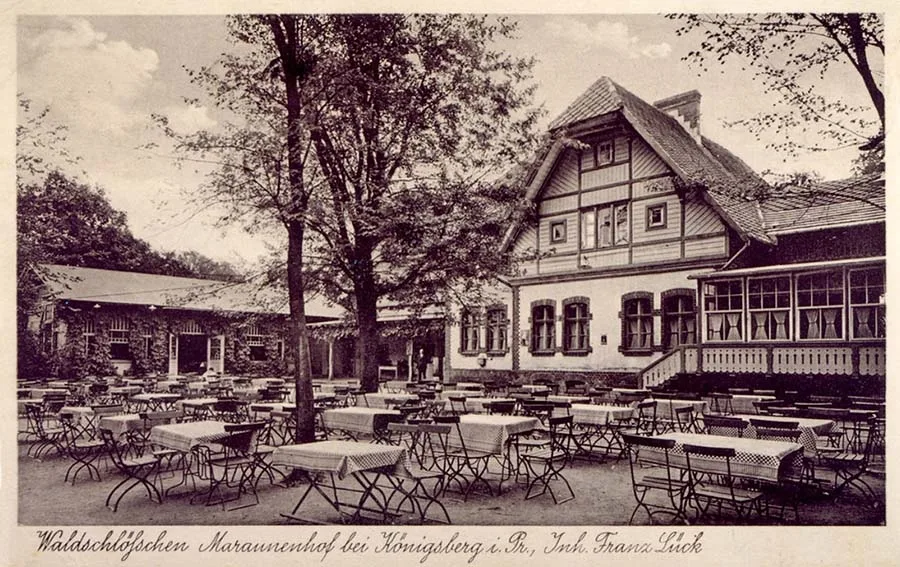
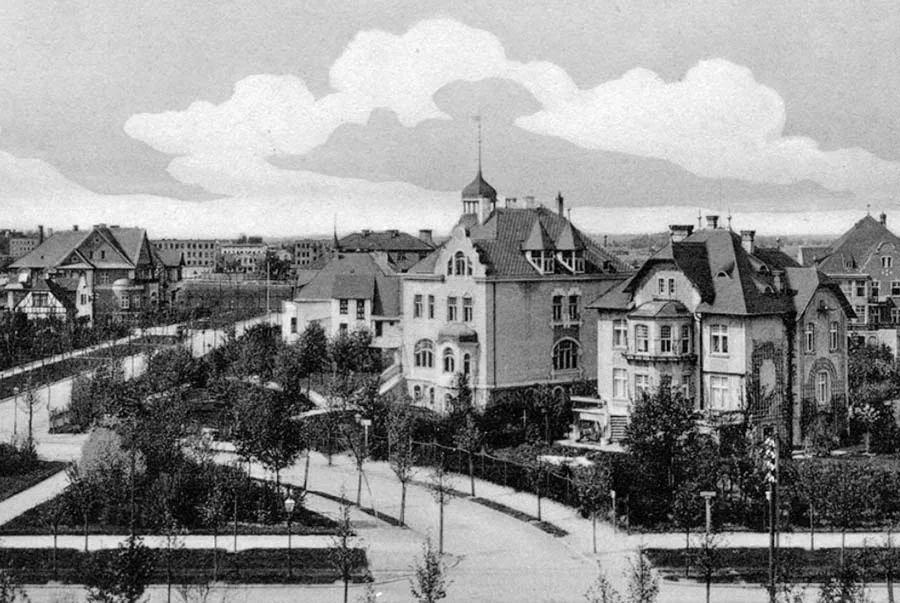 Maraunenhof villas and the country café (Waldschlösschen).
During the storming of Königsberg on 6–9 April 1945, Maraunenhof suffered less from the fighting than many other districts, but the Maraunenhof church was badly damaged.
After the end of the Second World War, according to the established practice, surviving fragments of the city’s built-up area were given the status of settlements. The part of Maraunenhof east of Telmana Street was named the settlement of Energetikov, and the western part of Maraunenhof was renamed the settlement of Bolshiye Prudy.
The name Energetikov did not catch on, and soon the whole of Maraunenhof came to be called Bolshiye Prudy.
It was never an independent locality, however, but a settlement within the Leningradsky District of Kaliningrad without any settlement-level administrative bodies. The name, incidentally, fell out of use among residents as early as the 1970s, although it regularly appeared on city plans until quite recently.
In Soviet times two tram routes ran along Telmana Street, No. 1 and No. 8. The “one” practically repeated the route of Königsberg tram No. 7.
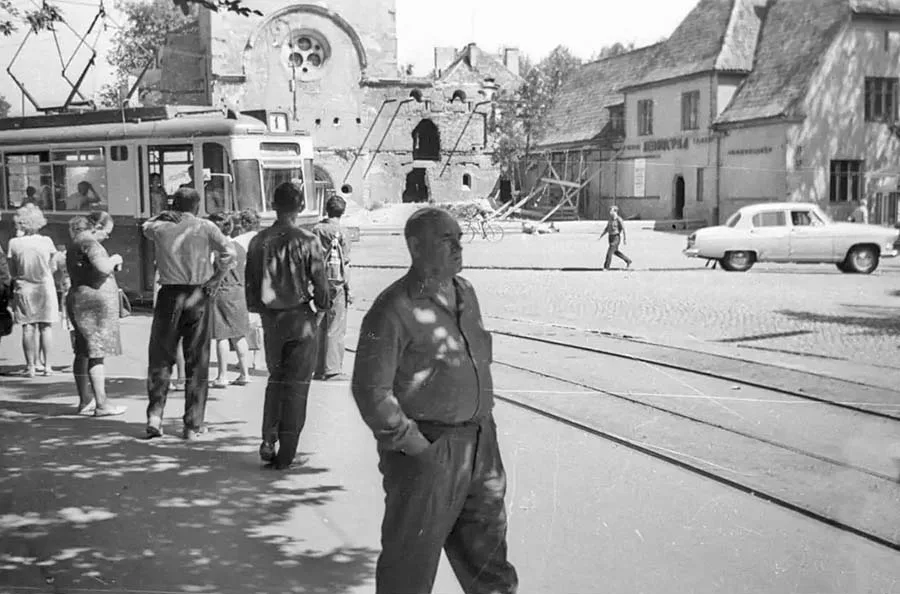 Ruins of the Duke Albrecht Memorial Church and the “Leningrad” cinema on Telmana Street (1969).
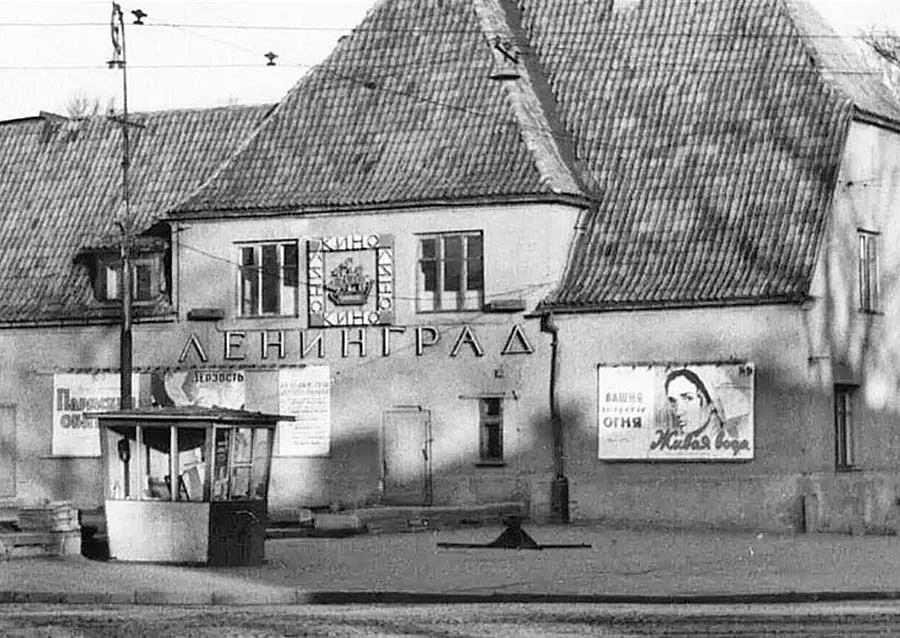
In 1972 the ruined Duke Albrecht Memorial Church was demolished, and the former parish house was converted into a cinema named “Leningrad”. In the 1990s the cinema closed. Later the Hoffmann Children’s Music School opened in the same building.
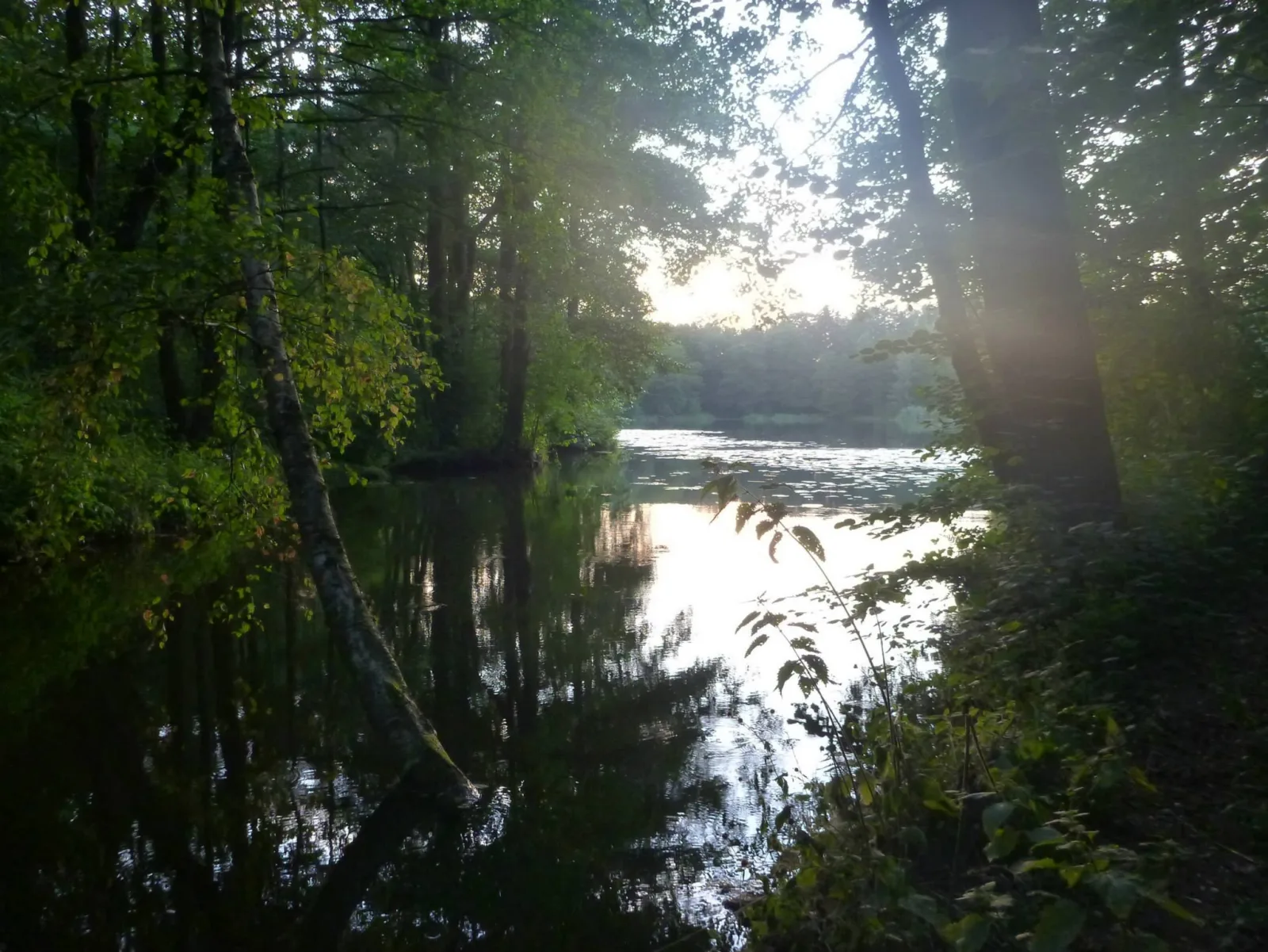
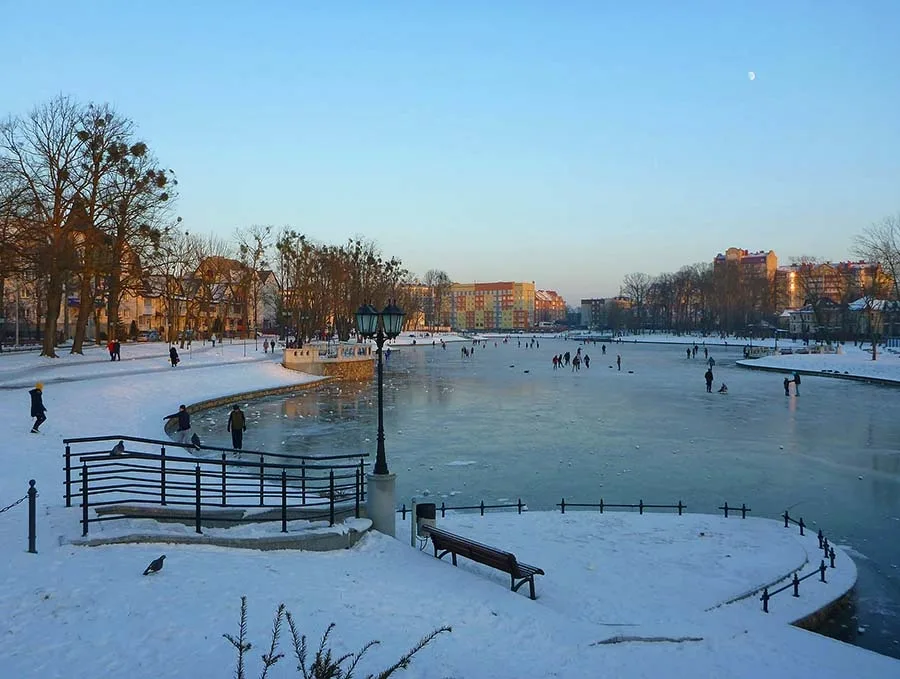 Children playing on the ice of the Upper Pond in Maraunenhof.
In 2010 the city administration abandoned tram route No. 8, and in 2012 route No. 1 also disappeared from the city plans. At present (2023) considerable stretches of cobbled roadway survive in the former Maraunenhof district, and the district as a whole has not suffered much from Soviet standardised construction or post-Soviet infill development.
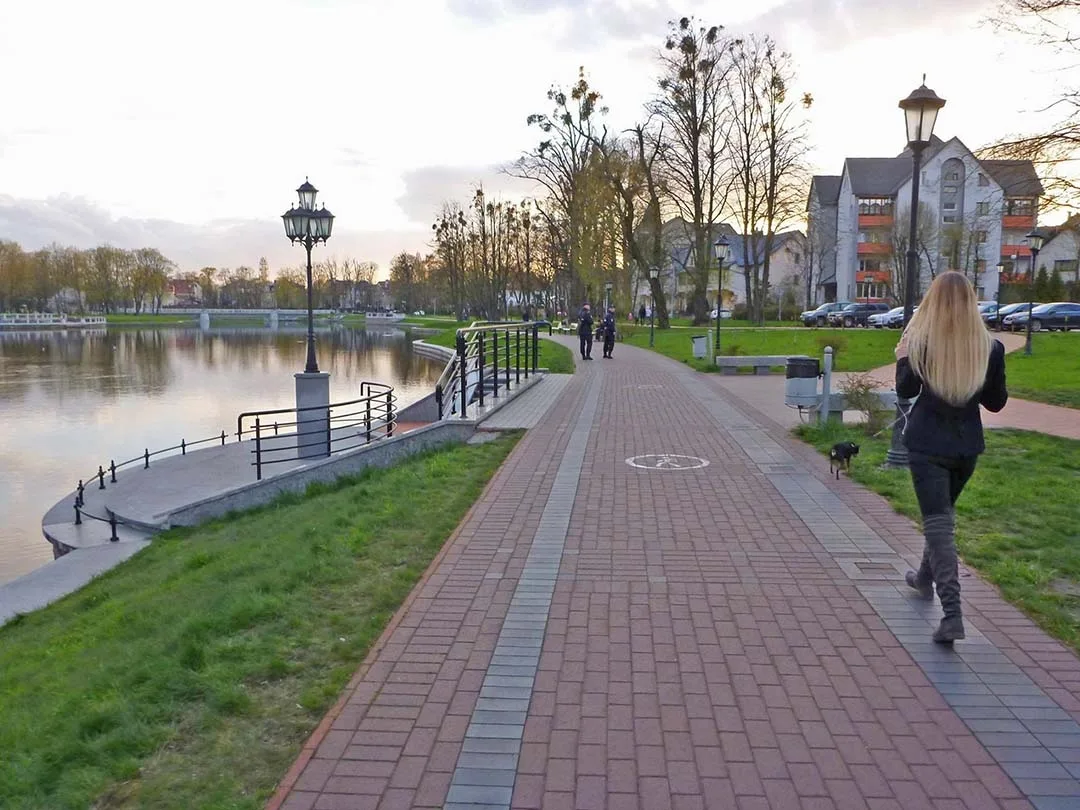
Sights: the city’s best pedestrian area on the shores of the Upper Pond, numerous pre-war villas, the parish house of the Duke Albrecht Memorial Church (music school), the monument to Ernst Thälmann, the mass grave of Soviet soldiers (38 people, monument 1957).
On the edge of the settlement lies the IKBFU Botanical Garden (the former botanical garden of the University of Königsberg).
Population of the Maraunenhof Gutsbezirk: 1818 – 67, 1867 – 102, 1871 – 92, 1885 – 96, 1905 – 67, 1910 – 44 inhabitants.
Composition of the population of Maraunenhof in 1871: all 92 Protestants, children under 10 – 18, literate – 48 (68%).
Photos on this page: Bildarchiv Ostpreußen / bildarchiv-ostpreussen.de, Mikhail Ogorodnikov.
Translated from Russian with the help of AI (Claude, Anthropic), October 2026.