The area around Yantarny has been inhabited since ancient times, as evidenced by the nearby Prussian hillfort of Palmnicken. Several pre-Teutonic earthworks have also been found in the vicinity of the settlement; they became known as “Swedish entrenchments” / Schwedenschanze, although in reality they have nothing to do with the Swedes.
Palmnicken has been mentioned in documents since 1389 as Palweninken, which indicates that the place name derives from the Prussian word “palwe” / Palwe – “heath, wasteland”. By 1491 the name had changed to Palmeninken, and later still to Palminken.
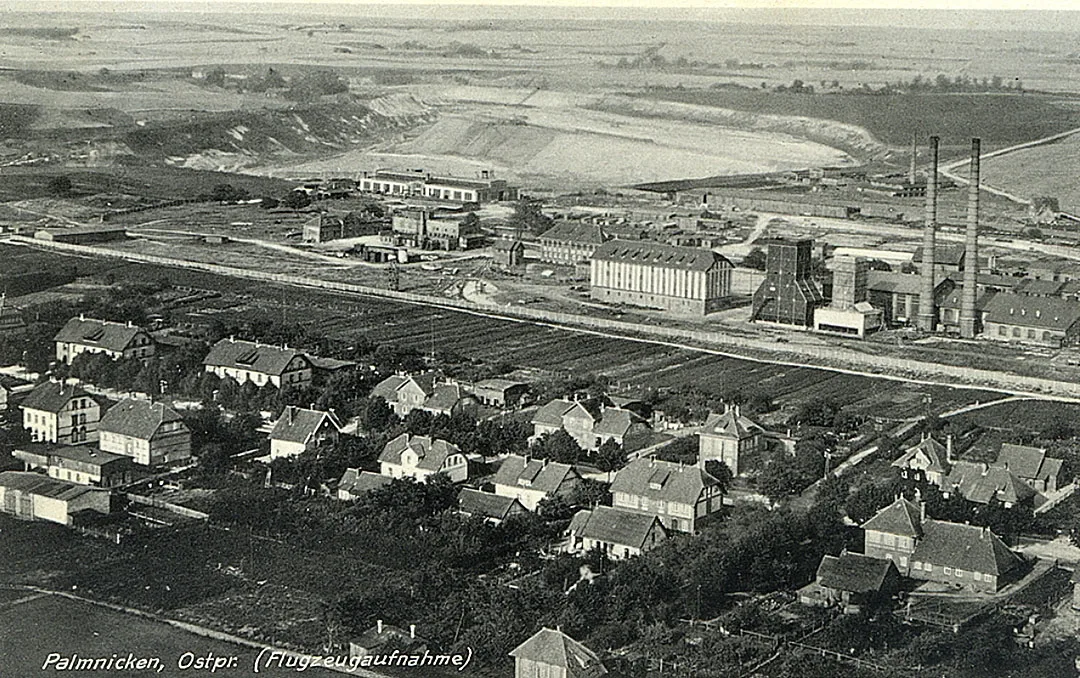
 View of Palmnicken from the air.
At the beginning of the 17th century, by order of George William, Elector of Brandenburg and Duke of Prussia, a hunting lodge was built on Palmnicken Hill; boulders from the foundations of the Germau fortress were used in its construction.
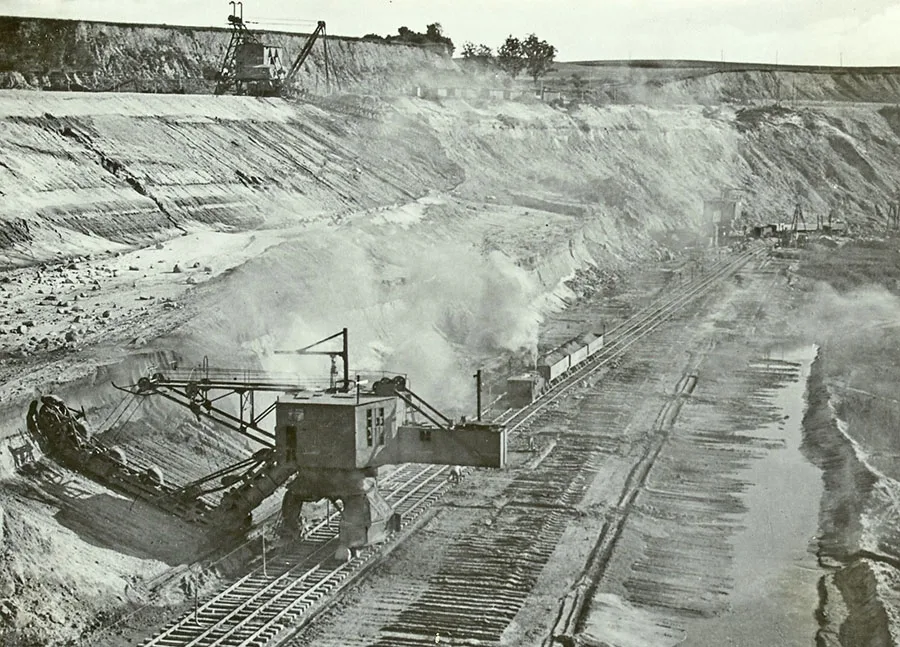
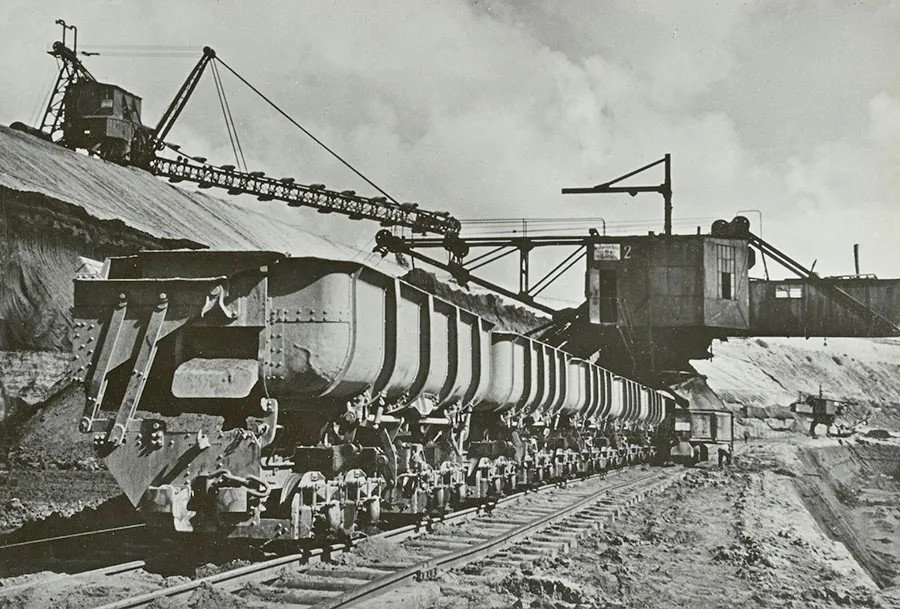 The old quarry, on whose site Lake Sinyavino now lies.
In 1654 the settlement of Palmnicken had four farmsteads. Around 1690 the coastal administration and the prison for illegal amber gatherers were moved from Germau to the Palmnicken hunting lodge.
In 1703 King Frederick I visited the lodge and ordered that the lodge and the surrounding lands be returned to their former purpose – royal hunting. From 1722 Palmnicken belonged to the Hauptamt of Fischhausen / Fischhausen (Primorsk) in the Kreis of Schaaken / Schaaken (Nekrasovo).
In accordance with the king's order, the hunting lodge was rebuilt at the beginning of the 18th century, but by 1781, as a report shows, the building had fallen into decay again.
A year earlier the lodge had been handed over to the coast warden for official use. In 1785 the Palmnicken estate had 12 households. At the end of the 18th century the first unsuccessful attempts were made near Palmnicken to mine amber underground.
In the 19th century Palmnicken was a state estate in the Kreis of Fischhausen / Fischhausen (Primorsk). In 1828 a manager's house was built on the estate. In 1849 the hunting lodge in Palmnicken was bought by a certain Gustav Theodor Stein / Stein, who had it restored once again. Stein's business activity came down to the kind of rural enterprise traditional for East Prussia: he opened a brewery in Palmnicken and built inns along the surrounding roads.
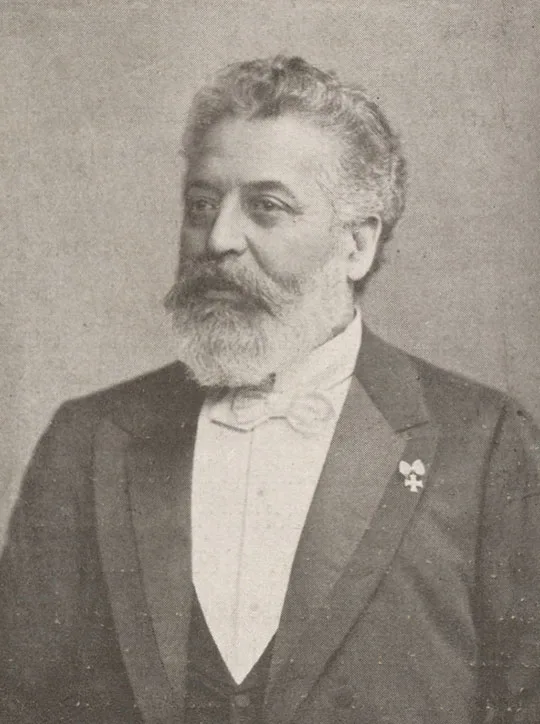 Amber industrialist Moritz Becker.
In 1858 the company “Stantien und Becker” / “Stantien & Becker” was founded in Memel / Memel (Klaipėda, Lithuania); one of its co-owners was Moritz Becker (1830–1901). The company was engaged in the extraction of minerals, paying particular attention to amber.
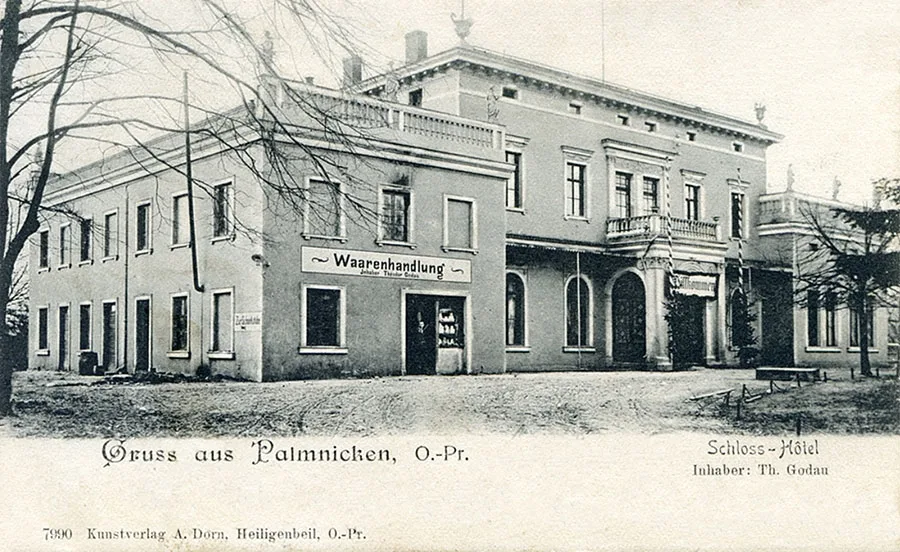
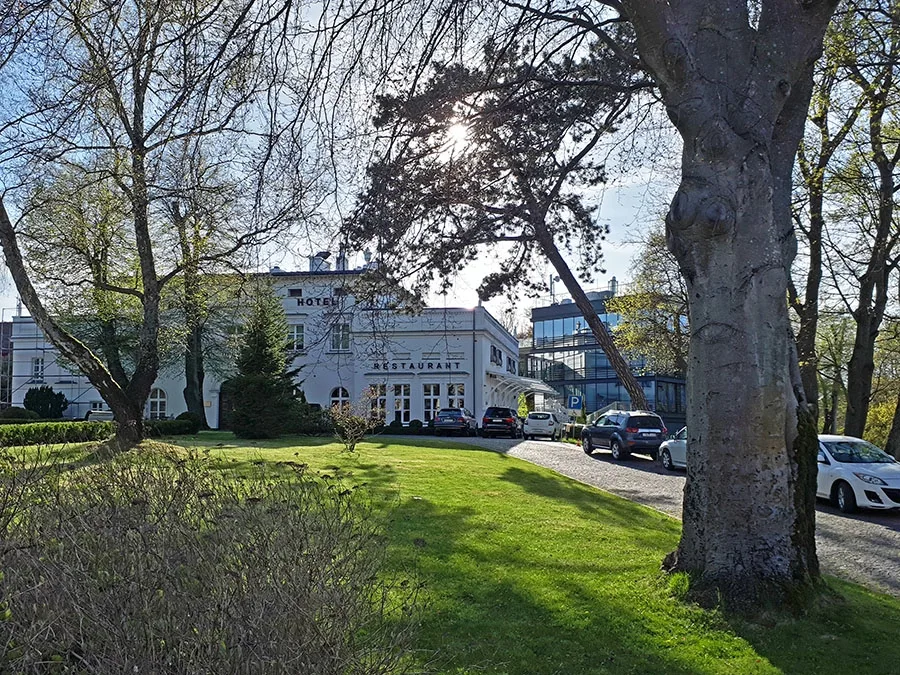
The hotel “Schloss” was built on the site of Moritz Becker's mansion and is an outward copy of it.
At first the company mined amber in the Curonian Lagoon near the village of Schwarzort / Schwarzort (Juodkrantė, Lithuania), but industrial extraction there (from 17 to 75 tonnes of amber in different years) involved considerable costs: wages for almost 1,000 workers and the upkeep of machinery, port infrastructure and the technical fleet. At the end of the 1860s the company's management turned its attention to the coast near Palmnicken as a promising site for amber mining.
In 1870 Becker acquired Palmnicken Castle, demolished the old building and on its foundations built the “Schloss Hotel”, intended to accommodate the company's management and guests. A park was laid out around the hotel (it now bears Becker's name).
By 1871 Becker had become the sole owner of the company and began buying up peasant plots around Palmnicken, offering high prices for them.
On 13.06.1874 the Palmnicken estate was included, with the status of a Gutsbezirk, in the newly established Amtsbezirk of Palmnicken. In reality, however, the Gutsbezirk of Palmnicken was formed only on 26.05.1899. Besides the Palmnicken estate itself, the Gutsbezirk of Palmnicken also included the outlying farms (Vorwerke) of Dorbnicken / Dorbnicken (Krasnolesye), Heiligenkreutz / Heiligenkreutz (Krasnotorovka) and Warschken / Warschken (Vershkovo). Residents of Palmnicken held the post of head of the Amtsbezirk in 1907–23 (Royal Senior Mining Councillor Jacobson / Jacobson), in 1923–43 (Senior Mining Councillor Bellmann / Bellmann) and in 1943–45 (the mayor of Palmnicken, name to be clarified).
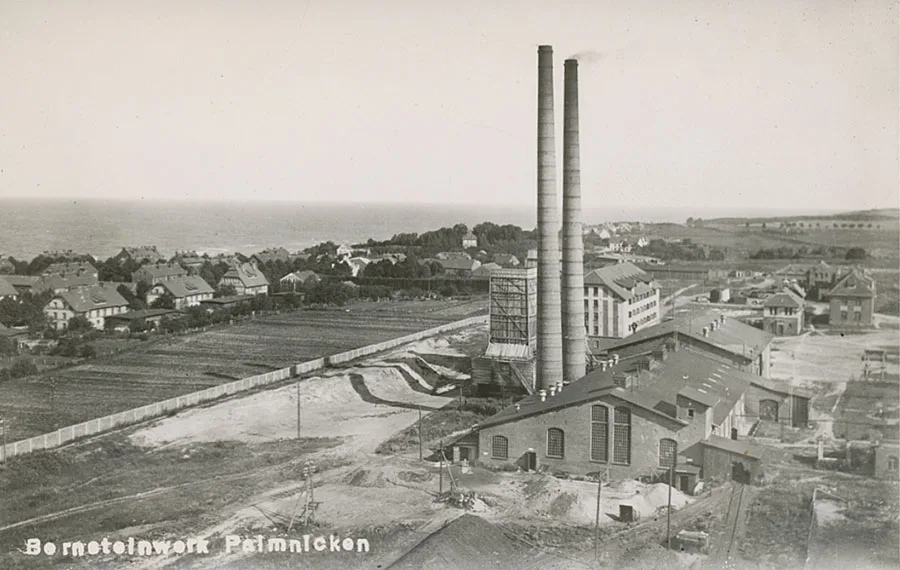
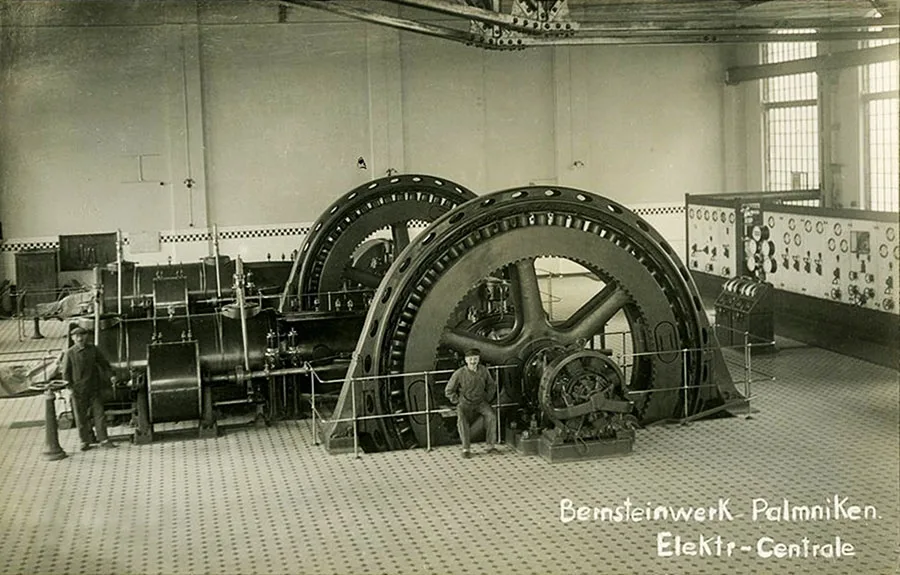 The electric heart of the amber mine.
On 20.05.1875 Becker's company received official permission for industrial amber mining near Palmnicken (north of the village of Kraxtepellen).
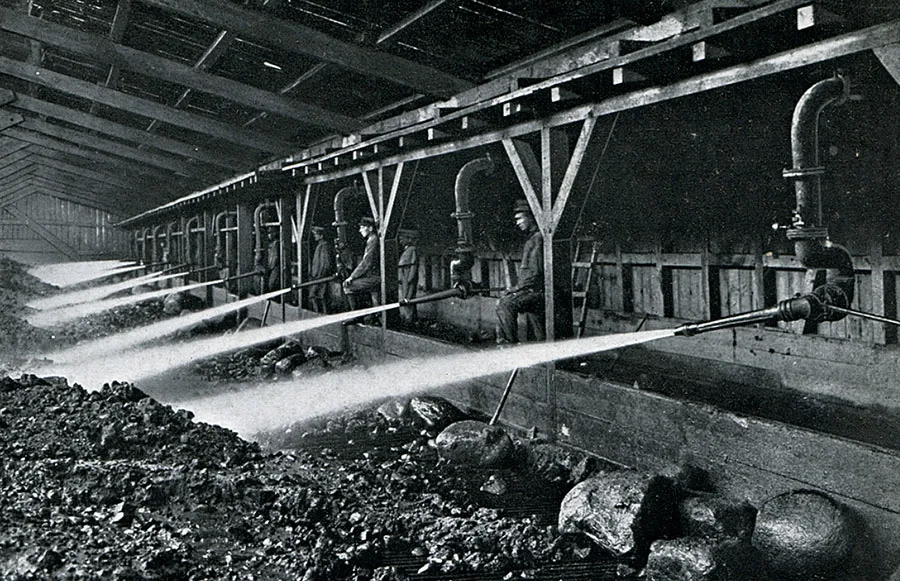 Amber mining.
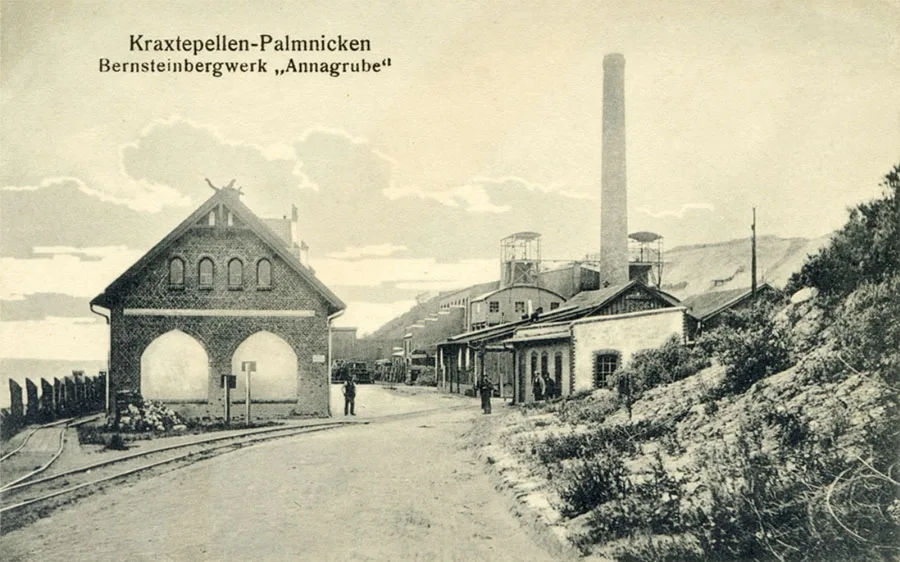 The notorious “Anna” mine.
At first Becker tried to obtain amber using teams of diggers and divers. In 1881 the divers brought up 14 tonnes of amber, but Moritz Becker was not satisfied with the results. The “Anna” (1883) and “Henriette” mines were opened (the latter was closed in 1896 owing to low profitability). With their help amber output increased more than tenfold, reaching 85 tonnes in the first year and 400 tonnes a year at its peak.
In 1883 Becker's company, with 2,000 employees, was recognised as the largest enterprise in East Prussia. On 16.04.1884 the Fischhausen – Palmnicken (Primorsk – Yantarny) railway branch line was opened; it became part of the East Prussian Southern Railway (Ostpreußische Südbahn).
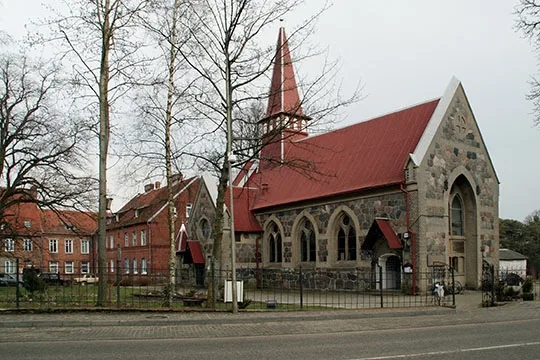
A station was built on it in Palmnicken. In 1892 a church was built in Palmnicken, which at first was a filial church of the Germau (Russkoye) parish. Only in 1906 did the Palmnicken parish become independent. The new parish took in the surrounding settlements that had previously belonged to the parishes of Germau (Russkoye) and Heiligenkreutz (Krasnotorovka).
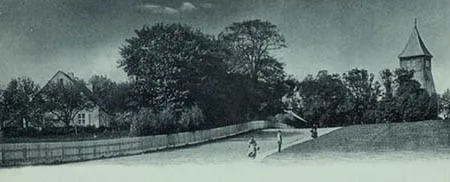
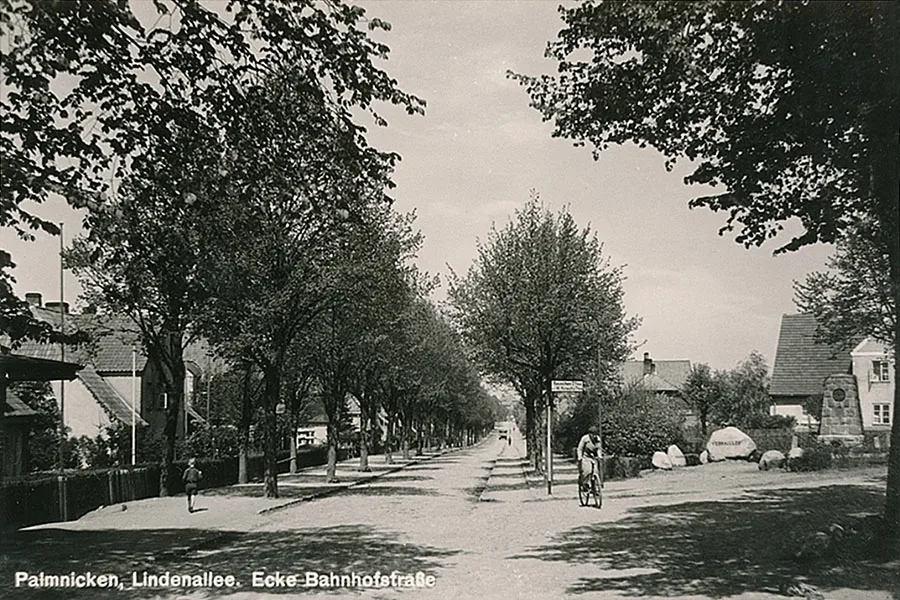 Corner of Lindenallee and Bahnhofstraße (junction of Sovetskaya and Zheleznodorozhnaya Streets).
In 1899 the land lease of the “Stantien und Becker” company expired, and the state bought out the property of Becker's company, including the mines and the “Schloss Hotel”.
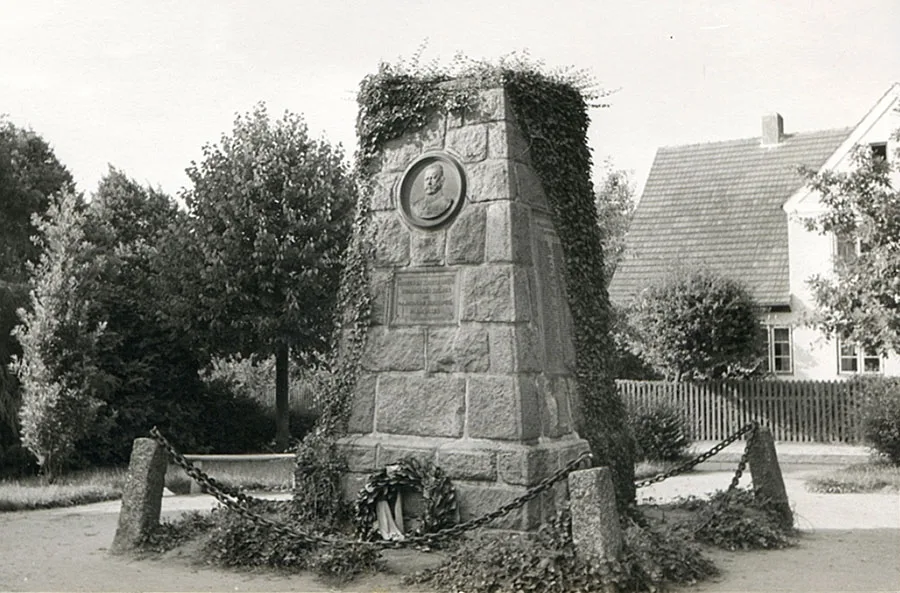
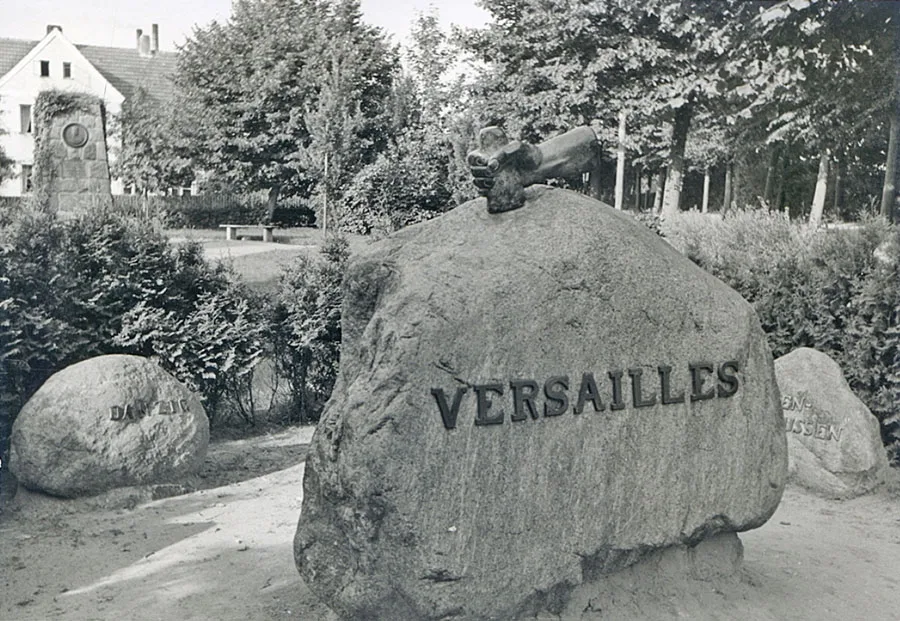 Monument to those who fell in the First World War (above) and the memorial stone commemorating the Peace of Versailles.
In 1900–02 the Gutsbezirk of Heiligenkreutz / Heiligenkreutz (Krasnotorovka) was joined to the Gutsbezirk of Palmnicken. In 1913 the “Walter” amber open-pit mine was opened, where 50 tonnes of amber a year were extracted right from the start. The “Anna” mine was closed in 1924, when its amber output fell and production became unprofitable.
On 30.09.1928 the Gutsbezirk of Palmnicken was abolished. Palmnicken itself (together with the likewise abolished rural communities of Bardau (Gordovo) and Kraxtepellen (Yantarny, part)) formed the new rural community of Palmnicken. The outlying farms of Warschken (Vershkovo) and Heiligenkreutz (Krasnotorovka), which had belonged to the Gutsbezirk, passed respectively to the rural communities of Sorgenau / Sorgenau (Pokrovskoye) and Wangnicken / Wangnicken (Yantarovka).
On 04.10.1936 the railway branch line from Palmnicken to Groß Dirschkeim / Groß Dirschkeim (Donskoye) was put into operation. In 1937 a record 850 tonnes of amber were extracted at the “Walter” mine.
Amber production employed 700 people. In 1945 the railway branch to Gross Dirschkeim (Donskoye) was extended to Georgenswalde / Georgenswalde (Otradnoye), where it joined the Samland Railway / Samlandbahn, by which one could reach Königsberg.
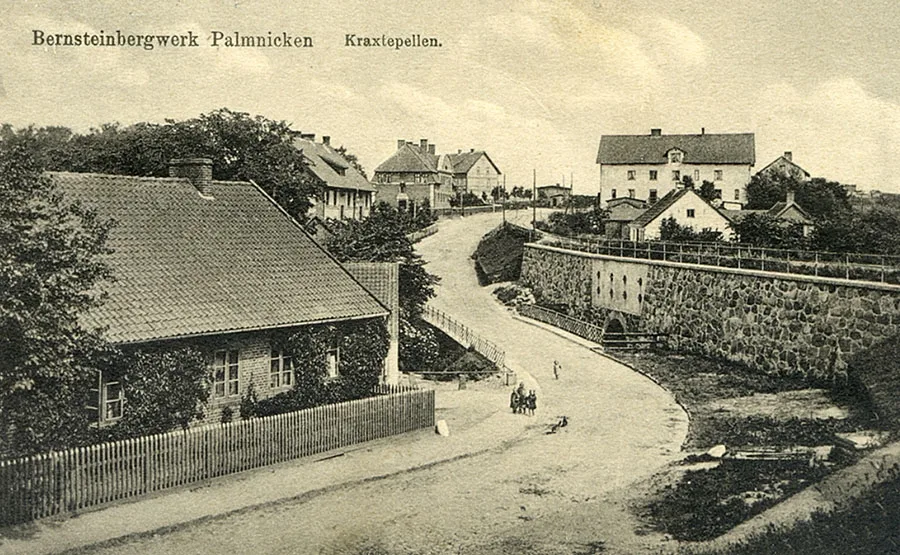 The boundary between Palmnicken and Kraxtepellen.
On 31 January – 1 February 1945, after the so-called “death march”, concentration camp prisoners were shot near the abandoned “Anna” mine.
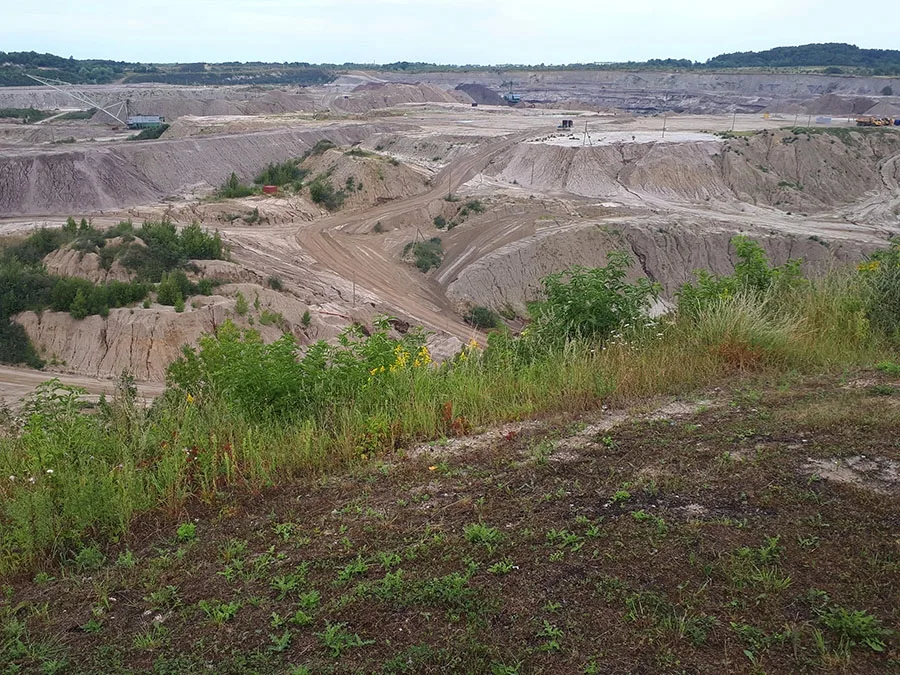 The present-day quarry. The proven amber reserves alone are enough for another 300 years of mining.
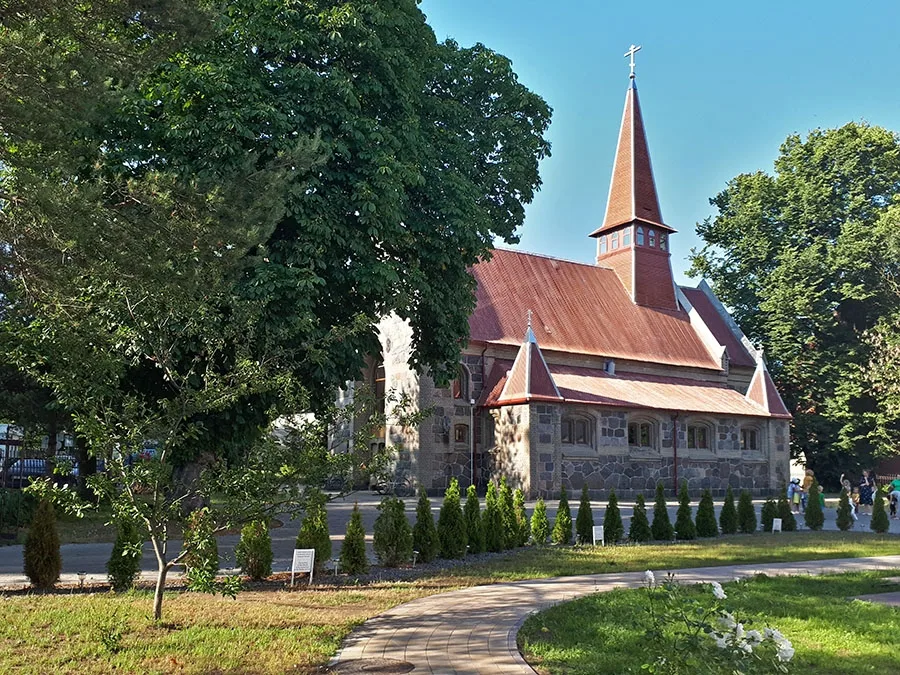 Church of the Kazan Icon of the Mother of God (the Palmnicken church).
The exact number of those shot is unknown. It was originally thought that about two thousand people had been killed. Later researchers put the figure at 4,600 and even as many as seven thousand
On 15.04.1945, by 17:00, soldiers of the 115th Rifle Division (Major General A. P. Blinov, 1900–74) of the 103rd Rifle Corps of the 43rd Army reached the sea coast near the villages of Palmnicken, Sorgenau and Kraxtepellen. Fighting then broke out on the approaches to these villages, turning into street fighting late in the evening. By the end of 15 April Palmnicken and Kraxtepellen had been taken by soldiers of the 292nd and 576th Rifle Regiments of the 115th Rifle Division.
The southern approaches to Palmnicken were liberated by soldiers of the 325th Rifle Division (Major General N. Z. Sukhorebrov, 1901–57). The damage done to Palmnicken during the fighting was minor.
By November 1946 the district authorities had proposed giving Palmnicken the status of a workers' settlement and renaming it Krasnoflotsk or Krasnofilsk, but as far as the name was concerned, the proposal was not supported by the regional commission. On 17.06.1947 Palmnicken was renamed Yantarny, and on 25.07.1947 Yantarny was confirmed as a workers' settlement in Primorsk District (from 1962 in Zelenogradsk District). The Yantarny village council was also created, which besides the settlement itself included another 34 localities.
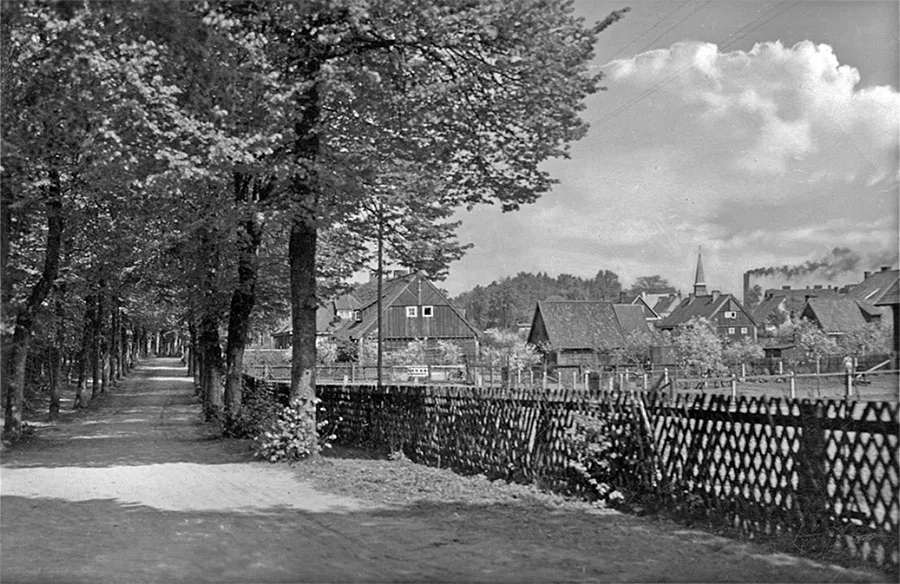 The southern outskirts of Palmnicken.
In 1948 amber mining was resumed. Kombinat No. 9 under the USSR Ministry of Internal Affairs (MVD) was established. About 600 people worked at the enterprise, most of them prisoners. In the first year 127 tonnes of amber were extracted.
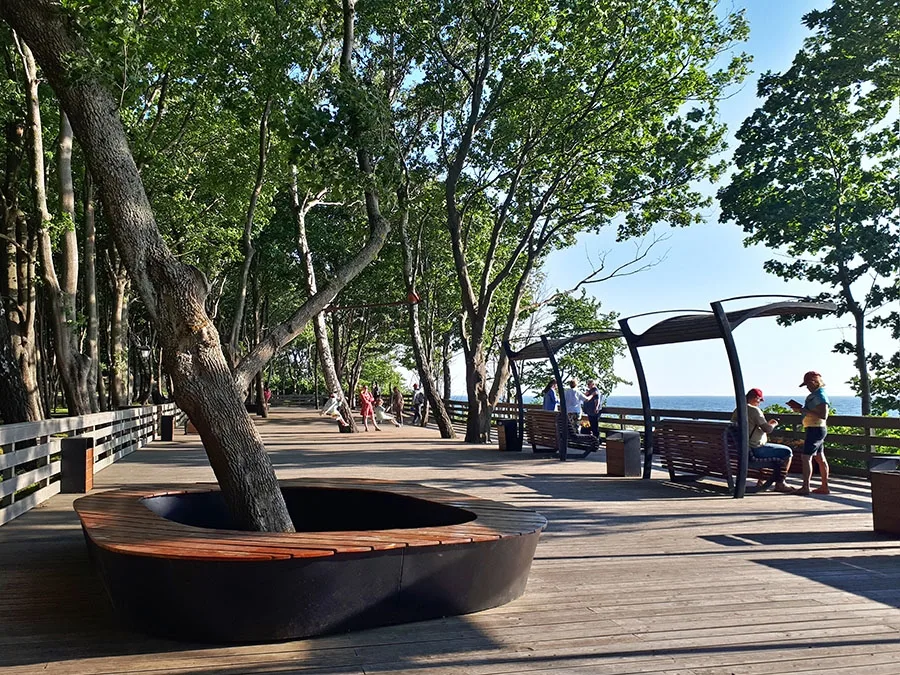 Terrace overlooking the sea in the Moritz Becker Park.
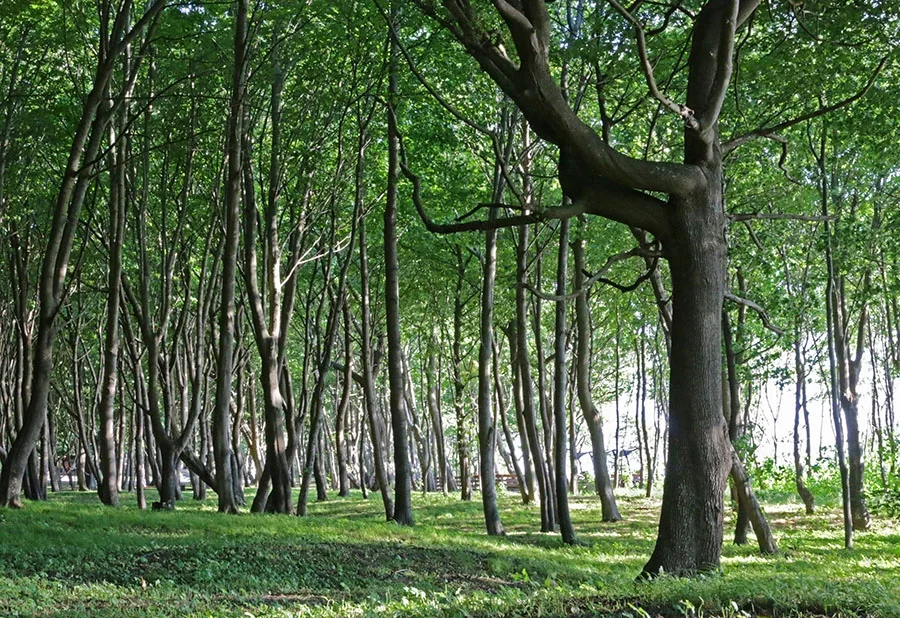 The Moritz Becker Park is especially beautiful at sunset.
Besides the enterprise on which the settlement of Yantarny was built, a brickworks (closed in 1949) and the “Trud” production cooperative (closed in 1950) also began operating there.
In 1953 the amber-mining enterprise was removed from the jurisdiction of the MVD, was renamed the Kaliningrad Amber Kombinat and became part of the “Russkiye Samotsvety” trust. Right away, in 1953, products of the Amber Kombinat were shown at the VDNKh of the USSR. In the same year a hospital was opened in the settlement and the school was thoroughly renovated.
After successful exhibitions of the Amber Kombinat's products in the GDR and the Netherlands, it was decided to expand the extraction and processing of amber and to build new workshops.
In 1957 a brickworks was reopened in Yantarny for the construction of residential and industrial buildings. Also, in 1960–62 a special order of the Government of the RSFSR allocated funds for improving the settlement. In 1965 Yantarny was transferred from the jurisdiction of the Zelenogradsk town council to that of the Svetlogorsk town council. In 1969 and 1970 proposals were submitted to the Supreme Soviet of the RSFSR to grant the settlement the status of a town of regional subordination, but both were rejected. In 1968 the “Yantar” department store opened in the settlement.
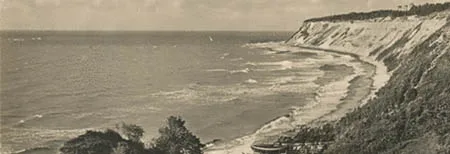
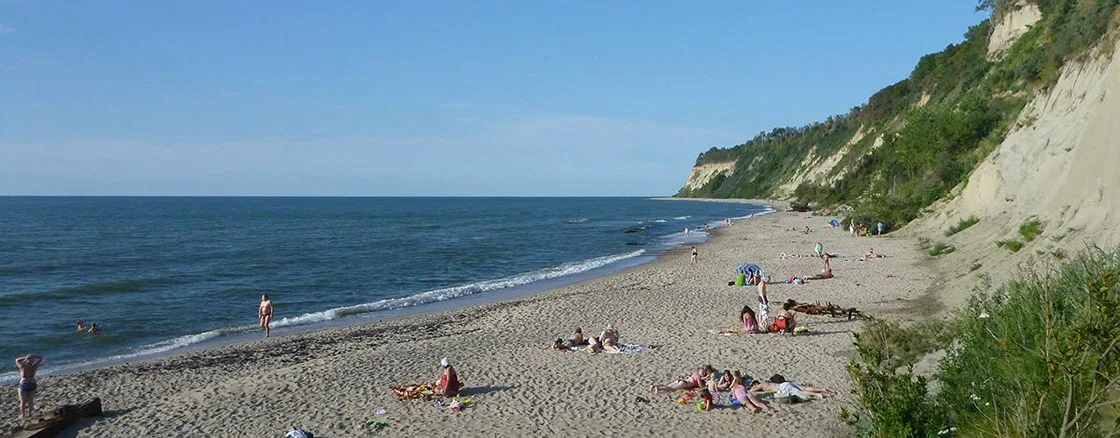
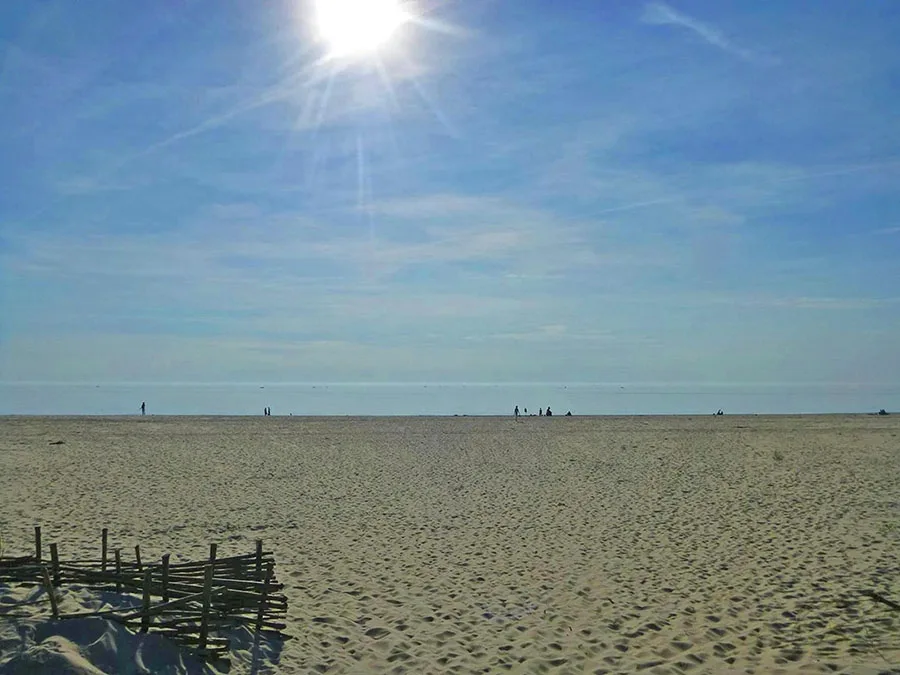 The local boundless beach amazes even seasoned tourists!
In 1970 work at the old “Walter” mine ended, and the development of a new one began nearby. The “Walter” was gradually flooded by groundwater and turned into Lake Sinyavino.
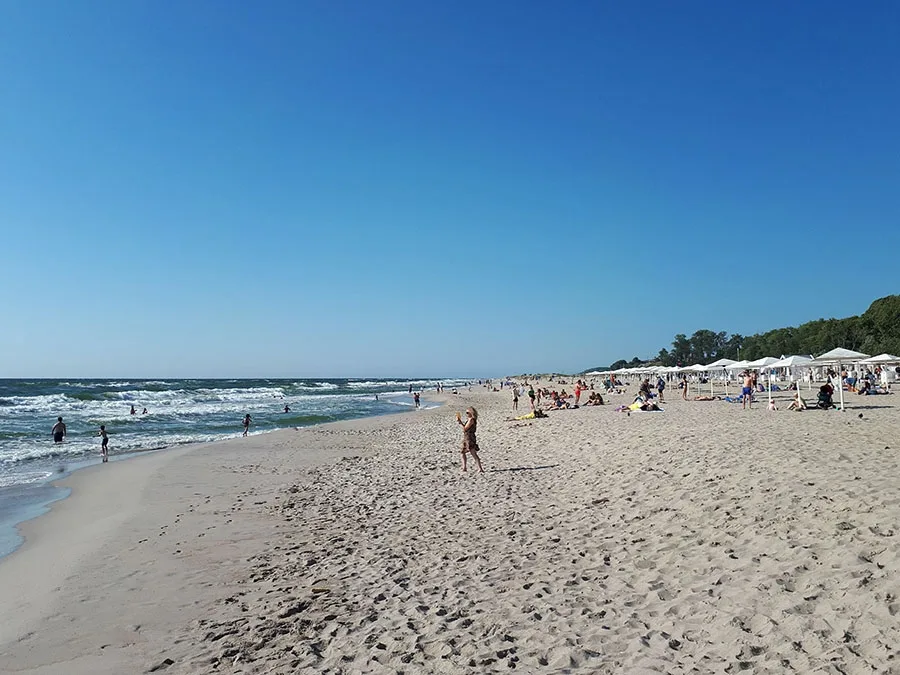 The developed part of the beach, certified with the “Blue Flag”.
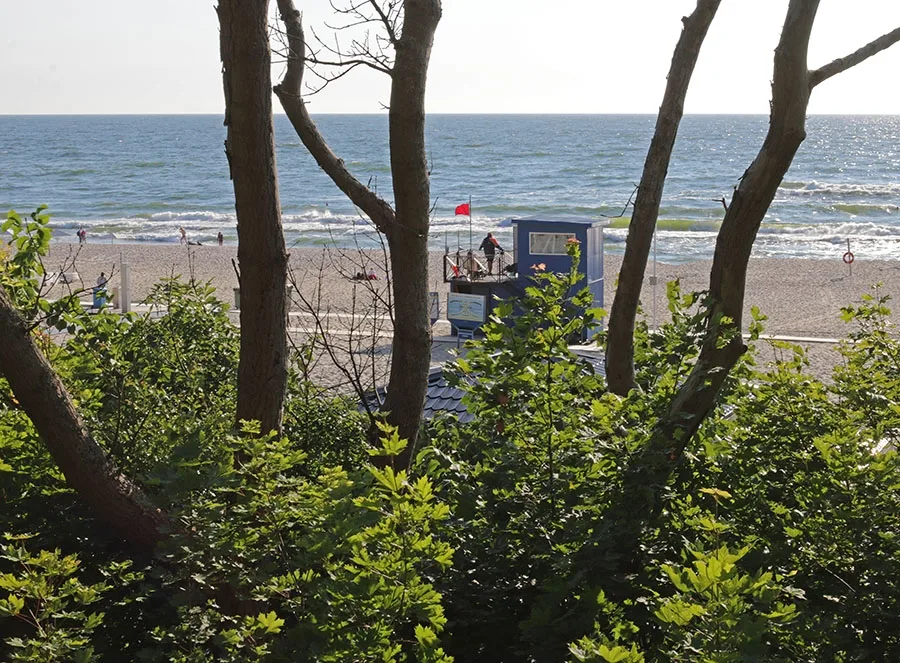 A lifeguard watches the beach.
In the 1970s (no later than 1975) the settlements of Pokrovskoye and Sinyavino were placed under the administration of the Yantarny settlement council. By 1975 Yantarny had a secondary school and an evening school, two kindergartens, a House of Culture, a hospital with an ambulance station, two first-aid posts and 13 retail outlets. In 1981 a 500-line telephone exchange was put into service. The main industry was, of course, the Amber Kombinat, which extracted an average of 700 tonnes of raw material a year and produced two million pieces of jewellery in a range of up to 500 items.
In 1990 the Amber Kombinat extracted a record amount of amber – more than 800 tonnes. In the same year the Lutheran church of Palmnicken was handed over to the Orthodox community to be turned into an Orthodox church.
With the collapse of the USSR and the transition to a market economy, a local administration was set up in Yantarny on 06.02.1992, and in the same year the Charter of Local Self-Government was adopted. In 1992 the local newspaper “Yantar” began to appear. However, the representative body created in 1993 – the settlement town council – was transformed as early as 1994 into an advisory body, the assembly of people's deputies. In 1994 the territory of the municipal formation “Posyolok Yantarny” became part of the municipal formation “Svetlogorsk Urban Okrug”. In 1993 the Amber Kombinat was corporatised and became JSC “Russky Yantar”, but as early as 1996 a court ruled the corporatisation unlawful, and the enterprise's status as a state enterprise was restored.
In 2002 the first commemoration of the victims of the Holocaust and of the shooting of Nazi camp prisoners in Palmnicken was held. Since then these events have been held every year.
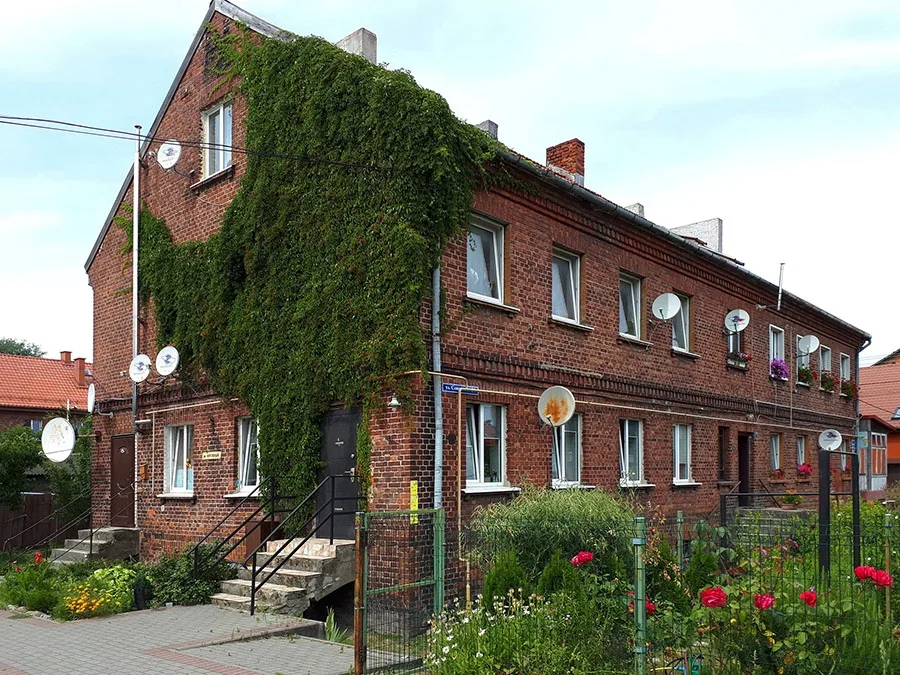 One of the many pre-war houses in the centre of the settlement.
In 2004 the Yantarny Urban Okrug was formed. In 2004–05 the restoration of historic urban sites began: a number of pre-war buildings were reconstructed, the old descent to the sea was restored, and cafés and hotels were opened.
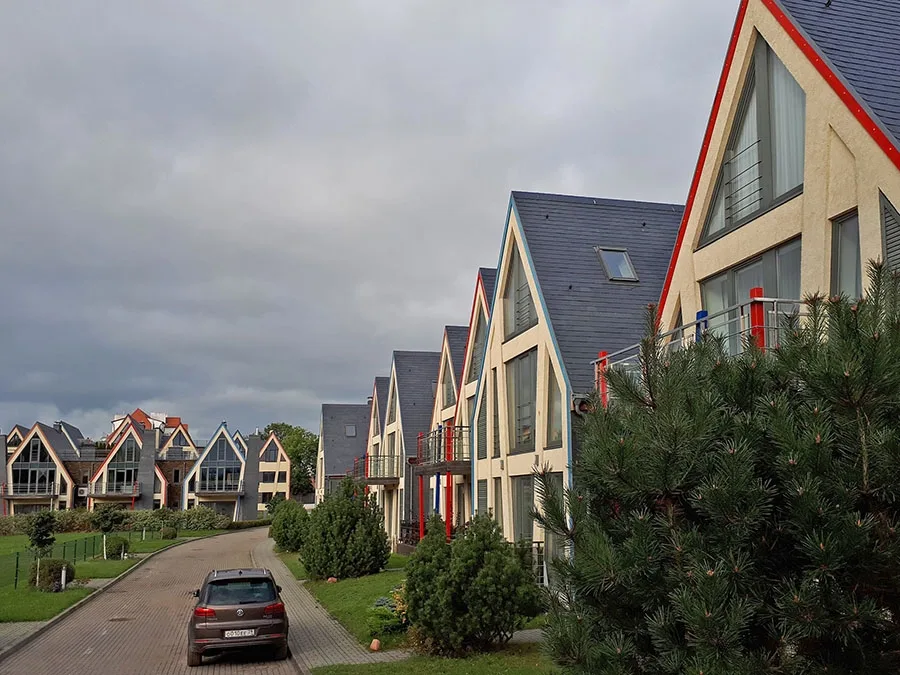 The new residential complex “Amberland”.
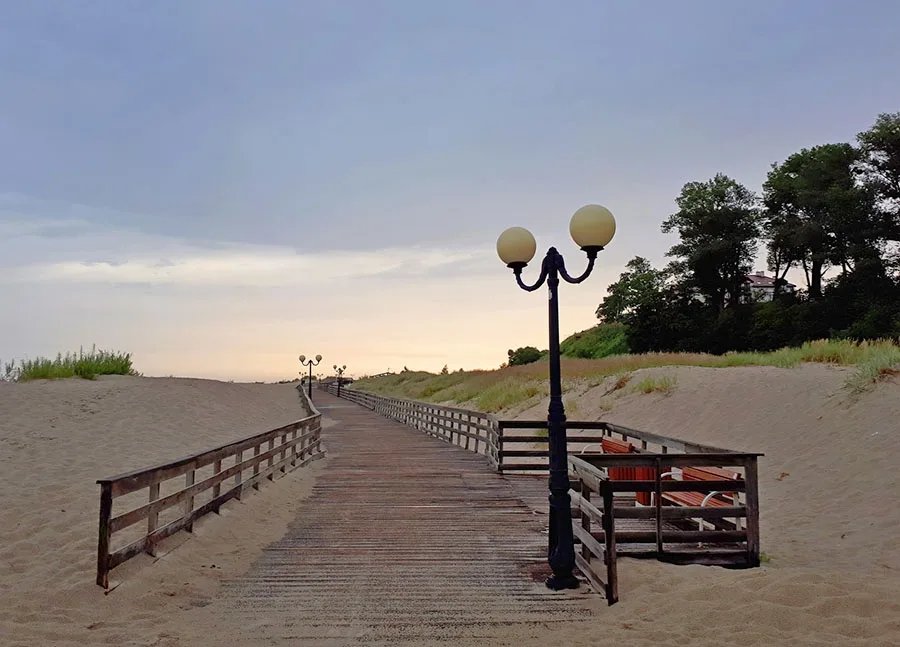 Promenade on the beach in Yantarny.
Since 2005 beach volleyball tournaments have been held in Yantarny.
As of 2008, 151 organisations and 136 sole proprietors operated in Yantarny. A considerable proportion of them were connected with amber and the sale of amber industry products; there was also furniture and building-component manufacturing. After 2005 tourist infrastructure began to develop in the settlement: around the turn of the 2000s and 2010s it had three hotels, two restaurants and about a dozen cafés and bars. As of 2012 Yantarny had a secondary school, a hospital, two kindergartens, a children's art school, a House of Culture, a library, a sports complex and two sports grounds. The Moritz Becker Park has been restored. There are diving clubs and centres, and the settlement is visited by paragliding, kiting and sailing enthusiasts.
Sights: church (1892), water tower (1920), park (1881), monument to the victims of the “death march” (2011), “Amber Castle” museum, stone footbridge.
Population dynamics of the settlement of Yantarny: 1946 – 11971, 1959 – 4307, 1970 – 4973, 1989 – 4948, 2002 – 5455, 2010 – 5524 inhabitants.
1 – including a German population of 450.
For reference
Kraxtepellen is mentioned in 1540 as Kraxtebellen / Craxtebellen. Then by 1563 the name had changed to Kraxtepel / Craxtepel. Around 1785 it is mentioned as Kirschpellen / Kirschpellen, and later, until 1820, it was called Krispellen / Krispellen.
In the 19th century Kraxtepellen was a village which from 1818 formed a rural community in the Kreis of Fischhausen / Fischhausen (Primorsk; from 1939 part of the Landkreis of Samland / Samland). Until 1906 the village belonged to the parish of Germau / Germau (Russkoye), and from 1906 to the new parish of Palmnicken (Yantarny). The community also included the outlying settlement of Pfeffermühle / Pfeffermühle (54°52'58'' N, 19°57'13'' E), where a windmill operated at the end of the 19th century. In 1871 Kraxtepellen had 30 dwelling houses, in which 59 families and three single men lived. On 13.06.1874 the rural community of Kraxtepellen was included in the newly established Amtsbezirk of Palmnicken. The head of the Kraxtepellen community, Hermann Kahlau / Kahlau, served as head of the Amtsbezirk in 1892–1907. At the end of the 19th century the amber mine (from 1899 the State Amber Mine / Staatliches Bernstein-Bergwerk) became part of the Kraxtepellen community. The fact is that both the galleries of the “Anna” mine and later the “Walter” open-pit mine were located north of the village of Kraxtepellen. In actual fact the amber was mined in Kraxtepellen, while Palmnicken earned fame as the centre of amber mining because the directorate and works management were located there. On 30.09.1928 the rural community of Kraxtepellen lost its independence and was merged with the Palmnicken estate and the Bardau (Gordovo) community into the new rural community of Palmnicken.
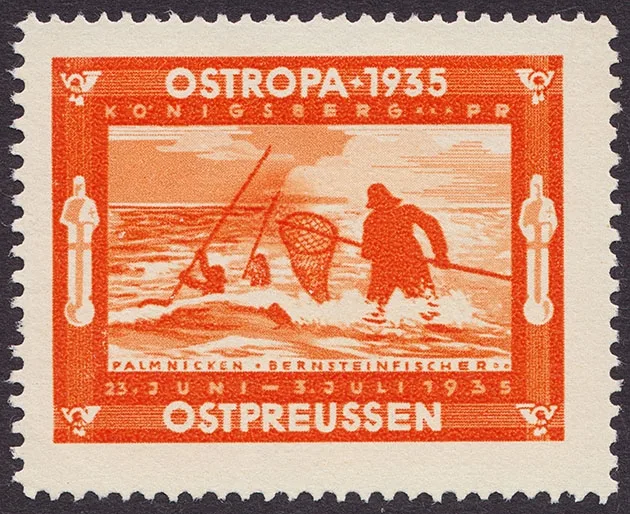
Amtsbezirk of Palmnicken. On 13.06.1874 Amtsbezirk No. 10 Palmnicken was established in the Kreis of Fischhausen (Primorsk; in 1939 merged into the Landkreis of Samland / Samland); it comprised three rural communities – Kraxtepellen / Kraxtepellen (Yantarny, part), Lesnicken / Lesnicken (Rakushino), Sorgenau / Sorgenau (Pokrovskoye) – and three Gutsbezirke: Dorbnicken / Dorbnicken (Krasnolesye), Palmnicken (Yantarny), Warschken / Warschken (Vershkovo). Strictly speaking, Palmnicken was not yet a Gutsbezirk in 1874 – it received this status in 1899 – but was initially included in the Amtsbezirk “with the rights of a Gutsbezirk”. By 1883 one more rural community had joined the Amtsbezirk of Palmnicken – Bardau / Bardau (Gordovo). On 26.05.1899 the Gutsbezirke of Dorbnicken (Krasnolesye) and Warschken (Vershkovo) were abolished, and the estates became outlying farms within the Gutsbezirk of Palmnicken. On 06.07.1901 the rural community of Lesnicken (Rakushino) lost its independence and was incorporated into the Gutsbezirk of Nodems / Nodems (Okunyovo) of the Amtsbezirk of Gauten / Gauten (Putilovo). Thus the Amtsbezirk of Palmnicken came to consist of three rural communities – Bardau (Gordovo), Kraxtepellen (Yantarny, part) and Sorgenau (Pokrovskoye) – as well as part of the Gutsbezirk of Palmnicken (since the Gutsbezirk of Heiligenkreutz / Heiligenkreutz (Krasnotorovka), previously incorporated into it, lay within the territory of the Amtsbezirk of Heiligenkreutz).
On 25.05.1910 the rural communities of Groß Hubnicken / Groß Hubnicken (Sinyavino) and Klein Hubnicken / Klein Hubnicken (Klenovoye) were transferred to the Amtsbezirk of Palmnicken from the Amtsbezirk of Heiligenkreutz (Krasnotorovka), and on 23.10.1911 the rural community of Heiligenkreutz (Krasnotorovka) met the same fate. On 30.09.1928 the rural communities of Bardau (Gordovo) and Kraxtepellen (Yantarny, part) and part of the Gutsbezirk of Palmnicken (in the form of the estate itself) were transformed into the new rural community of Palmnicken. As a result, the Amtsbezirk of Palmnicken came to consist of four rural communities: Gross Hubnicken (Sinyavino), Klein Hubnicken (Klenovoye), Palmnicken (Yantarny) and Sorgenau (Pokrovskoye). The last change in its composition took place on 01.04.1939, when the Sorgenau (Pokrovskoye) community lost its independence and became part of the rural community of Palmnicken.
Population dynamics of the Palmnicken estate: 1867 – 233, 1871 – 299, 1885 – 352 inhabitants.
Population dynamics of Kraxtepellen: 1867 – 317, 1871 – 339, 1885 – 657, 1905 – 734, 1910 – 922 inhabitants.
Population dynamics of the Gutsbezirk and community of Palmnicken: 1816 – 153, 1831 – 123, 1858 – 258, 1864 – 228, 1867 – 233, 1871 – 299, 1885 – 352, 1905 – 1141, 1910 – 1289, 1925 – 2704, 1933 – 2361, 1939 – 3079.
Composition of the population of Palmnicken in 1871: Evangelical Christians – 298, other Christians (excluding Catholics) – 1, children under 10 – 50, literate – 193 (78%), insane – 2.
Composition of the population of Kraxtepellen in 1871: all 339 Evangelical Christians, children under 10 – 103, literate – 159 (67%).
Composition of the Palmnicken parish in 1907: Bardau / Bardau (Gordovo), Dorbnicken / Dorbnicken (Krasnolesye), Groß Hubnicken / Groß Hubnicken (Sinyavino), Klein Hubnicken / Klein Hubnicken (Klenovoye), Kraxtepellen / Kraxtepellen (Yantarny, part), Lesnicken / Lesnicken (Rakushino), Palmnicken (Yantarny), Pfeffermühle / Pfeffermühle (54°52'58'' N, 19°57'13'' E), Sorgenau / Sorgenau (Pokrovskoye), State Amber Mine / Staatliches Bernstein-Bergwerk, Warschken / Warschken (Vershkovo).
Photos on this page: Bildarchiv Ostpreußen, bildarchiv-ostpreussen.de, present-day photos by Mikhail Ogorodnikov.
Translated from Russian with the help of AI (Claude, Anthropic), October 2026.