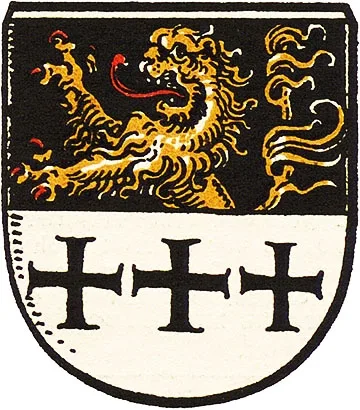
 Coat of arms
of Preußisch Eylau
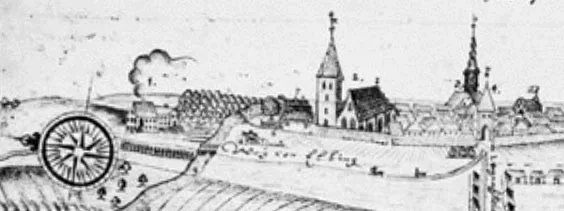
Founded in 1325–30 as a castle of the Teutonic Order on the site of the Prussian settlement of Sutvirt. The official year of foundation is 1336. Ile Castle (later Ilow, Ilau) was founded on the orders of the Grand Master of the Teutonic Order, Werner von Orseln; construction was led by Master Arnold von Eylenstein and supervised by Dietrich von Altenburg, then Komtur of Balga. By 1330 a square fortification, an outer bailey (Vorburg), a dam on the stream and a mill had been built. In 1335 a church was erected, and at around the same time a settlement began to grow up beneath the castle walls. Until 1347 Ilow Castle was the residence of a Pfleger; later it housed the administration of an Amt belonging to the Komturei of Balga. In 1400 a thunderstorm caused a major fire in the castle. In 1412 the castle had what was, for the time, a large estate: 76 horses, 58 oxen and cows, 356 sheep and 170 pigs. In February 1454, during the Thirteen Years' War, the castle was captured by the forces of the Prussian Confederation, but the Order soon retook it.
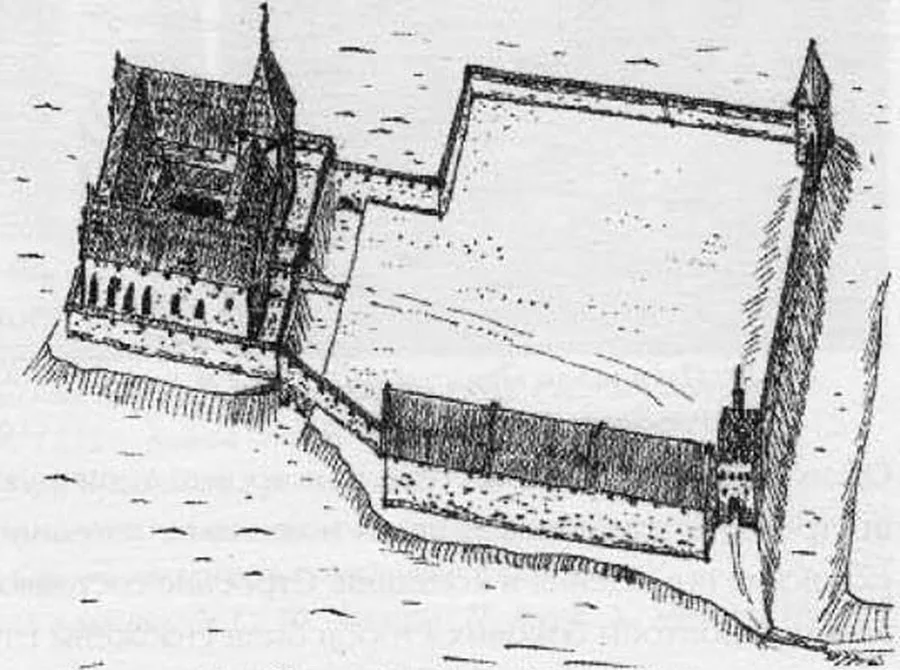 Preußisch Eylau Castle in the 15th century. Reconstruction by A.P. Bakhtin.
On 24 May 1455 Preußisch Eylau was attacked by Polish troops. By the time reinforcements arrived from Königsberg, only 15 of its defenders were still alive, but the castle held out.
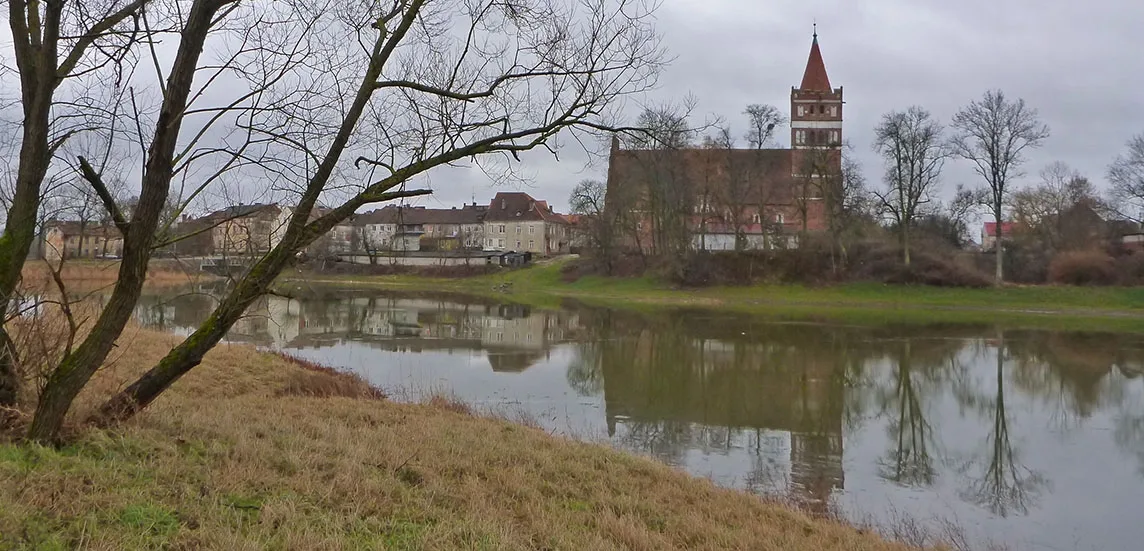
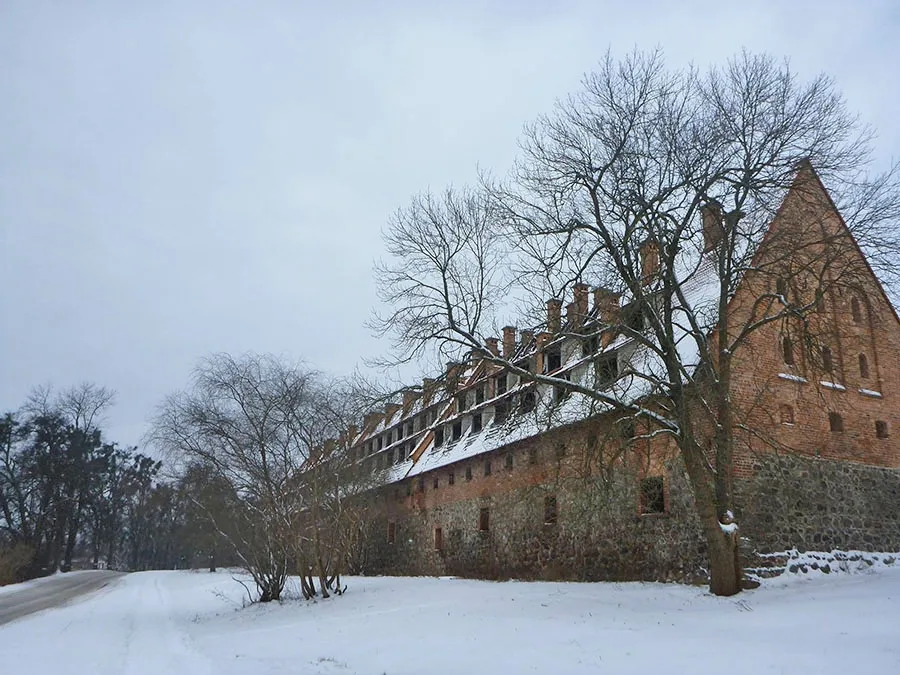 The surviving outer bailey of Preußisch Eylau Castle (2017).
In October 1455 Preußisch Eylau was attacked again by Polish troops and supporters of the Prussian Confederation, who burned down the outer bailey but failed to take the castle. In March 1456 a detachment set out against Preußisch Eylau from the Friedland area, but it was routed on the approaches to the castle. In 1492 Preußisch Eylau Castle passed to the descendants of Grand Master Heinrich Reuss von Plauen. Albrecht of Brandenburg granted the castle to the Lendorf family for their services to the Order, and they held it until 1575. In May 1520 a Polish army four thousand strong laid siege to Preußisch Eylau. The Poles burned the town, but the garrison, commanded by Friedrich Truchsess Weltburg and the Courland commander Fiericke, managed to beat off the assaults on the castle.
From 1514, regular fairs were held in Preußisch Eylau. On 30 November 1585 Preußisch Eylau was granted town status by the regent Georg Friedrich. At the end of the 18th century the Preußisch Eylau estate was leased, and later bought outright, by one Karl Gotter Gibensan.
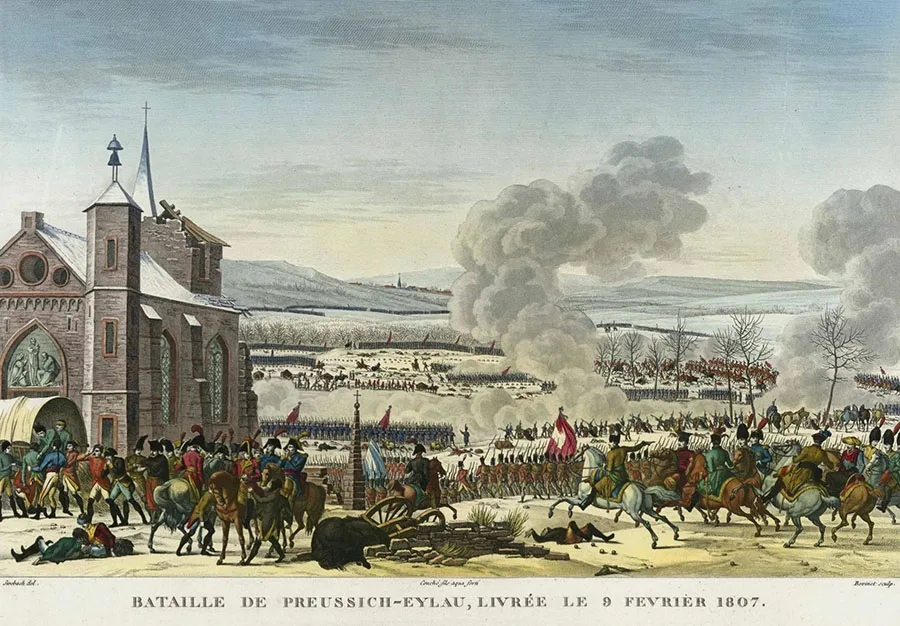 Jacques-François-Joseph Swebach-Desfontaines, “The Battle of Preußisch Eylau”, engraving, 1807.
On 7–8 February (Old Style; 25–26 January New Style) 1807, Preußisch Eylau was the scene of a famous battle between Napoleon's army and the Russo-Prussian coalition forces.
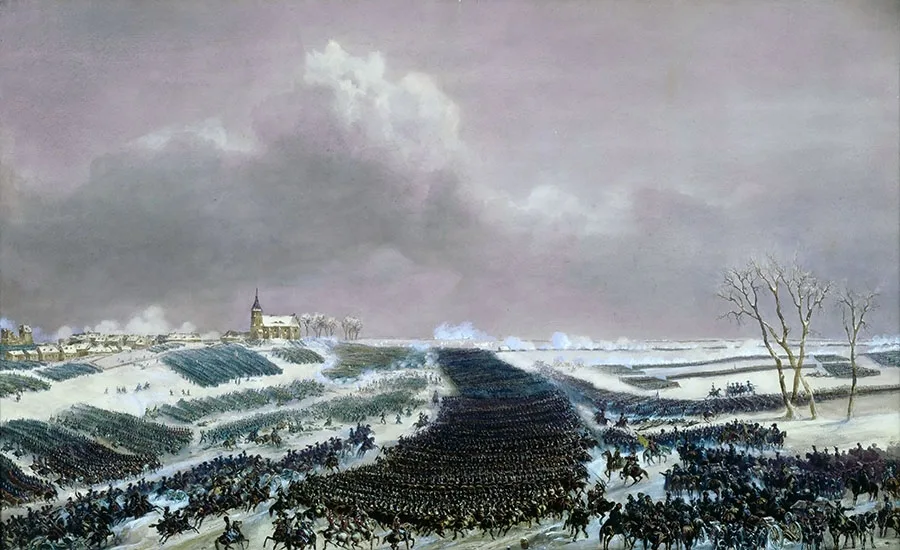 A painting held at the Palace of Versailles: “The Battle of Preußisch Eylau” by the French artist Jean-Antoine-Siméon Fort, 1836.
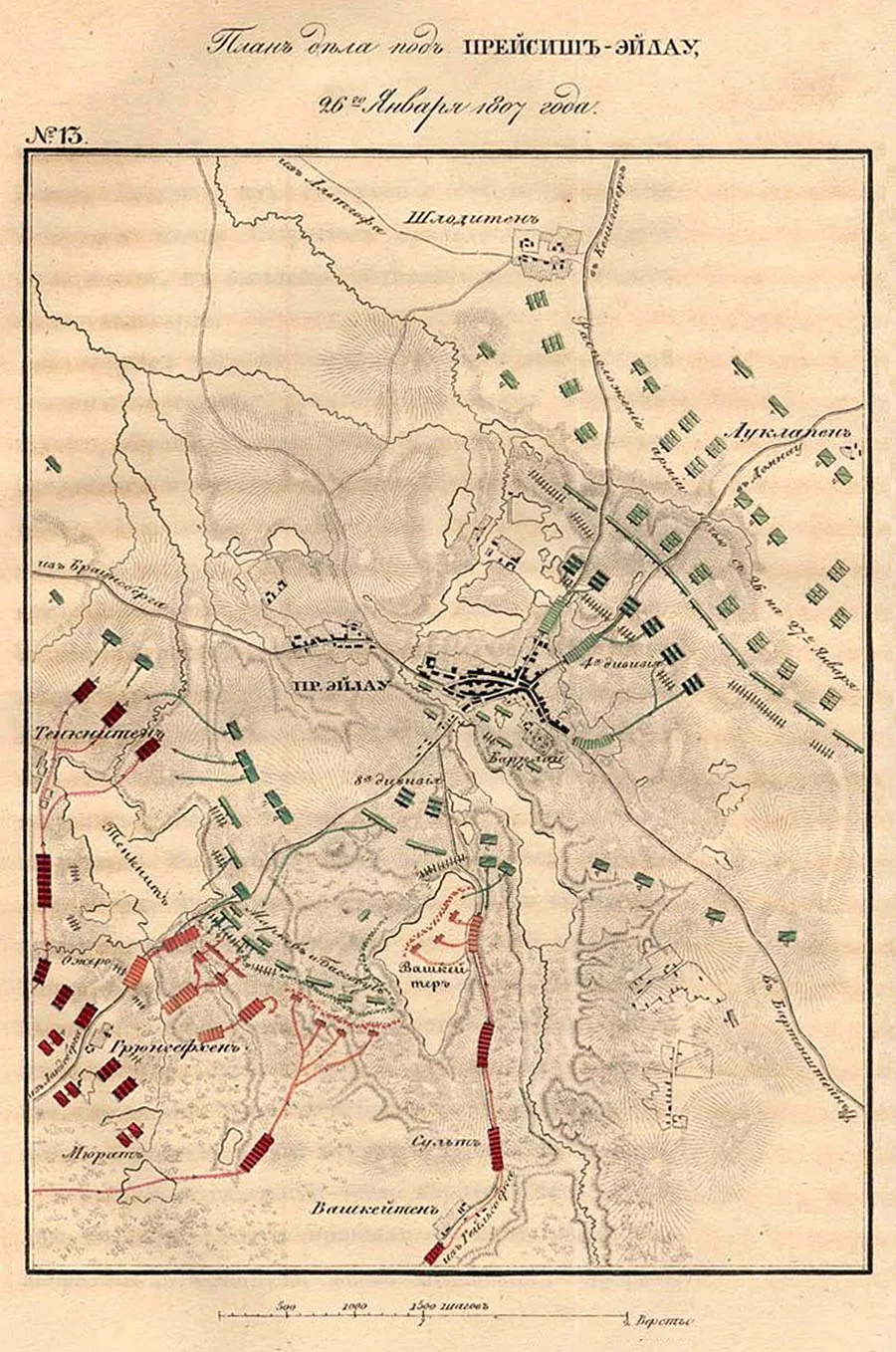 Plan of the Battle of Preußisch Eylau.
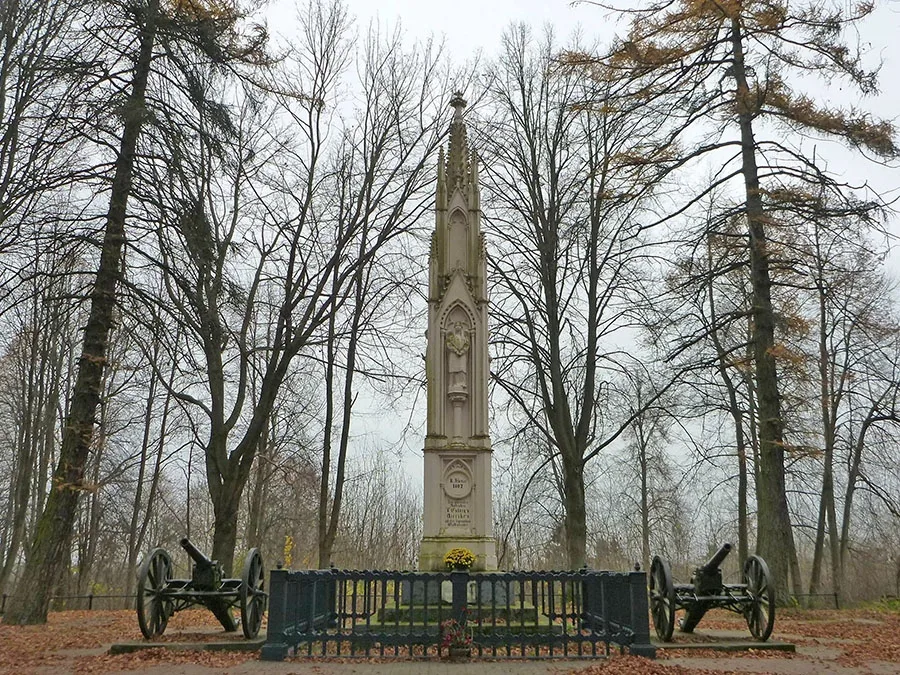 Monument commemorating the Battle of Preußisch Eylau on Druzhby Street.
In 1814 the Preußisch Eylau estate was bought by Heinrich Sigismund Valentini, who built a new house a kilometre away from the crumbling castle.
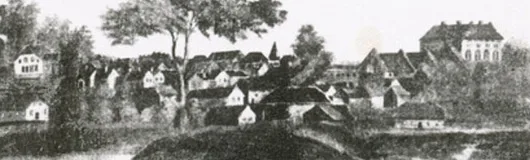
On 1 April 1819 Preußisch Eylau became an administrative centre. In 1831 a new manor house was built on the foundations of the outer bailey. In 1835 a newspaper began to be published in Preußisch Eylau. In 1861 the building of the Royal Teachers' Seminary was erected in the town.
In 1866 a railway link was opened to Königsberg and to Bartenstein (Bartoszyce, Poland).
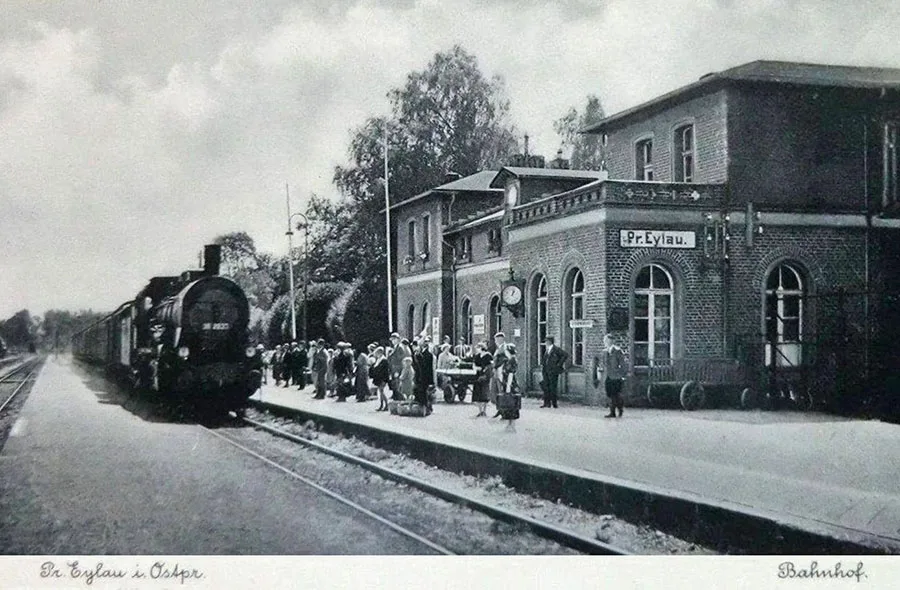 A train arriving at Preußisch Eylau station (1928).
From 26 August to 3 September 1914 Preußisch Eylau was occupied by the Russian army.
In 1932 the Valentini family handed Preußisch Eylau Castle over to the municipality. Before the war the town had a secondary school and a high school, a home for the elderly, a district hospital, a dairy, a brickworks, a cooperage, a steam mill, and a garrison.
On 10 February 1945 Preußisch Eylau was taken by the 55th Guards Motor Rifle Division of the 28th Army.
On 7 September 1946 Preußisch Eylau was renamed Bagrationovsk.
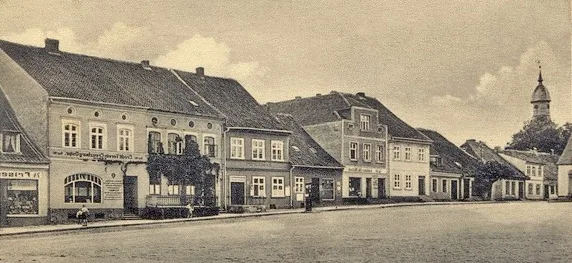
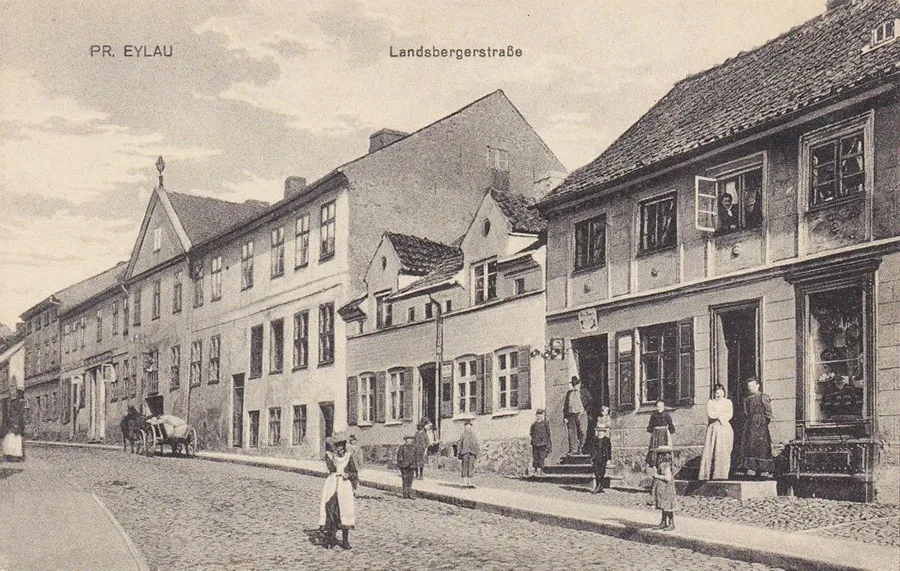 A pre-war postcard showing Landsberger Straße, today Pogranichnaya Street.
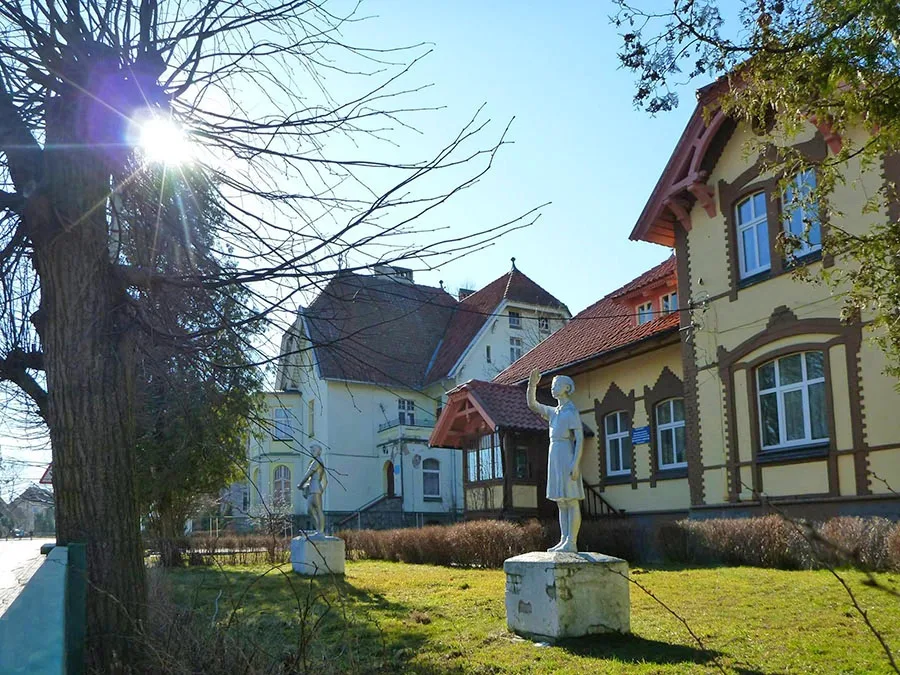 Old houses on Pogranichnaya Street (2015).
On 9 May 1954 a bust of Bagration was unveiled on the central square. From 27 November 1961 the castle grounds were occupied by the Bagrationovsk office of the district consumer cooperative union, which set up a warehouse there. In August 1990 a fire broke out in the middle section of the outer bailey.
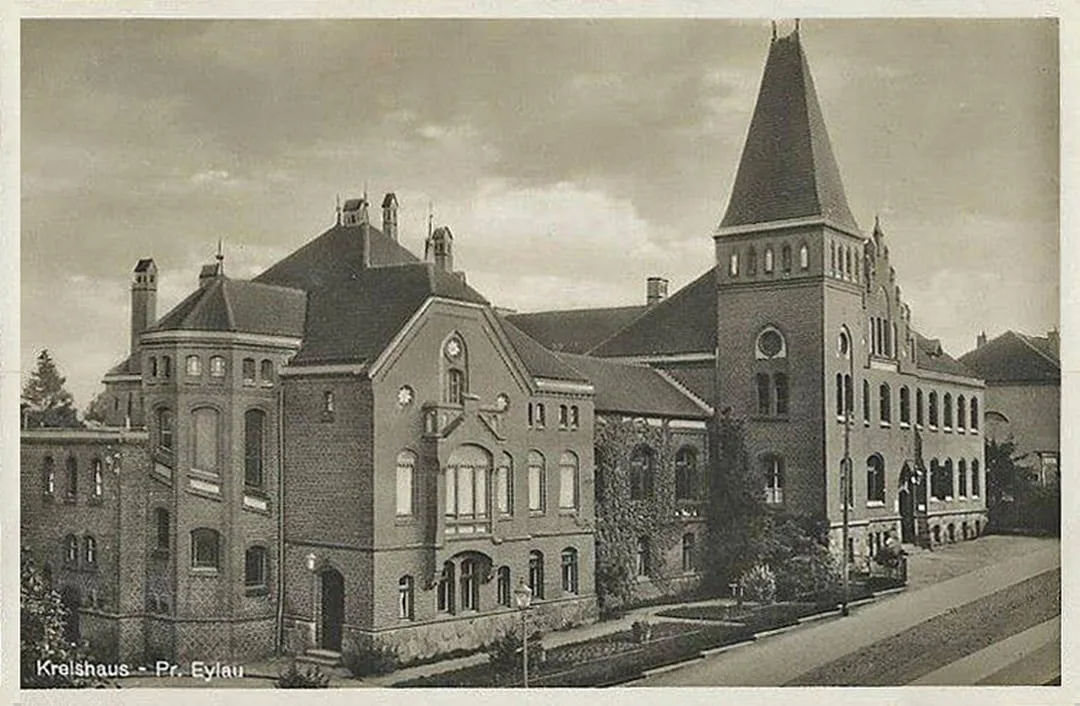
Sights: the remains of the outer bailey of the Order castle; the church building (14th century, converted into a factory workshop); the Catholic chapel (now a residential building); the former courthouse and post office; the former district administration building (1901, now the local history museum and house of culture); the former town school (1861, now the town administration); the former “youth house” (now a boarding school).
Population: 1782 – 1455, 1875 – 3738, 1890 – 3446, 1910 – 3270, 1933 – 4322, 1939 – 7461, 1946 – 2985, 1947 – 5229, 1959 – 4438, 1968 – 4300, 1970 – 5563, 1979 – 6049, 1989 – 6728, 1996 – 7300, 1998 – 7400, 2000 – 7300, 2002 – 7316, 2009 – 6591, 2010 – 6400, 2012 – 6462, 2013 – 6292, 2014 – 6229, 2019 – 6304, 2020 – 6388 inhabitants.
Contemporary photos by Mikhail Ogorodnikov.
Translated from Russian with the help of AI (Claude, Anthropic), October 2026.