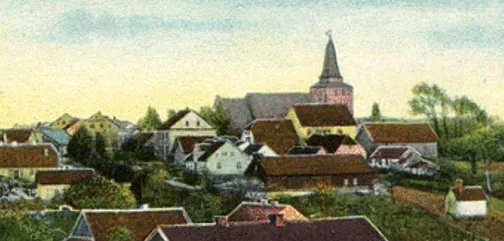
Strobjehnen was founded in 1405 as Strobieyn. Later the village's name changed to Strabiein (1525), Strabigen (1539), Strabigein (1540), Strobien (1540) and Strubienen (1542). By 1785 the name Strobgehnen had become established.
In 1785 Strobjehnen was classified as a royal and Kulm-law village (königlich und cölmisch Dorf) with 12 households. The village belonged to the Amt of Grünhoff / Grünhoff (Roshchino) in the Kreis of Schakenschen (Nekrasovo).
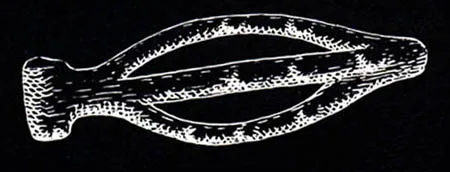
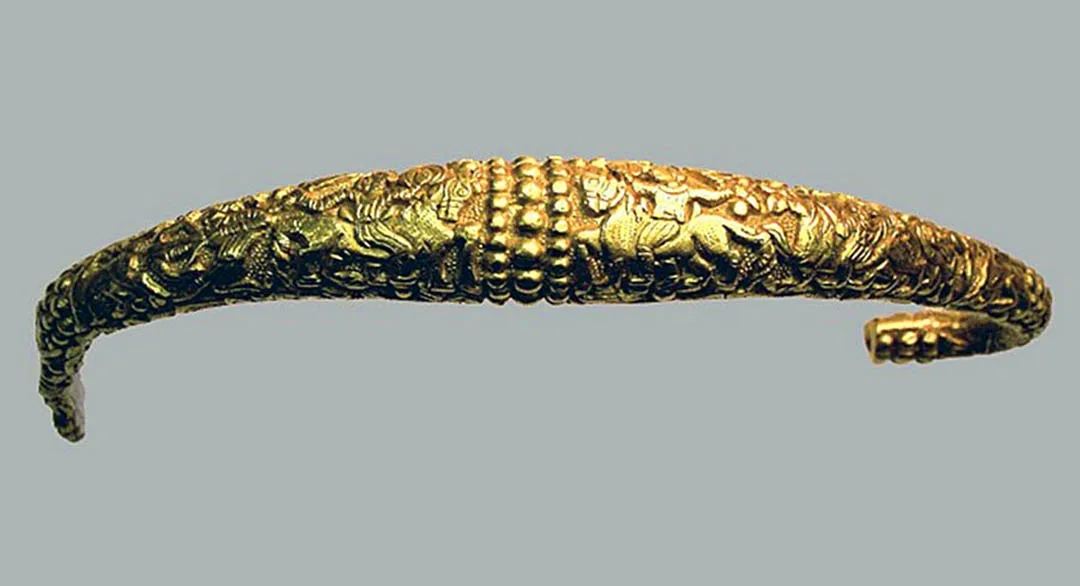
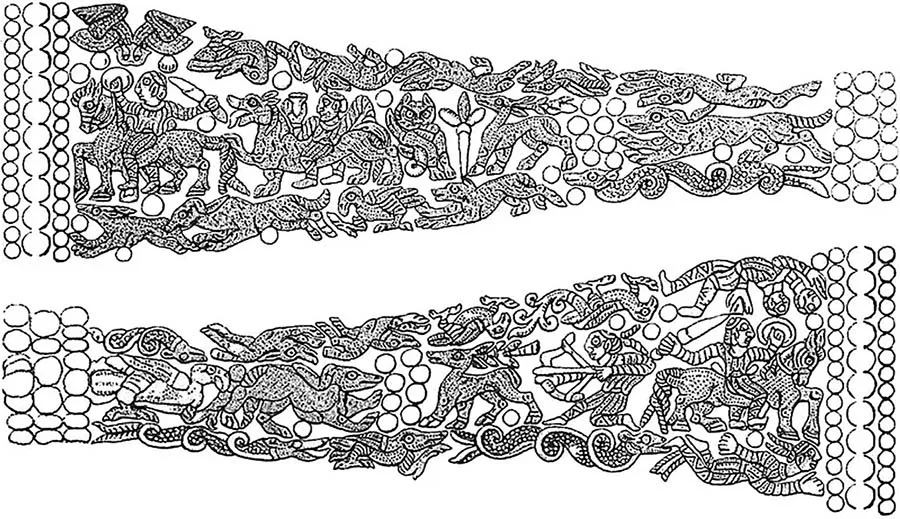
In 1798 the famous gold bracelet (the "ring"), weighing 347 g and decorated with battle scenes, was found near Strobjehnen (see below). The bracelet dates from the 8th century and is now in the Pushkin Museum in St Petersburg.
From 1818 Strobjehnen was a Kulm-law and peasant village (cöllmisches und Bauer-Dorf) forming a rural municipality in the Kreis of Fischhausen / Fischhausen (Primorsk; from 1939 part of the Landkreis of Samland). The village belonged to the parish of Pobethen / Pobethen (Romanovo). Until 1874 Strobjehnen belonged to the Amt of Grünhoff (Roshchino). In 1818 the village had 14 households.
In 1828 the village of Strobjehnen owned 1,171 7/9 Morgen of very fertile loamy land. The village had three free estates (Freigut), four peasant farms (Bauergut), two cottager holdings (Eigenkathner) and six households of hired tenant labourers (Instleute). As of 1805, of the total land area 409 17/18 Morgen were common pasture and 33 Morgen were unusable land.
Total payments to the state budget amounted to 129 thalers, 10 groschen and 7 pfennigs.
In 1822 one of the Kulm-law estates, with an unspecified amount of land, was put up for sale for 2,405 thalers. And in 1824 an arable farm (Ackergut) with 86 1/3 Morgen of land was valued at 491 thalers and put up for sale.
In 1840 Strobjehnen had three dwelling houses, but by 1858 their number had risen to 12. In 1864, according to the records of the tax office, Strobjehnen had 11 dwelling houses, and in addition there were 221 other buildings in the village that were exempt from tax.
In 1871 Strobjehnen consisted of 12 dwelling houses inhabited by 23 families. On 13.06.1874 the rural municipality of Strobjehnen was incorporated into the newly established Amtsbezirk of Strobjehnen. A tenant farmer from Strobjehnen, Scharffenort, served as head of the Amtsbezirk in 1892–95.
In 1885 the landholdings of the municipality of Strobjehnen amounted to 299 ha, of which 174 ha were arable land, 39 ha meadow and 5 ha forest. The village had 11 dwelling houses and 22 households.
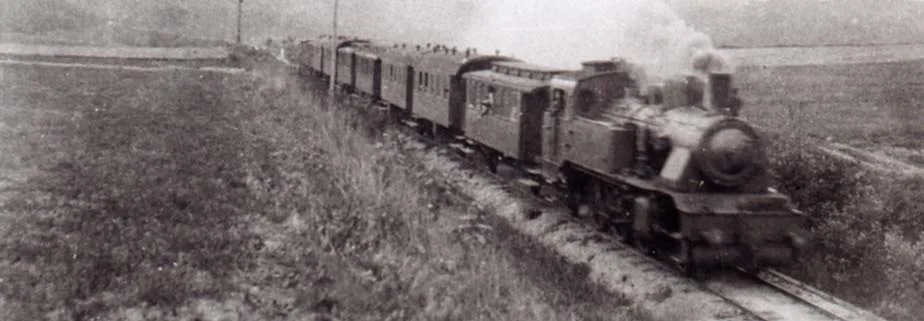
In 1900–01 the Cranz – Neukuhren / Cranz – Neukuhren (Zelenogradsk – Pionersky) railway section was built; it passed close to Strobjehnen, and the Garbseiden station / Bahnhof Garbseiden was set up on it for the villagers.
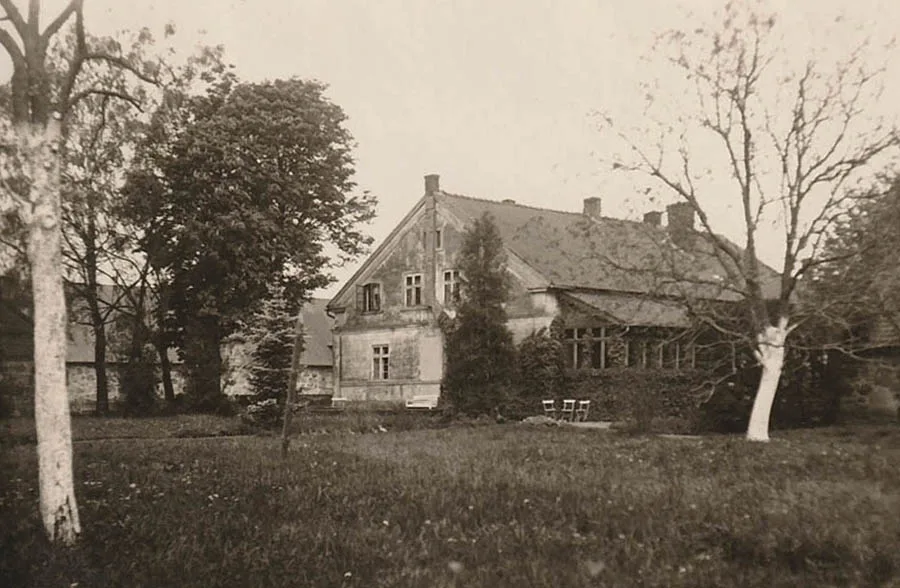 A house in Strobjehnen.
From 13.01.1905 the rural municipality of Strobjehnen included the "forester's house" Skardelies / Waldwärterhaus Skardelies, which consisted of one house with no permanent population. By 1905 the landholdings of the municipality of Strobjehnen had increased slightly, to 315.6 ha. Together with the "forester's house", the village had 10 houses, inhabited by 21 families and one single person. Property tax revenue per hectare of land amounted to 14.73 marks, 30.5% above the average for the municipalities of the Kreis of Fischhausen.
On 25.10.1910, following the dissolution of the Amtsbezirk of Strobjehnen, the rural municipality of Strobjehnen passed to the Amtsbezirk of Pobethen (Romanovo). On 17.10.1928 the municipality of Strobjehnen lost its independence and was incorporated into the rural municipality of Garbseiden (part of Kulikovo).
The Amtsbezirk of Strobjehnen
On 13.06.1874 Amtsbezirk No. 36 Strobjehnen was established in the Kreis of Fischhausen. It comprised 7 rural municipalities: Alknicken (Pribrezhnoye), Barthenen (54°55'03'' N 20°18'13'' E), Biegiethen (part of Kulikovo), Eisseln (Beregovoye), Garbseiden (part of Kulikovo), Rantau (Zaostrovye) and Strobjehnen (Kulikovo), and two Gutsbezirke (estate districts): Alleinen (54°55'56'' N 20°16'39'' E) and Kringitten (54°54'27'' N 20°19'24'' E). On 18.11.1898 the Gutsbezirk of Alleinen lost its status, and the Amtsbezirk of Strobjehnen now consisted of seven rural municipalities and one Gutsbezirk. The Amtsbezirk of Strobjehnen existed until 25.05.1910, when it was dissolved. The municipalities of Rantau (Zaostrovye) and Alknicken (Pribrezhnoye) joined the Amtsbezirk of Neukuhren / Neukuhren (Pionersky), and the rest (including the municipality of Strobjehnen itself) the Amtsbezirk of Pobethen (Romanovo).
Garbseiden was founded in 1343. By 1542 the spelling Garpseiden had become established. Around 1560 it was called Garbseyten, after 1564 Garbsteyten. Then, until 1785, it was called Garpseden.
In 1785 Garbseiden was classified as a Kulm-law village (cölmisch Dorf) with 15 households. The village belonged to the Amt of Grünhoff (Roshchino) in the Kreis of Schakenschen (Nekrasovo).
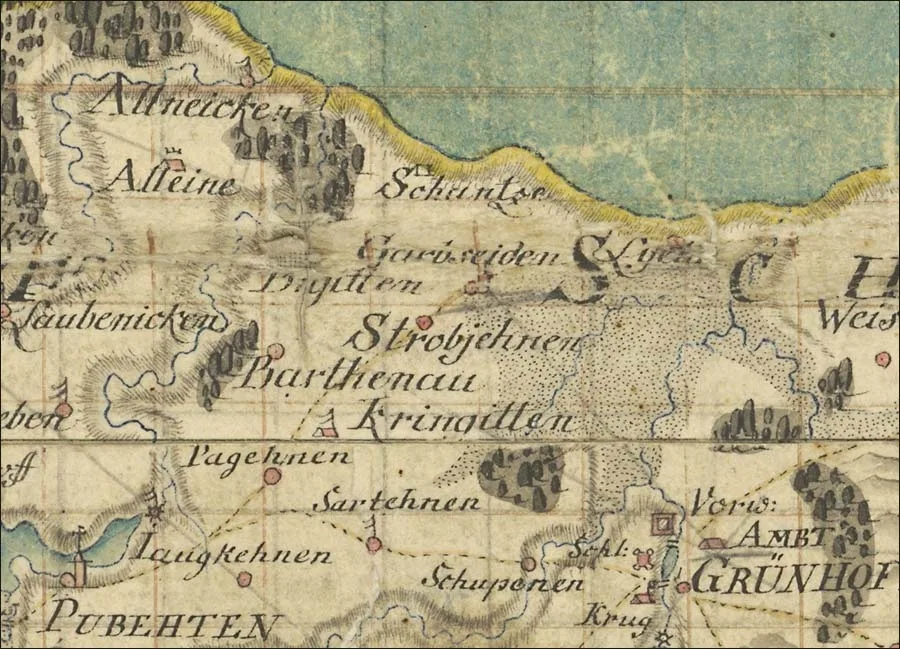 The area on a map of 1730.
From 1818 Garbseiden was a Kulm-law and peasant village (cöllmisches und Bauer-Dorf) forming a rural municipality in the Kreis of Fischhausen (Primorsk; from 1939 part of the Landkreis of Samland). The village belonged to the parish of Pobethen (Romanovo). Until 1874 Garbseiden belonged to the Amt of Grünhoff (Roshchino). In 1818 the village had 17 households.
In 1828 the village of Garbseiden owned 1,404 Morgen of very fertile loamy land. The village had three free estates (Freigut), six peasant farms (Bauergut), one cottager holding (Eigenkathner) and 14 households of hired tenant labourers (Instleute). In 1840 and in 1858 Garbseiden had 18 dwelling houses. In 1864, according to the tax office, Garbseiden had 18 dwelling houses, two other buildings and 21 structures exempt from tax.
In 1871 Garbseiden had 17 dwelling houses inhabited by 30 families. On 13.06.1874 the rural municipality of Garbseiden was incorporated into the newly established Amtsbezirk of Strobjehnen (Kulikovo). A landowner from Garbseiden, Wigand, served as head of the Amtsbezirk in 1895–1910.
In 1885 the municipality of Garbseiden owned 478 ha of land, of which 285 ha were arable land, 43 ha meadow and 16 ha forest. The village had 14 dwelling houses and 27 households. By 1895 these numbers had fallen to 13 and 26 respectively.
In 1901 Garbseiden got a railway connection: the Cranz – Neukuhren line was put into operation, and Garbseiden station was opened on it for the villagers.
In 1905 Garbseiden had 11 dwelling houses inhabited by 23 families. Property tax revenue per hectare of land amounted to 13.1 marks, 16% above the average for the municipalities of the Kreis of Fischhausen. On 25.05.1910 the Amtsbezirk of Strobjehnen was dissolved, and the rural municipality of Garbseiden passed to the Amtsbezirk of Pobethen (Romanovo). On 17.10.1928 the municipality of Strobjehnen (Kulikovo), which had lost its independence, was incorporated into the municipality of Garbseiden. The merged municipality consisted of four localities: Garbseiden, Strobjehnen, Garbseiden station / Bahnhof Garbseiden (Kulikovo station) and the "forester's house" Skardelies. It owned 771.2 ha of land, on which there were 24 dwelling houses with 59 households. In 1939 the merged municipality had 80 households.
Biegiethen was founded in 1472. By 1530 it was called Begitten, by 1542 Begithen. In 1563 it was mentioned as Byegkyten. Then, until 1785, the name Begieten was used; by 1785 the spelling Biegiethen had become established, and in 1828 the spelling changed to Begieten.
In 1785 Biegiethen was classified as a royal village (königlich Dorf) with nine households. The village belonged to the Amt of Grünhoff (Roshchino) in the Kreis of Schakenschen (Nekrasovo). Close to the village was a Kulm-law estate (cöllmisch Gut) with one household, called Biegiethensche Hube.
From 1818 Biegiethen was a Kulm-law and peasant village (cöllmisches und Bauer-Dorf) forming a rural municipality in the Kreis of Fischhausen (Primorsk; from 1939 part of the Landkreis of Samland)
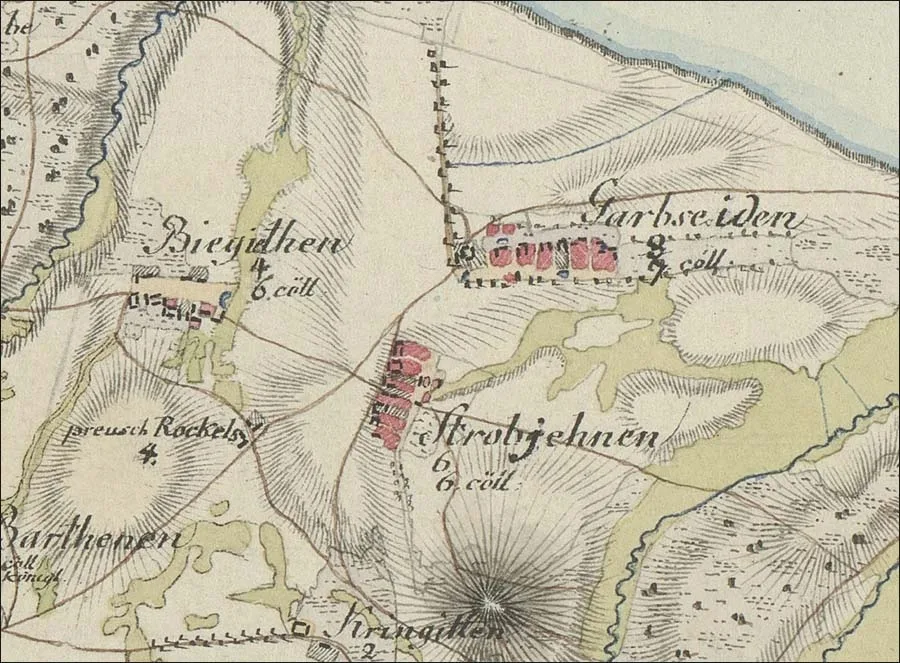 The area on a map of 1796.
The village belonged to the parish of Pobethen (Romanovo). Until 1874 Biegiethen belonged to the Amt of Grünhoff (Roshchino). In 1818 the village had 11 households.
In 1828 the village of Biegiethen owned 985 Morgen of very fertile loamy land. The village had three free estates (Freigut), two peasant farms (Bauergut), one cottager holding (Eigenkathner) and four households of hired tenant labourers (Instleute). In 1823 one of the local Kulm-law estates, with 181 1/10 Morgen of land, was put up for sale for 1,592 thalers. Another such estate, belonging to the same landowner, was valued at 1,906 thalers and also put up for sale. In 1840 the village and the Begitensche Hube estate had 11 dwelling houses. By 1858 their number had risen to 13. In 1864 the tax office registered 14 dwelling houses in Biegiethen and 20 other buildings that were exempt from tax.
In 1871 Biegiethen had 13 dwelling houses inhabited by 16 families and one single person. On 13.06.1874 the rural municipality of Garbseiden was incorporated into the newly established Amtsbezirk of Strobjehnen (Kulikovo).
In 1885 the municipality of Biegiethen owned 250 ha of land, of which arable land made up 160 ha, meadows 23 ha and forest 8 ha. The village had 12 dwelling houses and 18 households.
On 19.07.1895 the Vorwerk (outlying farm) of Preußisch Rockels / Preußen Rockels (54°55'59'' N 20°17'15'' E) was transferred from the Gutsbezirk of Kringitten to the rural municipality of Biegiethen.
The municipality of Biegiethen now had 13 dwelling houses (including 1 house in the Vorwerk of Preußisch Rockels), inhabited by 18 families. The property tax rate per hectare of land was 11.73 marks, close to the average for the municipalities of the Kreis of Fischhausen and only 3.9% above it.
In 1901 Garbseiden station (Kulikovo station) was opened 1.2 km from Biegiethen on the Cranz – Neukuhren line.
In 1905 the landholdings of the municipality of Biegiethen amounted to 281.4 ha. The village had 12 dwelling houses, and there was one more house in the Vorwerk of Rockels; altogether they were inhabited by 19 families.
On 25.05.1910 the Amtsbezirk of Strobjehnen was dissolved, and the municipality of Biegiethen passed to the Amtsbezirk of Pobethen (Romanovo).
On 17.10.1928 the municipality of Barthenen was incorporated into the rural municipality of Biegiethen. As of 1935 the merged municipality owned 525.7 ha of land. It had 20 dwelling houses and 34 households. In 1939 the municipality of Biegiethen had 37 households.
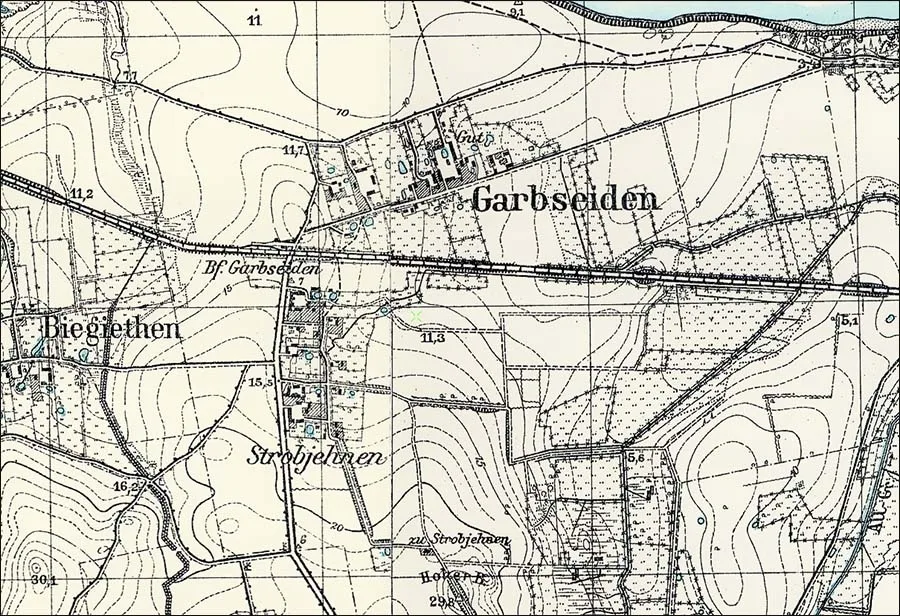 The area on a map of the 1930s.
On 17.11.1947 Strobjehnen was renamed the village of Kulikovo. Garbseiden and Biegiethen were not officially renamed and became part of Kulikovo de facto. In 1955 Kulikovo had 40 houses (including 5 in former Biegiethen and 13 in former Garbseiden), and a school was in operation. At the end of the 1990s the village had 69 houses (including 3 in Biegiethen and 18 in Garbseiden). In 2000–02, 19 (of the 20) wind turbines of the Zelenogradsk Wind Farm were installed on the territory of former Garbseiden. As of 2018 Kulikovo already had 219 houses (75 on the territory of Strobjehnen, 139 on that of Garbseiden and 5 on that of Biegiethen). In the same year the Zelenogradsk Wind Farm was shut down and its dismantling began.
As of 2025 the village has 282 residential and public buildings, including a rural health post, a café, shops and a private "Amber Museum".
Population: 1984 – 210, 2002 – 243, 2010 – 267, 2012 – 279 inhabitants.
Population of the municipality of Strobjehnen: 1818 – 100, 1828 – 97, 1840 – 101, 1852 – 100, 1858 – 115, 1864 – 150, 1867 – 140, 1871 – 148, 1885 – 141, 1895 – 135, 1905 – 127, 1910 – 128 inhabitants.
Population of the municipality of Garbseiden: 1818 – 112, 1828 – 152, 1840 – 149, 1852 – 157, 1858 – 150, 1864 – 156, 1867 – 181, 1871 – 165, 1885 – 144, 1895 – 138, 1905 – 119, 1910 – 106, 1925 – 318, 1933 – 364, 1939 – 348 inhabitants.
Population of the municipality of Biegiethen: 1818 – 69, 1828 – 69, 1840 – 751, 1952 – 88, 1858 – 86, 1864 – 95, 1867 – 64, 1871 – 76, 1885 – 101, 1895 – 106, 1905 – 108, 1910 – 98, 1925 – 149, 1933 – 168, 1939 – 185 inhabitants.
Population of the municipality of Barthenen: 1818 – 61, 1840 – 79, 1852 – 94, 1858 – 98, 1864 – 104, 1867 – 100, 1871 – 91, 1885 – 83, 1895 – 105, 1905 – 104, 1910 – 61 inhabitants.
Population of the Vorwerk of Preußisch Rockels: 1840 – 26, 1858 – 29, 1871 – 35, 1885 – 36, 1895 – 11, 1905 – 9 inhabitants.
Composition of the population of Strobjehnen in 1871: all 148 Evangelical Christians; children under 10 – 46; literate – 77 (of 84 surveyed, 92%); blind – 1; deaf-mute – 1; insane – 2.
Composition of the population of Garbseiden in 1871: Evangelical Christians – 163; Catholics – 2; children under 10 – 40; literate – 87 (of 112 surveyed, 78%); deaf-mute – 1; insane – 1.
Composition of the population of Biegiethen in 1871: all 76 Evangelical Christians; children under 10 – 12; literate – 55 (87%); deaf-mute – 1.
Composition of the population of Barthenen in 1871: all 91 Evangelical Christians; children under 10 – 13; literate – 52 (68%).
Structure of the population of the municipality of Garbseiden in 1939: men – 177, women – 171; children under 6 – 53, children aged 6–14 – 76, aged 14–65 – 193, over 65 – 24; employed in agriculture and forestry – 234, in industry and crafts – 59, in trade and transport – 16; self-employed – 67, assisting family members – 48, officials and white-collar employees – 16, workers – 191.
Structure of the population of the municipality of Biegiethen in 1939: men – 96, women – 89; children under 6 – 39, children aged 6–14 – 40, aged 14–65 – 98, over 65 – 8; employed in agriculture and forestry – 156, in industry and crafts – 14, in trade and transport – 2; self-employed – 21, assisting family members – 16, officials and white-collar employees – 1, workers – 137.
Structure of farms in the municipality of Garbseiden in 1939: 0.5–5 ha – 10, 5–10 ha – 4, 10–20 ha – 7, 20–100 ha – 5, over 100 ha – 2.
Structure of farms in the municipality of Biegiethen in 1939: 0.5–5 ha – 3, 5–10 ha – 1, 10–20 ha – 0, 20–100 ha – 4, over 100 ha – 2.
1 — including the Begitensche Hube estate.
Translated from Russian with the help of AI (Claude, Anthropic), October 2026.