The Origins of the Woodland Tulip
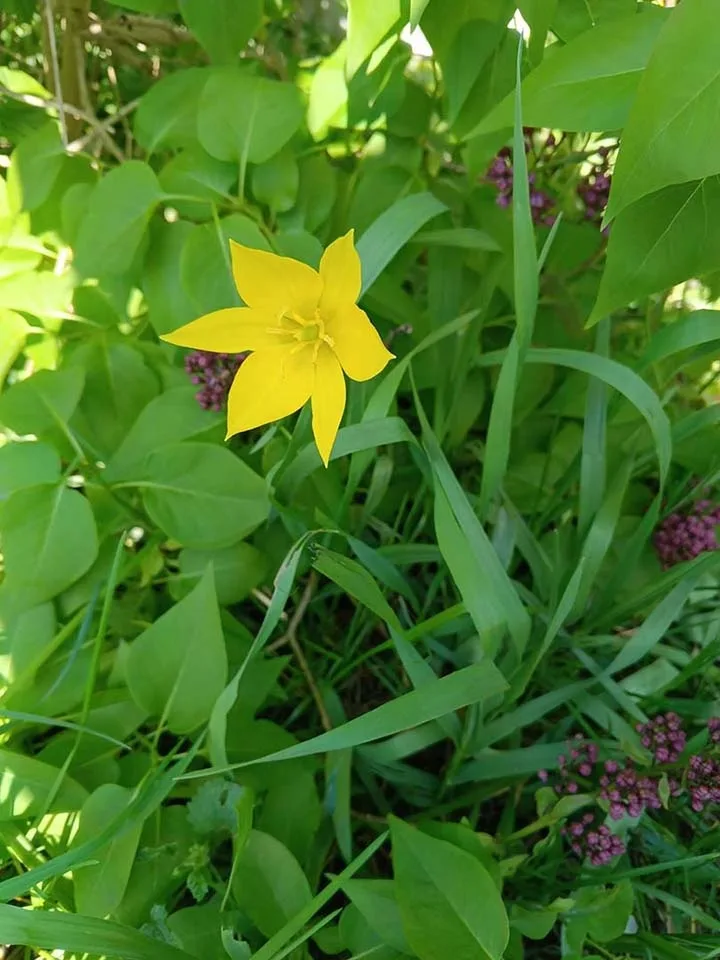
Yellow tulips are very beautiful and really can make someone happy! Imagine: just such a happy tulip grows here in our region. Not in flowerbeds, not in front gardens, and planted by no one. This is the woodland tulip, Tulipa sylvestris. It differs from its cultivated relatives in its narrow leaves, its graceful flowers and the mysterious story of how it came to our latitudes.
The woodland tulip is native to the Mediterranean. It is a plant of the lily family with elongated leaves, an egg-shaped bulb and a solitary golden-yellow flower. The fruit of the tulip is a capsule.
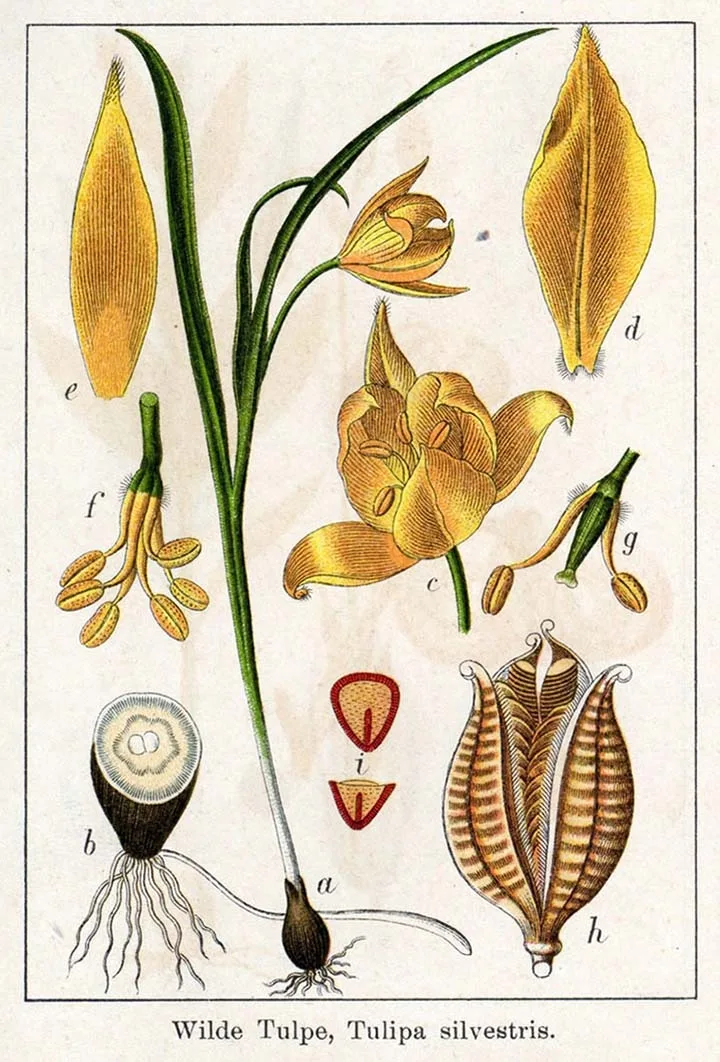 Woodland tulip. Illustration by the German botanist Jacob Sturm
from Deutschlands Flora in Abbildungen, 1796.
Scientists note that the woodland tulip has three subspecies, including the diploid australis and the tetraploid sylvestris. (Stefanaki, Anastasia & Walter, Tilmann & Andel, Tinde. (2022). Tracing the introduction history of the tulip that went wild (Tulipa sylvestris) in sixteenth-century Europe. Scientific Reports. 12. 9786. 10.1038/s41598-022-13378-9.)
Omar Khayyam and Saadi wrote about tulips, and they were cultivated in the Ottoman Empire, where they were regarded as a sign of peace, tranquillity and renewal, as well as of mystical experience. Under Mehmed II the tulip became one of the symbols of the ruling dynasty. Tulip growing took on enormous proportions, and a great variety of cultivars were raised. European travellers in Turkey were struck by the beauty of these flowers. Incidentally, the word "tulip" itself comes from the Turkic name for a headdress, the turban, which reminded someone of the flower's corolla.
One account of how tulips reached Europe points to the Flemish diplomat and writer Ogier Ghiselin de Busbecq, who served in Istanbul as ambassador of the Holy Roman Empire from 1556. It is thought that it was de Busbecq who brought lilac, horse chestnut and tulips to Europe.
In his book “Turkish Letters” (Turcicae epistola), he describes his first encounter with tulips:
"We stayed at Adrianople only one day, and then set off towards the last stage of our journey, Constantinople. Along my way grew a multitude of hyacinths and narcissi, and of the flowers the Turks call tulips, which we beheld not without admiration, for it was the middle of winter, and the ground was so adorned with these flowers, which is so unusual in other countries. As for narcissi and hyacinths, Greece is full of them, and they are so fragrant that their strength goes to the head of those unaccustomed to such scents. The tulip, though it has a faint scent or none at all, delights with its brightness and festive colours." (Russian translation by I. Mikhaylova)
 Porcelain plate depicting a woodland tulip (Germany, second half of the 20th century).
Whether in de Busbecq's luggage or by other routes, bulbs of various tulip species reached northern Europe, among them the woodland tulip that interests us here.
It is worth noting that "tulip mania", the economic frenzy that gripped the Netherlands in the 1630s, was connected with the breeding of tulip cultivars derived from a different species, Gesner's tulip. The woodland tulip and Gesner's tulip were brought to Europe at the same time, but their introductions met entirely different fates…
So, in the mid-16th century, bulbs of the woodland tulip were brought to northern Europe. The first botanical illustrations and herbarium specimens date from that period. Interestingly, scholars of the time sometimes referred to the woodland tulip as a narcissus or a "lilionarcissus".
Among those involved in the introduction of the woodland tulip, that is, in bringing it into cultivation, were well-known botanists: Gesner, Wieland, Aldrovandi, de L'Obel, Clusius and Dodoens.
For several centuries this delicate golden flower was grown as an ornamental, and then it "escaped", became naturalised and went on spreading without any human intent.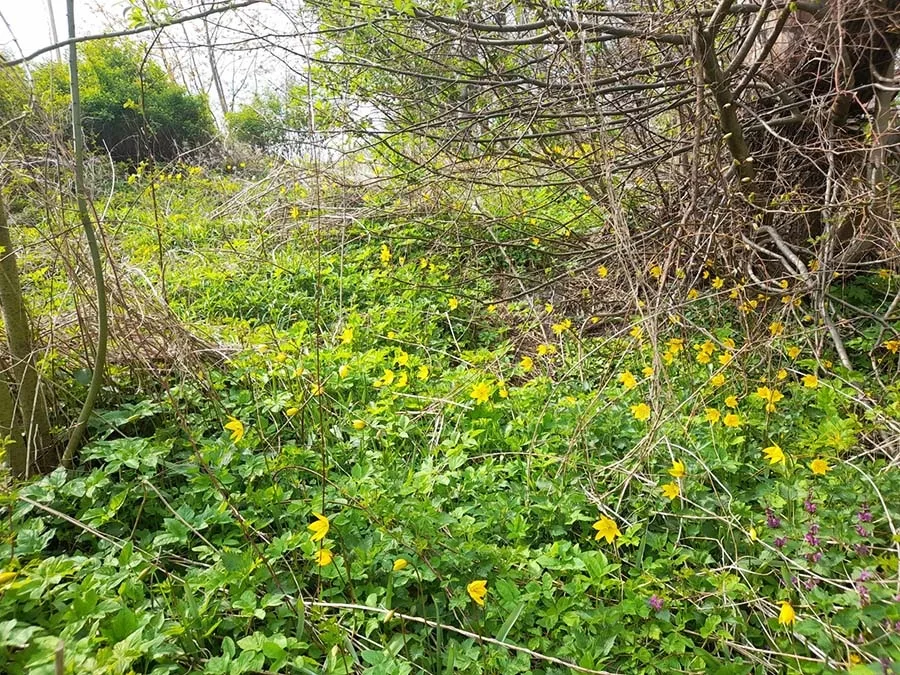 Woodland tulip in the Kaliningrad Region.
Scientists note that this naturalised tulip is most often found where there were once parks and church gardens, and also along river valleys. A woodland tulip bulb can stay in water for up to 11 days without losing its viability.
(Kowarik, Ingo & Wohlgemuth, J.O.. (2006). Tulipa sylvestris (Liliaceae) in Northwestern Germany: A non-indigenous species as an indicator of previous horticulture. Polish Botanical Studies. 22. 317-331.)
The Woodland Tulip in the Kaliningrad Region
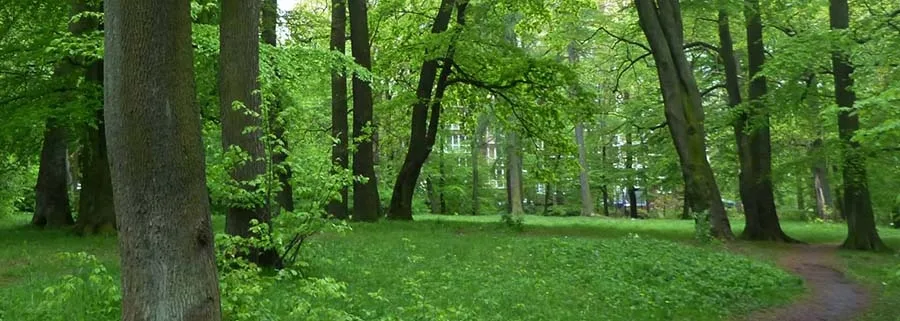
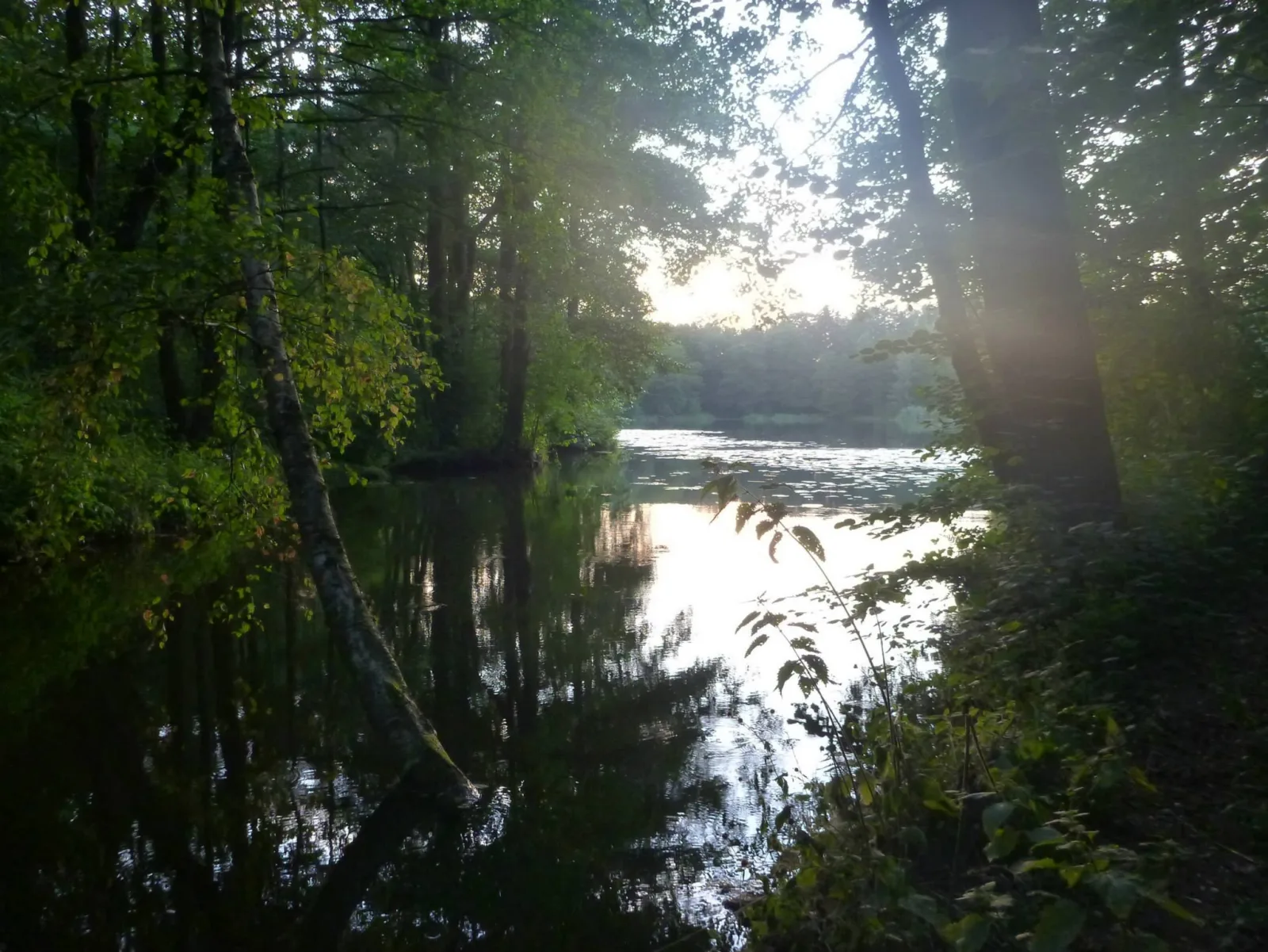
In the Kaliningrad Region the woodland tulip grows in old parks and on former estates, in places where church gardens and cemeteries once stood. For example, the Zhuravlyovka manor park in Polessk District and Frida Park (a former cemetery park) in Chernyakhovsk still harbour the woodland tulip.
In the post-war years Soviet settlers adorned their gardens with woodland tulips, transplanting them to their own plots. So a species that had escaped from cultivation was brought back into cultivation once again. It can be found, for instance, in Sprindt, the south-eastern part of Chernyakhovsk, a lovely spot on the banks of the Instruch.
The woodland tulip is known to grow in neighbouring Poland as well. Old recipes have survived in which it is used as an edible and medicinal plant. This is wonderfully described by Professor Stanisław Czachorowski of the University of Warmia and Mazury in Olsztyn, an entomologist and science communicator. He gives a recipe for a spring drink made with honey and tulip juice.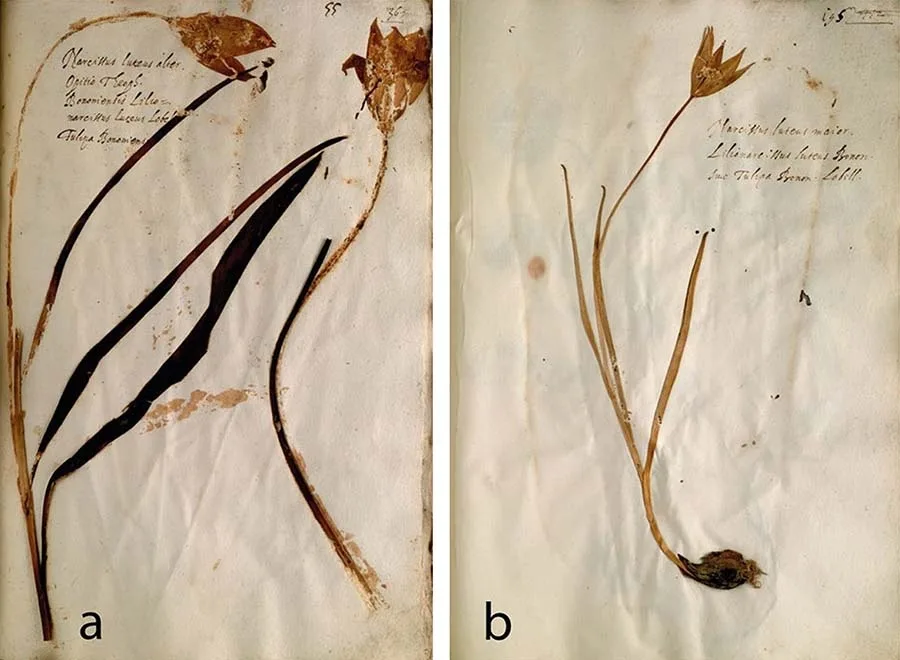 The oldest surviving herbarium specimens of the woodland tulip (a – 1552, b – 1553).
For the second season now, the Kaliningrad Region has been hosting Herbarium Fest, a festival whose concept centres on plants in culture. Its themes cover a very wide range: botanical illustration, medicinal herbs, plant legends and much more.
The formats vary: walks, lectures, workshops… In 2025 one of these events was the citizen expedition "In Search of the Woodland Tulip". The organisers invited anyone interested to join the search for the tulip independently, on their own, and, if successful, to report where they had found it.
As a result, two sites where the woodland tulip grows in the Kaliningrad Region were identified: in Nesterov District and in Chernyakhovsk. Anastasia Burkova found the woodland tulip in a city park in Chernyakhovsk. We know that Chernyakhovsk is rich in woodland tulips! Frida Park, the hospital grounds, Georgenburg… And now there is one more new point on the map.
Meanwhile, an iNaturalist user going by the name astromegalith found a wild tulip in the village of Chistye Prudy in the Nesterov District. This place is famous for its association with the father of Lithuanian literature and author of “The Seasons”, Kristijonas Donelaitis. And here's the thing: the tulip was growing on the grounds of the museum named after him, next to a building that was once a Lutheran church!
All information on the species' distribution is collected on the iNaturalist platform. This is a portal where anyone can upload records of observed species of plants, animals, fungi and every other living thing. When photographs are uploaded, their geographic coordinates are read and a distribution map of the species is built.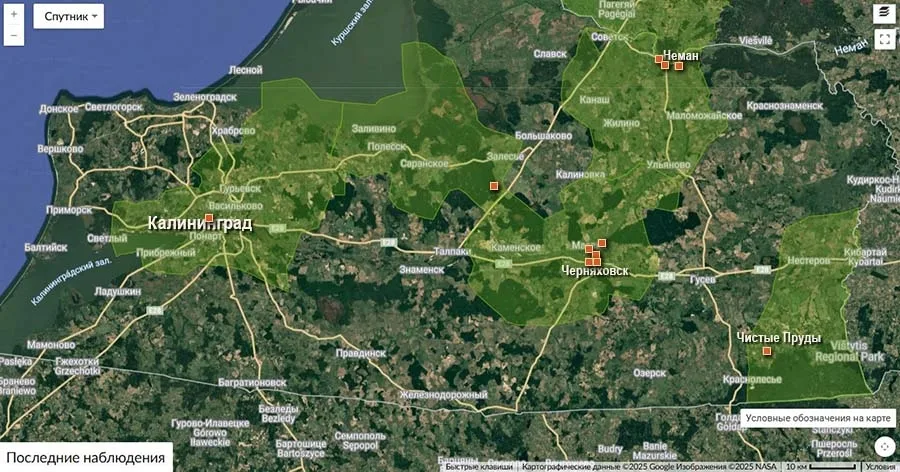
So where does the woodland tulip grow in our region, according to the platform? The westernmost point is in Kaliningrad, in Central Park; the easternmost is in Nesterov District. The northernmost is in Neman, where the woodland tulip has been recorded in the green spaces along Pobedy Street.
There are also undocumented finds. There is evidence that the species occurs in the south of the region, in Ozyorsk, and in the north-east, in the Krasnoznamensky District. Before the war there was even a village there with a “tulip” name, Tulpeningken, now Zarechnoye. To this day, splendid clumps of wild tulips delight the local residents!
There are reports from the seacoast too: near the village of Lesenkovo stands an information board devoted to the natural riches of the Warnicken Forest. It also marks a spot where the wild tulip grows.
The wild tulip, a delicate and mysterious flower with a fascinating history, is waiting for its explorers. In early May 2026 we invite you to join our citizen expedition and help find new places where the wild tulip grows in the Kaliningrad Region.
Photos by the author.
Translated from Russian with the help of AI (Claude, Anthropic), October 2026.