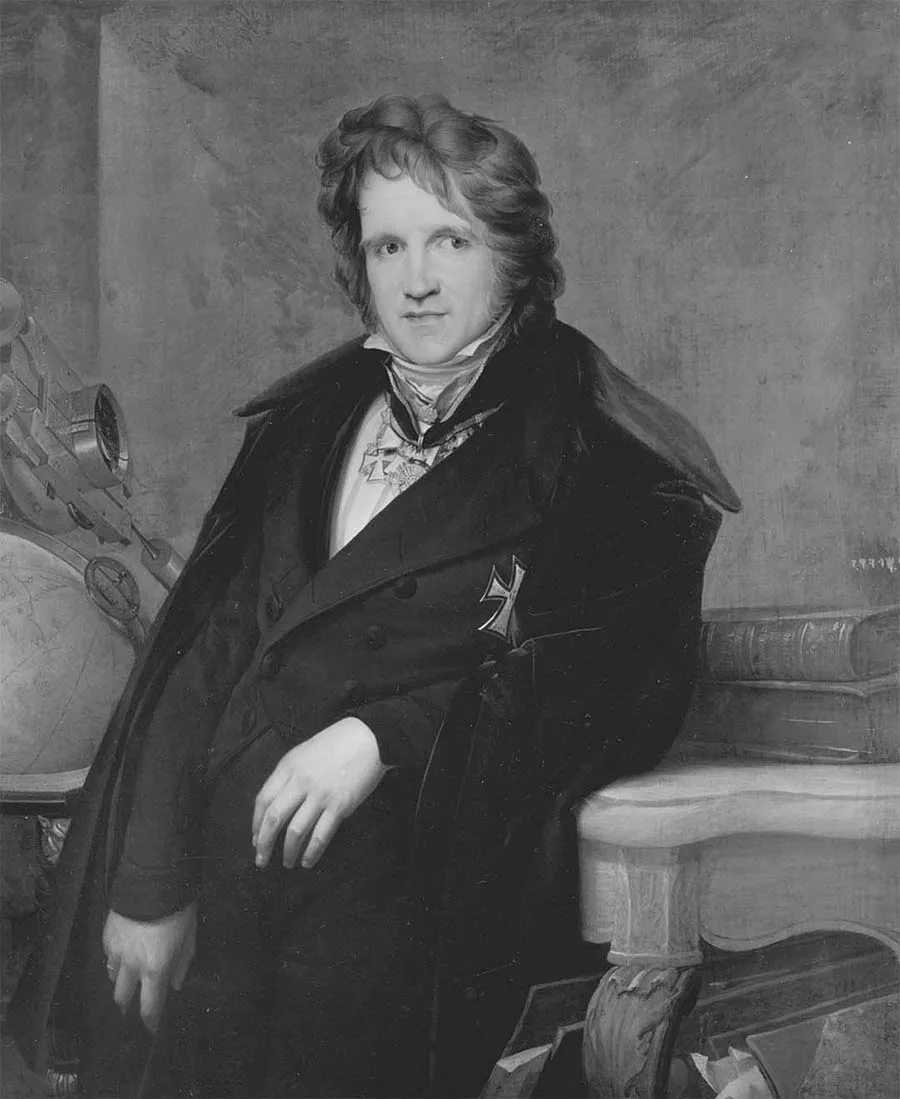
The scientist's life was a remarkable one. From his birth (22 June 1784) until the age of 14, the future great astronomer lived in Minden (Westphalia). Karl Bessel, the father of a large family, served as a minor court official. Despite his rather modest salary, he managed to give all nine of his children a good upbringing and education. When Friedrich left the Gymnasium at 13, not only out of a dislike of Latin but out of a general aversion to studying for its own sake, Karl began teaching his son himself. He understood that his inquisitive boy, with a mathematical turn of mind and dreams of the stars and sea voyages, needed work that brought tangible benefit. His self-education went so well that by the age of 14 Friedrich Bessel had made his first contribution to astronomy: he discovered the duplicity of Epsilon Lyrae. Studying the sky by eye alone, without any instruments, he found that a faint little star in the constellation Lyra was double, although the star chart showed it as a single star. Yet even though astronomy had become his passion, the young Friedrich did not at that time even dream of devoting his life to science.
His parents had no scientific career in mind for their son either. They pictured him as a man of means with a respectable position in society. Friedrich did not object. On the contrary, he was even pleased when his father sent him to a friend in Bremen to learn the merchant's trade. By day the young man worked, and by night he pursued his own education, studying foreign languages, mathematics, geography, ethnography and even navigational astronomy. And, of course, he kept observing the stars.
At 18 he calculated the orbit of the minor planet Ceres, discovered a year earlier by the Sicilian astronomer Giuseppe Piazzi.
(It was later classified as an asteroid, but in 2006 it was recognised, along with Pluto, as a dwarf planet.) And in 1804, using home-made instruments, Bessel determined the longitude of Bremen.
But his most significant achievement was calculating the orbital elements of Halley's Comet. This discovery changed Friedrich's life dramatically, as it caught the attention of none other than Heinrich Wilhelm Matthias Olbers, one of the greatest astronomers of the day. Olbers published an enthusiastic review of Bessel's work, introducing the self-taught astronomer to the entire scholarly world. On his recommendation, the young genius became assistant to another eminent German astronomer, Johann Schröter, a member of the Royal Swedish Academy of Sciences, who, while serving as a judge in Lilienthal near Bremen, had built himself an observatory there and become famous for his observations of the Moon and the planets.
Working at Schröter's observatory, Bessel was utterly happy despite his paltry salary. In 1810 his achievements earned him the Lalande Prize, which the Paris Academy of Sciences awarded for contributions to astronomy until 1970.
In his four years with Schröter, Bessel published more than 50 scientific papers, half of them devoted to the motion of comets, as well as several articles and 12 scientific reviews.
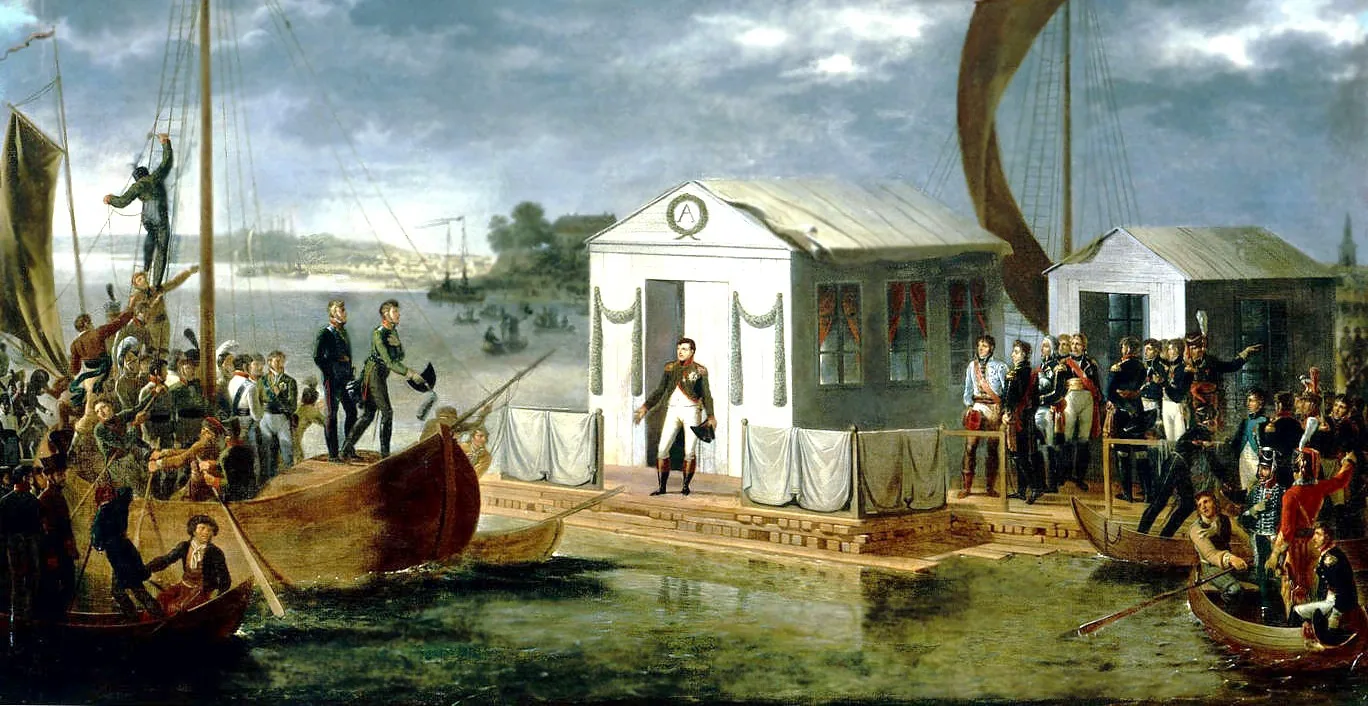
The young scientist received invitations from renowned observatories and educational institutions in Düsseldorf, Greifswald, Leipzig… But Bessel turned down every offer, perhaps out of modesty or a lack of teaching experience, or perhaps simply because he was reluctant to leave the ageing Schröter, who had given him what amounted to complete freedom of action. However, the political situation was growing tense because of the Napoleonic Wars, and in the end Bessel was forced to change his plans after all and leave Lilienthal.
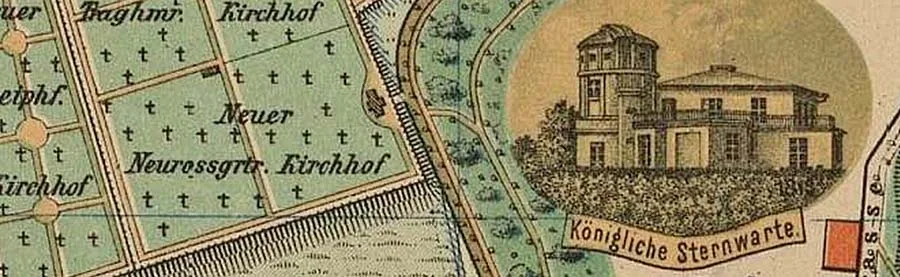
It was at his new place of work that he succeeded in realising his idea of creating a new, precise astrometry. The Prussian government had adopted a programme to develop the University of Königsberg and to establish an observatory attached to it. Bessel was entrusted with building it to his own design and then directing it; it was precisely for this purpose that he was invited to Königsberg in 1809.
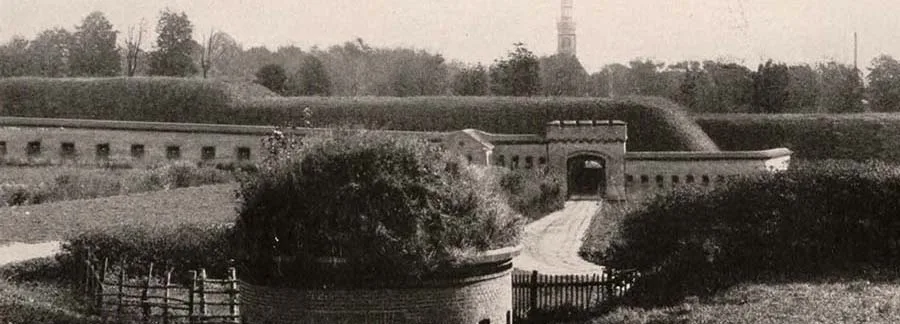
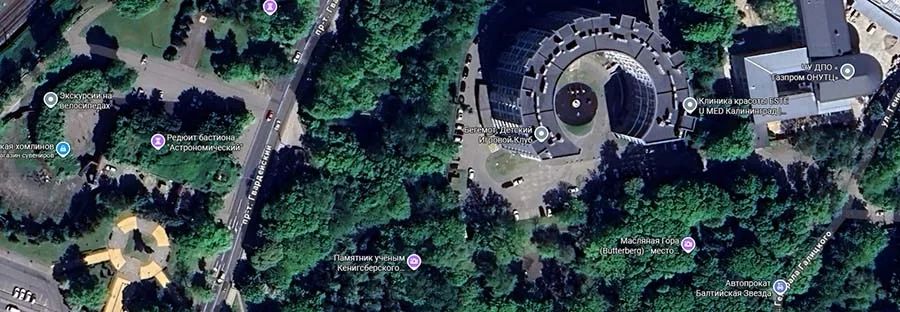
The process, however, dragged on. Money for construction was allocated from the treasury, but difficulties arose over the choice of site. Red tape set in: documents were passed from one department to another and lay for weeks forgotten in officials' desk drawers. At last a solution was found. The observatory was founded on the highest part of the old city rampart, on the Butterberg hill.
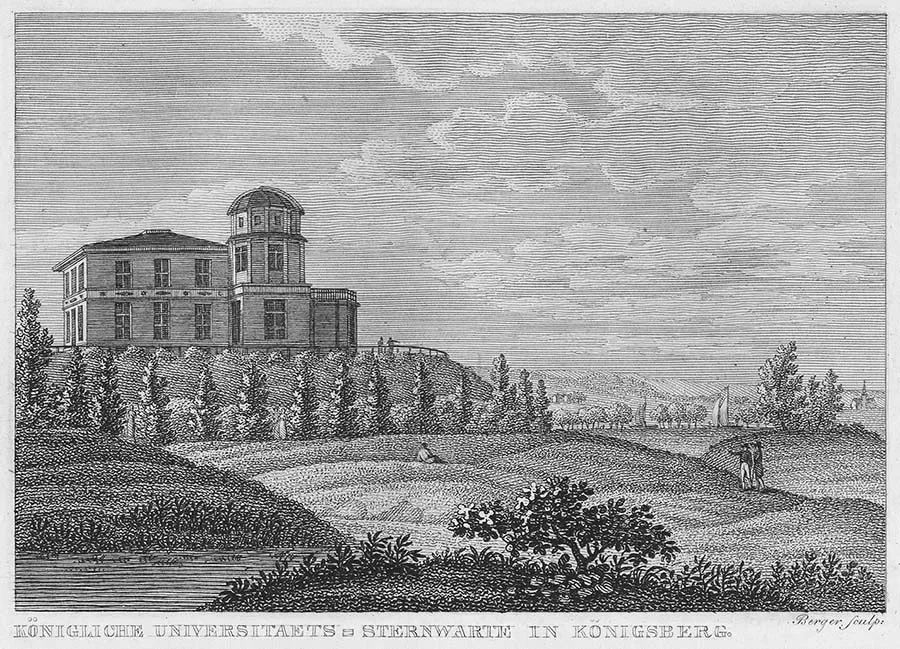 Bessel's observatory on the outskirts of post-Napoleonic Königsberg.
According to biographical sources, construction proceeded slowly and unevenly. The difficulties stemmed above all from a shortage of funds, which is hardly surprising: the country had been ruined by the recent war, and the enormous indemnity Prussia was paying Napoleon was draining the state treasury… In the summer of 1811 construction came to a complete standstill. Bessel was already beginning to think of moving elsewhere, but in the autumn of 1811 he managed to obtain money and decided to stay in Königsberg. Exactly two years later, in the autumn of 1813, the observatory was completed and equipped in accordance with Bessel's plan.
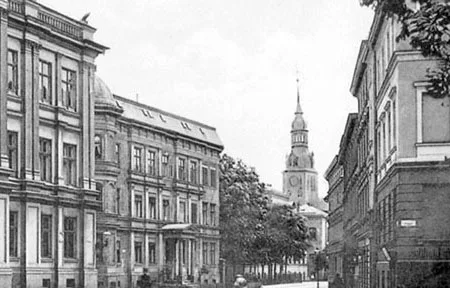
While construction was under way, he was invited to work at the Albertina, the University of Königsberg, which at that time was in decline. Here the self-taught scientist wrote the most important of his works, gave lectures and became professor of mathematics and astronomy. Bessel raised the prestige of the Albertina as a university with a high standard of teaching and research in the exact sciences, and laid the foundations of the Königsberg school of physics and mathematics.
Yet although Friedrich Bessel had been received very warmly in Königsberg, problems arose for him at the university. The administration was displeased that so famous a scientist had no academic degree. Help came, as always, from Olbers and from Gauss, the "Prince of Mathematicians", whom Bessel had met back in Bremen. Thanks to them, Bessel was awarded a doctoral degree in absentia by the Faculty of Philosophy of the University of Göttingen.
The Königsberg government observatory became one of the leading observatories in Europe, second in importance only to the one in Berlin.
Some of the observatory's equipment was made to Bessel's own drawings and subsequently served as a model for all new observatories. The first thing our hero did as its director was to complete the work he had begun while still with Schröter: he updated Bradley's star catalogue, the most accurate of the 18th century, and on the basis of his own observations compiled a new and even more accurate one, comprising more than three thousand stars, which he published in 1818 in his work Fundamenta Astronomiae. The new refraction tables he compiled remained in use in astronomical observing practice for a long time. Thanks to him, the demands placed on the makers of instruments for astronomical observation grew considerably.
In just 12 years (1821–1833), Friedrich Bessel determined the coordinates of more than 75,000 stars with great precision and published the results in the Tabulae Regiomontanae, which for the first time made astrometry a standardised modern science. And when the observatory acquired a heliometer (1829), he was able to tackle a problem that astronomers had been trying to solve for 300 years: measuring parallaxes (the distances between neighbouring stars) with an accuracy extraordinarily high for the time.
Thanks to this work, Bessel became one of the first astronomers
to take on the problem of the scale of the Universe.
While the measurement of stellar parallax earned Bessel the Gold Medal of the Royal Astronomical Society, his next discovery in stellar astronomy went unrecognised in his lifetime. For several years he observed the brightest stars, Sirius and Procyon (in the constellation Canis Minor). The paths of these stars turned out to be serpentine, wavy. And the scientist suggested that they had invisible companions. Thus Bessel came to be regarded, if not as the founder, then as the forerunner of the "astronomy of the invisible", although the laurels of discovery went not to him but to the American optician Alvan Clark. On 31 January 1862, while testing a refracting telescope of his own making, Clark found the companion of Sirius whose existence Friedrich Bessel had predicted. Later still, at the beginning of the 20th century, the American astronomer Walter Adams (the very one who determined the rotation speed of the Sun) established that the companions of Sirius and Procyon belong to a previously unknown type of star: "white dwarfs".
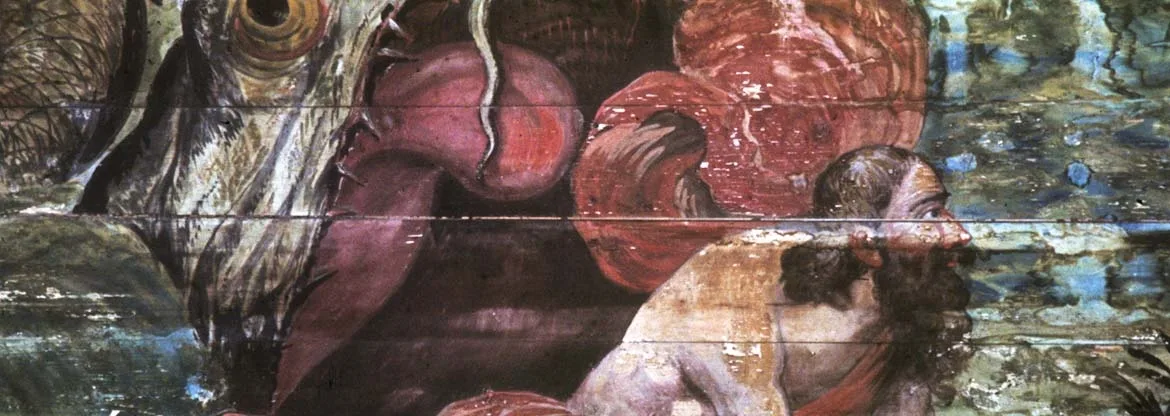
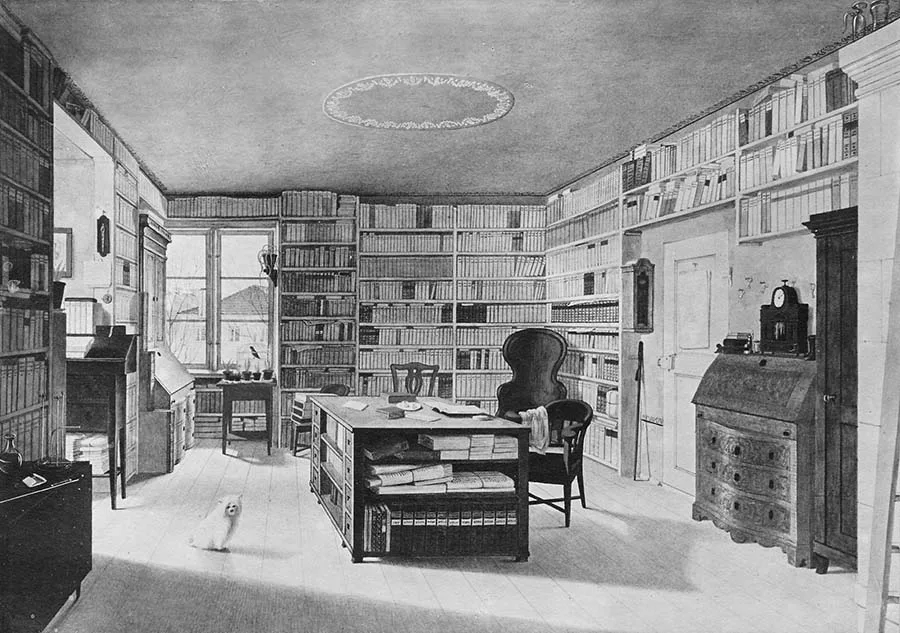 The study of the great Königsberg astronomer.
It seemed there was no limit to Bessel's discoveries and scientific predictions. He was convinced that another planet existed beyond Uranus. And he was not mistaken. Neptune was discovered a few months after his death with the help of the Berlin Academy star charts, which had been published on Bessel's initiative and, naturally, with his involvement. In addition, he determined the masses of several planets and developed a theory of solar eclipses.
Contemporaries and biographers note that Bessel was easy to talk to, always friendly and attentive to the person he was speaking with, and constitutionally unable to tolerate hypocrisy. He had many friends, including colleagues from Russia. Among those who worked at his observatory were Piotr Sławiński, director of the Vilnius Observatory (not to be confused with his namesake, the conductor), Karl Knorre, director of the Nikolaev Naval Observatory, and Alexander Drashusov and Kaspar Gottfried Schweizer, both directors of the Moscow Observatory.
Bessel was bound by many years of collaboration to his younger colleague Friedrich Georg Wilhelm von Struve, the outstanding Russian astronomer and founder and first director of the famous Pulkovo Observatory. Struve visited his friend and mentor in Königsberg many times, sought his advice and even discussed with him the design of the future Pulkovo Observatory.
During Bessel's tenure, Königsberg became one of Europe's leading centres of astronomical research.
The scientist published some 400 scholarly works and left behind an extensive correspondence with his colleagues.
In all, the famous scientist lived in Königsberg for 36 years. Friedrich Wilhelm Bessel died of cholera on 17 March 1846 in Königsberg and was buried in the so-called university "Professors' Cemetery". Beside him lies his beloved wife Johanna (Johanna Henriette Bessel, 1794–1885), who died at the age of 91, having outlived her husband by 40 years. Sadly, the grave has not survived... In 2014, a small monument was erected next to the former "Professors' Cemetery", where their remains rest.
Translated from Russian with the help of AI (Claude, Anthropic), October 2026.