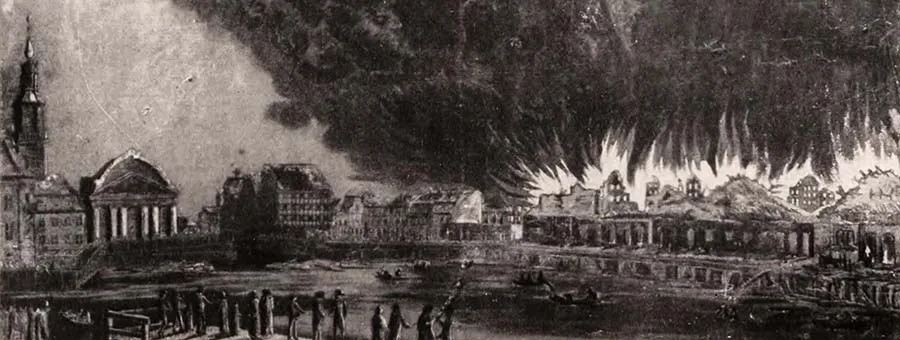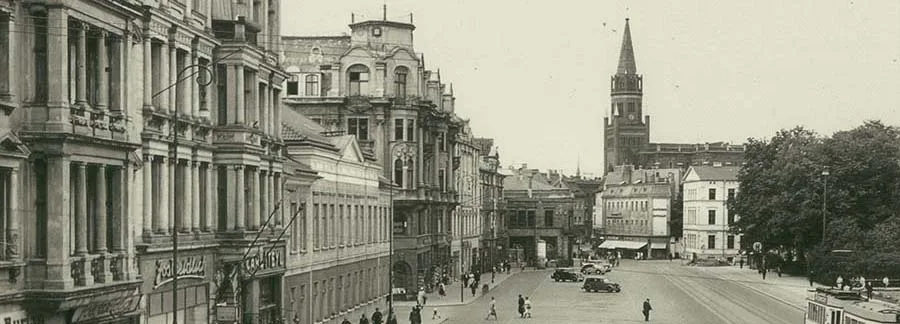
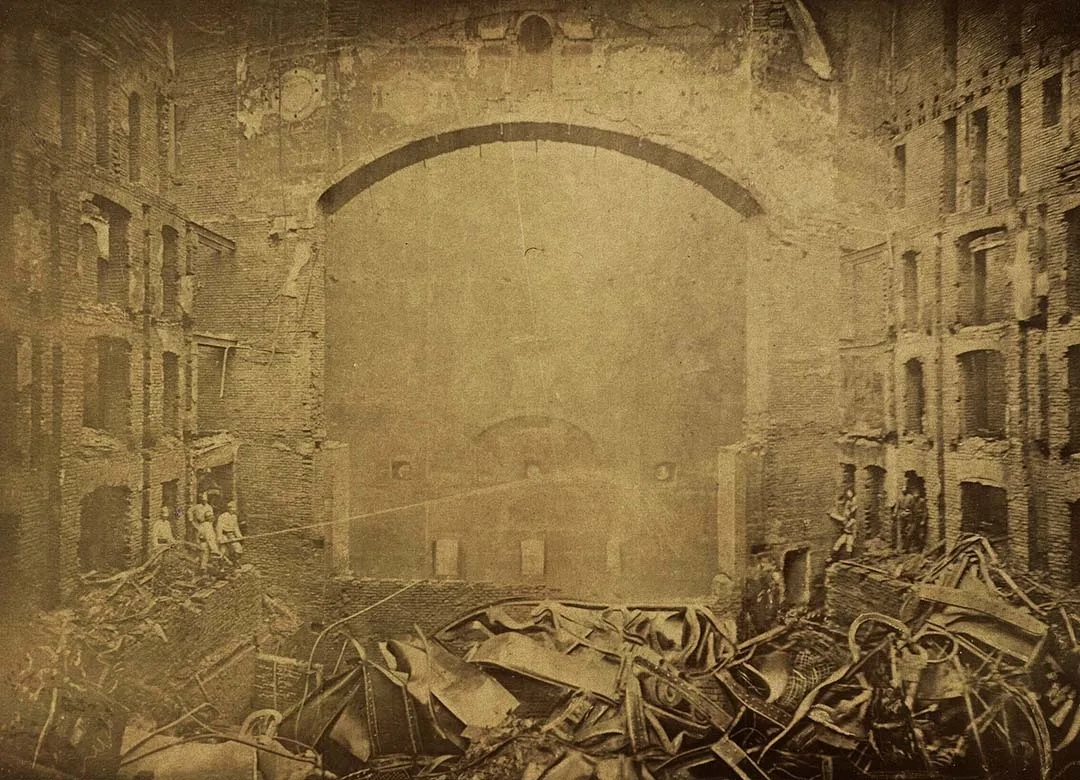
Königsberg's old theater opened in 1755 as one of the first permanent playhouses in Germany. On 27 October 1797 the wooden theater building and three neighboring houses were destroyed by a major fire. In 1800 the theater was rebuilt, but it burned down again that same year. In the years when the city had no theater, performances were held in the Public Garden of the Altstadt and in the riding hall on the Paradeplatz. Thus Königsberg came to need a large theater building that would be more resistant to such disasters and would also be better than the old one, which was often popularly called the "Stable of the Muses" or the "Barn of Art."
Joining forces, prominent citizens of Königsberg put forward on 18 November 1804 a proposal to create a company called the "Committee of Shareholders of the New Dramatic Theater."
Of the planned capital of 100,000 thalers, 65,000 were paid in at once. By royal decree of 21 April 1805 a plot of land in the Königsgarten was allocated for the construction. It was a truly royal gift, since such a property, given its excellent location, was already priceless at that time. Among the founders of the company was the Chief Director of Building Müller, under whose energetic leadership construction of the theater began.
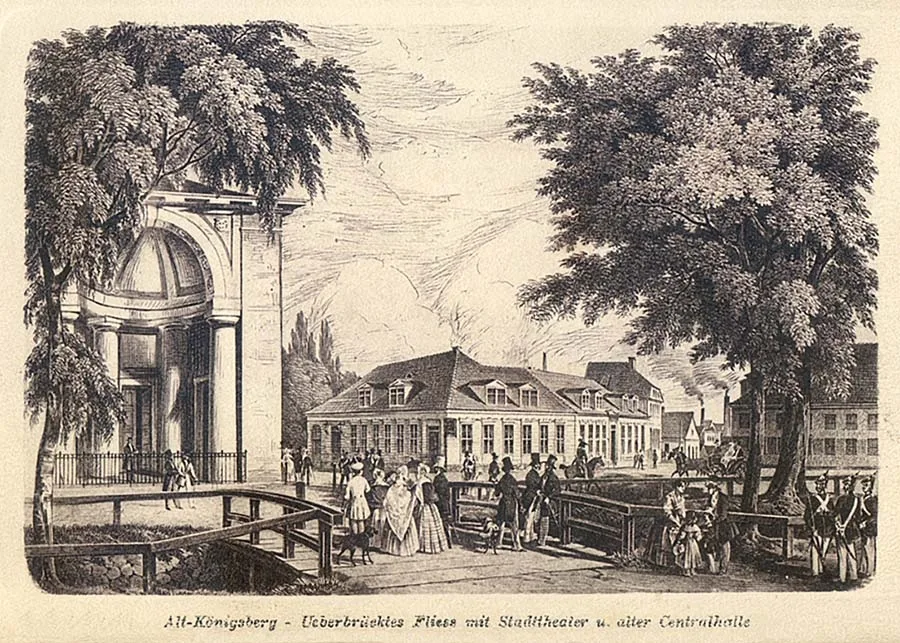 The old theater of Königsberg.
On 16 July 1806 the Minister of State Baron von Schroetter laid the foundation stone, and on 9 March 1808 the grand opening took place in the presence of the royal family with Mozart's opera "La clemenza di Tito." The first theater season began on 29 April 1808.
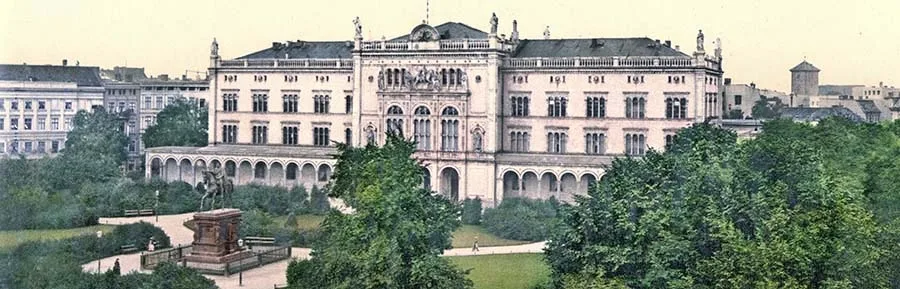
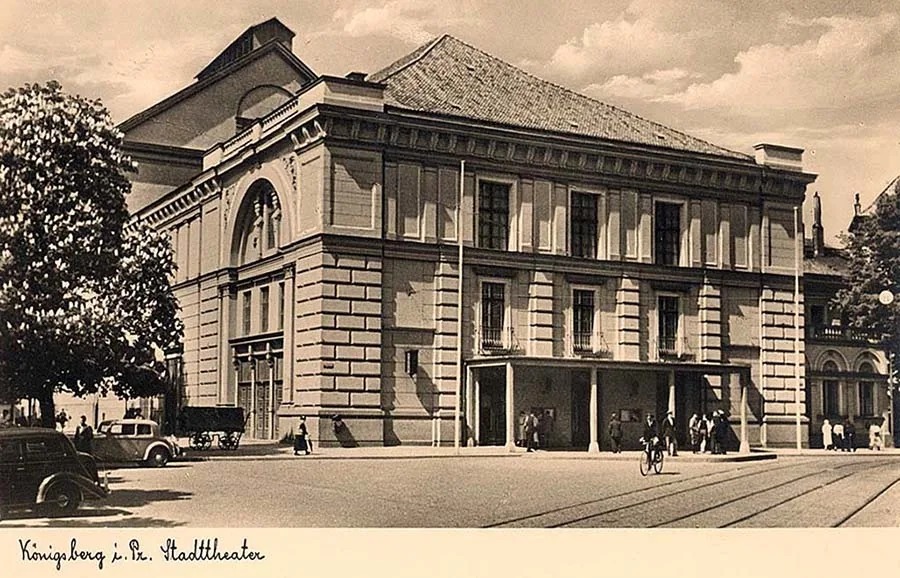 The New Theater of Königsberg.
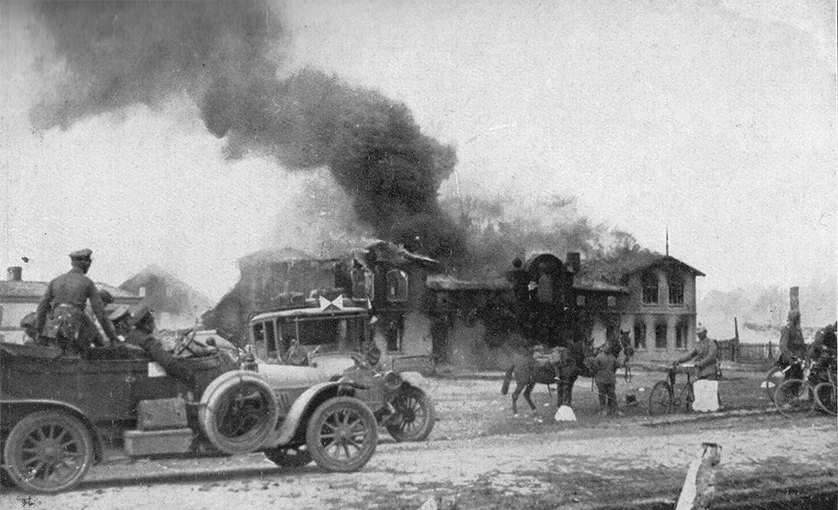
But only three months later, on 1 July 1808, the magnificent and unusually spacious theater building burned down. All the props were also lost in the fire.
Rumor had it that it was arson, but given the primitive lighting technology typical of the time and the inadequate fire safety measures, the fire may also have been caused by a fatal combination of circumstances.
The "Königl. Preusz. Staats-, Krieges- und Friedens-Zeitung" (Royal Prussian State, War and Peace Gazette) of 2 July 1808 wrote: "Yesterday, at about two o'clock in the afternoon, a fire broke out in our new theater. No one knows exactly what caused it.
Driven by a fresh north wind, the flames spread quickly, and within a few hours nothing remained of the beautiful building but its walls.
Its construction had only recently been completed, and both the interior and exterior finishing of the building were of excellent quality, so this new disaster is doubly distressing, since a speedy restoration of the theater is at present out of the question."
But contrary to these gloomy forecasts, and despite all the upheavals and hardships of the war, from which East Prussia suffered particularly severely, construction of a new theater began at once under the same leadership. The building costs were estimated at about 120,000 Reichsthalers. Only 105,000 of this sum were spent, since a hall on the backstage side of the theater had to be abandoned, though it was undoubtedly much needed, given the shortage of large assembly halls in the city.
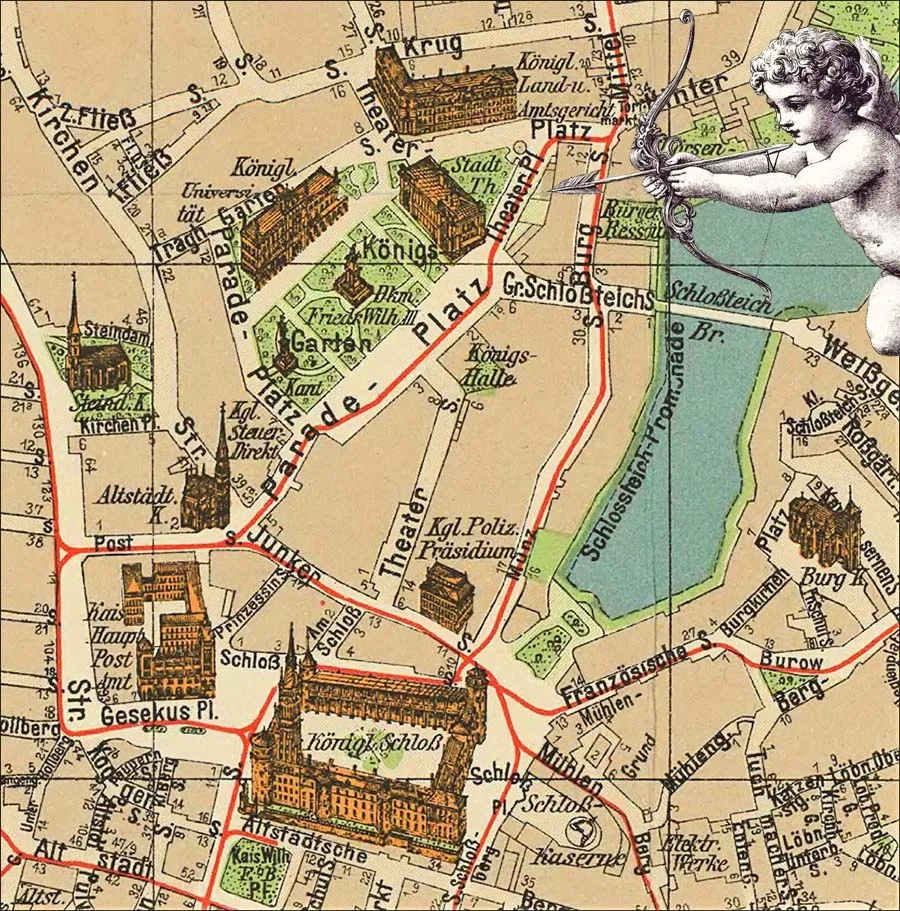 The theater on a map of central Königsberg.
On 9 December 1809 the theater once again opened its doors to the people of Königsberg. The interior of the building was not yet fully finished, but the first performance took place.
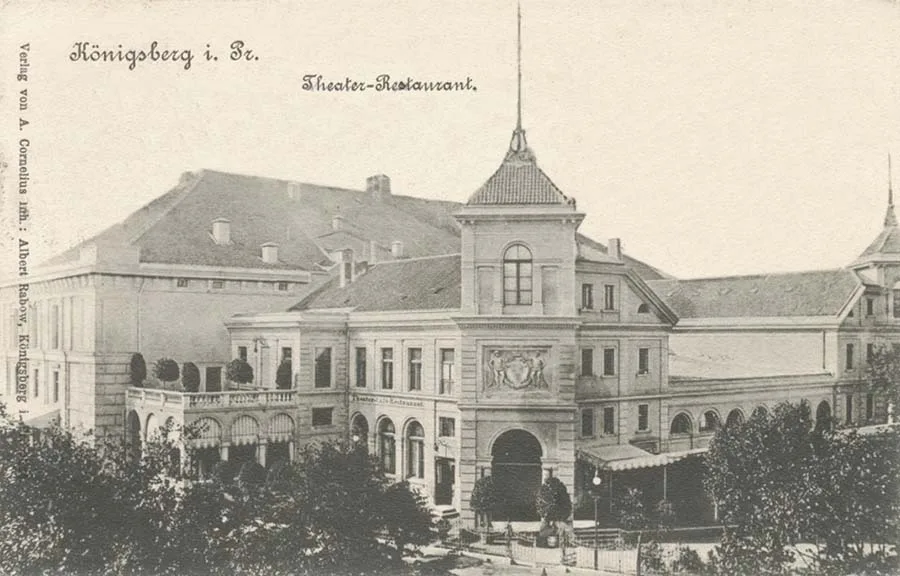 The theater restaurant was a very popular place.
In this way the people of Königsberg wished to express their gratitude to the royal court, which was leaving Königsberg on 15 December 1809, for its support of the project to rebuild the theater, since half of the timber for its construction had been supplied free of charge from the state forests.
The Königsberg newspaper "Hartungsche Zeitung" of 10 December 1809 wrote of this event: "Yesterday the grand opening of our new theater took place (the previous one burned down a year and a half ago). The general wish to see Their Majesties in this new playhouse, so as to be able to show them the universal respect and love before their forthcoming departure, was the reason for the earlier opening of the theater season.
The royal couple was greeted with loud applause, and the theater company performed a piece of its own composition to the tune of "God Save the King" /"God Save the King".
Especially for this occasion a very well performed prologue with choruses (Dedication) had been composed, followed by Joseph Babo's comedy "The Pulse"1, which made an unforgettable impression on the audience. The expectations of the new theater were fully satisfied by the exquisite decoration of the interior and the excellent sets."
The first opera, performed on 12 December 1809, was Himmel's "Fanchon the Hurdy-Gurdy Girl"2, a work that had premiered in Königsberg in November 1805 in honor of Queen Louise.
This "New Theater," created by the Chief Director of Building Müller, remained the basis of the Königsberg City Theater on the Paradeplatz as we all still remember it.
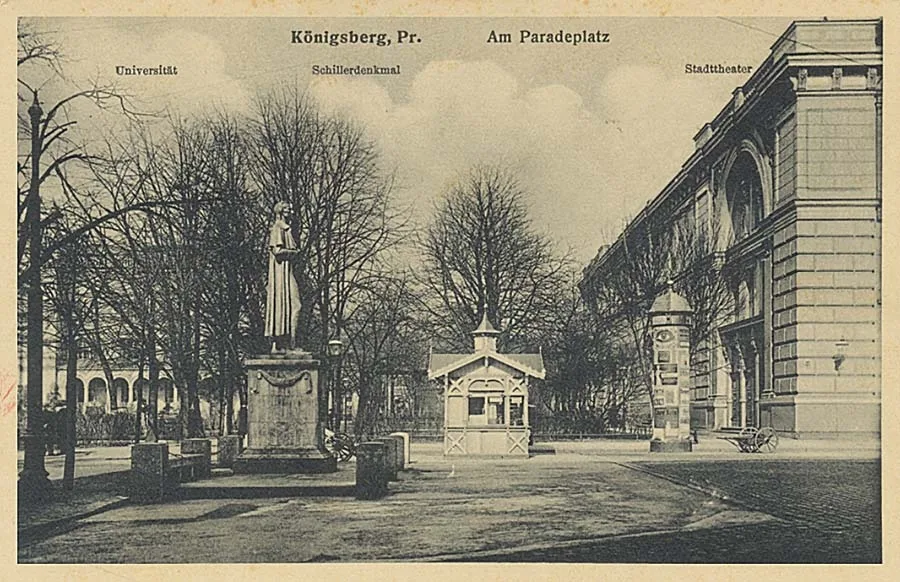 The Schiller monument also stood in Königsberg near the theater building, not far from the spot where the Kant monument now stands in Kaliningrad.
NOTES
1. Joseph Marius von Babo (German: Joseph Marius von Babo; 1756, Ehrenbreitstein – 1822, Munich): German playwright. Full member of the Bavarian Academy of Sciences.
2. Friedrich Heinrich Himmel (German: Friedrich Heinrich Himmel; 1765–1814): German pianist and composer; Kapellmeister of the Prussian king's chapel. "Fanchon the Hurdy-Gurdy Girl" (German: Fanchon das Leyermädchen) is his singspiel in three acts. The libretto was written by August von Kotzebue after a work by Jean-Nicolas Bouilly.
SOURCE
Der Brand des Königsberger Stadttheaters
Ostpreußen-Warte, Folge 08 vom August 1952 (p. 10)
https://archiv.preussische-allgemeine.de/ow1952/1952_08_01_08.pdf
● From the editors: Read on VisitPrussia.com an interview with the translator of German and, in particular, Prussian fairy tales, our regular contributor Tatyana Kolivay, who runs her own blog, where countless other parables, legends and fairy tales in her translations have been published.
Translated from Russian with the help of AI (Claude, Anthropic), October 2026.