In the 16th century the whole territory of Neurossgarten (Neu-Roßgarten) consisted of meadows and gardens. Even at the beginning of the 17th century there was no question yet of Copernicus Street (Kopernikusstraße, now Kopernika Street) or Lange Reihe (Lange Reihe, now Barnaulskaya Street), let alone the streets west of them.
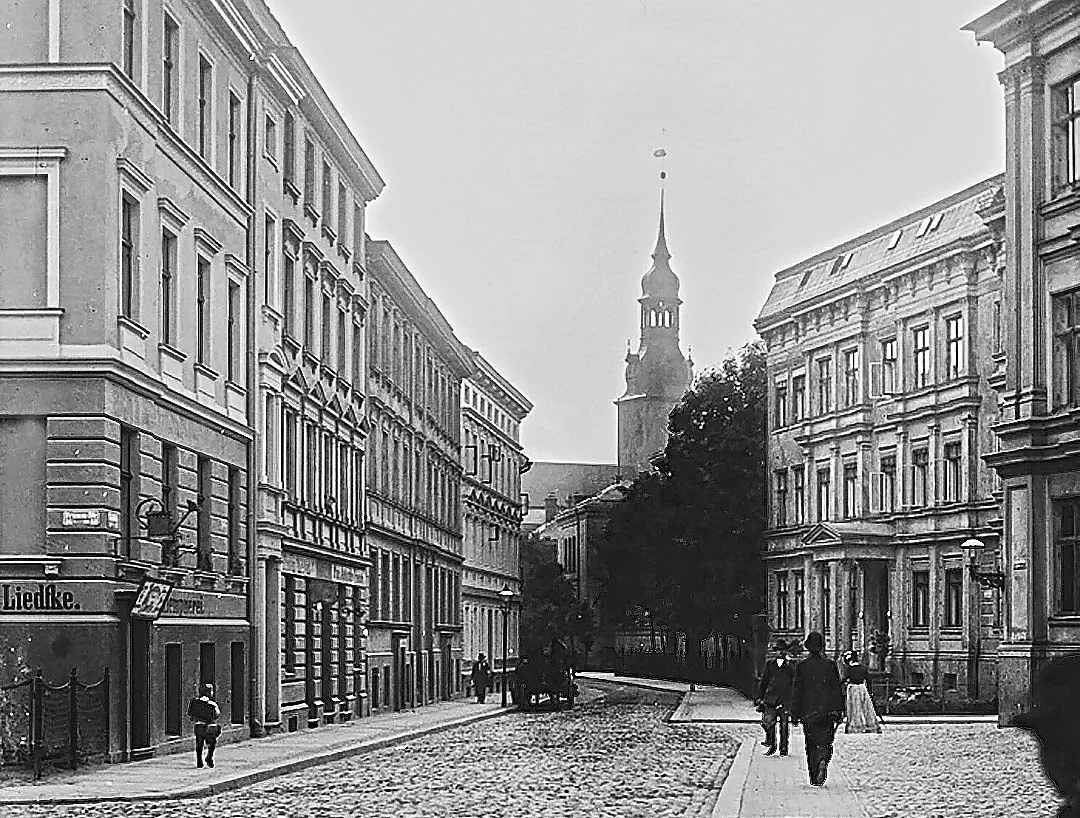
The oldest and most important building in this district is the Neurossgarten Church (Neu-Roßgärter Kirche). Its foundation stone was laid on 31 May 1644 by decision of the town council of Altstadt (Altstadt), since the local congregation had grown considerably. The festive consecration of the church took place on 5 December 1647.
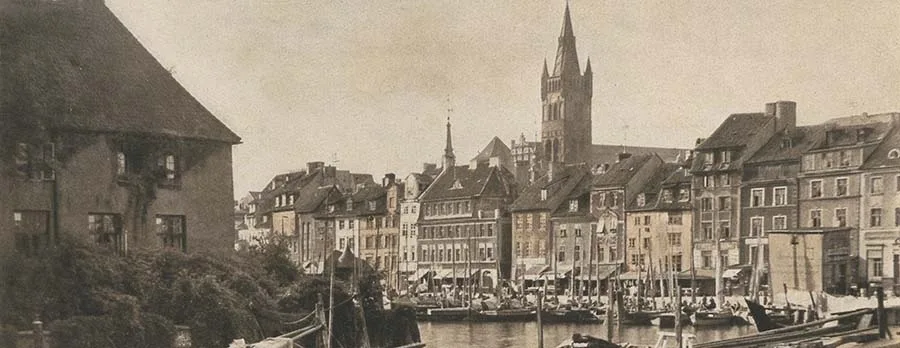
The people of Altstadt raised the money for building the new church and the pastor's house voluntarily. The church is very simple both outside and inside. The vaulted ceiling was painted by artists who were far from the most outstanding. The pulpit, on the other hand, is a real work of art: the wonderful wood carving dates from 1648. The organ of 1737 is the work of Casparini (Kasparini). The tower was built in 1685–1695 and was 90 metres high. The spire of the tower was covered with copper; the weathervane above the spire bears a cross and a crown, the coat of arms of Altstadt. Until the rebuilding of the castle keep, the tower of the Neurossgarten Church was the tallest in Königsberg and even served as a lighthouse. During the repairs to the church in 1863–1865 a sacristy was added to the eastern part. During this time services were held in the Steindamm Church (Steindammer Kirche), which for many years before had been used by the parishioners of Altstadt in place of the demolished old church on Altstadt Church Square (Altschtädtischen Kirchenplatz).
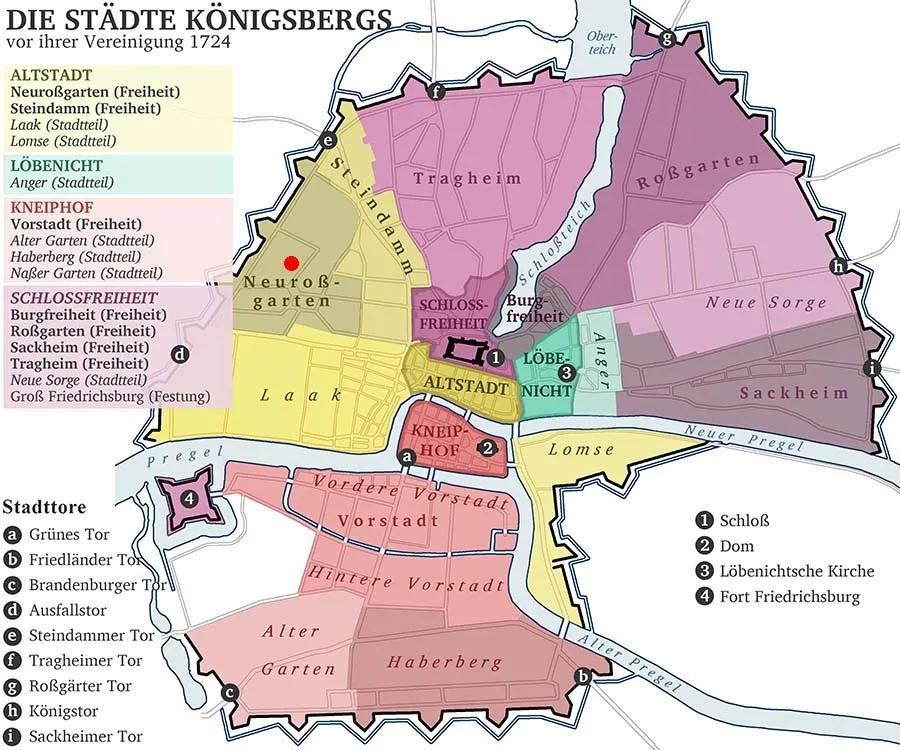
Neurossgarten on a reconstructed map of the local towns, settlements and districts before their unification in 1724.
Originally the Neurossgarten Church served as a chapel of ease of the Altstadt parish church (Altstädtischen Pfarrkirche).
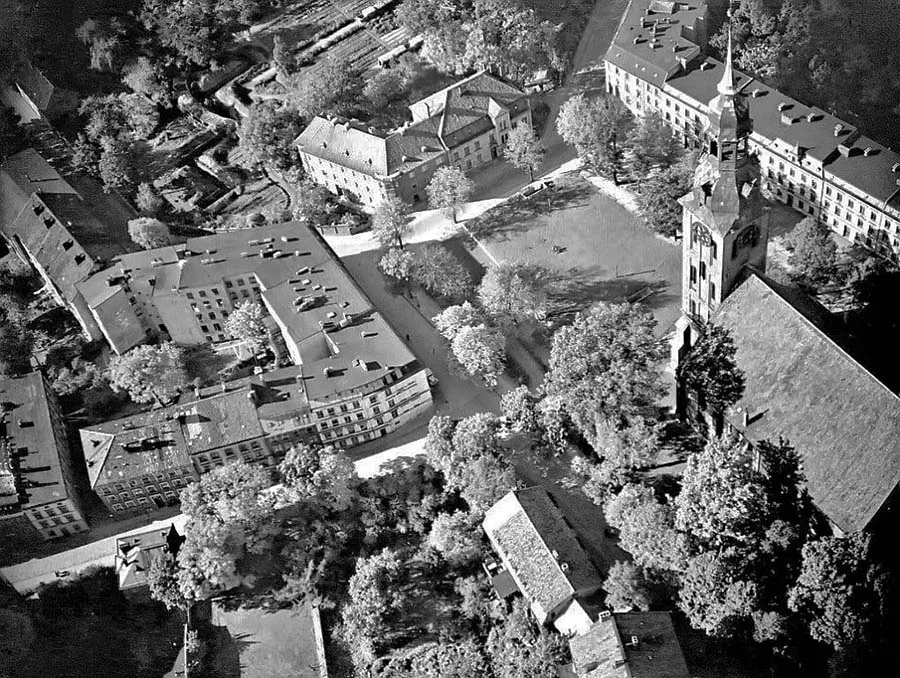 The Neurossgarten Church traditionally faced east with its altar end.
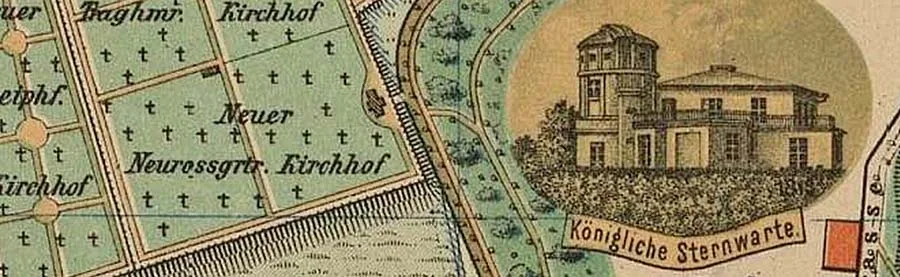
But from 1716 it received its own strictly defined parish, and after the post of a second preacher was established in 1888 the church in Neurossgarten became fully independent. The old local cemetery is by the astronomical observatory (Sternwarte, in the area of today's Gvardeysky Prospekt), and the new parish cemetery is by Violet Hill (Veilchenberg, in the area of today's Dmitriya Donskogo Street).
Among the clergy of the Neurossgarten Church a special place belongs to Ludwig Ernst Borowski (Ludwig Ernst Borowski, 1740–1831). He was born in Königsberg in 1740; after his studies he became a teacher at the Collegium Fridericianum (Friedericianum), during the Seven Years' War he was an army field chaplain, and from 1770 he served as pastor and archpriest in Schaaken (Schaaken, now the settlement of Nekrasovo).
From 1783 to 1815 Borowski was pastor of the Neurossgarten Church. The royal family listened to his sermons during their stay in Königsberg. In 1823 he became a bishop, and then an archbishop. Shortly before his death in 1831 he was ennobled. His portrait hangs in the church.
Closely connected with the Neurossgarten congregation is the Neurossgarten Parish House (Neu-Roßgärter Vereinshaus), which was built on Steindamm Rampart Lane (Steindammer Wallgasse) in 1893 with funds from members of the congregation for the purpose of developing the Inner Mission.
(Steindamm Rampart Lane was later called simply Stone Rampart; today it is General Galitsky Street — editor's note)
Thanks to the large number of institutes of the University of Königsberg located here, Neurossgarten acquired a distinctive character. The part of the district where all the clinics and most of the laboratories and institutions serving medical and natural-science purposes are concentrated is jokingly called the "Latin Quarter", after the student quarter in Paris.
It lies where Drum Street, Copernicus Street and Ober-Rollberg (Drummstraße, Kopernikusstraße, Ober-Rollberg; today Bolnichnaya and Kopernika Streets) meet. Here are the new chemical laboratory built in 1888, the gynaecological clinic, the medical clinic, the women's outpatient clinic, and the institute of pathological anatomy with a laboratory of medical chemistry, experimental pharmacology and a physiological observatory. Some of these buildings are under construction.
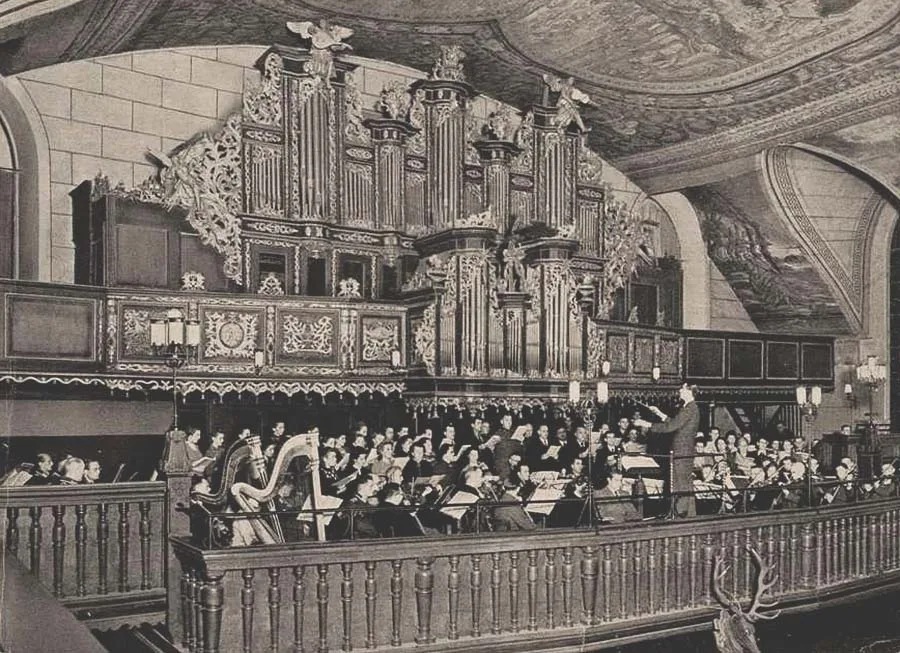 On 23 November 1941 Brahms's "German Requiem" was performed beneath the vaults of the Neurossgarten Church. It was conducted by Traugott Fedtke, cantor and organist of the church, who headed the Königsberg Bach Society (Bach-Verein Königsberg) in 1932–1944.
The most famous physiologist to work in Neurossgarten was Hermann Helmholtz (Hermann Ludwig Ferdinand von Helmholtz, 1821–1894), who during his time in Königsberg in 1849–1855 made his great invention here: the eye mirror (Augenspiegel, the ophthalmoscope). His invention marked the beginning of a new age in ophthalmology.
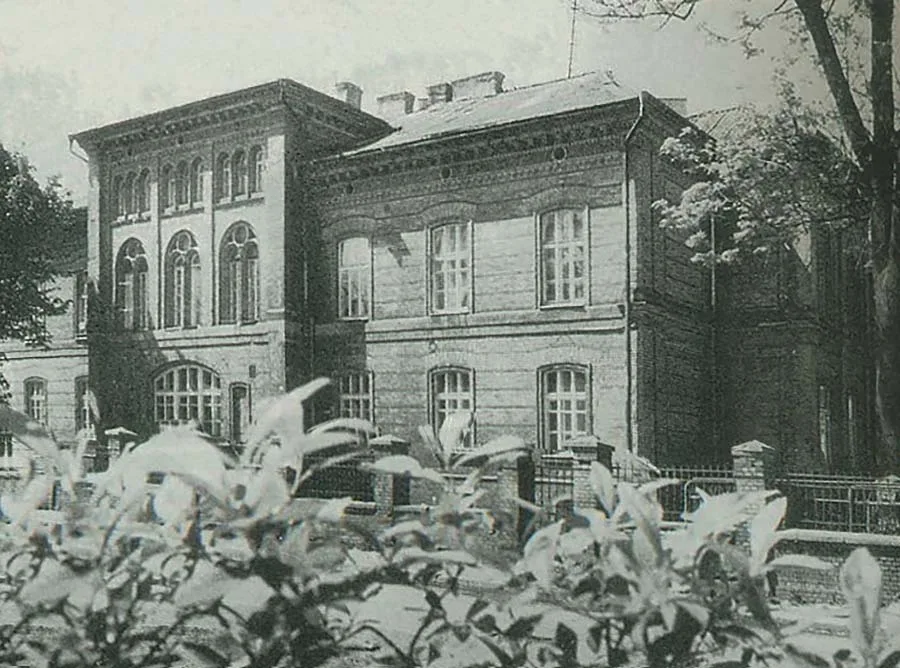
The Königsberg eye clinic, where Hermann Helmholtz worked.
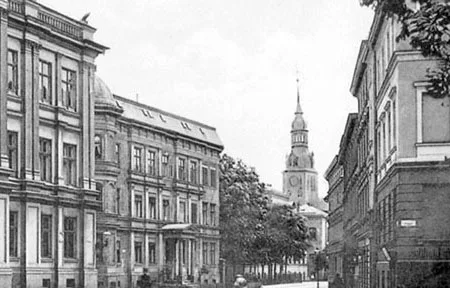
The eye clinic stands opposite the Neurossgarten Church, on the corner of Wagnerstraße (Wagnerstraße) and Lange Reihe. It was opened in 1877. Next to the clinic building stands a monument to the famous ophthalmologist Julius Jacobson (Julius Jacobson, 1828–1889) by Professor Reusch (Johann Friedrich Reusch, 1843–1906). Next to the eye clinic is the surgical clinic, built in 1895.
(The former "Latin Quarter" contained the following buildings, which have survived to this day: the anatomical institute on the grounds of the factory at Gvardeysky Prospekt 15, with an exit onto Galitsky Street; the medical clinic on the corner of Bolnichnaya and Vagnera Streets; the surgical clinic at Barnaulskaya 28; the gynaecological clinic at Bolnichnaya 44; the eye clinic at Barnaulskaya 5; the paediatric clinic at General Galitsky Street 26 and Botanicheskaya Street 8–10; the chemical institute at Bolnichnaya 45, on the corner of Kopernika Street; and the geological and palaeontological institute at Barnaulskaya 2. — Editor's note.)
Opposite the eye clinic, on the former Neurossgarten Church Street (now Vagnera Street), stands the Altstadt Foundation for Widows and Orphans (Altstädtische Witwen- und Waisenstift).
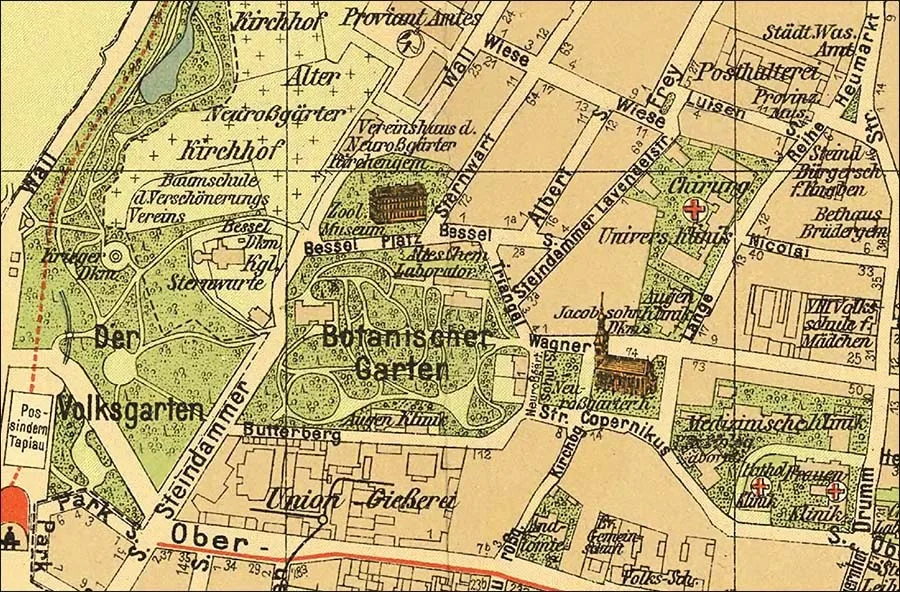 Neurossgarten on a map of 1901.
It was founded in 1720 by the town council, the town court and the guild of wealthy citizens of Altstadt, and was gradually enlarged with other endowments. The needy are provided here with free housing and heating and also receive financial support. The large new building of the foundation was built in 1892–93.
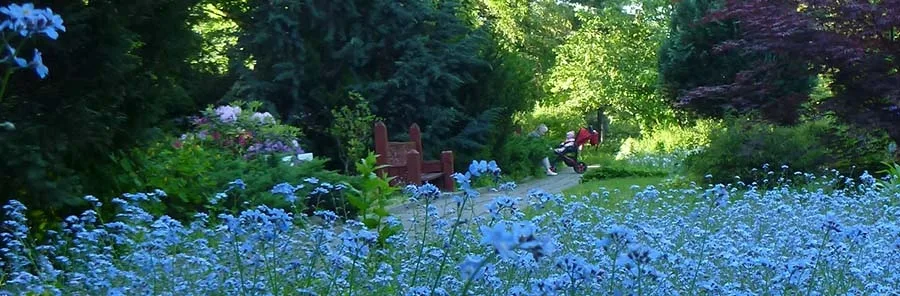
The Botanical Garden (Botanischer Garten), at the western end of Wagnerstraße, was founded in 1811, after a chair of botany was established at the university in 1809. Before it there was an estate with a garden on this site belonging to Johann Georg Scheffner (Johann Georg Scheffner, 1736–1820), war and domains councillor. On 25 October 1806 this plot of land in Neurossgarten passed into the ownership of the University of Königsberg.
Because of the difficulties of wartime, the founding of the Botanical Garden took five years. The first professor of botany was August Friedrich Schweigger (August Friedrich Schweigger, 1783–1821), who was murdered by a guide in Sicily in 1821.
His monument – an iron imitation of the ancient base of a candelabrum found near Tivoli at the villa of Maecenas, the friend of Emperor Augustus – stands in the Königsberg Botanical Garden that Schweigger founded.
Great changes took place in the garden in 1890–1895. The director's new official residence now accommodated lecture rooms and collections. The world-famous Ground Temperature Measuring Station (Bodenthermometer-Station, a geothermal station) that was here was moved outside the garden in 1892. On the grounds of the Botanical Garden, with its façade facing Besselstraße (Besselstraße), stands the Pharmaceutical and Chemical Institute (Pharmazeutisch-chemische Institut).
(The grounds of the botanical garden have survived to this day and have partly preserved their unique flora. The garden contains a landscape park and a children's and youth ecological centre. As for the botanical and pharmacological institutes, their buildings have not survived — editor's note)
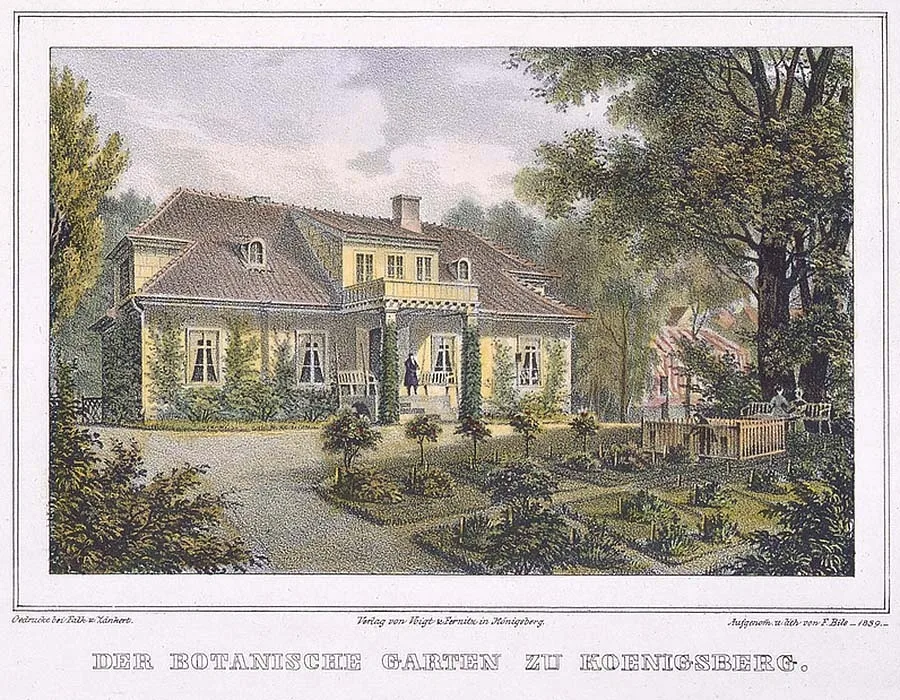 The Botanical Garden of the Albertina.
Opposite the Botanical Garden, surrounded by Besselstraße, Observatory Street (Sternwartstraße) and Steindamm Rampart Lane (today Besselya, Zvyozdnaya and General Galitsky Streets), stands the Zoological Museum (Zoologische Museum).
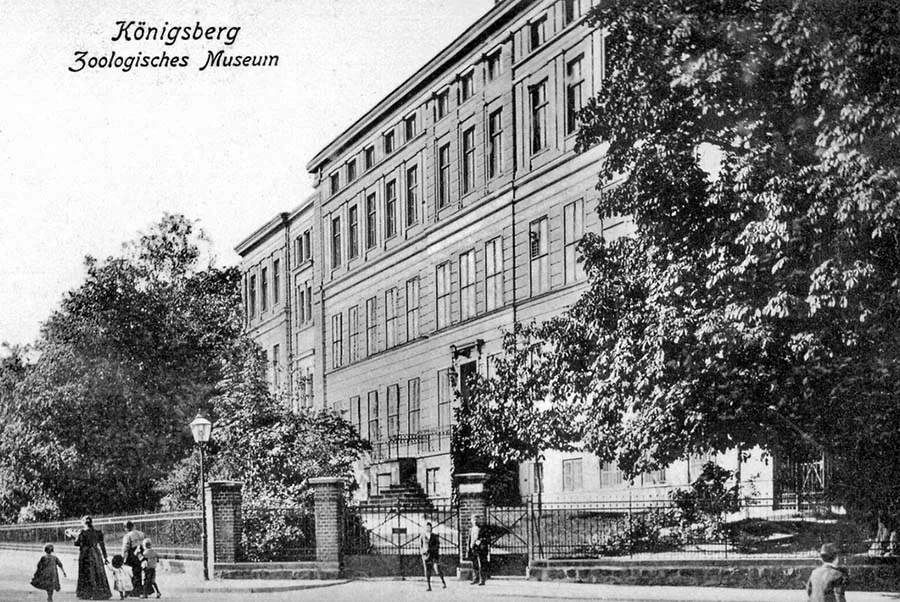 The Zoological Museum was built on the site of the Altstadt plague house.
The university had already formed its zoological collection by the end of the 1810s. It grew constantly and required scientific description and accommodation befitting its status, so in 1830 the present building was erected, and later the museum's floor space was increased by adding storeys.
(The Zoological Museum building has not survived). Formerly the Altstadt plague house stood on the site of the museum, which is why today's Observatory Street and Besselstraße were called the Plague House Lanes (Pesthausgasse / Pesthaus Quer Gasse) in this part.
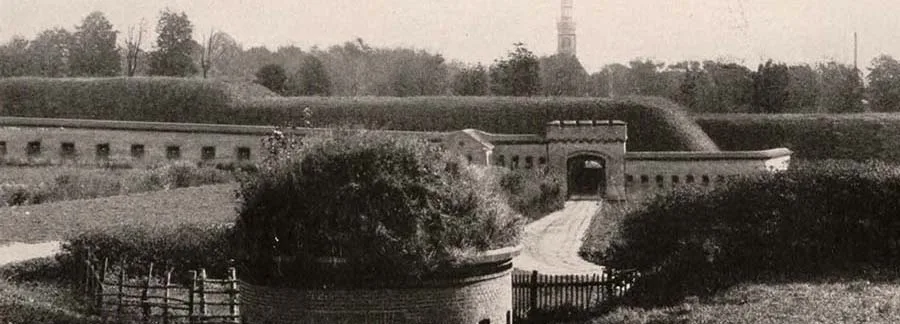
The renaming of some streets in this part of the city is connected with one very important event: the construction here of an astronomical station (Sternwarte, an observatory). It was built in 1811–1813 and became a symbol of the new, bold outlook on the future that filled the Prussian government after the unfortunate war (meaning the conclusion of the humiliating Peace of Tilsit in 1807).
When the French Emperor Napoleon visited Königsberg for the second time in 1812, on his way to the Russian campaign, he looked at the observatory under construction and said: "My God! The King of Prussia still finds time to think about such things!"
The observatory was built on the highest point of the old fortifications of Königsberg, where the Altstadt gallows once stood; later a windmill was built here, and for a long time this site was called Windmill Square (Windmühlenplatz).
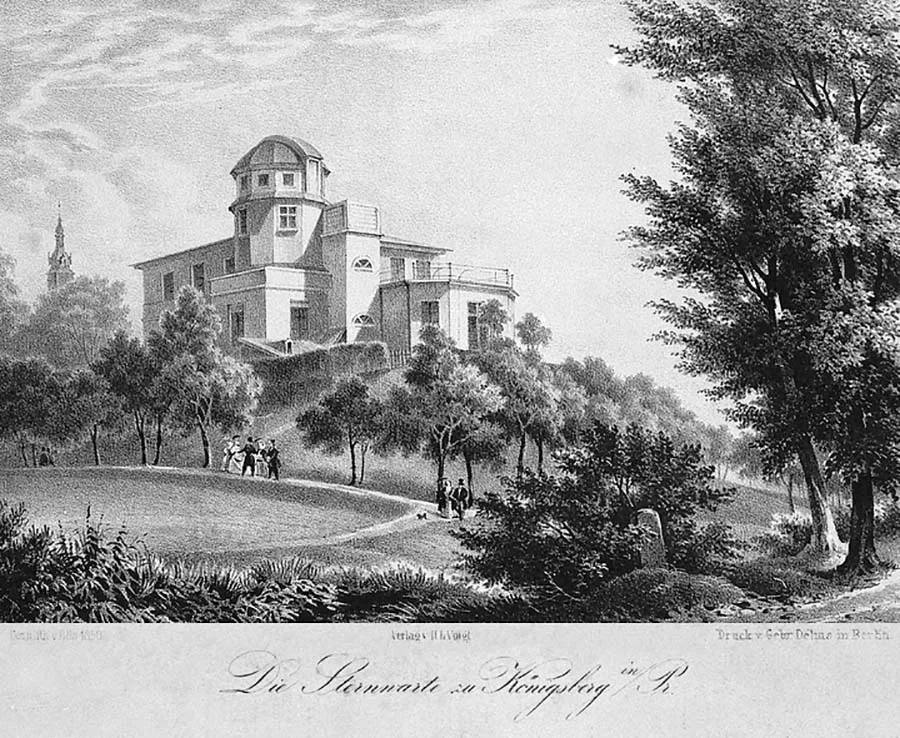 The Königsberg Observatory in 1850. Engraving by Friedrich Bils (Friedrich Heinrich Bils).
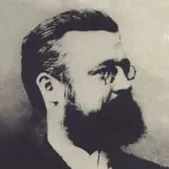
Now this is Bessel Square (Besselplatz), around which spreads the City Park (Stadtpark), usually called the People's Garden (Volksgarten). The observatory is cross-shaped in plan and small in size. But it made famous its director Friedrich Wilhelm Bessel (Friedrich Wilhelm Bessel, 1784–1846), who was also professor of astronomy at the University of Königsberg.
(The astronomical observatory was placed on the Butterberg hill. Translated literally from German, the name means "Butter Hill". From the similarity of the German words "Butter" (butter) and "Büttel" (executioner), it was suggested that the hill was named after the gallows that stood here, since it had nothing to do with butter. Another version inclines us to think that the name comes from the word "Butenberg", "outer, outlying hill". There is also a version that Samland peasants used to sell butter here. — Editor's note.)
Friedrich Wilhelm Bessel was born on 22 June 1784 in Minden. He showed an early aptitude for arithmetic. At 15 he became an apprentice at a trading house in Bremen and at the same time studied mathematics and astronomy on his own, which attracted attention. In 1806 Bessel finally broke with commerce and became an assistant at the private observatory in Lilienthal near Bremen. At Easter 1810 he was invited to Königsberg as professor of astronomy. Here he worked fruitfully for more than thirty years until his death. Bessel was buried in the old cemetery by the Neurossgarten Church. Königsberg and its university paid the great astronomer high honours: a street was named after him, a bronze bust of the scholar stands by the observatory, and this luminary of science appears on the base of the monument to Frederick William III and on the façade of the university. A tower with a rotating dome is currently being built at the observatory, which will house a state-of-the-art telescope.
In the People's Park stands the Monument to the Fallen Soldiers of the City of Königsberg (Kriegerdenkmal). The monument was designed by the Königsberg building councillor Franz Krüger (Franz Krüger, 1829–1896).
The monument is made of Saxon sandstone. On an octagonal base rises a column topped by an eagle with outspread wings. Four bronze plaques with military attributes alternate with four sandstone plaques bearing inscriptions:
«Das höchste Gut bes Mannes ist sein Volk» (Dahn)
(A man's highest wealth is his people / Dahn);
«Nicht Euer Lohn, nur unser Dank» (Wichert)
(This is no payment to you – only our gratitude / Wichert);
«Getreu bis in den Tod erkämpften sie uns das Deutsche Reich»
(Faithful unto death, they fought for our German state);
«Die Einwohner Königsbergs ihren im Kriege 1870/71 gefallenen Brüdern»
(To the brothers who fell in the war of 1870–1871, from the people of Königsberg).
On the southern side of the monument are the mask of a dying soldier and an Iron Cross. The faces of the column are carved with the names of the places, engagements and battles in which the troops of the 1st Army Corps took part.
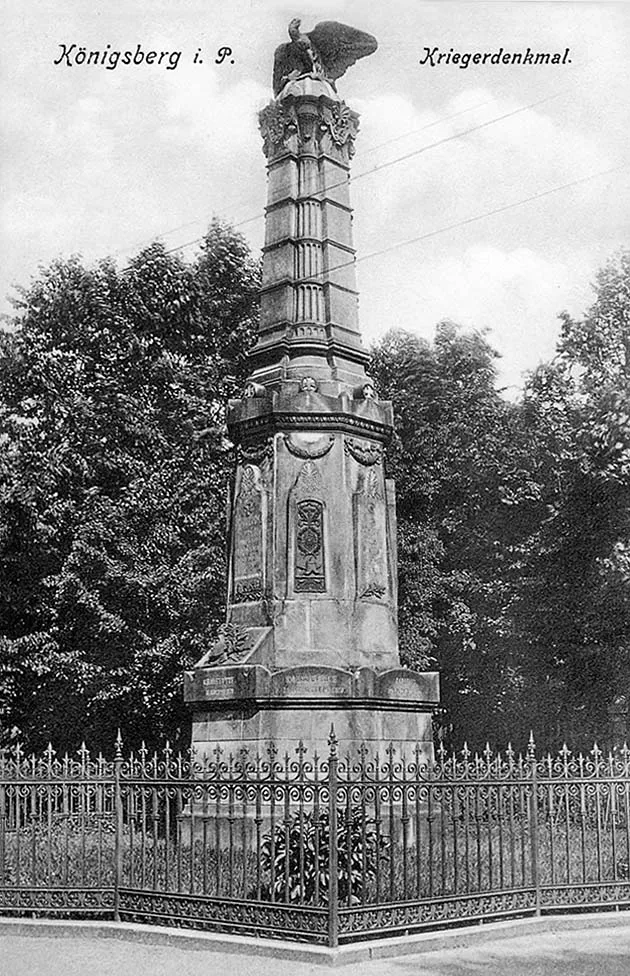
The monument to the fallen soldiers of the city of Königsberg.
The foundation stone of the Monument to the Fallen Soldiers of the City of Königsberg was laid on 2 September 1873. The ceremonial unveiling took place on 18 June 1877.
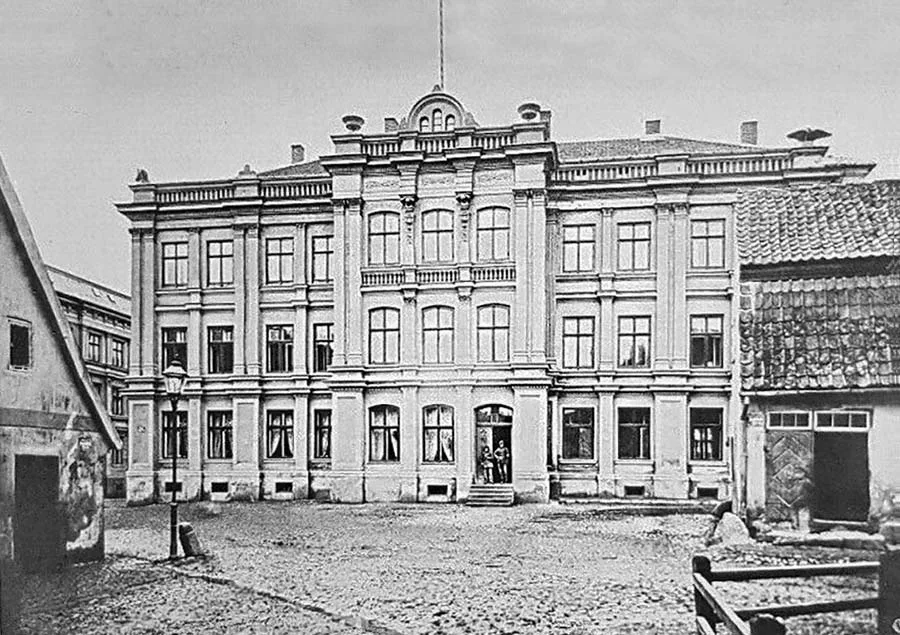 The building of the East Prussian Agricultural Union on Lange Reihe.
Before leaving the suburb of Neurossgarten, we must mention two more institutions which, although they did not belong to the university, also pursue scientific aims. These are the Physical-Economic Society (Physikalisch-ökonomische Gesselschaft) and the East Prussian Agricultural Union (Ostpreußische landwirtschaftliche Centralverein). They stand opposite each other on the corner of Luisenstraße (Luisenstraße) and Lange Reihe.
(Luisenstraße was later renamed Amber Street (Bernsteinstraße). It follows that, in terms of today's orientation, both buildings should be on the corner of Barnaulskaya and Geologicheskaya Streets, opposite the surviving part of the geological museum building. They have survived — editor's note)
The Physical-Economic Society was founded on 22 February 1790 in Mohrungen (Mohrungen, now Morąg in Poland) and in 1799 was moved to Königsberg. Its original aim was to help agriculture. But gradually it moved away from these intentions and took up the study of the natural sciences and of the problems of farming in East Prussia. On 29 May 1879 the society acquired its own building, where it remains to this day.
The society's museum holds about 66,600 exhibits – geological finds, 20,000 objects of Prussian antiquity, 1,500 glass objects from prehistoric times and 230 skulls. The society has a library of 13,000 volumes.
(Later the collection assembled by the Physical-Economic Society formed the basis of the famous Prussia Museum — editor's note)
The aims of the East Prussian Central Agricultural Union correspond to the name of this organisation: it is concerned with the development of agriculture in the province. The union was founded on 13 November 1844, and its first chairman was the Royal Minister of State Theodor von Schön (Heinrich Theodor von Schön, 1773–1856) of Arnau (Arnau). On 1 November 1875 the union set up an agricultural experimental station where science and practice were combined. The activities of the union consist in testing the best fertilisers and the quality of fodder, controlling seed stocks, studying plant biology on the scientific basis of chemical and technical analysis, studying soil composition and the quality of foodstuffs, making observations and so on. The union moved into its own new building on 1 April 1879. In 1880 a meteorological station was set up at the organisation.
(In terms of today's orientation, Neurossgarten occupied an area resembling a triangle. The western boundary ran along today's Gvardeysky Prospekt. The southern boundary ran along the northern part of today's Moskovsky Prospekt. The north-eastern part bordered on the suburb of Steindamm, and in the east the boundary ran along Bolnichnaya Street — editor's note)
Photos on this page: Bildarchiv Ostpreußen / bildarchiv-ostpreussen.de.
Translated from Russian with the help of AI (Claude, Anthropic), October 2026.