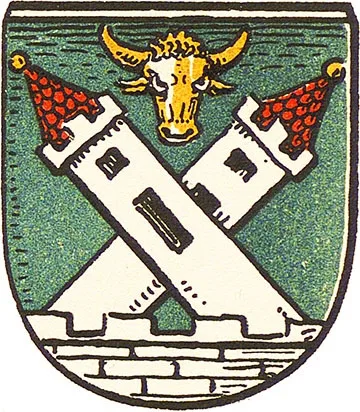
Coat of arms
of Zinten
Zinten's year of foundation is considered to be 1290, when the Prussian nobleman Sulenko was granted a charter for eight Hufen of land on the Porrn River (evidently the Kornevka) and one Hufe of land on the Eyszenwasser River (Vishnyaya) between the settlements of Marawnen (Mikhaylovskoye) and Clingbeke. The date is rather tentative, since the text of the original document survives only in a confirmation of the charter in 1494. In 1313 Zinten received town rights. The charter for this has not survived, but Zinten's town rights are confirmed by a charter of 13.07.1341, which also mentions a pastor Matthias, indicating that the town already had a congregation and a church. The Kammeramt of Zinten is mentioned from 1343. On 19.11.1352 the Grand Master presented Zinten with a charter under Kulm law, and with it the right to a seal; the seal's design of two crossed towers became the basis of Zinten's coat of arms. Originally Zinten had 52 households. By order of Grand Master Winrich von Kniprode, the town walls and fortifications were built in 1360–63.
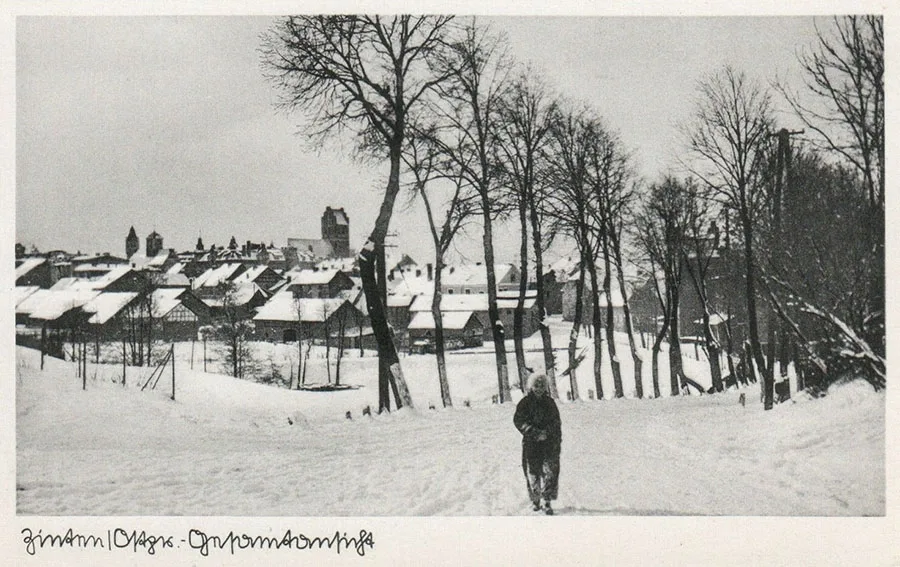
In 1414 Zinten was attacked by the Poles and burned down. According to the chronicle, 27 burghers were killed, 10 young men were taken prisoner, and women were violated right in the church.
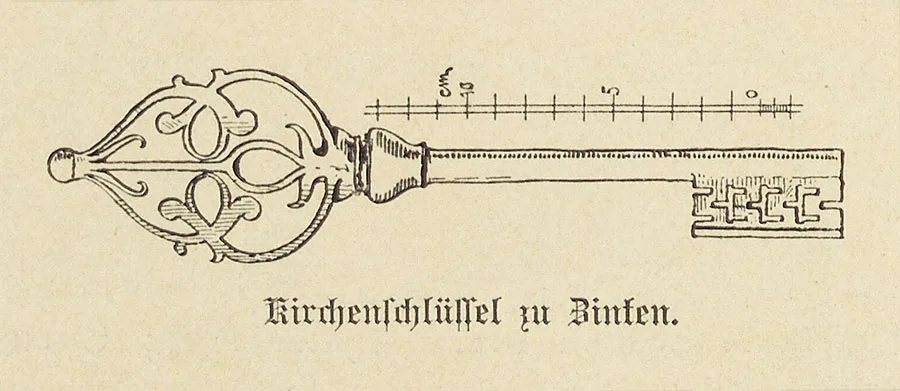
In 1417 a water mill was built in the town. Before the Thirteen Years' War, Zinten sided both with the Teutonic Order and with the Prussian Confederation: in 1440 it was one of the first to join the Prussian Confederation, in 1454 it swore allegiance to the Polish king, but in 1455 (or in 1454, according to other sources) it finally went over to the Order's side, as a result of which it was attacked by the Poles and the troops of the Prussian Confederation. In 1447 the town consisted of 48 households on 67 Hufen of land.
In 1480 it was handed over to Anselm and Hans von Tettau as payment for military service. In 1496 it passed into the possession of Bishop Johannes of Pomesania. In 1520 it was attacked by the Poles, taken, burned and destroyed. Under the Treaty of Kraków in 1525, Zinten passed as a hereditary fief to Duke Albrecht of Brandenburg.
From 1526, when an edict by Bishop Mauritius Ferber of Warmia forbade Protestants to live in Poland continuously for more than a year, Zinten became the foreign town to which Protestants came for a few days to interrupt their period of residence in Poland. This gave rise to the expression "a foreigner from Zinten", widespread in East Prussia. It meant a person passing himself off as someone he was not. According to another version, the expression arose after an incident when two students pretended to be foreigners at the Zinten market, talking in a language they had made up, but it later turned out that they were simply those very Protestants from Poland staying there temporarily.
In 1533 the miller Hans Mattern built a sawmill next to the mill. In 1548 a clergyman in Zinten who also served as a teacher is mentioned for the first time, indicating that a school had appeared in Zinten.
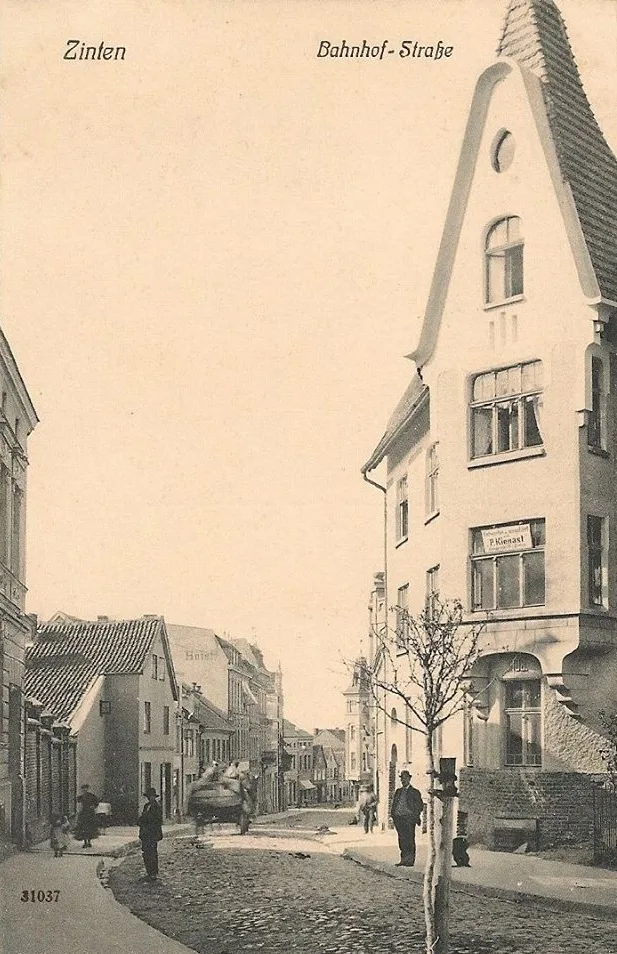
Severe fires raged in the town in 1593 and 1625. In 1628, during the Polish–Swedish War (1626–29), Zinten was occupied by the Swedes.
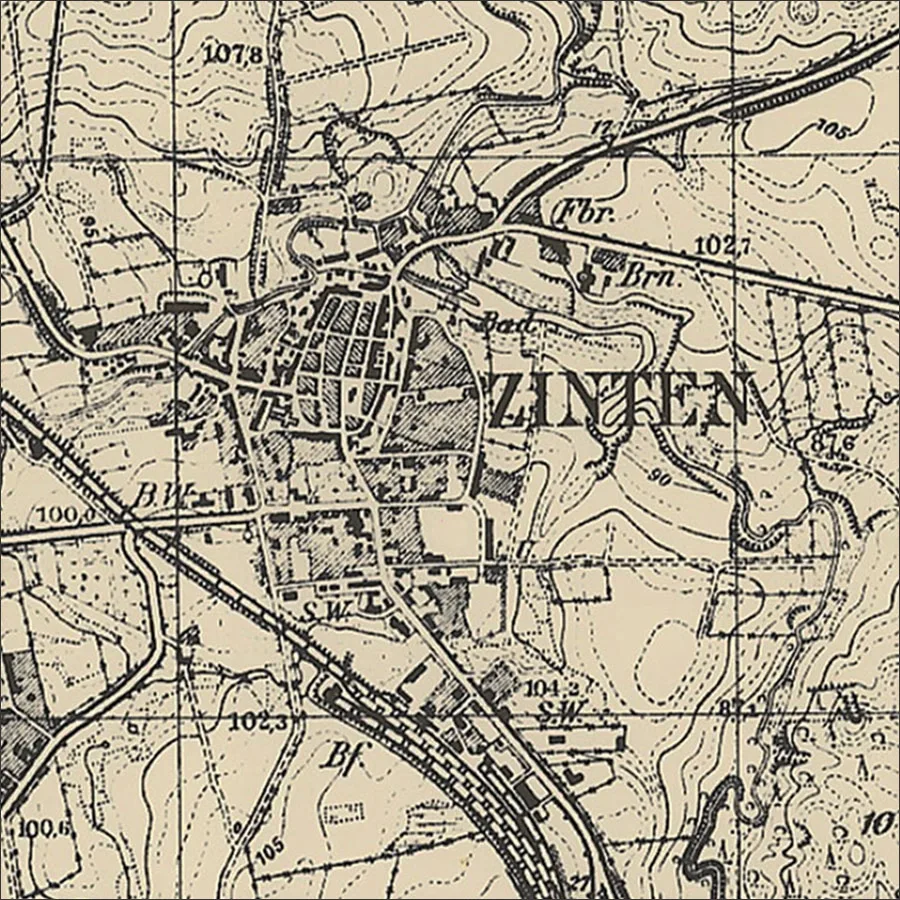
In 1629 another fire broke out in Zinten. The next Swedish garrison was stationed here in 1656–60 during the Northern War (1655–60). In 1693 the journeyman cloth-makers of the town rose in revolt. In 1716 Zinten again suffered a severe fire that destroyed the town. The fire and destruction were so severe that by the end of the 18th century it turned out that not a single family that had lived here before 1716 remained in Zinten.
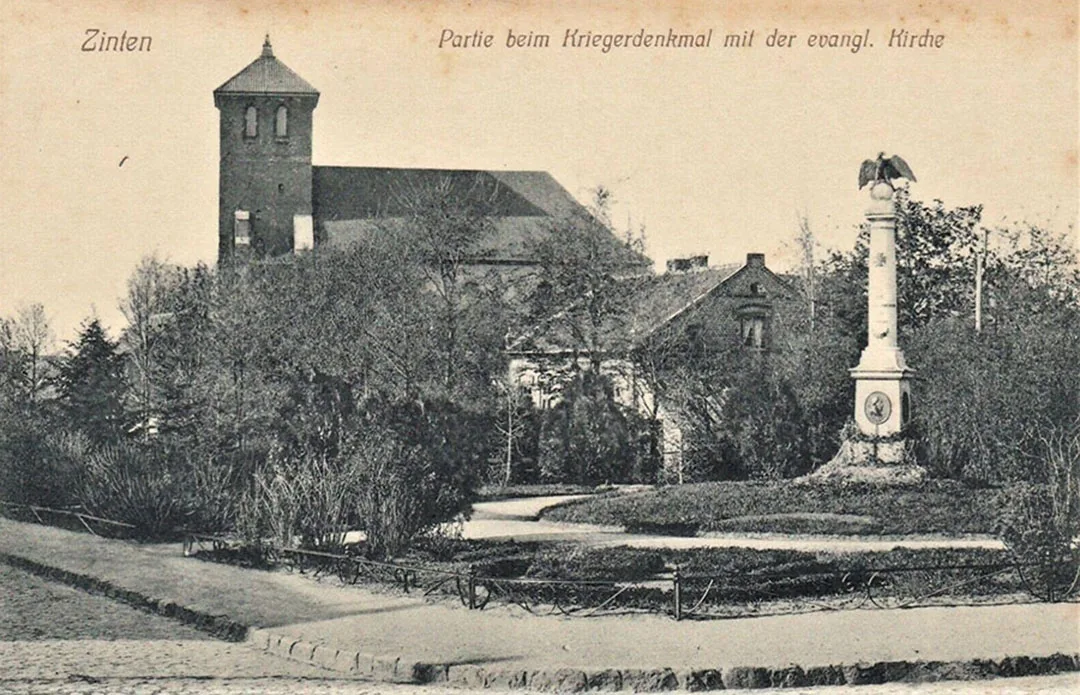
In 1741 Zinten's church was rebuilt. In 1746 another fire broke out in the town. In 1751 the Zinten mill passed into private hands. In 1756 an organ was installed in the Zinten church. During the Seven Years' War, in 1758–62, squadrons and the headquarters of the Kargopol Cuirassier Regiment were quartered in Zinten. In 1781 a west tower was added to the Zinten church.
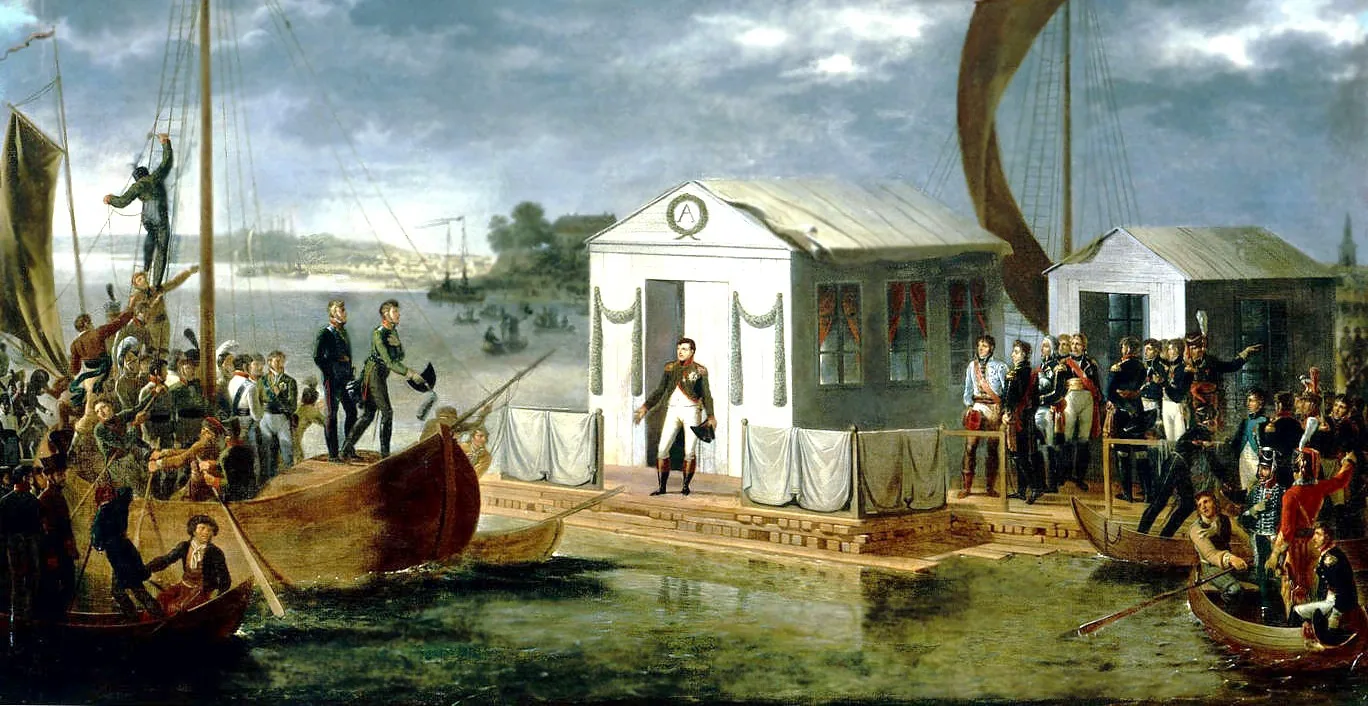
In 1807–08, after Prussia's defeat in the war with Napoleon, a French garrison was stationed in Zinten.
In 1818 Zinten was declared an open town and became the centre of the Landkreis of the same name, but as early as 1819 it became part of the Landkreis Heiligenbeil. Since the town gates were no longer locked, the Middle Gate (Mitteltor), the Upper Gate (Obertor) and the Lower or Mill Gate (Mühlentor) were demolished; only the Potters' Gate (Töpfertor), which housed the town prison, survived until 1847.
In 1831 a cholera epidemic broke out in Zinten.
In 1837 the Swiss settler Rudolf Kindelmann built the town's first small industrial enterprise, with a mechanical hammer, on the Stradick River (Kornevka). Later the Rudolfhammer mill stood on this site (54°25'41'' N 20°18'09'' E). In 1885 the Königsberg – Allenstein railway (Olsztyn, Poland) was built through Zinten. On 1.07.1898 the Königsberg – Zinten – Heilsberg railway (Lidzbark Warmiński, Poland) was opened.
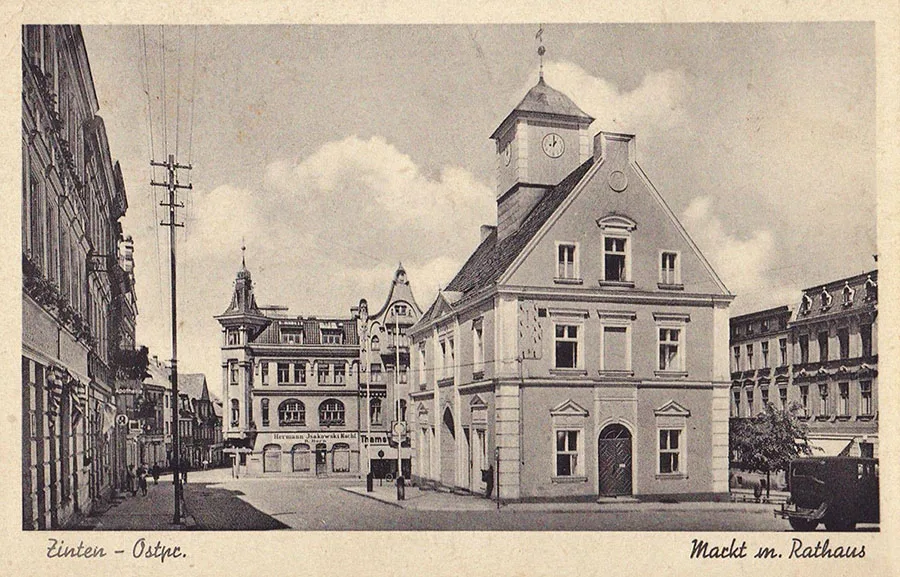
In 1902 a power station was built next to the mill, generating electricity for the town's needs. In the same year Zinten's first newspaper began to appear – a weekly news sheet.
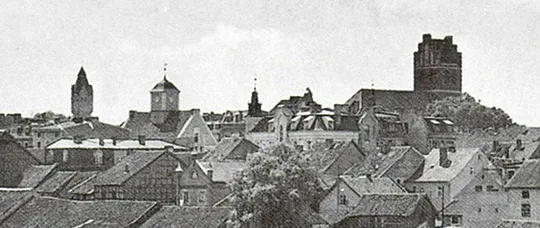
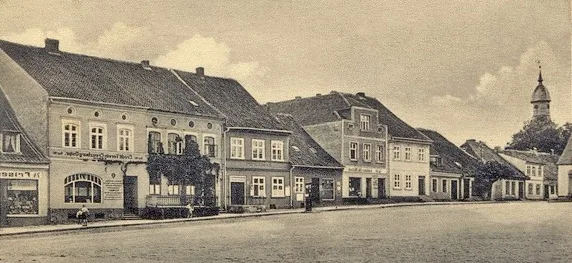
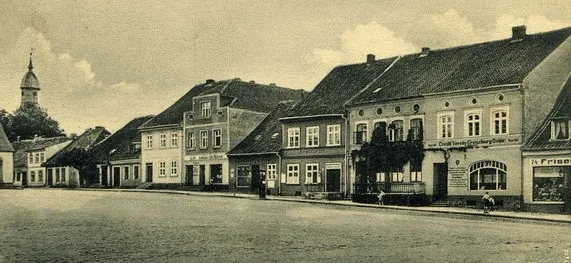
At the turn of the 19th and 20th centuries the town burned again. In 1898 houses burned down in the eastern part of the town. In 1901 it was the west of Zinten that burned. In 1904 the north side burned out, and in 1913 the south side. As a result, practically nothing remained of the town's medieval appearance. In 1914 a water tower was built in the town, which has survived to this day.
From the beginning of the 20th century, thanks to the efforts of mayors Hugo Holzmann (1890–1911) and Karl Ruprecht (1931–34), Zinten developed as a resort. The resort was officially opened on 31 July 1933, but the activity itself had begun in 1896, when the watchmaker Johann Weist built a small guest house in the town forest, which became very popular.
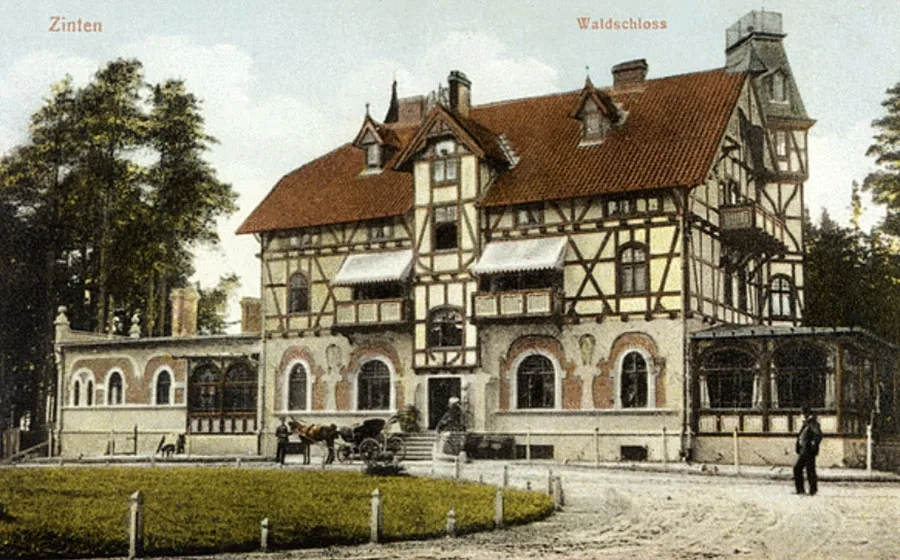
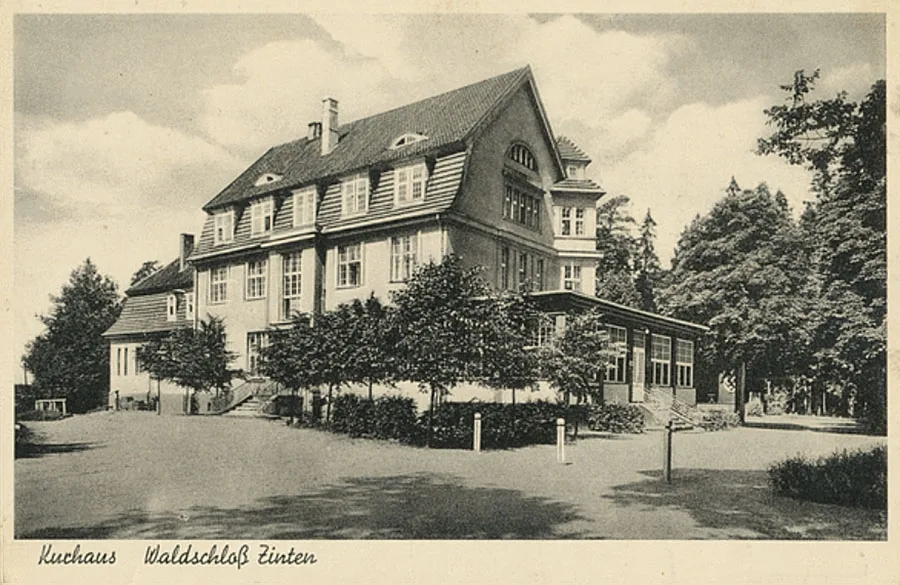
On 05.11.1902 the magistrate ordered the construction of a large house, built by the master builder G. Pauli and named the "Waldschloß" (pictured above). Paths were laid through the town forest, benches were installed and playgrounds were set up. On 09.08.1913, during the celebration of Zinten's 600th anniversary, the guest house burned down. A new one with 26 rooms and 40 beds was soon built (pictured below).
In 1932–33 a forest swimming pool was built through the efforts of enthusiasts. From 1936 a 500-metre funicular operated in the forest near Zinten. In summer beaches were set up on the banks of the Stradick (Kornevka), and in winter a 4,000 m² skating rink was laid out. Next to the "Waldschloß", Domerau Castle was built and an open-air shooting range was set up.
As of 1931 the town had 360 residential houses and 959 farm buildings. On 01.04.1937 the village of Klein Klingbeck (54°27'32'' N 20°18'47'' E), which had previously belonged to the rural municipality of Klaussitten (Michurino, part), was incorporated into the town municipality.
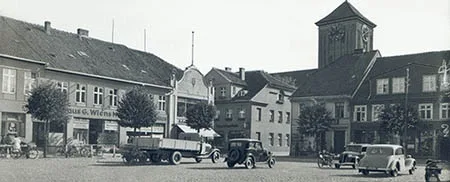
Before the Second World War Zinten had a power station, a waterworks, a dairy, a soap factory, a cement products plant, a brickworks, a sawmill, a slaughterhouse, a mill, schools, a higher girls' school, a district orphanage, an old people's home, a stadium, a youth hostel, two banks, a savings bank, a municipal printing works, a post office and two hotels, and a military garrison was stationed there.
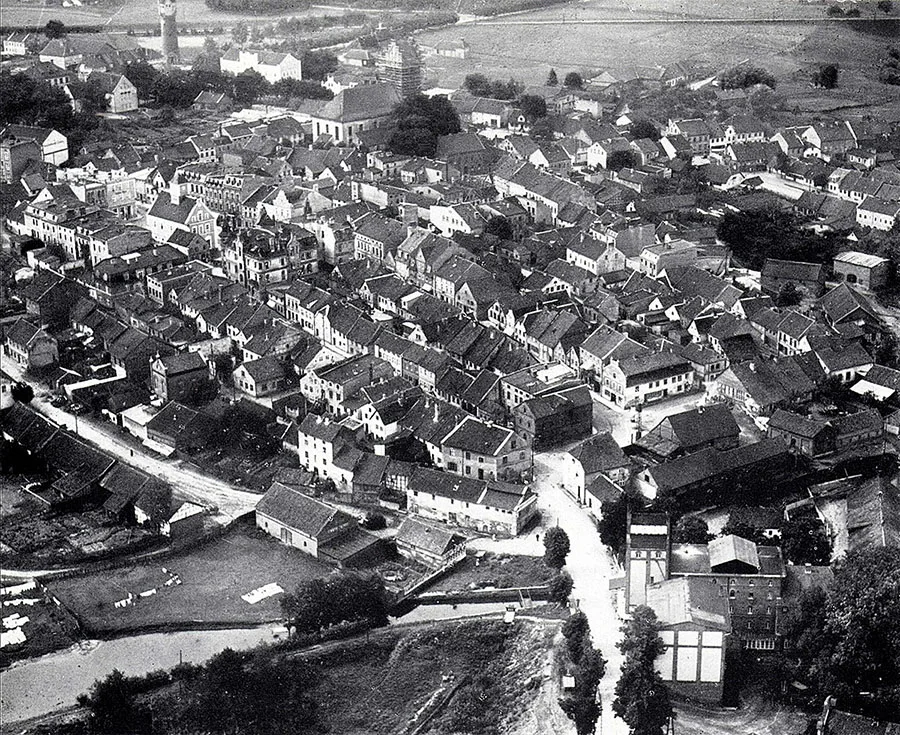
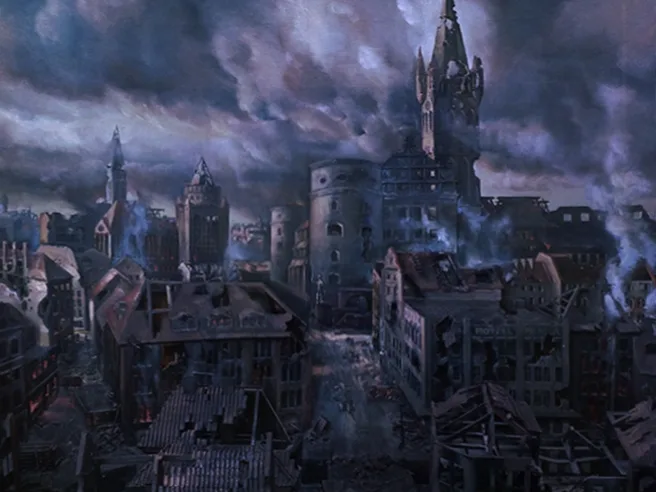
During the East Prussian operation, Zinten covered the German army's retreat to the Frisches Haff (Kaliningrad Lagoon, Polish: Vistula Lagoon). The town's garrison consisted of the remnants of the 23rd, 547th and 170th Infantry Divisions. On 09.02.1945 units of the 28th Army and the 65th and 128th Rifle Corps of the Red Army's 5th Army reached the town. During the night two regiments of the 352nd Rifle Division attacked and stormed the "Waldschloß", but were then halted, half-encircled and forced onto the defensive. In the north-east, units of the 173rd Rifle Division were stopped at the mill. On 18.02.1945 the assault by the forces of the 5th Army and the 28th Army began; the 54th Guards Rifle Division advanced on the northern part and the 36th Rifle Corps on the southern part. The fighting on 18–19.02.1945 did not produce the expected result. The 96th Rifle Division of the 28th Army was assigned to strike around the town. On 20.02.1945 a new offensive began, but it was halted by a German counterattack. Only on 21.02.1945 did the situation turn: in the morning the 221st Rifle Regiment captured the mill, and the 307th Rifle Regiment burst into the station. Then by noon the 221st Rifle Regiment had fought its way into the town centre, and the remnants of the German units withdrew from it into the forest. The town was badly damaged in the fighting; about 30 buildings in the centre remained intact. In the first post-war years the town centre was dismantled for building materials and firewood. The first Soviet inhabitants of Zinten were military personnel, who set up a military settlement here. A commandant's office and a border post appeared in the town. The mill survived and was usable after repairs. In October 1946 the Kuybyshev kolkhoz and a brickworks are mentioned. Before its official renaming, Zinten had several unofficial names (Bagramyansk, Shaumyan, Pogranichny). The barracks complex housed the tanks of the 1st Insterburg Red Banner Tank Corps (from 10.06.1945 – the 1st Insterburg Red Banner Tank Division).
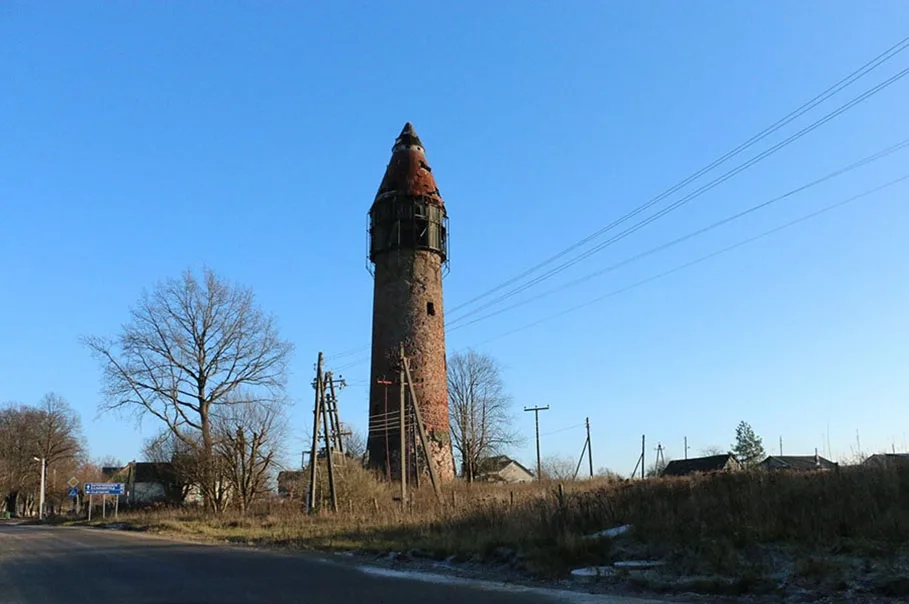
On 17.06.1947 Zinten was renamed the settlement of Kornevo.
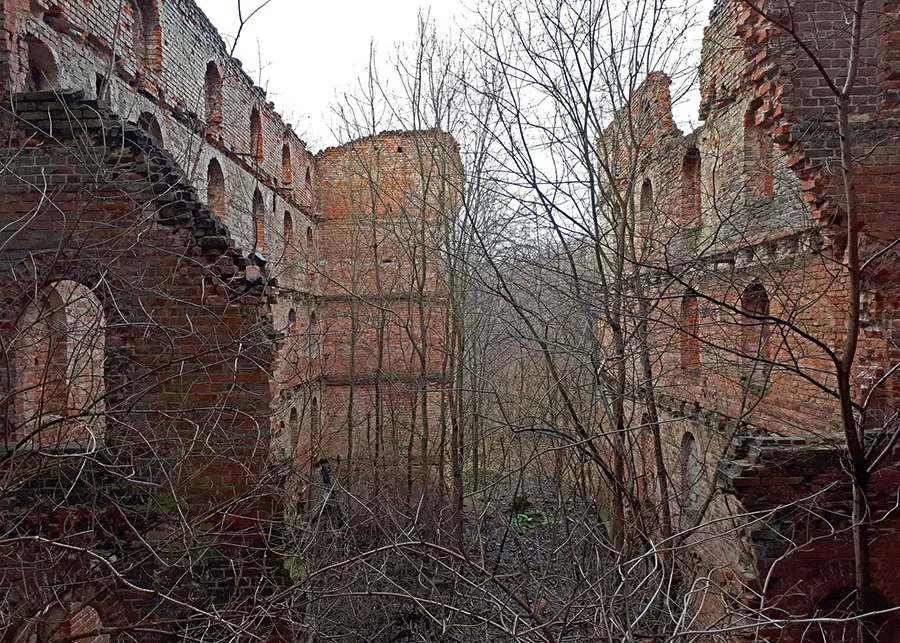 Ruins of the Zinten mill.
At the same time the Kornevo village council of the Ladushkin district was created. By October 1947 the settlement had 315 inhabitants, including 17 Germans. In 1950–57 the settlement became part of the M. I. Kalinin kolkhoz. From 1958 it was the central settlement of the Kornevsky kolkhoz. In 1972 the settlement had 88 houses. In the late 1990s the 1st Tank Division was disbanded and left the barracks.
Sights: church ruins (14th–18th c.), memorial on the mass grave of Soviet soldiers (6,700 people, 1980), mass grave of Soviet soldiers (1,659 people, monument 1952), park, water tower (1914), water mill, memorial sign at the burial site of Red Army soldiers (54°26'15'' N 20°18'19'' E; 32 soldiers were reburied in Medvedevka in 2005), road bridge over the Kornevka, forest swimming pool (1932–33, 54°26'31'' N 20°18'12'' E), barracks complex.
Population: 1861 – 3,138, 1867 – 3,177, 1875 – 3,201, 1880 – 3,226, 1890 – 3,360, 1905 – 3,488, 1910 – 3,382, 1925 – 3,549, 1930 – 2,800, 1933 – 3,955, 1939 – 5,800, 1946 – 234, 1947 – 315, 1984 – 690, 2002 – 1,870 inhabitants.
Photos on this page: Bildarchiv Ostpreußen, bildarchiv-ostpreussen.de, Mikhail Ogorodnikov
Translated from Russian with the help of AI (Claude, Anthropic), October 2026.