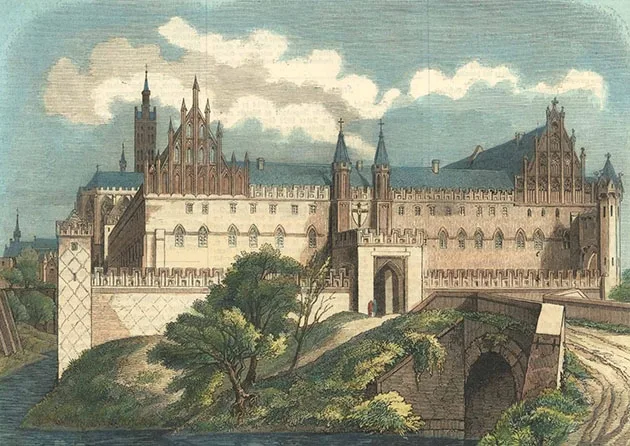
The castle was planned from the start as a Komtur's seat, although its first Komtur is not mentioned until 1305. Lochstädt's main building was smaller than Brandenburg's, measuring 53 x 47 m, but it too was a four-winged castle, as befitted a Komtur's seat.
There is, however, evidence that the fourth wing was not completed during the initial construction and was only built in the 14th century.
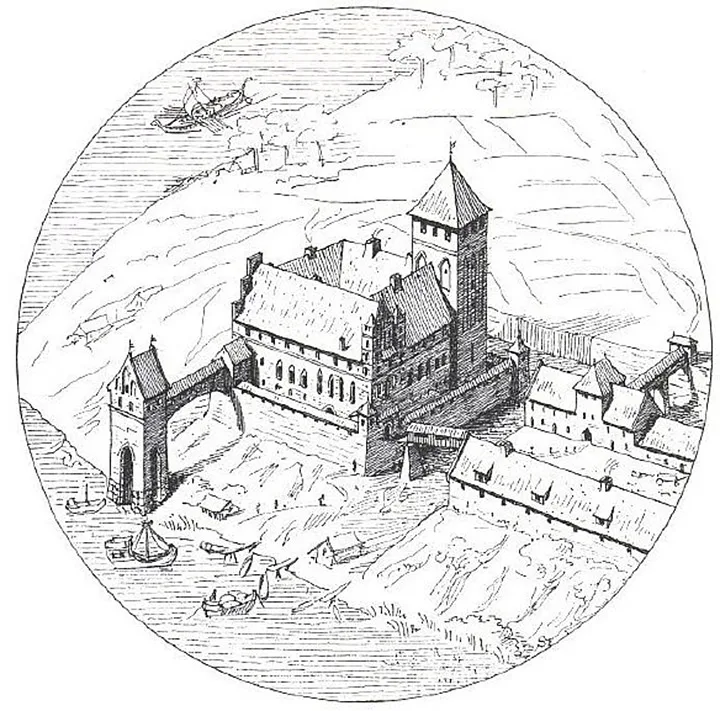
Besides these four wings, the castle had a very massive tower with walls five metres thick at the base. It also had a classic danzker in the form of a projecting tower standing over the lagoon.
Adjoining the castle to the east was an elongated rectangular outer bailey formed by three buildings, which housed quarters for soldiers and servants as well as storerooms. In the castle itself the cellars served as a prison, while the ground floor contained service rooms, the kitchen, the furnace room, the armoury and all kinds of storerooms. The upper floor held the living quarters, the Remter and the chapter hall. The castle chapel was built in the eastern part of the southern wing.
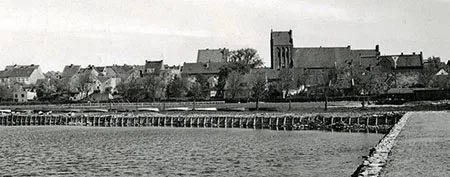
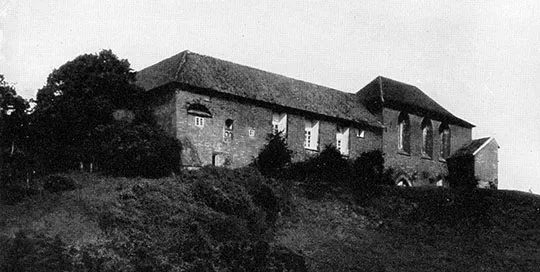
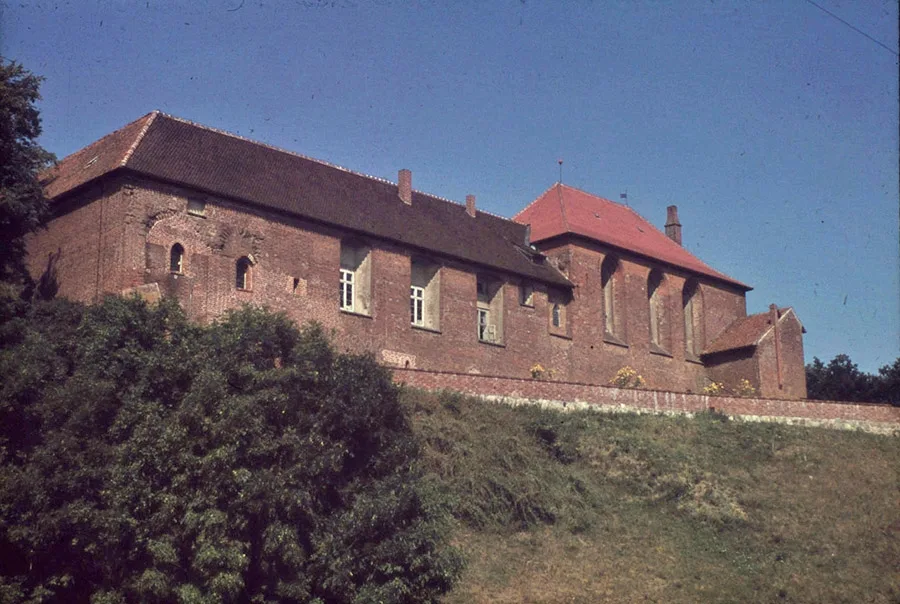 Lochstädt Castle before the Second World War (1943–44).
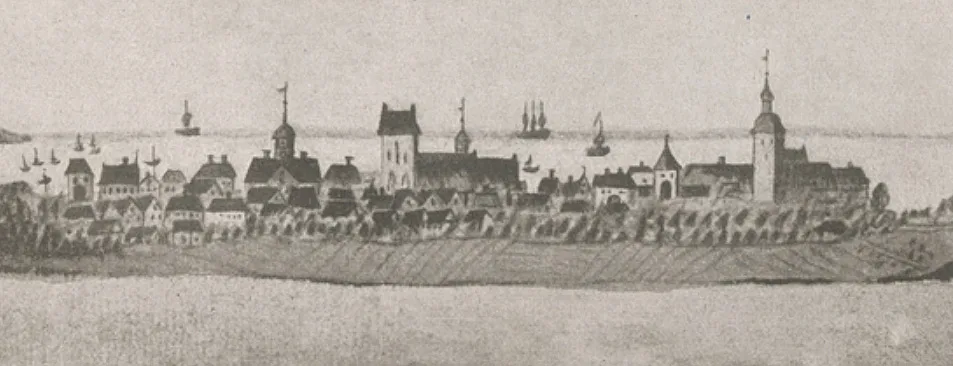
Lochstädt Castle was built on this spot for a reason. Up to and including the 13th century, this was where the strait connecting today's Kaliningrad Lagoon with the Baltic Sea lay, while at the site of present-day Baltiysk there was no strait at the time. Lochstädt controlled access from the sea to Fischhausen, Königsberg, Brandenburg and Balga.
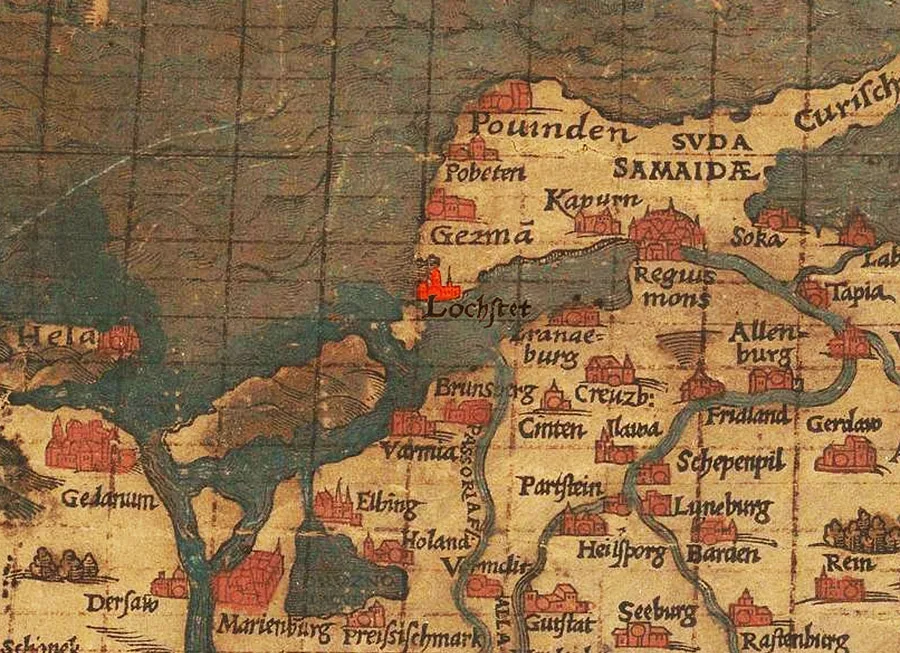 Lochstädt on a medieval map of the Baltic Sea.
One should not, of course, imagine that this control resembled the way coastal fortresses of later periods controlled straits. In the 13th and 14th centuries the castle could not have had any effective long-range means of acting against ships forcing their way into the strait. A boom of chains and logs could, however, be set up, and then a ship's crew would have had to land near the castle to open it. An equally important task was inspecting merchant ships, collecting duties from them, and exercising the right of wreck, under which any wrecked ship with its cargo became the property of whoever owned the shore. In addition, a considerable share of the commandery's income came from gathering amber on the shore, over which the Order held a monopoly.
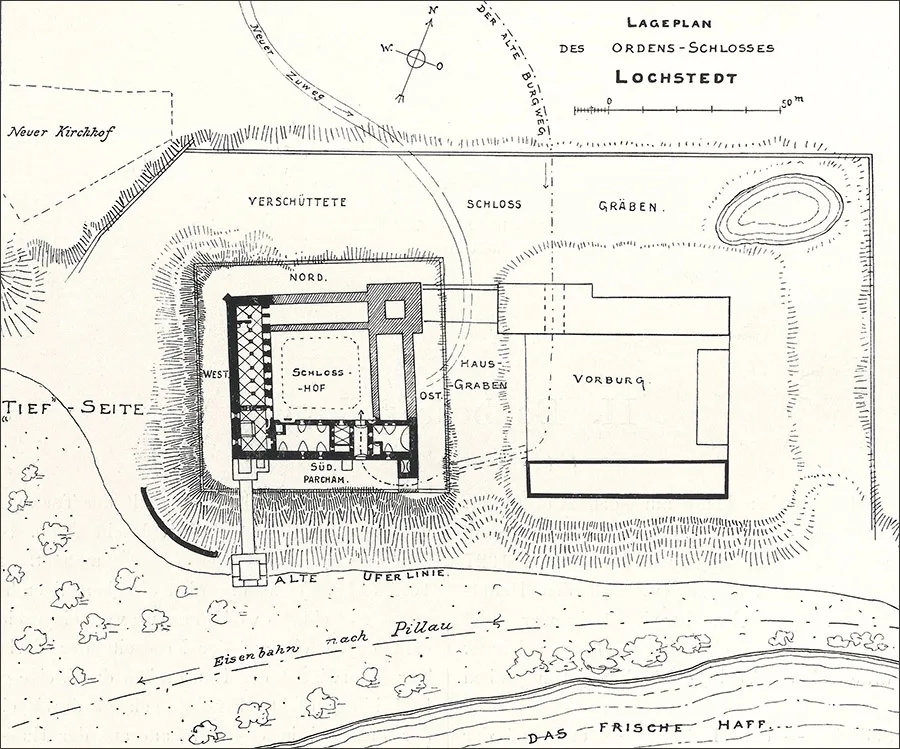 Map of the area around Lochstädt Castle (1882).
Yet a mere 5–10 years after the castle was built, nature itself intervened in these plans: the strait at Lochstädt began rapidly to grow shallow and silt up with sand. Attempts were later made to deepen it, but the technical means of the day did not allow this to be done effectively.
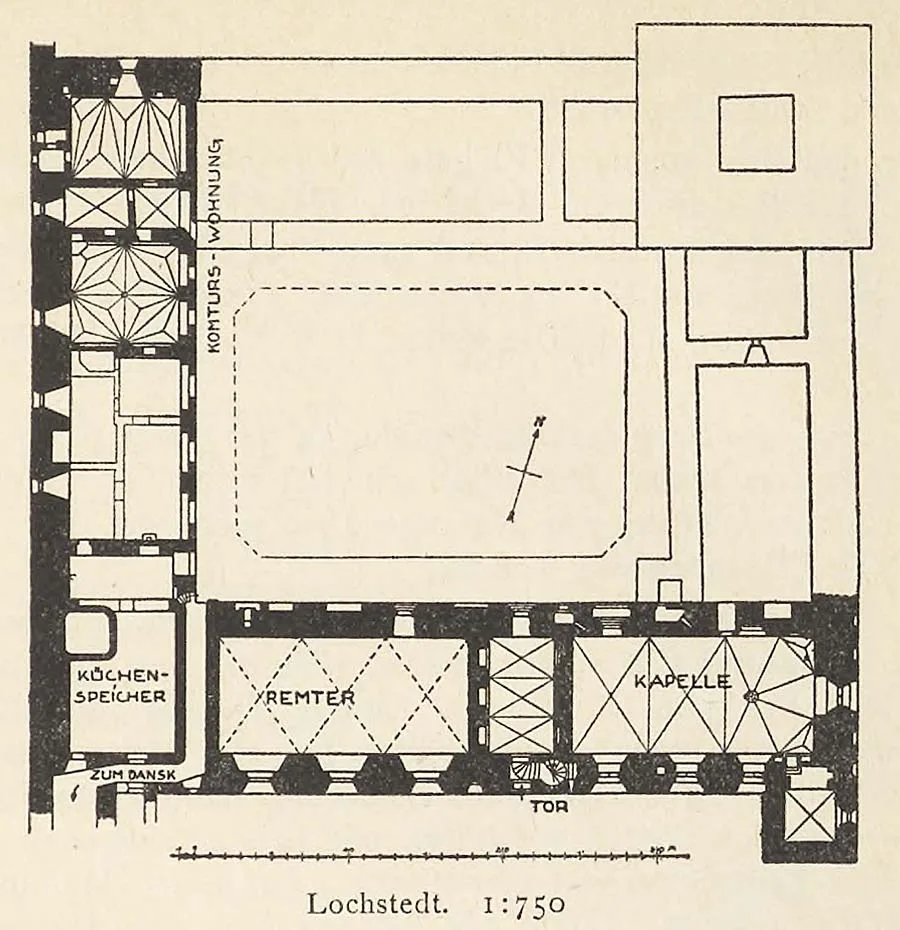 Architectural plan of Lochstädt Castle.
Meanwhile, near the village of Wogram, where Pillau would later arise, a new strait had already formed, becoming navigable in 1510. As a result, Lochstädt Castle lost much of its purpose and became, in essence, merely a centre of amber extraction and amber administration. In the 14th century the Lochstädt commandery was abolished, the castle was placed under the Königsberg commandery, and its administrator was given the post of Pfleger, or castle warden.
The Pfleger of Lochstädt also held the office of amber master. In 1429 the castle came under the administration of the hero of the defence of Marienburg during the Great War, the deposed but later rehabilitated Grand Master Heinrich von Plauen.
In recognition of his past services he was given the rank of Hauskomtur, that is, a person equal in the hierarchy to a commander but in charge of a commandery castle without any subordinate territories.
At the very start of the Thirteen Years' War (1454–1466), in 1454, Lochstädt Castle was seized by supporters of the Prussian Confederation, but already the following year it was recaptured by a detachment under the Grand Hospitaller Heinrich Reuß von Plauen.
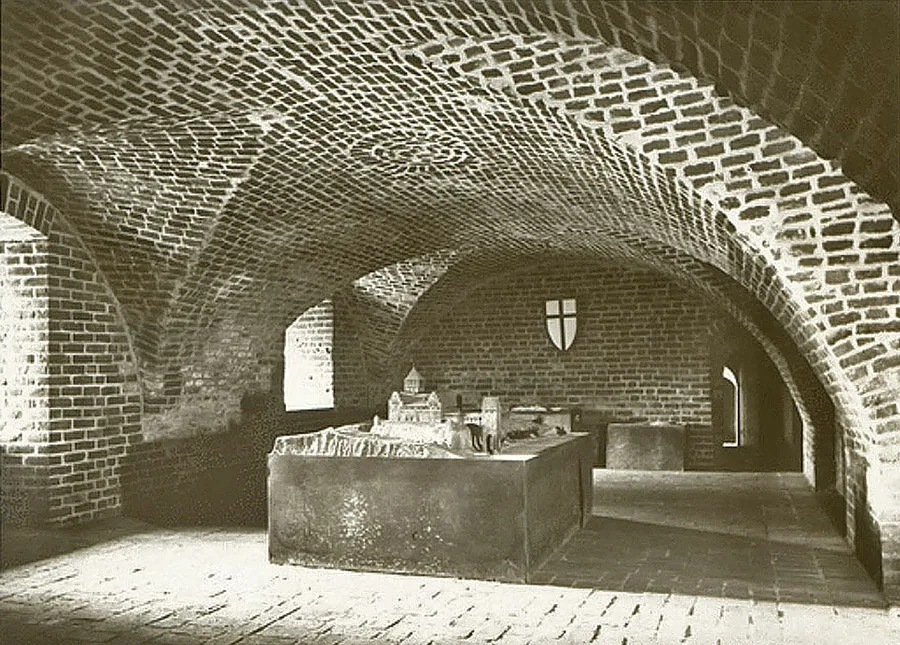 A model of the castle adorned one of its halls.
In 1456 a storm opened up a new strait next to Lochstädt. Attempts were made to widen it and make it fit for shipping, but after 1500 it was realised that it would be easier to develop the strait at Pillau.
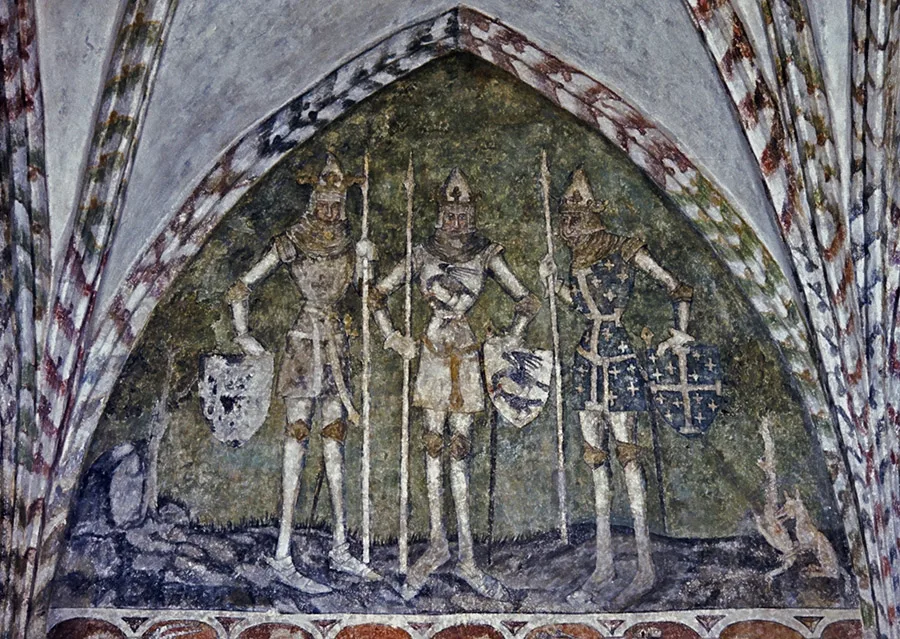 The Lochstädt frescoes of the late 14th century shared the sad fate of this unique monument in the 20th century...
By 1513 Lochstädt Castle had fallen into considerable disrepair and was in need of renovation. Short of funds, the Order handed it over to two knights on condition that they carry out the necessary repairs. In 1629 the Swedish king Gustavus Adolphus, who had made camp near Lochstädt, decided to build a stretch of rampart with bastions there, for which the wall of the castle's parcham was dismantled. But the serious destruction of the castle began in 1703, when King Frederick I ordered the demolition of the danzker, the great tower, the north and east wings and part of the south wing. In 1884 the remaining castle buildings were converted into a school. A fire in 1888 completely destroyed the Vorburg.
Finally, in 1907, it was decided to carry out a thorough restoration of Lochstädt Castle as a historic monument. The work continued right up to the outbreak of the Second World War, when it was halted.
In April 1945, during the fighting for Pillau, the castle came under artillery fire and bombing that destroyed it almost entirely, leaving only the cellars and fragments of walls. In the years up to 1989 these cellars were somewhat disturbed by local diggers, and some of the walls were taken apart for building material. But at the end of 1989 the magazine Der Spiegel unexpectedly provided money for a search for the Amber Room at Lochstädt. Work began in 1990, with the very active participation of the well-known local historian and treasure seeker Avenir Ovsyanov. The heavy construction machinery used in the operation almost completely destroyed the castle's cellars. The Amber Room, needless to say, was not found.
Photos on this page: Bildarchiv Ostpreußen, Bildindex der Kunst & Architektur.
An excerpt from the chapter "The Shores of Samland"
from the book by local authors "Königsberg Local Studies",
published at the end of the 19th century
In 2012–2014, "Pregolya", the literary and art supplement to the "Baltic Almanac",
published a translation of "Königsberg Local Studies" ("Heimatkunde von Königsberg i. Pr.", 1895, Kommissionsverlag von Wilhelm Koch, Königsberg), a book by the Königsberg authors Dr Richard Armstedt, a professor at the Altstadt Gymnasium, and Dr Richard Fischer, a senior teacher at the Kneiphof Gymnasium; the translation was made by an unknown translator. The idea of publishing it came from Igor Vladimirovich Afonin. The text was adapted and annotated by Aleksey Borisovich Gubin and Igor Fyodorovich Avtukhov. That book had a separate chapter on the outlying environs of Königsberg, which contains several paragraphs about Lochstädt Castle. We have substantially edited them and offer them to you as a supplement to the text by Aleksey Yevgenyevich Petrushin.
– – – – – – – – –
Two kilometres north-east of Neuhäuser (Neuhäuser, now the settlement of Mechnikovo within the town of Baltiysk), right on the high shore of the lagoon, rises Lochstädt Castle (Lochstädt). After the castle of the Grand Masters at Marienburg, it is the most important surviving fortress from the time of the Teutonic Order. Lochstädt Castle was built in the second half of the 13th century (c. 1270) and was at first called Witlandsort (Witlandsort), after its location. The assumption that the name derives from a strait that supposedly existed here earlier is untenable. Recent research has shown that there was no strait here.
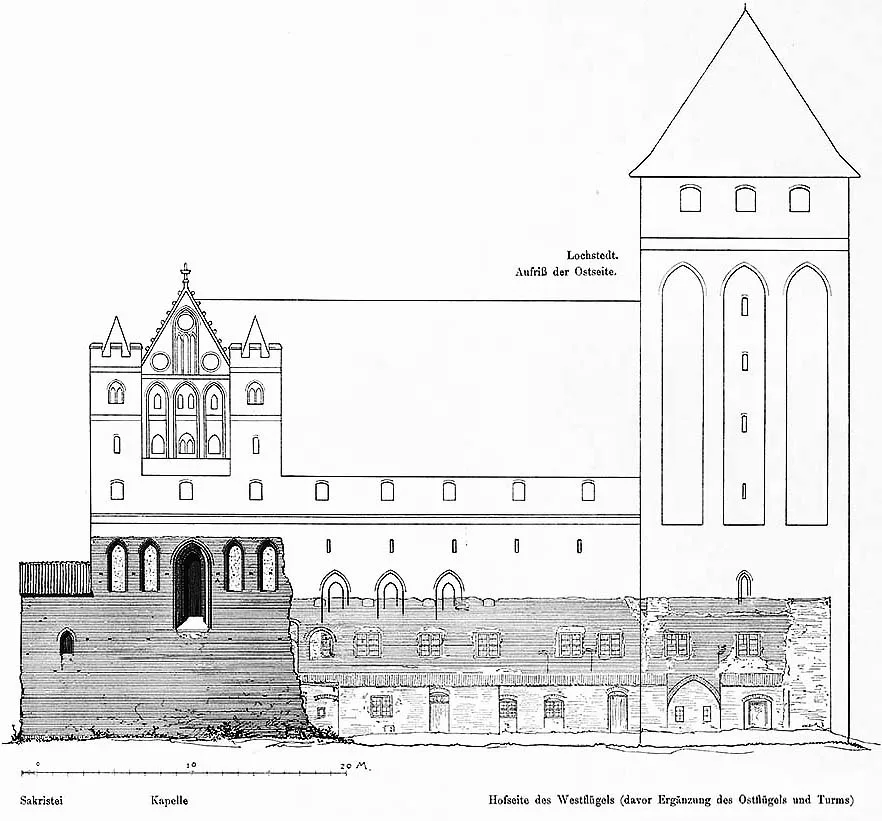 Reconstruction of the view of the west wing from the courtyard (in front of it, the east wing and the towers).
The castle was intended to control the western part of Samland and soon became the administrative centre of amber extraction, which had since time immemorial been a sovereign right of the state.
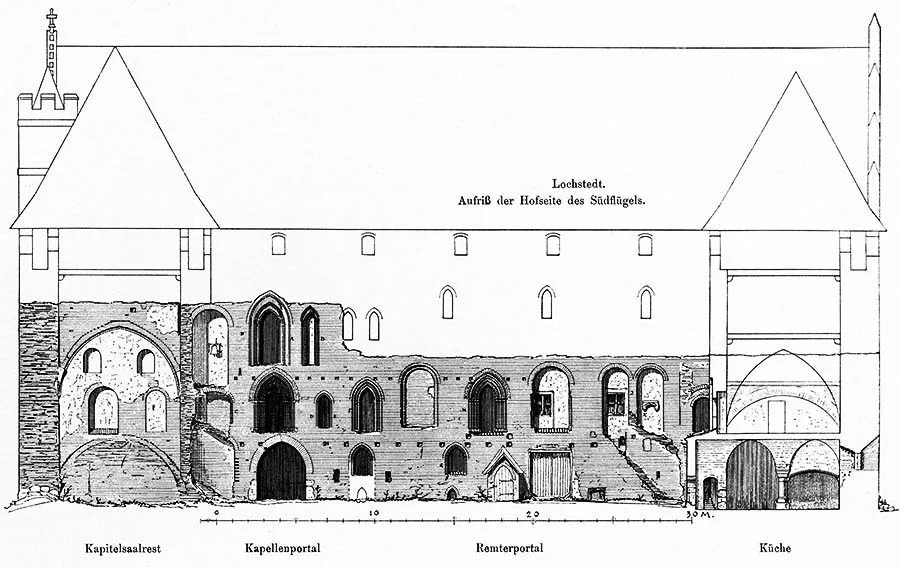 Reconstruction of the courtyard façade of the south wing.
In 1581 the residence of the amber master (Bernsteinmeister), Prussia's chief official in charge of amber, was moved from here to Germau (Germau, now the settlement of Russkoye) and then to Palmnicken (Palmnicken, now the settlement of Yantarny).
Like all the large castles of the Teutonic Order, Lochstädt was originally built as a square; today, however, only two wings survive, since the east and north wings were dismantled in 1701–02, when building materials were needed for the fortress of Pillau, then under construction.
The south wing has preserved its chapel, which was reconsecrated after an internal remodelling in 1869 and where services are held to this day. An inscription above one of its windows reads: Maria gute haben uns in diner hute (Keep us, Holy Mary!).
On the outside, the Gothic arches of the north-facing window openings of the south wing are adorned with two more inscriptions: Benedigit si der Name Jhesu Cristi (Hallowed be Thy Name, Jesus Christ) and Mase ist czu allen Dingin gut (Moderation is good in all things). The letters of these inscriptions are made of fired clay and glazed. Next to the chapel was the Konventsremter (Konventsremter, the assembly hall of the knight brethren of the Order), which has served as a school since 1861.
Since 1888 the west wing has been at the disposal of the royal forester; it was formerly intended for the castle's commandant. Originally this was a commander, but over time he became merely an administrator (in the Order's hierarchy, a Komtur and a Hauskomtur respectively). Later the amber master lived here. Both rooms have splendid cross vaults that have survived to this day.
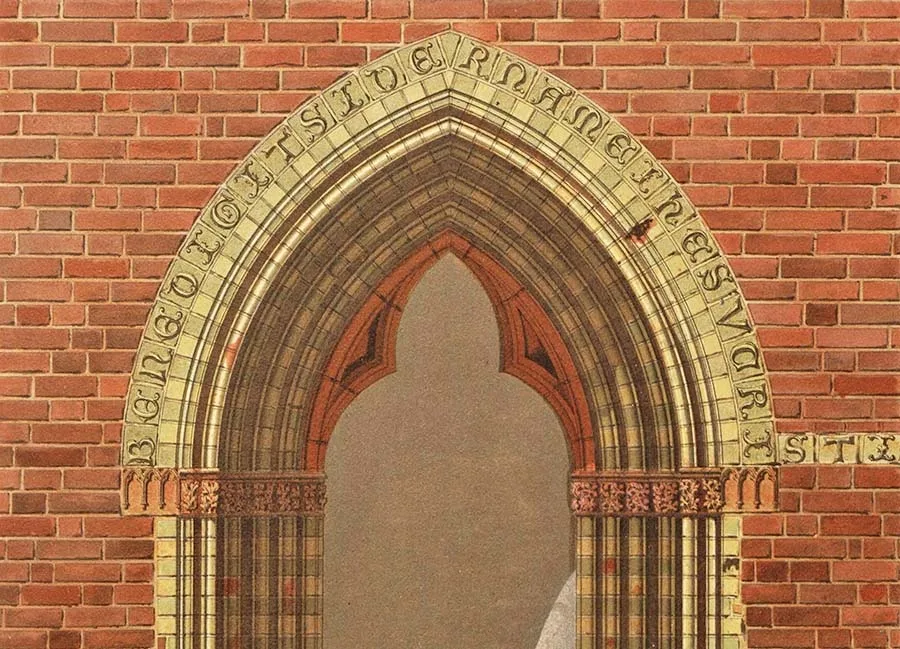 Inscription above a window of the south wing facing the courtyard: Benedigit si der Name Jhesu Cristi.
From 1422 to 1429 Lochstädt was home to Heinrich von Plauen (Heinrich von Planen, 1370–1429), former Grand Master of the Teutonic Order, whose name is associated with memories of both the most brilliant and the most sorrowful events.
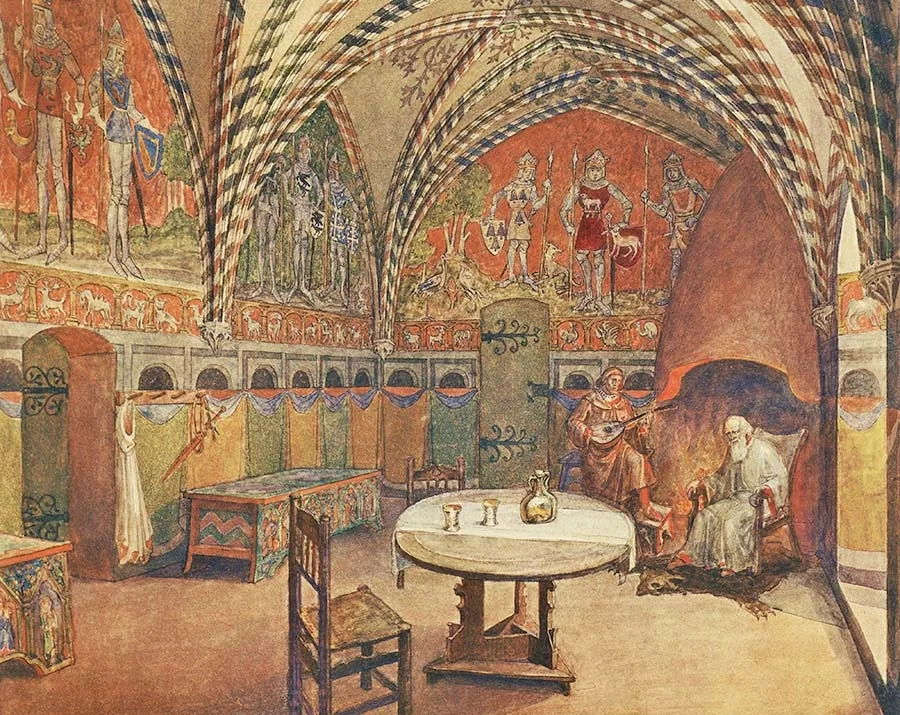
An ageing Heinrich von Plauen in his chambers at Lochstädt.
In 1410 the Polish king Władysław Jagiełło, together with the Lithuanians, routed the Teutonic Order at the Battle of Tannenberg (known in Polish history as the "Battle of Grunwald" and in Lithuanian history as the "Battle of Žalgiris"), after which many castles, towns and territories passed to the victors. The Order was left with only part of its lands, including the residence of the Grand Masters, Marienburg Castle. A significant role in liberating the capital of the Order's state was played by the komtur of the town of Schwetz (Schwetz, now the Polish town of Świecie), Heinrich von Plauen. On learning that the Grand Master's castle was under siege, he came to its aid with his troops. In gratitude for its rescue, his comrades elected him Grand Master. However, von Plauen's strictness and exacting nature provoked resentment among those who were supposed to obey him, and he was soon removed on trumped-up charges. The knights accused their Grand Master of abuse of power and even suspected him of treason in favour of Poland. For many years Heinrich von Plauen languished innocently in prison. In 1422 he was finally released, and Lochstädt Castle was assigned to him as his place of residence for the rest of his days. He died here in 1429. His body was buried at Marienburg, in the crypt of the Grand Masters of the Teutonic Order.
(Today all that remains of Lochstädt Castle are ruined cellars and foundations that have been dug over many times. The well-known local historian Adolf Bötticher (Adolf Bötticher, 1842–1901), citing a certain Panzer, also expressed doubts that a strait had ever existed at Lochstädt — editor's note)
The design uses illustrations from Conrad Steinbrecht's book "Prussia in the Time of the Grand Masters. The Architecture of the Teutonic Order". (Conrad Steinbrecht. «Preußen zur Zeit der Landmeister beiträge zur Baukunst des deutschen Ritterordens». Berlin. Verlag von Julius Springer. 1888.)
Translated from Russian with the help of AI (Claude, Anthropic), October 2026.