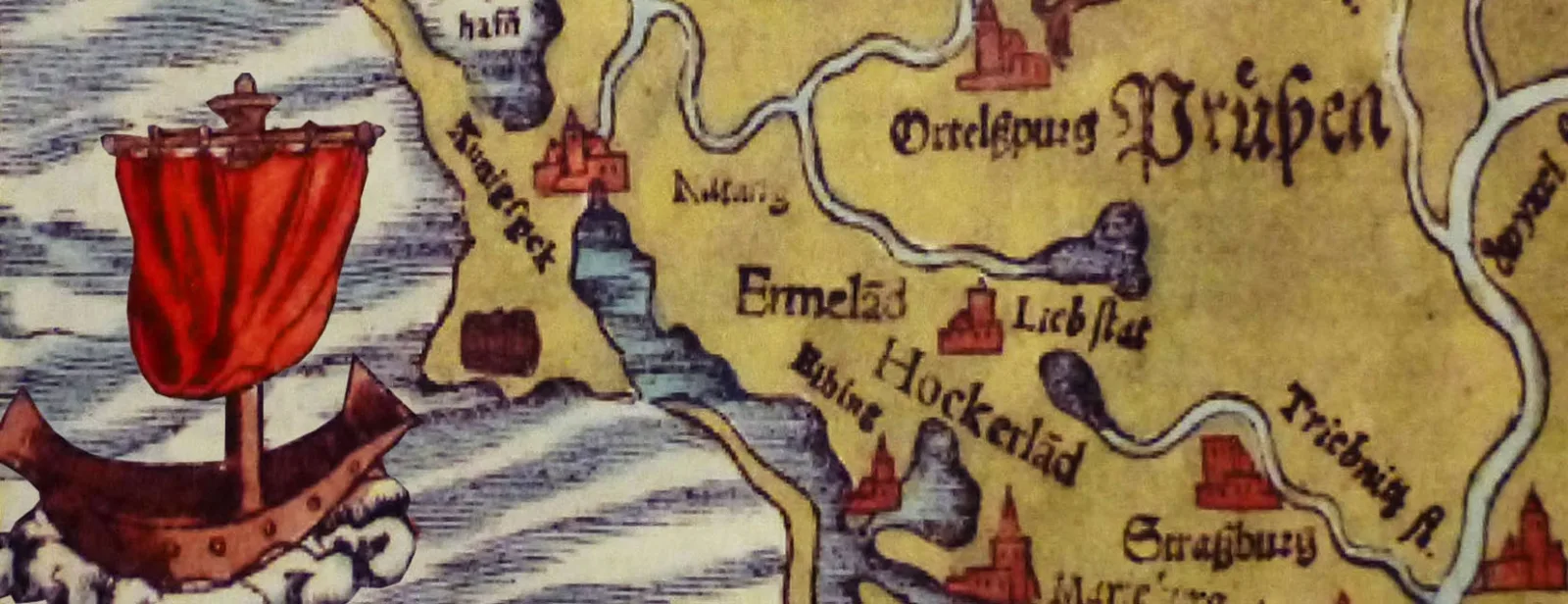
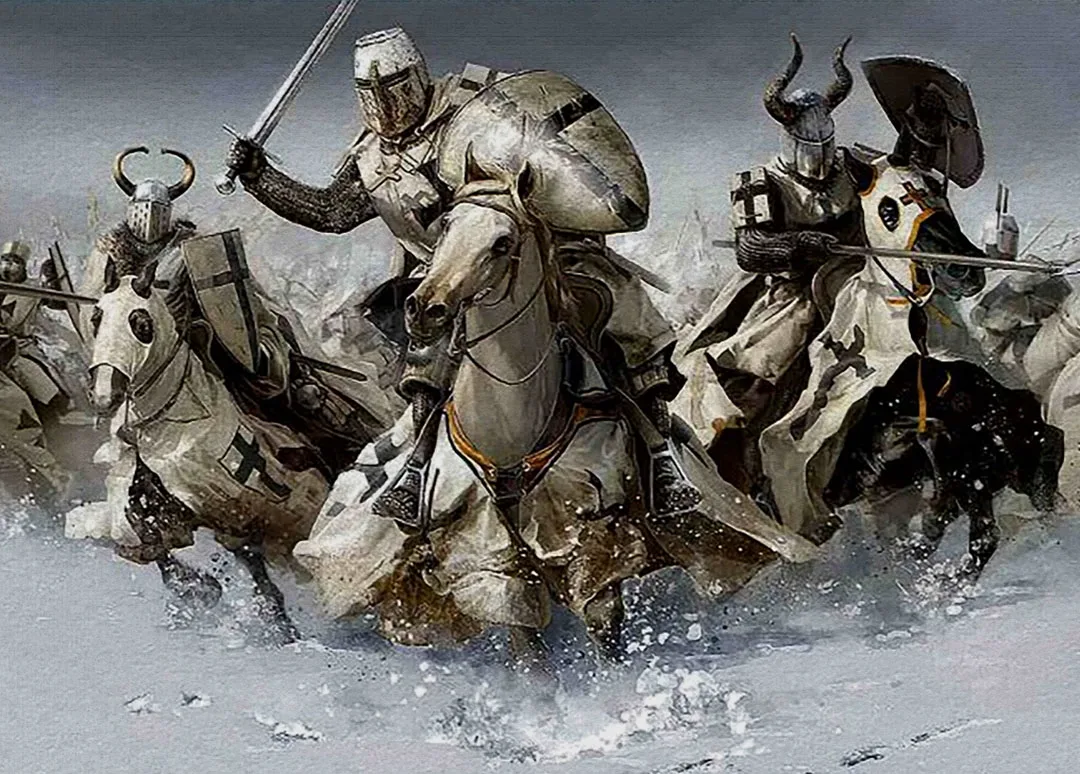
At first the conquest of Sambia was not expected to be difficult. The Order knew that the Sambians were a brave people, yet it assumed that the fate of their conquered neighbours would discourage any attempt to defend their independence. The first attempt to conquer Sambia was made in the winter of 1252–1253. It was led by the Komtur of Christburg [Dzierzgoń, Poland — ed.], Heinrich von Skonnenberg Stange (Heinrich Stange), a brave and prudent warrior. The Komtur gathered the brethren of the Order, added a sizeable auxiliary force of Prussians, crossed the ice of the Frisches Haff near the Lochstedt strait and invaded the Sambian Peninsula. Meeting no resistance, the army advanced as far as the settlement of Girmow1. There a large Sambian army attacked it. Unable to withstand the assault, the Order's force began to retreat. Heinrich Stange, his brother Hermann and the brethren of the Order covered the withdrawal. The Komtur and his brother were killed in the rearguard fighting.
To improve communications between Prussia and Livonia, Eberhard von Sayn, Vice-Landmeister of Livonia, sent a detachment of brethren of the Order in 1252 to found an intermediate stronghold. Marching along the seashore, they founded Memelburg Castle at the mouth of the Dange (Danes) River, and soon afterwards a town under Lübeck law [Klaipėda, Lithuania — ed.].
But the route remained unsafe as long as Sambia was unconquered. News of the building of Memel soon reached the Sambians. To find out what was going on, they sent scouts to inspect the newly built fortress. The scouts concluded that this "crow's nest" (kreyn nest) would be easy to take. At the beginning of 1254 the Sambians gathered a large army, marched along the Curonian Spit, crossed the narrow strait separating the spit from the mainland and laid siege to the fortress. By then, however, Anno von Sangerhausen, who had been appointed Landmeister of Livonia at the end of 1253, had already arrived. He had managed to strengthen Memelburg further and reinforce its garrison. The Sambians' attempt to storm the stronghold failed, and they were forced to turn back. Anno von Sangerhausen, who had come with a detachment of his own, joined forces with the Memelburg garrison and set off in pursuit of the Prussians. Breaking through a strong abatis on the Spit, he burst into Sambia, plundered the nearby settlements and tried to return to Memelburg with his booty. But the large Sambian army outflanked him, built a new abatis on the spit and cut off the Order's force. There were enemies behind and in front, the sea on the left and the lagoon on the right. Abandoning their booty, the knights of the Order fought their way out. At the cost of heavy losses they took the abatis and managed to break through to Memelburg.
In the second half of 1253 numerous pilgrims from Saxony and other lands arrived under the banner of Henry the Illustrious, Margrave of Meissen and Thuringia (Heinrich der Erlauchte markgraf von Meisen und Thüringen). With them came the Grand Master and Landmeister of Prussia, Dietrich von Grüningen. The leadership of the Order decided to use these forces for the urgent "Christianisation" of the lands of Barta and Galindia. The conquest of Sambia was postponed, and for good reason: the Polish dukes of Kuyavia had decided to expand their territories in order to secure stronger borders against Lithuania and Rus'. The southern part of Galindia had already been seized by the Duke of Kuyavia, so the Order had to hurry. The two lands were subdued with unexpected speed and almost without a fight: the Bartians and Galindians accepted baptism and became subjects of the Order, handing over hostages as a pledge of their loyalty. The Order immediately hastened to place the newly acquired lands under the protection of the Holy See. The Pope [Innocent IV — ed.], for his part, ordered the bishops in Prussia to support the brethren in Christianising these lands, and at the same time threatened with excommunication and anathema any of the Order's rivals (meaning Duke Casimir I of Kuyavia) who might attempt to seize this territory by force. Having established itself in Barta and Galindia, the Order turned once again to the conquest of Sambia. The experience of the earlier failed attempts had shown that such an expedition required larger forces. The Order did not have them and once more appealed to the Pope for help. For the second time a crusade was proclaimed in Germany, Bohemia and Moravia in defence of the Christian Church in Prussia and Livonia.
The Campaign of Ottokar II, 1254–1255
Grand Master Poppo von Osterna resolved to enlist the Bohemian King Ottokar2 for the new campaign. To this end he appeared in Prague in the autumn of 1254. The Pope also played his part by hastening the conclusion of peace between Ottokar and Hungary.
Přemysl Ottokar II took command of the campaign and set out from Prague on 14 December 1254. He stopped in Wrocław to celebrate Christmas (24 December). There he was joined by his brother-in-law (his sister's husband) Otto II, Margrave of Brandenburg, who served as marshal on the campaign. The combined army marched towards Prussia. At Kulm [Chełmno, Poland — ed.] it was met by Master Poppo von Osterna. At Elbing [Elbląg, Poland — ed.] they were joined by another brother-in-law of the Bohemian king, Heinrich von Meissen, and (probably) by Count Rudolf of Habsburg of Austria.
Before the invasion of Sambia, the crusader contingents and the knights of the Order assembled at Balga Castle. The combined army may be assumed to have numbered about 250 knights and 2,000 squires and foot soldiers. At the castle Ottokar met the Sambian Gedune and received from him information about the state of the land.
On the morning of 9 January the king set out from the castle. Crossing the ice of the Frisches Haff, the crusaders approached Medenow (Medenau — Logvino, Zelenogradsk Urban District). Having captured this Prussian stronghold, they plundered and burned the surrounding settlements and spent the night in the area. The next day, 10 January, the king advanced about 16 kilometres and laid siege to the powerful fortress of Hunenberg near Rudau [Melnikovo, Zelenogradsk Urban District — ed.]. By evening the Christians had broken through the gate in the gate tower and taken the fortress, slaughtering the garrison and the entire population.
Unprepared for King Ottokar's sudden and rapid offensive, the chieftains of Sambia agreed to accept Christianity at once and handed over hostages. Bishop Bruno of Olmütz (Bruno von Olmütz), who was present, baptised the chieftains, and since the king attended as a witness, the bishop gave the first of them the king's own name, Ottokar. In the same way the second Prussian noble received the name of the Margrave of Brandenburg, Otto. This example proved highly effective: the very next day the Sambian nobility, won over by the promises and gifts of the king and the Master, brought their people along with them.
While negotiations were under way, Ottokar sent part of his army via Quedenow (Quednau) to Waldow (Waldau) to collect hostages. After spending the night at Waldow, the detachment moved on in the morning of 12 January via Kaime (Kaymen) as far as Tapiow (Tapiau)3. Within five days the conquest of Sambia was complete.
As early as 13 January, Ottokar's troops left Tapiow and followed the course of the Lipza River (Pregora, Pregel) to Tuwangste (the site of the future Königsberg), where the king was probably waiting for them. With that the "blitzkrieg" was over, and by 17 January the king was already in Elbing on his way back to Bohemia. From the Order's Prussian seat he travelled at a leisurely pace, with stops along the way, and by 6 February he had reached Opava (Czech Republic).
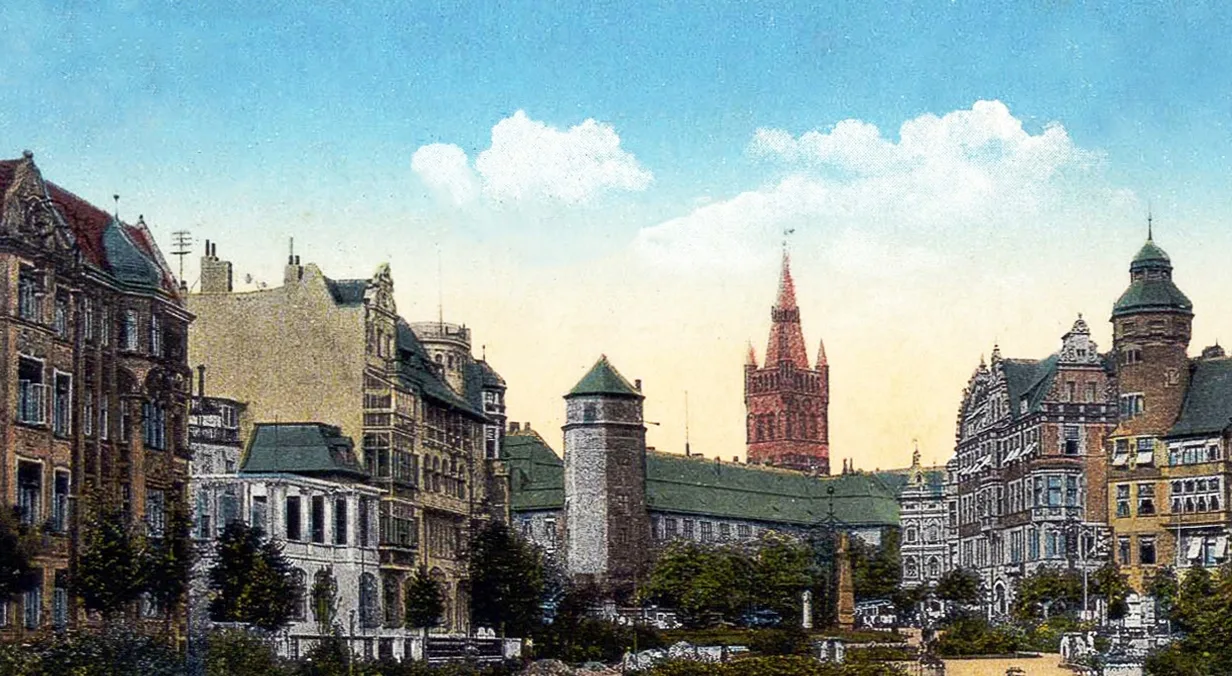
It is believed that during this campaign Ottokar suggested building a castle on the bank of the Pregel. The Order followed his advice and in the summer of 1255 founded a stronghold, the castrum antiquum. The Prussians called the Order's fortress Tuwangste, after the forest that stood on the site. Later, when the Order decided to build a permanent castle here, it was named Königsberg in honour of King Ottokar.
A garrison was left in the castle under the command of Vice-Landmeister Burchard von Hornhausen4.
That same year, the Nadrovians, Skalvians and Sudovians, learning that the Sambians had been crushed and had accepted Christianity, decided to take advantage of their weakness. Gathering a large host, they invaded Sambia, burning villages, killing the men and carrying off the women and children into captivity. According to J. Voigt, the garrison of Königsberg bravely withstood the enemy assault. Whether Königsberg was actually attacked, however, remains unknown. As they withdrew, the pagans built the fortress of Vilov (Wehlau)5 on the border with Sambia, blocking access to Nadrovia. A strong garrison was left there under the chieftain Tirsko and his son Mludela. But the unforeseen happened: it is believed that Tirsko was repeatedly invited to Königsberg, and that the vice-landmeister, with tempting promises and costly gifts, persuaded him to accept Christianity. Soon the garrison was baptised as well, and the fortress itself was handed over to the Order.
The Sambians, outraged by their neighbours' attack, resolved to take revenge the following year, and Vice-Landmeister Burchard undertook to lead the campaign. The newly converted Tirsko, who knew the routes into the neighbouring lands well, served as guide. The target was the territory of Unsatrapis, bordering on Barta and Nadrovia. The first campaign ended with the capture of the fortress of Kapostene. The next year a second campaign went south along the Alle River, and the region was laid waste. The fortress of Ochtolitten fell, its garrison was slaughtered and the surrounding country devastated. Receiving no support from their neighbours, the fortresses of Unsatrapis, Gundau and Angeteten surrendered to the Christians. All the nobility of the land hastened to accept baptism and pledged their loyalty by handing over hostages.
Thus yet another Prussian region fell. The reason, as everywhere else, lay in the disunity of the Prussians: throughout the entire conquest of Prussia, not one of the major tribes gave military help to its neighbours. What is more, taking advantage of the weakness of Sambia after its defeat by Ottokar, its neighbours attacked and ravaged it still further. In this situation the law of blood feud came into play, and the Sambians resolved to take revenge on their treacherous neighbours. Exploiting the situation, the Order merely channelled this vengeance in the direction it wanted. The Prussian nobility, receiving noble privileges from the Order, went over to the side of the conquerors, and the common Prussians followed in the wake of their nobles.
_________________
1 – Girmov, from the 19th century Germau. After 1945, the settlement of Russkoye, Zelenogradsk Urban District, Kaliningrad Region.
2 – Czech Přemysl Otakar, German Ottokar. Přemysl Otakar II (1253–1278). Российская и мировая история в таблицах/сост. Ф. М. Лурье. С.П. 1995. С. 180.
3 – Kvedenov – Severnaya Gora, on the outskirts of Kaliningrad. Valdov – the settlement of Nizovye, Guryevsk Urban District; Kaime – the settlement of Zarechye, Guryevsk Urban District; Tapiov – the town of Gvardeysk, Kaliningrad Region.
4 – From 18 January 1255, Burchard von Hornhausen was Vice-Landmeister of Prussia. Voigt J. Namen. S.1.; Петер из Дусбурга. Хроника. С. 85.
5 – Vilov – the settlement of Znamensk, Gvardeysk Urban District, Kaliningrad Region.
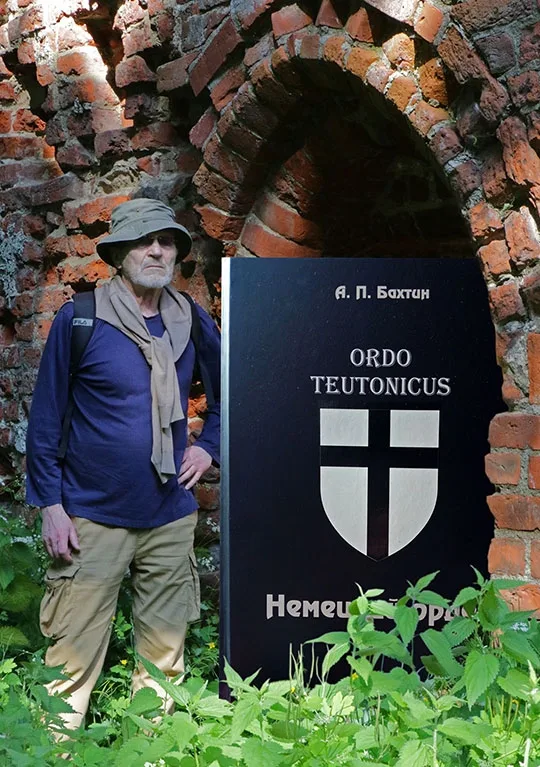
The book “The Teutonic Order” by Kaliningrad's leading expert on the subject,
(17.01.1949 – 28.11.2023)
was published by Zhivyom in 2020. With the kind permission of the author, we are publishing an excerpt devoted to the crusaders' conquest of the Sambian Peninsula and the founding of the towns of Memel (Klaipėda) and Königsberg (Kaliningrad).
Translated from Russian with the help of AI (Claude, Anthropic), October 2026.