In the time of Heinrich von Richtenberg, Grand Master of the Teutonic Order, there lived a pious and learned man, Dietrich von Cuba. He was a doctor of both laws1 and enjoyed the patronage of two popes, Paul II and his successor Sixtus. The latter appointed him bishop of Prussian Samland [Sambia]. But this was done against the wishes and will of the Master of the Order and his chapter2. They were greatly angered and, when the bishop arrived in Königsberg, they received him coldly and humiliated him in every way, thereby showing how unwelcome his arrival was.
The crusaders acted this way because by that time the Order had distanced itself from Rome, wishing to live more by secular than by spiritual laws. The brethren of the Order had no wish to tolerate in their midst a Roman appointee and favourite of the Pope.
The bishop himself burned with the desire, secure in the protection and support of the Pope, to correct the errant knights of the Order, set them back on the true path and return them to the bosom of the holy church. But whoever wants to correct and improve this world must have an iron fist, a brazen forehead and a fiery heart, otherwise he will never succeed, because the world does not want to be corrected and improved.
All the will and desire of Bishop Dietrich von Cuba were not enough to stand alone against the proud knightly Order and its chapter.
However, the bishop paid little attention to the hostility and unfriendly reception and behaved towards the head of the Order proudly and independently.
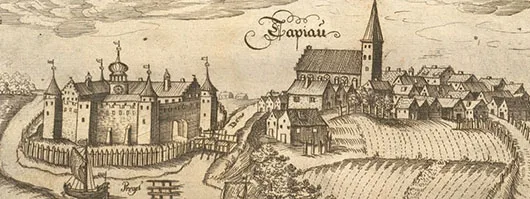
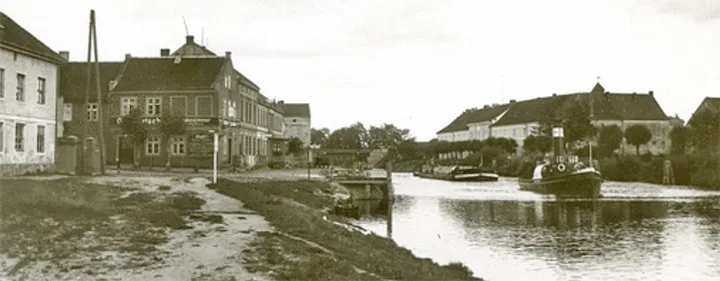
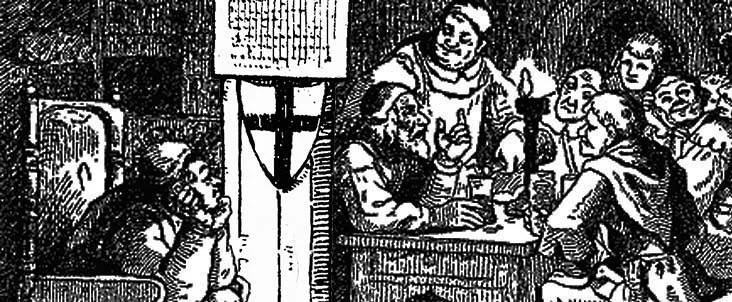
Then the Master convened the chapter of the Order to take counsel on what they should do with the bishop. All decided that he must be taken into custody and confined in one of the castles. And on the day after the fifth Sunday of Lent he was seized and taken to Tapiau Castle. Here at first he was kept in the castle chambers with all the honour due to the Bishop of Samland.
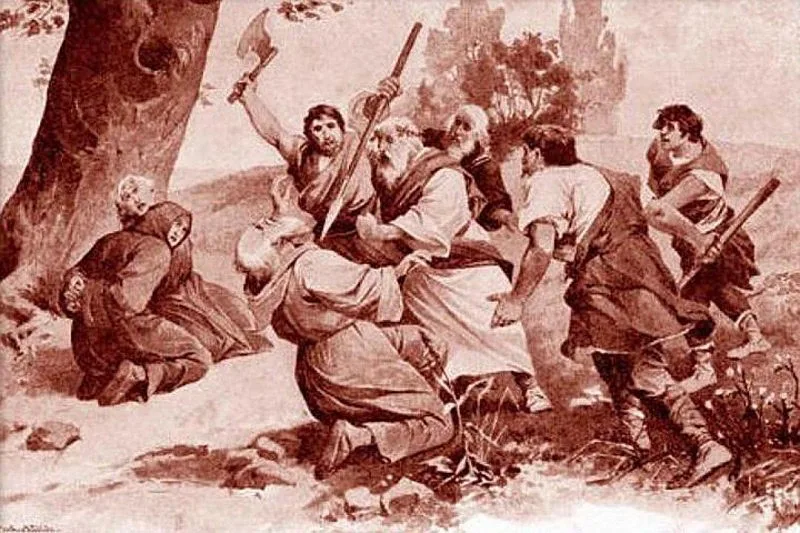
At that time there lived at Tapiau Castle a certain chaplain. He was a treacherous and spiteful man. He tried to worm his way into the confidence of the Bishop of Samland, visited him every day, urged him to escape and offered him his help and support. Dietrich von Cuba liked this advice and gave his consent. But the chaplain told the knights everything, and before the bishop could break free he fell straight into the hands of the Teutonic Knights. Once again the Master began to confer with his close associates about what to do with the unruly prisoner. And they resolved to starve him to death.
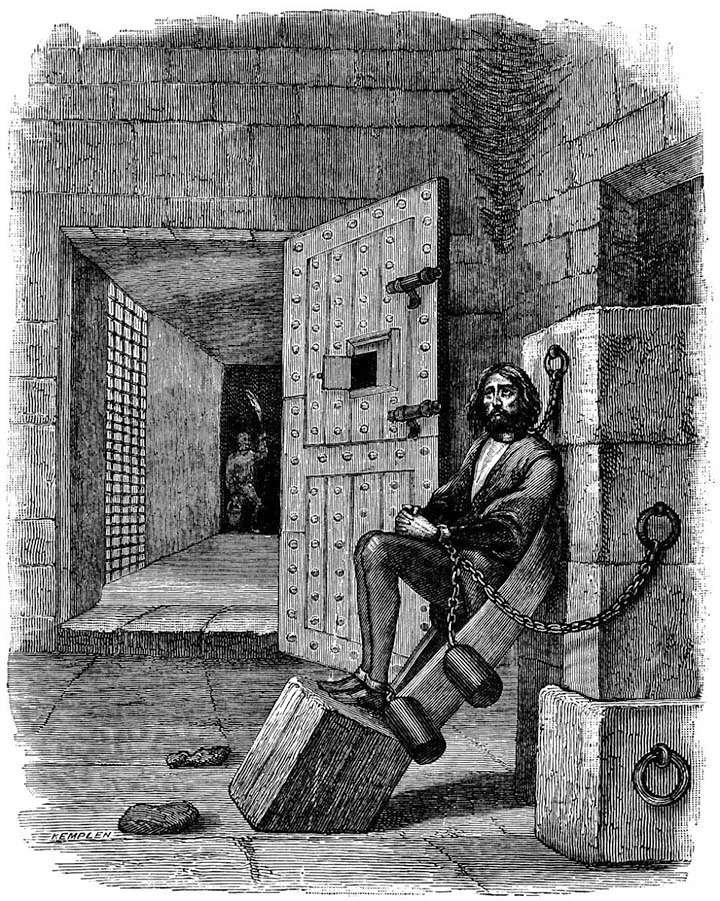
On the orders of the chapter the bishop was taken to a dark dungeon beneath Tapiau Castle, chained hand and foot in the shape of a cross to the wall and left there without food or water.
For seven days the unfortunate man suffered in the gloomy dungeon with no hope of release from his torment, and on the eighth day the people gathered in the church heard from behind the sacristy door, which had carelessly been left open, a voice groaning hoarsely: "My God, my God! Why hast thou forsaken me? God, have mercy on me!"
The bishop's body was then taken to Königsberg, and when the Pope in Rome heard of this crime, he demanded vengeance. Then seven knights bribed by the Order stepped forward, raised their palms and swore that the bishop had died a natural death of his own and that the Order was clean and guilty of nothing. And then the Pope's anger softened.
Some time later the Grand Master of the Order fell gravely ill. He was already recovering when he suddenly leapt out of bed and cried: "My armour! My horse! The bishop summons me to God's judgement! Who will have pity on me?!" — after which he fell back and died.
* * *
People often hear at midnight in the dungeons of Tapiau Castle a hoarse voice calling as if with its last strength: "My God! My God! Have mercy on me!" Some say it is the unhappy bishop who starved to death, but others claim that it is Grand Master Heinrich von Richtenberg groaning. His body rests in a grave in Königsberg Cathedral, but his spirit still wanders restlessly about Tapiau.
SOURCES
Ludwig Bechstein, "German Tales" (Ludwig Bechstein, «Deutsches Sagenbuch»), Leipzig, 1853.
Christian Krollmann, "Tales of East Prussia" (Christian Krollmann, «Ostpreußisches Sagenbuch»), Leipzig, 1919.
TRANSLATOR'S NOTES
1. Doctor of both laws (abbreviated J.U.D. — Lat. Iuris Utriusque Doctor) — the highest academic degree, a doctorate in civil and canon law. The degree was widespread among Catholic and German scholars of the Middle Ages and the early modern period.
2. Chapter — a general assembly of the members of a monastic or military religious order.
● Editor's note: Read on VisitPrussia.com an interview with the translator of German and, in particular, Prussian fairy tales, our regular contributor Tatyana Kolivay, who runs her own blog, where countless other parables, legends and fairy tales in her translations have been published.
Translated from Russian with the help of AI (Claude, Anthropic), October 2026.